What life was like, with you in it.
Wake up in a medieval village, a Roman barracks or a pirate ship, and find out what the day holds. Clippie writes the tour, draws a stickman you in every stop and narrates it.
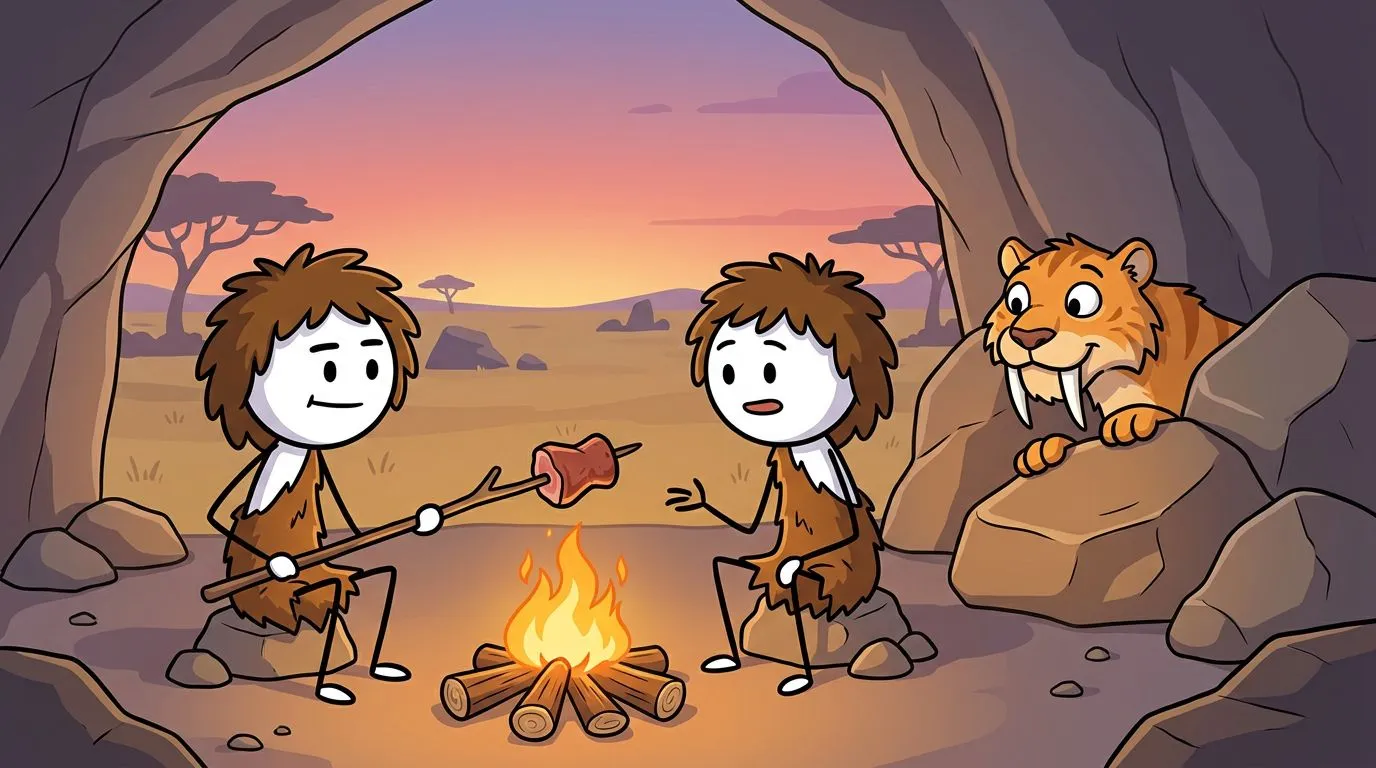
Painted stickman (a style sample and a finished narrated story, tap for sound) and Caveman stickman.
How to make a “what life was like” video. Four steps.
- 1
Pick a life, not an event
A medieval peasant, a Roman legionary, a Victorian factory child. The bigger and better-known the period, the more people search for it.
- 2
Plan the stops
Use a day or a life as the spine: waking up, food, work, sickness, the law, sleep. A new stop every one to two minutes.
- 3
Write it to “you”
Pick the “You are in it” format and the Historical theme, or paste your own tour. Present tense, second person, and smells and sounds before dates.
- 4
Set the period and export
Put the period and clothing in scene instructions so every stop stays in it, add a narrator and captions, and export in 16:9.
Why tours win. And how to write one.
The format that beats its own channel
In Clippie’s dataset of viral long-form history videos, 10 of 24 history-documentary winners were tours of a time and place rather than chronologies. They were also three of the top five by how far they beat their channel’s usual views. Examples include “Why You Wouldn’t Last a Day in Medieval Times” (about 4.4 million views) and “What It Was Like to Be a Pirate During the Golden Age” (about 1.4 million), as of November 2026.
Senses, not dates
A tour works because the viewer imagines being there. Each stop needs one thing they can picture and one thing that surprises them:
- Food: what is in the bowl, and why there is so little of it.
- Work: what your hands are doing at dawn, and who you answer to.
- Sickness: what happens if you cut your hand, and what the cure is.
- The law: what gets you punished, and how.
- Night: who you share a bed with, and what you hear in the dark.
One date at the start sets the scene. After that, the period lives in the details, not the numbers.
Drawing “you”
Add one character in the Characters panel, such as “you: a thin stickman peasant in a brown wool tunic”, and call them with @ in the script. They then appear in every stop, which is what makes a tour feel like one life and not a slideshow.
We have no Roman, medieval or pirate stickman samples to show yet, so this page shows real scenes in other settings. The period comes from your scene instructions: make a one-minute test first and see how your era draws before you commit to a long video.
Nearby formats. For when your idea is a bit different.
 StoryStone Age survival“Could you survive the Ice Age?”, told to the viewer as “you”.
 Story“The entire history of…”A country or empire in 10 to 20 minutes, era by era.
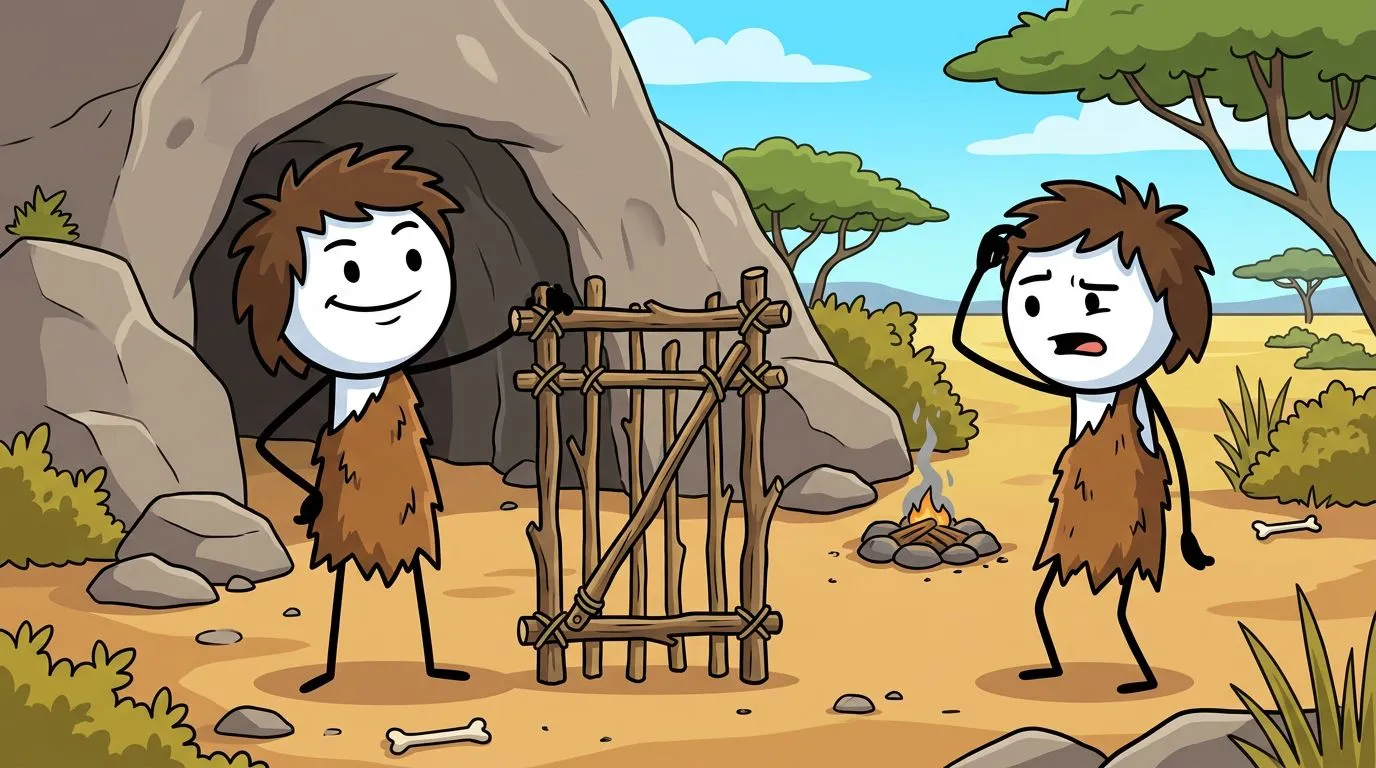 StoryAncient humans stickman videos“What did ancient humans do all day?” explainers.
 Story“Worst in history” videosPunishments, jobs and deaths, ranked, without turning into gore.
A tour in one editor. What Clippie handles.
“You are in it” format
The writer’s second-person format: “You wake up and…”
One “you” throughout
A saved character keeps the same stickman in every stop.
The period, held
Scene instructions put the clothes, buildings and weather in every picture.
Long enough
Up to 10 minutes from the writer, about 20 if you paste your own.
A warm or calm voice
Calm suits a slow tour; Warm suits a lighter one.
Atmosphere
Rain, snow and glowing particles as overlays on the whole video.
Frequently asked questions.
How is this different from a normal history video?
A history video follows events in order. A “what life was like” video stays in one time and place and walks the viewer through it, usually as “you”, one part of life at a time.
How long should it be?
Most land between 10 and 20 minutes, with a stop every one to two minutes. Very long sleep versions run for hours; Clippie makes about 20 minutes per video, so make those in parts.
Do you have samples of medieval stickmen?
Not yet, so we are not showing any. Periods come from your scene instructions. Make a one-minute test of your period first and see how it draws.
Can I trust the AI writer on history?
Not without checking. The Historical theme asks for real events and factual detail, but AI writers can confuse dates, invent quotes and repeat myths. Check every name, date, number and quote against a reputable source before you spend voice minutes.
How much does a video like this cost to make?
Clippie plans start at $19.99 a month. Scene pictures are included in every stickman look. The voiceover uses voice minutes and the export uses export minutes, one of each per minute of video. Animating scenes is optional: free with Clippie Animate on Creator and Pro, and from 7 credits for a 5-second clip on Lite, which includes 2,400 credits a month.