Cinematic AI stories, shot like a film.
Moody, photoreal scenes with film lighting, for dramatic stories, modern documentaries and essays. Clippie writes, renders and narrates every scene in 16:9.
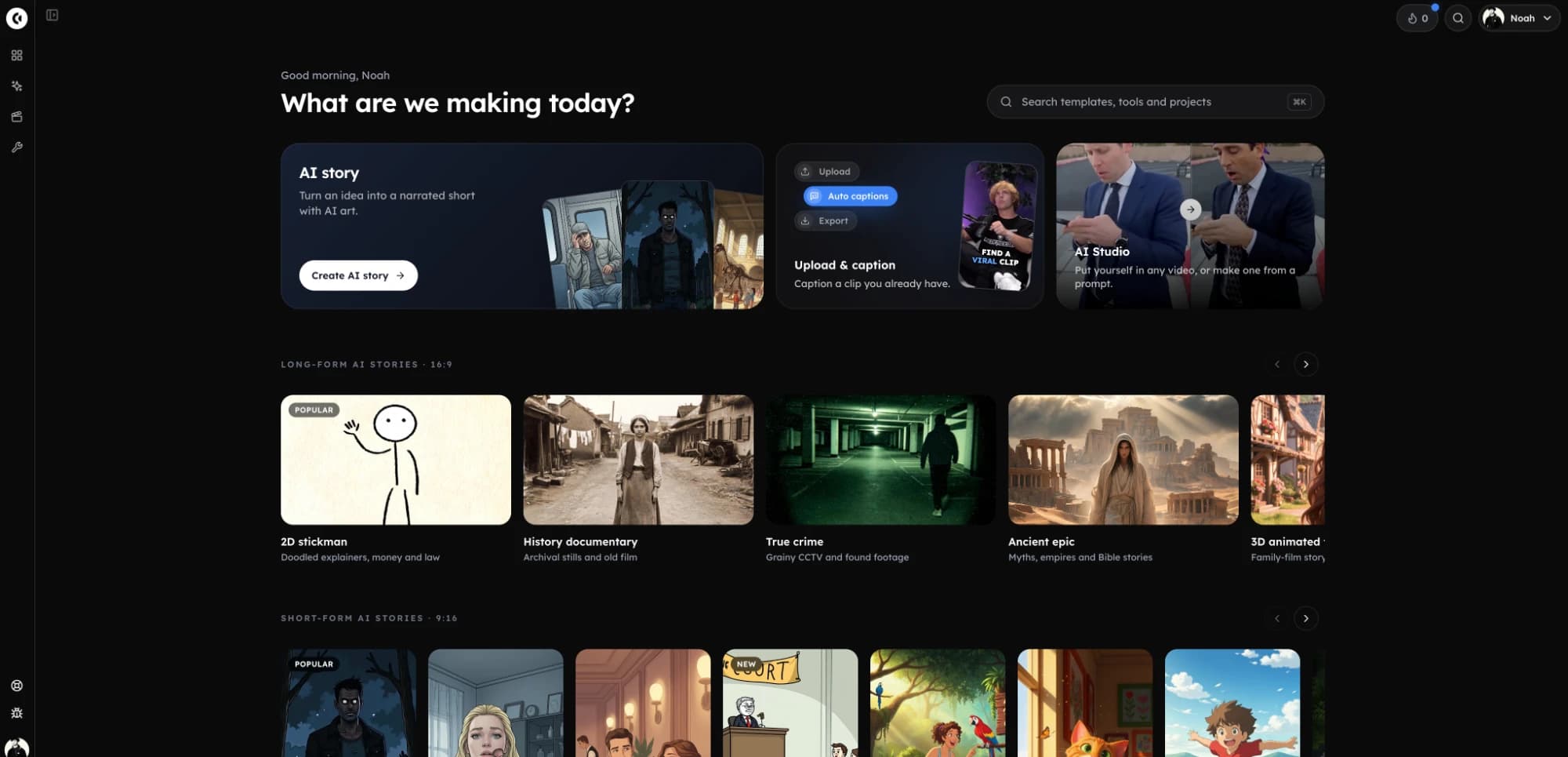
Visual samples of the Cinematic look. These demonstrate the artwork and motion, rather than a finished narrated story.
How to make cinematic AI story videos. Three steps.
- 1
Open the Cinematic template
The look and frame are set for you: long-form 16:9 for YouTube.
- 2
Write or generate the script
Paste your story, or let the AI script writer draft one from a topic, a tone and a length up to 10 minutes.
- 3
Generate, edit and export
Clippie draws every scene, adds a narrator and captions. Change any scene, voice line or caption, then export.
Build a story in this style. Plan the parts that matter.
What people make with it. Cinematic, ready to go.
Video essays
Big ideas with a filmic, serious look.
Modern documentaries
Tech, business and culture stories.
Short films
Narrated fiction with a cinematic grade.
125 AI voices
Pick the narrator that fits the story and regenerate any line.
Captions in 100+ languages
Styled captions that keep muted viewers watching.
Built for long-form
A 16:9 frame and scripts up to 10 minutes for YouTube.
Frequently asked questions.
Which tone pairs best with the Cinematic look?
Cinematic, Dramatic or Suspenseful in the AI script writer, with a deep narrator voice.
How long does it take to make a Cinematic video?
The time depends on the script length, scene count, selected models and revisions. Start with a short draft, review the scenes and voiceover, then animate selected moments if needed. Allow time for a final caption and continuity check.
Does selecting a style animate every scene?
The look controls the scene artwork. AI scene animation is a separate optional step that uses credits. Review the pictures first, then animate the actions that help tell the story.
Do styles cost extra?
The 9:16 Clippie styles are included in your plan. The 16:9 long-form looks are drawn by AI image models and use AI credits per scene, shown before you generate. Exporting uses the export minutes in your plan.
Keep exploring