Stickman psychology videos, one study at a time.
Stick figures suit psychology because the subject is ordinary people doing ordinary things. Pick one behaviour or one experiment, and Clippie writes the script, draws it scene by scene and narrates it. You check the research.
Short answer
A stickman psychology video explains one behaviour, bias or experiment with stick figures: what people were asked to do, what happened, and what it shows. In Clippie, open the Doodle explainer template, choose the Psychology theme and the Educational tone in the AI writer, or paste your own script, and it draws the script scene by scene with a narrator and captions. Build each video on a source you have read, and say what the study found without turning it into advice about the viewer.
The worked script below is built from one source, the University of Illinois News Bureau’s article of 12 July 2010, read on 20 November 2026.
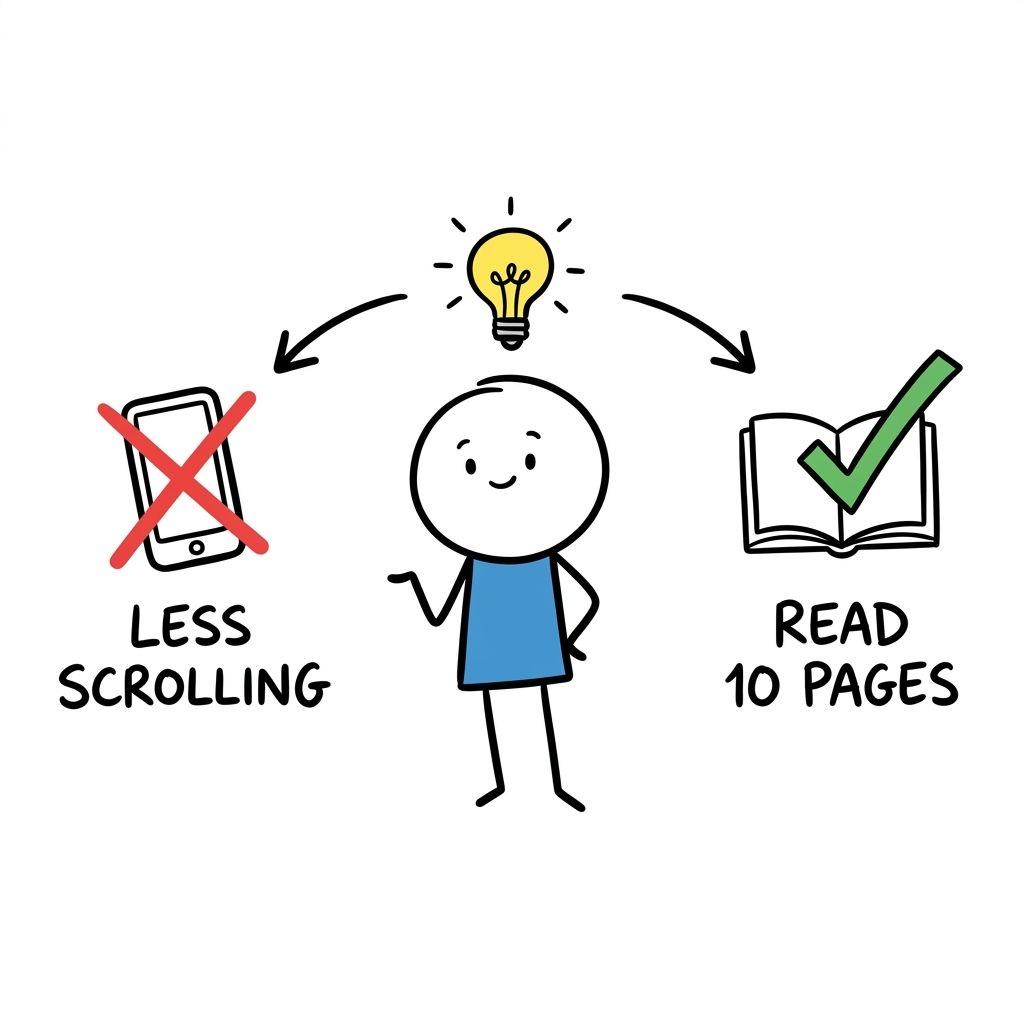
A Doodle explainer scene and a Whiteboard stickman scene, both drawn in Clippie. They show the two looks used for psychology and are not from a finished psychology video.
How to make a stickman psychology video. Four steps.
- 1
Pick one study or one behaviour
A single experiment, bias or habit with a clear before and after. “The invisible gorilla test” is a video. “How the mind works” is a shelf of books.
- 2
Read the source first
Find the paper, the researchers’ own page or their university’s write-up, and note who ran it, what people did and the result. Those notes are the skeleton of the script.
- 3
Draft with the Psychology theme
In the AI writer pick the Psychology theme, the Educational tone and the Explain why format, and put the key facts in your idea. Then correct the draft against the source.
- 4
Draw, narrate and export
Clippie splits the script into scenes and draws each one. Redraw any that show the setup wrong, pick a calm narrator, and export in 16:9 or 9:16.
Five kinds of psychology video. And what each one needs first.
| Kind | Example title | What you need before scripting | What to avoid |
|---|---|---|---|
| One experiment, retold | “The gorilla half the viewers never saw” | The study, or the researchers’ own account of it | Changing the numbers or the setup |
| One bias in daily life | “Why does a deadline feel far away until it is tomorrow?” | A named effect and where it was described | Presenting a made-up example as a finding |
| A habit and how it forms | “Why do I reach for my phone without deciding to?” | A source for each claim about the brain | Turning it into a diagnosis |
| A myth, checked | “Do we really use only 10 percent of our brains?” | What the evidence says, and who says it | Swapping one myth for another |
| An open question | “Why do we dream?” | The main explanations and who proposed them | Announcing a winner the research has not |
The example titles are prompts for your own research, not findings. The first one is the worked script below.
A worked script: the invisible gorilla. Every line, its picture and its source.
This script was written for this page from one source: the University of Illinois News Bureau’s account of Daniel Simons’s research, published on 12 July 2010 and read on 20 November 2026. It runs about a minute.
The script, with a picture for every line
Each item is one narration line and the picture planned for it. To get these pictures, paste each one on the line after its narration in square brackets, as [Image: …], and Clippie draws it as written for that line. Without them, Clippie plans the pictures from the words and may give two short lines one picture.
- “Two groups of people pass basketballs back and forth. Some wear white. Some wear black.”: Stick figures in white shirts and black shirts pass basketballs in a plain room.
- “Your job is to count the passes made by the people in white, and ignore the ones in black.”: A stickman viewer sits in front of a screen, counting on his fingers.
- “Then a person in a gorilla suit walks into the game.”: A cartoon gorilla steps in between the players, who keep passing.
- “It faces the camera, pounds its chest and strolls out of view.”: The gorilla in the middle of the frame, fists on its chest.
- “It is on screen for nearly nine seconds.”: A stopwatch beside the gorilla.
- “Half of the people who watched did not see it.”: Two stickman viewers side by side: one with wide eyes, one still counting.
- “Psychologists call this inattentional blindness: failing to see something obvious while your attention is on something else.”: A stickman stares hard at a ball while the gorilla waves right beside him.
- “The test was run in the late 1990s by Daniel Simons and Christopher Chabris.”: Two stick figures stand beside a video camera on a tripod.
- “Later, Simons made a similar video, with the same rules, a gorilla and other unexpected events.”: The same game again, with a question mark hanging over the background.
- “Viewers who knew the original all spotted the gorilla. Only 17 percent of them noticed the other surprises.”: A proud stickman points at the gorilla and does not look behind him.
- “Knowing that surprises happen does not stop you missing the next one.”: The stickman goes back to counting as a second gorilla tiptoes past.
Every name and number in it comes from that one article, and the script says nothing the article does not. It does not say how many players there were, because the article does not, and it does not tell viewers they are unobservant. The script has not been made into a video on this page. If you add a detail, find its source first.
Say what the study found, and no more
The quickest way to lose a psychology audience is to stretch a finding. “Half of the viewers missed the gorilla” is a result. “You miss half of what happens around you” is not what the experiment measured. Keep the claim the size of the study.
A stick figure story is an illustration. When you invent a character to show a bias in daily life, say that it is an example, and keep it apart from what researchers observed. Avoid “signs you are…” titles that diagnose the viewer. A one-minute cartoon cannot assess anyone.
Which look, which voice
Doodle explainer is the usual choice: a plain paper background, one clear subject, and room for a prop such as a ball or a stopwatch. Whiteboard stickman adds short hand-lettered labels in the picture, which helps when a scene compares two groups. Classic stickman has bigger expressions and suits stories about embarrassment, arguments and other social moments.
For the narrator, pick one of the 125 voices and a Calm or Warm delivery. Let the pictures change with the lines, and animate only a moment that needs motion, such as the gorilla walking in.
What YouTube’s policies say about this kind of channel
YouTube’s channel monetization policies, read on 20 November 2026, describe inauthentic content as content that looks like it is made with a template, or that may feel repetitive after several videos in a row from one channel. Their examples of what cannot be monetized include AI-generated content made with generic or unoriginal templates, without the creator’s own insight or perspective. Their examples of what can include a series that follows a set of characters across episodes, where each video has its own storyline, focus or concept.
YouTube’s channel monetization policies, read on 20 November 2026, have a section on AI personas and sensitive topics. It covers channels that use AI-generated personas to deliver information on sensitive topics, including content that presents itself as a human expert giving advice on health, legal issues, finances or politics, and says channels uploading it will not be allowed to monetize. One of its examples is an AI “doctor” providing medical diagnoses, health advice or wellness remedies. This page cannot tell you how YouTube would judge a given psychology channel. Read the policy before you plan one. Explain research, name your sources, and do not present your narrator as a therapist or a doctor.
What the editor gives a psychology channel. From the first line to the export.
A Psychology theme
One of the AI writer’s themes steers a draft toward behaviour and the mind. You still check it against the source.
The Explain why format
A script built around one question and its answer, from 30 seconds to 10 minutes.
One recurring stickman
Save a character once and bring them into every video. A story takes up to 8 characters.
Scene instructions
Rules for the pictures, such as “the players wear white or black shirts in every scene”.
Calm deliveries
Set a voice to Calm, Warm or Serious for a long explanation.
Captions
Word-by-word captions in 103 languages.
Frequently asked questions.
What is a stickman psychology video?
A narrated video that explains one behaviour, bias or experiment with stick figures. The simple drawing keeps the focus on what people did and why it is surprising.
How do I make a stickman psychology video with AI?
Choose one study, read a reliable source and note the facts. In Clippie, open the Doodle explainer template, draft with the Psychology theme or paste your own script, check it against the source, then generate the scenes, narration and captions and export.
Where does the gorilla script on this page come from?
From the University of Illinois News Bureau’s article of 12 July 2010 about Daniel Simons’s research, read on 20 November 2026. It was written for this page as an example. Clippie has no connection to the university or the researchers, and the article is cited for its facts only.
How is this different from the psychology facts video maker page?
That page is about one-fact Shorts in several looks. This one is about stickman explainers built on a single study, with a full worked script and its source.
Can the AI writer invent studies?
It can state things confidently that are wrong or unsourced. Treat a draft as wording, not evidence. Keep only claims you have found in a source, and cut any researcher’s name, year or percentage you cannot confirm.
How long should a stickman psychology video be?
One experiment fits about a minute in 9:16, or 5 to 10 minutes on YouTube if you cover the setup, the result, later studies and the limits. The AI writer drafts from 30 seconds to 10 minutes.
How much does a stickman video cost to make in Clippie?
Stickman videos are included in every Clippie plan, from $19.99 a month. Scene pictures are included in all seven stickman looks. Narration uses voice minutes and the export uses export minutes, one of each per minute of video. Monthly allowances are Lite: 3 hours of export and 1 hour of AI voice; Creator: 10 hours of export and 4 hours of AI voice; Pro: 16 hours of export and 8 hours 20 minutes of AI voice. Animating scenes is optional and uses AI credits, about 7 credits for a 5-second clip at the default settings.