Stickman motivational videos, that show it and do not preach it.
A quote over a sunset is easy to scroll past. A small stick figure who keeps going is harder to ignore. Write a short parable or one habit, and Clippie draws it, narrates it and captions it.
Short answer
A stickman motivational video makes its point with a story: a simple character does one thing, usually for a long time, and the ending shows why it mattered. In Clippie, open a stickman template such as Painted stickman, write the story or have the AI writer draft it with the Inspirational tone, and it draws the story scene by scene with a narrator and word-by-word captions. Keep it to one character and one idea, and let the last picture carry the message.
The lighthouse sample on this page is a finished Clippie video. Its narration is printed below as its captions show it.
Left: a finished 40-second Painted stickman story, made in Clippie. Tap it to hear the narration. Middle: a single Painted stickman scene. Right: one Whiteboard stickman scene, the look for habit explainers.
How to make a stickman motivational video. Four steps.
- 1
Choose one idea you can show
Patience, showing up, starting small. If you cannot picture a person doing it, it is a slogan and not yet a story.
- 2
Give it to one character
A keeper, a baker, a runner. One person with one job, repeated, so the viewer knows them in two lines.
- 3
Write the turn
Something tests the habit: the town laughs, the power fails, nobody comes. Then one event shows what the habit was for. Draft it yourself or use the writer’s Inspirational tone.
- 4
Draw, narrate and export
Clippie draws the story scene by scene. Pick a warm, unhurried narrator, keep the captions large, and export in 9:16 or 16:9.
A real motivational video, taken apart. The script, the pictures and why it works.
The lighthouse sample at the top is a finished Clippie video in the Painted stickman look. This is its narration as its captions show it, with the picture on screen for each part. The story is fiction.
The script of the sample, line by line
Six pictures in about 40 seconds.
- “Every night for 40 years, the old man climbed the lighthouse and lit the lamp. Even after the ship stopped coming.”: The keeper, a stickman in a navy coat and a grey beanie, stands at the lit lamp at the top of a lighthouse above a rough sea.
- “The town called him a fool. ‘Nobody needs a lighthouse anymore,’ they said. ‘We have GPS.’”: On a wet stone causeway, townspeople point at him. The lighthouse stands behind them.
- “Then one winter, a storm knocked out the power along the whole coast.”: He stands on the rocks under black clouds. The lighthouse behind him is dark.
- “Out in the black water, a little fishing boat was lost, its screens dead, its radio silent.”: A small fishing boat in dark water, with a beam from the lighthouse crossing the cliffs above it.
- “The only light anyone could see was his. The boat followed it all the way home.”: The boat rides the waves toward the beam.
- “The next morning, the whole town walked up the hill to say thank you. He just smiled and lit the lamp again that night.”: In daylight, a crowd of townspeople climbs the hill. He waves from beside the lighthouse.
The story never says “be consistent”. It shows a man doing the same small thing for forty years, lets other people doubt it, and then makes the habit matter once. The viewer supplies the lesson, which is why it lands.
The shape behind it, to reuse
The lighthouse story has five parts. Fill them in for your own before you write a line.
- The habit: one person, one repeated action and a number, such as every night for forty years.
- The doubt: someone says it is pointless, and has a reasonable argument.
- The test: one event outside the character’s control: a storm, a closure, a long winter.
- The payoff: the habit is the only thing that works, seen through someone else’s eyes.
- The return: the character goes back to the habit, with no speech.
Write it in the past tense and the third person, keep it under a minute in 9:16, and cut any sentence that explains the meaning.
The other kind: one habit, explained
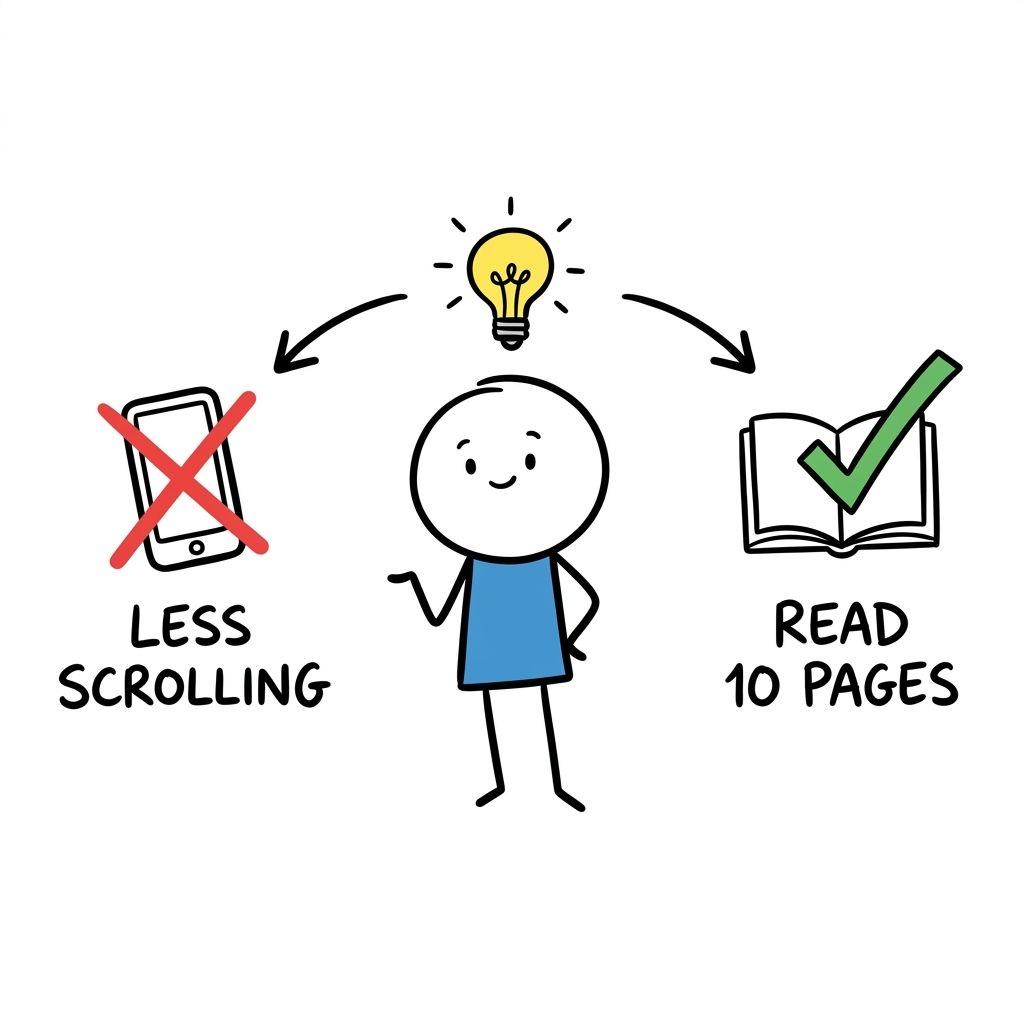
Not every motivational video is a story. The second common kind explains one habit with a do and a do not: a phone face down, a book open, ten pages before bed. Whiteboard stickman is the look for this, because it draws short labels, ticks and crosses in the picture. Pick it in the Stickman group of the look gallery.
Keep these honest. A habit video is your experience or a summary of a source, not a promise. Leave out claims about what a habit does to the brain or the body unless you can say where they come from, and do not put a famous name on a quote you have not traced to a book, a speech or a letter.
Voice, pace and the last picture
Choose a Warm or Calm delivery and let the narrator take their time. Add [pause] before the turn, so the storm arrives in a silence. Animate only the moment that moves, such as the boat on the waves, and let the final picture hold.
Made for short stories with a point. What the editor gives you.
An Inspirational tone
One of the AI writer’s tones. Use it for a first draft, then cut the lines that explain the lesson.
Painted stickman
Stickman heads on clothed bodies in warm, painterly settings, in 9:16 and 16:9.
Whiteboard stickman
A white page with labels, ticks and crosses, for habit explainers.
Warm and Calm deliveries
Set on any of the 125 AI voices.
One character, kept
Save the character with a name and a description, and bring them into the script with @.
Captions that read on a phone
Word-by-word captions in 17 styles.
Frequently asked questions.
What is a stickman motivational video?
A short narrated story or habit explainer drawn with stick figures. The story kind follows one character through a small act that turns out to matter. The habit kind shows one change with a do and a do not.
Which stickman look suits motivational videos?
Painted stickman for parables, because it draws clothes, weather and warm light. Whiteboard stickman for habit explainers, because it draws labels, ticks and crosses. Doodle explainer sits between the two.
Did Clippie make the lighthouse video on this page?
Yes. It is a finished video of about 40 seconds made in Clippie with the Painted stickman look, an AI narrator and word-by-word captions. The script above is its narration as its captions show it. The story is fiction.
Can I use famous quotes?
Check each one first. Quotes are often passed around with the wrong name attached. Trace a quote to a book, a speech or a letter before you put a name on it, or write your own line.
How long should a stickman motivational video be?
A parable fits 30 to 60 seconds, and the lighthouse sample is about 40. Longer pieces suit 16:9, when they follow one person’s story from start to finish.
How is this different from the motivational video maker page?
That page is about a spoken message over cinematic scenes. This one is about stick figure stories and habit explainers, with a finished sample and its script.
How much does a stickman video cost to make in Clippie?
Stickman videos are included in every Clippie plan, from $19.99 a month. Scene pictures are included in all seven stickman looks. Narration uses voice minutes and the export uses export minutes, one of each per minute of video. Monthly allowances are Lite: 3 hours of export and 1 hour of AI voice; Creator: 10 hours of export and 4 hours of AI voice; Pro: 16 hours of export and 8 hours 20 minutes of AI voice. Animating scenes is optional and uses AI credits, about 7 credits for a 5-second clip at the default settings.