
How to Make Faceless Finance Videos With AI in 2026 (The Highest-CPM Niche Guide)
Learn how to make faceless finance videos with AI in 2026, the highest-CPM niche guide covering formats, scripting, production with Clippie AI, and how to monetise beyond AdSense.

Searching for the most profitable niche to build a faceless YouTube channel in 2026?
The answer is not gaming. It is not lifestyle. It is not general motivation.
It is personal finance, and it is not even close.
Finance channels earn 3–5x more per thousand views than the average YouTube channel. The audience is actively making financial decisions, advertisers compete aggressively for their attention, and the content formats are perfectly suited to faceless AI production. You never need to appear on camera. You never need to record your own voice. You never need a studio setup.
This guide is the complete blueprint for building a faceless finance YouTube channel with AI in 2026, from niche selection and scripting to full production with Clippie AI and scaling to a real monthly income.
Executive Summary
This guide is for creators who want to build a profitable faceless YouTube channel in the highest-CPM niche available in 2026. It covers why finance generates the most advertiser revenue per view, the specific video formats that perform best, how to research and script high-CPM topics using AI, how to produce complete finance videos inside Clippie AI without a camera or studio, the full range of monetisation strategies beyond AdSense, and how to scale to consistent double-digit monthly output. Whether you are starting from zero or optimising an existing channel, this is the complete operational guide.
Table of Contents
Why Finance Is the Most Profitable Niche for Faceless AI Channels in 2026
The Finance Video Formats That Generate the Most Views and Revenue
How to Research and Script High-CPM Finance Topics With AI
How to Produce Finance Videos Entirely With Clippie AI (No Camera, No Studio)
How to Monetise a Faceless Finance Channel Beyond AdSense
How to Scale Your Finance Channel to 10+ Videos Per Month
Frequently Asked Questions

1. Why Finance Is the Most Profitable Niche for Faceless AI Channels in 2026
Not all YouTube niches pay equally. The CPM, cost per thousand ad impressions, determines how much revenue your channel generates per view. In finance, CPMs are among the highest on the entire platform.
The CPM Advantage of Finance Content
Finance content consistently commands the highest advertiser rates on YouTube because the audience is actively making purchasing decisions about financial products.
Realistic CPM ranges by niche in 2026:
Personal finance and investing: $8–$25 CPM
Business and entrepreneurship: $7–$20 CPM
Technology and AI tools: $6–$18 CPM
Health and wellness: $5–$15 CPM
Gaming entertainment: $1–$5 CPM
General lifestyle: $1–$4 CPM
A finance channel generating 100,000 monthly views earns roughly $800–$2,500 per month from AdSense alone. A gaming channel with the same views earns $100–$500. The same production effort, same posting frequency, same video length, same workflow, generates 3–5x more income simply because of niche selection.
Why finance advertisers pay so much:
Financial products carry high lifetime customer value, a single referred credit card or investment account is worth hundreds to thousands of dollars to the advertiser
Finance audiences have demonstrated financial decision-making behaviour, advertisers pay a premium to reach people who act on financial content
Competition among financial advertisers drives up CPM rates, banks, investing platforms, fintech apps, and insurance companies all compete for the same audience
Why Finance Is Perfectly Suited to Faceless AI Production
Finance content does not require a presenter on camera. In fact, faceless formats often outperform face-on-camera finance content for a specific reason: the audience trusts the information more than the personality delivering it.
Why faceless works in finance:
Finance viewers search for answers to specific questions, they are not looking for a personality, they are looking for clarity
Explainer, list, and news commentary formats, the dominant finance video types, are entirely compatible with AI voiceover over text, charts, and visuals
Faceless production removes the credibility risk of being a visible "finance influencer", legal and regulatory considerations make anonymous educational content strategically safer
AI image generation and VEO3 footage replace the need for expensive stock video libraries that finance creators traditionally depended on
The production equation: A faceless finance creator using Clippie AI can produce a complete 8–12 minute video, script, voiceover, visuals, captions, and export, in under 60 minutes. A traditional face-on-camera finance creator needs recording time, lighting setup, editing, and post-production. The faceless creator produces 3–5x more content for the same weekly time investment.

The Competitive Landscape in Finance in 2026
Finance is not a saturated niche, it is a deep niche with infinite sub-topics and audiences at every stage of their financial journey.
Audiences that currently underserved in faceless finance content:
Gen Z entering the workforce and making first investment decisions
Millennials navigating homeownership, family finances, and retirement planning
Immigrants learning about financial systems in a new country
Small business owners managing business finances and tax strategy
Side hustlers monetising their income and managing self-employment taxes
Each of these audiences represents a distinct sub-niche with its own keyword ecosystem, its own affiliate product opportunities, and its own CPM profile. A faceless finance channel does not need to serve all of them, it needs to own one.

2. The Finance Video Formats That Generate the Most Views and Revenue
Finance content performs across multiple video formats, but not all formats perform equally for views, retention, and monetisation. Understanding which formats to prioritise determines how efficiently your channel grows.
Format 1: Explainer Videos (Highest Watch Time, Highest CPM)
Explainer videos answer a specific financial question clearly and completely.
Examples:
"What Is Dollar Cost Averaging? And Does It Actually Work?"
"The Difference Between a Roth IRA and Traditional IRA (Explained Simply)"
"How Compound Interest Works? The Math That Makes Millionaires"
"What Happens to Your Debt When You Die?"
Why these dominate finance:
Evergreen search traffic, these queries are searched consistently year-round, not just when a trend spikes
High average view duration, viewers watching to understand a concept stay longer than viewers watching for entertainment
Strong save rate, viewers bookmark finance explainers to reference later, which is a powerful algorithmic signal
Premium advertiser targeting, financial product advertisers specifically target viewers of educational finance content
Production note: Explainer videos work best at 8–12 minutes on YouTube. This length maximises ad placements per video while keeping the topic focused enough to maintain retention.
Format 2: Listicle Finance Videos (Highest Click-Through Rate)
List-format finance videos consistently generate the highest CTR of any finance format because the title clearly promises a specific, countable outcome.
Examples:
"7 Money Mistakes People Make in Their 20s (That Cost Them Thousands)"
"5 High-Yield Savings Accounts Paying the Most Interest in 2026"
"10 Passive Income Streams That Actually Work for Regular People"
"3 Investing Apps That Beginners Are Using to Build Wealth in 2026"
Why these perform:
Clear value promise in the title, viewers know exactly what they are getting before clicking
Structured format aids retention, viewers mentally track progress through the list and stay to see all items
Strong affiliate conversion, list videos comparing financial products are the highest-converting format for affiliate links
Shorts repurposing, individual list items become standalone 30–60 second Shorts, multiplying output from a single script
Format 3: News and Trend Commentary (Highest Short-Term Traffic)
Finance news commentary captures search volume during market events, policy changes, and economic developments.
Examples:
"What the 2026 Interest Rate Decision Means for Your Mortgage"
"Stock Market Just Dropped, Here's What to Do (And What Not to Do)"
"New Tax Law Explained, How It Affects Your 2026 Return"
"This Investing App Just Changed Its Rules, What You Need to Know"
Why these drive growth:
Trending topics generate algorithmic push in the first 24–72 hours, high short-term impressions
First-mover advantage is significant, the creator who publishes within 24 hours of a news event captures the majority of that search traffic
These videos attract new viewers who are not yet subscribers, high audience acquisition value
News commentary establishes topical authority, which improves YouTube's confidence in recommending your channel for related searches
Production note: News commentary videos require fast production. This is where Clippie AI's integrated workflow — script to exported video in under 45 minutes, provides a direct competitive advantage.
Format 4: Comparison and Review Videos (Highest Affiliate Conversion)
Comparison videos target buyers who are actively evaluating financial products.
Examples:
"Robinhood vs Fidelity vs Schwab, Which Is Actually Better for Beginners in 2026?"
"Best High-Interest Savings Accounts in 2026, Compared"
"YNAB vs Mint vs Every Dollar, The Honest Budgeting App Comparison"
"Is [Specific Investment Product] Actually Worth It? Here's the Data"
Why these monetise best:
The audience is in buying mode, they are comparing products because they intend to choose one
Affiliate links in the description match exactly what the viewer is researching
A well-structured comparison video with a clear recommendation drives affiliate clicks consistently for 12–24 months after publication
Finance product affiliates pay some of the highest commissions available, $50–$200 per referral for investment accounts, $50–$150 for credit cards
Format 5: "How to" Tutorial Videos (Strongest Search Traffic)
Tutorial videos target specific financial tasks that people need to complete.
Examples:
"How to Open a Roth IRA in 2026 (Step-by-Step for Beginners)"
"How to File Your Taxes as a Freelancer in 2026"
"How to Build a $1,000 Emergency Fund in 90 Days"
"How to Negotiate a Higher Salary (Scripts That Actually Work)"
Why these compound:
Tutorial queries are among the highest-searched finance topics on YouTube and Google
Viewers with a specific task to complete watch tutorials with full attention, high average view duration
Tutorial content ranks in both YouTube search and Google search simultaneously, double organic discovery
"How to" titles have naturally high CTR, they promise a direct, actionable outcome

3. How to Research and Script High-CPM Finance Topics With AI
The difference between a finance video that gets 500 views and one that gets 500,000 views is almost always the topic selection and scripting, not the production quality. Here is the research and scripting system that consistently surfaces high-CPM, high-search-volume finance topics.
Research Method 1: YouTube Autocomplete Mining
YouTube's autocomplete is a direct window into what people are actively searching for in your niche.
How to use it:
Type "how to [finance keyword]" into YouTube search and note every autocomplete suggestion
Type "best [finance product]" and note suggestions
Type "[finance topic] for beginners" and note suggestions
Type "[finance topic] 2026" and note suggestions
Each autocomplete suggestion is a validated search query with real volume. These are not guesses, they are data points from YouTube's own search behaviour.
What to look for:
Suggestions that appear across multiple keyword variations, these indicate sustained, broad demand
Suggestions with fewer than 50 high-quality results in YouTube search, these indicate lower competition
Suggestions that include buying-intent words ("best," "how to open," "which is better"), these indicate high affiliate conversion potential
Research Method 2: Google Trends for Timing
Google Trends reveals whether a finance topic is rising, stable, or declining, and whether there are seasonal spikes you can plan content around.
High-value seasonal finance topics:
Tax filing: peaks January–April every year
ISA and pension contributions: peaks February–April in the UK, November–December in the US
End-of-year investment reviews: peaks November–December
New year financial resolutions: peaks December–January
Publishing content in advance of these peaks, 2–3 weeks before the search volume spike, positions your video to capture the rising traffic curve rather than the tail.
Research Method 3: Reddit and Community Mining
The comments sections of finance subreddits (r/personalfinance, r/financialindependence, r/investing) contain the exact questions real people are asking about money right now.
What to look for:
Questions that appear repeatedly across multiple threads, these indicate persistent audience confusion that a video can resolve
Questions that existing creators have not answered well, browse YouTube for the query and assess whether the top results actually answer it clearly
Debates and disagreements between community members, these make excellent "here is the definitive answer" explainer video topics

Scripting Finance Videos With AI
Once a topic is validated, use ChatGPT or Claude to generate a first-draft script. The key is the prompt structure, a vague prompt produces a generic script; a specific prompt produces something you can actually use.
The finance script prompt template:
"Write a faceless YouTube script about [topic]. The audience is [specific audience, e.g., 'US-based 25-35 year olds who are employed but have never invested before']. The video should be 8–10 minutes long (approximately 1,200–1,500 words). Open with a hook that challenges a common assumption about this topic. Include 4–5 clearly numbered sections. Use short sentences (under 15 words) optimised for AI voiceover delivery. End with a specific CTA asking viewers to comment with their biggest question about [topic]. Tone: conversational, authoritative, not condescending."
Essential finance script rules:
Never give specific financial advice, frame content as education, not recommendation
Always include a disclaimer: "This video is for educational purposes only and is not financial advice"
Cite data sources in the script where relevant, viewers trust finance content that references real numbers
Use analogies liberally, financial concepts become significantly more accessible when compared to everyday situations

4. How to Produce Finance Videos Entirely With Clippie AI (No Camera, No Studio)
Finance videos have one significant visual challenge: the content is inherently abstract. Unlike cooking or fitness content, finance has nothing to show on camera. This is exactly why AI production tools are so well-suited to the finance niche, and why faceless finance channels are growing faster than face-on-camera alternatives.
Step 1: Voiceover Generation
Paste your completed script into Clippie AI.
Voice selection for finance content:
Finance content benefits from a voice that reads as authoritative, measured, and trustworthy. From Clippie AI's 50+ voice library:
Choose a voice with a mid-range to lower pitch, higher-pitched voices read as less authoritative on financial topics
Select a pace that is deliberate but not slow, finance viewers want clarity, not urgency
Test the voice on your first 300 words before committing, listen specifically for how it handles numbers, percentages, and financial terminology
Custom voice cloning for finance channels:
For creators building a long-term finance channel, custom voice cloning is the recommended approach. A cloned voice builds the consistent audio identity that converts casual viewers into subscribers over time. The Creator plan (10 custom voices at $34.99/month) supports this from early in the channel's lifecycle.
Generate full narration, for a 1,200-word script, generation takes approximately 60–90 seconds.
Step 2: AI Image and Visual Generation
Finance videos need visuals that reinforce the information being delivered, not generic stock footage, which looks cheap and undermines credibility.
Visual types that work for finance content:
Title cards, bold, clean text on a dark or neutral background for section transitions ("Step 1: Open Your Brokerage Account")
Concept visualisation images, abstract representations of financial concepts (compound interest shown as a growing tree, diversification shown as multiple streams flowing into one river)
Data-driven scene images, charts, graphs, and number visualisations to accompany statistical claims
Scenario images, visual representations of the relatable situations described in the script (a person looking at bills, a couple reviewing finances, a phone showing an investment app)
Using Clippie AI's image generation for finance:
Generate 5–8 images per 8-minute video, one for the title card, one per major section, and one for the conclusion or CTA segment. Prompt specificity is important: "a clean flat-design illustration of a person reviewing a growing investment portfolio on a laptop, neutral background, finance channel aesthetic" produces more usable output than "person and money."
Image capacity by plan:
Lite: 100 images/month
Creator: 500 images/month
Pro: 1,000 images/month
For a finance channel producing 10 videos per month with 8 images each, the Creator plan's 500-image capacity covers this comfortably.
Step 3: Auto-Captioning
Finance content has a significant proportion of viewers watching in contexts where audio is off or low, commuting, in shared spaces, during work hours.
Clippie AI auto-syncs captions to the voiceover:
Select English (or the language of your target audience from 102+ available)
Review for accuracy on financial terminology, compound terms like "401(k)," "DRIP investing," or "dollar cost averaging" occasionally require manual correction
Confirm caption timing is aligned with the voiceover rhythm before proceeding to export
Captions improve average view duration on finance content by keeping sound-off viewers engaged long enough to activate audio. This has a direct positive impact on the metric YouTube uses most heavily to distribute finance content.
Step 4: Export
Export settings for finance content on YouTube:
Format: MP4
Aspect ratio: 16:9 for long-form, 9:16 for Shorts cross-posts
Resolution: 1080p minimum
Frame rate: 30fps
For a channel producing both long-form and Shorts, export both versions from the same production session, the long-form as the primary video and a 45–60 second clip from the strongest section as a Short.
Export capacity by plan:
Lite: 30 mins/month (~3–5 finance videos per month)
Creator: 120 mins/month (~8–12 finance videos per month)
Pro: 250 mins/month (~15–20 finance videos per month)
For a finance channel targeting 10+ videos per month, the Creator plan is the right entry point.
💡 For the complete step-by-step production workflow that this finance process sits inside, read our guide on the ultimate faceless content workflow from idea to viral video

5. How to Monetise a Faceless Finance Channel Beyond AdSense
AdSense is the starting point for finance channel revenue, not the ceiling. The creators earning the most from faceless finance channels in 2026 run 4–6 income streams simultaneously. Here is the complete monetisation stack.
Monetisation Stream 1: YouTube AdSense
AdSense becomes active once the channel reaches YouTube Partner Programme eligibility:
1,000 subscribers
4,000 watch hours (long-form) OR 10 million Shorts views in 90 days
Maximising AdSense on finance content:
Produce videos of 8–12 minutes minimum, longer videos support more mid-roll ad placements
Maintain completion rates above 40%, YouTube distributes finance content with strong retention more aggressively, increasing impressions
Target US, UK, Canadian, and Australian audiences where possible, these markets pay the highest CPMs for finance content
Use finance keywords in titles, descriptions, and spoken content, YouTube's content classification system uses these signals to match financial advertisers to your videos
Realistic AdSense projections for a finance channel:
50,000 monthly views: $400–$1,250/month
200,000 monthly views: $1,600–$5,000/month
500,000 monthly views: $4,000–$12,500/month
Monetisation Stream 2: Affiliate Marketing (Highest Margin)
Finance affiliate marketing is the most lucrative income stream for faceless channels in this niche. Commissions are significantly higher than in any other content category.
High-value finance affiliate programmes:
Investment and brokerage platforms: $50–$200 per new account opened
Credit cards and financial products: $50–$150 per approved application
Budgeting and personal finance apps: $20–$50 per subscription
Tax filing software: $20–$60 per completed return
Robo-advisors and wealth management platforms: $50–$150 per funded account
Affiliate placement strategy:
Place affiliate links in the first 2–3 lines of every video description, above the "show more" fold
Include a verbal mention in the video: "I've linked the best options in the description below"
Create dedicated comparison videos for your highest-converting affiliate products, these generate affiliate income for 12–24 months after publication
Use a link tracking tool to monitor which videos and which products generate the most clicks
Disclosure requirements: Always disclose affiliate relationships clearly in the video description and, where relevant, verbally in the video itself. This is both a legal requirement in most jurisdictions and a trust-building practice that improves long-term conversion rates.
Monetisation Stream 3: Digital Products
Digital products have zero marginal cost after creation and generate revenue indefinitely.
Highest-converting digital products for finance channels:
Budget spreadsheet templates: $9–$27, high volume, low friction to purchase
Debt payoff calculators and trackers: $9–$19, solves a specific, urgent problem
Investment tracking dashboards (Notion or Google Sheets): $19–$47
Financial goal-setting workbooks: $19–$37
"Complete beginner's guide to investing" ebooks or mini-courses: $27–$97
How to launch a digital product on a finance channel:
Create the product before you have a large audience, early products generate data on what converts
Reference the product naturally in relevant videos: "I built a budget template that makes this process automatic, it's linked in the description"
Price the entry-level product at $9–$19 to minimise purchase friction for new audiences
Use a simple Gumroad or Stan Store page, no complex sales funnel required at the early stage
Monetisation Stream 4: Brand Sponsorships
Finance channels attract some of the highest-paying brand sponsorships available to YouTube creators.
When sponsorships become accessible:
10,000–25,000 subscribers: micro-sponsorship opportunities ($150–$600 per integration)
25,000–100,000 subscribers: mid-tier sponsorships ($500–$3,000 per integration)
100,000+ subscribers: premium sponsorships ($3,000–$15,000 per integration)
Finance brands that actively sponsor creator content:
Fintech apps (budgeting, investing, payments)
Online banks and neobanks
Tax software companies
Financial education platforms and courses
Insurance and protection products
How to attract sponsors proactively:
Maintain a simple media kit with channel statistics, audience demographics, and niche description
Link the media kit in the YouTube channel About section
Register on creator marketplace platforms, many finance brands actively recruit creators in this niche
Pitch directly via email to brands whose products align with your content, personalised pitches from relevant creators are more effective than marketplace listings
Monetisation Stream 5: Email List and Community
An email list is the only audience asset that a creator fully owns and that platforms cannot algorithmically limit.
How to build an email list from a finance channel:
Create a lead magnet directly related to your most popular content: a free budget template, a "10 financial mistakes to avoid" guide, or a savings calculator
Promote the lead magnet in every video description and as a verbal mention in relevant videos
Use a simple email platform (ConvertKit or Beehiiv) to manage the list
How the email list generates additional revenue:
Promote affiliate products to a warm, trust-built audience, email affiliate conversion rates significantly outperform cold traffic
Launch digital products to the list before making them publicly available, early access creates urgency and drives initial sales volume
Develop higher-ticket offers ($97–$497) as the list grows and audience trust deepens

6. How to Scale Your Finance Channel to 10+ Videos Per Month
Consistent output at volume is the operational requirement for compounding growth on a finance channel. Here is the system for reaching and maintaining 10+ videos per month with Clippie AI.
The Finance Content Calendar System
A finance channel never runs out of content. The topic universe is enormous. The challenge is not finding ideas, it is organising them for consistent production.
The monthly content calendar structure:
4 evergreen explainer videos (one per week, these form the stable backbone of the channel)
3 listicle videos (high-CTR format, interspersed throughout the month)
2 comparison or review videos (affiliate-focused, target the highest-commission products)
1 news or trend commentary video (time-sensitive, produced and published within 48 hours of a relevant event)
Total: 10 videos per month
This mix optimises for three outcomes simultaneously: sustained search traffic (evergreen), high CTR and affiliate conversions (listicles and comparisons), and audience acquisition from algorithmic distribution (news commentary).
The Weekly Production Schedule
Monday: Research and ideation (45 minutes)
Pull this week's topics from the content calendar
Run quick YouTube autocomplete checks on each topic to confirm search demand
Check Google Trends for any news or trend commentary opportunities this week
Tuesday: Scripting (2–2.5 hours)
Generate AI first drafts for all 2–3 videos this week using ChatGPT or Claude
Review and edit each script for accuracy, tone, and compliance with finance content guidelines
Add the disclaimer to each script: "This video is for educational purposes only and is not financial advice"
Wednesday: Production batch in Clippie AI (2.5–3 hours)
For each video:
Generate voiceover: 3–5 minutes
Generate scene images and title cards: 5–8 minutes
Review auto-captions: 2–3 minutes
Export in 16:9 for YouTube and 9:16 for Shorts: 5 minutes
Total per video: 15–20 minutes in Clippie AI
Thursday: Caption copy, thumbnails, and scheduling (1.5–2 hours)
Write YouTube titles, descriptions, and tags for each video
Create thumbnails (Canva or AI-generated)
Schedule in YouTube Studio for optimal posting times
Write platform-specific captions for any Shorts cross-posts
Weekly total: 7–8.5 hours for 2–3 complete, published videos
At this pace, 10 videos per month requires approximately 30–35 hours per month, roughly 7–9 hours per week.
Clippie AI Plans: Matched to Finance Channel Scale
Lite: $19.99/month
30 mins video export (~3–5 videos/month)
30 mins AI voice generation
30 mins speech-to-subtitles
100 AI images
1 custom voice
Captions in 102+ languages
50+ AI voices
24/7 support
Best for: Launching the finance channel and validating which formats and topics perform before scaling
Creator: $34.99/month
120 mins video export (~8–12 videos/month)
120 mins AI voice generation
120 mins speech-to-subtitles
500 AI images
10 custom voices
Captions in 102+ languages
50+ AI voices
24/7 support
Best for: A finance channel targeting 10+ videos per month with a consistent posting schedule across YouTube and Shorts
Pro: $69.99/month
250 mins video export (~15–20 videos/month)
250 mins AI voice generation
250 mins speech-to-subtitles
1,000 AI images
30 custom voices
Captions in 102+ languages
50+ AI voices
24/7 support
Best for: A scaled finance channel producing 15+ videos monthly across multiple formats, or a creator running a finance channel alongside other niche channels simultaneously
No free tier is available on Clippie AI.
💡 For the complete system for building a full automated content business around this finance channel, read our guide on how to build a fully automated AI video business in 2026
💡 Start producing your faceless finance channel with Clippie AI today →
Conclusion: Finance Is the Highest-Return Channel Investment Available to a Faceless Creator in 2026
Every hour you invest in a faceless finance channel in 2026 compounds differently than any other niche.
The CPMs are higher. The affiliate commissions are higher. The digital product conversion rates are higher. The sponsorship rates are higher. And because the content is evergreen, a video about compound interest or Roth IRA contribution limits performs for years, not days, the return on each video produced keeps growing long after the upload date.
Clippie AI removes the production barrier that used to make high-volume finance content creation unsustainable for a solo creator. Voiceover, visuals, captions, and export in one integrated platform means the 10+ video monthly output that finance channel growth requires is achievable in under 10 hours per week.
The niche is validated. The tools exist. The audience is actively searching.
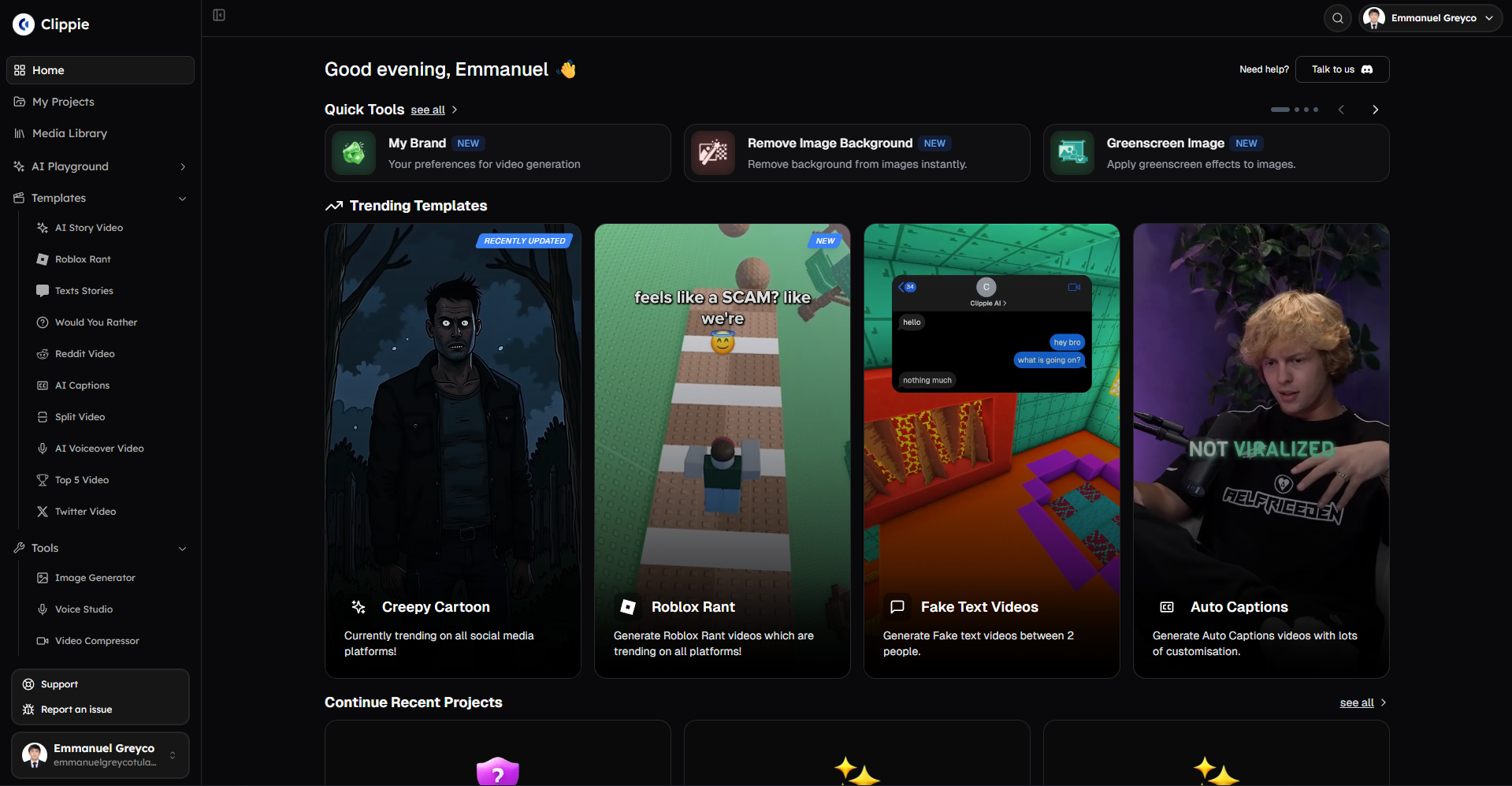
Start building your faceless finance channel with Clippie AI →
7. Frequently Asked Questions
Q1: Do I need to be a financial expert to run a faceless finance YouTube channel?
No, but you need to be accurate and responsible with the information you present. The most successful faceless finance creators are not certified financial planners. They are researchers and communicators who present financial education clearly, cite reputable sources, and always include a disclaimer that their content is for educational purposes and not professional financial advice. Thorough research using reputable sources (government websites, established financial publications, verified data) is sufficient to produce credible finance content. Always have AI-generated scripts reviewed for factual accuracy before publishing.
Q2: What is the realistic monthly income from a faceless finance channel in 2026?
This depends heavily on view count, audience geography, and how many monetisation streams are active. A finance channel generating 100,000 monthly views with AdSense, two active affiliate programmes, and a single digital product can realistically earn $1,500–$4,000 per month. At 500,000 monthly views with the same monetisation stack plus brand sponsorships, monthly income ranges from $8,000–$20,000. These figures assume a US-dominant audience and consistent posting. Most consistently posting finance channels reach their first $1,000 month within 6–9 months of launch.
Q3: How long does it take to produce one finance video with Clippie AI?
With a script already written, production inside Clippie AI, voiceover generation, image creation, auto-captioning, and export, takes 15–20 minutes per video. Including script writing via ChatGPT or Claude (20–30 minutes) and thumbnail creation (15 minutes), the total end-to-end time per finance video is approximately 50–65 minutes. At that pace, 10 videos per month requires roughly 8–11 hours of total production time, achievable within a single focused day per week.
Q4: Which Clippie AI plan is right for a finance channel targeting 10 videos per month?
The Creator plan at $34.99/month is the right fit for this output target. Its 120-minute export capacity supports 8–12 finance videos per month (at an average of 8–12 minutes each), 500 AI images provides sufficient visual content for all videos, and 10 custom voices allows the channel to maintain a distinct voice identity while testing alternatives. The Lite plan at $19.99/month is suitable for the first 1–2 months while validating format and topic performance before committing to higher output.
Q5: Is a disclaimer required on finance YouTube videos?
Yes, and it is strongly recommended for both legal protection and audience trust. The standard disclaimer, "This video is for educational purposes only and is not financial advice. Please consult a qualified financial professional before making any financial decisions", should appear in every finance video description and ideally be stated verbally within the video itself. This protects the creator from liability, signals transparency to the audience, and aligns with YouTube's policies on financial content. Channels that include clear disclaimers also tend to have better audience trust scores, which positively affects retention and subscriber conversion.
Q6: What finance sub-niches have the most room for new faceless channels in 2026?
The most accessible sub-niches for new faceless finance channels entering in 2026 are: Gen Z financial literacy (first jobs, student loans, beginner investing); side hustle and freelance income management (tax, expenses, self-employment finance); international and immigrant finance (understanding financial systems in a new country, multilingual opportunity with Clippie AI's 102+ language caption support); and FIRE movement content (financial independence and early retirement, an evergreen niche with passionate, high-engagement audiences). All four sub-niches have established search demand, strong affiliate ecosystems, and insufficient quality faceless content to meet current viewer appetite.
Read more

How to Create YouTube Shorts Faster Using AI (2026 Workflow)
AI can take a YouTube Short from script to export in one sitting. Here's the six-step workflow, the 2026 specs, and what to keep manual as volume rises.

Faceless YouTube Automation in 2026: What Works, What Fails
A 5-stage faceless YouTube automation pipeline with the human checks that keep it monetized, plus what YouTube's Feb 2027 Partner Program changes mean.

Best Short-Form Video Formats to Monetize in 2026, Ranked
Which short-form video formats actually pay? Seven formats scored on payout route, policy risk, production cost and YouTube's February 2027 Shorts rules.