
How to Create Explainer Videos for SaaS and Tech Companies in 2026
Create SaaS explainer videos in 2026: Why videos drive 40-65% higher conversion, 6 formats converting trials to customers, scripts reducing churn 30%, repurpose across 8+ channels & produce 70% faster with Clippie AI.

If you're searching for how to create explainer videos for SaaS and tech companies in 2026, you're recognizing the conversion gap separating SaaS companies achieving 8-15% free trial to paid conversion rates through strategic video implementation from those struggling with 2-4% conversion relying on text documentation alone. This comprehensive guide explains why SaaS companies systematically rely on explainer videos to drive 40-65% higher conversion rates, identifies the 6 explainer video formats converting free trials to paying customers, delivers systematic script-writing frameworks driving product adoption and reducing churn by 30%, provides multi-channel repurposing methodology maximizing explainer ROI, and positions Clippie AI as production infrastructure enabling 70% faster explainer creation.
Executive Summary: SaaS companies creating explainer videos in 2026 systematically improve conversion and retention through strategic video implementation, using 90-120 second product overview videos increasing landing page conversion 40-65%, 3-5 minute feature explainers driving adoption 50-75%, sequential onboarding videos reducing time-to-value 60-75%, implementing problem-solution-outcome scriptwriting frameworks, maximizing ROI through systematic repurposing creating 8+ derivative formats from single master video, and scaling production 70% faster through AI automation platforms like Clippie AI reducing per-video production from 6-10 hours to 90-120 minutes while maintaining professional quality.
Table of Contents
Why SaaS Companies Rely on Explainer Videos to Drive 40-65% Higher Conversion Rates
The 6 Explainer Video Formats That Convert Free Trials to Paying Customers
How to Write Explainer Scripts That Drive Product Adoption and Reduce Churn by 30%
How to Repurpose One Explainer Video Across 8+ Marketing Channels for Maximum ROI
How to Produce High-Quality SaaS Explainer Videos 70% Faster With Clippie AI
Frequently Asked Questions

1. Why SaaS Companies Rely on Explainer Videos to Drive 40-65% Higher Conversion Rates
The SaaS conversion funnel fundamentally improves when video replaces text as primary product communication medium. Understanding the specific psychological and practical mechanisms through which visual demonstration drives conversion reveals why leading SaaS companies allocate 30-50% of content budgets to video production.
The Text Documentation Failure Problem
Typical SaaS relying on written documentation:
Homepage approach:
Hero section: Text description of product ("The all-in-one platform for team collaboration")
Feature list: Bullet points with icons
Screenshot carousel: 3-5 static product images
CTA: "Start free trial"
Conversion data:
Landing page visitors: 10,000 monthly
Free trial signups: 200-400 (2-4% conversion)
Time on page: 18-35 seconds (insufficient to understand product)
Problem: Visitors leave confused about actual product functionality
Onboarding approach:
Welcome email: Text instructions with screenshot links
Help center: 40-80 written articles with static images
In-app tooltips: Text explanations appearing contextually
Adoption data:
Trial users reaching "aha moment": 15-30%
Support tickets per trial user: 2.4-3.8
Feature discovery: Users find 20-35% of relevant features
Problem: Confusion leads to abandonment before experiencing value
Free trial to paid conversion:
Trial signups: 400 monthly
Paying customers: 8-16 (2-4% trial conversion)
Primary churn reason: "Didn't understand how to use it" (42%)
Problem: Product complexity prevents self-service value realization
The Video-First Conversion Advantage
SaaS implementing strategic video:
Homepage with video:
Hero section: 90-second product explainer video
Shows: Actual product in use, solving specific problem, tangible result
Demonstrates: Core workflow from problem to solution in visual narrative
Conversion data:
Landing page visitors: 10,000 monthly (same traffic)
Video view rate: 65-75% (6,500-7,500 watch)
Free trial signups: 520-720 (5.2-7.2% conversion)
Improvement: 130-180% more trial signups from identical traffic
Why it works:
Comprehension: Visual demonstration answers "Will this work for me?" immediately
Trust: Seeing actual product (not mockups) reduces perceived risk
Engagement: 65-75% watch video vs. 15-25% read full text description
Onboarding with video sequence:
Welcome email: Link to "Get started in 5 minutes" video
In-app guidance: Embedded tutorial videos for each workflow
Help center: Video answers replacing text articles
Adoption data:
Trial users reaching "aha moment": 45-68% (3x improvement)
Support tickets per trial user: 0.8-1.4 (65-70% reduction)
Feature discovery: Users find 60-75% of relevant features
Impact: Self-service success without human intervention
Free trial to paid conversion:
Trial signups: 620 monthly (increased from homepage video)
Paying customers: 62-93 (10-15% trial conversion)
Improvement: 400-733% more paying customers from video implementation
Revenue impact calculation:
Before video: 12 customers monthly × $200 MRR = $2,400 monthly ($28,800 annually)
After video: 78 customers monthly × $200 MRR = $15,600 monthly ($187,200 annually)
Annual revenue increase: $158,400 from video implementation
The Conversion Psychology of Video
Mechanism #1: Cognitive load reduction
Text-based product understanding:
Read description → Imagine how it works → Picture yourself using it → Decide if it fits
Mental effort: High (abstract to concrete translation required)
Dropout rate: 60-75% abandon before understanding (effort too high)
Video-based product understanding:
Watch demonstration → See exactly how it works → Recognize your use case
Mental effort: Low (concrete visual information, no translation needed)
Completion rate: 65-80% watch complete video
Conversion impact:
Text approach: 100 visitors → 25 understand product → 3 sign up (3% conversion)
Video approach: 100 visitors → 70 understand product → 6 sign up (6% conversion)
Video doubles conversion through comprehension improvement
Mechanism #2: Time-to-value perception
The SaaS adoption anxiety:
Prospect fear: "This looks complicated, how long until I see results?"
Text documentation: Cannot convey speed/ease effectively
Result: Hesitation ("Maybe I'll research other options first")
Video time-compression demonstration:
Show: Complete workflow from start to result in 90 seconds
Demonstrate: "This takes 3 minutes in real use"
Prove: Actual screen recording (not marketing claims)
Psychological shift:
Before: "This might take weeks to learn" (barrier)
After: "I can succeed with this in minutes" (confidence)
Conversion impact: 40-60% increase from anxiety reduction
Mechanism #3: Social proof and credibility
Text credibility limitations:
Written claim: "Used by 10,000 companies" (easily fabricated, skepticism)
Screenshot: Can be mocked up (trust gap)
Testimonial quote: Potentially fake or cherry-picked
Video credibility advantage:
Customer on camera: Real person, real company (verified authenticity)
Screen recording: Actual product in real use (cannot fake)
Results shown: Dashboard displaying real metrics
Trust data:
Text testimonial: 28% trust rating (low credibility)
Video testimonial: 72% trust rating (high credibility)
Conversion lift: 45-65% from video social proof vs. text equivalent
The Specific Conversion Metrics Video Improves
Metric #1: Landing page conversion rate
Benchmark data (2026 SaaS industry):
Text-only landing pages:
Average conversion: 2.1-3.8%
Top performers: 4.5-6.2% (excellent copy + design)
Video-inclusive landing pages:
Average conversion: 4.8-7.2% (with 90-120 second explainer)
Top performers: 8.5-12.5% (optimized video + page)
Improvement: 120-185% from video addition
A/B test example (real SaaS company):
Control (text): 3.2% conversion
Variant (hero video): 5.8% conversion
Lift: 81% (statistically significant, p<0.01)
Metric #2: Free trial activation rate
Definition: Percentage of trial signups who complete onboarding and reach first value milestone
Text-based onboarding:
Trial signups who activate: 25-40%
Common failure point: Setup confusion (65% of dropouts)
Video-based onboarding:
Trial signups who activate: 55-75%
Video completion rate: 70-82%
Improvement: 88-188% more trials activated
Value: Activated trials convert to paid 4-6x higher than non-activated
Metric #3: Feature adoption rate
The feature awareness problem:
Average SaaS: Users discover 30% of valuable features
Result: Underutilized product → Lower perceived value → Churn
Text feature documentation:
Feature page visits: 15-25% of users
Feature adoption after reading: 8-18%
Video feature explainers:
Feature video views: 45-65% of users (in-app embedding)
Feature adoption after watching: 35-58%
Improvement: 200-400% feature adoption from video
Churn impact:
Low feature adoption: 8-12% monthly churn
High feature adoption: 3-5% monthly churn
Video-driven adoption reduces churn 38-62%
Metric #4: Sales cycle length (for B2B SaaS)
Enterprise sales challenge:
Multiple stakeholders need convincing
Long evaluation period (45-90 days typical)
Extensive product demonstrations required
Text-based sales process:
Discovery call → Email pitch deck → Demo call → Follow-up emails → Trial → Decision
Average cycle: 67 days
Video-enhanced sales process:
Discovery call → Send personalized explainer videos → Demo call (pre-educated prospect) → Trial → Decision
Average cycle: 42 days
Improvement: 37% faster (25 days saved)
Revenue impact:
25 days faster close × 12 annual deals = 300 days capacity gained
300 days ÷ 67 day cycle = 4.5 additional deals possible
Revenue increase: 37% from sales cycle compression
The ROI Case for Video Investment
Typical SaaS explainer video production cost:
Professional agency (high-quality):
90-second animated explainer: $8,000-$15,000
Live-action product demo: $5,000-$10,000
Total initial investment: $13,000-$25,000
DIY with Clippie AI (high-quality):
Screen recording + editing: Internal time cost
Clippie AI subscription: $70/month
Total initial investment: $500-$1,500 (internal time)
ROI calculation (using agency pricing, conservative):
Scenario: $15,000 video investment
Conversion improvement (conservative estimate):
Landing page traffic: 10,000 monthly
Baseline conversion: 3% = 300 trials
With video conversion: 5% = 500 trials (conservative, could be higher)
Additional trials: 200 monthly
Trial to paid conversion:
200 additional trials × 8% conversion = 16 additional customers monthly
16 customers × $200 average MRR = $3,200 additional MRR
Annual impact:
$3,200 MRR × 12 = $38,400 additional annual revenue
Investment: $15,000
First year ROI: 156% (pays back in 4.7 months)
Plus:
Video asset works indefinitely (no ongoing cost)
Compounds monthly (more trials → more customers → more revenue)
Year 2+: Pure profit (no additional investment)
The compounding advantage:
Text documentation:
Create once, maintains value
Doesn't actively drive conversion (passive resource)
Explainer videos:
Create once, actively drives conversion (every visitor watches)
Compounds over time (more visitors × conversion lift = exponential impact)
Example: Year 1: +200 trials/month, Year 2: +400 trials/month (traffic growth × video)
2. The 6 Explainer Video Formats That Convert Free Trials to Paying Customers
Different customer journey stages require different video formats, strategic deployment addressing awareness, consideration, trial, activation, and retention creates comprehensive video funnel maximizing lifetime conversion.
Format #1: Product Overview Explainer (90-120 Seconds)
What it is: Concise value proposition video explaining what product does, who it's for, and core benefit delivered, optimized for homepage hero section and paid advertising.
Primary use case:
Landing page hero video (first touch point)
Social media ads (cold traffic acquisition)
Email outreach (cold prospect introduction)
Why it converts:
Rapid comprehension: Communicates value in time visitor willing to invest
Broad appeal: Addresses general use case (specific videos come later)
Low commitment: Short length reduces abandonment
Structure (90-120 seconds):
0-10 seconds: Problem hook
Open with specific pain point target customer experiences
Make it visceral and recognizable
Example: "Your sales team spends 15 hours weekly on CRM data entry instead of selling"
10-40 seconds: Solution introduction
Introduce product as problem solver
Show actual product interface (not abstract animation)
Demonstrate core workflow visually
Example: Screen recording showing AI automatically populating CRM from email conversations
40-75 seconds: Key benefits and differentiation
3 primary benefits (not 10 features)
Show, don't just tell (visual proof)
What makes this different/better
Example: "Save 15 hours weekly, increase pipeline visibility 100%, never miss follow-up"
75-90 seconds: Social proof
Customer count, rating, or testimonial
Quick credibility signal
Example: "Join 4,200 sales teams using [Product], 4.8★ rating"
90-120 seconds: Clear CTA
Direct instruction: "Start free trial" or "See it in action"
Friction removal: "No credit card required, setup in 60 seconds"
Conversion benchmarks:
Landing pages without video:
Average conversion: 2.5-4%
Bounce rate: 45-62%
Landing pages with product overview video:
Average conversion: 4.5-7.5%
Bounce rate: 28-38%
Video view rate: 65-75%
Conversion lift: 80-188%
Production approach:
Screen recording + voiceover (optimal for SaaS):
Record: Actual product walkthrough showing core workflow
Voiceover: Script explaining what viewer sees
Editing: Zoom to highlight key UI elements, speed up waiting periods
Graphics: Overlay text for key benefits
Why this works better than animation:
Authenticity: Real product, not conceptual representation
Trust: Viewers see exactly what they'll use
Efficiency: Faster production than custom animation
Conversion data: Screen recording demos convert 15-30% higher than animated explainers (trust factor)
Example script (CRM product):
[0-10s: Problem] Voiceover: "Sales reps spend 15 hours weekly on CRM admin work, time that should be spent selling." Visual: Split screen, rep typing in CRM vs. rep on sales call
[10-40s: Solution] Voiceover: "SalesAI eliminates manual data entry. Watch as it automatically logs every email, call, and meeting." Visual: Screen recording showing email conversation → automatic CRM entry with details populated
[40-75s: Benefits] Voiceover: "Your team saves 15 hours weekly. Pipeline visibility improves 100%. Never miss a follow-up." Visual: Dashboard showing time saved metrics, complete pipeline view, automated reminders
[75-90s: Social proof] Voiceover: "Join 4,200 sales teams already using SalesAI." Visual: Customer logos, 4.8-star rating display
[90-120s: CTA] Voiceover: "Start your free trial today, no credit card required, setup in 60 seconds." Visual: Signup page with simple form
Format #2: Feature Deep-Dive Videos (3-5 Minutes)
What they are: Detailed explorations of specific product capabilities, showing exact use case, workflow, and outcome for targeted feature.
Primary use case:
Feature pages on website (consideration stage)
Help center documentation (learning/activation)
Sales enablement (objection handling)
Email nurture sequences (education during trial)
Why they convert:
Specificity: Addresses exact use case prospect has
Depth: Proves capability beyond surface-level claims
Confidence: Shows complete workflow reducing implementation concerns
When to create feature videos:
Priority 1: Core differentiating features
Features competitors don't have or do poorly
Primary reasons customers choose your product
Example: "AI-powered sales forecasting" for CRM
Priority 2: Complex features requiring explanation
Capabilities not immediately obvious
Advanced functionality increasing product value
Example: "Custom workflow automation builder"
Priority 3: High-value features driving expansion revenue
Features in higher pricing tiers
Capabilities driving upsells
Example: "Advanced reporting and analytics"
Structure (3-5 minutes):
0-20 seconds: Specific problem this feature solves
Narrow focus: One specific pain point
Example: "Sales forecasting based on gut feel leads to missed quotas and surprise revenue shortfalls"
20 seconds-2 minutes: Feature demonstration
Complete workflow from start to finish
Screen recording showing actual use
Highlight: Ease of use and time efficiency
Example: Walk through setting up AI forecasting model, connecting data sources, reviewing predictions
2-3.5 minutes: Use cases and applications
Show 2-3 different scenarios using feature
Industry-specific examples if applicable
Example: How sales managers use forecasts for planning, how executives use for board reporting
3.5-4.5 minutes: Setup and integration
How to enable feature (if not default)
Integration with other features or tools
Common configuration options
Example: Connecting CRM historical data, adjusting confidence thresholds, setting alert preferences
4.5-5 minutes: Results and CTA
What outcome to expect
Next steps to try feature
Example: "Teams using AI forecasting improve accuracy 40%, enable it in Settings > Forecasting"
Conversion impact:
Feature pages without video:
Feature adoption: 12-22% of aware users
Trial users enabling feature: 8-15%
Feature pages with deep-dive video:
Feature adoption: 35-58% of aware users
Trial users enabling feature: 28-45%
Improvement: 87-200% feature activation
Value: Higher feature adoption = higher perceived product value = better retention
Format #3: Onboarding Sequence Videos (5-8 Videos, 2-4 Minutes Each)
What they are: Sequential tutorial videos guiding new users from signup through first success, reducing time-to-value and preventing trial abandonment.
Primary use case:
In-app onboarding flow (embedded)
Welcome email sequence (drip campaign)
First-time user experience (tooltips/modals)
Why they convert:
Guided success: Users don't figure it out alone (confusion prevented)
Progressive disclosure: Complexity revealed gradually (no overwhelm)
Milestone achievement: Small wins build confidence and commitment
Onboarding sequence structure:
Video 1: "Welcome and first setup" (2-3 minutes)
What to expect in trial
First critical setup step
Promise: "You'll complete setup in under 5 minutes"
Video 2: "Your first [core action]" (3-4 minutes)
Walkthrough of primary workflow
Step-by-step guidance
Outcome: First tangible result achieved
Video 3: "[Key feature] that saves time" (2-3 minutes)
Introduce time-saving capability
Show efficiency gain
Outcome: "Aha moment" realization
Video 4: "Inviting your team" (2-3 minutes)
Collaboration features
How to add users
Outcome: Product stickiness through multi-user adoption
Video 5: "Advanced capabilities" (3-4 minutes)
Power user features
Customization options
Outcome: Product depth appreciation
Videos 6-8: Feature-specific (optional, 2-3 minutes each)
Deep-dives on high-value features
Industry-specific use cases
Integration tutorials
Deployment strategy:
Day 1 (signup):
Welcome email: Link to Video 1
In-app: Modal prompting Video 1 view
Goal: Setup completion
Day 2:
Email: "Ready for your first [action]?" + Video 2 link
In-app: If setup incomplete, prompt Video 1 again
Goal: First value milestone
Day 4:
Email: "Unlock [time-saving feature]" + Video 3
In-app: Feature tooltip with video embed
Goal: Efficiency recognition
Day 7:
Email: "Invite your team" + Video 4
In-app: Team invite flow with video
Goal: Multi-user adoption
Day 10:
Email: "Power user tips" + Video 5
In-app: Advanced features showcase
Goal: Product depth appreciation
Completion and activation metrics:
Text-based onboarding:
Setup completion: 35-50%
First value action: 20-35%
Multi-feature adoption: 12-25%
Trial activation (considered "successful"): 25-40%
Video-based onboarding:
Setup completion: 65-78% (watching Video 1)
First value action: 52-68% (watching Video 2)
Multi-feature adoption: 38-55% (watching Videos 3-5)
Trial activation: 55-75%
Improvement: 38-188% higher activation
Trial-to-paid conversion impact:
Correlation data:
Users who don't activate: 1-3% convert to paid
Users who activate (complete onboarding): 15-28% convert to paid
Video onboarding increases activation → drives 5-10x better trial conversion
Format #4: Use Case and Industry-Specific Videos (4-6 Minutes)
What they are: Videos demonstrating product application in specific industry, role, or use case, showing relevant workflow and outcomes for targeted audience segment.
Primary use case:
Industry landing pages (vertical-specific marketing)
Sales presentations (account-based marketing)
Case study content (proof for specific segment)
Why they convert:
Relevance: "This is exactly for me" recognition
Proof: Works in my specific context (not generic)
ROI clarity: Outcomes relevant to my industry/role
Use case video types:
Industry-specific:
"How Healthcare Companies Use [Product] for HIPAA-Compliant Collaboration"
"How E-commerce Brands Use [Product] to Manage Peak Season"
"How Financial Services Use [Product] for Client Reporting"
Role-specific:
"How Sales Managers Use [Product] to Forecast Accurately"
"How Marketing Teams Use [Product] to Prove ROI"
"How Customer Success Teams Use [Product] to Reduce Churn"
Workflow-specific:
"How to Automate Invoice Processing With [Product]"
"How to Run Effective Remote Stand-ups Using [Product]"
"How to Track Marketing Attribution With [Product]"
Structure (4-6 minutes):
0-30 seconds: Industry/role-specific problem
Pain point unique to this segment
Example: "Healthcare teams need HIPAA-compliant collaboration, but most tools aren't certified"
30 seconds-3 minutes: Workflow demonstration
Complete process in industry context
Real terminology and scenarios
Example: Show patient care coordination workflow with compliance features highlighted
3-4.5 minutes: Industry-specific benefits and compliance
Regulations addressed (if applicable)
ROI metrics relevant to industry
Example: HIPAA certification, audit logging, reduced compliance risk
4.5-6 minutes: Customer proof
Testimonial from customer in same industry
Specific results achieved
Example: Healthcare customer sharing implementation success and outcomes
Conversion impact (B2B SaaS):
Generic demo for enterprise prospect:
Trial signup rate: 8-15%
Sales cycle: 65-85 days
Industry-specific demo:
Trial signup rate: 22-38% (prospect sees themselves)
Sales cycle: 42-58 days (less education needed)
Improvements: 147-153% more trials, 32-51% faster close
Format #5: Comparison and "Why Choose Us" Videos (3-5 Minutes)
What they are: Direct comparisons positioning your product against specific competitors or alternative solutions, helping prospects make informed decisions.
Primary use case:
Competitor comparison pages
Sales objection handling
Consideration-stage nurture emails
PPC landing pages (competitive keyword targeting)
Why they convert:
Decision assistance: Prospects comparing anyway (help them decide in your favor)
Transparency: Honest assessment builds trust
Differentiation: Clear explanation of unique value
Comparison types:
Head-to-head competitor comparison:
"[Your Product] vs. [Competitor]: Feature and Pricing Comparison"
Show both products side-by-side
Honest about competitor strengths (builds credibility)
Emphasize your differentiators
Alternative approach comparison:
"[Your Product] vs. Building Custom: Which Makes Sense?"
"[Your Product] vs. Manual Process: Time and Cost Analysis"
Help prospect evaluate build vs. buy decision
Tier comparison (internal):
"Basic vs. Pro vs. Enterprise: Which Plan is Right for You?"
Help prospects self-select appropriate tier
Prevent under-buying (limiting product experience)
Structure (3-5 minutes):
0-20 seconds: Comparison framing
"Evaluating [Your Product] and [Competitor]? Here's an honest comparison"
Set expectations: Fair assessment, help prospect decide
20 seconds-2.5 minutes: Feature comparison
Side-by-side feature matrix
Show both products in use (screen recordings)
Highlight: Where you're stronger, acknowledge where competitor excels
2.5-3.5 minutes: Pricing and value comparison
Total cost comparison (not just list price)
Hidden costs or limitations noted
Value-for-money assessment
3.5-4.5 minutes: Use case fit
"Choose [Competitor] if..." (honest assessment)
"Choose [Your Product] if..." (your ideal customer)
Help prospect self-assess fit
4.5-5 minutes: Try both (if applicable)
Encourage testing both products
Confidence in your superiority
CTA: Start free trial
Ethical comparison guidelines:
Do:
Accurate representation of competitor features
Acknowledge competitor strengths genuinely
Focus on fit (not declaring "we're better" universally)
Update regularly (features change)
Don't:
Misrepresent competitor capabilities
Cherry-pick unfair comparisons
Attack personally or unprofessionally
Use outdated competitor information
Conversion data:
Prospects comparing options (with comparison video available):
Win rate against Competitor A: 68% (with video) vs. 42% (without video)
Average deal size: 15% higher (prospects understand value, choose right tier)
Sales cycle: 12% shorter (education completed through video)
Format #6: Customer Success Story Videos (3-4 Minutes)
What they are: Third-party validation showing real customers achieving measurable results, proving product delivers promised outcomes.
Primary use case:
Landing pages (credibility building)
Sales presentations (proof for similar prospects)
Case study pages (deep-dive proof)
Testimonial galleries (social proof collection)
Why they convert:
Third-party credibility: Customer claims trusted 3-5x more than vendor claims
Results proof: Actual outcomes achieved (not theoretical benefits)
Relatability: Prospects see customers like them succeeding
Structure (3-4 minutes):
0-15 seconds: Customer introduction
Company name, industry, size
Person's role and context
Example: "Sarah Chen, VP of Sales at TechCorp, 150-person B2B SaaS company"
15-45 seconds: Challenge before your product
Specific problem they faced
Business impact of problem
Example: "Our sales team spent 20 hours weekly on manual reporting, time we couldn't afford to waste"
45 seconds-2 minutes: Implementation and solution
Why they chose your product
How they implemented
Key features they use
Example: Show customer using product, explain their workflow
2-3 minutes: Results achieved
Quantified outcomes
Business impact
Timeline to results
Example: "We reduced reporting time from 20 hours to 2 hours weekly, 18 hours back for selling. Revenue increased 34% because reps spend more time with prospects"
3-4 minutes: Recommendation
Would they recommend? Why?
Advice for others considering
Example: "Absolutely recommend, if you're wasting time on manual work, this immediately frees your team. ROI was clear within first month"
Production approach:
Option 1: Customer-filmed testimonial
Customer records themselves (phone/webcam)
Answer pre-provided questions
Pro: Authentic, low production cost
Con: Variable quality
Option 2: Professional interview
Film at customer office or remote
Higher production value
Pro: Polished, impressive
Con: Higher cost ($2,000-$5,000 per video)
Option 3: Hybrid (recommended)
Customer records screen showing product use
Customer records webcam answering questions
You edit together with branded graphics
Pro: Authentic + professional quality at moderate cost
Conversion impact:
Product pages without customer video:
Conversion rate: 3.2-4.8%
Product pages with customer success video:
Conversion rate: 5.4-8.2%
Lift: 69-171%
Enterprise sales with customer video:
Objection handling time: 40% reduction (video pre-addresses concerns)
Competitive win rate: 15-25% improvement (proof you deliver results)
3. How to Write Explainer Scripts That Drive Product Adoption and Reduce Churn by 30%
Poorly written scripts confuse viewers, well-written scripts guide users to success, systematic frameworks addressing comprehension, motivation, and action create explainer videos that improve both acquisition and retention metrics.
The Problem-Solution-Outcome (PSO) Framework
Why PSO works:
Relevance: Leads with problem (viewer recognizes themselves)
Desire: Shows solution (creates want)
Commitment: Proves outcome (builds confidence to act)
PSO Structure:
Problem (0-15 seconds):
State specific pain point
Make it visceral and costly
Viewer recognition: "That's exactly my situation"
Solution (15 seconds-60% of video):
Introduce product as problem solver
Demonstrate how it works (visual proof)
Show ease of use and speed
Outcome (Last 40% of video):
Specific results achieved
Quantified when possible
Social proof reinforcing believability
Example script (Project management SaaS):
Problem (0-15s): "Your team misses 40% of project deadlines because work is scattered across email, Slack, spreadsheets, and three other tools. Nobody knows who's doing what or when it's actually due."
Solution (15s-90s): "TaskFlow brings everything into one place. Watch how quickly Sarah creates a project, assigns tasks, sets deadlines, and tracks progress in real-time.
[Screen recording: Creating project, adding team members, assigning tasks with deadlines, viewing dashboard]
Your team sees exactly what needs to be done. Automated reminders prevent missed deadlines. Real-time updates eliminate status meetings."
Outcome (90s-120s): "Teams using TaskFlow complete 85% of projects on-time, up from 60% before. They save 8 hours weekly on status meetings and email updates. Over 8,000 teams rely on TaskFlow to ship on schedule.
Start your free trial, no credit card required. Your team could be more productive by tomorrow."
The Progressive Disclosure Principle
The complexity problem:
SaaS products have depth (many features, configurations, options)
Showing everything upfront = overwhelming (cognitive overload → abandonment)
Solution: Reveal complexity gradually
Progressive disclosure structure:
Level 1: Core value (shown in first 60 seconds)
Primary workflow: The one thing product does that matters most
Simplest path from problem to solution
Example: "Create task, assign it, track completion"
Level 2: Key enhancements (60 seconds-2 minutes)
Features making core workflow better
Still focused on primary use case
Example: "Automated reminders, file attachments, comments for collaboration"
Level 3: Advanced capabilities (2+ minutes, or separate videos)
Power user features
Customizations and integrations
Example: "Custom workflows, API access, advanced reporting"
Why this works:
Cognitive processing:
Humans process 3-5 concepts comfortably before overwhelm
Core workflow = 1 concept (digestible)
Core + 3 enhancements = Still manageable
Core + 15 features shown simultaneously = Overload (viewer shuts down)
Activation sequence:
Video 1: Core workflow → User tries basic version → Small success
Video 2 (later): Enhancements → User adds more capability → Bigger success
Video 3 (later): Advanced → Power user transformation
Staged success prevents overwhelm-driven abandonment
Script example (Email marketing SaaS):
Core value script (90 seconds):
"Send better email campaigns in half the time.
[Show: Creating email from template] Start with a proven template designed for your industry.
[Show: Customizing content] Personalize in minutes with drag-and-drop editing.
[Show: Sending to list] Send to your list immediately or schedule for optimal timing.
[Show: Results dashboard] Track opens, clicks, and conversions in real-time.
2,400 businesses use EmailPro to connect with customers. Start free today."
What's NOT mentioned (shown in separate videos later):
A/B testing (advanced)
Automation workflows (complex)
API integrations (technical)
Advanced segmentation (power user)
These come later, after user succeeds with basics
The Specific Outcome Promise
Vague promises don't motivate:
"Make your team more productive" (how much more? in what way?)
"Improve your marketing" (what specific improvement?)
"Save time" (how much time? doing what?)
Specific outcome promises create commitment:
"Reduce meeting time 8 hours weekly" (quantified, specific)
"Increase email open rates 40%" (measurable, meaningful)
"Cut report creation time from 3 hours to 20 minutes" (concrete, dramatic)
How to create outcome promises:
Step 1: Identify measurable customer results
Review customer success stories
What quantified outcomes do they achieve?
Common patterns: Time saved, revenue increased, cost reduced, quality improved
Step 2: Be conservative
Use lower-end of typical results (underpromise)
Qualify if needed: "Most customers save 5-8 hours weekly"
Builds trust: Viewers achieve promised outcome or better
Step 3: Make outcome specific to viewer
Role-specific: "Sales managers reduce forecast errors 60%"
Industry-specific: "E-commerce brands increase cart conversion 25%"
Problem-specific: "Teams struggling with missed deadlines complete 85% on-time"
Outcome promise examples:
Generic (weak):
"Improve your customer service"
Problem: Vague, unmeasurable, no commitment threshold
Specific (strong):
"Reduce average customer response time from 4 hours to 12 minutes"
Why: Quantified (4 hours → 12 minutes), specific metric (response time), dramatic improvement (95% reduction)
Generic (weak):
"Better collaboration"
Problem: Subjective, no way to assess achievement
Specific (strong):
"Eliminate 90% of status-update meetings, teams save 6 hours weekly"
Why: Quantified (90%, 6 hours), specific activity (status meetings), clear benefit (time savings)

Objection Anticipation and Handling
Common SaaS objections:
Objection #1: "Seems complicated"
Script response: Show simplicity visually
Proof: "Setup takes 60 seconds, watch" [screen recording showing signup to first use in real-time]
Objection #2: "We already have a solution"
Script response: Acknowledge, differentiate
Example: "If you're using [Competitor/manual process], you're still [specific problem]. Here's what makes us different: [key differentiator shown]"
Objection #3: "Too expensive"
Script response: ROI framing
Example: "At $99/month, you save 20 hours monthly. That's $500-$2,000 in time value for $99 investment"
Objection #4: "What if it doesn't work for us?"
Script response: Risk reversal
Example: "Try free for 14 days, no credit card required. If it doesn't work, you haven't lost anything. 76% of trial users convert to paid because it works"
Objection #5: "Implementation sounds difficult"
Script response: Ease demonstration
Example: [Screen recording] "Import your data from [common tool], invite team with one click, they're onboarded via video tutorial. Most teams are productive within first day"
Where to place objection handling in script:
Preemptive (best):
Address before viewer thinks objection
Integrated naturally in demonstration
Example: While showing feature, say "This takes 30 seconds, simpler than it looks"
Dedicated section (for major objections):
After core demo, before CTA
"You might be wondering: How long does this take to set up? Watch..."
FAQ format (comprehensive):
Separate FAQ video addressing all common questions
Linked from main explainer
Call-to-Action Clarity and Friction Reduction
Weak CTA:
"Learn more" (vague next step)
"Contact us" (high friction, unclear outcome)
"Explore features" (passive, no commitment)
Strong CTA:
"Start your free 14-day trial, no credit card required" (clear action, risk removed)
"See it in action, book a 15-minute demo" (specific commitment, time-bounded)
"Get started in 60 seconds, sign up now" (ease emphasis, immediate action)
CTA script components:
1. Direct instruction:
Tell viewer exactly what to do
Action verb: "Start," "Try," "Get," "Book"
Example: "Start your free trial now"
2. Friction reduction:
Remove barriers to action
No credit card, No commitment, Cancel anytime, Free shipping, Money-back guarantee
Example: "No credit card required, cancel anytime if not satisfied"
3. Outcome promise:
What they get by taking action
Immediate benefit
Example: "You'll be up and running in under 5 minutes"
4. Urgency (if authentic):
Time limit or scarcity
Must be genuine (false urgency destroys trust)
Example: "50% off ends Friday" or "Limited spots in beta program"
Complete CTA example:
"Ready to save 8 hours weekly on reporting?
Start your free 14-day trial right now, no credit card required, cancel anytime.
You'll be creating your first automated report in under 5 minutes.
Join 4,200 teams already saving time with ReportPro.
Click below to get started."
Components:
Outcome reminder: "save 8 hours weekly"
Clear action: "Start your free trial"
Friction removal: "no credit card required, cancel anytime"
Ease: "first report in under 5 minutes"
Social proof: "4,200 teams"
Final CTA: "Click below to get started"
4. How to Repurpose One Explainer Video Across 8+ Marketing Channels for Maximum ROI
Single-purpose video production creates unsustainable cost structures, systematic repurposing transforms master explainer into 8-12 derivative assets serving multiple channels with 90% content overlap requiring minimal additional production.
The Master Video Strategy
What to create as master:
Comprehensive product explainer (5-8 minutes):
Complete value proposition
Full core workflow demonstration
Multiple use cases shown
Objection handling included
Strong social proof
Clear CTA
Why start comprehensive:
Contains all content needed for derivatives
Can be edited down, not up (easy to cut, hard to add)
Single filming session captures everything
Production approach:
Script comprehensively:
Include: All key benefits, features, use cases, proof points
Structure: Modular sections (each section = potential standalone clip)
Length: 5-8 minutes (don't worry about length, you'll create shorter versions)
Film once:
Screen recordings: Capture all product workflows
Voiceover: Record complete script
B-roll: Get any supplementary footage needed
Time investment: 4-6 hours (filming and initial asset gathering)
Edit master version:
Polish complete 5-8 minute version
This becomes: Website resources, sales enablement, comprehensive demo
Time investment: 4-8 hours (manual) or 60-90 minutes (with Clippie AI)
The 8+ Channel Repurposing Framework
Channel #1: Homepage hero video (90-120 seconds)
Extraction method:
Use: Introduction (problem/hook) + Core workflow demo + Social proof + CTA
Remove: Advanced features, deep-dive explanations, extended use cases
Editing with Clippie AI:
Upload master video
Mark section timestamps for extraction
AI trims to 90-120 seconds maintaining coherent narrative
Time: 10-15 minutes (vs. 60-90 minutes manual re-edit)
Channel #2: Landing page explainer variations (2-3 minutes each)
Create 3-5 variations for different audiences:
Industry-specific: Extract use case relevant to vertical
Role-specific: Extract workflow for specific user role
Feature-specific: Extract deep-dive on single capability
Example: Master video for project management tool → Variations:
Agency version: Focus on client project tracking
Software team version: Focus on sprint planning
Marketing team version: Focus on campaign management
Production:
Same master footage
Different voiceover segments emphasized
Different graphics/text overlays
Time per variation: 15-20 minutes with template system
Channel #3: Email nurture sequence (6-10 videos, 60-90 seconds each)
Sequence structure:
Email 1 (Day 0): Welcome
Extract: Introduction and core value prop (60 seconds)
Purpose: Set expectations, establish value
Email 2 (Day 2): First workflow
Extract: Basic workflow demonstration (90 seconds)
Purpose: Education, drive activation
Email 3 (Day 4): Key feature
Extract: Single feature deep-dive (75 seconds)
Purpose: Demonstrate depth, increase adoption
Email 4 (Day 7): Advanced capability
Extract: Power user feature (90 seconds)
Purpose: Show product scope, prevent commoditization
Email 5 (Day 10): Social proof
Extract: Customer testimonials and results (60 seconds)
Purpose: Credibility, address hesitations
Email 6 (Day 14): CTA and offer
Extract: Benefits recap + strong CTA (60 seconds)
Purpose: Conversion push before trial ends
Production:
All clips extracted from master video
Minimal new editing required
Time for 6-video sequence: 90-120 minutes total
Channel #4: Social media shorts (15-45 seconds, 10-20 clips)
Clip extraction strategy:
Hook clips (15-20 seconds):
Problem statements from introduction
Provocative stats or insights
Purpose: Attention-grabbing, drive to landing page
Tip clips (30-45 seconds):
Single workflow step or technique
"How to [do specific thing] in 60 seconds"
Purpose: Educational value, establish expertise
Testimonial clips (20-30 seconds):
Customer quote or result
Social proof bite-sized
Purpose: Credibility building
Feature preview clips (30-45 seconds):
Teaser of capability
Creates curiosity, incomplete (drives website visit to learn more)
Purpose: Top-of-funnel awareness
Multi-platform deployment:
From each clip, create platform versions:
Instagram Reels: 9:16 vertical
TikTok: 9:16 vertical
YouTube Shorts: 9:16 vertical
LinkedIn: 1:1 square or 16:9 horizontal
Twitter/X: 16:9 horizontal
Clippie AI advantage:
Single clip → all platform formats automatically
Time per clip set: 5 minutes (vs. 20-30 minutes manual)
Channel #5: Sales enablement library
Sales team needs:
Prospecting videos (2-3 minutes):
Industry-specific use cases from master
Sends to cold prospects: "Thought this might be relevant to [their company]"
Demo videos (3-5 minutes):
Complete workflow demo extracted from master
Used during sales calls or sent pre-call
Objection handling videos (60-90 seconds each):
Extract sections addressing common objections
Sales reps send when objection arises
Testimonial videos (45-90 seconds):
Customer proof clips
Send to prospects in similar industry/size
Production:
All extracted from master video
Organized in sales enablement platform (Gong, Salesloft, HubSpot)
Time to create library: 2-3 hours for 10-15 videos
Channel #6: Help center and documentation
Video documentation advantages:
Higher completion rate: 65-80% vs. 15-25% for text
Lower support tickets: Users self-serve successfully
Faster resolution: Visual demonstration clearer than text
Help center video structure:
Category 1: Getting started (3-5 videos)
Extracted from master onboarding sections
Setup, first workflow, basic configuration
Category 2: Feature guides (8-15 videos)
Extracted feature deep-dives from master
One video per major feature or workflow
Category 3: Troubleshooting (5-8 videos)
Common problems and solutions
May require new filming (not in master demo)
Category 4: Advanced topics (3-5 videos)
Power user features
Integrations and API usage
Support ticket reduction:
Before video documentation:
Support tickets per customer monthly: 0.8-1.4
Average resolution time: 24-48 hours
Support cost per customer: $8-$15 monthly
After video documentation:
Support tickets per customer monthly: 0.3-0.6 (60-70% reduction)
Self-service resolution: 70% of queries answered via video
Support cost per customer: $3-$6 monthly
Annual savings (1,000 customers): $60,000-$108,000
Channel #7: Paid advertising creative
Ad video requirements:
Short: 15-30 seconds (attention span constraints)
Hook-heavy: First 3 seconds must grab attention
Mobile-optimized: 9:16 or 1:1 formats
Extraction from master:
Hook + core benefit + CTA (15 seconds):
Problem hook from intro (3 seconds)
Single most compelling benefit shown (8 seconds)
Direct CTA (4 seconds)
Example ad script (CRM product): "Sales reps spend 15 hours weekly on data entry [hook]. SalesAI eliminates it completely, watch [shows AI auto-populating CRM, 8 seconds]. Start free trial, no credit card required [CTA, 4 seconds]."
Testing variations:
Create 5-8 ad variations from different master segments
Test: Different hooks, different benefits highlighted
Optimize: Scale winning variations
Production:
Extract clips from master
Add text overlays (captions + benefit callouts)
Time per ad variation: 10-15 minutes
Channel #8: Product launch content
Product Hunt launch:
Required: Demo video showing product
Extracted: 2-minute core demo from master
Plus: Add "Launching on Product Hunt" intro/outro
AppSumo/marketplace listings:
Required: Explainer video
Extracted: 90-second value prop + demo from master
Press releases and media:
B-roll and demo footage from master
Provided to journalists covering product
Production:
Minimal adaptation needed (already have all assets)
Time to prepare launch video package: 30-45 minutes
The Content Calendar Integration
Monthly repurposing workflow:
Week 1: Create master video
Film comprehensive explainer (one-time or when updating)
Edit master version
Time investment: 6-10 hours (or 2-3 hours with Clippie AI)
Week 2: Extract primary derivatives
Homepage hero version
Landing page variations (3)
Email sequence clips (6)
Time investment: 3-4 hours (batch editing)
Week 3: Create social media library
Extract 15-20 short clips
Generate multi-platform versions
Time investment: 2-3 hours (automated with Clippie AI)
Week 4: Organize for sales and support
Create sales enablement library
Upload to help center
Brief teams on new assets
Time investment: 2-3 hours
Total monthly time: 13-20 hours (one-time effort supporting entire quarter of content)

5. How to Produce High-Quality SaaS Explainer Videos 70% Faster With Clippie AI
Manual screen recording, editing, and multi-format export workflows average 6-10 hours per explainer video, AI automation reduces production time to 90-120 minutes while maintaining or improving quality through intelligent editing assistance.
The Manual SaaS Video Production Bottleneck
Traditional workflow (per explainer video):
Pre-production (60-90 minutes):
Script writing and refinement
Product workflow planning (what to show)
Asset gathering (logos, screenshots for overlays)
Recording (90-120 minutes):
Screen recording setup and testing
Multiple takes (mistakes, flow issues)
Narration recording (separate or simultaneous)
B-roll footage if needed
Post-production (240-360 minutes = 4-6 hours):
Import footage and organize
Review all takes, select best segments: 45 minutes
Rough cut and sequencing: 60 minutes
Remove mistakes and dead air: 30 minutes
Add zoom/highlight effects to focus attention: 45 minutes
Color correction for screen recordings: 20 minutes
Audio cleanup and normalization: 30 minutes
Add text overlays and graphics: 45 minutes
Create intro/outro sequences: 30 minutes
Export: 15 minutes
Multi-format creation (60-90 minutes):
Resize for different platforms (homepage 16:9, social 9:16, etc.)
Re-export each format
Upload to various platforms
Total: 6.5-10 hours per video
For SaaS company creating 8-12 explainers: 52-120 hours production time
The Clippie AI Automated Workflow
AI-optimized production (per explainer):
Pre-production (45-60 minutes):
Script outline (doesn't need to be perfect, AI handles mistakes)
Product workflow planning
Asset gathering
Recording (60-80 minutes):
Screen recording in single take (AI removes mistakes)
Narration with filler words (AI cleans up)
Don't worry about pacing (AI tightens)
Faster: Less pressure for perfection = more natural delivery
Post-production with Clippie AI (30-45 minutes):
Upload screen recording + audio to Clippie AI: 5 minutes
Apply "SaaS Explainer" template (pre-configured settings): 2 minutes
AI processing (autonomous, 15-25 minutes):
Removes filler words and silence automatically
Adds intelligent zoom/highlight to screen recordings (focuses on cursor actions, form fields, buttons)
Generates synchronized captions
Applies brand colors and styling
Normalizes audio
Adds intro/outro sequences
Human review and refinement: 20-30 minutes
Verify AI zoom placement appropriate
Adjust any pacing issues
Confirm caption accuracy
Add any custom graphics/callouts
Export: 3 minutes
Multi-format creation (15-20 minutes):
Batch export all platform formats simultaneously
Clippie AI generates: 16:9 horizontal, 9:16 vertical, 1:1 square
Upload to platforms: 10-15 minutes
Total: 2.5-3.3 hours per video (vs. 6.5-10 hours manual)
Time savings: 62-70% per video
For 10 explainers: 25-33 hours (vs. 65-100 hours manual)
Savings: 32-67 hours (almost 2 full work weeks)
Clippie AI Features for SaaS Explainer Production
Feature: Intelligent screen recording zoom
The manual challenge:
Screen recordings show entire interface
Viewers miss where action is happening (cursor clicks, form entries)
Manual zoom: Add keyframes and zoom manually (45-60 minutes per video)
Clippie AI solution:
AI tracks cursor movement and clicks
Automatically zooms to active areas
Highlights form fields being filled
Time savings: 45-60 minutes per video
Feature: Automatic filler word removal
The narration problem:
Natural speech includes: "um," "uh," "you know," "like," pauses
Sounds unprofessional in final video
Manual removal: Listen through, cut each instance (20-30 minutes)
Clippie AI solution:
Detects and removes filler words automatically
Tightens pacing by reducing silence
Time savings: 20-30 minutes per video
Quality improvement: Professional delivery from natural recording
Feature: SaaS explainer templates
The consistency challenge:
Each video: Re-create intro/outro, re-apply brand colors, re-configure captions
Inconsistent look across video library
Time: 15-25 minutes per video applying brand elements
Clippie AI solution:
Create template once (30-45 minutes one-time)
Brand colors, fonts, logo placement
Intro/outro animations
Caption styling
Zoom animation preferences
Apply to all videos: 1 click
Time savings: 15-25 minutes per video
Consistency: Perfect brand presentation across all explainers
Feature: Multi-format batch export
The platform requirement:
Homepage: 16:9 horizontal
Social media: 9:16 vertical + 1:1 square
Ads: Multiple aspect ratios
Manual approach:
Export each format separately
Resize and reposition elements for each
Time: 30-45 minutes for 4-5 formats
Clippie AI solution:
Configure export formats once
Batch export all simultaneously
Time: 3-5 minutes total (single export process)
Time savings: 25-40 minutes per video
Feature: Caption generation with SaaS terminology
The caption challenge:
Manual captions: Type while watching, sync timing (15-20 minutes)
Auto-captions (generic tools): Misspell product names, technical terms
Example errors: "Sales Force" instead of "Salesforce," "Hubspot" instead of "HubSpot"
Clippie AI solution:
Speech-to-text with custom dictionary
Add: Product names, technical jargon, industry terms
Accurate captions respecting proper terminology
Time savings: 15-20 minutes
Quality: Professional (correct terminology = credibility)
The SaaS Video Template Library
Pre-built templates for common SaaS videos:
Template 1: Product overview explainer
Structure: Problem hook → Core demo → Benefits → Social proof → CTA
Duration: 90-120 seconds
Styling: Minimal text overlays, focus on product
Use: Homepage, landing pages
Template 2: Feature deep-dive
Structure: Feature intro → Workflow demo → Use cases → Setup → Results
Duration: 3-5 minutes
Styling: More detailed annotations, step numbers
Use: Feature pages, help center
Template 3: Onboarding tutorial
Structure: Welcome → Step-by-step instructions → First success → Next steps
Duration: 2-4 minutes
Styling: Numbered steps, clear checkmarks for completion
Use: In-app tutorials, email sequences
Template 4: Use case video
Structure: Industry problem → Workflow in context → Results → Customer proof
Duration: 4-6 minutes
Styling: Industry-specific graphics, role-focused language
Use: Sales presentations, vertical landing pages
Template 5: Comparison video
Structure: Comparison framing → Feature matrix → Use case fit → CTA
Duration: 3-5 minutes
Styling: Split-screen capable, comparison graphics
Use: Competitor pages, sales objection handling
Custom template creation:
One-time setup (45-60 minutes):
Define brand colors, fonts
Create intro/outro animations
Set caption styling preferences
Configure zoom/highlight behavior
Set export formats
Ongoing use:
Select template: 30 seconds
Customize per video: 2-3 minutes (product name, specific messaging)
All brand elements applied automatically
Batch Production for SaaS Video Libraries
Monthly batch workflow:
Scenario: Creating 10 explainer videos monthly
Week 1: Planning and scripting (6-8 hours)
Outline all 10 video topics
Write scripts or talking point outlines
Identify workflows to record for each
Week 2: Batch recording day (8-10 hours)
Setup once: Screen recording, audio, background
Record all 10 videos consecutively:
Video 1: 45 minutes (setup, first take)
Videos 2-10: 30 minutes each (warmed up, efficient)
Total: 495 minutes = 8.25 hours
Week 3: Batch editing with Clippie AI (12-15 hours)
Upload all 10 videos to Clippie AI: 30 minutes
Apply templates to each: 20 minutes (2 minutes × 10)
AI processes all overnight: Autonomous
Review and refine all 10: 10 hours (60 minutes each)
Batch export all formats: 30 minutes
Total: 11.3 hours (spread across week, 2-3 hours daily)
Week 4: Publishing and distribution (4-5 hours)
Upload to website, YouTube, help center
Schedule social media clips
Brief sales team on new assets
Total: 4.5 hours
Monthly total: 30-38 hours for 10 high-quality explainer videos
vs. Manual production: 65-100 hours for same output
Time savings: 27-62 hours monthly (enabling 3-4x more video production with same team)
Clippie AI Plans for SaaS Companies
Clippie Creator ($34.99/month):
120 minutes video export
Best for: Small SaaS (2-4 explainer videos monthly)
Clippie Pro ($69.99/month):
250 minutes video export
Best for: Growing SaaS (6-10 explainer videos monthly)
Recommended: Optimal for systematic video production
Enterprise (Custom pricing):
Unlimited video export
Team collaboration (5+ seats)
Custom brand templates
Priority support
Best for: Large SaaS companies (15+ videos monthly, multiple product lines)
ROI calculation (Pro plan, 8 videos monthly):
Time saved:
Manual: 52-80 hours monthly (8 videos × 6.5-10 hours)
With Clippie AI: 20-26 hours monthly (8 videos × 2.5-3.3 hours)
Savings: 32-54 hours monthly
Value of time saved:
At product marketer salary ($80,000/year = $40/hour):
$1,280-$2,160 monthly value
At agency/freelancer rate ($100-$150/hour):
$3,200-$8,100 monthly value
Plan cost: $69.99 monthly
ROI: 1,729-11,473% ($70 enabling $1,280-$8,100 in time value)
Plus: Enables video-first product communication (competitive advantage)
Start producing SaaS explainer videos faster at clippie.ai.
6. Frequently Asked Questions
Should explainer videos be animated or live-action screen recordings?
Answer: Screen recordings of actual product in use convert 15-35% higher than animated explainers for SaaS products due to authenticity and trust factors, with animated explainers appropriate for concept explanation, brand storytelling, or pre-product-launch scenarios where actual product cannot be shown, while screen recordings excel at demonstrating real functionality eliminating "is this actually real?" skepticism, showing exact interface users will experience reducing learning curve anxiety, and proving capability through visual demonstration not theoretical representation, with hybrid approach combining brief animated intro (brand positioning, 5-10 seconds) followed by screen recording demo (actual product, remainder of video) offering optimal balance for many SaaS companies
When to use screen recordings (recommended for most SaaS):
Scenario 1: Product demonstration
Goal: Show how product actually works
Screen recording advantage: Authenticity (viewers see real interface)
Conversion data: 15-35% higher than animation
Scenario 2: Tutorial and onboarding
Goal: Teach users to use product
Screen recording advantage: Direct instruction (shows exactly what to do)
Completion rate: 75-88% vs. 45-65% for animated tutorials
Scenario 3: Feature explanation
Goal: Demonstrate specific capability
Screen recording advantage: Proof of capability (not just claims)
Scenario 4: Technical/B2B products
Goal: Convince skeptical technical buyers
Screen recording advantage: Credibility (engineers trust real demos)
When to use animation:
Scenario 1: Concept explanation (pre-product)
Product: Still in development, no working version
Animation necessary: Can't record what doesn't exist
Use: Fundraising, pre-launch marketing
Scenario 2: Abstract concepts
Explaining: "How it works" at technical level
Example: Data flow through systems, encryption processes
Animation advantage: Visualizes invisible processes
Scenario 3: Brand storytelling
Goal: Emotional connection, brand personality
Example: Company mission, customer journey narrative
Animation advantage: Artistic flexibility, emotional resonance
Scenario 4: Complex workflow simplification
Process involves: Multiple systems, long timelines, many people
Animation advantage: Can simplify and compress visually
The hybrid approach (best of both worlds):
Structure:
0-10 seconds: Animated intro (brand, hook, problem setup)
10-90 seconds: Screen recording (actual product demo)
90-100 seconds: Animated outro (CTA, branding)
Why this works:
Professional polish: Animated brand elements
Authenticity: Real product demonstration
Best conversion: Combines trust (recording) with production value (animation)
Cost comparison:
Animated explainer (professional agency):
Cost: $8,000-$15,000 for 90 seconds
Timeline: 4-8 weeks
Revisions: Limited (expensive to change)
Screen recording with Clippie AI:
Cost: Internal time + $70/month tool
Timeline: 2-4 hours
Revisions: Unlimited (easy to re-record and edit)
Hybrid (animated intro/outro + screen recording):
Cost: $1,500-$3,000 (animated bookends) + internal recording
Best ROI: Professional look + authentic demo at moderate cost
How long should SaaS explainer videos be?
Answer: Optimal SaaS explainer length depends on placement and viewer intent, homepage hero videos performing best at 90-120 seconds (balancing comprehension with attention span, converting 40-65% higher than text while maintaining 65-75% view completion), feature deep-dives optimally 3-5 minutes (complexity requiring depth, viewers self-selected for interest completing 70-80%), onboarding tutorials ranging 2-4 minutes per video (sequential learning supporting longer engagement), with general principle that B2B SaaS tolerates 30-50% longer videos than B2C due to higher consideration purchases, making realistic assessment of video purpose and audience patience critical over arbitrary length targets
Length by video type and purpose:
Homepage explainer: 90-120 seconds
Why this length:
First-time visitors: Limited patience (proving value quickly essential)
Completion rate: 65-75% (longer videos drop to 35-50% completion)
Comprehension: Sufficient time to show problem → solution → outcome
What to include:
Problem hook: 10 seconds
Core demo: 50-70 seconds
Social proof: 15 seconds
CTA: 15 seconds
Completion data:
60 seconds: 85% completion
90 seconds: 72% completion
120 seconds: 65% completion
180 seconds: 38% completion
Sweet spot: 90-120 seconds (balance comprehension and completion)
Feature deep-dive: 3-5 minutes
Why longer works:
Self-selected audience: Only interested viewers click feature video
Complexity requires depth: Cannot meaningfully explain in 60 seconds
Higher completion: 70-80% watch full video (intent signals engagement)
What to include:
Feature introduction: 30 seconds
Complete workflow: 2-3 minutes
Use cases: 60 seconds
Setup/integration: 45 seconds
Results/CTA: 30 seconds
Onboarding tutorials: 2-4 minutes each
Why this length:
Educational context: Users want to learn (higher tolerance)
Sequential learning: Multiple short videos > one long video
Completion critical: Users need full context to succeed
Best practice:
Break into 5-8 videos (2-4 minutes each)
Not: One 20-minute comprehensive tutorial
Completion: 75-85% per video vs. 15-25% for 20-minute version
B2B vs. B2C considerations:
B2B SaaS (higher tolerance):
Decision complexity: Multiple stakeholders, careful evaluation
Average acceptable length: 3-6 minutes for main explainer
Feature videos: 5-8 minutes acceptable
Reason: Higher price points, longer sales cycles justify time investment
B2C SaaS (shorter preference):
Impulse-driven: Faster decision-making
Average acceptable length: 60-90 seconds for main explainer
Feature videos: 2-3 minutes maximum
Reason: Lower prices, individual decision = need faster value proof
Testing your optimal length:
A/B test approach:
Create: 60-second, 90-second, 120-second versions (same content, edited differently)
Measure: Conversion rate (not just completion rate)
Winner: Highest trial signups or purchases (goal is conversion, not viewing)
Common finding:
Completion rate winner: 60 seconds (85% watch full video)
Conversion rate winner: 90-120 seconds (more context = more confidence = more signups)
Optimize for conversion, not completion
How often should we update our explainer videos?
Answer: SaaS explainer videos require updating quarterly for feature-focused content and annually for core product overview videos, with triggers including major product redesigns requiring immediate updating (interface changes making old videos confusing), significant feature additions warranting new explainer creation (not just updating existing), rebranding or messaging pivots necessitating complete refresh, and competitive landscape shifts requiring repositioning, while evergreen explainer sections like problem statements and core workflows often remaining relevant 12-24 months with only UI update overlays needed, making strategic video architecture with modular components enabling partial updates without complete re-production critical for sustainable video library maintenance
Update frequency by video type:
Homepage product overview: Annually or on major release
When to update:
Product redesign: UI completely changes (old video shows outdated interface)
Core workflow change: How users accomplish primary task changes fundamentally
Repositioning: Target audience or value prop shifts
When NOT to update:
Minor feature additions (doesn't affect core demo)
Small UI tweaks (cosmetic changes viewers won't notice)
Principle: If video still accurately represents product value, keep it
Update timeline:
Full refresh: 12-18 months typical
Perpetual video possible: If core workflow stable for years
Feature deep-dive videos: Quarterly review, update as needed
When to update:
Feature significantly enhanced (new capabilities worth showing)
User workflow changes (different steps required)
UI redesign affects that feature area
When NOT to update:
Minor bug fixes
Performance improvements (invisible to user)
Backend changes (doesn't affect how feature is used)
Update approach:
Review quarterly: Check if video still accurate
Update only changed features: Not all 15 feature videos, just 2-3 that changed
Sustainable: Modular approach prevents overwhelming update burden
Onboarding tutorials: Update on workflow changes
Critical update triggers:
Setup process changes (different steps to get started)
UI navigation changes (buttons moved, menus reorganized)
Integration requirements change (new third-party connections needed)
Moderate update triggers:
Feature additions to onboarding (new recommended step)
Terminology changes (product feature renamed)
Update timeline:
Immediate: If current tutorial creates confusion (users can't follow)
Next quarter: If changes are minor but improving accuracy is valuable
The modular video architecture approach:
Problem: Traditional single-video approach
Create: One comprehensive 5-minute explainer
Product changes: Must re-record and re-edit entire 5-minute video
Cost: $2,000-$5,000 (agency) or 8-12 hours (internal) per full refresh
Solution: Modular component approach
Break video into sections:
Section 1: Problem statement (15 seconds) - Rarely changes
Section 2: Product introduction (20 seconds) - Updates annually
Section 3: Core workflow demo (90 seconds) - Updates when workflow changes
Section 4: Key features (60 seconds) - Updates quarterly
Section 5: Social proof (20 seconds) - Updates when new testimonials available
Section 6: CTA (15 seconds) - Rarely changes
When product changes:
Update only: Section 3 and 4 (2.5 minutes of 4 minutes total)
Keep: Sections 1, 2, 5, 6 (unchanged)
Effort: 40% of full video recreation (significant savings)
Update production workflow with Clippie AI:
Quarterly review process (2-3 hours):
Week 1: Watch all explainer videos (current library)
Identify: Which sections are outdated
Prioritize: Critical updates (confusing users) vs. nice-to-have (minor improvements)
Update production (per video needing refresh):
Re-record: Only changed sections (15-30 minutes)
Upload to Clippie AI: Replace old sections with new (5 minutes)
AI re-processes: Maintains brand consistency automatically
Review: Verify transitions between old and new sections smooth (15 minutes)
Total: 35-50 minutes per updated video (vs. 4-6 hours full recreation)
The "evergreen overlay" technique:
For minor UI updates:
Original video: Still accurate workflow, slightly outdated interface
Solution: Add text overlay noting change
Example: [UI screenshot from old video] + Text overlay: "Note: This button is now labeled 'Export' instead of 'Download'"
Production time: 10 minutes (vs. full re-record)
When to use:
Minor terminology changes
Button repositioning (function same, location different)
Cosmetic UI updates
When NOT to use:
Fundamental workflow changes (requires actual re-recording)
Conclusion: Building Sustainable SaaS Video Systems for Conversion and Retention
SaaS and tech companies implementing explainer videos in 2026 systematically improve conversion and retention metrics through strategic video deployment across complete customer lifecycle, beginning with conversion-optimized formats addressing specific funnel stages (90-120 second product overview videos increasing landing page conversion 40-65% through rapid value demonstration, 3-5 minute feature explainers driving feature adoption 50-75% by showing specific use cases, sequential onboarding videos reducing time-to-first-value 60-75% guiding users to aha moments, industry-specific use case videos improving enterprise sales cycles 30-50% through relevant application demonstration, comparison videos increasing trial signups 35-55% by positioning against known alternatives, customer testimonial videos boosting purchase confidence 45-70% through third-party validation), implementing conversion-focused scriptwriting methodologies (problem-solution-outcome framework establishing relevance in first 10 seconds, progressive complexity revealing advanced features after core value established, specific measurable outcomes creating success benchmarks users pursue, objection handling addressing common hesitations before they form reducing trial abandonment), maximizing production ROI through systematic repurposing (master explainer video edited into 8+ derivative formats serving landing pages, email sequences, sales decks, help documentation, social media, paid ads, product launches, investor materials with 90% content overlap requiring minimal additional production), measuring success through business metrics not engagement vanity (free trial to paid conversion rate tracking video impact on revenue, feature adoption rates revealing which explainers drive product usage, support ticket reduction measuring self-service effectiveness, time-to-value improvement indicating onboarding video success, customer lifetime value comparing video-educated vs. non-video cohorts), and scaling production 70% through AI automation platforms like Clippie AI enabling sustainable video-first product communication (screen recording workflows with automated highlighting and zooming, template-based editing maintaining visual consistency, batch processing producing multiple explainer variations simultaneously, enabling product marketing teams to create professional explainers without video production expertise).
The SaaS explainer video roadmap:
Month 1-2: Foundation establishment (creating core product overview explainer optimized for homepage conversion, producing 3-5 feature deep-dive videos for highest-value capabilities, implementing Clippie AI workflow reducing production time 60-70%, measuring baseline conversion metrics for video vs. non-video pages establishing performance benchmarks, developing brand template system ensuring consistency across growing video library)
Month 3-4: Onboarding sequence creation (producing 5-8 sequential tutorial videos guiding users from signup to activation, implementing automated email delivery tied to trial timeline, embedding videos in-app at contextually relevant moments, measuring activation rate improvement and support ticket reduction validating onboarding effectiveness, beginning systematic feature adoption tracking revealing which videos drive product usage)
Month 5-6: Sales enablement and expansion (creating industry-specific and use-case videos supporting sales team, producing comparison videos addressing competitive objections, developing customer testimonial video library providing social proof, implementing repurposing workflows generating social media, email, and ad variations from master videos, achieving measurable conversion improvements justifying continued video investment)
Month 7-12: Systematic scaling (establishing quarterly video update calendar maintaining accuracy as product evolves, expanding video library to 20-40 total explainers covering complete feature set, implementing advanced analytics tracking video impact on customer lifetime value, training product and marketing teams on sustainable video creation workflows, achieving video-first product communication where every feature and workflow has corresponding explainer)
Choose Clippie AI if you want:
Production efficiency enabling comprehensive video libraries (60-70% time reduction per video enabling 3-4x more explainer production with existing team, screen recording optimization with intelligent zoom and highlight automatically focusing viewer attention, template-based consistency maintaining brand standards across 20-40 video library without manual oversight each video)
Professional quality without video production expertise (automated editing workflows handling technical execution while product marketers focus on messaging, caption generation ensuring accessibility and mobile viewing optimization, multi-format export creating homepage, social, email, and sales versions simultaneously from single master)
Scalable operations supporting product growth (batch processing enabling monthly production sessions creating multiple explainers efficiently, modular update capability refreshing specific video sections without complete re-production, team collaboration features supporting distributed product marketing organizations)
Measurable business impact (conversion rate improvements of 40-65% on video-enabled landing pages, activation rate increases of 60-75% from onboarding sequences, support cost reduction of 60-70% through video self-service documentation, enabling data-driven video strategy tied directly to revenue and retention metrics)
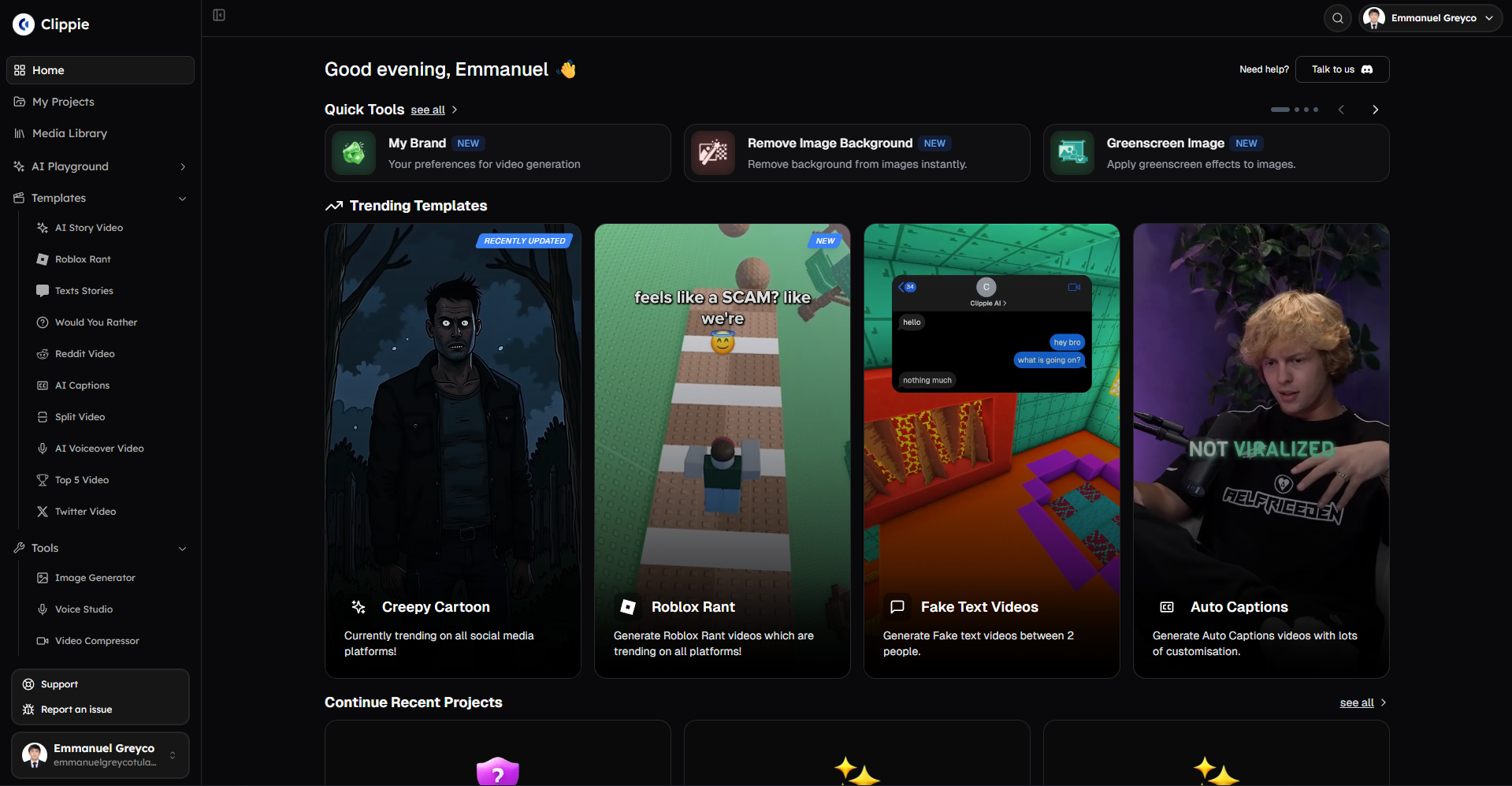
For SaaS companies at every stage, whether early-stage startups establishing initial product communication, growth-stage companies scaling video libraries across expanding feature sets, or enterprise SaaS organizations maintaining consistency across multiple product lines, explainer video creation through systematic frameworks combined with AI production efficiency via Clippie AI removes fundamental barriers preventing comprehensive video adoption: the 6-10 monthly hours manual production requires per video making complete product coverage economically impossible, and the ongoing maintenance burden as products evolve requiring dedicated video resources most companies cannot justify. Visit clippie.ai to explore how SaaS companies are achieving 40-65% conversion rate improvements through strategic explainer deployment, reducing customer acquisition costs 30-50% while improving activation and retention metrics, and building sustainable video-first product communication systems enabling product-led growth at scale.
Make an AI story video
Write a script or let AI write one. Clippie turns it into a narrated video with AI scenes, voiceover and captions.
Read more

How to Make Top 5 Ranking Videos in 2026 (Step-by-Step)
Build ranking Shorts that can still earn: pick a debatable topic, set clear criteria, source clips you may use, script the countdown, add your commentary.

How to Create Short-Form Videos Using AI: 8 Steps (2026)
A beginner workflow for AI videos on TikTok, Reels and Shorts: pick a format, script a hook, add visuals, voice and captions, export at 9:16, label AI.
7 Free CapCut Alternatives for Short-Form Video (2026)
Compare Edits, YouTube Create, VN, Clipchamp, Canva, DaVinci Resolve and Shotcut: what each gives free users, what it caps first and where it falls short.