
Best Runway ML Alternatives in 2026, Cinematic AI Video Tools for Faceless Content Creators
Find the best Runway ML alternatives in 2026 for faceless creators, why the multi-tool problem limits scale, Clippie AI vs Runway ML full comparison, cinematic quality guide, and plan recommendations.

Searching for the best Runway ML alternatives in 2026 for faceless content creation?
Runway ML produces genuinely impressive AI video generation. If visual quality in isolation is the benchmark, Runway competes at the highest level of the current AI video generation landscape. But for faceless content creators building YouTube channels and TikTok accounts, visual generation is one stage of a seven-stage production pipeline, and a tool that handles only one stage requires the creator to manage six additional stages through separate tools.
That multi-tool overhead is why creators who start with Runway ML often find themselves searching for integrated alternatives. Not because the footage is poor, but because generating footage is not the same as producing a complete video.
This guide covers what Runway ML does well, why its standalone model creates friction for faceless channel production at scale, how Clippie AI compares as an integrated alternative, and how to achieve Runway-level visual quality within a complete production workflow.
Executive Summary
This guide is for faceless content creators evaluating Runway ML alternatives in 2026. It covers what Runway ML is designed for and where its specialist positioning creates workflow limitations for faceless channel production, the multi-tool overhead problem that standalone video generators create, a full comparison between Clippie AI and Runway ML across visual quality, workflow integration, and pricing, other alternatives worth evaluating, how to achieve cinematic AI footage quality within Clippie AI's integrated workflow, and the right plan for creators at different production volumes. By the end, you will know whether Runway ML's generation quality justifies its workflow complexity for your specific production needs.
Table of Contents
What Runway ML Does and Why Faceless Creators Are Looking for Integrated Alternatives
The Multi-Tool Problem, Why Runway ML Requires 3 Additional Tools for a Complete Video
Clippie AI vs Runway ML, Cinematic Quality, Workflow Integration, and Pricing Compared
Other Runway ML Alternatives Worth Considering in 2026
How to Get Runway-Level Visual Quality Inside a Complete Production Workflow With Clippie AI
Which Clippie AI Plan Is Right for Creators Switching From Runway ML
Frequently Asked Questions
1. What Runway ML Does and Why Faceless Creators Are Looking for Integrated Alternatives
Runway ML is an AI-powered creative platform focused on video generation, visual effects, and creative media production. It is one of the most technically sophisticated AI video tools available, its Gen-3 Alpha and subsequent models produce high-quality cinematic footage with strong motion coherence, creative visual effects, and prompt responsiveness that competitors frequently benchmark against.
What Runway ML Is Designed For
Runway's primary positioning:
Runway markets itself to creative professionals, filmmakers, visual artists, directors, and advanced creators who want to use AI as a creative tool within a more complex production workflow. Its feature set reflects this orientation:
Text-to-video and image-to-video generation with state-of-the-art model quality
Multi-motion brush tools for controlling how specific elements move within a generated clip
Camera motion controls for directing virtual camera movement (pan, zoom, orbit)
Inpainting and outpainting for editing specific regions of video frames
Green screen and background removal tools
Image generation alongside video generation
A growing suite of creative production tools beyond just clip generation
Who Runway is designed for:
Independent filmmakers experimenting with AI in their production workflow
Visual artists creating AI-generated art and experimental video
Advanced creators with existing video production workflows who want AI generation as one component
Creative agencies building custom AI video workflows for specific production contexts
Directors and producers in music video, advertising, and short film production

Where Runway Falls Short for Faceless Channel Production
Runway ML's sophistication is also its limitation for the specific use case of faceless YouTube channel production. The platform is designed for creative professionals who have existing production workflows and want AI generation as a tool within those workflows, not as a standalone complete production solution.
Limitation 1: No AI Voiceover Generation
Runway ML generates video footage. It does not generate voiceover narration. For faceless creators whose entire content delivery mechanism is AI narration, this means maintaining a completely separate voiceover tool, and integrating the audio into the video workflow manually.
Limitation 2: No Auto-Captioning
Runway ML does not provide captioning services. Captions must be generated through a separate captioning tool and applied during post-production. For faceless creators who need captions on every video, and multi-language captioning for international distribution, this is a separate subscription and workflow step.
Limitation 3: No Video Assembly Workflow
Runway generates individual clips. Assembling those clips with voiceover audio, additional images, caption overlays, and export settings requires a separate video editor or assembly platform. There is no native timeline assembly, audio sync, or export pipeline built for the faceless content creator workflow.
Limitation 4: Credit-Based Pricing Creates Cost Unpredictability
Runway uses a credit-based pricing model, generations consume credits, and each plan provides a fixed credit allocation. High-quality, longer-duration generations consume more credits. For faceless creators producing 8–15 videos per month with 5–8 clips per video, credit consumption can be difficult to predict and manage.
Limitation 5: Technical Learning Curve
Runway's feature depth, multiple motion controls, camera direction tools, inpainting, outpainting, creates a learning curve that is appropriate for creative professionals who use the platform as a core creative tool. For faceless content creators who need efficient, repeatable video production at volume, this complexity adds overhead without proportional benefit for standard channel content types.
Who Runway ML Is Actually Right For
Runway is the right tool for:
Creative filmmakers who want maximum control over AI video generation and are building it into a complex production workflow
Visual artists and experimental creators for whom the creative control and visual effects capability are intrinsically valuable
Agencies building custom AI video production pipelines for specific client needs
Creators producing low-volume, high-investment content where per-clip generation quality is the primary priority and production speed is not a constraint
Runway is not the right primary tool for:
Solo faceless channel creators producing 8–20 videos per month who need an integrated, efficient complete production workflow
Creators who need voiceover, captioning, and assembly handled within the same platform as footage generation
Creators whose production economics require keeping per-video cost and time within a sustainable threshold for consistent weekly publishing

2. The Multi-Tool Problem, Why Runway ML Requires 3 Additional Tools for a Complete Video
The practical reality of building a faceless video production workflow around Runway ML is that it requires assembling and managing four separate tools, each with its own subscription, learning curve, and file management requirement.
The 4-Tool Stack Required for Runway ML-Based Faceless Production
Tool 1: Runway ML (AI Video Generation)
Generates the cinematic video clips from text prompts. Output: individual MP4 clip files at 5–15 seconds each.
Monthly cost: Varies by plan and credit consumption, consult Runway's current pricing directly. Credit-based pricing means actual monthly cost depends on generation volume and clip quality settings.
Tool 2: AI Voiceover Tool (ElevenLabs or Equivalent)
Generates natural-sounding AI narration from the script text. Output: MP3 or WAV audio files.
Monthly cost: $11–$22+ depending on ElevenLabs plan and character volume
Additional overhead:
Separate account management
File export from ElevenLabs and import into the assembly tool
Voice selection and cloning managed outside the video production workflow
Tool 3: Video Editor or Assembly Platform
Assembles the Runway-generated clips with the ElevenLabs audio, adds any AI-generated static images, applies caption overlays, and exports the final video. Common options: DaVinci Resolve (free but complex), CapCut (more accessible), Premiere Pro ($55/month).
Monthly cost: $0 (DaVinci Resolve) to $55/month (Premiere Pro)
Additional overhead:
Import Runway clips into the editor
Import ElevenLabs audio into the editor
Manually sync audio to video clips
Import captioning from a separate captioning tool
Export at correct specifications for each platform
Tool 4: Captioning Tool (Submagic, Captions.ai, or Equivalent)
Generates and styles captions from the voiceover audio. The captioning step must happen either before or after assembly depending on the workflow chosen.
Monthly cost: $15–$35+ depending on tool and plan
The Total Cost and Time Overhead
Monthly subscription cost for 4-tool Runway ML stack:
Runway ML: varies (credit-based)
ElevenLabs: $11–$22
Video editor: $0–$55
Captioning tool: $15–$35
Total monthly cost estimate: $60–$130+ before Runway's own plan cost
Per-video production overhead:
Beyond the generation time in Runway (2–4 minutes per clip), each video requires:
ElevenLabs audio export and import into editor: 5 minutes
Manual audio-video sync in the editor: 10–15 minutes
Caption import and overlay: 5–8 minutes
Export configuration and render: 5–10 minutes
Additional per-video overhead from multi-tool integration: 25–38 minutes
At 10 videos per month, this overhead totals 250–380 minutes, over 4–6 hours of monthly production time that contributes nothing to content quality and everything to workflow friction.
What Workflow Integration Actually Means
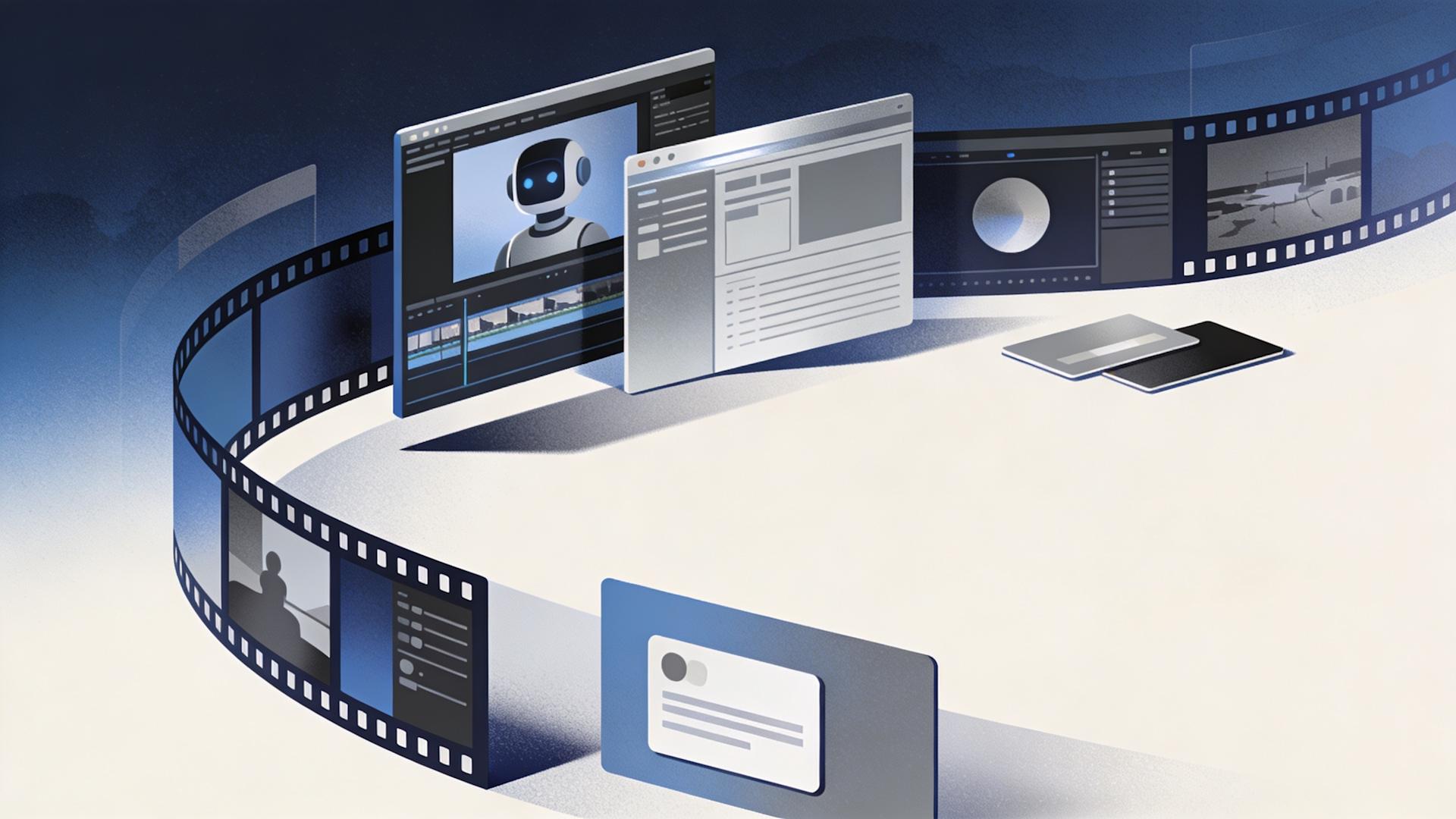
Clippie AI's integrated production workflow eliminates every inter-tool file transfer and manual sync step:
Voiceover generates from the script within Clippie AI, no separate tool, no export, no import
AI footage generates within the same session, the voiceover and visuals are assembled together
Captions auto-sync to the voiceover within the same session, no separate captioning tool
Export happens from the same interface in the correct format for each platform
The workflow goes from: Generate footage → export → import voiceover → import footage → sync → import captions → apply captions → export
To: Voiceover → visuals → captions → export (all in one session)
For a creator producing 10 videos per month, the integration difference represents 4–6 hours of recovered production time monthly, time that can be reinvested in research, scripting, and publishing optimisation.

3. Clippie AI vs Runway ML, Cinematic Quality, Workflow Integration, and Pricing Compared
AI Video Generation Quality
Runway ML: Runway's video generation quality is among the best available in 2026. Its Gen-3 Alpha and subsequent models produce footage with:
Strong temporal consistency (objects and environments maintain coherent appearance across the clip)
Sophisticated motion quality for both character and environmental footage
Responsive camera control through Runway's motion brush and camera direction tools
Strong visual effects capability for creative and experimental content
For creative filmmakers who need maximum generation quality with extensive creative control, Runway's footage generation is the benchmark.
Clippie AI: Clippie AI integrates VEO3.1 (Google DeepMind) and Seedance 1.0 within its production platform:
VEO3.1: photorealistic, documentary-quality footage with strong environmental realism and natural motion, the current benchmark for naturalistic AI footage
Seedance 1.0: filmic, narrative-forward footage with strong character staging and dramatic composition, competitive with Higgsfield and Runway for the narrative aesthetic category
Both models produce footage that meets professional production standards for faceless channel content across documentary, motivational, true crime, history, and narrative formats.
Quality comparison by use case:
For natural environments, documentary style, and photorealistic footage: VEO3.1 within Clippie AI is competitive with or exceeds Runway in this specific category
For creative visual effects, experimental aesthetics, and highly controlled motion direction: Runway's advanced controls provide capabilities that Clippie AI's integrated models do not match, at the cost of significantly more production time and technical knowledge
For narrative, cinematic, and character-forward footage: Seedance 1.0 within Clippie AI is directly competitive with Runway's narrative output
The practical conclusion: For the standard faceless channel content types, motivational, true crime, history, finance, Reddit story, science explainer, VEO3.1 and Seedance within Clippie AI produce footage that matches or exceeds what Runway ML produces for these specific use cases, within an integrated workflow that requires no additional tools.

Workflow Integration
Runway ML: Generation tool only. Voiceover, assembly, captioning, and export all require separate tools. No native integration with voiceover or captioning workflows.
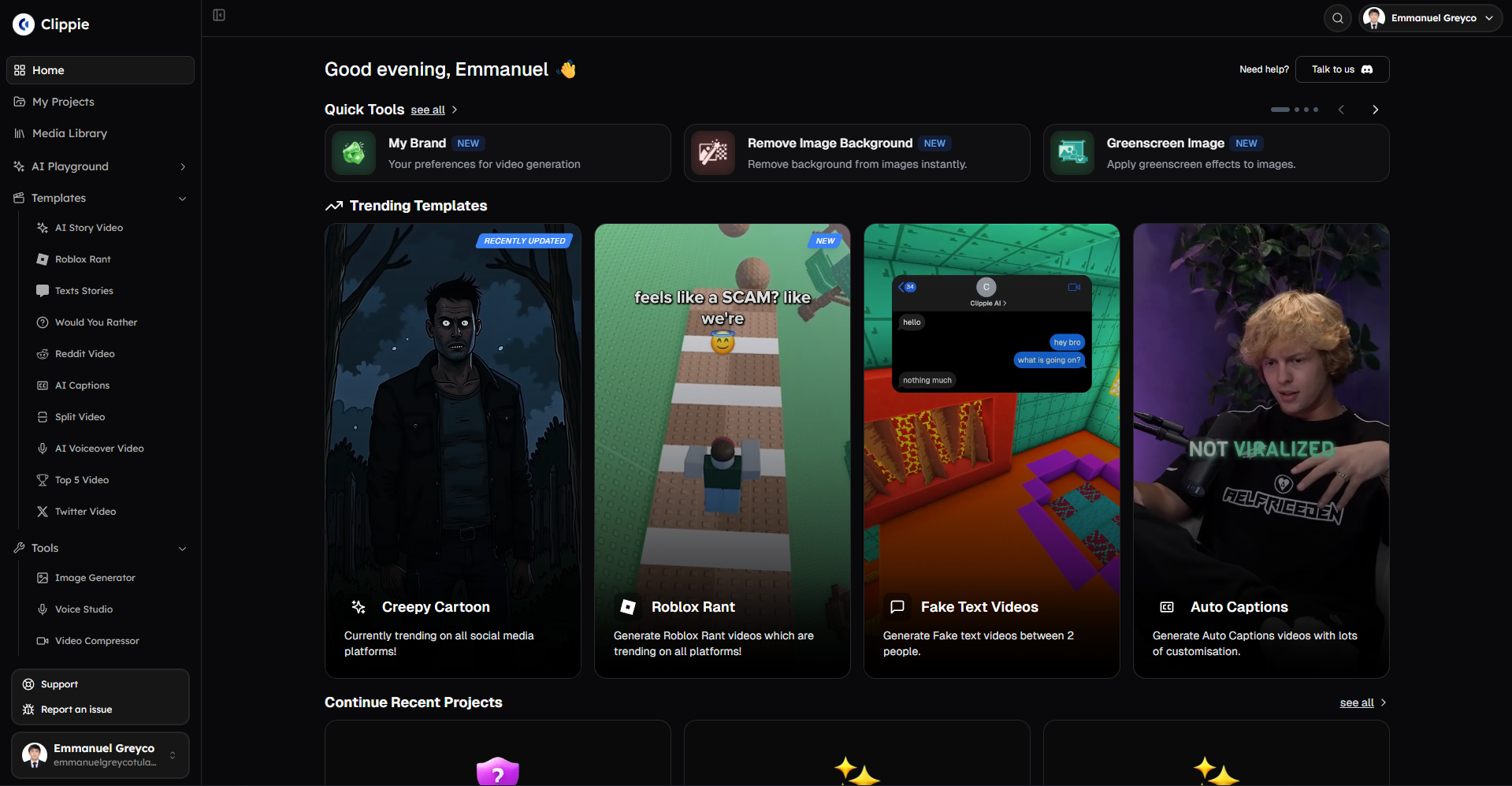
Clippie AI: Complete production platform. All stages, voiceover generation, AI image creation, VEO3.1/Seedance footage generation, speech-to-subtitles, and multi-format export, within one integrated session.
Auto-Captioning
Runway ML: No native captioning, a separate captioning tool is required for every video.
Clippie AI:
Speech-to-subtitles auto-synced to AI voiceover
102+ language support
No manual timing required
Included within all plan tiers
AI Voiceover and Voice Cloning
Runway ML: No voiceover generation, a separate voiceover tool is required.
Clippie AI:
50+ AI voices with natural delivery across multiple tonal styles
Custom voice cloning: 1, 10, or 30 voices by plan
Integrated within the production workflow
Pricing Structure
Runway ML: Credit-based pricing with monthly plan tiers. Specific current pricing should be verified on Runway's website. Credit consumption varies by generation quality, duration, and feature usage, making exact monthly costs difficult to predict without usage data.
Clippie AI:
Lite: $19.99/month
30 mins video export (~3–5 videos/month)
30 mins AI voice generation
30 mins speech-to-subtitles
100 AI images
1 custom voice
Captions in 102+ languages
50+ AI voices
24/7 support
Creator: $34.99/month
120 mins video export (~8–12 videos/month)
120 mins AI voice generation
120 mins speech-to-subtitles
500 AI images
10 custom voices
Captions in 102+ languages
50+ AI voices
24/7 support
Pro: $69.99/month
250 mins video export (~15–25 videos/month)
250 mins AI voice generation
250 mins speech-to-subtitles
1,000 AI images
30 custom voices
Captions in 102+ languages
50+ AI voices
24/7 support
No free tier is available on Clippie AI.
Total cost comparison:
A creator producing 10 videos per month using Runway ML plus supporting tools (ElevenLabs, editor, captioning tool) spends $60–$130+ monthly in combined subscriptions. Clippie AI's Creator plan at $34.99/month covers all production stages within one subscription, a significant cost reduction for equivalent or better output across the faceless channel content use cases.

4. Other Runway ML Alternatives Worth Considering in 2026
Alternative 1: Clippie AI (Primary Recommendation for Faceless Creators)
As covered throughout, the strongest recommendation for faceless creators who need cinematic footage within a complete production workflow. VEO3.1 and Seedance integration, voiceover with custom cloning, 102+ language captioning, and dual-format export in one platform.
Best for: All faceless channel creator types at any production volume.
Alternative 2: Pika Labs
Pika Labs is an AI video generation tool positioned around accessibility, making AI footage generation approachable for non-technical creators. Its quality is improving but generally positioned below Runway ML and VEO3.1 for the highest-quality outputs.
Best for: Creators who want simple, accessible AI clip generation without Runway's technical complexity.
Limitation: Generation tool only, same multi-tool overhead as Runway without matching Runway's generation quality ceiling.
Alternative 3: Higgsfield AI
Higgsfield AI focuses on cinematic, character-expressive footage with strong narrative staging. Its aesthetic is competitive with Runway for specific content types, particularly character-forward emotional content.
Best for: Creators who specifically prioritise character expressiveness and narrative staging in a cinematic aesthetic.
Limitation: Generation tool only, requires the same multi-tool overhead as Runway for a complete faceless video.
Alternative 4: Kling AI
Kling AI is a Chinese-developed AI video generation model from Kuaishou Technology, producing high-quality footage with strong motion coherence and photorealistic output. It has gained significant attention in the AI generation community for its quality relative to cost.
Best for: Creators who want high-quality AI video generation at potentially lower credit costs than Runway.
Limitation: Generation tool only, no voiceover, captioning, or assembly capability within the platform.
Alternative 5: Sora (OpenAI)
OpenAI's Sora produces exceptionally high-quality, temporally coherent AI video footage. In 2026, access is available to ChatGPT Pro subscribers with certain usage limits.
Best for: Creators who want the highest possible footage quality and are comfortable with access limitations and manual integration with other production tools.
Limitation: Generation tool only, with access limitations, the same multi-tool overhead applies, and the creative control for faceless channel content types is less systematically documented than Runway's.

5. How to Get Runway-Level Visual Quality Inside a Complete Production Workflow With Clippie AI
The practical question for a creator evaluating Runway alternatives is: can the visual quality I want from Runway's footage be achieved without the multi-tool overhead and workflow complexity?
For the specific content types that faceless channels produce, the answer is yes, through VEO3.1 and Seedance 1.0 within Clippie AI.
Understanding the Visual Quality Landscape for Faceless Channel Use Cases
The content types where faceless channels primarily generate footage fall into four categories, and each has an optimal model within Clippie AI:
Category 1: Natural Environments and Documentary-Style Footage
Landscapes, urban environments, atmospheric outdoor footage, weather and natural phenomena.
Optimal model: VEO3.1
VEO3.1's photorealistic output for natural environments consistently produces footage that matches or exceeds Runway ML in this specific category. The model's training on real-world footage makes natural environment generation its strongest performance area.
Example VEO3.1 prompt for this category: "Slow cinematic aerial shot over an ancient forest at dawn, ground fog visible between the trees, golden light breaking through the canopy, documentary aesthetic, photorealistic 4K broadcast quality"
Category 2: Atmospheric and Emotionally Staged Footage
Character-present scenes with dramatic lighting, interior environments, emotional staging for motivational or narrative content.
Optimal model: Seedance 1.0
Seedance's filmic aesthetic and character-forward output is directly competitive with Runway for this category, and in some narrative staging scenarios, produces more consistently usable output for faceless content types.
Example Seedance prompt for this category: "Cinematic dramatic scene: a lone figure seen from behind at a window at night, city lights reflected in the glass, contemplative and weighted atmosphere, slow static medium shot, Seedance filmic aesthetic, film grain, 4K"
Category 3: Historical and Period-Appropriate Footage
Ancient civilisation environments, historical battlefield contexts, period-specific architectural settings.
Optimal model: VEO3.1
VEO3.1's photorealistic output handles historical environment generation effectively when prompts specify "no modern elements" and provide clear period-appropriate descriptions.
Example prompt: "Cinematic establishing shot of an ancient Roman plaza at dawn, stone architecture and columns, Mediterranean light, no modern elements, empty and atmospheric, documentary historical aesthetic, photorealistic 4K"
Category 4: Technology and Corporate Environments
Business districts, technology facilities, professional working environments.
Optimal model: VEO3.1
Example prompt: "Slow cinematic pan through a modern technology facility, rows of servers with blue indicator lights, cool blue and silver light palette, technology documentary aesthetic, photorealistic 4K"
The Prompt Quality Principle
For both VEO3.1 and Seedance within Clippie AI, the footage quality ceiling is determined primarily by prompt quality, not by the model ceiling itself. The difference between a mediocre output and a cinematic output from the same model is often entirely in the specificity and intentionality of the prompt.
The 6-element prompt framework that produces Runway-competitive quality:
Scene type specification: "Slow cinematic establishing shot" / "Dramatic character scene" / "Atmospheric transition clip"
Subject and staging: What is in the frame and how is it positioned
Environment: The setting with atmospheric and emotional qualities
Camera direction: Pan, push-in, static wide shot, rack focus
Lighting and colour palette: Specific, intentional lighting description
Quality and aesthetic closing: "Photorealistic 4K broadcast quality" / "Feature film aesthetic, film grain, 4K"
A prompt that includes all six elements consistently produces footage that meets or exceeds what Runway ML generates for equivalent scene types, with the significant advantage that it is generated within the same session as the voiceover, captions, and export.
The Complete Integrated Workflow
With VEO3.1 and Seedance generating Runway-quality footage within Clippie AI's integrated workflow, the production session looks like:
Script preparation (external, 60–90 minutes): Research and write the script using the channel's standard scripting system.
Production session in Clippie AI (45–65 minutes for a 10-minute video):
Voiceover generation: 3–5 minutes
VEO3.1 establishing shots (3–4 clips): 10–15 minutes
Seedance narrative scenes (2–3 clips): 8–12 minutes
AI image generation for static sections: 8–12 minutes
Caption review: 8–12 minutes
Dual-format export: 6–8 minutes
Total: 45–65 minutes for a complete 10-minute video with cinematic AI footage
The equivalent Runway ML workflow, Runway generation + ElevenLabs audio + editor assembly + captioning tool, takes 90–130 minutes for the same output, with the additional cognitive overhead of managing four separate tools and file transfers between them.
6. Which Clippie AI Plan Is Right for Creators Switching From Runway ML
Lite Plan ($19.99/month)
Right for: Creators who have been using Runway for occasional footage generation in a lightweight production schedule and are transitioning to a more integrated approach with 3–5 videos per month.
Specifications:
30 mins video export
30 mins AI voice generation
30 mins speech-to-subtitles
100 AI images
1 custom voice
Captions in 102+ languages
50+ AI voices
24/7 support
Creator Plan ($34.99/month), Primary Recommendation for Runway Switchers
Right for: Creators who have been using Runway as part of a multi-tool production stack and are consolidating into one integrated platform for 8–12 videos per month. This is the most common starting plan for creators switching from Runway ML.
Specifications:
120 mins video export
120 mins AI voice generation
120 mins speech-to-subtitles
500 AI images
10 custom voices
Captions in 102+ languages
50+ AI voices
24/7 support
Why this is the right switch: The Creator plan provides VEO3.1 and Seedance footage generation, integrated voiceover with custom cloning, 102+ language captioning, and 120-minute export capacity, within one subscription at $34.99/month. A creator previously paying Runway ML credits + ElevenLabs + captioning tool is almost certainly spending more than $34.99/month for less integrated functionality.
Pro Plan ($69.99/month)
Right for: High-volume creators or agencies producing 15–25 videos per month, running multiple channels with separate voice identities, or managing high-quality AI footage production for multiple clients.
Specifications:
250 mins video export
250 mins AI voice generation
250 mins speech-to-subtitles
1,000 AI images
30 custom voices
Captions in 102+ languages
50+ AI voices
24/7 support
No free tier is available on Clippie AI.
💡 For the complete Seedance 1.0 and VEO3.1 cinematic prompt framework that produces Runway-competitive footage within Clippie AI, read our guide on how to use VEO3 and VEO3.1 to create cinematic AI videos in 2026
💡 For the complete AI video tool comparison that positions every major platform against Clippie AI for faceless channel production, read our guide on Best AI Video Tools for Faceless Content Creators in 2026
💡 Start creating cinematic faceless content with Clippie AI's integrated workflow today →
Conclusion: Generation Quality Means Nothing If the Workflow Doesn't Scale
Runway ML's footage quality is genuinely impressive. For creative filmmakers who need maximum generation control within a sophisticated production workflow, it is one of the best tools available.
For faceless content creators producing 8–20 videos per month, consistent quality at sustainable production volume matters more than maximum quality at unsustainable production complexity. The multi-tool overhead of a Runway-based workflow, four separate platforms, manual file transfers, audio sync in an external editor, a separate captioning subscription, creates 4–6 hours of monthly friction that erodes the production consistency that channel growth demands.
Clippie AI's VEO3.1 and Seedance integration produces footage quality that meets the visual standard for professional faceless channel content across every major niche, within an integrated workflow that keeps total production time at 45–65 minutes per complete 10-minute video.
The footage quality that matters is the footage quality your audience actually sees. And the audience of a faceless channel that publishes consistently at high quality sees better content than the audience of a channel that occasionally publishes exceptional content but cannot maintain the volume that algorithmic growth requires.
Start creating cinematic faceless content with Clippie AI's integrated workflow today →
7. Frequently Asked Questions
Q1: What is Runway ML and why are faceless creators looking for alternatives?
Runway ML is a sophisticated AI video generation platform designed for creative professionals, filmmakers, visual artists, and advanced creators who want AI generation as a component of a complex production workflow. Faceless creators look for alternatives because Runway is a generation tool only, it does not provide voiceover, auto-captioning, video assembly, or integrated export. Building a complete faceless video production workflow around Runway requires 3–4 additional tools (voiceover tool, video editor, captioning tool), creating subscription costs of $60–$130+ monthly and 25–38 minutes of additional per-video overhead from inter-tool file management and manual assembly.
Q2: Does Clippie AI produce footage that is comparable in quality to Runway ML for faceless channel content?
For the specific content types that faceless channels produce, natural environments (VEO3.1), character-staged narrative scenes (Seedance 1.0), historical settings (VEO3.1), and technology environments (VEO3.1), Clippie AI's integrated models produce footage that is competitive with or exceeds Runway ML. Runway's generation ceiling is higher for experimental visual effects, complex motion direction, and creative filmmaking, capabilities that most standard faceless channel content does not require. For the typical use cases of motivational, true crime, history, finance, and Reddit story channels, VEO3.1 and Seedance within Clippie AI deliver cinematic footage quality without Runway's workflow complexity.
Q3: Is Runway ML better than Clippie AI for faceless video production?
These are different tools for different use cases rather than direct quality competitors. Runway ML is better for: maximum generation control, experimental visual effects, creative filmmaking where the AI generation process itself is a core creative tool. Clippie AI is better for: complete faceless video production from script to export, consistent high-volume output, integrated voiceover and captioning, and sustainable production economics for solo channel operators. A creative filmmaker building custom video art benefits from Runway's control. A faceless creator building a weekly publishing schedule benefits from Clippie AI's integration.
Q4: Can I use Runway ML and Clippie AI together?
Yes, though this is a niche use case rather than a recommended standard workflow. A creator who has specific clips that benefit from Runway's advanced creative controls (experimental effects, complex motion direction) could generate those specific clips in Runway and import them into a Clippie AI production session alongside VEO3.1 and Seedance clips. This hybrid approach maintains the integrated assembly and captioning workflow in Clippie AI while accessing Runway's specific capabilities for occasional high-effort clips. The practical overhead of this approach means most creators will find the full Clippie AI workflow produces adequate quality without the added complexity.
Q5: How much does a complete Runway ML-based faceless production workflow cost per month?
The total monthly cost for Runway ML plus the additional tools required for a complete faceless production workflow, ElevenLabs for voiceover ($11–$22), a video editor ($0–$55 for DaVinci Resolve to Premiere Pro), and a captioning tool ($15–$35), typically ranges from $60–$130+ before Runway's own plan cost. Runway's credit-based pricing adds variable additional cost depending on generation volume and quality settings. Clippie AI's Creator plan at $34.99/month covers all production stages within a single subscription, typically $25–$95+ less per month than the Runway-based multi-tool alternative.
Q6: Which Clippie AI plan is the right replacement for a Runway ML-based production workflow?
The Creator plan at $34.99/month is the right replacement for most creators switching from a Runway-based workflow. Its 120-minute export capacity supports 8–12 videos per month, its VEO3.1 and Seedance integration provides the cinematic footage quality, its 10 custom voice slots enable voice cloning for channel identity, and its 102+ language captioning covers international distribution needs. The plan consolidates everything the Runway ML multi-tool stack provides, at a lower total monthly cost and significantly lower per-video workflow overhead. Creators producing 15+ videos per month should evaluate the Pro plan at $69.99/month for its 250-minute capacity and 30 custom voice slots.
Generate it in AI Studio
Create videos with Seedance and Veo, or copy any dance onto your own character with Motion Control.
Read more

How to Create Short-Form Videos Using AI: 8 Steps (2026)
A beginner workflow for AI videos on TikTok, Reels and Shorts: pick a format, script a hook, add visuals, voice and captions, export at 9:16, label AI.

7 Free CapCut Alternatives for Short-Form Video (2026)
Compare Edits, YouTube Create, VN, Clipchamp, Canva, DaVinci Resolve and Shotcut: what each gives free users, what it caps first and where it falls short.

Pictory vs Clippie AI (2026): Which Fits Your Video Workflow?
Compare Pictory and Clippie AI on workflow, 2026 pricing, voices and templates to see which one suits article repurposing and which suits faceless shorts.