
How YouTube Automation Channels Make Money in 2026, The Complete AdSense and Affiliate Blueprint
The complete guide to how YouTube automation channels make money in 2026, niche selection by CPM, AdSense optimisation, affiliate stack blueprint, Clippie AI production system, and revenue projections at 10K, 50K, 100K.

Searching for how YouTube automation channels make money in 2026?
YouTube automation is one of the most durable digital income models available, and in 2026, AI production tools have made it more accessible and more profitable than it has ever been. The core premise has not changed: a channel produces consistent educational or informational content in a high-CPM niche, accumulates watch hours and subscribers, activates AdSense, and generates income from a growing video catalogue that earns while you sleep.
What has changed is the cost and time required to build and sustain the operation. A production pipeline that previously required a content team, scriptwriters, voiceover artists, editors, now runs through one creator using Clippie AI in under 60 minutes per video.
This guide is the complete blueprint, from niche selection and AdSense optimisation to affiliate stack construction to a full revenue projection at each subscriber milestone.
Executive Summary
This guide is for creators who want to build a profitable YouTube automation channel in 2026 using AI production tools. It covers what YouTube automation is and why it remains one of the strongest passive income models, how to choose a niche that maximises AdSense CPM, the specific AdSense optimisation tactics that increase income per view, how to build an affiliate stack that generates income before and after YouTube monetisation eligibility, the complete Clippie AI production workflow, and detailed revenue projections at 10K, 50K, and 100K subscribers. By the end, you will have a complete operational blueprint for building and monetising a YouTube automation channel in 2026.
Table of Contents
What YouTube Automation Is and Why It Is Still One of the Best Passive Income Models in 2026
How to Choose a YouTube Automation Niche That Maximises AdSense CPM
The AdSense Optimisation System, Watch Time, Mid-Roll Strategy, and CPM Compounding
How to Build an Affiliate Stack That Generates Income Before and After Monetisation
How to Produce YouTube Automation Videos at Scale With Clippie AI
The Full Revenue Projection, What a YouTube Automation Channel Earns at 10K, 50K, and 100K Subscribers
Frequently Asked Questions

1. What YouTube Automation Is and Why It Is Still One of the Best Passive Income Models in 2026
YouTube automation is the practice of building and monetising a YouTube channel through a systematised production process, using AI tools to handle scripting, voiceover, visuals, captioning, and export without requiring the creator to appear on camera, record their voice manually, or manage a manual editing workflow.
The "automation" refers to the production process, not to some magical hands-off operation. A YouTube automation channel still requires the creator's strategic and operational involvement. What it removes is the manual production bottleneck that traditionally made consistent publishing unsustainable for solo operators.

Why YouTube Automation Remains One of the Best Passive Income Models
The compounding video catalogue:
Every video published to a YouTube automation channel is a permanent income-generating asset. A video that ranks for a specific search query generates AdSense income every time it is watched, whether that is this week or three years from now. Unlike social media content that peaks and declines, evergreen YouTube content compounds over time.
A channel with 100 videos generating an average of 1,000 views per month per video earns AdSense from 100,000 monthly views, across a catalogue built over 18–24 months. The newest video is generating income alongside videos published two years earlier. This compounding effect is the defining characteristic of YouTube automation as a passive income model.
The platform stability advantage:
YouTube has been paying creators through AdSense for over 15 years. The platform's monetisation structure is more stable than virtually any other content platform, TikTok Creator Rewards rates change, Instagram's monetisation programmes shift, but YouTube's Partner Programme has remained consistent. For a creator building a long-term income asset, YouTube's stability is a meaningful advantage.
The AI production efficiency advantage:
In 2026, the per-video production cost for a YouTube automation channel using Clippie AI is:
Platform subscription: $3–$7 per video (depending on Clippie AI plan)
Research and scripting time: 60–90 minutes per video
Production time in Clippie AI: 45–65 minutes per video
Publishing preparation: 15–20 minutes per video
Total time investment per video: approximately 2.5–3.5 hours
At a $10 CPM, that 2.5–3 hour investment earns AdSense from every future view the video generates, for years. A video that accumulates 100,000 lifetime views at $10 CPM generates $550 in lifetime AdSense income from a 3-hour investment. The ROI compounds with every additional view.
What YouTube Automation Is Not
YouTube automation is not:
A get-rich-quick scheme, channels typically reach meaningful income 12–18 months after launch
Truly hands-off, it requires consistent production investment and strategic management
Immune to content quality, low-quality videos that do not provide genuine value will not rank, will not accumulate watch hours, and will not generate meaningful AdSense income
A guaranteed outcome, niche selection, keyword targeting, and content quality all significantly affect results
The creators who generate consistent long-term income from YouTube automation are the ones who treat it as a business, consistent production, strategic keyword targeting, and genuine content quality, rather than a passive set-and-forget operation.

2. How to Choose a YouTube Automation Niche That Maximises AdSense CPM
CPM is the single most important variable in YouTube automation niche selection. A channel generating 100,000 monthly views at $5 CPM earns approximately $275/month from AdSense. The same channel at $18 CPM earns approximately $990/month, with identical production investment and identical view counts.
The niche decision is therefore the highest-leverage strategic decision in YouTube automation channel building.

The 3-Dimensional Niche Evaluation Framework
Optimal niche selection balances three dimensions simultaneously:
Dimension 1: CPM Potential: What is the realistic CPM range for this niche's audience? High-CPM niches attract advertiser categories with large budgets and high purchase intent, financial services, legal services, SaaS software, healthcare, professional services.
Dimension 2: Content Pipeline Depth: Can 100+ videos be produced on distinct topics within this niche without running out of content? A niche with deep, evergreen content pipeline sustains a 2–3 year publishing programme.
Dimension 3: Competition Level: Are there established channels dominating every major keyword in this niche, or are there underserved search queries where a new channel can rank within 6–12 months?
The optimal niche scores high on all three dimensions, premium CPM, deep content pipeline, and manageable competition at the sub-niche level.
The Tier 1 YouTube Automation Niches by CPM
Tier 1A: Finance and Investing ($8–$25 CPM)
Why it leads: Financial services advertisers, investment platforms, insurance companies, credit card companies, wealth management services, pay premium CPMs because their customers represent high lifetime values. Acquiring one investment platform user through advertising is worth $500–$5,000 to the advertiser, which means they can afford to pay $15–$25 per thousand impressions.
Best automation sub-niches within finance:
Tax strategy and tax optimisation, highest CPM within the category, dramatically underserved
Dividend investing and passive income investing, high-intent, high-income audience
Retirement planning and 401K/IRA strategy, insurance and wealth management advertisers
Real estate investing basics, mortgage and real estate platform advertisers
Content pipeline depth: Exceptional, finance questions are inexhaustible and multiply with economic events
Tier 1B: Legal and Professional Services ($10–$28 CPM)
Why it performs: Legal service advertisers, law firms, legal tech platforms, document preparation services, pay among the highest CPMs of any category because the per-client value is enormous. A personal injury law firm earns $10,000–$100,000+ per client, paying $20 CPM to acquire a single client is trivially cost-effective.
Best automation sub-niches within legal:
Business formation and LLC strategy
Consumer rights and employment law
Estate planning and wills
Real estate law for property owners
Content pipeline depth: Strong, legal questions multiply with regulatory changes and life events
Tier 1C: Business and Entrepreneurship ($8–$20 CPM)
Why it performs: Business owners and entrepreneurs are premium buyers, they make purchasing decisions with company budgets, not personal income. SaaS companies, business service providers, and financial institutions pay premium rates to reach this audience.
Best automation sub-niches:
Agency building and freelance business
E-commerce business fundamentals
SaaS metrics and growth strategy
B2B sales and marketing
Content pipeline depth: Exceptional, business strategy questions are permanently relevant
Tier 2: Science and Technology ($8–$18 CPM)
Science and technology content attracts a high-income, highly educated audience that technology advertisers pay premium rates to reach. Lower CPM than finance and legal but still significantly above the YouTube average, with dramatically lower competition for faceless channels.
Tier 3: Health and Medical ($6–$15 CPM)
Health content attracts healthcare advertisers, supplement brands, and insurance companies. Strong CPM but requires careful disclaimer management and extra factual accuracy standards.
What to Avoid in Automation Niche Selection
Entertainment and gaming: $1–$4 CPM, enormous audience, poor advertiser economics. The view counts required to generate meaningful income are not achievable for most automation channels in these niches.
Vague motivational: Generic motivational content without a clear audience profile attracts lower CPM advertisers. Niche-specific motivational content (finance motivation, fitness discipline, entrepreneurship mindset) performs better.
Trend-dependent niches: Niches that depend on viral trends rather than permanent search demand do not sustain the compounding catalogue model that makes automation valuable.

3. The AdSense Optimisation System, Watch Time, Mid-Roll Strategy, and CPM Compounding
Once YouTube Partner Programme eligibility is reached (1,000 subscribers + 4,000 watch hours), AdSense income is not fixed, it can be optimised significantly through specific video structure, upload timing, and keyword targeting decisions.
Optimisation Lever 1: Maximising Watch Time Per Video
Watch time is the primary signal YouTube's algorithm uses to determine whether a video deserves recommendation and search ranking. More watch time per video = better ranking = more views = more AdSense income.
The specific watch time mechanics:
YouTube measures three watch time metrics:
Total watch time: The cumulative minutes of viewing across all views of a video
Average view duration: What percentage of the video the average viewer watches
Click-through rate (CTR): What percentage of impressions result in a click
Improving all three creates a compounding algorithmic advantage, higher CTR delivers more initial views, higher average view duration signals content quality, and higher total watch time drives recommendation.
How to maximise watch time through video structure:
Retain viewers through strong section transitions: Each major section of the script should end with a forward hook, a statement that makes the viewer need to see the next section. "But here's the part that most [finance/legal/business] guides completely skip."
Use pattern interrupts at the one-third and two-thirds marks: Introduce a surprising fact, a counterintuitive claim, or a new angle at these specific points, the moments when viewer attention most commonly drifts
Keep video length appropriate to the topic: 10–15 minutes for educational explainer content is the sweet spot for automation channels, long enough for 3–4 mid-roll ads, short enough to maintain 50%+ completion rates
Never pad scripts: Every sentence must contribute to the viewer's understanding or engagement. Padding, verbal filler, unnecessary repetition, over-lengthy introductions, is the primary cause of early video drop-off

Optimisation Lever 2: Mid-Roll Ad Strategy
Mid-roll ads, ads that appear during the video rather than before or after it, generate significantly more revenue per video than pre-roll ads alone. A 15-minute video with 4 mid-roll ad placements generates approximately 3–4x the AdSense income of the same video with pre-roll only.
The right mid-roll timing:
Poorly placed mid-rolls drive viewer abandonment, the completion rate drops at the mid-roll point, reducing the watch time signal and the subsequent views per impression. Well-placed mid-rolls are barely noticed because they interrupt at natural pause points.
Optimal mid-roll placement rules:
Place mid-rolls at section transitions, the moment between one major section ending and the next beginning
Never place mid-rolls in the middle of a sentence, explanation, or story, these feel jarring and drive abandonment
Never place a mid-roll in the first 2 minutes, the retention window before the viewer is committed to the video is the most fragile
Space mid-rolls at minimum 2-minute intervals, consecutive mid-rolls train viewers to close the video
Mid-roll placement schedule for a 12-minute video:
Pre-roll: 0:00
Mid-roll 1: 3:30 (after the intro section completes)
Mid-roll 2: 6:30 (at the midpoint section break)
Mid-roll 3: 9:30 (before the conclusion section)
Post-roll: 11:45
This placement generates 3 mid-roll opportunities without any single mid-roll appearing at a moment of high narrative engagement.
Optimisation Lever 3: Keyword Targeting for CPM-Maximising Queries
Not all search queries within a high-CPM niche generate equivalent CPMs. The queries that attract the highest-paying advertisers are those with explicit financial, legal, or purchase-decision intent.
High-CPM keyword patterns:
"Best [financial product] for [specific situation]", attracts financial product advertisers bidding for comparison searchers
"How to [specific financial action]", attracts educational advertisers targeting action-intent searchers
"[Specific tax strategy] for [profession or situation]", attracts accounting software and advisory service advertisers
"[Legal document or process] step by step", attracts legal document preparation service advertisers
"[Business software category] comparison", attracts SaaS companies advertising to decision-phase searchers
Low-CPM keyword patterns to avoid:
Broad awareness queries ("what is money?" "what is a contract?"), these attract educational advertisers at low rates
Entertainment-adjacent queries within the niche ("most interesting [finance/legal] stories"), entertainment advertisers pay low rates
Queries with no commercial intent signal, the advertiser cannot identify a purchasing context
The keyword audit process:
When building the content calendar, run each planned topic through a CPM lens before scripting:
Does this search query attract a viewer who is about to make a financial, legal, or business decision?
Which specific advertisers are likely bidding on this keyword?
Is there a more commercially specific version of this topic that would attract higher-paying advertisers?
"How to reduce your tax bill as a freelancer" attracts higher-paying tax software advertisers than "understanding taxes as a freelancer", because the former implies imminent action while the latter implies information-seeking only.
Optimisation Lever 4: Upload Timing for Initial Distribution
The first 48 hours after a video is published determine its long-term performance. Videos that generate strong early engagement receive algorithmic promotion to broader audiences. Videos with weak early engagement are deprioritised.
The upload timing principle:
Publish when the primary audience is actively watching YouTube, not when the creator has finished production.
For finance, legal, and business automation channels (US primary audience):
Tuesday to Thursday, 2:00–5:00 PM Eastern, professional audience's peak YouTube consumption window
Avoid Friday afternoons and weekends for informational content, engagement is lower for professional content during leisure periods
Avoid uploading at midnight, the video's early engagement window will be during low-traffic hours, suppressing initial distribution
The scheduled upload system:
Produce videos in batch sessions (Saturday) and schedule uploads for the following Tuesday–Thursday using YouTube Studio's scheduling feature. This decouples production timing from optimal publishing timing.
Optimisation Lever 5: Thumbnail and Title CTR Optimisation
CTR, the percentage of impressions that result in clicks, directly affects how many views a video receives for a given algorithmic distribution level. Improving CTR from 4% to 7% nearly doubles the views received from the same impression pool.
High-CTR title patterns for automation channels:
Specific number: "7 Tax Deductions Freelancers Almost Never Claim"
Specific outcome: "How This Legal Clause Saved a Business Owner $40,000"
Counterintuitive claim: "Why Your Emergency Fund Is Costing You Money"
Year specificity: "The LLC Strategy Everyone Is Missing in 2026"
Audience-specific: "What Every Self-Employed Person Needs to Know About [Topic]"
High-CTR thumbnail principles:
Clear, readable text in under 3 words, readable at mobile thumbnail size
High-contrast design, the thumbnail must stand out in the YouTube feed
Consistent visual style across all channel thumbnails, builds brand recognition that improves CTR for returning viewers
No face required, text-and-image thumbnails without faces perform equivalently or better than face-on-camera thumbnails for educational content
4. How to Build an Affiliate Stack That Generates Income Before and After Monetisation
The most strategic feature of YouTube automation affiliate marketing is that it activates immediately, no subscriber threshold, no watch hour requirement. A video published on day 1 can include an affiliate link that generates income from the first viewer who purchases.
This means affiliate income is the primary monetisation mechanism during the months between channel launch and YouTube Partner Programme eligibility. Building the affiliate stack before the channel reaches monetisation is the difference between 12 months of zero income and 12 months of growing pre-monetisation income.
The Affiliate Stack Architecture
An affiliate stack is a curated set of affiliate relationships, products, services, and platforms, that collectively serve the channel's audience across multiple purchase contexts. A well-built stack generates income passively from description links, pinned comments, and natural video mentions.
Stack Layer 1: Core Category Affiliates (Highest Commission, Highest Relevance)
These are the 2–3 affiliate products most directly aligned with the channel's core topic, the products that a significant percentage of every video's viewers would want to know about.
Finance automation channel core affiliates:
Personal finance app affiliate (You Need a Budget, Monarch Money, etc.), $20–$50 per sign-up
Investment platform affiliate (varies by platform and geography), $50–$200 per account opened
Tax software affiliate, $10–$40 per completed filing
Financial literacy course affiliate, 20–40% commission per sale
Legal automation channel core affiliates:
Legal document service affiliate (LegalZoom, Northwest Registered Agent, etc.), $20–$75 per referred service
Contract template platform affiliate, ongoing subscription commissions
Online notarisation service affiliate, per-transaction commissions
Business automation channel core affiliates:
Project management and CRM software affiliates, $50–$200 per referred subscription
Business banking affiliate, $50–$150 per account opened
Accounting software affiliate, $20–$60 per subscription
Stack Layer 2: Adjacent Category Affiliates (Moderate Commission, High Volume)
These are products that the channel's audience buys regularly but that are not the primary topic focus, lower individual commissions but higher aggregate volume due to broader applicability.
Universal high-volume affiliates for education and professional audiences:
Audible/audiobook platform, $5–$10 per trial sign-up; finance and business audiences are heavy readers
Amazon Associates on book recommendations, 4–8% per sale; recommend the 5–10 books most relevant to the niche
VPN services, $30–$80+ per sign-up; active in finance, business, and legal content
Online learning platforms (Coursera, Udemy, Skillshare), 15–30% commission per subscription
Stack Layer 3: Evergreen Contextual Affiliates (Lower Commission, Set-and-Forget)
These are products that are relevant to the niche but do not require dedicated promotion, they convert from a persistent link in the channel description or bio that applies to a broad range of viewers.
Examples:
Credit monitoring service, relevant to any financial channel viewer
Password manager, relevant to any tech-using audience
Identity protection service, relevant to financial and legal content audiences
The Affiliate Link Placement System
Placement 1: Video Description (Permanent Passive Income)
Every video description should include:
Primary affiliate links (2–3) directly relevant to the specific video's topic
A consistent "Resources mentioned / Recommended tools" section at the bottom of every description with the full affiliate stack
The contextual description format:
"In this video I mention [Product X] for [specific use case]. If you want to check it out: [affiliate link]"
Contextual placement converts significantly higher than a generic resource list because the viewer has just been told why the product is relevant within the video they watched.
Placement 2: Video Pinned Comment
Immediately after publishing, pin a comment with:
"📌 Resources from this video: [Product 1], [specific use case]: [link] | [Product 2], [specific use case]: [link]"
Pinned comments receive high visibility, many viewers check the top comment before or after watching. This placement reaches viewers who would not scroll the full description.
Placement 3: Video End Screen CTA
The final 20 seconds of every video should include a verbal affiliate CTA, specific, contextual, and brief:
"If you want to [specific outcome the affiliate product provides], the resource I'd recommend is [product name], it's linked in the description below."
One verbal affiliate mention per video. It takes 10–15 seconds and does not interrupt the content.
Placement 4: Channel About Section
The channel's "About" section should include a brief resource mention:
"Recommended resources for [channel topic]: [3–5 most important affiliate links with brief descriptions]"
This placement serves viewers who visit the channel page rather than individual videos.
Building the Affiliate Stack Before Channel Monetisation
Week 1: Affiliate programme applications: Apply to affiliate programmes for 3–5 products in each of the three stack layers. Approval typically takes 1–7 days for most programmes.
Week 2–4: First video affiliate integration: Every video from the first publish includes affiliate links in the description and a verbal mention where relevant. Do not wait for a "large enough" audience, affiliate income from a small audience accumulates over time and builds the habits and systems for larger-scale income.
Month 2–6: Performance tracking: Track which affiliates generate clicks and conversions using the affiliate dashboard for each programme. Double down on high-converting products; replace low-converting ones.
Month 6–12: Direct affiliate relationships: As the channel builds a documented conversion track record, negotiate directly with product companies for higher commission rates or dedicated promo codes. Companies pay higher rates for proven converters than for new unknown channels.
5. How to Produce YouTube Automation Videos at Scale With Clippie AI
The production system that enables YouTube automation at sustainable volume, without sacrificing quality, is the most critical operational element of the entire model.
The Weekly Production Rhythm
Monday: Research and keyword validation (30 minutes):
Select the week's video topic from the content calendar. Validate the keyword:
YouTube search volume and competition assessment (use TubeBuddy or vidIQ for precise data)
Check the top 3 existing videos for this keyword, what are they missing? What can this video do better?
Confirm the topic has commercial intent that justifies the CPM target for the niche
Tuesday: Research and script (90–120 minutes):
Research the topic from primary and secondary sources. Write the complete script using the AI-assisted scripting system:
Paste research notes into ChatGPT with the niche's standard scripting prompt
Review draft for accuracy, completeness, and retention mechanics
Add contextual affiliate mentions at appropriate script points
Final script review: read aloud at the pace of AI narration
Wednesday: Production in Clippie AI (45–65 minutes):
Complete the full production session:
Voiceover generation: 3–5 minutes
VEO3.1 and Seedance footage generation (5–7 clips): 18–25 minutes
AI image generation (4–6 images): 8–12 minutes
Caption review: 8–12 minutes
Export (16:9 for YouTube + 9:16 for Shorts clip): 6–8 minutes
Thursday: Publishing preparation (20–30 minutes):
Write the YouTube title (A/B test 2 options, publish the stronger, store the alternative for a future title update if performance is lower than expected)
Write the 200-word keyword-optimised description with affiliate links placed contextually
Create the thumbnail in Canva using the channel's standardised template
Upload to YouTube Studio and schedule for Tuesday or Wednesday the following week
Upload the 9:16 clip to YouTube Shorts, TikTok, and Instagram Reels with platform-specific captions
The Clippie AI Visual Approach for Automation Channels
High-CPM automation niches, finance, law, business, require visuals that communicate professionalism and credibility. The visual production approach differs from entertainment niches:
Finance automation visuals: "Clean professional editorial illustration of a financial document environment, dark navy and gold tones, sophisticated and authoritative, no text visible in the image, high quality professional illustration"
"VEO3.1: Slow cinematic pan through a professional financial district at dusk, glass towers reflecting golden hour light, editorial and authoritative, photorealistic 4K"
Legal automation visuals: "Clean editorial illustration of a professional legal environment, courtroom or law office aesthetic, serious and authoritative, warm wood tones with natural window light, high quality"
Business automation visuals: "VEO3.1: Slow cinematic shot of a modern business workspace, multiple monitors, organised and professional, soft natural light, documentary aesthetic, photorealistic 4K"
Clippie AI Plans: Matched to Automation Channel Scale
Lite: $19.99/month
30 mins video export (~2–4 videos/month)
30 mins AI voice generation
30 mins speech-to-subtitles
100 AI images
1 custom voice
Captions in 102+ languages
50+ AI voices
24/7 support
Best for: Testing the automation channel model with initial content before committing to weekly production
Creator: $34.99/month
120 mins video export (~8–12 videos/month)
120 mins AI voice generation
120 mins speech-to-subtitles
500 AI images
10 custom voices
Captions in 102+ languages
50+ AI voices
24/7 support
Best for: The standard automation channel producing 2 videos per week, the primary plan for serious single-channel automation operations
Pro: $69.99/month
250 mins video export (~15–20 videos/month)
250 mins AI voice generation
250 mins speech-to-subtitles
1,000 AI images
30 custom voices
Captions in 102+ languages
50+ AI voices
24/7 support
Best for: High-frequency automation channels posting 3–4 videos per week, operators running multiple automation channels simultaneously, or content agencies managing automation production for clients
No free tier is available on Clippie AI.

6. The Full Revenue Projection, What a YouTube Automation Channel Earns at 10K, 50K, and 100K Subscribers
These projections are based on a finance or legal niche automation channel with strong keyword targeting, consistent posting (2 videos per week), and an active affiliate stack. All AdSense figures use RPM (actual creator earnings) at 55% of CPM.
Revenue at 10,000 Subscribers
Channel state:
Monthly views: 40,000–80,000 (10K subscriber base with strong search-driven traffic from a growing catalogue of 50–80 videos)
Average CPM: $12 (finance/legal niche, US-dominant audience)
RPM (creator earnings): approximately $6.60 per 1,000 views
AdSense income:
60,000 monthly views × $6.60 RPM = approximately $396/month
Affiliate income: With an established affiliate stack and 60,000 monthly views of finance/legal content:
Description link clicks: approximately 2% of views = 1,200 clicks/month
Average conversion rate across affiliate stack: 8%
Average commission per conversion: $30
Monthly affiliate income: 96 conversions × $30 = approximately $288/month
Total monthly income at 10K subscribers: approximately $684/month
Annual income trajectory: This is month 12–15 of a channel launched in early 2026, the compounding catalogue effect has not yet reached full maturity. Year 2 income from the same channel (additional 100+ videos + improved ranking across existing content) can be 2–3x this figure without any subscriber growth.
Revenue at 50,000 Subscribers
Channel state:
Monthly views: 200,000–400,000 (50K subscribers with strong algorithmic recommendation in addition to search traffic)
Average CPM: $14 (algorithm recommends content to higher-value audiences as channel builds authority)
RPM: approximately $7.70 per 1,000 views
AdSense income:
300,000 monthly views × $7.70 RPM = approximately $2,310/month
Affiliate income:
Description link clicks: 2% of views = 6,000 clicks/month
Conversion rate: 8–10%
Average commission: $30
Monthly affiliate income: approximately $1,440–$1,800/month
Brand sponsorship income: At 50K subscribers in a premium niche, 1–2 brand deals per month are realistic:
1 sponsorship at $1,500 average = $1,500/month
Total monthly income at 50K subscribers: approximately $5,250–$5,610/month
Revenue at 100,000 Subscribers
Channel state:
Monthly views: 500,000–1,000,000 (100K subscribers with strong search ranking across a mature video catalogue)
Average CPM: $15–$18 (premium niche with established audience authority)
RPM: approximately $8.25–$9.90 per 1,000 views
AdSense income:
750,000 monthly views × $9 RPM = approximately $6,750/month
Affiliate income:
2% click-through × 750,000 views = 15,000 clicks/month
10% conversion rate × $35 average commission = $52,500/month is an overestimate, real affiliate income rarely scales linearly with views because attribution complexity increases. Realistic affiliate at this scale: $3,000–$5,000/month
Brand sponsorship income: At 100K subscribers in finance/legal, 2–4 sponsorships per month at $3,000–$8,000 each:
3 sponsorships at $5,000 average = $15,000/month
Digital product income: A channel at 100K subscribers in a premium niche typically has 1–2 digital products (templates, guides, mini-courses) generating:
$2,000–$5,000/month from an established email list and YouTube audience
Total monthly income at 100K subscribers: approximately $26,750–$31,750/month
The Timeline to Each Milestone
0 to 10K subscribers: 10–16 months (at 2 videos per week with strong keyword targeting)
10K to 50K subscribers: 8–14 months (algorithmic recommendation accelerates growth beyond search-only)
50K to 100K subscribers: 6–12 months (compounding catalogue + recommendation flywheel driving accelerating growth)
Full timeline from launch to 100K: 24–42 months for a channel that maintains consistent quality and publishing frequency throughout
💡 For the complete high-CPM niche selection guide that determines which sub-niche maximises these projections, read our guide on Most Profitable TikTok Niches That Will Explode in 2026
💡 For the faceless channel growth system that compresses the timeline to each subscriber milestone, read our guide on how to build a faceless YouTube channel from 0 to monetisation in 90 days
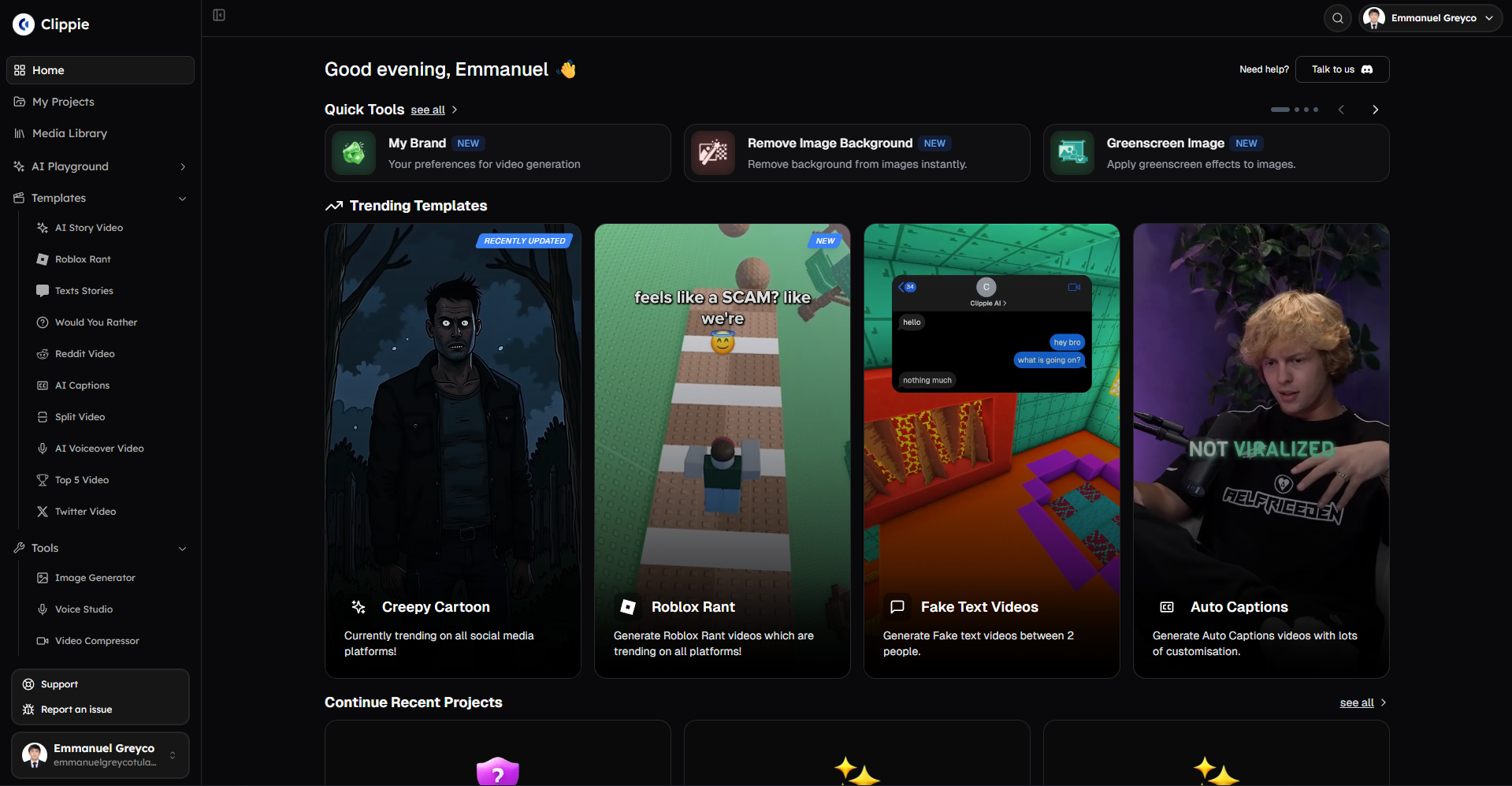
💡 Start building your YouTube automation channel with Clippie AI today →
Conclusion: YouTube Automation in 2026 Is a Business, Build It Like One
The creators who succeed with YouTube automation in 2026 are the ones who approach it with the strategic clarity and operational discipline of a business owner, not the mindset of someone hoping passive income appears without deliberate effort.
The niche decision is a business decision. The affiliate stack is a sales system. The production schedule is an operational system. The keyword targeting is a customer acquisition strategy. Each element requires intentional design and consistent execution.
What AI production tools, and specifically Clippie AI's integrated workflow, provide is the elimination of the manual production bottleneck that previously made this business model inaccessible to solo operators. A channel that once required a $5,000/month production team can now be operated by one person with a $34.99/month subscription and 3 hours per week.
The infrastructure for a 6-figure annual income channel is available to anyone willing to build it consistently over 24–36 months.
Start building your YouTube automation channel with Clippie AI today →
7. Frequently Asked Questions
Q1: Is YouTube automation still profitable in 2026 or has the market become too saturated?
YouTube automation remains profitable in 2026, but niche and keyword specificity determine outcomes more than they did three years ago. Broad, general niches are saturated. Specific sub-niches within high-CPM categories (tax strategy for self-employed people, business law for first-time entrepreneurs, real estate investing for W-2 earners) have significant search volume and dramatically limited competition. The creators who struggle with automation in 2026 are those targeting the most competitive broad keywords in oversaturated niches. The creators generating strong income are those who have identified specific underserved search queries within premium CPM niches and built catalogues specifically targeting them.
Q2: How long does it realistically take for a YouTube automation channel to reach $1,000 per month?
The timeline to $1,000/month combined AdSense and affiliate income is typically 10–16 months for a channel in a premium CPM niche posting 2 videos per week consistently. The milestone breakdown: months 1–6 (building the catalogue and reaching Partner Programme eligibility, primary income from affiliate links), months 6–10 (AdSense activating, channel building search authority, combined monthly income $200–$600), months 10–16 (search traffic compounding across a 50–80 video catalogue, combined income reaching $700–$1,200+). The primary variables that compress or extend this timeline are keyword targeting quality (channels that rank faster reach income faster) and posting consistency (gaps in publishing slow the algorithmic momentum that drives ranking).
Q3: How much does it cost to run a YouTube automation channel with Clippie AI per month?
The primary operational cost is the Clippie AI subscription: $19.99/month (Lite), $34.99/month (Creator), or $69.99/month (Pro). The Creator plan at $34.99/month is the right fit for a 2-videos-per-week channel, its 120-minute export capacity supports 8 videos per month at 15 minutes each. Additional costs are minimal: Canva Pro for thumbnails ($13/month) and potentially TubeBuddy or vidIQ for keyword research ($9–$20/month). Total monthly operational cost for a serious automation channel: approximately $57–$74/month before any income is generated.
Q4: What is the most important factor in YouTube automation success, niche, content quality, or posting frequency?
Niche selection is the highest-leverage decision because it determines the ceiling of income achievable at any given view count. Content quality is the most important operational variable because it determines whether videos rank and retain viewers, low-quality content generates views from initial impressions but fails to build the watch time signals that drive sustained ranking. Posting frequency is the compounding multiplier, a channel that posts twice per week builds its catalogue and search surface area at twice the rate of a once-per-week channel. All three are required: the right niche, at the right quality, at consistent volume.
Q5: Should a YouTube automation channel use the same videos for YouTube Shorts cross-posting?
Yes, cross-posting short clips from long-form automation videos to YouTube Shorts, TikTok, and Instagram Reels provides two benefits simultaneously. First, the Shorts drive additional views back to the full long-form video through YouTube's internal recommendation system. Second, the cross-posted clips reach audiences on TikTok and Reels who would not discover the channel through YouTube search, expanding the audience acquisition surface at minimal additional production cost. The clip-extraction process from an existing long-form video takes 15–20 minutes in Clippie AI, a worthwhile investment for the additional discovery and monetisation surface it creates.
Q6: Which Clippie AI plan is right for a YouTube automation channel posting 2 videos per week?
The Creator plan at $34.99/month is the correct plan for a 2-videos-per-week automation channel. Two 12-minute videos per week (8 per month) uses approximately 96 minutes of the Creator plan's 120-minute export capacity, within limits with 24 minutes of headroom for shorter videos, Shorts clips, and occasional additional content. The 10 custom voice slots allow immediate custom voice cloning for the channel's narrator identity, essential for building the consistent audio brand that automation channel audiences return for. The 500 AI images cover 4–6 images per video across 8 monthly videos. Channels posting 3 or more videos per week should evaluate the Pro plan at $69.99/month for its 250-minute capacity.
Read more

AI Video Creation Trends 2026: Don't Get Left Behind
What changed in AI video in 2025, the 8 trends shaping 2026, and the tools and workflow faceless Shorts, TikTok and Reels creators should use now.

Short-Form Video in 2026: Why It Wins, What to Do
The real mechanisms behind short-form's dominance in 2026, the trade-offs nobody mentions, and an 8-step playbook for Shorts, TikTok and Reels.

The Future of Faceless Content in 2026 (What to Expect)
The future of faceless content in 2026: where AI video, the rules, and monetization are heading, and what to do now.