
How to Make AI Shorts Go Viral in 2026: What Works + 12 Mistakes to Avoid
How to make AI shorts go viral in 2026, why most AI videos fail, the hook-pacing-payoff anatomy of viral Shorts, 12 mistakes killing your views (with fixes), and the 4 metrics that predict breakouts.
If you searched "how to make AI shorts go viral", or its more painful cousin, "why do my AI videos get no views", here's the truth most guides dodge: virality in 2026 isn't a hack, it's the absence of specific, identifiable mistakes. AI tools have made production nearly free, which means the videos that break out are separated from the ones that die at 200 views by decisions, not budgets. This guide covers what the data actually says about whether people watch AI content, the anatomy of shorts that travel, the 12 mistakes that quietly kill AI channels (each with its fix), and the four metrics that predict a breakout before it happens.
Executive summary: This guide is a performance playbook for AI-generated Shorts in 2026: the honest answer on audience appetite for AI content, why most AI shorts fail in the first three seconds, a hook–pacing–payoff framework for engineering watchability, how to ethically recreate viral formats without crossing originality policies, six proven faceless formats, fixes for the most common technical failures, and an analytics reading system. It's written for faceless creators who already produce videos and want them to perform, the production workflow itself is covered in our companion guide to turning a script into a video with AI.
Table of Contents
Do People Actually Watch AI-Generated Content? The 2026 Answer
Why Most AI Shorts Fail: The 3-Second Problem
Mistake #1–#12: What's Killing Your AI Shorts (and Each Fix)
The Anatomy of a Viral AI Short: Hook, Pacing, Payoff
How to Ethically Recreate Viral Formats with AI
Format #1–#6: Proven Viral AI Formats in 2026
Common Technical Issues with AI Videos, and How to Fix Each
Reading Your Analytics: The 4 Metrics That Predict Virality
FAQs
What to Do Next

Do People Actually Watch AI-Generated Content? The 2026 Answer
Yes, at enormous scale, and mostly without caring how it was made. Faceless AI-assisted channels sit throughout the Shorts and TikTok feeds people binge daily, and platforms themselves say the quiet part out loud: YouTube's trust and safety team has publicly welcomed high-quality AI-assisted content in the Partner Program while cracking down on the low-effort kind.
That sentence contains the whole 2026 dynamic. Viewers don't punish AI; they punish sameness. "AI slop" fatigue is real, audiences now recognize the default AI look (stock montage, flat robot voice, recycled quote) within seconds and swipe accordingly, and platform policy has followed viewer taste: YouTube's July 2026 monetization clarifications specifically target generic, templated content and emotionally manipulative bait.
The practical reframe: the question isn't "will people watch AI content?", it's "does your content clear the sameness bar?" A video with a real story, a distinctive look, and confident pacing gets judged as a video, not as AI. Everything below is about clearing that bar.

Why Most AI Shorts Fail: The 3-Second Problem
Feed algorithms in 2026 are ruthless auditioners: your video is shown to a small test audience, and its swipe-away rate in the first ~3 seconds largely decides whether a larger audience ever sees it. Most AI shorts fail this audition for one structural reason, AI tools generate videos from the beginning, but viewers decide from the hook.
A script that opens with context ("So there's this app called...") or a default template intro burns the only seconds that matter. The channels that break out treat the first two seconds as a separate product: written last, tested hardest, and never generic.
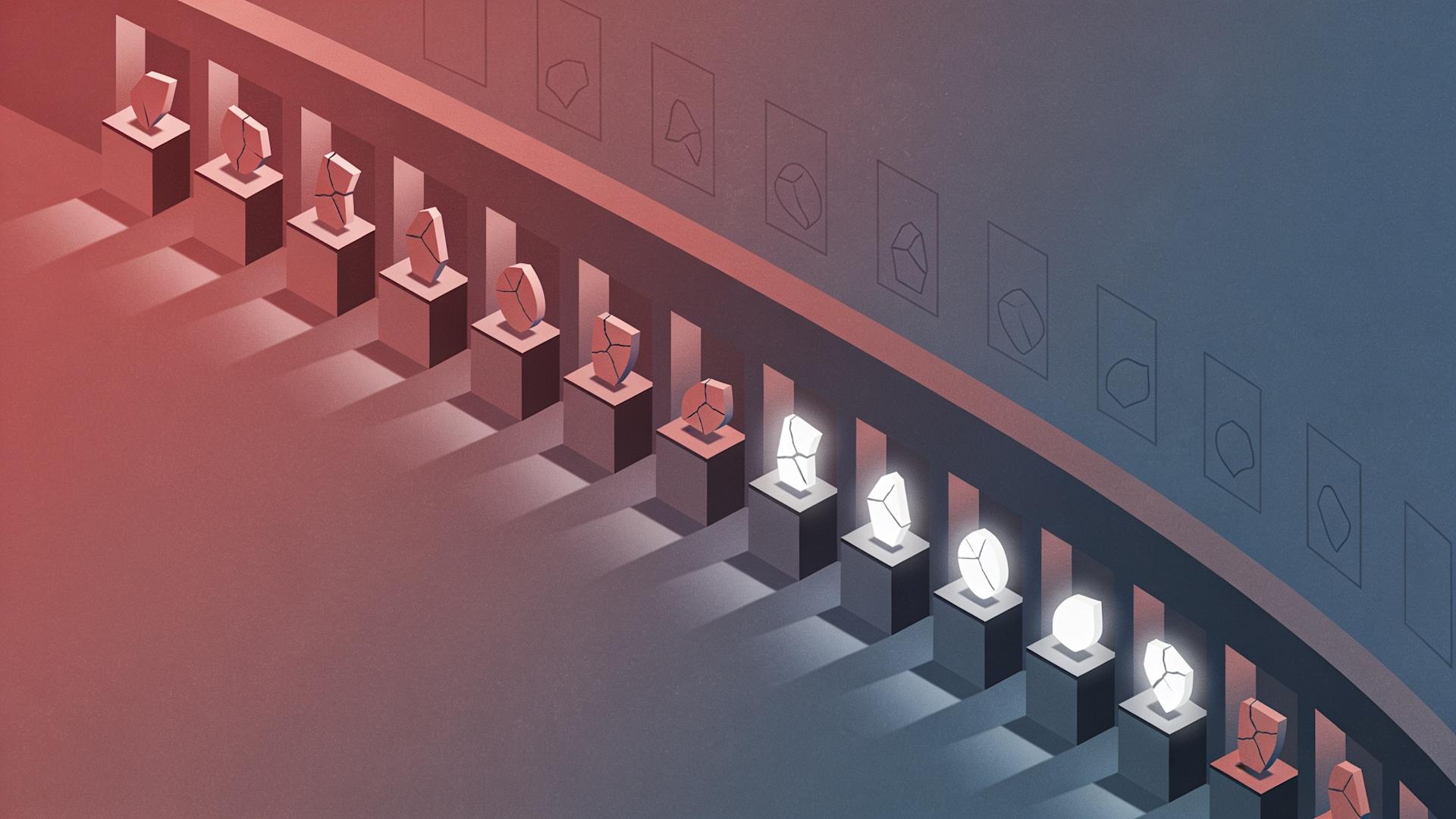
The failure math is unforgiving but useful: if 100 videos die at 200 views, you don't have 100 problems, you almost certainly have one hook problem, one sameness problem, or one niche problem repeated 100 times. The next section is the diagnostic.
Mistake #1–#12: What's Killing Your AI Shorts (and Each Fix)
Mistake #1: Opening with context instead of tension. The most common failure in AI shorts.
Fix: write the hook after the script, pull the most dramatic line to position one and let context follow attention.
Mistake #2: Robotic or mismatched voiceover. Flat narration on a dramatic story reads as parody.
Fix: audition voices on your actual opening line, match energy to format, and clone a consistent custom voice once your channel has an identity.
Mistake #3: No niche focus. A feed of random topics gives the algorithm no audience to match you with.
Fix: one niche, one viewer avatar, 90 days minimum before judging.
Mistake #4: Publishing unreviewed output. Straight-from-generator videos ship with the exact flaws viewers flag as slop.
Fix: a five-minute review pass at full speed on every video, non-negotiable, and also your policy protection.
Mistake #5: Caption errors and desync. Misspelled names and lagging captions read as low-effort in a sound-off medium.
Fix: proofread names, brands, and numbers every video; captions are UI, not decoration.
Mistake #6: Scenes that sit too long. A visual holding past one sentence is where retention graphs dip.
Fix: cut every 2–4 seconds; split long beats into two visuals or add motion.
Mistake #7: Reading source material verbatim. Narrating a Reddit thread word-for-word is both boring and a named originality violation.
Fix: adapt, restructure the story, re-engineer the twist, write your own lines.
Mistake #8: One template with swapped nouns. Fifty near-identical videos trains viewers to skip you and triggers inauthentic-content review.
Fix: vary story, structure, or angle visibly between videos; templates should scaffold, not clone.
Mistake #9: Ignoring retention graphs. Posting daily without reading analytics is rehearsing mistakes at scale.
Fix: check the retention curve of every video against your channel average; the dip timestamp is your edit note.
Mistake #10: Cross-posting with watermarks. Uploading TikTok-watermarked videos to Shorts (or vice versa) gets distribution quietly suppressed.
Fix: export clean masters and publish natively per platform.
Mistake #11: Chasing every trend outside your niche. Trend-hopping buys one video's views at the cost of your audience match.
Fix: adapt trends into your niche's format or skip them.
Mistake #12: Quitting in the dead zone. Most channels die in month two, after novelty, before traction.
Fix: commit to a fixed video count (60–90), not a feelings-based timeline; cadence through the dead zone is the strategy.

The Anatomy of a Viral AI Short: Hook, Pacing, Payoff
Every breakout short, AI-made or not, runs the same three-act machine. Here's a working example from a small channel: a 52-second AI scary-cartoon short that pulled 154K+ views from a channel with around two thousand subscribers, which is the algorithm-audition system working exactly as described.
▶ The case study: https://www.youtube.com/watch?v=NGwDqnXEohM
The hook (seconds 0–2): a visual or line that creates an open question immediately, unusual art style plus instant tension. The viewer's brain asks "what is this?" and the swipe pauses. Engineering rule: your thumbnail-frame and first line should work with the sound off.
The pacing (the middle): visual changes every 2–4 seconds, each beat advancing the story, no scene overstaying its sentence. Pacing isn't speed, it's the elimination of moments where swiping feels costless. Every cut is a small re-hook.
The payoff (the final seconds): a twist, punchline, or completion that rewards the watch. Payoffs drive the three behaviors that actually spread videos: rewatches (loops count as retention), shares ("watch till the end"), and profile taps. A short that fades out instead of landing forfeits all three.
The compounding secret: series. When your payoff teases a next installment, or your format itself is inherently episodic, viewers binge, and binge sessions are the strongest signal you can send an algorithm.
How to Ethically Recreate Viral Formats with AI
Can you recreate viral shorts with AI tools? Yes, if you understand what you're allowed to copy. The line, both ethically and under 2026 platform policy, is mechanics versus material:
Copy freely: the format mechanics. Structure, pacing pattern, hook style, visual grammar, "countdown with the #1 teased upfront" or "text conversation with a twist" are formats, and formats aren't owned
Never copy: the material. Re-uploading footage, re-voicing someone's script, shot-for-shot remakes with a synonym pass, that's reused content on YouTube, ineligible for rewards on TikTok, and it builds an audience you can't keep because the value was never yours
The transformation test: if the original creator watched your video, would they see their video or their format with your story? The second is how every genre on the internet was built; the first is a strike waiting to process
Practical workflow: deconstruct three viral examples in your niche into beat sheets (what happens at 0:00, 0:03, 0:10...), then pour an original story into the strongest beat structure. You inherit the proven skeleton and own everything on it.

Format #1–#6: Proven Viral AI Formats in 2026
Format #1: Would You Rather videos. Binary dilemmas with a countdown, participation is built into the format because viewers answer in comments before the reveal. AI handles visuals for both options fast, and the format is endlessly serial. Purpose-built tooling exists: Clippie's Would You Rather video generator templates the whole structure.
Format #2: Top 5 rankings. The countdown is a retention machine and rankings are argument-starters, comment sections do your distribution. Tease #1 in the hook, keep entries to two lines.
Format #3: Reddit-style story videos. Adapted (never verbatim) first-person stories with a re-engineered final twist. The deepest content well in short-form; differentiation lives in story selection and the last three seconds.
Format #4: Fake text-message stories. Narrative told through a phone screen, native-feeling, cheap to produce, and the highest affiliate-conversion format for app offers.
Format #5: Rant and commentary videos. A voiced hot take over gameplay or AI visuals. Personality is the moat here, the take must be specific enough to disagree with. ▶ Format walkthrough: https://www.youtube.com/watch?v=MX0Mr3nVpOM
Format #6: Trend-native visual formats. Recurring visual concepts the feed periodically falls in love with, talking-object skits, timeline transformations, dark cartoon stories. These reward early movers with outsized reach because the visual itself is the hook. ▶ Examples: https://www.youtube.com/watch?v=CA5DaQN_nQI and https://www.youtube.com/watch?v=Uk6badT-MIQ
Format strategy in one line: pick one as your channel's spine, use a second as seasoning, and let trend formats visit your niche rather than replace it.
Common Technical Issues with AI Videos, and How to Fix Each
The recurring production failures, with the working fixes:
Mangled AI imagery (hands, faces, text in images): don't fight the model, reframe prompts to avoid what it draws badly, or swap the scene for a template graphic. Never let a broken visual near the hook
Voice mispronunciations: spell problem words phonetically in the script ("Nike" → "Ny-kee"), and keep a channel pronunciation list so fixes persist across videos
Caption desync: almost always caused by editing audio after captioning, regenerate captions last, after the final audio cut
Music burying narration: keep the bed 15–20dB under voice; if you can't comfortably transcribe the narration on phone speakers, the mix is wrong
Blurry exports: export 1080p vertical at high bitrate and upload the master file, platforms re-compress everything, so feeding them a compressed file compounds the damage
Wrong crops across platforms: design for 9:16 with critical elements center-safe, because previews and feeds crop edges differently per platform
Technical polish won't make a weak video travel, but any one of these failures can stop a strong one. They're the cheapest fixes on this page.

Reading Your Analytics: The 4 Metrics That Predict Virality
Views are the scoreboard; these four are the game:
Metric #1: First-3-seconds retention (swipe-away rate). Your hook grade. If under ~70% of viewers survive the opening, nothing downstream matters, fix hooks before anything else
Metric #2: Average percentage watched. Your pacing grade. Compare each video to your channel average and read the retention curve's dip timestamps as edit notes; shorts that travel typically hold 80%+ or loop past 100%
Metric #3: Completion and rewatch rate. Your payoff grade. Loops are the strongest single signal in short-form, endings that connect back to the opening line manufacture them
Metric #4: Shares, saves, and follows per 1,000 views. The breakout predictor. Views measure the algorithm's opinion; shares measure humans volunteering distribution. A video over-indexing here versus your average is your next format decision, made for you
The weekly ritual that compounds: rank the week's videos by metrics #1 and #4, find what the top two did differently, and encode it into next week's batch. Channels that iterate on this loop don't need luck, they need repetitions.
FAQs
How often should I post AI shorts?
Once daily is the proven baseline; 3–4 weekly is the floor for algorithmic momentum. Volume only counts at maintained quality, if daily posting means skipping the review pass, post four good videos instead. Consistency over any 90-day window beats intensity in any single week.
What are the best times to post?
When your audience is active, check your analytics' audience-activity view once you have data. Starting defaults: evenings and lunch hours in your target audience's timezone (US evening hours if you're chasing US RPMs). Posting time is worth optimizing only after hooks and retention; it's a tiebreaker, not a strategy.
Why do my videos stall at around 200 views?
That number is the algorithm's test audience verdict: your video was auditioned and didn't clear the retention bar for wider distribution. It's diagnostic, not punitive, check metric #1 (hook survival) first, then sameness (Mistake #8). Ten videos stalled at 200 views nearly always share one repeated fixable flaw rather than ten separate ones.
Can I revive a dead channel or should I start fresh?
Revive if the niche is right and the content failed on execution, fix the diagnosed mistake and post consistently; algorithms re-test channels that show a quality step-change. Start fresh if you're changing niche entirely, since a mismatched subscriber base actively hurts your audience-matching signal.
Do hashtags matter for AI shorts?
Marginally, 2–4 relevant tags help classification, but search-friendly titles, spoken keywords, and caption text carry far more discovery weight in 2026. Skip hashtag-stuffing entirely; thirty tags reads as spam to platforms and viewers alike.
Can I post the same video on YouTube, TikTok, and Instagram?
Yes, and you should, multi-platform posting is free distribution and lets each algorithm test the same content independently. Two rules: export clean masters (no cross-platform watermarks — see Mistake #10), and remember TikTok monetization needs 60+ seconds while Shorts tolerates shorter cuts, so script to the strictest platform and trim per platform if needed.
What to Do Next
Diagnose before you produce: pull up your last ten videos, grade them against the 12 mistakes, and fix the one pattern that repeats, that single fix usually moves more views than a month of new uploads. Then build next week's batch on your strongest format's beat structure and let the weekly analytics ritual take over. When the views start converting, our guide to making money with AI-generated Shorts turns the traffic into revenue streams.
And if production speed is what's holding your iteration loop back, Clippie AI's format-native generators, Would You Rather, rankings, stories, fake texts, handle the build so your time goes into hooks, payoffs, and the decisions that actually make shorts travel.
Read more
The Future of Faceless Content in 2026 (What to Expect)
The future of faceless content in 2026: where AI video, the rules, and monetization are heading, and what to do now.

The Best TikTok Niches for High CPM in 2026
The best high-CPM TikTok niches in 2026: which are worth the most, what CPM really means, and how to earn from them.
How to Make Money With Whop Clipping in 2026
How to make money with Whop clipping in 2026: how pay-per-view campaigns work, realistic earnings, and how to start.