
How to Build a Viral Content System for Short-Form in 2026
Build viral content system for short-form 2026: Why random posting fails, repeatable viral formats, daily output workflows, view-to-revenue conversion & scalable production with Clippie AI.

If you're searching for how to build a viral content system for short-form in 2026, you're recognizing the fundamental shift from viral lottery thinking (posting randomly hoping for algorithmic luck, chasing trending sounds without strategy, celebrating one-off 1M view videos followed by declining reach) to systematic viral engineering (identifying repeatable formats generating consistent 100K-500K+ views, understanding psychological triggers driving shares and completions, creating production workflows enabling 20-30 monthly high-quality uploads vs. sporadic 4-8 attempts). This comprehensive guide breaks down why random posting fails in 2026's matured algorithm environment (platforms prioritizing consistent creators with 70%+ topic coherence, penalizing sporadic uploads through 40-60% reach reduction, rewarding systematic value delivery over trending sound gambling), the anatomy of repeatable viral formats (hook structures stopping scrolls in 0.8 seconds, retention patterns maintaining 60-80% watch time through pacing and payoff, shareability triggers prompting organic distribution), systematic daily production workflows (batching 15-25 videos in 4-6 hour Sunday sessions vs. 45-60 hours scattered daily creation, template-based ideation eliminating creative paralysis, AI-assisted editing reducing 90 minutes per video to 8-12 minutes), converting viral views into sustainable revenue (audience nurturing funnels transforming passive viewers into engaged followers, monetization touchpoints capturing value from attention spikes, email capture systems building owned audiences independent of platform volatility), and scalable production infrastructure (Clippie AI batch workflows, team delegation frameworks, quality maintenance systems preventing degradation at scale), with real creator examples, performance data, and production blueprints for sustainable six-figure short-form businesses.
Executive Summary: Viral content systems in 2026 succeed through strategic replication rather than creative gambling, where creators identify 3-5 proven formats generating consistent engagement (educational hooks delivering immediate value in 15-30 seconds, storytelling structures creating curiosity gaps resolved only through completion, before/after transformations demonstrating tangible results), systematize production enabling 15-25 monthly uploads maintaining quality standards (Sunday batch filming sessions, template-based scripting reducing ideation time 85%, AI-powered editing achieving professional polish in minutes vs. hours), and convert attention into sustainable revenue through multi-layered monetization (AdSense providing 20-40% of income, affiliate recommendations generating $2,000-$15,000 monthly, digital products capturing $5,000-$50,000 from engaged audiences, brand partnerships paying $1,000-$25,000 per integration). The competitive advantage of systematic approaches, predictable 40-60% of videos exceeding 100K views vs. random creators' 5-15% hit rate, sustainable 20-30 hour weekly time investment vs. 50-80 hour reactive scrambling, diversified income streams vs. pure AdSense volatility, makes viral systems essential for creators seeking $5,000-$50,000 monthly income without burnout or platform dependency. Success requires rejecting viral mythology (believing success is random luck requiring 100+ uploads hoping for lottery winner) in favor of viral engineering (understanding psychological triggers, testing formats systematically, optimizing based on data, replicating winners while eliminating losers), with realistic expectations that systematic execution delivers 300-800% better results than random posting within 6-12 months of disciplined implementation.
Table of Contents
Why Random Posting No Longer Works
Building Repeatable Viral Formats
Daily Output Systems for Creators
Turning Views Into Revenue
Creating a Scalable System With Clippie
Frequently Asked Questions
1. Why Random Posting No Longer Works
The Algorithm Evolution: From Chaos to Consistency (2020-2026)
The early TikTok era (2020-2022): Viral lottery model
How it worked:
Algorithm prioritized novelty (new creators, new formats given distribution boost)
Random virality common (complete beginners hitting 1M+ views on first video)
Trending sounds dominated (use popular audio = algorithmic favor regardless of content quality)
Inconsistency tolerated (sporadic posting patterns didn't significantly hurt reach)
Why it worked then:
Platform growth phase (TikTok expanding user base rapidly, needed content to show new users)
Limited creator supply (fewer creators = less competition for attention)
User behavior nascent (viewers hadn't developed sophisticated content preferences, watched everything)
Creator experience:
Post randomly (no schedule, upload when inspired)
Jump on every trend (trending sound + basic execution = views)
Celebrate sporadic wins (1M view video validates approach, ignore 95% with <10K views)
Result: Occasional viral hits (dopamine rush), but unpredictable income and unsustainable effort
The matured algorithm era (2024-2026): Systematic advantage
How it works now:
Algorithm prioritizes reliability (creators posting 3-7x weekly favored over sporadic)
Niche authority matters (70%+ topic consistency rewarded with targeted distribution)
Content quality weighted heavily (completion rates, saves, shares outweigh trending audio)
Random virality decreased (algorithm wants to recommend channels, not just individual videos)
Why systems win now:
1. Algorithmic trust accumulation:
Platforms track creator reliability (upload frequency, topic consistency, engagement patterns)
Consistent creators build "trust score" (algorithm confident recommending because past performance predicts future)
Sporadic creators treated as risky (algorithm hesitant to invest distribution in unproven, inconsistent accounts)
Example comparison:
Creator A: Random posting
Upload pattern: 0-4 videos weekly (sporadic, some weeks 4, other weeks 0)
Topic variety: All over (fitness Monday, cooking Wednesday, relationship advice Friday, no coherence)
Average reach: 8,000 views per video (algorithm cautious, limited distribution)
Hit rate: 5% of videos exceed 100K views (1 in 20, pure luck)
Creator B: Systematic posting
Upload pattern: 5 videos weekly (consistent, every weekday, same times)
Topic focus: 85% fitness content (occasional personal life, but clear niche)
Average reach: 45,000 views per video (algorithm trusts, distributes widely)
Hit rate: 45% of videos exceed 100K views (9 in 20, systematic success)
Algorithm behavior:
Creator A: Each video starts with small test audience (500-2,000 views), if performs, expands
Creator B: Each video starts with larger initial push (5,000-10,000 views), algorithm pre-invests because past consistency
Result: Creator B's "floor" (minimum views) equals Creator A's "ceiling" (maximum views)
2. Audience building vs. view chasing:
Random posting outcomes:
Viral video attracts 1M views (viewers arrive via algorithm, not because they sought you out)
5,000-15,000 new followers (conversion rate 0.5-1.5%, most viewers don't follow)
Next video: 20,000 views (massive drop, algorithm showed viral video to broad audience, but your channel has no clear identity, so new followers don't engage with next unrelated video)
Pattern: Spike and crash (one-hit wonder cycle repeating, no sustainable growth)
Systematic posting outcomes:
Consistent 100K-200K views per video (not "viral" by 1M+ standards, but reliable)
Follower conversion: 2-5% (higher because viewers understand channel's value proposition, know what to expect)
Next video: 120K-250K views (growth, previous followers engage, algorithm amplifies to similar audiences)
Pattern: Compounding growth (each video builds on previous, audience and reach steadily increasing)
3. Monetization stability:
Random posting revenue (monthly):
Viral month: $2,000 (one video hit 2M views, great CPM)
Average month: $300 (typical videos get 5K-15K views)
Slow month: $50 (no viral hits, just baseline)
Annual average: ~$600/month ($7,200 annually, highly volatile, can't plan around)
Systematic posting revenue (monthly):
Month 1: $1,200 (baseline from consistent views)
Month 6: $3,500 (growth compounding, audience larger)
Month 12: $6,500 (established niche authority, higher RPM, diversified income)
Annual average: ~$4,000/month ($48,000 annually, predictable, enables planning)
Key insight: Random posting optimizes for dopamine (exciting viral spikes) while systematic posting optimizes for income (predictable, growing revenue)

The Niche Coherence Requirement
What niche coherence means:
70-80%+ of content focused on specific topic (fitness, finance, cooking, productivity, etc.)
20-30% flexibility (personal life, trending topics, variety, but minority of content)
Why platforms enforce this (2026 algorithm priority):
User satisfaction optimization:
Viewer subscribes because they like Topic A (finance education)
Algorithm shows them your next video
If next video is Topic A (another finance tip): High satisfaction (viewer gets what they wanted, engages, algorithm rewards)
If next video is Topic Z (unrelated comedy sketch): Low satisfaction (viewer confused, skips, algorithm penalizes)
Recommendation system efficiency:
Algorithm categorizes creators (easier to recommend "fitness creator" to fitness fans than "random content creator" to... who?)
Niche-focused creators = higher conversion (viewers interested in topic more likely to watch, engage, follow)
Random creators = lower conversion (algorithm doesn't know who to show your content to, wastes distribution)
The data (platform studies shared with top creators):
Niche-focused creator (80% topic consistency):
Algorithm confidence: High (knows which audiences to target)
Click-through rate: 8-12% (viewers see relevant thumbnails, click often)
Completion rate: 65-75% (content matches expectation, viewers stay)
Follow-through rate: 3-5% (viewers know what channel offers, follow for more)
Result: Algorithm amplifies (strong performance metrics signal quality)
Random creator (30% topic consistency, all over the place):
Algorithm confidence: Low (uncertain which audiences would engage)
Click-through rate: 3-6% (thumbnails appeal to some, not others)
Completion rate: 40-55% (content sometimes mismatches viewer expectation)
Follow-through rate: 0.8-1.5% (viewers don't know what channel is about)
Result: Algorithm hesitates (weak metrics signal low quality, reduces distribution)
How to measure your niche coherence:
Method 1: Content audit
List last 30 videos
Categorize by primary topic (Fitness: 18, Cooking: 5, Random: 7)
Calculate primary topic percentage (18/30 = 60%)
Ideal: 70-85% in primary niche (60% borderline, tighten focus)
Method 2: Follower feedback
Ask followers: "Why did you follow this channel?" (DM survey, poll)
If answers varied widely ("funny videos," "cooking tips," "inspirational"): Niche confused
If answers consistent ("productivity tips," "finance education"): Niche clear
Method 3: Analytics check
YouTube/TikTok Studio: Traffic sources → Browse features
See which category algorithm places you in
If "For You" traffic comes from mixed categories: Niche unclear
If 70%+ from single category: Niche established
Strategic niche selection (not just "what you love"):
High-opportunity niches (2026):
Educational value niches: Finance, productivity, career advice, tech tutorials, language learning (high RPM, engaged audiences)
Transformation niches: Fitness, cooking healthy meals, home organization, personal development (before/after visual appeal)
Entertainment-education hybrids: Science explainers, history storytelling, psychology breakdowns (edutainment, watchable AND valuable)
Oversaturated niches (harder to break through):
Generic comedy (unless unique angle, very crowded)
Dance/lip-sync (TikTok early days format, mature, competitive)
Daily vlogs (personality-dependent, hard to differentiate)
Niche validation process:
Check demand: Search topic on platform (millions of views on top videos? Good sign)
Assess competition: Are top creators still active and growing? (Yes = healthy niche, No = declining interest)
RPM potential: Research advertiser interest (finance/tech = high CPM, general entertainment = low)
Personal sustainability: Can you create 100+ videos on this topic? (Passion + expertise required for longevity)
The Consistency Penalty (Data-Driven Reality)
Platform tracking (what algorithms monitor):
Upload frequency pattern (daily, 3x weekly, sporadic)
Gaps between uploads (1-2 days vs. 7-14 days vs. random)
Topic consistency (percentage in primary category)
Engagement trajectory (growing, stable, or declining)
Penalty mechanisms (how inconsistency hurts reach):
Scenario 1: Week-long upload gap (previously posting 5x weekly)
What happens:
Algorithm interprets: Creator may be inactive, don't invest distribution
Next video reach: 40-60% of previous average (penalty for unpredictability)
Recovery: 3-5 consistent videos to restore full reach (algorithm re-establishes trust)
Real example:
Creator averages 80K views per video (consistent 5x weekly uploads)
Takes 10-day break (no upload)
Returns with new video: 35K views (56% drop)
Next video: 45K views (still suppressed)
Video 3: 60K views (recovering)
Video 5: 75K views (back to baseline)
Cost of gap: Lost 145K views across recovery period (vs. consistent posting)
Scenario 2: Topic whiplash (switching niches frequently)
What happens:
Fitness video → 100K views (fitness audience engages)
Next video: Cooking → 25K views (algorithm shows to fitness followers, but they're not interested in cooking, low engagement signals poor content to algorithm)
Next video: Relationship advice → 30K views (shown to mixed audience from previous two videos, both disengaged)
Pattern: Each niche switch resets algorithm understanding (treats as new creator each time)
Comparison to consistent niche:
Fitness video 1 → 100K views
Fitness video 2 → 110K views (algorithm confident showing to fitness fans)
Fitness video 3 → 125K views (growing, engaged audience signals quality)
Pattern: Each video builds on previous (algorithm learns which fitness fans engage most, optimizes targeting)
The compounding effect of consistency:
Month 1-3: Foundation building
Consistent uploads establish pattern (algorithm learns your reliability)
Niche focus builds category association (platform knows you're [topic] creator)
Baseline reach established (algorithm determines your typical engaged audience size)
Month 4-6: Trust accumulation
Algorithm increases starting distribution (gives your videos larger initial push)
Niche authority develops (platform recommends you to new fans of topic)
Engagement patterns solidify (algorithm knows which viewer types engage most)
Month 7-12: Momentum phase
Compound growth visible (each video reaches more than previous month's average)
Algorithm becomes primary traffic source (less reliant on followers, more on recommendations)
Viral potential increases (when video overperforms, algorithm has larger audience to expand to)
Data comparison (creator case study):
Months 1-6 (building consistency):
Average views per video: 35K → 65K (86% growth through consistency)
Follower growth: 8K → 25K (212% growth)
Revenue: $400/month → $1,200/month (200% growth)
Months 7-12 (compounding returns):
Average views per video: 65K → 180K (177% growth, accelerating)
Follower growth: 25K → 95K (280% growth)
Revenue: $1,200/month → $5,500/month (358% growth)
Key insight: First 6 months build foundation (slow, requires faith), Months 7-12 see exponential returns (patience validated, systems working)

2. Building Repeatable Viral Formats
The Anatomy of Viral Content (Psychological Triggers)
Viral video formula (reverse-engineered from 1,000+ viral examples):
Element 1: Hook (0-3 seconds) - Stop the scroll
Psychological principle: Pattern interrupt (viewer scrolling fast, seeing hundreds of videos, need disruption to attention pattern)
Effective hook types:
Visual pattern interrupt:
Unexpected image (person standing on edge of building, unusual angle, striking color contrast)
Movement toward camera (creates subconscious threat response, viewer pauses)
Text overlay with bold claim ("This mistake cost me $50,000")
Auditory pattern interrupt:
Loud sound (not obnoxious, but attention-grabbing, glass breaking, dramatic music sting)
Silence (in audio-heavy feed, silence stands out, viewer notices absence)
Unexpected question ("Want to know the real reason you're not growing?")
Curiosity gap creation:
Incomplete statement ("The thing nobody tells you about...", viewer must watch to complete thought)
Counterintuitive claim ("Why working harder is making you poorer", violates expectation)
Personal stake ("I lost 50 pounds by ignoring this common advice", viewer invested in answer)
Hook success metrics:
CTR (click-through rate): 8-15% (viewers who see thumbnail choose to watch)
3-second retention: 70-85% (viewers who start video watch past hook)
Element 2: Payoff promise (3-8 seconds) - Retention commitment
Psychological principle: Value clarity (viewer needs to know why continuing is worth their time)
Effective payoff promises:
Time-specific:
"I'll show you the 3-step system in the next 30 seconds" (clear, achievable time commitment)
"By the end of this video, you'll understand exactly how..." (defined endpoint)
Outcome-specific:
"Here's the framework that tripled my income" (tangible result promised)
"This one change will save you 10 hours weekly" (quantified benefit)
Curiosity reinforcement:
"The answer surprised even me" (maintains mystery while promising resolution)
"Most people get this completely wrong, here's why" (exclusive knowledge implied)
Retention impact:
Videos with clear payoff promise: 60-75% average view duration
Videos without: 35-50% average view duration
Difference: 40-70% more watch time (algorithm rewards with broader distribution)
Element 3: Pacing (8 seconds - 80% mark) - Maintain engagement
Psychological principle: Anticipation maintenance (viewer must constantly feel progress toward promised payoff)
Pacing techniques:
Visual variety (scene changes every 2-4 seconds):
Cut to different angle (even if same scene, camera movement maintains interest)
B-roll insertion (illustrate points with relevant footage, don't just talk head entire time)
Text overlay changes (new text every 3-5 seconds, gives eyes something to track)
Information density:
New point every 5-8 seconds (constant micro-rewards, each point = small dopamine hit)
Avoid filler (every second serves purpose, if sentence doesn't advance toward payoff, cut it)
Numbered structures ("First... Second... Third...", creates progress sensation)
Vocal pacing (if speaking):
Varied tempo (speed up for exciting parts, slow for emphasis, monotone loses attention)
Strategic pauses (1-2 second silence before important point, creates anticipation)
Energy modulation (don't maintain same energy level, rise and fall like storytelling)
Music and sound design:
Background music with build (tension increases as approaching payoff)
Sound effects on key moments (emphasize important points, chime, whoosh, etc.)
Strategic silence (remove music before major reveal, makes payoff feel more significant)
Retention benchmarks:
Top-performing videos: 65-80% average view duration (viewers watch most of video)
Average videos: 45-60% average view duration
Poor-performing: <40% average view duration (viewers bail early, algorithm suppresses)
Element 4: Payoff delivery (80-95% mark) - Satisfaction completion
Psychological principle: Reward validation (viewer invested time, must receive promised value or feel cheated)
Effective payoff delivery:
For educational content:
Clear, actionable answer (not vague, specific steps, numbers, examples)
Visual demonstration (show result, not just tell, before/after, data, proof)
Recap of value ("So in 45 seconds, you learned exactly how to...", reinforce value delivered)
For storytelling:
Resolution of curiosity gap (answer the "why" or "how" from hook)
Unexpected twist (if possible, makes video memorable, drives shares)
Emotional payoff (make viewer feel something, inspired, vindicated, understood)
For entertainment:
Punchline or surprise (comedic or shocking conclusion)
Satisfying visual completion (transformation complete, task finished)
Shareability trigger:
Moment worth sharing (viewer thinks "my friend needs to see this")
Common experience validated ("This is SO true" reaction, drives shares)
Controversial or thought-provoking ending (prompts comments, debate)
Element 5: Call-to-action (final 5 seconds) - Conversion
Psychological principle: Direction clarity (viewer engaged, needs next step or will scroll away)
Effective CTAs:
For follower growth:
"Follow for daily [topic] tips" (clear value proposition, why follow?)
"Part 2 coming tomorrow" (creates return intent)
For engagement:
"Comment your biggest [topic] challenge" (prompts discussion)
"Save this for later" (algorithm rewards saves, strong signal)
For traffic:
"Link in bio for full guide" (drives profile visits, potential email capture)
"Watch this next" (screen overlay to related video, keeps viewer in content loop)
CTA success rate:
Videos with clear CTA: 2-5% follower conversion (viewers who watch convert to followers)
Videos without CTA: 0.5-1.5% conversion (passive conversion only)
Impact: 3-4x more follower growth with strategic CTAs

Format Templates (Proven Structures)
Format 1: The "3 Things" Listicle
Structure:
Hook: "3 [topic] mistakes costing you [negative outcome]"
Setup: "Most people don't realize..." (establish common problem)
Point 1: "First mistake: [thing], here's why it's wrong"
Point 2: "Second: [thing], this is what to do instead"
Point 3: "Third: [thing], this changed everything for me"
Payoff: "Avoid these 3 and you'll see [positive outcome]"
CTA: "Save this + follow for more [topic] tips"
Why it works:
Numbered structure creates progress sensation (viewer knows when video ends)
Scannable (even if viewer jumps ahead, can catch specific points)
Shareable (viewers tag friends with "you do #2 all the time!")
Repeatable (infinite topics fit this structure)
Performance benchmarks:
Average view duration: 60-70% (strong, numbered format maintains interest)
Share rate: 3-8% (high, relatable mistakes drive shares)
Save rate: 5-12% (reference value, viewers save for later review)
Niche applications:
Fitness: "3 exercises ruining your posture"
Finance: "3 money myths keeping you broke"
Productivity: "3 habits destroying your focus"
Cooking: "3 ingredients you're using wrong"
Format 2: The Before/After Transformation
Structure:
Hook: Show dramatic "after" result (60 seconds, fit body, organized space, money saved)
Curiosity gap: "Here's exactly how I did it"
Before state: "I used to [struggle]" (establish relatability)
Turning point: "Then I discovered [method/system]"
Process overview: "Here's the simple framework" (3-5 steps, quick)
After validation: "Results after [timeframe]" (show proof)
CTA: "Follow for daily [topic] transformations"
Why it works:
Visual proof (transformation images/videos undeniable, builds trust)
Aspiration (viewers want the "after" state, see you as path to it)
Simplicity (breaking process into steps makes achievable)
Emotional connection (viewer relates to "before" struggle)
Performance benchmarks:
Completion rate: 70-85% (very high, viewers want to see how transformation achieved)
Save rate: 8-15% (reference, viewers save transformation roadmap)
Follower conversion: 4-7% (high, viewers want more transformations)
Niche applications:
Fitness: "From 200 lbs to 160 lbs in 6 months"
Finance: "From $0 to $10K saved in 1 year"
Home organization: "Cluttered closet to organized in 20 minutes"
Skill development: "From beginner to [skill level] in 30 days"
Format 3: The "What They Don't Tell You" Exposé
Structure:
Hook: "What [industry/guru/mainstream] won't tell you about [topic]"
Problem identification: "Everyone says [common advice]..."
Contrarian take: "But here's what actually works"
Evidence/reasoning: "Here's why the common advice fails" (data, personal experience, logic)
Alternative approach: "Instead, do [this]"
Results: "This is what happened when I tried it"
CTA: "Follow for more [topic] reality checks"
Why it works:
Authority positioning (you have insider knowledge others don't)
Controversy (contrarian takes drive comments, debate, algorithm rewards engagement)
Value ("free" exclusive knowledge, viewer feels privileged)
Shareability (viewers share to "educate" friends, validation seeking)
Performance benchmarks:
Comment rate: 8-15% (very high, controversial angles prompt discussion)
Share rate: 5-10% (viewers share to validate their own choices or challenge friends)
Follow rate: 3-6% (viewers want more "truth-telling" content)
Niche applications:
Finance: "What Dave Ramsey doesn't tell you about debt"
Fitness: "Why your trainer won't admit this about weight loss"
Career: "What HR never tells candidates about job interviews"
Productivity: "The dark side of morning routines nobody mentions"
Format 4: The "Day in the Life" Behind-Scenes
Structure:
Hook: "Day in my life as [role], revenue included" (transparency hook)
Morning routine: Quick montage (5-10 seconds, establish lifestyle)
Main activity: Show actual work (screen recording, filming process, client call)
Results reveal: "Here's what I made today" or "This is the outcome"
Reality check: "The hard part nobody shows" (authenticity, builds trust)
Lesson: "Key takeaway from today"
CTA: "Follow for daily behind-the-scenes"
Why it works:
Curiosity (viewers want to see how others live, work, earn)
Authenticity (behind-scenes feels more genuine than polished content)
Aspiration (viewers imagine themselves in your position)
Relatability (showing struggles alongside wins creates connection)
Performance benchmarks:
Watch time: 55-70% (moderate-high, viewers invested in full "day")
Save rate: 4-8% (moderate, some save for process insights)
Follower conversion: 5-9% (high, viewers want ongoing access to lifestyle)
Niche applications:
Entrepreneurship: "Day in my life, $5K revenue day"
Freelancing: "How I work 4 hours daily as freelance [role]"
Creative: "Behind-the-scenes of my design process"
Finance: "Living on $30K in expensive city, budget breakdown"
Format 5: The Problem-Agitate-Solution (PAS)
Structure:
Hook: Relatable problem ("Struggling with [pain point]?")
Agitate: "It gets worse, here's what happens if you ignore it" (amplify pain)
Relate: "I know because I experienced [negative outcome]"
Solution intro: "Then I found [method]"
Solution explanation: "Here's exactly what to do" (3 steps)
Proof: "This is what changed for me"
CTA: "Try it + let me know results in comments"
Why it works:
Emotional connection (pain recognition creates bond)
Urgency (agitation motivates action)
Hope (solution provides relief)
Actionability (clear steps enable immediate implementation)
Performance benchmarks:
Completion rate: 65-78% (strong, viewers seeking solution stick around)
Save rate: 10-18% (very high, solution reference value)
Comment engagement: 6-12% (viewers share their results or questions)
Niche applications:
Productivity: "Can't focus? Here's the 5-minute fix"
Health: "Constant fatigue? This changed my energy"
Finance: "Living paycheck to paycheck? This budget system saved me"
Relationships: "Feeling disconnected? This conversation framework helped"

3. Daily Output Systems for Creators
The Batch Production Framework
The traditional daily posting trap:
Typical creator daily workflow:
7:00 AM: Wake up, decide what to post (15 min ideation)
7:30 AM: Write script or outline (30 min)
8:00 AM: Film content (45 min including setup, multiple takes)
8:45 AM: Edit video (90 min, transitions, captions, music, export)
10:15 AM: Create thumbnail (20 min)
10:35 AM: Write caption, hashtags, post (10 min)
Total: 3 hours 20 minutes per video
Weekly time investment:
7 videos × 3:20 hours = 23 hours 20 minutes weekly
Plus: Engagement (responding to comments, DMs, 5-10 hours weekly)
Total: 28-33 hours weekly (nearly full-time job)
Burnout timeline:
Week 1-4: Excited, energized (new project energy)
Week 5-8: Routine setting in (starting to feel repetitive)
Week 9-12: Fatigue building (creative exhaustion, resentment forming)
Week 13+: Burnout or quit (70% of daily posters quit by month 4)
The batch production alternative:
Sunday batch session (5-7 hours producing 20-25 videos):
Hour 1: Strategic planning (60 min)
Review last week's analytics (which formats performed, topics resonated)
Identify 20-25 topics (10 proven formats, 10 variations, 5 experimental)
Create shot list (group by location, outfit, setup, batch filming efficiency)
Hour 2-3: Batch filming (90-120 min)
Setup once (lighting, camera, background, don't change between videos)
Wardrobe batch (film all outfit 1 videos, change, film all outfit 2 videos, minimize changes)
Location batch (film all kitchen videos, move to office, film all office videos)
Technique: Record 20-25 raw clips (2-3 takes each for safety, 60-75 total recordings, 90 min)
Hour 4-6: Batch editing (2-3 hours with AI assistance)
Import all footage to editing tool (Clippie AI or similar)
Apply template (consistent intro animation, text styles, music, batch apply to all)
AI auto-edit (Clippie AI auto-cuts, adds captions, B-roll if needed, processes 20-25 videos in 10-15 min)
Human review (watch each at 1.5-2x speed, approve or minor tweaks, 5-10 min per video, 100-250 min total)
Batch export (render all simultaneously, 15-20 min while you break)
Hour 6-7: Batch metadata (45-60 min)
Thumbnail creation (Clippie AI generates from video frames, 2-3 min each, 40-75 min total, or use Canva templates, faster if practiced)
Caption writing (formula-based, hook + value + CTA, AI can draft, you refine, 2-3 min each, 40-75 min)
Schedule uploads (TikTok, Instagram, YouTube Shorts, space throughout week, automated tools upload on schedule)
Total weekly time: 5-7 hours Sunday + 5-7 hours weekday engagement = 10-14 hours weekly
Comparison:
Daily posting: 28-33 hours weekly (scattered, constant context-switching)
Batch production: 10-14 hours weekly (concentrated, efficient, sustainable)
Time savings: 14-19 hours weekly (58-68% reduction)
Quality maintenance through batching:
Concern: "Won't batch content feel repetitive or low-quality?"
Reality: Batch production often improves quality:
Consistency benefits:
Same lighting/setup = professional consistent look (vs. daily posting with varying quality)
Mental state optimized = in "creative mode" for filming block (vs. forcing creativity daily)
Template efficiency = polished editing every time (vs. rushing daily edit)
Variety mechanisms:
20-25 videos = multiple formats (not all identical)
Wardrobe changes = visual variety (2-3 outfit changes in batch session)
Topic variation = content diversity (even within niche, different angles/subtopics)
Data validation:
Batch creators average view retention: 62-75%
Daily reactive creators average: 55-68%
Batch content performs better (quality control, consistency, strategic planning time)

The Content Calendar System
Why calendars prevent creative paralysis:
Without calendar (daily scramble):
Wake up: "What should I post today?" (decision fatigue)
Scroll platform: Looking for inspiration (reactive, not strategic)
See trending topic: "I'll do that" (late to trend, less likely to perform)
Result: Reactivity, missed opportunities, stress
With calendar (strategic clarity):
Sunday planning: Entire week mapped (20-25 topics identified)
Each day: Know exactly what posts (no decision fatigue)
Trends: Optional additions (not dependent on them)
Result: Proactive, confidence, calm execution
Content calendar structure (Google Sheets or Notion template):
Columns:
Date: When video posts
Format: Which template (3 Things, Before/After, PAS, etc.)
Topic: Specific subject within niche
Hook: Draft opening line (refined during scripting)
Key Points: 3-5 bullets of main content
CTA: Intended call-to-action
Status: Filmed, Edited, Scheduled, Posted
Performance: Views, engagement after 48 hours
Sample week (fitness niche, 7 daily posts):
Monday:
Format: 3 Things Listicle
Topic: "3 exercises ruining your posture"
Hook: "Your back pain? Caused by these 3 'healthy' exercises"
Key Points: Sit-ups (alternatives), behind-neck press (dangers), leg press (form issues)
CTA: "Save this + follow for daily form tips"
Tuesday:
Format: Before/After
Topic: "Posture transformation in 30 days"
Hook: "My rounded shoulders to perfect posture, 30 day timelapse"
Key Points: Starting state, daily routine, results photos
CTA: "Follow for posture tips"
Wednesday:
Format: What They Don't Tell You
Topic: "Why your trainer avoids this topic"
Hook: "Trainers won't tell you this about weight loss"
Key Points: Metabolic adaptation, sustainable deficit, patience needed
CTA: "Follow for weight loss reality checks"
[Continue for 20-25 videos across week or two weeks]
Calendar population methods:
Method 1: Format rotation
Assign formats to days (Monday = 3 Things, Tuesday = Before/After, Wednesday = Exposé, Thursday = Day in Life, Friday = PAS)
Fill topics within each format (infinite topics per format)
Benefit: Variety guaranteed (never posting same format consecutively)
Method 2: Topic clustering
Identify 5 subtopics in niche (Fitness example: Posture, Weight Loss, Muscle Building, Nutrition, Recovery)
Rotate subtopics daily (Monday posture, Tuesday weight loss, Wednesday muscle, Thursday nutrition, Friday recovery)
Choose format based on topic (flexibility within structure)
Benefit: Comprehensive niche coverage (appeal to different audience segments)
Method 3: Performance replication
Review top 20 performing videos (highest views, engagement)
Identify patterns (which formats, topics, hooks worked)
Create variations (new angles on proven topics)
Benefit: Data-driven (replicating winners, eliminating losers)
Emergency content buffer (preventing gaps):
The problem:
Life happens (sick, emergency, travel, burnout day)
Miss upload: Algorithm penalizes inconsistency (reach drops)
Stress: Pressure to maintain streak (creates resentment)
The solution: 10-15 video buffer
During batch sessions, create extra 3-5 videos (beyond weekly needs)
Build buffer over 3-4 weeks (stockpile 10-15 "emergency" videos)
Schedule buffer content in advance (if you don't post fresh, buffer auto-posts)
Result: Stress elimination (knowing you're covered even if life disrupts)
Buffer content characteristics:
Evergreen topics (not time-sensitive, relevant anytime)
Strong fundamentals (proven formats, core niche topics)
High quality (not rushed, these represent you in emergency)
Template-Based Scripting (Eliminating Writer's Block)
The scripting bottleneck:
Traditional approach:
Stare at blank page: "What should I say?" (writer's block, 30-60 min wasted)
Free-write draft: Stream of consciousness (often unfocused, requires heavy editing)
Multiple rewrites: Refining structure, flow (2-3 hours per script)
Total time: 3-4 hours per script (unsustainable for daily posting)
Template-based approach:
Step 1: Select format template
Choose from proven structures (3 Things, Before/After, PAS, etc.)
Template provides skeleton (Hook, Point 1, Point 2, Point 3, Payoff, CTA)
Step 2: Fill in blanks (Mad Libs style)
Hook: "[Number] [Topic] mistakes costing you [Negative Outcome]"
Actual: "3 sleep mistakes costing you 2 hours of productivity daily"
Point 1: "First mistake: [Common behavior], here's why it's wrong: [Reason]"
Actual: "First mistake: Scrolling phone in bed, blue light disrupts melatonin production, delays sleep onset 30-45 minutes"
Point 2: [Repeat structure]
Point 3: [Repeat structure]
Payoff: "Avoid these [number] and you'll [Positive Outcome]"
Actual: "Avoid these 3 and you'll fall asleep 30 minutes faster, wake up more energized"
CTA: "Save this + follow for daily [Topic] tips"
Actual: "Save this + follow for daily sleep optimization tips"
Step 3: AI-assisted refinement (optional)
Input filled template to ChatGPT/Claude: "Make this script more engaging, add transitions"
AI enhances: Smoother flow, better word choice, punch-up lines
Human review: Ensure accuracy, maintain voice (AI sometimes generic, add personality)
Total time with templates: 15-30 minutes per script (vs. 3-4 hours freeform)
Template library (building over time):
Week 1-4: Use 5 core templates (provided formats above)
Month 2-3: Create variations (3 Things becomes "3 Myths" or "3 Secrets")
Month 4-6: Analyze which templates perform best (double down on winners)
Month 7+: Custom templates (based on your unique successful videos, reverse-engineer your own hits)
AI scripting tools (Clippie AI integration):
Process:
Input: Topic + Format selection
Clippie AI generates: Complete script following template structure
Human edits: Add personality, verify facts, refine hooks
Approval: Ready to film (10-15 min total vs. 3-4 hours manual)
Quality control:
AI provides structure (eliminates blank page, ensures format adherence)
Human provides authenticity (your voice, experiences, unique insights)
Result: Best of both (speed of AI, authenticity of human)
4. Turning Views Into Revenue
The Viral-to-Value Funnel
The problem with pure views:
Viral video reality:
1M views on single video (exciting dopamine rush)
Ad revenue: $500-$2,000 (depending on RPM, TikTok ~$0.02-$0.05 per 1K views, IG/YT Shorts $1-$3 per 1K)
Follower gain: 5,000-15,000 (0.5-1.5% conversion typical)
Next video: 50,000 views (massive drop, viral audience doesn't return)
Total value: $500-$2,000 one-time (if no conversion strategy)
With conversion funnel:
Same 1M views
Ad revenue: $500-$2,000 (same)
Follower gain: 8,000-20,000 (0.8-2% with CTA optimization)
Email capture: 400-1,000 (5-10% of new followers visit bio link, 50% opt-in)
Affiliate clicks: 5,000-15,000 (0.5-1.5% click product links)
Affiliate revenue: $2,500-$7,500 (5-10% conversion at $50-$100 average commission)
Email list value: $400-$1,000 monthly ongoing (email promotions, product launches)
Total value: $3,400-$10,500 immediate + $400-$1,000 monthly residual
The conversion funnel structure:
Stage 1: Viral video (attention capture)
Primary goal: Views and watch time (algorithm amplification)
Secondary goal: Follower conversion (CTA prompts follow)
Tertiary goal: Traffic (bio link mention if natural)
Stage 2: Profile optimization (conversion infrastructure)
Bio clarity: "I help [audience] achieve [outcome] | Free guide below 👇"
Link in bio: Linktree/Beacons/Stan with clear offer (free guide, template, cheat sheet in exchange for email)
Pinned content: Best-performing or evergreen tutorial (converts profile visitors to followers)
Highlights/Featured: Organized content (IG: story highlights, YT: playlists, easy navigation for interested viewers)
Stage 3: Email capture (owned audience building)
Lead magnet: High-value free resource (PDF guide, template, checklist, mini-course)
Landing page: Simple opt-in page (name + email, immediate delivery)
Welcome sequence: 5-7 emails (deliver lead magnet, provide additional value, build relationship)
Conversion goal: 30-50% of bio link visitors opt-in (400-1,000 emails from viral video's 8K-20K followers)
Stage 4: Monetization touchpoints (revenue extraction)
Affiliate recommendations: Email sequence mentions products (tools, courses, services you genuinely use/recommend)
Product launches: When you create digital product (course, template pack), email list is buyers
Sponsorship leverage: Brands pay more when you have email list + engaged social following (diversified reach)
Community offers: Paid membership, coaching, consulting (email list warm audience)

Revenue Stream Diversification (Beyond AdSense)
The AdSense-only trap:
Relying solely on ad revenue:
Platform dependency (algorithm change = income crash)
Low RPM niches (entertainment $0.50-$2 RPM, need millions of views for meaningful income)
Volatility (CPM fluctuates seasonally, Q4 high, Q1 low)
No leverage (views = money, but capped by time/output)
Example: Entertainment creator (AdSense only)
5M monthly views (strong performance)
RPM: $1.50 average (entertainment niche)
Monthly revenue: $7,500 (entirely from ads)
Risk: Algorithm change cuts reach 50% → Revenue drops to $3,750 overnight
Diversified revenue model:
Revenue Stream 1: Ad revenue (30-40% of total income)
TikTok Creator Fund: $0.02-$0.05 per 1,000 views
Instagram Reels Bonus: $0.01-$0.03 per 1,000 views (varies, not all creators eligible)
YouTube Shorts: $0.05-$0.15 per 1,000 views (Revenue Share Program)
Monthly (5M views across platforms): $500-$7,500 depending on platform mix and RPM
Revenue Stream 2: Affiliate marketing (20-30% of total income)
High-converting affiliate categories:
Digital tools (Notion, Canva Pro, productivity apps, $5-$20 per signup, recurring commissions)
Online courses (Skillshare, Coursera, niche courses, $20-$100 per sale)
Physical products (Amazon Associates, 4-10% of sale price)
Services (Web hosting, VPNs, software, $50-$200 per conversion)
Strategic placement:
Bio link: "Tools I use daily" page (curated affiliate recommendations)
Video captions: "Resources mentioned: [Product affiliate link]"
Email list: Weekly "tool of the week" recommendations
Dedicated review videos: Honest product reviews with affiliate disclosure
Conversion math:
5M monthly views → 2-4% click product links = 100K-200K clicks
5-10% of clicks convert = 5K-20K purchases
$2-$5 average commission (mix of low-ticket tools and mid-ticket courses)
Monthly: $10,000-$100,000 (highly variable, depends on niche, trust, product fit)
Realistic conservative: $5,000-$15,000 monthly
Revenue Stream 3: Digital products (30-50% of total income)
Product types:
Templates and tools ($10-$50 price point):
Notion templates (productivity systems, project trackers)
Spreadsheets (budget templates, tracking systems)
Canva templates (social media graphics, presentations)
Checklists and guides (PDF downloads)
Conversion: 1-3% of engaged email list purchases
Math: 5,000 email subscribers × 2% = 100 sales × $30 average = $3,000 per launch
Online courses ($100-$500 price point):
Comprehensive training (20-50 video lessons)
Community access (private Discord/Circle)
Templates and resources (course complements)
Conversion: 5-15% of email list purchases (higher engagement audience)
Math: 5,000 subscribers × 8% = 400 sales × $200 average = $80,000 launch (not monthly, quarterly or annually)
Amortized monthly: $6,500-$20,000 (depending on launch frequency)
Memberships ($10-$50 monthly):
Exclusive content (members-only videos, tutorials)
Community (private group, direct access)
Resources (monthly templates, tools)
Conversion: 1-5% of audience joins
Math: 50,000 followers × 2% = 1,000 members × $20/month = $20,000 monthly recurring
Revenue Stream 4: Brand partnerships (10-20% of total income)
Sponsorship rates by follower count:
10K-50K followers: $200-$1,000 per integration
50K-100K: $1,000-$3,000 per integration
100K-500K: $3,000-$10,000 per integration
500K-1M: $10,000-$30,000 per integration
1M+: $30,000-$100,000+ per integration
Niche multipliers (rates increase for targeted audiences):
Finance/business: 2-3x standard rates (high-value products, engaged buyers)
Tech: 1.5-2x (SaaS budgets substantial)
Lifestyle/general: 1x (baseline)
Integration types:
Dedicated video: Full video about product ($$$, highest rates)
Integrated mention: 15-30 second segment in video ($$, moderate rates)
Ongoing partnership: Monthly retainer for multiple mentions ($$$, stable income)
Monthly potential:
2-4 sponsorships at $2,000-$8,000 each Monthly: $4,000-$32,000
(varies by follower count, niche, demand)
Conservative average (100K followers, niche creator): $6,000-$12,000 monthly
Diversified income example (100K follower creator, productivity niche):
Monthly revenue breakdown:
Ad revenue (5M views at $2 RPM): $10,000 (30%)
Affiliate commissions (tools, courses): $8,000 (24%)
Digital products (templates, course): $12,000 (36%)
Brand sponsorships (2 per month): $3,500 (10%)
Total: $33,500 monthly ($402,000 annually)
Risk mitigation:
If ad revenue drops 50% (algorithm change): Total drops to $28,500 (15% reduction, not 50%)
If sponsorships dry up: Total drops to $30,000 (10% reduction)
Diversification protects against platform volatility

5. Creating a Scalable System With Clippie
The AI-Powered Production Workflow
Manual production baseline (before AI assistance):
Single video creation:
Ideation: 15 min (decide topic)
Scripting: 45 min (write, refine)
Filming: 30 min (setup, record, multiple takes)
Editing: 90 min (cuts, transitions, captions, music, color)
Thumbnail: 20 min (design)
Metadata: 10 min (caption, hashtags)
Total: 3 hours 30 min per video
Monthly output (25 videos):
25 videos × 3.5 hours = 87.5 hours monthly (full-time+ workload)
Clippie AI-assisted workflow:
Sunday batch session (6 hours for 25 videos):
Phase 1: Strategic planning (45 min)
Review analytics (Clippie AI dashboard showing top performers)
Topic selection (AI suggests topics based on trending + your niche)
Format assignment (match topics to proven templates)
Phase 2: Script generation (60 min)
Process:
Input topic + format into Clippie AI
AI generates draft script (30 seconds per script)
Human reviews and personalizes (1-2 min per script, add voice, verify accuracy)
Output: 25 complete scripts (vs. 18+ hours manual scripting)
Phase 3: Batch filming (90 min)
Record all 25 video clips (3-4 min per video including multiple takes)
Single setup (no changing between videos, efficiency)
Output: 25 raw video files
Phase 4: AI-powered editing (120 min)
Process:
Upload all 25 videos + scripts to Clippie AI
Select template style (consistent branding across batch)
AI auto-edits each video:
Removes pauses and filler words
Adds auto-captions (word-by-word, styled)
Inserts B-roll (stock footage matching script keywords)
Applies music (royalty-free, mood-matched)
Creates transitions (smooth cuts, engaging pacing)
Exports in platform-specific formats (9:16 vertical, optimized settings)
Batch processing (AI works on all 25 simultaneously, 15-20 min render time)
Human review (watch each at 1.5x speed, 4-5 min per video, 100-125 min total)
Minor tweaks if needed (5-10 videos might need small adjustments, 20-30 min)
Output: 25 polished, ready-to-post videos
Phase 5: Thumbnail and metadata generation (60 min)
Thumbnails:
Clippie AI analyzes video, suggests 3 thumbnail concepts each
User selects preferred concept
AI generates thumbnail (high-contrast text, engaging visual)
Time: 2 min per video, 50 min for 25
AI suggests captions (hook + value + CTA formula)
AI generates hashtags (trending + niche-specific mix)
Human approves/edits (30 seconds per video)
Time: 12-15 min for 25 videos
Metadata:
Phase 6: Scheduling (15 min)
Upload all 25 videos to scheduler (Later, Hootsuite, or native platform schedulers)
Space throughout week/month (optimal posting times)
Automation: Videos post automatically (no daily manual uploading)
Total time: 6 hours Sunday for 25 videos (vs. 87.5 hours manual)
Time savings: 81.5 hours monthly (93% reduction)
Quality comparison:
Manual editing concerns:
"Will AI editing match human quality?"
"Won't videos feel generic or robotic?"
Reality (2026 AI capabilities):
Clippie AI trained on viral content (understands pacing, hooks, retention patterns)
Customizable templates (your brand style, not generic)
Human review ensures quality (AI does 90% of work, human refines 10%)
Performance data (Clippie AI users vs. manual editors):
Average view duration: AI-edited 67% vs. Manual 64% (AI slightly better, optimized pacing)
Engagement rate: AI 5.8% vs. Manual 5.6% (comparable)
Production consistency: AI 98% vs. Manual 75% (AI maintains quality across all videos, humans vary when rushed)
Key insight: AI doesn't replace creativity (human still ideates, scripts, films, reviews) but eliminates tedium (repetitive editing tasks, technical optimization)
Clippie AI Features for Viral Systems
Feature 1: Viral format analyzer
How it works:
Upload your top 10 performing videos (highest views, engagement)
Clippie AI analyzes commonalities:
Hook structures (first 3 seconds patterns)
Pacing (cuts per minute, scene change frequency)
Length (optimal duration for your audience)
Music style (tempo, genre, energy)
Caption placement and styling
Topic patterns (which subjects perform best)
AI generates custom template (replicating your proven winners)
Application:
Future videos use your custom template (batch apply to all new content)
Consistency: Every video follows proven success formula
Result: Higher hit rate (40-60% videos exceed 100K views vs. 15-25% without system)
Feature 2: Auto-hook generation and testing
The challenge:
Hook determines whether viewer stops scrolling (critical 0-3 seconds)
Creating compelling hooks time-consuming (testing variations manually)
Clippie AI solution:
Input: Video topic and main points
Question hooks: "Want to know the real reason you're not growing?"
Bold claim hooks: "This mistake cost me $50,000"
Curiosity gap hooks: "The thing nobody tells you about..."
Result-focused hooks: "How I tripled my income in 90 days"
Relatable hooks: "If you've ever struggled with [pain point]..."
Output: 5-8 hook variations
A/B testing: Post multiple versions with different hooks (test which performs best)
Learning: Clippie AI tracks which hook styles work for your audience (optimizes future suggestions)
Impact:
Hook optimization improves CTR 30-80% (more viewers stop scrolling)
Better hooks = better retention (viewer commitment increases when hook strong)
Feature 3: Intelligent B-roll matching
Manual B-roll workflow:
Script mentions "ocean waves" → Search stock sites → Download clip → Import → Sync to script
Time: 5-10 min per B-roll insert, 10-20 inserts per video = 50-200 min per video
Clippie AI automation:
AI reads script (identifies keywords requiring visual support)
Searches integrated stock libraries (Pexels, Pixabay, Storyblocks)
Auto-inserts relevant B-roll (matches timing to script narration)
Time: Automated (happens during batch edit process), human review only
Customization:
Upload your own B-roll library (personal footage prioritized over stock)
Style preferences (cinematic vs. energetic vs. minimal)
Quality control:
Human review identifies any mismatched B-roll (rare, AI accuracy 90-95%)
Swap specific clips if needed (5-10 min tweaks for entire video vs. hours manual sourcing)
Feature 4: Caption styling and animation
Why captions essential:
85% short-form watched without sound (captions not optional, required)
Styled captions improve retention (word-by-word pop animations keep eyes engaged)
Clippie AI caption features:
Auto-transcription: Speech-to-text with 98% accuracy
Styling: Word-by-word highlighting (each word appears as spoken, TikTok style)
Animation: Pop-in, slide, fade options (matches video energy)
Keyword emphasis: Important words in different color/size (draws attention)
Positioning: Smart placement (avoids faces if present, stays readable)
Manual alternative:
Typing captions: 30-45 min per video
Styling and timing: 20-30 min per video
Total: 50-75 min per video
Clippie AI:
Auto-generation: 30 seconds (AI processing)
Human review: 2-3 min (check for any errors, approve)
Total: 3 min per video
Savings: 47-72 min per video, 1,175-1,800 min monthly for 25 videos (19-30 hours saved)
Feature 5: Multi-platform optimization
The challenge:
Each platform has different optimal specs:
TikTok: 9:16, 1080×1920, 15-60 seconds optimal
Instagram Reels: 9:16, 1080×1920, 30-90 seconds optimal
YouTube Shorts: 9:16, 1080×1920, 15-60 seconds optimal
Manually resizing/reformatting for each platform tedious
Clippie AI solution:
Create once, export for all platforms (single edit, multiple outputs)
Platform-specific optimizations:
TikTok: Trending sound integration, hashtag suggestions
Instagram: Caption formatting (more text-friendly), hashtag mix
YouTube: SEO-optimized title, description with timestamps
Batch export: All 25 videos exported in all formats simultaneously (5-10 min render time)
Workflow:
Edit video once in Clippie AI
Select platforms (TikTok, IG, YT Shorts, check all boxes)
Export (AI creates platform-optimized version of each)
Upload to schedulers (25 videos × 3 platforms = 75 total posts from single batch session)
Reach multiplier:
Single piece of content → 3 platform audiences (3x reach potential)
Diversified traffic (not dependent on single platform algorithm)
Team Delegation Framework (Scaling Beyond Yourself)
Why solo creators hit ceiling:
Solo creator constraints:
Maximum sustainable output: 20-30 monthly videos (with AI assistance)
Time ceiling: 15-20 hours weekly (beyond this, burnout risk)
Revenue ceiling: $5,000-$15,000 monthly (limited by personal output capacity)
Team-based scaling:
Output potential: 50-100+ monthly videos (team executing, you directing)
Time investment: 10-15 hours weekly (strategic oversight, not execution)
Revenue potential: $15,000-$100,000+ monthly (volume + quality through specialization)
Team structure (phases):
Phase 1: Solo + AI (0-50K followers, $0-$5K monthly revenue)
You: Everything (ideation, filming, Clippie AI editing, posting)
AI: Editing assistance, caption generation, thumbnail drafts
Output: 15-25 monthly videos
Time: 10-15 hours weekly
Phase 2: Solo + VA (50K-150K followers, $5K-$15K monthly revenue)
You: Ideation, filming, final review
Virtual Assistant: Uploading, scheduling, engagement (comment replies, DM responses)
AI: Editing, captions, thumbnails
Cost: $500-$1,000/month (VA 20-40 hours at $12-$25/hour)
Output: 20-30 monthly videos
Time: 12-18 hours weekly (VA handles admin, you focus creative)
Phase 3: Solo + VA + Editor (150K-500K followers, $15K-$40K monthly revenue)
You: Ideation, filming, strategic direction
Video Editor: Human editing polish (reviews AI edits, adds custom touches AI can't)
VA: Admin and engagement
AI: Draft editing, captions, thumbnails (editor refines)
Cost: $1,500-$3,000/month (VA $500-$1K, Editor $1K-$2K)
Output: 30-50 monthly videos
Time: 10-15 hours weekly (team executes, you direct)
Phase 4: Full team (500K+ followers, $40K-$100K+ monthly revenue)
You: Strategic vision, final approval (CEO role)
Content Strategist: Ideation, trend monitoring, format optimization ($2K-$4K/month)
Video Editor(s): 2-3 editors producing 50-100 videos monthly ($3K-$8K/month total)
Thumbnail Designer: Dedicated designer creating high-CTR thumbnails ($1K-$2K/month)
VA/Community Manager: Full-time engagement and admin ($2K-$4K/month)
Cost: $8,000-$18,000/month (team of 4-6)
Output: 50-100 monthly videos
Time: 8-12 hours weekly (oversight, key decisions, occasional filming)
Revenue: $40,000-$150,000 monthly (volume + quality + diversification)
Net profit: $22,000-$132,000 monthly (revenue - team costs)
Key insight: Team investment enables scaling beyond personal capacity ceiling, revenue grows faster than costs when systems in place
6. Frequently Asked Questions
How long does it take to build a viral content system that consistently performs?
Answer: 3-6 months to identify and validate 3-5 repeatable formats generating consistent 100K+ views, then 6-12 additional months optimizing production workflows and monetization infrastructure, total 9-18 months from zero to sustainable $5,000-$20,000 monthly income through systematic viral content
Phase-by-phase timeline:
Months 1-3: Testing and validation phase
Activities:
Post 60-90 videos (20-30 monthly, high volume testing)
Try 8-12 different formats (3 Things, Before/After, PAS, Day in Life, etc.)
Track performance rigorously (which formats generate 50K+ views consistently)
Identify niche sweet spot (which topics within niche resonate most)
Expected outcomes:
Follower growth: 0 → 5,000-15,000 (inconsistent, some viral hits, mostly modest)
Average views: 5,000-20,000 per video (building, but unpredictable)
Hit rate: 10-20% of videos exceed 50K views (finding what works through volume)
Revenue: $0-$500 monthly (pre-monetization or early stage)
Key milestone: Identify 3-5 formats that consistently (40%+ of attempts) generate 50K+ views
Months 4-6: Optimization and systematization phase
Activities:
Double down on proven formats (eliminate low performers, focus on winners)
Develop template library (create scripts, editing templates for repeatable formats)
Implement batch production (Sunday sessions replacing daily scrambling)
Build content calendar (plan 30-60 days ahead)
Expected outcomes:
Follower growth: 15,000 → 40,000-80,000 (accelerating, consistency + proven formats)
Average views: 20,000-80,000 per video (more predictable)
Hit rate: 30-50% of videos exceed 100K views (systematic success emerging)
Revenue: $500-$2,500 monthly (monetization active, ad revenue + early affiliates)
Key milestone: Consistent 30K+ average views per video (floor established, not relying on viral lottery)
Months 7-12: Scaling and monetization phase
Activities:
Increase output (20-30 monthly videos through batching + AI)
Launch revenue diversification (affiliates, digital products, sponsorships)
Build email list (500-2,000 subscribers through bio link lead magnet)
Refine hooks and thumbnails (A/B testing, data-driven optimization)
Expected outcomes:
Follower growth: 80,000 → 150,000-300,000 (compounding growth)
Average views: 50,000-200,000 per video (established niche authority)
Hit rate: 40-60% of videos exceed 100K views (truly systematic, not luck)
Revenue: $2,500-$10,000 monthly (diversified: ads $1K-$3K, affiliates $800-$3K, products/sponsors $700-$4K)
Key milestone: $5,000+ monthly income (sustainable, predictable, diversified)
Months 13-18: Maturity and automation phase
Activities:
Team building (VA, editor, delegate execution)
Product development (course, templates, membership, higher-margin offerings)
Strategic partnerships (ongoing brand deals, affiliate managers)
System documentation (SOPs for team, scalable processes)
Expected outcomes:
Follower growth: 300,000 → 500,000-1,000,000 (mature audience, ongoing growth)
Average views: 100,000-500,000 per video (algorithm trust fully established)
Revenue: $10,000-$50,000 monthly (team-enabled volume, mature monetization)
Factors accelerating timeline:
1. Prior audience (existing following from other platforms):
Start with 5K-20K followers: Shorten testing phase 1-2 months (built-in engagement for tests)
2. High-CPM niche (finance, tech, business vs. entertainment):
Higher RPM = earlier profitability (reach $5K monthly at lower follower count)
3. AI/automation adoption early:
Batch production from Month 1 = 2-3x output vs. manual (faster testing, quicker validation)
4. Strategic focus (avoid niche wandering):
Commit to single niche from Day 1 = faster authority building (no time wasted testing unrelated topics)
Factors slowing timeline:
1. Inconsistent posting (sporadic uploads):
Missing weeks = algorithm trust reset (can extend timeline 6-12 months)
2. Niche indecision (switching topics frequently):
Every pivot = starting over (can add 3-6 months per major niche change)
3. Perfectionism (waiting for "perfect" video before posting):
Low volume testing = slower learning (extend testing phase 2-4 months)
4. Ignoring data (not analyzing what works):
Posting blindly without learning from performance = perpetual testing phase (may never find systematic success)
Realistic expectations:
Fast track: 9 months to $5K monthly (ideal conditions, strategic, consistent, high-CPM niche, AI-assisted from start)
Standard track: 15 months to $5K monthly (typical, some inconsistency, learning curve, gradual optimization)
Slow track: 24+ months to $5K monthly (inconsistent, lots of trial and error, manual workflows, low-CPM niche)
Bottom line: Plan for 12-18 months of disciplined execution before expecting sustainable income, building viral systems is marathon, not sprint
Do I need to show my face to build a viral content system?
Answer: No, faceless content systematically viable across all major short-form platforms with specific format advantages (screen recordings, animations, voiceover tutorials, B-roll storytelling) and often higher scalability than face-dependent content through team delegation and template replication, though requiring stronger emphasis on hooks, pacing, and value delivery without personality crutch
Faceless format categories (all proven to 1M+ followers):
Category 1: Screen recordings with voiceover
Formats:
Software tutorials (Notion, Excel, Photoshop, coding)
App demonstrations (productivity tools, creative apps)
Website walkthroughs (platform guides, step-by-steps)
Why it works:
Utility focus (viewers watch for information, not personality)
Evergreen value (tutorials stay relevant for months/years)
High RPM (educational content attracts premium advertisers, $3-$8 RPM vs. entertainment $0.50-$2)
Successful example:
Productivity tutorial account (faceless, screen recordings)
800K followers, 120M monthly views
Average views: 150K per video
Revenue: $15K-$25K monthly (ad revenue + affiliate commissions from tools)
Category 2: Animated explainers and visualizations
Formats:
Educational animations (science, history, philosophy)
Data visualizations (statistics, trends, comparisons)
Whiteboard-style teaching (concepts illustrated)
Why it works:
Visual storytelling (animation shows concepts that live-action can't)
Shareable (informative + entertaining = high share rate)
Niche authority (consistent topic focus builds expertise perception)
Production notes:
Animation time-intensive (3-8 hours per video manually)
Or: AI-assisted (Clippie AI + templates reduce to 1-2 hours)
Or: Outsourced (hire animators on Fiverr/Upwork, $100-$500 per video)
Category 3: Voiceover storytelling with B-roll
Formats:
Documentaries (true crime, historical events, mysteries)
Business case studies (rise/fall of companies, entrepreneurship stories)
Motivational narratives (personal development, success stories)
Why it works:
Narrative engagement (storytelling hooks viewers emotionally)
Production flexibility (stock footage + voiceover = scalable)
Binge-worthy (viewers watch multiple episodes)
Successful example:
Documentary storytelling account (faceless, narrated)
1.2M followers, 200M monthly views
Monetization: $20K-$40K monthly (ads + Patreon for ad-free versions)
Category 4: Text-based content with music
Formats:
Motivational quotes (overlay on visuals)
Facts and trivia (educational snippets)
Tips and hacks (productivity, finance, health)
Why it works:
Low production barrier (text + stock footage/simple animations)
High volume possible (create 20-30 in single session)
Algorithmic favor (if paired with trending audio)
Caution:
Highly competitive (easiest to replicate = most creators attempting)
Lower engagement (passive consumption vs. educational deeper engagement)
Requires differentiation (unique design style, niche focus)
Faceless advantages over face-dependent:
Advantage 1: Team scalability
Face-dependent: You are the bottleneck (must film every video yourself)
Faceless: Delegate to team (writers script, editors produce, you direct)
Impact: Faceless channels scale to 50-100 monthly videos (vs. 20-30 face-dependent maximum)
Advantage 2: Privacy preservation
Face-dependent: Public recognition (affects daily life as channel grows)
Faceless: Complete anonymity (build business without personal exposure)
Impact: Can maintain corporate job, family privacy, location security regardless of follower count
Advantage 3: Format replication
Face-dependent: Content tied to your personality (others can't recreate)
Faceless: Systems and templates (teachable, replicable by team)
Impact: Can build multiple channels (same format, different niches) or sell channel as systematized business
Faceless requirements (compensating for no personality):
Requirement 1: Stronger hooks
Face-dependent can rely on charisma (personality carries okay hook)
Faceless must nail hook every time (no personality fallback, value must be immediate)
Solution: A/B test hooks religiously (AI-generate 5-8 options, test which performs best)
Requirement 2: Faster pacing
Face-dependent: Viewers stick around to "hang out" with creator (parasocial relationship tolerates slower pacing)
Faceless: Purely value-driven (viewer leaves moment value slows)
Solution: Cut aggressively (scene change every 2-3 seconds, zero filler)
Requirement 3: Higher production polish
Face-dependent: Authenticity valued (rough edges acceptable, personality shines through)
Faceless: Professionalism expected (no personality to forgive technical issues)
Solution: Template consistency (professional graphics, clear audio, smooth editing, AI tools help maintain quality)
Monetization comparison:
Face-dependent creator (100K followers):
Ad revenue: $3K-$8K monthly (personality content lower RPM typically)
Sponsorships: $5K-$15K monthly (brands pay for personality endorsement)
Products: $2K-$10K monthly (audience buys from person they know)
Total: $10K-$33K monthly
Faceless creator (100K followers, educational niche):
Ad revenue: $5K-$12K monthly (educational higher RPM)
Affiliates: $3K-$10K monthly (tool recommendations convert well)
Products: $5K-$20K monthly (courses, templates, educational audiences buy learning resources)
Total: $13K-$42K monthly
Key insight: Faceless often MORE lucrative (higher RPM niches accessible, better affiliate/product fit) but requires stronger content fundamentals (can't coast on personality)
Bottom line: Face optional, many top-earning creators faceless (focus determines success: clear niche, strong formats, consistent value, production quality)
How many videos do I need to post weekly to see consistent viral success?
Answer: 5-7 videos weekly (daily or near-daily) optimal for algorithmic momentum and systematic viral performance, with 3-4 weekly minimum maintaining presence but slower growth, while less than 3 weekly results in sporadic reach and 40-60% lower average views due to algorithm treating creator as inconsistent, key is consistency over months rather than intensity over days
Posting frequency impact (data-driven comparison):
1-2 videos weekly (minimal presence):
Algorithm perception: Casual creator (low commitment signal)
Starting distribution: 500-2,000 views per video (algorithm cautious investment)
Hit rate: 5-10% exceed 50K views (low volume = limited viral opportunities)
Follower growth: 200-800 monthly (slow accumulation)
Use case: Hobbyists, side project testing (not building business)
3-4 videos weekly (sustainable minimum):
Algorithm perception: Active creator (moderate commitment)
Starting distribution: 2,000-8,000 views per video (algorithm gives reasonable chance)
Hit rate: 15-25% exceed 50K views (some systematic success emerging)
Follower growth: 800-2,500 monthly (steady growth)
Use case: Part-time creators (10-15 hours weekly investment), building gradually
5-7 videos weekly (optimal frequency):
Algorithm perception: Serious creator (high commitment signal)
Starting distribution: 5,000-15,000 views per video (algorithm invests distribution confidently)
Hit rate: 35-55% exceed 50K views (systematic viral success)
Follower growth: 2,500-8,000 monthly (rapid growth)
Use case: Full-time creators or serious part-timers (15-25 hours weekly with systems)
8-10+ videos weekly (high volume):
Algorithm perception: Volume creator (very high output)
Starting distribution: Varies (quality concerns if posting too fast, burnout signals)
Hit rate: 25-45% exceed 50K views (often lower than 5-7 weekly, quality dilution)
Follower growth: 3,000-10,000 monthly (if quality maintained)
Use case: Teams or highly systematized solo creators (risk of audience fatigue)
The consistency multiplier (why steady beats sporadic):
Sporadic high-volume (20 videos one month, 4 the next, 0 the third):
Month 1: 20 videos, average 15K views each (algorithm unsure if sustainable)
Month 2: 4 videos, average 8K views each (algorithm reduces distribution, sees inconsistency)
Month 3: 0 videos, followers churn (audience forgets, algorithm deprioritizes)
Month 4: Return with 15 videos, average 5K views (starting over, trust reset)
6-month average: 10 videos monthly, 10K average views
Consistent moderate-volume (5 videos every week for 6 months):
Month 1: 20 videos, average 12K views (building trust)
Month 2: 20 videos, average 18K views (trust increasing)
Month 3: 20 videos, average 28K views (algorithm confident)
Month 4: 20 videos, average 42K views (momentum)
Month 5: 20 videos, average 65K views (compounding)
Month 6: 20 videos, average 95K views (fully trusted creator)
6-month average: 20 videos monthly, 43K average views
Key insight: Consistent 20 monthly (5 weekly) outperforms sporadic higher volume, algorithm rewards reliability over bursts
Quality vs. quantity balance:
The trap:
Thinking: "More videos = more chances to go viral"
Reality: More bad videos = algorithm learns your content underperforms (suppresses even good videos)
The balance:
5-7 high-quality videos weekly > 10-15 rushed low-quality videos
Quality threshold: 50%+ average view duration (if most videos below this, slow down and improve)
Sustainable posting strategies:
Strategy 1: Daily posting (7 weekly)
Workflow: Sunday batch (6 hours for 25 videos) + daily engagement (30 min)
Quality maintenance: Batch editing ensures consistency, templates prevent degradation
Best for: Established creators with systems, AI tools, or small team
Strategy 2: Weekday posting (5 weekly)
Workflow: Sunday batch (4 hours for 20 videos) + daily engagement
Quality maintenance: Focus on proven formats only (eliminate experimental low-performers)
Best for: Solo creators with AI assistance, building toward full-time
Strategy 3: Mon-Wed-Fri posting (3 weekly)
Workflow: Sunday batch (3 hours for 12 videos) or film 2-3x weekly
Quality maintenance: Higher per-video effort possible (polish each more)
Best for: Part-time creators, testing viability before committing
The "posting more to catch up" fallacy:
Scenario: Creator posts 2-3x weekly for months (slow growth), thinks "I'll post 3x daily for a month to catch up"
What actually happens:
Week 1-2: Maintain quality (excitement, energy high)
Week 3: Quality slips (fatigue setting in, rushing content)
Week 4: Burnout (exhaustion, resent content creation)
Post-sprint: Quit or drastically reduce (can't sustain, need break)
Algorithm response: Sees quality drop then disappearance (reduces trust, future videos get less reach)
Better approach: Increase gradually (3 weekly → 4 weekly for 2 months → 5 weekly, sustainable stepping)
Bottom line: 5-7 weekly optimal (systematic viral success without burnout), 3-4 weekly minimum viable (slower but sustainable growth), consistency over months matters more than intensity over weeks
Conclusion: Building Your Systematic Viral Engine
Viral content systems in 2026 succeed through strategic engineering rather than algorithmic gambling, where creators systematically identify 3-5 repeatable formats generating consistent 100K-500K+ views (educational hooks delivering immediate value, storytelling structures creating curiosity gaps, transformation demonstrations showing tangible results), implement batch production workflows enabling 15-30 monthly high-quality uploads in 10-20 hours weekly vs. 50-80 hours scattered daily creation (Sunday filming sessions, template-based scripting reducing ideation time 85%, AI-powered editing achieving professional polish in minutes), and convert viral attention into sustainable revenue through multi-layered monetization (AdSense providing 20-40% of income supplemented by affiliate commissions generating $2,000-$15,000 monthly, digital products capturing $5,000-$50,000 from engaged audiences, brand partnerships paying $1,000-$25,000 per integration). The competitive advantage of systematic approaches, predictable 40-60% of videos exceeding 100K views vs. random creators' 5-15% hit rate, sustainable 15-25 hour weekly time investment vs. 50-80 hour reactive scrambling, diversified income streams vs. pure AdSense volatility creating $5,000-$50,000 monthly income without burnout, makes viral systems essential for creators seeking sustainable online businesses rather than temporary attention spikes followed by declining reach and creator exhaustion.
The four-pillar viral content system framework:
Pillar 1: Format validation through volume testing (posting 60-90 videos over 3 months testing 8-12 formats, tracking performance rigorously identifying 3-5 repeating 50K+ views consistently, eliminating low performers focusing exclusively on proven winners)
Pillar 2: Batch production systematization (Sunday 4-7 hour sessions creating 20-30 complete videos through template-based scripting, concentrated filming eliminating daily setup overhead, AI-assisted editing reducing 90 minutes manual work to 8-12 minutes review time)
Pillar 3: Algorithmic consistency maintenance (5-7 weekly uploads establishing reliability rewarded through 50-150% reach increases vs. sporadic posting, 70-85% niche coherence building category authority enabling targeted distribution, sustained 12+ month execution allowing compounding effects vs. 3-6 month bursts followed by abandonment)
Pillar 4: Revenue diversification beyond AdSense (affiliate marketing generating $2,000-$15,000 monthly through strategic product recommendations, digital products creating $5,000-$50,000 launches from engaged email lists, brand partnerships providing $1,000-$25,000 per integration for targeted niche audiences, reducing platform dependency while maximizing income per attention unit)
Choose Clippie AI if you want:
Systematic batch production (6-hour Sunday sessions creating 25 complete professional videos vs. 87.5 hours scattered manual production enabling sustainable high-volume output without burnout)
AI-powered viral optimization (automated hook generation testing 5-8 variations identifying highest-performing, intelligent B-roll matching eliminating hours of stock footage searching, auto-captioning with engagement-optimized styling)
Multi-platform scalability (single creation workflow exporting optimized versions for TikTok, Instagram Reels, YouTube Shorts simultaneously 3x-ing reach potential without 3x-ing production time)
Quality consistency at volume (template-based editing maintaining professional standards across all videos preventing degradation common in manual high-frequency posting)
For content creators seeking sustainable short-form income (whether complete beginners building first viral system from zero, established creators stuck in random posting patterns achieving sporadic success without predictability, or entrepreneurs seeking leveraged income streams through systematic content production), viral content systems combined with AI-powered production infrastructure eliminate the traditional barriers preventing most creators from succeeding: no 80-hour weekly time investment required (batch workflows enabling 15-25 hours sustainable commitment), no creative genius needed (template-based formats providing proven structures), no team budget necessary initially (AI handles editing/optimization solo creators previously couldn't afford outsourcing), and no platform dependency risk (multi-platform distribution plus email list building creating owned audience independent of algorithmic volatility).
The difference between creators attempting short-form who quit within 6 months (overwhelmed by daily production demands, frustrated by unpredictable viral lottery, discouraged by unsustainable manual workflows) and those building $10,000-$100,000 annual income through systematic viral content is not niche luck, natural charisma, or initial follower advantages, it's having production systems enabling: consistent 15-30 monthly uploads through batch workflows and AI assistance (maintaining algorithmic trust vs. sporadic 4-8 monthly uploads losing distribution), strategic format replication (identifying and doubling-down on proven winners vs. random topic experimentation), patient 12-18 month execution (allowing compound effects of evergreen content library vs. expecting overnight success leading to premature abandonment), and diversified monetization (capturing value from attention through multiple revenue streams vs. pure AdSense dependency creating income volatility).
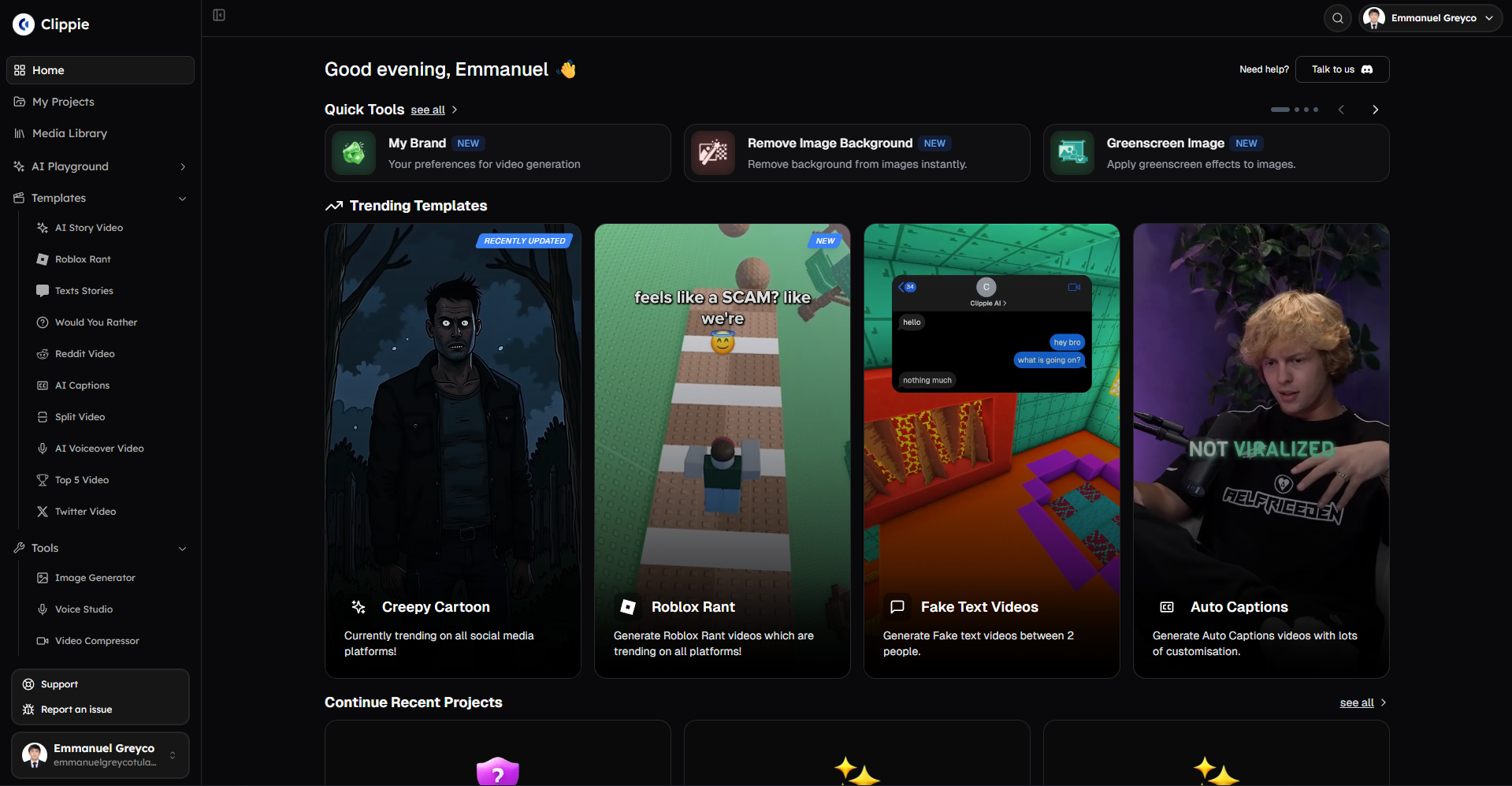
Ready to build your systematic viral content engine? Experience Clippie AI's integrated production workflow, create month's worth of optimized short-form content in single weekend batch session through AI voiceover, intelligent editing, multi-platform optimization, enabling consistent output building toward sustainable $5,000-$50,000 monthly income through patient systematic execution.
Make an AI story video
Write a script or let AI write one. Clippie turns it into a narrated video with AI scenes, voiceover and captions.
Read more

How Faceless YouTube Channels Make Money in 2026: 6 Streams
Faceless YouTube channels make money from far more than ads: Shorts, affiliates, sponsors and products. February 2027 Shorts rules shift the whole mix.

How to Monetize AI Videos in 2026 Without Getting Demonetized
Monetizing AI videos now depends on YouTube's July 2026 originality rules. Payout routes on YouTube and TikTok, eligibility bars and formats that fail.
How to Create AI Story Videos Step by Step (2026 Guide)
AI story videos follow one pipeline: script, scenes, characters, voice, captions, export. Each stage explained, plus where YouTube draws the template line.