Facebook Content Monetization for Faceless Videos in 2026
Invite-only access, the 90-day originality penalty and six steps to get an anonymous page ready to earn from Reels, Stars and subscriptions on Facebook.
 Emmanuel Greyco Tulabut

If you searched for Facebook content monetization for faceless videos, you want to know whether an anonymous page can actually get paid on Facebook, and what it takes. The answer has changed recently.
Meta retired its older video programs in August 2025 and now pays creators through one invite-only Content Monetization program. It also spent 2025 cracking down on unoriginal and reposted content, so the old reupload playbook now gets pages demonetized. This guide covers the verified requirements as of October 2026, the steps toward an invite, and the faceless formats that hold up.
Executive summary: This guide explains how Facebook Content Monetization works in 2026, which requirements Meta actually publishes, and how a faceless page can qualify. It is for creators running voiceover, story, explainer, quiz or ranking pages. You'll leave with a six-step setup plan, a clear picture of what Meta treats as unoriginal, and a list of the mistakes that block payouts.
Table of Contents
Can Faceless Videos Be Monetized on Facebook in 2026?
How Facebook Content Monetization Works
Facebook Monetization Requirements (Verified October 2026)
How to Monetize a Faceless Facebook Page (Step-by-Step)
What Facebook Counts as Unoriginal Content
Faceless Formats That Fit Facebook (and What Fails)
Other Ways Faceless Pages Earn on Facebook
Mistakes That Block Facebook Monetization
FAQs
What to Do Next

Can Faceless Videos Be Monetized on Facebook in 2026?
Yes. Meta's rules don't require you to appear on camera. They require that you created the content or meaningfully enhanced it. A faceless page that writes its own scripts and records original narration can qualify. A page that reposts other people's clips cannot, with or without a face.
What it is: Meta's Partner Monetization Policies allow you to monetize content you created, helped create, or that directly features you. Appearing on camera is one way to qualify, but it isn't required.
How to apply it:
Treat your script and your narration as the original asset, not the background footage.
Drop any format where your only contribution is a caption, a watermark or music.
Example: Original "what would happen if" science scenarios with your own narration fit the policy. Other creators' viral fails stitched together under your logo do not.

How Facebook Content Monetization Works
Facebook Content Monetization is Meta's invite-only program that pays creators for the performance of eligible public Reels, photos, Stories and text posts. Meta ended in-stream ads, ads on Reels and the performance bonus on August 31, 2025, and now invites eligible creators into this single program.
What it is: Instead of paying you a share of ads placed in your video, Meta pays based on qualified views and watch time, as determined solely by Meta. Since June 2025, every video posted to Facebook is shared as a Reel, and Reels can be any length.
How to apply it: Follow the content rules in Meta's help article on Facebook Content Monetization for creators:
Reels must be at least 10 seconds long, and Stories at least 5 seconds.
Content watched for under 5 seconds doesn't qualify.
Views don't count on boosted posts, posts with ads turned off, deleted posts, or content where a third party's ownership claim succeeds.
Earning potential: Meta publishes no fixed payout rate, and says earnings can change over time. In March 2026, it reported paying creators nearly $3 billion in 2025, but that's a platform-wide total, not a benchmark for any one page. Your niche shapes how much advertisers value your audience, so read up on which niches attract the highest-value advertisers before you commit to a topic.

Facebook Monetization Requirements (Verified October 2026)
Meta publishes no follower threshold for Content Monetization because the program is invite-only. To be considered, your Page or professional-mode profile must follow the Partner Monetization Policies and Content Monetization Policies, have at least 30 days of established presence, and be based in an eligible country.
What it is: Eligibility comes down to two policy sets. The Partner Monetization Policies apply to you and your account, and the Content Monetization Policies apply to each post.
Why it matters: Invites go to creators who are already compliant.
How to apply it. These requirements come from Meta's help pages:
Account type: a Facebook Page or a profile in professional mode. Personal profiles can't monetize.
Location: you, and any connected financial account, must be in a country where the feature is available.
Presence: an authentic, established presence on Facebook for at least 30 days.
Community Standards: a single violation can remove your access to monetization tools.
Authentic audience: no fake engagement, manufactured sharing or high-volume crossposting.
Credibility: no misinformation, clickbait or sensationalism.
Originality: unoriginal content without meaningful enhancements can't be monetized.
Banned formats: single static images, image slideshows, looping clips, text montages, engagement-bait polls and videos with embedded ads.

How to Monetize a Faceless Facebook Page (Step-by-Step)
To monetize a faceless Facebook page, create a Page or turn on professional mode, then pick an original format. Check your eligibility in Meta Business Suite, post original Reels consistently, and register interest in the Professional Dashboard. When an invite arrives, set up payouts.
Step 1: Set Up a Page or Turn On Professional Mode
Monetization only works on Pages and professional-mode profiles. For a faceless brand, a Page is usually the cleaner choice because it keeps your personal profile separate. Complete the name, category and bio.
Step 2: Pick a Niche and an Original Format
Choose a topic where you can keep producing original scripts without relying on other people's footage. This walkthrough of the top monetizable faceless niches for 2026 is a useful shortlist to test against Facebook's rules.
Step 3: Check Your Eligibility Status
On a computer, go to Meta Business Suite > Monetization and click View page eligibility under Status. On mobile, open the Professional Dashboard and tap Monetization. Check Policy issues too, so you catch any flags early.
Step 4: Post Original Reels Consistently
Post Reels of 10 seconds or longer on a steady schedule, and mix in longer narrated videos. When you cross-post, upload clean files with no watermark. This guide to posting one faceless video to TikTok, Reels and Shorts covers the export workflow.
Step 5: Request an Invite Through the Interest Form
In the Facebook app, go to Professional Dashboard > Monetization > Content Monetization and submit the interest form. Meta says the form isn't an application and doesn't guarantee an invite. It also says it plans to open enrollment in the near future.
Step 6: Accept the Invite and Set Up Payouts
Invites arrive through the Facebook app, email, Meta Business Suite or the Professional Dashboard. Tap Get started, accept the terms, add your payout details and complete setup. Meta is required to collect tax information from enrolled creators.

What Facebook Counts as Unoriginal Content
Facebook treats content as unoriginal when you had no meaningful role in creating it or changed it only slightly. Meta announced its crackdown on July 14, 2025. Repeat reposters lose monetization access for a period and get reduced distribution on everything they post.
What it is: Meta's original content guidelines on Facebook name two behaviors that trigger "limited originality" flags:
Duplicating content that already exists on Facebook or belongs to another creator.
Minor editorialization, where you repost clips with only small changes.
Changes Meta says don't count:
Borders, logos or watermarks
Only a caption, title, subtitles or background music
Changing the playback speed
Narrating what happens on screen without adding anything else
Basic compilations of third-party clips with no narrative of your own
Why it matters: In most cases, a limited originality violation brings a 90-day demonetization penalty, and posting more unoriginal content during that time can extend it. Meta may also withhold earnings you've accrued but haven't been paid yet.
How to apply it: Add new information, critique, a storyline or an opinion, and make that the focus. This breakdown of how to create monetizable ranking Shorts under the 2026 rules shows what real commentary looks like in a ranking video.

Faceless Formats That Fit Facebook (and What Fails)
The faceless formats that work on Facebook in 2026 are the ones where your script carries the value: original voiceover stories, narrated explainers, quiz videos with motion and rankings with real commentary. Reposts, watermarked TikToks, static slideshows and text-only montages fail Meta's originality or format rules.
Format #1: Original Voiceover Stories
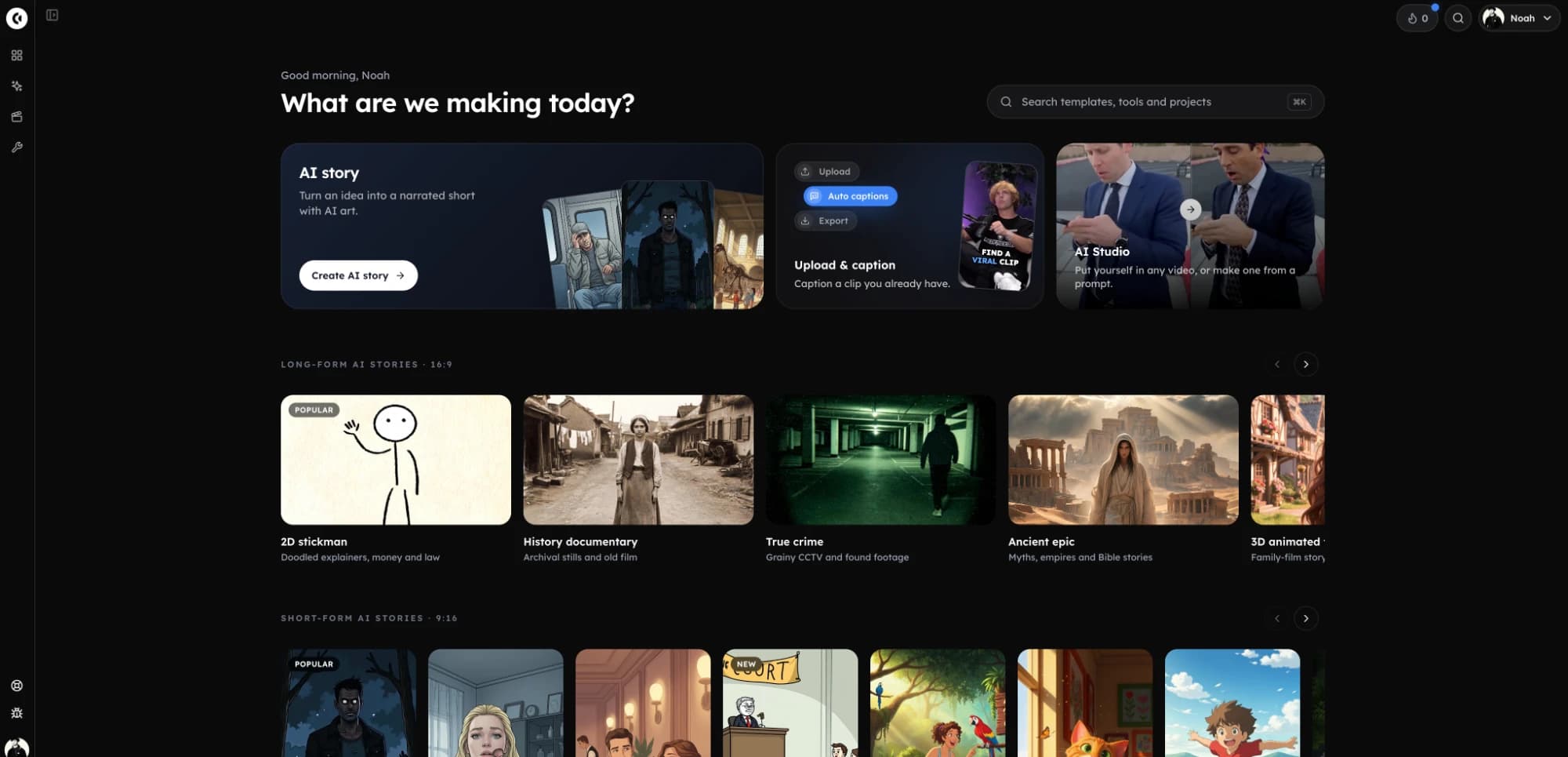
You write the story and record the narration, so the core content is original. Keep the story at the center rather than the background footage. If you write your own scripts, Clippie's AI voiceover video generator turns a script into a narrated video with background footage and captions. Where it falls short: it doesn't post to Facebook, check your eligibility or judge whether your script adds enough value.
Format #2: Narrated Explainers
Explain a topic in your own words, with facts, context or a point of view. It suits higher-value niches like finance or tech.
Format #3: Quiz Videos Without Engagement Bait
A question, a countdown and a reveal keep the video moving. Skip prompts like "comment your answer to win," because content that pushes people to like, comment or share can't be monetized.
Format #4: Rankings With Real Commentary
Rankings work when your reasoning is the content. Use footage you own or have the rights to use. If someone successfully claims ownership of a clip, they can collect the earnings from it.
What Fails on Facebook
Reuploads of viral clips from other pages
Other accounts' TikToks, especially with watermarks visible
Compilations with nothing added but music or captions
Static image slideshows and text-only montages

Other Ways Faceless Pages Earn on Facebook
Beyond Content Monetization, faceless pages can earn through Stars, Subscriptions and branded content. Each has its own published eligibility rules, and all of them require compliance with Meta's monetization policies. There's also Creator Fast Track, but it's built for creators who already have large audiences on other platforms.
Facebook Stars
Requires 500 followers for at least 30 consecutive days, age 18+ and an eligible country.
Meta pays based on how many Stars viewers send you.
Facebook Subscriptions
Requires a Page or professional-mode profile with 5,000+ followers, age 18+ and an eligible country.
Meta says it won't take fees through the end of 2026. Web purchases pass you the full price after taxes and fees, and iOS or Android purchases pass you 70%.
Branded content
Once you pass the Partner Monetization Policies, enable the tag in Meta Business Suite > Monetization > Branded content > Settings.
Creator Fast Track (launched March 2026)
This program offers three months of guaranteed pay to established Instagram, TikTok or YouTube creators who are new to Facebook. A brand-new faceless page won't qualify.

Mistakes That Block Facebook Monetization
The mistakes that most often block Facebook monetization for faceless pages are reposting other people's content, using banned formats, writing engagement bait, boosting the posts you want paid for, panic-deleting after a flag and trusting fake invites. Meta's published rules spell out every one of them.
Mistake #1: Uploading Clips With Another Platform's Watermark
Meta advises against visible third-party watermarks and visibly recycled content. Export clean files of your own work before you cross-post.
Mistake #2: Building Videos From Static Images or Text Alone
Slideshows, single static images and text montages are banned formats under the Content Monetization Policies. Add real motion and narration.
Mistake #3: Writing Engagement Bait
"Tag a friend" and "comment YES" prompts make a post ineligible to monetize.
Mistake #4: Boosting the Posts You Want Paid For
Boosted posts don't earn through Content Monetization. Boost different posts, or leave your earning posts unboosted.
Mistake #5: Bulk-Deleting Posts After a Flag
Meta warns against bulk-deleting content to get reinstated faster. Post a run of original Reels, then appeal.
Mistake #6: Trusting Unofficial "Monetization Invites"
Real invites only come through Meta's own channels. Ignore links sent through Messenger or from accounts you don't know.
FAQs
How many followers do you need for Facebook Content Monetization?
Meta publishes no follower minimum for Content Monetization because the program is invite-only. You need a Page or professional-mode profile with at least 30 days of authentic presence, compliance with Meta's monetization policies and an eligible country. Other tools set their own thresholds: Stars requires 500 followers for 30 days, and Subscriptions requires 5,000.
Does Facebook monetize AI-generated videos?
AI-generated content isn't a banned category in Meta's Content Monetization Policies, but the originality and format rules still apply. Meta requires you to use its disclosure tool for photorealistic video or realistic-sounding audio that was digitally created or altered, and it may penalize you if you don't. Posts disclosed this way are labeled "AI info."
Can I repost my own TikToks to Facebook and still earn?
Yes, as long as the content is genuinely yours. Meta says you can share the same content across your own Pages and profiles. Upload files without the TikTok watermark, because visible third-party watermarks reduce distribution. Crossposts from your own Instagram can earn, but content crossposted from a Page you don't manage doesn't count toward your earnings.
How long does a limited originality penalty last?
In most cases, Meta applies a 90-day demonetization penalty for limited originality violations. Posting more unoriginal content during that window can extend it, and repeated violations can remove your eligibility for good. To see which programs are affected, check Meta Business Suite > Monetization > Policy issues, then post original Reels before you appeal.
How do I know if a Content Monetization invite is real?
Real invites appear in the monetization tools of the Facebook app, Meta Business Suite, the Professional Dashboard or official Meta email. Approved agency partners can also send invites as part of Creator Fast Track. Treat links sent through Messenger or from unknown accounts as likely scams, and always confirm an invite inside your own dashboard.
Is there a minimum length for Facebook Reels to earn money?
Yes. Meta's help center says Reels must be at least 10 seconds long and Stories at least 5 seconds to earn. Content watched for less than 5 seconds doesn't qualify. Facebook says Reels can be any length, so longer narrated videos can earn too, as long as they meet the same policy rules.
What to Do Next
Today: Set up a Page or turn on professional mode, then check Monetization > Policy issues in Meta Business Suite.
This week: Pick one original format, such as voiceover stories or narrated explainers, and script 10 videos before you post any of them.
Next 30 days: Post Reels of 10 seconds or longer on a steady schedule, keep engagement bait out of your captions, and submit the Content Monetization interest form.
Ongoing: Once you're enrolled, track Non-Qualified Views in your Earnings dashboard and fix the most common reason views don't count.
Try it in Clippie
Make faceless videos with Clippie
Type an idea or paste a script. Clippie writes, voices, illustrates and captions a video you never have to appear in.
See the faceless video formats