
How to Make Money With Whop Clipping in 2026 (Step-by-Step)
How to make money with Whop clipping in 2026: how campaigns pay (CPM and affiliate), realistic earnings by level, a step-by-step start guide, and how to spot good campaigns and avoid clipping scams. Honest numbers, no hype.
If you're searching for how to make money with Whop clipping, you want a straight answer: is it real, how does it pay, and how much can you actually earn? This guide gives you that, how Whop clipping campaigns work, the real CPM rates in 2026, honest earnings by experience level, a step-by-step way to get your first payout, and how to avoid the scams that waste beginners' time. It matters now because clipping exploded in 2025–2026, which means both real opportunities and inflated promises are everywhere. This post cuts through both.
Executive summary: Whop clipping pays you to cut short, viral clips from a creator's long-form content and post them on your own social accounts, earning per 1,000 verified views (or a share of sales). It's a legitimate way to earn with no follower requirement, but it's real work, and the honest numbers are far below the "$10k a month" hype. This guide covers how campaigns pay, realistic earnings, a start-to-first-payout workflow, how to vet campaigns, and where a tool like Clippie AI genuinely helps you post more captioned, multi-language clips to earn more per campaign.
Table of Contents
What Whop Clipping Is (and Why It's Everywhere in 2026)
How Whop Clipping Actually Pays You
How Much You Can Realistically Make Clipping
How to Start Making Money With Whop Clipping (Step-by-Step)
How to Spot Good Campaigns and Avoid Clipping Scams
How to Produce More Winning Clips (Where Clippie AI Fits)
Frequently Asked Questions

1. What Whop Clipping Is (and Why It's Everywhere in 2026)
What it is. Whop clipping is getting paid to cut short, viral clips from a creator's long-form content, podcasts, livestreams, or YouTube videos, and post them on your own TikTok, Reels, Shorts, or X accounts.
Why it matters. Creators and brands fund clipping campaigns on Whop and pay based on the views or sales your clips drive. There's no minimum follower count and no watch-hour requirement, which makes it one of the few real entry points into the creator economy for people starting from zero.
How it works at a glance:
A creator or brand posts a campaign brief, source video, content rules (hooks, hashtags, watermarks), a per-1,000-view payout, and a total budget.
You grab the approved footage, cut short clips that follow the brief, and post them natively on your own accounts.
The campaign team validates your views, and you get paid per the campaign terms.
Important: You clip authorized footage that the campaign provides. That's what keeps it legal, you're distributing content the creator wants distributed, not reposting random copyrighted video.
2. How Whop Clipping Actually Pays You
What it is. Two main payout models, sometimes stacked.
Why it matters. Knowing which one a campaign uses tells you whether your effort turns into money.
Pay-per-view (most common). You earn a set rate per 1,000 verified views, a CPM. A $2 CPM means $2 for every 1,000 qualified views your clip earns.
Affiliate / sales share. For creators selling products or courses, you earn a percentage of the sales your clips drive instead of (or on top of) a view rate.
Bonuses. Some campaigns add performance bonuses or a small fixed payment to attract clippers early.
The fine print that decides your take-home:
Typical Whop CPMs run about $0.50–$4 per 1,000 views, with finance and SaaS niches reaching the higher end ($5–$6). Headline rates can look bigger than what actually lands.
Whop takes roughly a 9% platform fee, and campaigns have minimums and caps, so real pay is always less than "views × rate."
Read the full brief. Two campaigns with the same headline CPM can pay very differently once caps, validation gates, and niche match are factored in.
Example. A clip that earns 50,000 qualified views on a $2 CPM campaign is worth about $100 before Whop's fee, not the "$1,000 per clip" you'll see in hype posts, unless a clip genuinely goes viral into the hundreds of thousands or millions of views.

3. How Much You Can Realistically Make Clipping
What it is. The honest earnings distribution, the part most "make money clipping" content won't tell you.
Why it matters. Setting real expectations is the difference between sticking with it and quitting in week two.
Beginner (Month 1–3): roughly $100–$500/month. This is where most people land, and where most quit, because it's real, repetitive work.
Active clipper (a few months in): roughly $500–$2,000/month, from consistent posting and learning what goes viral.
Top clipper (6+ months, treated like a job): $5,000+/month. Reaching this takes running multiple accounts, strong niche fit, and volume.
The honest version: clipping can become real income, but the outliers you see online ($0 to five figures in a few months) are the top fraction of a percent. Anyone promising $5,000 in your first month is selling a dream. The skill that actually separates earners isn't editing speed, it's knowing what goes viral: hooks, pacing, and picking a creator's best moments.

4. How to Start Making Money With Whop Clipping (Step-by-Step)
What it is. A realistic path from zero to your first payout.
Why it matters. A clear sequence beats guessing, and helps you avoid unpaid effort.
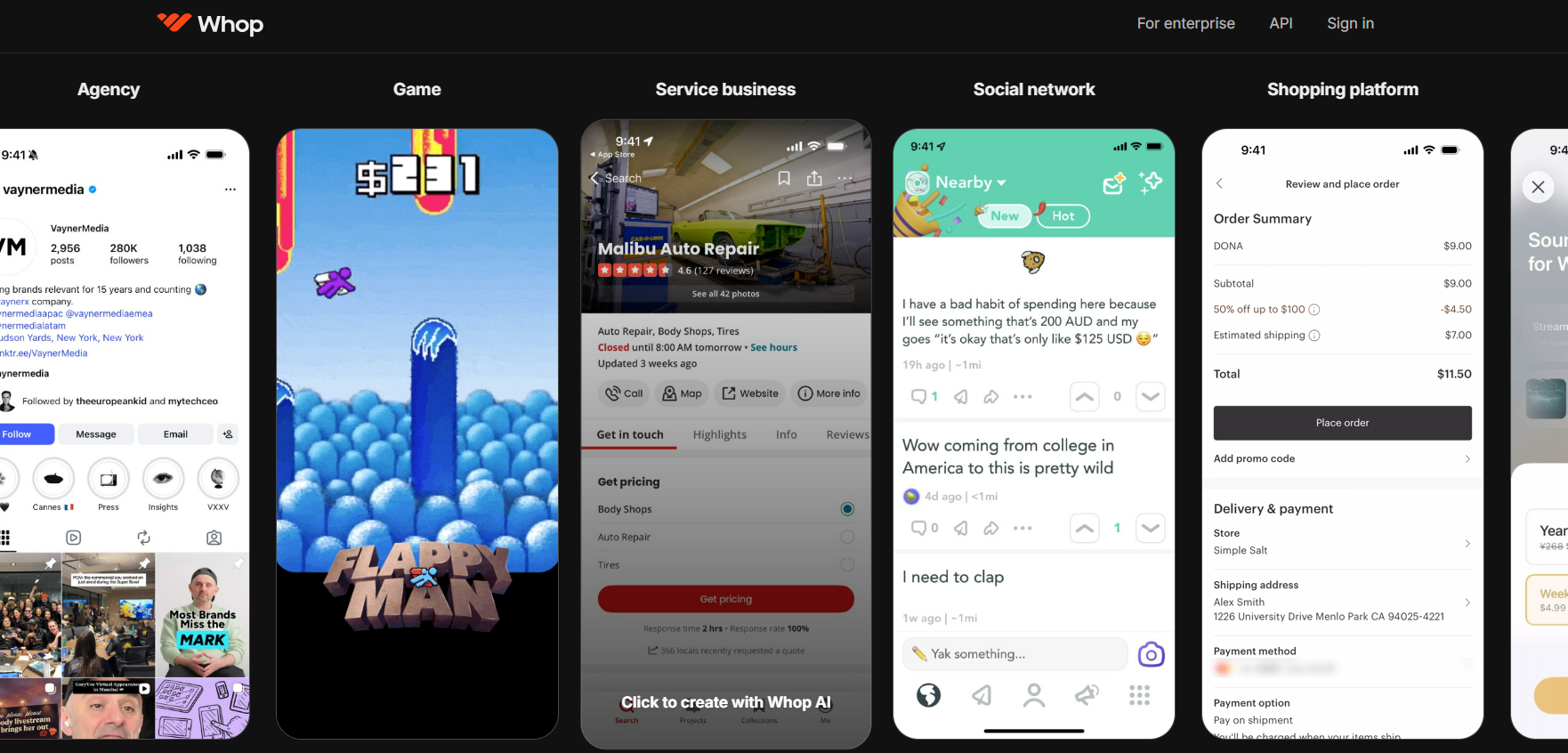
Step 1: Pick a niche you can actually post in. Finance, SaaS, and business tend to pay the highest CPMs, but only clip a niche you understand. Finance clips from someone who's never posted finance will underperform experienced clippers.
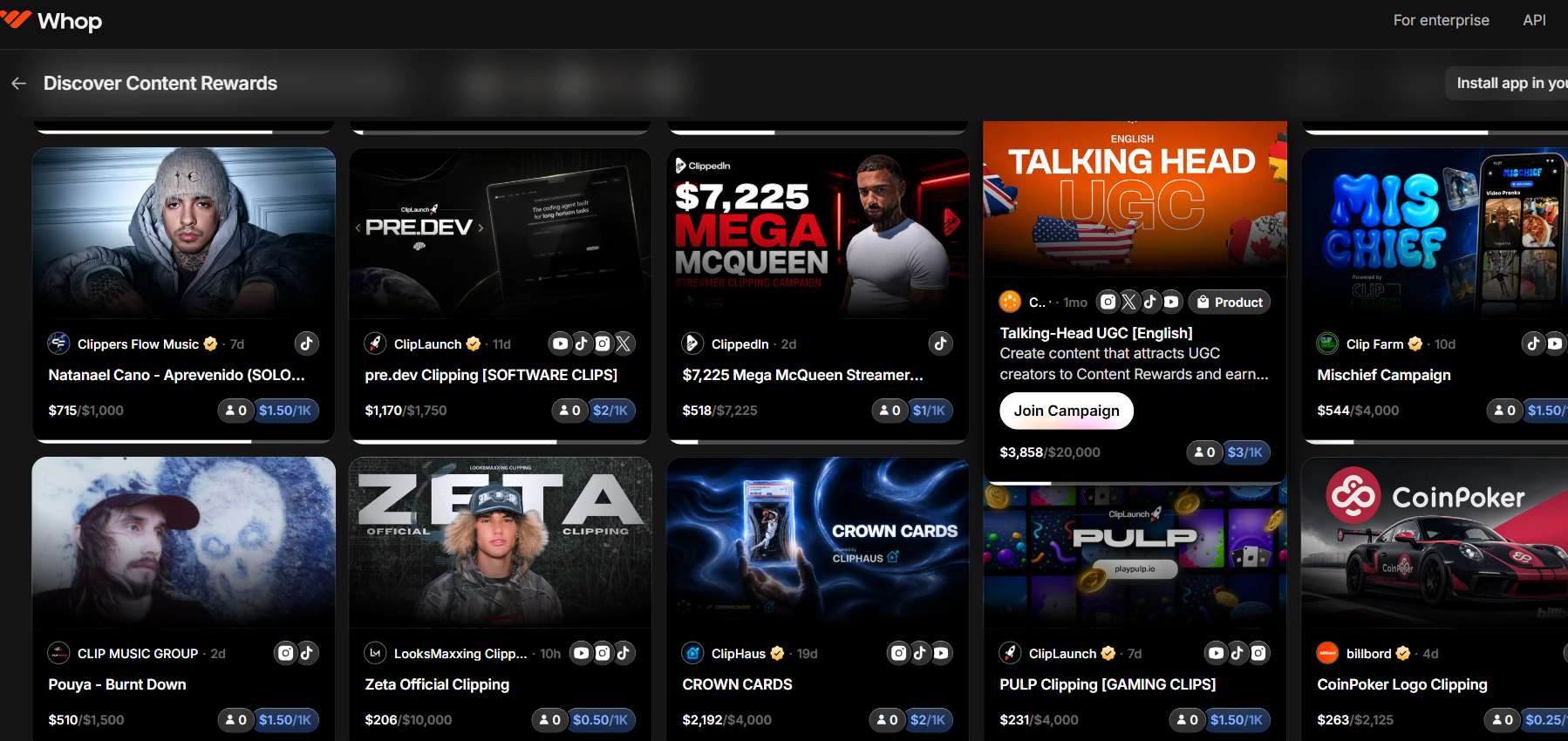
Step 2: Find a solid campaign on Whop. Browse active clipping campaigns and read each brief in full, payout rate, rules, budget, and validation window.
Step 3: Set up your posting accounts. Create or use accounts on the platforms the campaign targets (usually TikTok, Reels, Shorts, X). No followers required to start.
Step 4: Clip for the hook. Find the creator's strongest 15–60 second moments, lead with a scroll-stopping first line, and follow the brief's caption/hashtag/watermark rules exactly, off-brief clips get rejected.
Step 5: Add captions and post natively. Most clips need on-screen captions to retain viewers. Caption each clip, export it in the platform's native format, and post consistently.
Step 6: Track, learn, repeat. Review which clips landed, copy what worked, and increase volume. Views compound with consistency, not luck.
Example. A beginner clipping a finance podcast might post 3–5 clips a day across two platforms, study which hooks retained viewers, and double down on the format that hit, the same loop every $2,000/month clipper ran first.

5. How to Spot Good Campaigns and Avoid Clipping Scams
What it is. A quick vetting checklist. The opportunity is real, but so are the traps.
Why it matters. Bad campaigns waste your effort; scams waste your money.
Never pay to start. A legitimate clipping job never asks you to pay an entry or "training" fee. That's the clearest red flag.
Look for CPM of $2 or higher. Below that, your time usually isn't worth it unless the source has obvious viral potential.
Prefer a total budget of $5,000+. Small budgets cap fast, meaning you can do work that never gets paid.
Check the validation window. A 14-day (or shorter) payout validation is healthy; campaigns holding payouts 60+ days are worth avoiding.
Read the leaderboard. If a campaign shows clippers actually getting paid, that's a good trust signal. An inactive leaderboard isn't.
Match the niche. Clip adjacent to content you've already posted so your clips compete on a level field.

6. How to Produce More Winning Clips (Where Clippie AI Fits)
What it is. Since clipping pay scales with views, your leverage is producing more strong, captioned clips across more platforms and languages.
Why it matters. More qualified views across more posts means more per-campaign earnings, and that's a production problem you can systematize.
Where Clippie AI genuinely helps a clipper:
Auto-captions and subtitles. Caption every clip fast, most campaigns require on-screen text, and captioned clips retain better.
Captions in 102+ languages. Post language variants of the same clip to reach audiences a single-language version can't, more total views, more per-view pay. You can auto-caption your clips in 102+ languages in a few clicks.
Multi-format export. Export the same clip in each platform's native ratio so it performs on TikTok, Reels, Shorts, and X.
Batch production. Produce clips in batches instead of one at a time, so volume doesn't eat your whole day.
Stack faceless content. In high-CPM niches like finance, you can also produce your own faceless videos to build accounts that make your clips land harder.
A fair note: picking the viral moment is still on you, that judgment is the real skill. Clippie speeds up the caption, language, format, and volume layers around it. If you're comparing editing tools, see our roundup of the best clipping and editing tools for creators, and if you want to turn long videos into shorts faster, read our guide on how to clip long videos automatically and make money.
7. Frequently Asked Questions
Is Whop clipping legit, and can you really make money?
Yes, it's legitimate, creators and brands pay clippers per view or per sale to distribute their content. But it's real work, and honest earnings are modest at first. The opportunity is genuine; the "$10k a month easily" promises are not.
How much do beginner clippers actually make on Whop?
Most beginners earn roughly $100–$500 per month in their first few months. Active clippers reach $500–$2,000, and only experienced clippers treating it like a full job hit $5,000+ after six or more months. The people posting overnight-riches screenshots are the rare top fraction.
Do you need followers to start clipping on Whop?
No. Whop clipping has no minimum follower count, watch-hour, or subscriber requirement, you get paid on the views or sales your clips generate, not your audience size. That's why it's a common entry point for beginners.
What CPM should I look for in a Whop campaign?
Aim for a CPM of at least $2 per 1,000 views, and remember Whop takes about a 9% fee, so your take-home is always a bit less than views times rate. Finance and SaaS niches often pay the most. Below $2, only clip if the source has clear viral potential.
Do I have to pay anything to start clipping on Whop?
No, a real clipping campaign never asks you to pay an entry, training, or "activation" fee. If a campaign or "recruiter" wants money upfront, treat it as a scam and walk away.
What tools do I need, and how does Clippie AI help?
You need a way to clip the source footage, caption it, and export it for each platform. Clippie AI helps on the production side, fast captions, subtitles in 102+ languages, native multi-format export, and batch creation, so you can post more strong clips and reach more viewers, which is what actually grows clipping income.
Caption your video automatically
Upload a video and Clippie captions it in about 100 languages, with caption styles, emojis and sound effects.
Read more

How to Make Top 5 Ranking Videos in 2026 (Step-by-Step)
Build ranking Shorts that can still earn: pick a debatable topic, set clear criteria, source clips you may use, script the countdown, add your commentary.

How to Create Short-Form Videos Using AI: 8 Steps (2026)
A beginner workflow for AI videos on TikTok, Reels and Shorts: pick a format, script a hook, add visuals, voice and captions, export at 9:16, label AI.

7 Free CapCut Alternatives for Short-Form Video (2026)
Compare Edits, YouTube Create, VN, Clipchamp, Canva, DaVinci Resolve and Shotcut: what each gives free users, what it caps first and where it falls short.