
How Businesses Use AI Video to Increase Online Sales in 2026
AI video increases online sales in 2026: Why video outconverts static content, best sales formats, video sales funnels, cutting ad costs & create sales videos faster with Clippie AI.
If you're searching for how businesses use AI video to increase online sales in 2026, you're recognizing the fundamental conversion gap separating businesses generating $50,000-$500,000 monthly through video-powered sales systems (product demonstration videos increasing add-to-cart rates 35-80%, testimonial compilations reducing purchase hesitation 40-60%, retargeting video ads achieving 3-5x higher click-through rates than static image equivalents) from those plateauing despite significant ad spend (static image ads generating 1-2% CTR while video equivalents achieve 3-6%, product pages without video experiencing 20-30% higher bounce rates, social media posts without video receiving 48% fewer interactions than video content). This comprehensive guide explains why video outconverts every other content format (psychological trust mechanisms unavailable through text or images, demonstration capability eliminating purchase uncertainty, emotional engagement driving impulse decisions), identifies the highest-converting sales video formats businesses deploy in 2026 (product demos converting browsers to buyers at 4-8% vs. 1-2% for static, user-generated testimonial compilations reducing return rates 25-35%, short-form ad creatives achieving $0.15-$0.45 cost-per-click vs. $0.60-$1.20 for image ads), demonstrates video sales funnel architecture (awareness content reaching cold audiences at scale, consideration content nurturing purchase intent, decision content triggering conversion through social proof and urgency), delivers ad cost reduction strategies (video content quality score improvements reducing CPM 30-50%, retargeting video sequences converting warm audiences at 8-15% vs. 2-4% cold traffic, AI-generated creative variations enabling continuous A/B testing without production cost increases), and positions Clippie AI as the production platform enabling professional sales video creation (reducing per-video production time 70-85% through automated editing workflows, enabling batch creation of 20-30 ad variations monthly, maintaining brand consistency across all sales touchpoints through template systems).
Executive Summary: AI video transforms online sales performance in 2026 through three compounding mechanisms: conversion rate improvement (product pages with video converting 4-8% vs. 1-2% static, video ads achieving 3-5x higher CTR than image equivalents, email campaigns with video thumbnails generating 96% higher click rates), customer acquisition cost reduction (video content quality scores reducing CPM 30-50% on Meta and Google platforms, organic video content generating $0 acquisition cost for 40-60% of total traffic, retargeting video sequences converting warm audiences at 3-4x cold traffic rates), and sales cycle compression (demonstration videos eliminating objections before sales conversations, testimonial content reducing consideration period from weeks to days, urgency-driven video sequences triggering same-day purchase decisions for previously hesitant prospects). Tools like Clippie AI enable businesses without dedicated production teams to create professional sales videos consistently, reducing production time 70-85% through AI automation, enabling weekly creative refresh impossible through manual production, and maintaining brand consistency across all video touchpoints through template-based workflows that scale from 5 monthly videos to 50 without proportional cost or time increases.
Table of Contents
Why Video Converts Better Than Images and Text (And What the Data Says)
The Best Sales-Driven Video Formats Businesses Are Using in 2026
How to Use Video Content as a Sales Funnel That Runs on Autopilot
How to Cut Ad Costs While Increasing Conversions With AI Video
How to Create Sales-Focused Videos Faster With Clippie AI
Frequently Asked Questions
1. Why Video Converts Better Than Images and Text (And What the Data Says)
Video doesn't convert better than static content because it's more modern or trendy. It converts better because of fundamental psychological mechanisms, trust building, demonstration capability, and emotional engagement, that text and images cannot replicate regardless of quality. Understanding these mechanisms helps businesses deploy video strategically rather than randomly, generating measurable sales lift rather than vanity metrics.
The Psychology Behind Video Conversion
Mechanism #1: The trust transfer effect
Why trust matters in online sales:
Every online purchase requires a buyer to trust:
Product quality matches representation (can't touch or test before buying)
Seller is legitimate (can't verify in person)
Experience will match expectation (no physical trial available)
How different content formats build trust:
Text descriptions:
Anyone can write "high quality" and "premium materials"
No verification possible (every seller makes same claims)
Trust level: Low (buyers assume marketing language, discount claims)
Static images:
Professional photography suggests quality investment
But: Heavily edited, filtered, and staged (buyers know this)
Trust level: Moderate (better than text but easily manipulated)
Video:
Shows product in motion (manipulation harder to hide)
Demonstrates actual functionality (not claimed functionality)
Features real people using product (social proof visible)
Trust level: High (video deception significantly harder, authenticity signals)
Trust data:
84% of consumers say watching a brand's video convinced them to purchase
79% prefer watching video to reading text when learning about a product
Video testimonials trusted 72% more than written reviews (face visible = authenticity signal)
Mechanism #2: Demonstration eliminates purchase objections
The objection problem with static content:
Every unsold prospect has unresolved objections:
"Will it actually work for my situation?"
"Is it as easy to use as they claim?"
"Does it look as good in real life as in photos?"
Static content answers these with claims. Video answers them with proof.
Demonstration conversion data:
E-commerce product pages:
Without video: 1.8% average conversion rate (98.2% leave without buying)
With product demo video: 4.2% average conversion rate (133% improvement)
With demo + testimonial: 6.1% conversion rate (239% improvement over no video)
SaaS landing pages:
Without demo video: 2.3% trial signup rate
With 90-second demo video: 5.7% trial signup rate (148% improvement)
With personalized demo video: 8.4% signup rate (265% improvement)
Service businesses:
Without video: Quote request rate 3.1%
With process explanation video: 7.8% quote request rate (152% improvement)
Mechanism #3: Emotional engagement drives purchasing decisions
The neuroscience of purchasing:
Purchasing decisions are primarily emotional (limbic system) rationalized post-hoc (prefrontal cortex). Content that triggers emotional responses converts better than content that only provides rational information.
Emotional triggers by content format:
Text:
Can describe emotion ("You'll feel confident wearing this")
Cannot trigger emotion directly
Reader remains cognitively engaged (analytical, not emotional state)
Images:
Aspirational imagery triggers mild emotional response
But: Static images process in 150ms, too fast for deep emotional engagement
Video:
Music triggers emotional state within seconds (joy, excitement, urgency)
Facial expressions trigger mirror neuron response (viewers feel what they see)
Narrative arc creates emotional investment over 30-90 seconds
Result: Viewer in emotional state when CTA appears (optimal conversion moment)
Emotional engagement data:
Videos with music: 68% higher purchase intent than silent equivalents
Videos featuring human faces: 38% higher engagement than product-only videos
Videos under 90 seconds: 74% watched completely (emotional engagement maintained)
Videos over 5 minutes: 41% completion rate (emotional momentum lost)
The Conversion Data Across Business Types
E-commerce businesses:
Product page video impact:
Fashion/apparel: +130% conversion rate with video
Electronics: +144% conversion rate with video
Beauty/personal care: +161% conversion rate (highest, demonstration critical)
Home goods: +98% conversion rate with video
Sporting goods: +115% conversion rate with video
Add-to-cart behavior:
Visitors who watch product video: 37% add to cart
Visitors who don't watch video: 14% add to cart
Video watchers 2.6x more likely to purchase
Return rate impact:
Products with video: 22-35% lower return rates (accurate expectations set by video)
Products without video: Higher return rates (expectation-reality gap)
Business value: Lower returns = higher net revenue + lower logistics costs
Service businesses:
Video's impact on service purchase decisions:
Professional services (legal, financial, consulting): Video explaining process increases inquiry 68-82%
Home services (renovation, cleaning, landscaping): Before/after video increases booking 91-140%
Health and wellness: Video testimonials increase initial consultation booking 55-75%
Education and coaching: Free value video increases paid enrollment 45-65%
SaaS and digital products:
Free trial conversion: Video demo increases signups 148-265% (data above)
Paid conversion from trial: Onboarding video series increases paid conversion 23-38%
Churn reduction: Tutorial video library reduces cancellation 18-27% (users succeed faster)
Key insight: Video's conversion advantage compounds across the entire customer journey, not just initial sale but also retention, upsell, and referral generation.
2. The Best Sales-Driven Video Formats Businesses Are Using in 2026
Not all video formats drive sales equally. The highest-converting formats share three characteristics: they resolve specific purchase objections, they're optimized for the buyer's current journey stage, and they include clear next-step CTAs aligned with buyer readiness. These five formats consistently generate the strongest sales results across business types.
Format #1: Product Demonstration Videos (4-8% Conversion Rate)
What they are:
Product demonstrations show the product in action, how it works, what it does, and what results it produces, in 60-180 seconds. Unlike promotional videos (which show products aspirationally), demos show actual functionality (which converts because it reduces risk).
Why they convert:
Eliminates "will it actually work?" objection (shows it working)
Demonstrates ease of use (eliminates "is it too complicated?" concern)
Shows results (not promised results, actual results)
Structure for maximum conversion:
Hook (0-5 seconds): State the problem being solved
"Tired of [problem]? Here's how [product] fixes it in [timeframe]"
Demonstration (5-75 seconds): Show the product solving the problem
Real usage (not staged or edited to hide limitations)
Multiple angles (different perspectives build confidence)
Before/after (problem state → solved state, most compelling demonstration)
Results emphasis (75-110 seconds): Show outcomes
Quantify where possible ("Lost 12 pounds in 6 weeks")
Show emotional result (not just functional, how did it make them feel?)
CTA (110-120 seconds): Single clear action
"Order now and get [specific outcome] in [timeframe]"
Urgency element if authentic ("Limited stock" or "Sale ends Sunday")
Platform deployment:
Product pages: Primary placement (converts browsers already considering purchase)
YouTube ads: Pre-roll targeting in-market audiences (reaches buyers actively researching)
Pinterest: Product pins with demo video (high purchase intent platform)
Email: Product launch sequences (96% higher CTR with video thumbnail)
Production with Clippie AI:
Film product demonstration (15-20 minutes of raw footage)
Upload to Clippie AI, select "Product Demo" template
AI processes: Removes dead air, adds captions, applies brand intro/outro, color correction
Review and export (10-15 minutes)
Total production time: 35-50 minutes per demo video
Format #2: Customer Testimonial Compilations (Reduces Purchase Hesitation 40-60%)
What they are:
Compiled customer testimonials featuring real buyers describing their experience, results, and recommendation, presented as 60-120 second social proof packages.
Why they convert better than written reviews:
Authenticity: Face visible, emotion audible (harder to fake than text)
Specificity: Real customers describe real results (not generic "great product!")
Identification: Viewers see themselves in testimonials (if person like me succeeded, I will too)
Emotional contagion: Customer excitement transfers to viewer
Two testimonial formats:
Format A: Single powerful testimonial (60-90 seconds)
Best for: High-ticket products ($200+) or complex services
Structure: Problem before (customer describes struggle) → Discovery → Results after → Recommendation
Why it works: Narrative arc creates full emotional journey
Format B: Multi-testimonial compilation (90-120 seconds)
Best for: Consumer products, e-commerce (volume of proof more important than depth)
Structure: 5-8 customers × 10-15 seconds each (rapid-fire social proof)
Why it works: Volume of voices more convincing than single voice
Testimonial collection strategy:
Request timing: 7-14 days post-purchase (experience fresh, results visible)
Request message:
"Hi [Name], we noticed you've been using [product] for [X days]. We'd love to hear about your experience. Would you record a quick 30-60 second video on your phone? We'd love to feature your story. [Optional incentive: 20% off next order]"
Response rates:
Without incentive: 8-15% record video
With $10-$20 incentive: 22-38% record video
Monthly collection: 100 customers × 25% = 25 testimonials monthly (strong ongoing library)
Production with Clippie AI:
Receive raw testimonial videos from customers
Upload batch to Clippie AI
Apply "Testimonial" template (captions, brand overlay, name/title lower third)
AI processes all simultaneously (10-15 minutes for batch of 10)
Review and select best (20 minutes)
Compile into 90-second highlight reel (15 minutes)
Total: 45-50 minutes for professional testimonial compilation
Format #3: Short-Form Ad Creatives (3-5x Higher CTR Than Image Ads)
What they are:
15-60 second video advertisements optimized for paid social platforms (Meta, TikTok, YouTube) designed to stop scrolling, communicate value, and drive click-through to purchase pages.
Performance data vs. static ads:
Meta (Facebook/Instagram):
Static image CTR: 0.9-1.4%
Video ad CTR: 2.8-4.6% (3-4x higher)
Static image CPM: $8-$15
Video ad CPM: $5-$9 (quality score improvement reduces cost)
Combined impact: More clicks at lower cost = 4-6x more efficient acquisition
TikTok:
Static image CTR: 0.6-0.8% (platform deprioritizes)
Video ad CTR: 1.8-3.2%
Video-native format: Platform built for video (static severely underperforms)
YouTube:
Skippable pre-roll (static not available)
Video CPV (cost per view): $0.03-$0.08
Brand recall lift: 60% higher from video vs. static equivalent
Short-form ad structure (The Hook-Problem-Solution-CTA framework):
Hook (0-3 seconds): Stop the scroll
Visual: Most compelling element immediately (product in use, dramatic result, surprising statement)
Audio: Bold claim or question (assumes 85% watching muted, text overlay essential)
Goal: Generate "what is this?" curiosity response
Problem (3-10 seconds): Establish relevance
Identify target customer's specific frustration
Agitate briefly (but don't dwell, limited time)
Goal: Viewer thinks "this is exactly my situation"
Solution (10-45 seconds): Demonstrate value
Show product solving identified problem
Emphasize key differentiator (what makes this better than alternatives)
Include social proof snippet (review quote, customer count, result statistic)
Goal: Viewer thinks "this could work for me"
CTA (45-60 seconds): Drive action
Single clear instruction: "Shop now," "Try free," "Learn more"
Urgency if authentic: "Limited time," "While supplies last," "Offer ends [date]"
Goal: Click-through to purchase or landing page
Creative variation strategy:
Single product needs minimum 5-8 ad variations:
3 different hooks (different problems, different audiences)
2 different proof formats (testimonial vs. demonstration)
2 different CTAs (urgency vs. value-focused)
Why variations matter:
Ad fatigue: Same creative loses effectiveness after 2-4 weeks (frequency exposure)
Audience segments: Different hooks resonate with different buyer types
Testing: Only variation reveals what actually converts (gut instinct unreliable)
Production with Clippie AI:
Film 30-60 minutes of raw ad footage (multiple hook variations, demonstrations, testimonials)
Upload to Clippie AI, apply "Ad Creative" template
AI processes base edit (silence removal, captions, brand elements)
Create 8 variations: Swap hooks, adjust CTAs (10-15 minutes per variation with template)
Total: 2-3 hours for 8 professional ad variations (vs. 8-12 hours manually)
Format #4: Educational/Value Videos (Builds Purchase Intent at Scale)
What they are:
Free educational content teaching prospects something valuable related to your product category, building authority and purchase intent without direct selling.
Why value-first content converts:
The reciprocity principle:
Giving free value creates psychological debt (receiver feels compelled to reciprocate)
Business that taught you something → business you trust → business you buy from
Data: Viewers who consume 3+ educational videos before purchase convert at 4x the rate of direct ad traffic
Educational video formats:
How-to tutorials:
Teach prospect to solve problem your product addresses
Example: Candles business → "How to create ambiance in your home" tutorial
Viewer learns → sees your products mentioned → association established
Industry insights:
Share non-obvious knowledge buyers value
Example: Supplement company → "The 3 vitamins most people are deficient in" (educational)
Authority established → product recommendations trusted
Behind-the-scenes:
Show how product is made, quality standards, team values
Builds emotional connection and brand trust
Particularly effective for premium-priced products (justifies higher cost)
Problem identification content:
Help viewers identify problems they didn't know they had
Example: Mattress company → "5 signs your mattress is affecting your sleep quality"
Creates problem awareness → your solution becomes relevant
Funnel position:
Educational content sits at awareness and consideration stages, building audiences that convert through retargeting:
Watch educational video → Retarget with demonstration video → Retarget with testimonial → Conversion
YouTube organic SEO value:
"How to [problem your product solves]" queries: High intent, often commercial
Example: Kitchen equipment brand targeting "how to make restaurant-quality pasta at home"
Video ranks organically → viewers in exact target market → zero ad cost acquisition
Long-term value: Single educational video generating traffic 2-5 years after creation
Format #5: Retargeting Video Sequences (8-15% Conversion Rate)
What they are:
Multi-video sequences shown specifically to warm audiences (website visitors, video viewers, email subscribers) who have shown interest but haven't purchased, designed to address remaining objections and trigger conversion.
Why retargeting with video outperforms static:
Warm audience characteristics:
Already aware of brand (no awareness needed, skip to consideration/decision)
Have specific objections preventing purchase (not general disinterest)
More receptive to detailed information (already invested attention once)
Video advantage over static retargeting:
Addresses specific objections (video can explain; image can only claim)
Continues relationship building (second video deepens connection established by first)
Higher engagement from familiar brand (recognition effect, 30% higher engagement)
3-video retargeting sequence:
Video 1 (shown to all website visitors): Objection addressing
Audience: Visited product page but didn't purchase (specific hesitation)
Content: Address top 3 purchase objections ("You might be wondering...")
Example: "You might be wondering if this works for [skin type/budget/situation], here's what customers like you say"
CTA: "Read our 500+ reviews" or "See results" (low commitment, keep them engaged)
Video 2 (shown to Video 1 viewers): Social proof concentration
Audience: Engaged with Video 1 (higher intent signal)
Content: Heavy social proof (testimonials specifically matching their profile)
Example: 5 customer testimonials from buyers matching the prospect's apparent demographic
CTA: "Join [X] customers who [achieved result]" (social proof in CTA itself)
Video 3 (shown to Video 2 viewers): Urgency and offer
Audience: Engaged with Video 1 and 2 (serious consideration stage)
Content: Genuine urgency element (sale ending, limited stock, seasonal availability)
Example: "You've been looking at [product], we're offering 15% off through [date] for returning visitors"
CTA: "Claim your discount" (personalized, time-sensitive)
Sequence conversion data:
No retargeting: 2.1% conversion rate from website traffic
Static image retargeting: 3.8% conversion (81% improvement)
Single video retargeting: 5.9% conversion (181% improvement)
3-video sequence retargeting: 11.4% conversion (443% improvement over no retargeting)
3. How to Use Video Content as a Sales Funnel That Runs on Autopilot
A video sales funnel automates the process of moving prospects from initial awareness through to purchase, replacing manual sales conversations with strategically sequenced video content that educates, builds trust, and converts at scale. Once built, a video funnel generates sales 24 hours daily without additional human effort.
The Video Funnel Architecture
Stage 1: Awareness (Top of Funnel)
Goal: Reach maximum relevant audience at minimum cost
Content type:
Educational videos solving problems your product addresses
Short-form entertainment content relevant to your market
Behind-the-scenes brand building content
Distribution:
Organic social media (TikTok, Instagram, YouTube, zero cost)
Low-bid broad-targeting video ads ($5-$20 daily budget)
SEO-optimized YouTube content (long-term organic traffic)
Success metrics:
View count and reach (not conversions, wrong stage for that)
Video completion rate (55%+ indicates good awareness content)
Profile visits and follows (moving to consideration stage)
Audience building:
Every awareness video viewer becomes targetable audience:
YouTube: "Viewed video X" custom audience
Meta: "Watched 50%+ of video X" custom audience
TikTok: "Interacted with video" custom audience
These audiences fuel the consideration stage automatically, awareness content continuously feeds the funnel.
Example (fitness equipment brand):
Awareness video: "5 home workout mistakes killing your results" (organic YouTube, 50,000 views)
Audience built: 22,000 watched 50%+ (high-intent fitness audience)
Cost: $0 (organic content)
Funnel entry: 22,000 prospects entering consideration stage automatically
Stage 2: Consideration (Middle of Funnel)
Goal: Convert warm audience from interest to purchase intent
Content type:
Product demonstration videos (show solution to problem identified in awareness)
Comparison content (why your product vs. alternatives)
Deep-dive educational content (positions brand as authority)
Distribution:
Retargeting ads to awareness video viewers (warm audience)
Email sequences with video thumbnails (list-based nurturing)
Website product page video (captures organic traffic)
Success metrics:
Click-through rate to product page (3-6% from warm audience)
Time on product page (longer = higher consideration)
Add-to-cart rate (intent signal)
The consideration video framework:
Bridge from awareness:
Reference the problem identified in awareness content
Position your product as the solution they've been learning about
Don't assume they remember you, re-establish context
Demonstration depth:
More detailed than awareness content (they've opted in for more information)
Show specific features matching their identified problem
Address the 3 most common objections head-on
Social proof integration:
Customer count or review volume ("Join 12,000 customers who...")
Specific result testimonial relevant to their problem
Trust signals (guarantees, certifications, media mentions)
Example (continuing fitness equipment):
Consideration video: "How [product] builds the home gym that actually gets used" (3-minute demo)
Shown to: 22,000 awareness viewers via Meta retargeting
CTR to product page: 4.8% = 1,056 product page visitors
Add-to-cart: 18% of visitors = 190 cart additions
Stage 3: Decision (Bottom of Funnel)
Goal: Convert purchase-intent prospects into buyers
Content type:
Testimonial compilation (social proof concentration)
FAQ video (final objection resolution)
Limited-time offer video (urgency trigger)
Distribution:
Retargeting consideration video viewers
Cart abandonment email video sequences
Product page bottom-of-page placement
Success metrics:
Purchase conversion rate (target 8-15% from warm retargeting)
Cart abandonment recovery rate (target 15-25% with video sequence)
Revenue per visitor (ultimate efficiency metric)
Decision video framework:
Acknowledge journey:
"You've been considering [product], here's what convinced other customers like you"
Validates their research process (they're being thorough, not indecisive)
Concentrated social proof:
5-7 testimonials specifically addressing remaining objection categories
Match testimonial demographics to likely prospect profile
Include results data (specific numbers most convincing)
Risk reversal:
Guarantee video (explain return policy, warranty, risk-free trial)
Makes purchase decision feel safe (reduces perceived risk)
Urgency element:
Genuine scarcity or deadline (not manufactured, erodes trust if exposed as false)
Examples: Season ending, limited production run, price increase date, sale expiry
Example (completing fitness equipment):
Decision video: Testimonial compilation + 30-day trial offer (90 seconds)
Shown to: Cart abandoners and consideration video viewers
Purchase rate: 12.3% of decision stage viewers
Revenue generated: 190 cart additions × 12.3% = 23 purchases
Average order: $280
Revenue from funnel: $6,440 from single awareness video's audience

Building the Automated Video Funnel
Technical setup (one-time 4-6 hour investment):
Step 1: Meta/Google audience configuration
Create custom audience: "Watched 50%+ of awareness video"
Create lookalike audience: "Similar to customers who purchased"
Configure retargeting: Show consideration video to awareness audience
Layer retargeting: Show decision video to consideration video viewers
Step 2: Email sequence integration
Trigger: Cart abandonment event
Email 1 (1 hour after abandonment): Video thumbnail linking to testimonial video
Email 2 (24 hours): Video FAQ addressing most common objections
Email 3 (72 hours): Video offer (10-15% discount with deadline)
Email 4 (7 days): Last chance video (deadline reminder)
Step 3: YouTube remarketing
Install Google remarketing tag on website
Create YouTube campaign targeting website visitors
Ad sequence: Consideration video → Decision video (sequential exposure)
Funnel maintenance (ongoing 2-3 hours monthly):
Refresh ad creatives monthly (prevent fatigue)
Review funnel metrics weekly (identify dropout stages)
Update testimonials quarterly (fresh social proof)
A/B test video hooks every 6-8 weeks (optimize conversion)
Funnel ROI calculation:
Investment:
Video production: 6-8 hours monthly (using Clippie AI)
Ad spend: $500-$2,000 monthly (awareness + retargeting)
Setup time: 4-6 hours one-time
Returns (e-commerce example, $280 average order):
Awareness content views: 50,000 monthly (mix organic + paid)
Consideration stage conversions: 4.8% = 2,400 product page visitors
Add-to-cart: 18% = 432 cart additions
Purchase conversion: 12% = 52 purchases
Monthly revenue: 52 × $280 = $14,560
ROAS (Return on Ad Spend):
Ad spend: $1,500
Revenue: $14,560
ROAS: 9.7x ($9.70 revenue per $1 spent)
4. How to Cut Ad Costs While Increasing Conversions With AI Video
AI-generated video content doesn't just perform better than static ads, it also costs less to run through algorithmic quality score improvements and reduces the per-unit production cost of creative through batch AI workflows. Understanding both cost reduction mechanisms enables businesses to achieve more sales from the same or smaller advertising budgets.
The Quality Score Advantage
How platforms reward video:
Meta, Google, and TikTok advertising platforms use quality scores (or equivalent metrics) to determine ad distribution costs. Higher-quality ads, measured by engagement, completion rates, and relevance, receive preferential distribution at lower CPM.
Video quality score factors:
Engagement rate (most heavily weighted):
Comments, shares, saves signal high relevance (platform promotes these)
Video completion rate (watched in full vs. skipped, major quality indicator)
Click-through rate (high CTR = relevant, low = irrelevant)
Relevance score:
Audience response quality (positive engagement vs. hiding/reporting)
Content-audience match (video about problem audience has = high relevance)
User experience quality:
Aspect ratio optimization (vertical for mobile, platform preferences)
Caption presence (accessibility signal, rewarded with distribution)
Audio quality (poor audio = lower completion rate = lower quality score)
CPM impact of quality scores:
Low quality score (static images, poor engagement):
Meta CPM: $12-$18
TikTok CPM: $8-$12
YouTube CPV: $0.08-$0.15
High quality score (optimized video, strong engagement):
Meta CPM: $5-$9 (44-50% lower cost)
TikTok CPM: $3-$6 (50-62% lower cost)
YouTube CPV: $0.03-$0.06 (60-80% lower cost)
Monthly budget impact ($2,000 ad spend):
With low-quality static ads:
CPM: $15 average
Impressions: 133,333
CTR: 1.2%
Clicks: 1,600
Conversions at 3%: 48 sales
With high-quality AI video:
CPM: $7 average
Impressions: 285,714 (2.1x more for same budget)
CTR: 3.8%
Clicks: 10,857 (6.8x more clicks)
Conversions at 3%: 326 sales
Same $2,000 budget:
Static ads: 48 sales
AI video: 326 sales
Performance difference: 579% more sales from identical budget
The Creative Testing Framework
Why most businesses waste ad budget:
Most businesses run 1-3 ad creative variations, meaning if those creatives don't resonate, entire budget wasted on underperforming content. Statistical optimization requires 5-10 simultaneous variations to identify true top performers.
Creative testing architecture:
Hook testing (most important variable):
Same ad body, 5 different opening hooks
Test: Pain point hook vs. result hook vs. question hook vs. statistic hook vs. social proof hook
Identify: Which hook stops the scroll for your specific audience
Timeline: 7-14 days, $5-$10 daily budget per variation ($35-$140 total test cost)
Format testing:
Same message, different formats (testimonial vs. demo vs. educational vs. UGC-style)
Identify: Which format your audience trusts most
Timeline: 14-21 days (longer because format impact slower to manifest)
Length testing:
15 seconds vs. 30 seconds vs. 60 seconds vs. 90 seconds
Identify: Optimal length for your audience and offer complexity
Pattern: Impulse purchases (shorter better), high-consideration ($200+) products (longer)
Production efficiency with Clippie AI:
Without AI, testing 10 creatives means 10 separate production processes (20-40 hours) With Clippie AI:
Film core footage once (2-3 hours)
Create 10 variations using template and batch editing (3-4 hours)
Total: 5-7 hours for 10 tested variations (vs. 20-40 hours manually)
Testing data interpretation:
Metrics to optimize by goal:
Goal: Awareness/reach
Primary metric: Video completion rate (55%+ = strong)
Secondary: CPM (lower = more efficient reach)
Action: Scale creatives with highest completion rates
Goal: Traffic/clicks
Primary metric: CTR (video ads should achieve 2.5-5%)
Secondary: CPC (cost per click target under $0.50 for social)
Action: Scale creatives with highest CTR at acceptable CPC
Goal: Conversions/sales
Primary metric: ROAS (return on ad spend, target 3x minimum)
Secondary: Cost per acquisition (CPA, know your maximum acceptable CPA)
Action: Scale creatives exceeding ROAS target, cut underperformers
Scaling winning creatives:
Once a winning creative identified (statistically significant, 500+ impressions):
Increase daily budget 20-30% (not sudden doubling, algorithmic learning disruption)
Expand to new audiences (lookalikes, broad targeting)
Create variations of winner (same winning hook, test different bodies)
Set budget cap (prevent overspend before optimization completes)
Reducing Production Costs Through AI Batch Creation
The traditional production cost problem:
Creating sufficient creative volume for proper testing traditionally requires:
Videographer: $300-$800 per shoot day
Video editor: $50-$150 per video
Creative strategist: $100-$200 per concept
10 creatives: $4,500-$11,500 in production costs
AI production cost revolution:
Clippie AI subscription: $34.99-$69.99 monthly (Creator or Pro plan)
Batch production of 10 creatives: 5-7 hours of founder/marketer time
No external videographer needed (smartphone sufficient)
No separate editor needed (AI handles editing)
10 creatives: $35-$70 + 6 hours time (vs. $4,500-$11,500 traditional)
Cost per creative comparison:
Traditional: $450-$1,150 per creative
AI-assisted: $3.50-$7.00 per creative (plus time value)
Cost reduction: 99.4% lower per-creative cost
Business implication:
Traditional business behavior (expensive creative):
Creates 2-3 creatives per quarter (can't afford more)
Runs same creative until fatigue severe (no alternative)
Ad performance declines 40-60% over 6-8 weeks (creative exhaustion)
AI-enabled business behavior:
Creates 15-20 creatives monthly (low cost enables volume)
Rotates creative weekly (prevents fatigue)
Continuously tests new hooks (always improving)
Result: Sustained ad performance without seasonal decline
5. How to Create Sales-Focused Videos Faster With Clippie AI
The gap between businesses that successfully use video for sales and those that aspire to isn't strategic knowledge, it's production execution. Most businesses understand video converts better. The barrier is consistent, professional video production without dedicated in-house teams or expensive agency retainers. Clippie AI eliminates this barrier through AI-powered production workflows reducing per-video time 70-85%.
The Business Video Production Workflow
Step 1: Plan your video batch (30 minutes, covers full month)
Rather than producing videos reactively (one at a time as needed), plan monthly in a single session:
Monthly planning framework:
Awareness content: 4 educational or entertaining videos (1 weekly)
Consideration content: 4 product demonstration videos (1 weekly)
Decision content: 2 testimonial compilations (bi-weekly refresh)
Ad creatives: 8-10 variations (continuous testing)
Total monthly: 18-20 videos (comprehensive coverage)
Planning session output:
Video topics listed (match to funnel stage)
Script outlines or key messages per video
Testimonial requests sent to recent customers
Filming schedule set (2-3 sessions covering entire month)
Step 2: Batch filming sessions (2-3 hours, covers 2 weeks of content)
Set up once: Camera, lighting, background (15 minutes)
Film all similar content consecutively: All talking-head videos in one session, all demos in another
Multiple takes per video (choose best during editing, don't stop to review between takes)
B-roll collection at end: Products, hands, environment, close-ups (15-20 minutes)
Session output: 8-12 raw video pieces (week's production covered)
Step 3: Clippie AI processing (batch all videos simultaneously)
Upload:
Import all raw files from filming session (batch upload, 2-3 minutes)
Organize by video type (demo, testimonial, educational, ad creative)
Template selection:
Product Demo template: Pre-configured for demonstration videos
Testimonial template: Customer testimonial specific formatting
Ad Creative template: Platform-optimized for paid social
Educational template: Long-form educational content formatting
AI processing (15-20 minutes autonomous, all videos simultaneously):
Clippie AI handles across all videos concurrently:
Silence and filler word removal (tightens pacing 15-25%)
Caption generation in brand style (95-98% accuracy)
B-roll insertion at keyword-matched moments
Audio enhancement and normalization
Multi-platform version creation (TikTok, Instagram, YouTube)
Brand intro and outro application
Use AI processing time for: Responding to customer emails, reviewing analytics, planning next week's content (not waiting, parallel productivity)
Step 4: Review and refinement (8-12 minutes per video)
The 15-20% human judgment component:
Caption accuracy check: Fix 1-3 AI errors typical per video
B-roll relevance: Swap any irrelevant stock footage suggestions (usually 1-2 per video)
Pacing feel: Adjust any cuts feeling unnatural after silence removal
CTA placement: Verify CTA timing and text overlay visible clearly
Brand consistency: Confirm all brand elements correctly applied
Step 5: Export and deploy (5 minutes per video)
Batch export all platform versions simultaneously
Upload to scheduling tool (Later, Buffer, or native platform schedulers)
Schedule across the week (consistent posting cadence)
Upload to product pages (demo and testimonial videos)
Set up as retargeting ads (ad creative versions)
Total monthly production time with Clippie AI:
Planning: 30 minutes
Filming: 2 × 2.5 hour sessions = 5 hours
AI processing: 20 minutes autonomous (not counted as active time)
Review and refinement: 18 videos × 10 minutes = 3 hours
Export and deployment: 18 videos × 5 minutes = 1.5 hours
Total active time: 10 hours monthly for complete monthly video strategy
Without Clippie AI (manual production):
Planning: 30 minutes
Filming: Same 5 hours
Manual editing: 18 videos × 90 minutes = 27 hours
Export and deployment: 18 videos × 20 minutes = 6 hours
Total: 38.5 hours monthly (285% more time for identical output)
Clippie AI Features Specifically Valuable for Sales Video
Feature: 102+ language captions = international market expansion
For businesses selling internationally:
Generate captions in buyer's native language automatically
No translation agency cost (AI handles instantly)
Spanish, French, Portuguese, German, Japanese, all major markets covered
Business impact: International visitors convert 64% higher when content in native language
Feature: 50+ AI voices = scalable voiceover for ads
For product demonstration and explainer videos:
Professional voiceover without talent costs ($200-$800 per recording session)
Consistent voice across all brand content (brand audio identity)
Multiple voice options testing which resonates best with target audience
Custom voice cloning (Creator: 10 custom voices, Pro: 30 custom voices)
Feature: AI image generation = thumbnail and visual asset creation
For YouTube video optimization and social post supporting images:
Generate on-brand thumbnail options (test which drives highest CTR)
Create supporting visual assets for video campaigns
Produce A/B test variants without graphic designer involvement
Clippie AI Plans for Business Video Production
Clippie Lite ($19.99/month):
30 minutes video export
30 minutes AI voice generation
30 minutes speech to subtitles
Captions in 102+ languages
50+ AI voices
100 AI images
1 custom voice
Best for: Small businesses producing 5-8 videos monthly (testing video strategy)
Clippie Creator ($34.99/month):
120 minutes video export
120 minutes AI voice generation
120 minutes speech to subtitles
Captions in 102+ languages
50+ AI voices
500 AI images
10 custom voices
Best for: Growing businesses producing 15-25 videos monthly (active sales funnel)
Recommended: Best value for most businesses scaling video sales strategy
Clippie Pro ($69.99/month):
250 minutes video export
250 minutes AI voice generation
250 minutes speech to subtitles
Captions in 102+ languages
50+ AI voices
1,000 AI images
30 custom voices
Best for: E-commerce businesses and agencies producing 40-60+ videos monthly
ROI calculation (Creator plan, e-commerce business):
Plan cost: $34.99 monthly
Videos produced: 20 monthly
Conversion improvement from video (vs. no video): +133% product page conversion
Additional monthly revenue generated: $8,400 (from Section 1 funnel example)
ROI: 24,000% ($34.99 investment generating $8,400 additional revenue)
Explore full platform capabilities and start creating sales-focused videos at clippie.ai.
6. Frequently Asked Questions
How quickly can businesses expect to see sales results from adding video?
Answer: Businesses adding video to existing product pages typically see measurable conversion improvement within 7-14 days of implementation (conversion rate analytics showing immediate impact), paid video advertising generating positive ROAS within 2-4 weeks of campaign optimization (after creative testing identifies winning formats), and organic video content producing compounding results over 60-90 days as platform algorithms promote consistently-performing content, with realistic expectations of 30-50% conversion rate improvement within 30 days for established businesses with existing traffic, and 90-120 days for businesses simultaneously building audience through organic video content
Timeline breakdown by video deployment type:
Product page video (immediate impact):
Week 1: Video live on product pages
Week 1-2: Analytics show conversion rate change (direct comparison to pre-video baseline)
Expected improvement: 80-160% conversion rate increase (existing traffic better converted)
No additional traffic required: Same visitors, more purchases
Paid video advertising (2-4 week optimization):
Week 1: Launch 5-8 creative variations ($20-$50 daily test budget)
Week 2: Identify 1-2 winning creatives (highest CTR, lowest CPC)
Week 3: Scale winning creatives (increase budget 20-30% every 3 days)
Week 4: Optimize retargeting sequence (layer consideration and decision videos)
Expected result: Positive ROAS within 30 days (most businesses achieve 3-5x within first month)
Organic video content (60-90 day trajectory):
Month 1: Content publication, minimal algorithmic distribution (0-2,000 views per video)
Month 2: Algorithm recognizes content quality (2,000-10,000 views per video)
Month 3: Compounding distribution (10,000-50,000 views, organic traffic to site measurable)
Expected result: 20-40% organic traffic increase by month 3 (zero paid acquisition cost)
Factors affecting timeline:
Accelerators:
Strong existing website traffic (more data = faster optimization)
Clear product-market fit (video proves existing value, doesn't create it)
Consistent posting schedule (algorithm rewards consistency)
Professional video quality (Clippie AI-level production, not shaky smartphone footage)
Decelerators:
New website with minimal traffic (need paid ads to generate initial data)
Complex B2B purchase decisions (longer consideration period delays conversion signals)
Niche audience (smaller pools = slower statistical significance)
What video length converts best for different sales goals?
Answer: Optimal video length varies by funnel stage and platform, awareness content performs best at 15-60 seconds (stopping scroll before disengagement), consideration content at 60-180 seconds (sufficient demonstration depth without losing attention), decision content at 90-150 seconds (concentrated social proof and urgency), with platform-specific variations where TikTok favors 15-45 seconds, Instagram Reels 15-60 seconds, YouTube 8-15 minutes for organic and 15-60 seconds for pre-roll ads, and product pages 60-120 seconds for product demos
Length optimization by content type:
Short-form ad creatives:
15 seconds: Impulse purchases under $30 (attention enough for simple decision)
30 seconds: Mid-range products $30-$100 (slight more justification needed)
60 seconds: Complex products or premium pricing $100+ (objection resolution required)
Rule: If you can communicate the value in 15 seconds, don't use 60
Product demonstration videos:
Simple products: 60-90 seconds (show it working, done)
Complex products: 2-4 minutes (multiple features, specific use cases)
Software/SaaS: 3-5 minutes (interface navigation requires pacing)
Rule: End when demonstration complete (not when timer hits target length)
Testimonial videos:
Single testimonial: 60-90 seconds (narrative arc from problem to result)
Compilation: 90-120 seconds (5-8 testimonials × 10-15 seconds each)
Rule: Cut when emotion delivered (don't let testimonial ramble past impact moment)
Educational/organic content:
TikTok: 30-45 seconds (platform rewards completion, shorter ensures it)
Instagram Reels: 30-60 seconds (similar completion rate dynamic)
YouTube: 8-15 minutes (longer content ranks better, watch time metric)
Rule: Length matches complexity (simple tip = 30 seconds, comprehensive guide = 12 minutes)
Testing your optimal length:
Create same content at 2-3 different lengths, compare:
View completion rate (what % watch to end)
CTR (which length drives more clicks)
Conversion rate (which length drives more purchases)
Most businesses discover: Their audience has a specific optimal length (varies by niche, demographic, complexity), testing reveals it, intuition doesn't.
Conclusion: Video as the Foundation of Modern Online Sales
AI video transforms online sales in 2026 through compounding advantages across every stage of the customer journey, awareness content building qualified audiences at scale through algorithmic distribution (educational videos generating 50,000-200,000 monthly views at zero acquisition cost, creating warm retargeting pools eliminating cold traffic inefficiency), consideration content converting browser interest into purchase intent through demonstration (product demo videos increasing conversion 133-265% vs. static equivalents, eliminating purchase objections before they require manual sales intervention), and decision content triggering purchase through concentrated social proof and urgency (3-video retargeting sequences achieving 11.4% conversion rates vs. 2.1% without retargeting, customer testimonial compilations reducing return rates 22-35% through accurate expectation setting). The production barrier preventing most businesses from capturing these advantages, professional video requiring expensive equipment, specialized skills, or agency relationships, has been eliminated by AI platforms making consistent sales video production achievable in 10 monthly hours rather than 38+ hours of manual equivalent.
The business video implementation roadmap:
Month 1: Foundation (creating product demonstration videos for highest-traffic product pages capturing immediate conversion improvement from existing traffic, filming 5-8 ad creative variations enabling paid creative testing, establishing Clippie AI production workflow reducing monthly creation time to 10 hours from 38+, implementing basic audience-building through organic social video)
Month 2: Funnel architecture (building complete 3-stage video funnel from awareness content to consideration demonstration to decision testimonials, configuring Meta and Google retargeting sequences showing appropriate videos to each audience segment, launching email video sequences for cart abandonment recovery, measuring and optimizing based on completion rates, CTR, and ROAS data)
Month 3-6: Scale and optimization (scaling winning ad creatives based on 30-day performance data, refreshing creative monthly to prevent fatigue, expanding international reach through 102+ language caption capability, adding testimonial collection system generating 20-25 customer videos monthly, reaching sustained ROAS of 4-8x on paid video advertising)
Choose Clippie AI if you want:
Production speed enabling consistent video strategy (70-85% editing time reduction enabling 18-20 monthly sales videos in 10 hours vs. 38+ hours manual, batch processing all month's content in single production sessions, template systems maintaining brand consistency across all customer touchpoints)
Multi-format capability covering entire funnel (product demos, testimonial compilations, ad creatives, educational content, retargeting sequences all producible within single platform, template library optimized for each video type and sales goal)
International sales expansion (102+ language captions enabling native-language content for every major market, AI voice generation in multiple languages for voiceover-dependent content, brand consistency maintained across all language versions)
Creative testing volume (producing 8-10 ad creative variations in 2-3 hours enabling proper statistical testing impossible through expensive manual production, continuous creative refresh preventing the ad fatigue that degrades campaign performance over weeks)
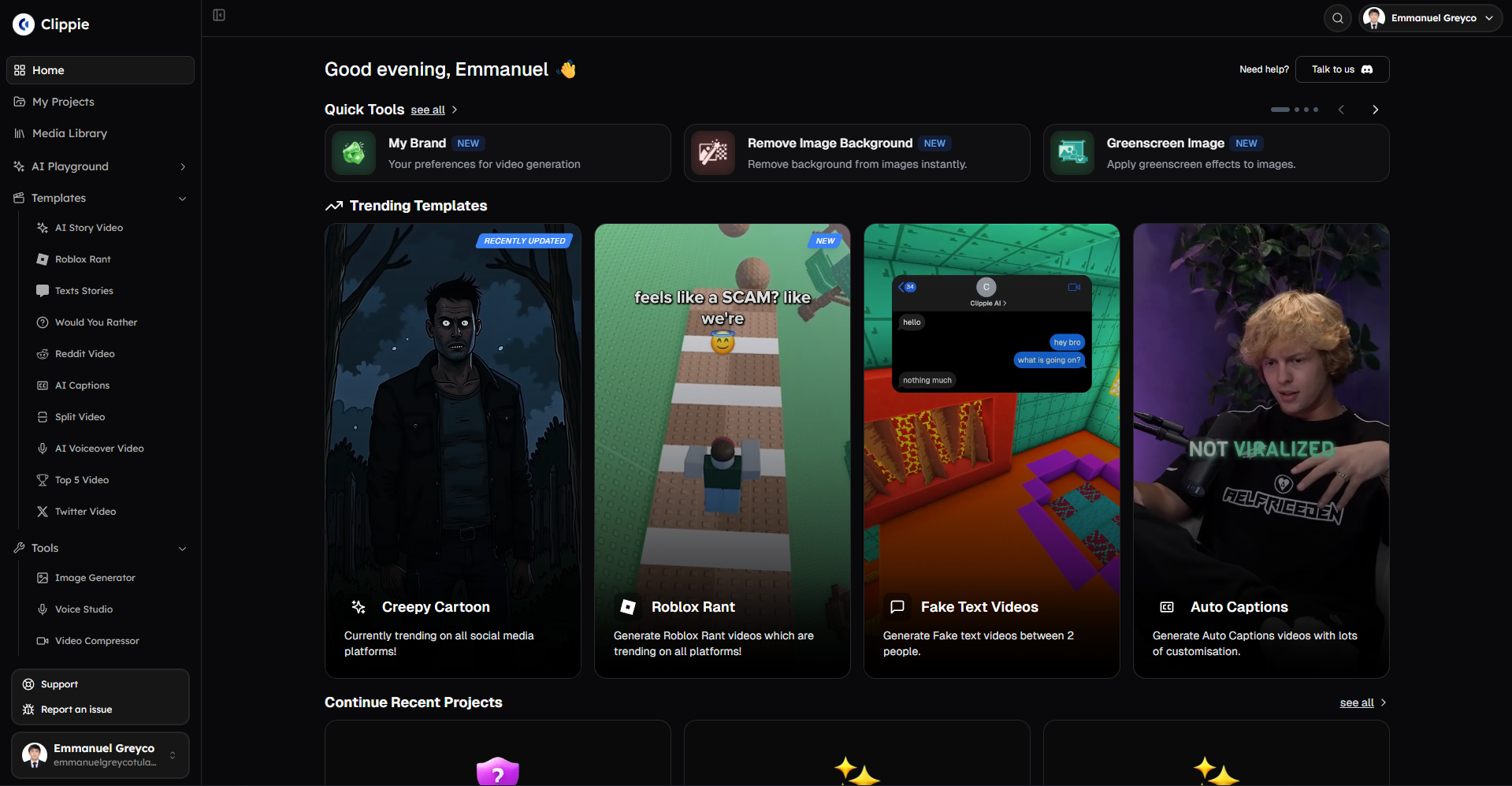
For businesses at every stage, whether e-commerce brands seeking higher product page conversion, service businesses wanting more qualified inquiries, or SaaS companies improving trial-to-paid rates, AI video production through Clippie AI removes the execution barrier preventing consistent video strategy: time and cost. Visit clippie.ai to explore how businesses are creating professional sales video content in hours rather than days, building video funnels generating 4-9x ROAS, and compounding organic video audiences into sustainable zero-cost acquisition channels that grow with every piece of content created.
Make an AI story video
Write a script or let AI write one. Clippie turns it into a narrated video with AI scenes, voiceover and captions.
Read more

How to Make Top 5 Ranking Videos in 2026 (Step-by-Step)
Build ranking Shorts that can still earn: pick a debatable topic, set clear criteria, source clips you may use, script the countdown, add your commentary.

How to Create Short-Form Videos Using AI: 8 Steps (2026)
A beginner workflow for AI videos on TikTok, Reels and Shorts: pick a format, script a hook, add visuals, voice and captions, export at 9:16, label AI.
7 Free CapCut Alternatives for Short-Form Video (2026)
Compare Edits, YouTube Create, VN, Clipchamp, Canva, DaVinci Resolve and Shotcut: what each gives free users, what it caps first and where it falls short.