
How to Use Seedance 1.0 for Faceless Video Creation in 2026 (Complete Creator Guide)
Learn how to use Seedance 1.0 for faceless video creation in 2026, complete prompt framework, Seedance vs VEO3 comparison, Clippie AI step-by-step workflow, and full cinematic channel production system.

Searching for how to use Seedance 1.0 for faceless video creation in 2026?
While VEO3 gets most of the attention, Seedance 1.0 has quietly become the preferred AI video model for a specific type of faceless creator, one building narrative-driven, character-forward, cinematically styled content that stock libraries cannot provide and VEO3's hyper-realistic aesthetic does not always serve.
This guide covers everything you need to know about Seedance 1.0: what it does differently, where it outperforms competing models, how to write prompts that produce cinematic output on the first attempt, and how to access and integrate it inside Clippie AI's production workflow.
Executive Summary
This guide is for faceless content creators evaluating AI video generation models in 2026. It covers what Seedance 1.0 is and how it differs from VEO3 and VEO3.1, the specific content formats where Seedance consistently outperforms competing models, how to write prompts that generate production-ready cinematic footage, how to access Seedance 1.0 through Clippie AI without a separate account or API setup, and how to build a complete faceless channel production workflow around Seedance. By the end, you will know exactly when to use Seedance, when to use VEO3, and how to combine both inside a single Clippie AI production system.
Table of Contents
What Seedance 1.0 Is and Why Faceless Creators Are Choosing It in 2026
Seedance 1.0 vs VEO3, Which AI Video Model Is Right for Your Content Style
The Content Formats Where Seedance 1.0 Outperforms Every Other AI Video Model
How to Write Prompts That Generate Cinematic Seedance Video on the First Try
How to Access and Use Seedance 1.0 Inside Clippie AI (Step-by-Step Workflow)
How to Build a Full Cinematic Faceless Channel Using Seedance 1.0 and Clippie AI
Frequently Asked Questions

1. What Seedance 1.0 Is and Why Faceless Creators Are Choosing It in 2026
Seedance 1.0 is an AI video generation model developed as a direct competitor to Google DeepMind's VEO series. Like VEO3, it converts text prompts into short video clips, but its underlying architecture, training data, and output aesthetic differ in ways that matter significantly for faceless content creators choosing the right model for their specific content style.
What Seedance 1.0 Actually Does
Seedance 1.0 takes a text prompt describing a scene, setting, characters, and visual style and generates a short video clip, typically 5–15 seconds, that represents that description in motion.
The core capability is the same as VEO3: text-to-video generation. What differs is the specific visual output, the aesthetic style, the handling of characters and motion, and the types of scenes it generates most reliably.
Understanding these differences is what allows a creator to choose the right model for each clip rather than defaulting to one model for everything.
Why Seedance 1.0 Has Attracted a Specific Creator Audience
Seedance 1.0 emerged as the preferred model for a distinct aesthetic category: cinematic, slightly stylised footage with a filmic rather than hyper-realistic quality. This aesthetic difference is subtle but meaningful.
VEO3's output tends toward photorealism, footage that looks like it was captured by a high-end camera in the real world. This is ideal for documentary-style content where environmental authenticity matters.
Seedance 1.0's output tends toward what cinematographers describe as "filmic", footage that looks like it was shot for a feature film or high-end TV production, with slightly more dramatic colour grading, more intentional composition, and character representation that reads as more cinematic than documentary.
For creators building channels in storytelling, drama, narrative entertainment, Reddit-style story videos, and character-driven content, this filmic aesthetic is more appropriate than photorealism, and this is why Seedance has attracted a dedicated creator audience despite VEO3 receiving more mainstream attention.

Seedance 1.0 in 2026: Production Readiness
In 2026, Seedance 1.0 has crossed the threshold of production readiness for most faceless channel use cases. Specifically:
Clip duration is sufficient for standard short-form and long-form insertion (5–15 seconds per clip)
Temporal consistency, characters and environments maintaining coherent appearance across the clip, is reliable for standard scene types
Prompt responsiveness, the model's ability to follow compositional and stylistic instructions, is strong for the scene categories where it performs best
Integration with production platforms, including Clippie AI, means creators can access the model without separate accounts or API setup

2. Seedance 1.0 vs VEO3, Which AI Video Model Is Right for Your Content Style
This is the most practical question for a creator choosing between the two models. The answer is not universal, it depends on the content format, aesthetic goals, and the specific scene type being generated.
Where VEO3 and VEO3.1 Have the Advantage
Photorealistic natural environments: VEO3 consistently produces the most photorealistic natural footage, landscapes, weather events, water, atmospheric outdoor scenes. If a creator needs a shot that looks like drone footage of a real location, VEO3 is the correct choice.
Documentary and news-style content: VEO3's hyper-realistic aesthetic is a better fit for documentary-style educational content, finance explainers, history documentaries, science channels, where the footage should look like it was captured in the real world.
Architectural and urban footage: City environments, financial districts, and modern architectural settings render more accurately in VEO3, the model's photorealism produces footage that reads as genuinely urban rather than cinematically stylised.
Technical and precision content: For content where the footage needs to accurately represent a specific technical environment, laboratory settings, medical contexts, engineering scenarios, VEO3's photorealism produces more credible output.
Where Seedance 1.0 Has the Advantage
Narrative and character-driven scenes: Seedance 1.0 generates character-forward footage with more cinematic composition and more emotionally expressive staging than VEO3. When a scene requires a character to occupy and animate a space in a way that conveys narrative weight, rather than simply existing in a photorealistic environment, Seedance produces stronger results.
Stylised and filmic aesthetics: Seedance's output has a visual quality that immediately reads as "cinematic" in a film-production sense rather than a documentary sense. For creators building channels with a premium visual identity, drama, thriller, narrative storytelling, this aesthetic is more appropriate than VEO3's photorealism.
Reddit and story-format content: Reddit story videos, true crime narratives, confession-style content, and moral dilemma stories all benefit from footage that has narrative staging rather than documentary realism. Seedance's character representation and scene composition serve these formats better.
Dark or atmospheric emotional scenes: Seedance handles dark, moody, and emotionally complex scene requests with stronger compositional intent than VEO3. Scenes requiring dramatic lighting, emotional staging, or atmospheric tension generate more striking output from Seedance.
Motivational and aspirational content: For self-improvement and motivational channels, Seedance's filmic quality elevates content above the stock-footage aesthetic that dominates this niche, giving the channel a visual distinction that VEO3's documentary realism does not provide in the same way.

The Practical Decision Framework
Use Seedance 1.0 when:
The content is narrative, story-driven, or character-forward
The channel aesthetic is filmic and cinematic rather than documentary and realistic
The scene requires emotional staging or character presence
The content is dark, dramatic, or emotionally complex
The target format is Reddit stories, true crime, moral dilemma, or narrative entertainment
Use VEO3.1 when:
The content is educational, documentary, or explainer-style
The scene requires a photorealistic natural or urban environment
The content is finance, history, or science-focused and requires footage that looks captured rather than staged
The scene is environmental (landscape, weather, architecture) with no character requirement
Use both within the same video when:
The video has both documentary sections (use VEO3.1 for environmental context) and narrative sections (use Seedance for character and story elements)
This mixed-model approach is accessible inside Clippie AI, both models are available within the same production session
3. The Content Formats Where Seedance 1.0 Outperforms Every Other AI Video Model
Understanding where Seedance specifically excels, beyond the broad advantage over VEO3 in stylised content, helps creators deploy it precisely where it delivers the most value.
Format 1: Reddit Story Videos
Reddit story channels are one of the fastest-growing faceless YouTube formats in 2026. The content is entirely narration-driven, AI voice reading Reddit posts while visuals provide atmospheric backdrop and emotional context.
Why Seedance outperforms here:
Reddit stories require footage that conveys the emotional register of the story, frustration, confusion, betrayal, relief, or vindication, through scene staging and visual atmosphere rather than literal depiction. Seedance's filmic aesthetic and character representation produce footage that matches this emotional requirement more naturally than VEO3's documentary realism.
Specific Seedance advantages for Reddit stories:
Character staging in everyday environments, a person at a kitchen table, someone looking out a window, a figure in a work setting, reads as emotionally present in a way that photorealistic empty environments do not
Colour grading in Seedance output reflects the emotional tone of the scene prompt more reliably, a scene described as "tense domestic setting" will produce footage with appropriate visual weight
Transition clips between story sections have a filmic quality that maintains narrative momentum

Format 2: True Crime and Mystery Storytelling
True crime content needs atmospheric, moody footage that conveys unease, investigation, and dramatic tension without depicting explicit content. Seedance produces this aesthetic more reliably than any competing model.
Why Seedance outperforms here:
True crime footage requirements are specific: dark, atmospheric, slightly stylised rather than photorealistic, emotionally weighted. VEO3's photorealism occasionally produces footage that is too bright and functional-looking for true crime atmosphere. Seedance's filmic bias produces darker, more dramatically lit footage with compositional choices that serve the genre.
Specific Seedance advantages for true crime:
Investigation and procedural scene staging, an empty interrogation room, a figure reviewing documents at night, a detective's desk with case materials, has strong compositional presence
Atmospheric environment clips, empty corridors, isolated locations, fog-covered landscapes, generate with appropriate dramatic weight
Night and low-light scenes are handled with more cinematically interesting lighting than competing models
Format 3: Moral Dilemma and "What Would You Do?" Content
This format requires footage that conveys difficult emotional situations without depicting explicit content, and that positions characters in staging that communicates the moral weight of the scenario.
Why Seedance outperforms here:
Seedance's character-forward footage generation means it can represent figures in emotionally complex situations, a person at a crossroads, two characters in confrontation, an individual facing a difficult decision, with compositional intent that supports the narrative rather than just occupying the frame.
Specific Seedance advantages for moral dilemma content:
Character staging in moment-of-decision scenarios has visual weight that supports the emotional question being posed
Scene transitions between different moral perspectives maintain a consistent filmic tone
The slightly stylised aesthetic creates appropriate emotional distance from the scenarios depicted
Format 4: Self-Improvement and Motivational Content
Motivational content benefits from aspirational visual footage, but not the sanitised, over-lit stock footage aesthetic that makes most self-improvement content visually generic. Seedance's filmic output provides a visual distinctiveness that elevates motivational channels above the aesthetic average.
Why Seedance outperforms here:
Seedance generates aspirational scenarios, someone achieving a goal, an individual overcoming an obstacle, a character arriving at a destination, with the visual weight of a premium commercial or film trailer rather than the generic quality of stock footage. This visual quality creates immediate brand differentiation.
Specific Seedance advantages for motivational content:
Achievement and goal-attainment scenes have dramatic composition, meaningful character placement within environments, intentional lighting, cinematically interesting framing
Transition clips between motivational sections maintain a consistent premium visual standard
The filmic aesthetic makes motivational content look more considered and less templated
Format 5: Dark Fantasy and Speculative Storytelling
Channels covering dark fantasy scenarios, alternate history narratives, speculative futures, or fictional world-building benefit from Seedance's ability to generate footage of environments and scenarios that do not exist in the real world with visual coherence and cinematic staging.
Why Seedance outperforms here:
VEO3's photorealism is constrained to what looks like the real world, speculative or fantastical elements often produce visual inconsistencies when the model attempts to render something that its training data does not have real-world equivalents for. Seedance's slightly stylised, filmic output is more flexible, it produces speculative and fantastical environments with a visual coherence that reads as intentionally cinematic rather than as a failed attempt at realism.

4. How to Write Prompts That Generate Cinematic Seedance Video on the First Try
Prompt quality determines output quality more than any other variable. A well-constructed Seedance prompt consistently produces usable footage in one or two generation attempts. A vague or poorly structured prompt produces footage that requires many iterations.

The Seedance Prompt Framework
Every effective Seedance prompt contains six elements. Unlike VEO3, which responds strongly to environmental description, Seedance responds particularly well to character and emotional staging description, this distinction shapes the prompt framework.
Element 1: Scene Type Specification
Tell the model what kind of scene this is before describing what is in it.
Effective Seedance scene type openers:
"Cinematic dramatic scene:"
"Filmic narrative moment:"
"Character-driven cinematic shot:"
"Dark atmospheric cinematic sequence:"
"Premium commercial-style footage:"
This scene type specification primes the model's output toward the filmic aesthetic rather than the documentary aesthetic it might otherwise default to.
Element 2, Character or Subject Description
Seedance produces stronger results when characters are specified with intentional staging rather than just positioned in an environment.
Effective character descriptions:
"a lone figure seen from behind, standing at the edge of...", establishes character presence without requiring detailed facial representation
"hands of an unseen person slowly turning through documents at...", character implied through action without frontal representation
"a silhouetted figure standing in the doorway of...", character as compositional element rather than photorealistic subject
Avoiding character over-specification:
Do not request specific facial features, precise clothing details, or demographically specific individuals. Seedance handles character staging and presence better than character specificity, the more specific the character description, the more likely the output is to produce inconsistency.
Element 3: Environment and Setting
Where is the scene taking place? For Seedance, the environment should complement the character staging rather than be the primary focus.
Effective environment descriptions:
"a dimly lit domestic interior, evening, single lamp creating warm pool of light"
"a rain-slicked empty street at night, neon reflections on wet pavement"
"a sparse office at dusk, long shadows from low windows"
"an overgrown garden path, overcast afternoon, subdued natural light"
The key distinction from VEO3 environment prompts: For Seedance, environments serve character and narrative, describe them with emotional and atmospheric qualities rather than geographic or documentary precision.
Element 4: Camera Style and Movement
Seedance responds reliably to specific camera direction. Including camera instruction elevates static scene descriptions into cinematic shots.
Effective Seedance camera directions:
"slow push-in toward the figure", gradual approach creates tension
"slow pull-back reveal", pulls back to reveal the wider setting
"static medium shot", no movement, compositional stability
"slow pan across the scene", reveals the environment incrementally
"close-up to medium shot rack focus", focus shifts from foreground to subject
"low angle looking up at", creates imposing, dramatic perspective
Element 5: Lighting and Colour Palette
Seedance's filmic output is heavily influenced by lighting specification. This is where the distinction between VEO3 and Seedance prompts diverges most significantly.
High-impact Seedance lighting descriptions:
"dramatic chiaroscuro lighting, deep shadows contrasting with single warm light source"
"cool blue ambient light with warm practical lamp in frame"
"overcast diffused daylight, desaturated colour palette, flat and contemplative"
"golden hour warm light streaming at low angle through windows"
"neon and practical light mix, urban night palette, warm amber and cool blue"
"single overhead practical light creating downward shadows"
Element 6: Stylistic and Quality Descriptors
Always close the prompt with filmic quality direction, this anchors the output to the cinematic aesthetic rather than allowing the model to default to a less intentional output style.
Effective closing descriptors for Seedance:
"cinematic 4K, film grain, filmic colour grading"
"premium narrative film aesthetic, professional cinematography"
"prestige TV production quality, intentional composition"
"feature film visual style, dramatic and considered"
"cinematic short film aesthetic, high production value"
Full Example Prompts by Content Category
Reddit Story / Narrative Content
For a domestic conflict story: "Cinematic dramatic scene: a lone figure sitting at a kitchen table late at night, hands wrapped around a mug, a phone face-down on the table beside them, domestic interior, single overhead warm light, slight motion in the steam from the mug, slow static medium shot, quiet and contemplative atmosphere, cinematic 4K film grain, prestige TV production quality"
For a discovery or revelation moment: "Filmic narrative moment: hands turning through pages of handwritten letters in a dimly lit study, warm lamp light on documents, slight camera push-in toward the papers, quiet tension, warm amber light against dark background, cinematic 4K, feature film aesthetic, film grain"
True Crime and Mystery
For investigation atmosphere: "Dark atmospheric cinematic scene: empty detective's workspace at night, case files spread across a desk, overhead fluorescent light humming in an otherwise dark room, no figure present, slow pan across the desk, cool blue and white light palette, desaturated and serious, cinematic 4K, prestige crime drama production quality"
For unease and mystery: "Cinematic dramatic shot: a long hallway in a mid-century house, end of hallway in shadow, slow push-in down the corridor, single practical light in the middle of the hall casting downward shadow, total silence implied, tension and unease, dark atmospheric colour palette, feature film cinematography, 4K"
Self-Improvement and Motivational
For a goal-achievement moment: "Character-driven cinematic shot: a silhouetted figure standing at the peak of a hill at sunrise, arms slightly raised, dramatic sky with low clouds breaking to reveal warm orange light, slow static medium shot from behind the figure, aspirational and triumphant, cinematic 4K, premium commercial film aesthetic, film grain"
For a focus and work ethic moment: "Cinematic scene: hands typing on a laptop in a dim home office at night, single desk lamp creating warm pool of light on the keyboard, everything outside the light pool in deep shadow, slow push-in toward the screen, focused and intentional atmosphere, warm amber light palette, 4K cinematic quality"
Moral Dilemma Content
For a crossroads or decision moment: "Filmic narrative scene: a figure standing at a fork in a wooded path, seen from behind, overcast light, one path in light and one in shadow, static low-angle shot looking up at the figure slightly, contemplative and weighted, desaturated colour palette with slight warm tone on the lit path, feature film visual style, 4K, film grain"
What to Avoid in Seedance Prompts
These prompt elements consistently reduce output quality in Seedance:
Overly specific facial features or demographic descriptions, generates inconsistency
Multiple characters interacting in complex ways, Seedance handles single-character or implied character staging better than multi-character interaction
Requests for text visible within the footage, Seedance does not reliably render readable text
Extremely fast motion, Seedance handles slow to moderate motion more reliably than fast action sequences
Prompts that mix photorealistic and stylised requirements, keep the aesthetic register consistent throughout the prompt

5. How to Access and Use Seedance 1.0 Inside Clippie AI (Step-by-Step Workflow)
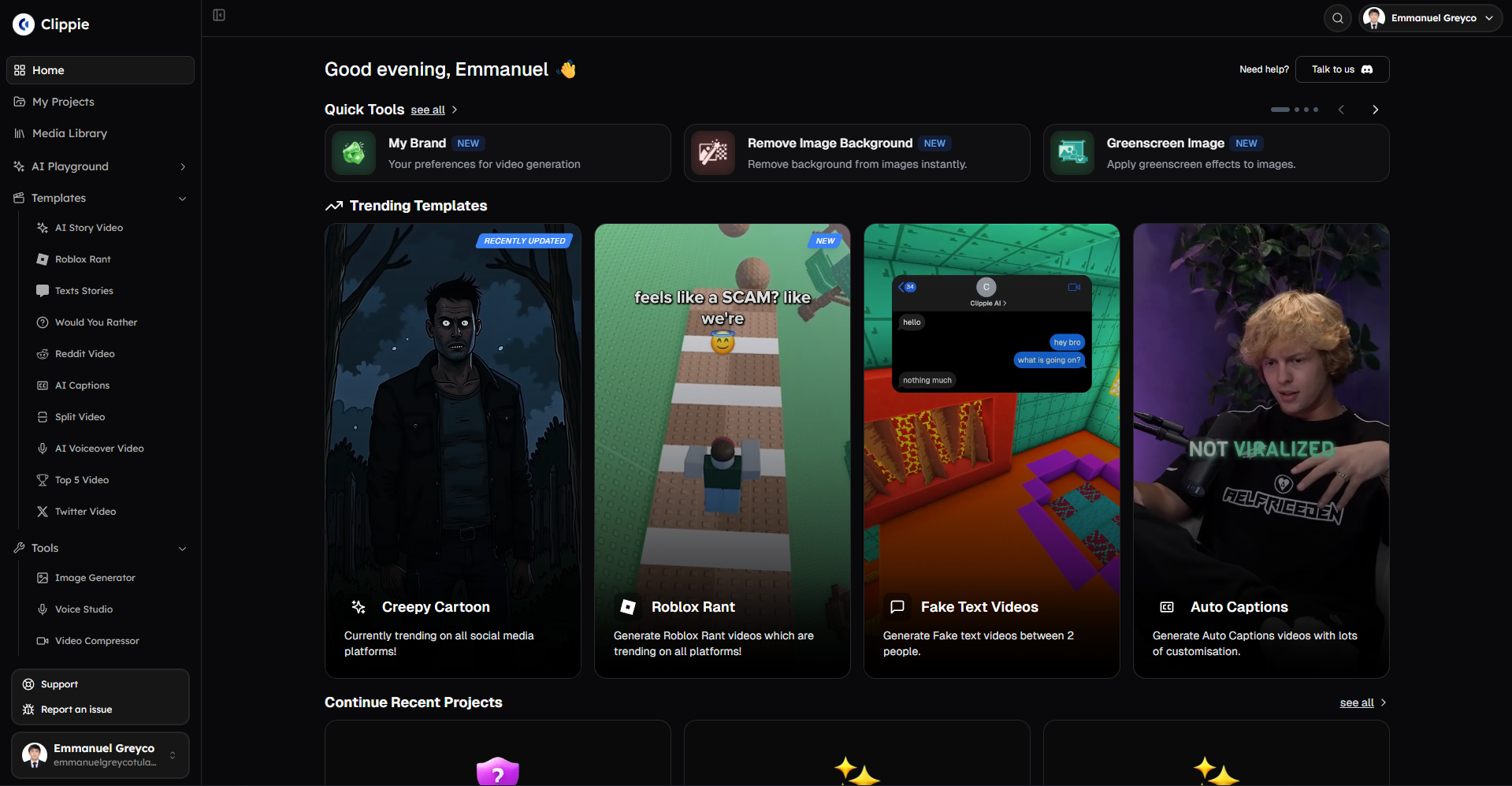
Clippie AI integrates Seedance 1.0 alongside VEO3 and VEO3.1, meaning creators can access all three models within the same production account and production session, selecting the appropriate model for each clip based on the scene requirements.
Step 1: Access the AI Video Generation Tool in Clippie AI
Log into your Clippie AI account
Navigate to the AI video generation section of the platform
Confirm Seedance 1.0 is listed as an available generation model alongside VEO3 and VEO3.1
Step 2: Select Seedance 1.0 as the Generation Model
From the model selection menu:
Select Seedance 1.0 for clips requiring filmic, narrative, or character-driven aesthetics
Select VEO3.1 for clips requiring photorealistic natural or urban environments
The model selection can be changed between clips within the same production session, each clip can use a different model if the scene requirements differ
Step 3: Input Your Prompt
Using the six-element prompt framework:
Open with scene type specification
Describe the character or subject with staging intention
Define the environment with atmospheric and emotional qualities
Specify camera direction
Add lighting and colour palette description
Close with filmic quality descriptors
Keep prompts between 50–90 words. Longer prompts do not consistently improve output and can introduce contradictions.
Step 4: Generate and Review
Seedance 1.0 generation takes approximately 45–120 seconds per clip depending on scene complexity.
Review criteria for Seedance output:
Does the scene type match the specification? (Filmic and cinematic rather than documentary and literal)
Is the character or subject staging compositionally intentional?
Does the lighting match the description?
Is motion smooth and coherent across the clip duration?
Does the overall aesthetic match the channel's visual identity?
The most common adjustment: If the output lacks the cinematic quality specified, add stronger quality descriptors in the revised prompt, "prestige TV production quality" and "feature film visual style" tend to produce stronger enforcement of the cinematic aesthetic than generic quality terms.
Step 5: Integrate Into the Video
Approved Seedance clips integrate into the Clippie AI production workflow:
Add each clip to its corresponding section of the video
Pair with the AI voiceover segment generated in the same session
Ensure auto-captions are synced across sections containing Seedance footage
Add AI-generated images from Clippie AI's image tool for sections that need static visuals rather than motion
Step 6: Export
Export the completed video with Seedance footage integrated:
YouTube long-form: 16:9, 1080p minimum, MP4, 30fps
Shorts / TikTok / Reels: 9:16, 1080 x 1920, MP4, 30fps
No separate rendering step is required, Seedance footage exports at the same quality settings as the rest of the Clippie AI production.
Credit Usage for Seedance vs VEO3.1
Both Seedance 1.0 and VEO3.1 use AI credits within Clippie AI. Check your available credit balance before beginning a generation session for a new video project.
Planning credit usage for a mixed-model video:
For a 10-minute video using a mix of Seedance and VEO3.1:
Allocate Seedance for character-forward and narrative scene clips (typically 4–6 clips in a narrative-style video)
Allocate VEO3.1 for environmental establishing shots (typically 2–3 clips)
Generate all clips in one session before proceeding to voiceover and captioning

6. How to Build a Full Cinematic Faceless Channel Using Seedance 1.0 and Clippie AI
This is the complete operational framework for a faceless channel that uses Seedance 1.0 as its primary video generation model, with VEO3.1 for environmental context, integrated with Clippie AI's voiceover, captioning, and export workflow.
Choosing a Seedance-Optimised Channel Concept
Seedance's filmic aesthetic suits specific channel concepts. The following are the strongest channel directions for a Seedance-primary production workflow:
Strongest Seedance channel concepts:
Reddit story channel - relationship advice, AITA, revenge stories, moral dilemmas
True crime and mystery - case storytelling with atmospheric narrative footage
Dark fiction and thriller storytelling - original or adapted narrative content
Self-improvement with premium visual identity - motivational content with film-quality visuals
Moral dilemma and thought experiment content - philosophical or ethical scenarios
Channel concepts better served by VEO3.1 primary:
Finance and economics - documentary realism serves educational credibility better
History and documentary - environmental photorealism is appropriate for historical contexts
Science and technology - accurate environmental representation matters more than filmic quality
The Pre-Production Footage Planning System
Before opening Clippie AI for any production session, the footage requirements should already be planned. This planning separates efficient batch production from reactive generation that wastes credits.
For each video, complete this footage brief before production:
For each section of the script, note:
Which model to use: Seedance or VEO3.1?
What scene type is this? (Character narrative / Environmental establishing / Atmospheric transition)
What is the character or subject staging?
What is the environment?
What camera direction?
What lighting and colour palette?
Writing this brief before production turns the generation session into an execution task rather than a creative decision-making session.
The Weekly Production Schedule for a Seedance-Primary Channel
Monday: Story Research and Ideation (45 minutes)
Select this week's 2–3 video topics from the content calendar
Confirm each topic has sufficient sourcing or story material for the planned video length
Write one-line footage brief notes for each video's main scene requirements
Tuesday: Scripting (2–2.5 hours)
Generate first-draft scripts using ChatGPT or Claude for each video
Review for hook quality, pacing, and section structure
Note specific emotional beats where Seedance footage will be needed, these are the scripting moments that most benefit from filmic character staging
Wednesday: Production Batch in Clippie AI (2.5–3.5 hours for 3 videos)
For each video (50–70 minutes):
Seedance and VEO3.1 clip generation: 25–35 minutes
Generate 4–6 Seedance clips (narrative character and atmospheric)
Generate 2–3 VEO3.1 clips (environmental establishing)
Voiceover generation: 5–8 minutes
Paste script, select custom cloned voice or pre-built voice
Generate narration
Image generation: 8–10 minutes
Generate title card and 3–4 section images for segments not requiring video footage
Caption review: 3–5 minutes
Confirm auto-caption accuracy across the full video
Export: 5 minutes
16:9 for YouTube long-form + 9:16 for Shorts clip
Thursday: Publishing Preparation (1–1.5 hours)
Create thumbnails in Canva or using Clippie AI image generation (15 minutes each)
Write YouTube titles and descriptions (10 minutes per video)
Write TikTok / Reels / Shorts captions and hashtag sets
Schedule in YouTube Studio
Friday: Analytics Review (20–30 minutes)
Review 48-hour performance data for videos published earlier in the week
Note which Seedance footage styles generated strongest retention at specific sections
Feed findings into Monday's footage brief planning
Clippie AI Plans: Matched to Seedance Channel Scale
Lite: $19.99/month
30 mins video export (~3–5 videos/month)
30 mins AI voice generation
30 mins speech-to-subtitles
100 AI images
1 custom voice
Captions in 102+ languages
50+ AI voices
24/7 support
Best for: Testing the Seedance 1.0 integration and validating channel concept with first 3–5 videos
Creator: $34.99/month
120 mins video export (~8–12 videos/month)
120 mins AI voice generation
120 mins speech-to-subtitles
500 AI images
10 custom voices
Captions in 102+ languages
50+ AI voices
24/7 support
Best for: A weekly Seedance-primary channel producing 2–3 long-form videos per week with consistent Shorts cross-posting
Pro: $69.99/month
250 mins video export (~15–20 videos/month)
250 mins AI voice generation
250 mins speech-to-subtitles
1,000 AI images
30 custom voices
Captions in 102+ languages
50+ AI voices
24/7 support
Best for: High-volume Seedance channel operations, multi-language expansion, or agencies managing multiple Seedance-primary channels
No free tier is available on Clippie AI.
💡 For a direct comparison of Seedance and VEO3.1 in the context of a complete cinematic faceless workflow, read our guide on how to use VEO3 and VEO3.1 to create cinematic AI videos in 2026
💡 For the complete production system that integrates Seedance footage with voiceover, captions, and export, read our guide on the best AI tools for faceless content creators in 2026
💡 Start creating with Seedance 1.0 inside Clippie AI today →
Conclusion: Seedance 1.0 Is the Cinematic Aesthetic Standard for Narrative Faceless Content in 2026
The creators building the most visually distinctive faceless channels in storytelling, true crime, Reddit content, and motivational video in 2026 are not using the same stock libraries as everyone else. They are generating custom, filmic footage with Seedance 1.0, footage with compositional intent, character presence, and a cinematic quality that stock libraries cannot match.
The visual differentiation Seedance provides is not just aesthetic. It translates directly into scroll-stop performance, completion rate, and the impression of production value that converts casual viewers into subscribers who trust the channel enough to return.
Clippie AI's Seedance 1.0 integration removes the technical and financial barrier that previously made custom AI video generation inaccessible to solo creators. The footage generation, voiceover, captioning, and export happen in a single workflow, at a cost structure that makes premium cinematic production sustainable at the volume that channel growth requires.
One prompt. Ninety seconds. Footage that no stock library can provide.
7. Frequently Asked Questions
Q1: What is the main difference between Seedance 1.0 and VEO3.1 for faceless video creators?
The primary difference is aesthetic and use-case alignment rather than raw quality ranking. VEO3.1 produces photorealistic footage that looks like it was captured by a high-end camera in the real world, ideal for documentary, educational, and environmental content. Seedance 1.0 produces filmic footage that looks like it was shot for a feature film or premium TV production, ideal for narrative, story-driven, character-forward, and emotionally complex content. The correct choice depends on your channel's content type and aesthetic goals rather than on one model being objectively superior to the other.
Q2: Can I use both Seedance 1.0 and VEO3.1 in the same video through Clippie AI?
Yes. Clippie AI provides access to Seedance 1.0, VEO3, and VEO3.1 within the same production account. You can select a different model for each clip in the same video, using Seedance for character-forward narrative sections and VEO3.1 for environmental establishing shots within the same production session. This mixed-model approach is the most sophisticated strategy for creators who want the best visual output for each section of a video rather than defaulting to one model for everything.
Q3: How many Seedance 1.0 clips does a typical 10-minute faceless video require?
A standard 10-minute narrative or story-driven faceless video typically uses 5–8 Seedance 1.0 clips, one opening establishing shot, one or two clips per major content section, and one closing shot. Sections between clips are covered by AI-generated images from Clippie AI's image tool, which provides visual variety without requiring video generation credits for every frame change. Planning clip requirements before the production session, identifying which sections need motion footage versus static images, keeps credit usage efficient.
Q4: How long does Seedance 1.0 clip generation take inside Clippie AI?
Individual clip generation takes approximately 45–120 seconds per clip depending on scene complexity. For a 10-minute video requiring 6 Seedance clips, the full generation session takes approximately 8–15 minutes. Combined with prompt review and output assessment, the total Seedance footage generation phase for most standard video projects takes 20–35 minutes.
Q5: What is the optimal prompt length for Seedance 1.0?
Prompts of 50–90 words consistently produce the best Seedance 1.0 output. Shorter prompts, under 30 words, lack sufficient staging and stylistic direction to produce the filmic aesthetic reliably. Longer prompts, over 120 words, risk introducing contradictions between the scene type, character staging, and stylistic direction that produce inconsistent output. The six-element prompt framework in this guide naturally produces prompts in the 50–90 word range when applied correctly.
Q6: Which Clippie AI plan is right for a creator building a Seedance 1.0 primary faceless channel?
The Creator plan at $34.99/month is the right starting point for a weekly Seedance-primary channel. Its 120-minute export capacity supports 8–12 videos monthly, its 500 AI image allocation supplements Seedance clips with static visuals for non-motion sections, and its 10 custom voice slots allow custom voice cloning for channel identity. Creators producing at higher volumes, 3+ long-form videos per week plus regular Shorts, or running multiple Seedance channels simultaneously should upgrade to the Pro plan at $69.99/month for 250-minute export capacity, 1,000 AI images, and 30 custom voices.
Read more

How to Post One Faceless Video to TikTok, Reels and Shorts
One vertical export works on all three platforms, but the rules don't. Lengths, payout thresholds, caption styles and what you should never cross-post.

Best AI Tools for Faceless YouTube Channels in 2026
A faceless YouTube channel needs one good tool per stage, not thirty. Research, scripting, voice, video and thumbnail picks, plus three stacks by budget

Best AI Video Tools for Faceless Content in 2026
The right tool depends on what you make: story shorts, prompt-to-video, repurposing, captions or avatars. Honest picks for each, plus where each one fails.