
The Ultimate Guide to Clippie's AI Story Video: Create Viral AI-Generated Stories Fast
Complete guide to creating viral AI-generated story videos with Clippie. Step-by-step tutorials, art style customization, new features, and proven viral strategies for 2025.
AI-generated story videos have become one of the fastest-growing content formats across short-form platforms in 2025, with channels dedicated to Reddit stories, fictional narratives, moral tales, and text-based storytelling consistently achieving millions of views and rapid subscriber growth. The format's explosive popularity stems from combining compelling narratives that keep viewers engaged through completion with visual interest through AI-generated imagery that continuously changes maintaining attention, accessibility for creators since story content requires no filming or complex production, and the universal human attraction to stories that transcends language, culture, and demographic barriers.
However, creating these story videos traditionally required juggling multiple separate tools and workflows including using ChatGPT or Claude to generate or refine story scripts, employing Midjourney or DALL-E to create individual story images matching narrative beats, using text-to-speech services like Eleven Labs for narration, manually importing everything into video editors, synchronizing images to narration timing, adding captions for accessibility and engagement, and finally exporting in appropriate formats for different platforms. This multi-tool workflow consumed 45-90 minutes per video even for experienced creators familiar with all the systems, created numerous friction points where technical issues could derail production, and required technical expertise across multiple platforms that many aspiring creators lacked.
Clippie's AI Story Video feature revolutionizes this production process by integrating the entire workflow into a single streamlined platform where you simply input your story concept or full script, select your preferred visual art style from multiple aesthetic options, let Clippie's AI generate matching imagery for your narrative automatically, add automatic narration with natural-sounding AI voices, apply synchronized captions enhancing accessibility and engagement, and export completed professional story videos in 5-15 minutes rather than the 45-90 minutes multi-tool approaches require. This integrated approach doesn't just save time, it makes story video creation accessible to creators with zero technical background or design skills while producing results that match or exceed what's achievable through complex multi-tool workflows.
Why Story Videos Are Dominating Short-Form Content
Understanding what makes story videos so effective helps you create content that leverages the format's inherent advantages.
The completion psychology drives engagement because stories create narrative tension and curiosity gaps that viewers want resolved, making them far more likely to watch through to the end compared to informational or entertainment content where viewers might leave once curiosity is satisfied. This completion drive translates directly into the watch time and average view duration metrics that platform algorithms reward with expanded distribution. Story videos commonly achieve 70-85% average view duration compared to 40-60% typical for other short-form content types.
The accessibility advantage makes stories universally relatable as narrative resonates across demographics, languages, and cultures more than humor, trends, or specific interests that appeal to narrower audiences. A well-told story about relationships, moral dilemmas, life lessons, or dramatic situations connects with viewers regardless of background. Additionally, story videos require no special knowledge, cultural context, or familiarity with trends or references to understand, anyone can immediately grasp and engage with narrative content.
The production efficiency enables high-volume consistent posting that algorithms favor. Unlike filming-based content requiring locations, props, actors, and extensive production, story videos can be created entirely through AI tools working from anywhere at any time. This efficiency enables daily or multiple-daily posting maintaining algorithmic momentum and audience engagement that manual production struggles to sustain. Creators report producing 3-5 story videos in the time previously required for single filmed video.
The format versatility allows stories to work across essentially every platform and audience including TikTok's entertainment-focused younger demographics, YouTube Shorts' broader age range and longer attention spans, Instagram Reels' visual-oriented communities, and even traditional YouTube for longer-form story compilations or extended narratives. Story content also ages well compared to trend-dependent or news-related content, compelling stories remain engaging months or years after creation, contributing to long-tail views from search and recommendations.
The emotional engagement creates memorable content and loyal audiences as stories that evoke emotion (surprise, anger, sadness, inspiration, humor, shock) are remembered and shared far more than purely informational or entertainment content. Emotional resonance builds stronger audience connections and creator-viewer relationships than surface-level entertainment. Many successful story channels report unusually high engagement rates and loyal communities compared to other content types.
What You'll Master in This Comprehensive Guide
This tutorial provides complete step-by-step instruction for creating viral-ready AI story videos using Clippie's integrated platform, from initial concept through optimized final exports.
We'll begin by thoroughly explaining what Clippie's AI Story Video feature actually is, including its core capabilities and unique advantages, how it compares to manual multi-tool workflows, what types of stories work best with the feature, and who benefits most from this production approach. This foundation ensures you understand not just the how but the why behind effective story video creation.
The detailed step-by-step tutorial with screenshots walks you through your first story video creation covering accessing the AI Story Video feature within Clippie, inputting or generating your story content, selecting and customizing art styles for your visual aesthetic, configuring narration and voice settings, adjusting pacing and scene generation, previewing and refining before final generation, and exporting optimized videos for your target platforms. This hands-on guide ensures you can successfully create your first story video even with zero prior experience.
The art style customization section explores Clippie's visual aesthetic options in detail including anime and manga styles for dramatic stylized visuals, realistic and photographic styles for grounded believable narratives, 3D cartoon and animated styles for family-friendly engaging content, cinematic and artistic styles for premium dramatic storytelling, and guidelines for choosing styles that match your story content and target audience. Understanding art style impact helps you create visually distinctive branded content.
The new features exploration keeps you current on Clippie's latest capabilities including recent additions to art style libraries, enhanced scene generation and image quality improvements, expanded voice and narration options, advanced customization and editing controls, and platform-specific optimization features. Staying current with new capabilities ensures you leverage the platform's full potential.
Finally, the viral optimization strategies provide proven tactics for maximizing your story videos' performance including narrative structures and story types that consistently perform well, hooks and opening techniques that stop scrollers and drive retention, pacing and scene timing optimizing engagement throughout videos, caption strategies maximizing accessibility and watch time, platform-specific optimization for TikTok, Shorts, and Reels, and posting strategies and community engagement building sustainable audiences. These strategic insights transform the technical ability to create videos into the strategic capability to build successful story-focused channels.
By the end of this guide, you'll have both the technical skills to efficiently create professional AI story videos and the strategic understanding to optimize content for viral performance and channel growth.
Table of Contents
What Is Clippie's AI Story Video?
How to Generate a Story Video (Step-by-Step With Screenshots)
Using Art Styles to Customize Your Story
Exploring the New Features
Tips for Making Your AI Story Videos Go Viral
FAQs
Conclusion
1. What Is Clippie's AI Story Video?
Understanding Clippie's story video feature's capabilities, advantages, and ideal applications helps you leverage it effectively.
Core Capabilities and Unique Integration
Clippie's AI Story Video feature represents an end-to-end integrated solution for story content creation.
The complete workflow integration handles every production step in single platform including story text processing whether you provide complete scripts or just story concepts, AI-powered scene generation analyzing your narrative to identify key moments requiring visual representation, automatic image generation creating artwork matching each scene using advanced AI image synthesis, natural voice narration with customizable voice options and pacing, synchronized caption generation with timing and styling, music and audio atmosphere adding emotional depth, and optimized video export for all major short-form platforms. This integration eliminates the friction points and context-switching overhead that plague multi-tool workflows where you're constantly exporting from one tool and importing to another.
The intelligent narrative analysis means Clippie doesn't just accept text, it understands story structure including identifying key narrative beats and dramatic moments deserving visual emphasis, recognizing character introductions and scene changes requiring new imagery, detecting emotional tone shifts guiding art style and visual mood, understanding pacing to distribute visuals appropriately throughout narrative, and maintaining visual continuity creating cohesive rather than random image sequences. This intelligence produces videos that feel intentionally designed rather than randomly assembled.
The customization flexibility balances ease-of-use with creative control through default settings producing excellent results with minimal input, while extensive customization options enable fine-tuning every element including art style selection from diverse aesthetic libraries, voice and narration characteristics matching your brand or content type, caption styling and positioning reflecting your visual identity, pacing and scene duration adjustments optimizing for platform and audience, and music selection setting appropriate emotional atmosphere. You can start with simple one-click generation then progressively refine as you develop preferences.
The production efficiency delivers dramatic time savings with typical story video requiring 5-15 minutes from concept to completed export (compared to 45-90 minutes with manual multi-tool workflows), bulk generation capabilities creating multiple videos from story batches, template and preset systems accelerating production for series or consistent content, and immediate preview and iteration without waiting for long renders. This efficiency enables consistent high-volume posting that algorithms reward.
Comparison to Traditional Story Video Creation
Understanding what Clippie replaces clarifies its value proposition and advantages.
Traditional multi-tool workflow challenges include using ChatGPT/Claude for story generation or refinement (5-10 minutes), employing Midjourney/DALL-E for creating 8-12 images per story (15-30 minutes including prompt crafting and selection), generating narration through Eleven Labs or similar (5-10 minutes), manually importing assets into video editor like Premiere or CapCut (5 minutes), synchronizing images to narration timing manually (10-20 minutes), adding and timing captions manually (10-15 minutes), selecting and adding background music (3-5 minutes), and exporting and optimization for platforms (5-10 minutes). Total time investment: 58-105 minutes per video requiring expertise across 4-6 different tools.
Clippie's integrated workflow simplification reduces this to entering story text (1-2 minutes if using existing story, 5-10 minutes if generating within Clippie), selecting art style and voice preferences (1 minute), reviewing AI-generated preview adjusting if needed (2-5 minutes), and final generation and export (automatic, 1-2 minutes). Total time investment: 5-15 minutes requiring familiarity with only single intuitive platform. The time savings compound dramatically across multiple videos, creating 10 story videos weekly would require 10-17.5 hours with traditional approach but only 50-150 minutes (under 3 hours) with Clippie.
Quality comparison shows Clippie matching or exceeding manual workflows because AI image generation maintains consistent quality across all scenes where manual workflows often have variable quality depending on prompt success, automated synchronization achieves precise timing where manual work is tedious and error-prone, consistent professional voicing versus potential quality variations with some TTS tools, and platform optimization built in versus requiring separate optimization steps. The quality ceiling might be slightly higher with manual workflows using expert Midjourney prompting and professional video editing, but the quality floor is much higher with Clippie preventing the poor results that occur when any step in complex manual workflow goes wrong.
Accessibility comparison reveals Clippie's democratizing impact as manual workflow requires expertise in AI prompting, image generation, video editing, and audio mixing, skillsets requiring months to develop competency. Clippie requires only basic computer literacy and ability to tell or select good stories, enabling creators with valuable narrative sensibility but limited technical skills to produce professional content. This accessibility expands who can participate in story video creation from technically sophisticated creators to anyone with story sense.
Ideal Use Cases and Content Types
Certain story formats particularly benefit from Clippie's AI Story Video feature.
Reddit story adaptations represent massive opportunity as popular Reddit communities (r/AmITheAsshole, r/relationshipadvice, r/entitledparents, r/MaliciousCompliance, etc.) provide endless compelling real stories, existing audiences already engaged with these narratives validate demand, dramatic situations and moral dilemmas drive engagement, and episodic format enables building series around specific story types. Many successful story channels generate 50-80% of content from Reddit adaptations. Key success factors include selecting stories with strong hooks and dramatic tension, properly attributing or transforming content avoiding copyright issues, and adding value through editing, commentary, or perspective rather than just reading posts verbatim.
Fictional moral tales and fables work excellently because clear moral lessons resonate universally and prompt discussion, traditional fable structure (setup, conflict, resolution, lesson) fits short-form perfectly, AI imagery can visualize any setting or scenario regardless of filming feasibility, and family-friendly nature enables broad audience appeal. Examples include modern retellings of classic fables, original stories teaching specific lessons, cultural tales from various traditions, and allegorical narratives addressing contemporary issues. These stories often perform exceptionally well with older demographics and parents seeking content to share with children.
True crime and mystery stories drive massive engagement through inherent suspense and curiosity gaps viewers want resolved, detailed narratives supporting longer-form content (3-5 minute Shorts or full YouTube videos), and passionate true crime audience consuming content voraciously across platforms. Clippie's AI imagery works particularly well for true crime since dramatic reenactment-style visuals enhance storytelling without requiring actual footage or raising ethical filming concerns. Critical ethical considerations include treating victims and families respectfully, clearly indicating when details are speculative versus confirmed, avoiding sensationalism that exploits tragedy, and properly researching facts rather than spreading misinformation.
Inspirational and motivational stories generate engagement and sharing because uplifting narratives contrast with negative news and content, shareability extends reach as viewers send inspiring content to friends and family, emotional resonance builds strong audience connection and loyalty, and positive content attracts brands and sponsorships. Examples include overcoming adversity stories, unexpected kindness and generosity narratives, achievement and success stories, and life lesson and wisdom tales. These perform particularly well on platforms like Instagram and YouTube where slightly older demographics appreciate inspirational content.
Horror and creepypasta stories tap into dedicated audiences with popular horror storytelling communities on Reddit (r/nosleep, r/LetsNotMeet) and elsewhere, suspense and tension driving completion rates as viewers must know how stories resolve, distinctive horror aesthetic creating recognizable brand, and passionate genre fans consistently consuming new content. Clippie's art styles can create appropriately eerie or disturbing imagery matching horror tone. Consider age-appropriate content warnings and platform guidelines around disturbing content.
Relationship and dating stories resonate across demographics as relationships are universally relatable experiences, dramatic relationship conflicts drive engagement and comments, advice and perspective elements add value beyond entertainment, and regular audience refreshment as people continuously enter relationship situations needing guidance. These stories work across platforms but particularly well on TikTok and Instagram where younger demographics actively seek relationship content.
Who Benefits Most from AI Story Videos
Certain creator types and situations particularly suit story video format.
Faceless channel creators seeking efficient production find story videos ideal since no filming or camera presence required eliminating major barrier, production possible from anywhere without equipment beyond computer, privacy maintained while building substantial channels, and multiple channels manageable by single creator through production efficiency. Story videos represent one of the most accessible formats for faceless content creation.
Content creators seeking volume and consistency benefit from production speed enabling daily or multiple-daily posting maintaining algorithmic favor, systematic scalable workflow supporting growth without team expansion, reduced dependency on external factors like weather, locations, or availability of people, and consistent quality regardless of creator's physical state or circumstances. Story channels commonly post 5-15 times weekly which would be impossible with filming-based approaches.
Storytellers and writers monetizing narrative skills discover story videos provide accessible path from written to video content, showcase storytelling ability building reputation and audience, create demonstration of writing skills for freelance opportunities, and potentially generate income from existing story libraries or writing ability without requiring video production skills. Writers can finally leverage YouTube without learning filming and editing.
Educators and advice channels embedding lessons in narrative form make educational content more engaging through storytelling, teach through examples and case studies rather than abstract concepts, reach audiences who prefer narrative over direct instruction, and create shareable content extending educational impact. Story format makes educational content entertaining rather than dry.
International creators overcoming language barriers benefit since stories translate and localize more easily than culture-specific humor or references, narration can be generated in multiple languages from single script, universal themes transcend cultural boundaries, and strong visuals reduce dependency on perfect language fluency. Story format democratizes global content creation.
2. How to Generate a Story Video (Step-by-Step With Screenshots)
Complete walkthrough creating your first AI story video from initial concept through final export.
Step 1: Accessing the AI Story Video Feature
Beginning your story video creation journey within Clippie's platform.
Log into your Clippie account at clippie.ai using your existing credentials, or create new account if you're new user. Clippie typically offers free trials enabling you to test AI Story Video feature before committing to paid subscription.
Navigate to the AI Story Video feature from the main dashboard. Look for "AI Story Video" or "Story Generator" in the main menu or creation options. This may be prominently featured on the dashboard or within a "Create" or "New Project" menu depending on Clippie's current interface design.
Understand subscription requirements as AI Story Video may require specific subscription tier or credit allocation depending on Clippie's current pricing model. Check your account status ensuring you have access to the feature. If using free trial, note any limitations on number of videos or generation credits available.
Step 2: Inputting Your Story Content
Providing the narrative foundation for your video.
Choose your input method as Clippie typically offers multiple options including entering complete story text if you already have written narrative, using story concept or brief description letting Clippie's AI expand into full narrative, uploading text file if you have story saved in document, or potentially selecting from story templates or prompts providing starting points. Most users either paste complete stories (from Reddit, their own writing, or generated elsewhere) or provide 2-3 sentence concepts for AI expansion.
Paste or enter your story text into the designated input field. If providing complete story, ensure text is well-formatted with clear paragraph breaks indicating narrative beats and scene changes, this helps Clippie's AI identify natural visual transition points. Typical short-form story length is 150-300 words for 60-90 second videos, or 300-500 words for 2-3 minute content.
Use AI story generation if starting from concept by entering brief story idea or prompt (example: "A person discovers their roommate has been secretly using their belongings and confronts them, leading to surprising revelation"), selecting any genre or style preferences if offered (moral tale, relationship drama, mystery, etc.), and clicking generate or similar button to have Clippie's AI create full narrative. Review generated story editing as needed to ensure it meets your vision and quality standards.
Review and refine your story text ensuring narrative flows logically and includes clear setup, conflict/tension, and resolution, has strong opening hook grabbing attention immediately, maintains engaging pacing without dragging sections, includes vivid specific details rather than vague generalities, and stays within optimal length for your target platform. Edit directly in the text input field making any necessary improvements before proceeding.
Step 3: Selecting Your Art Style
Choosing the visual aesthetic that will define your story video's appearance.
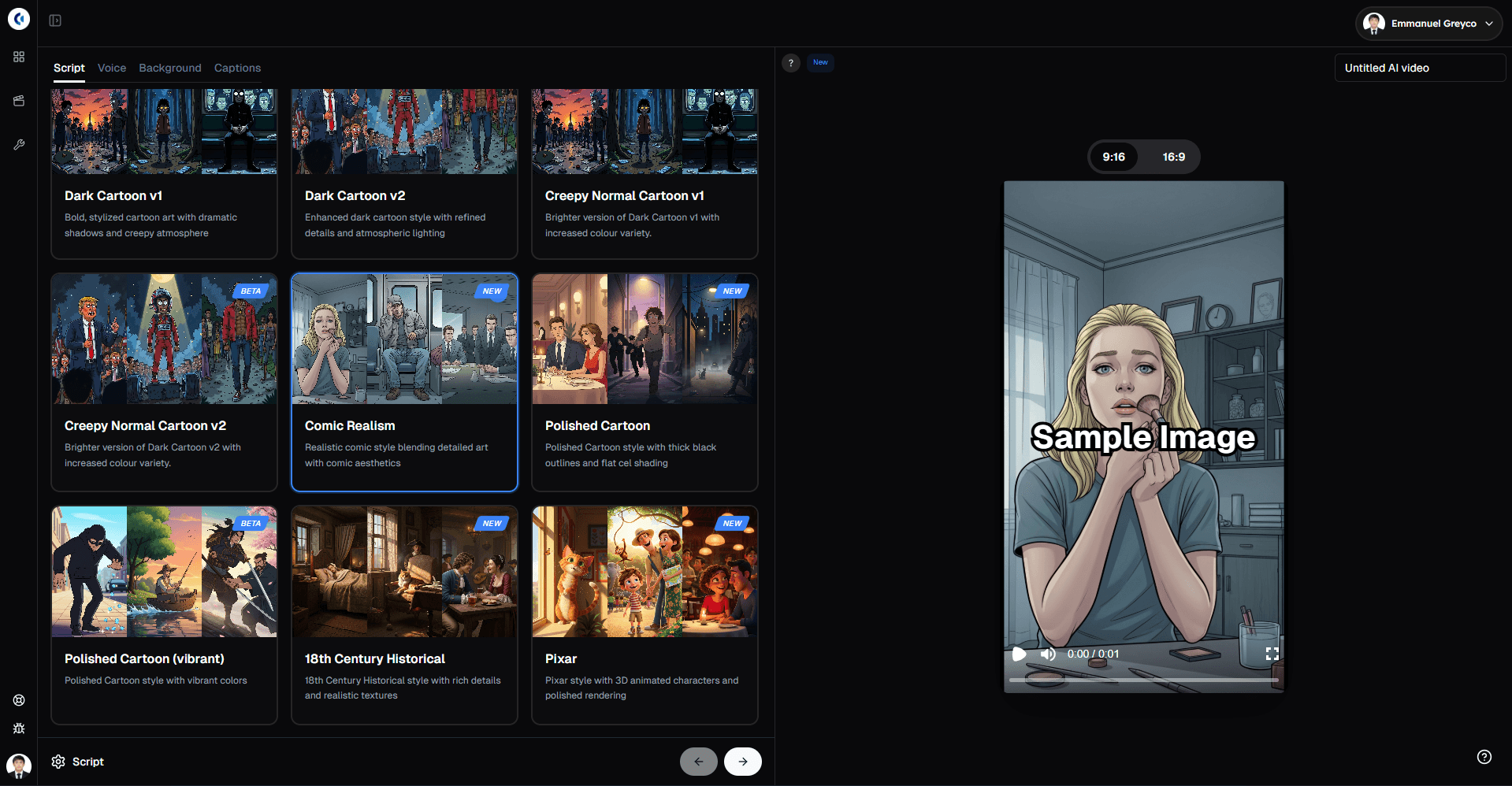
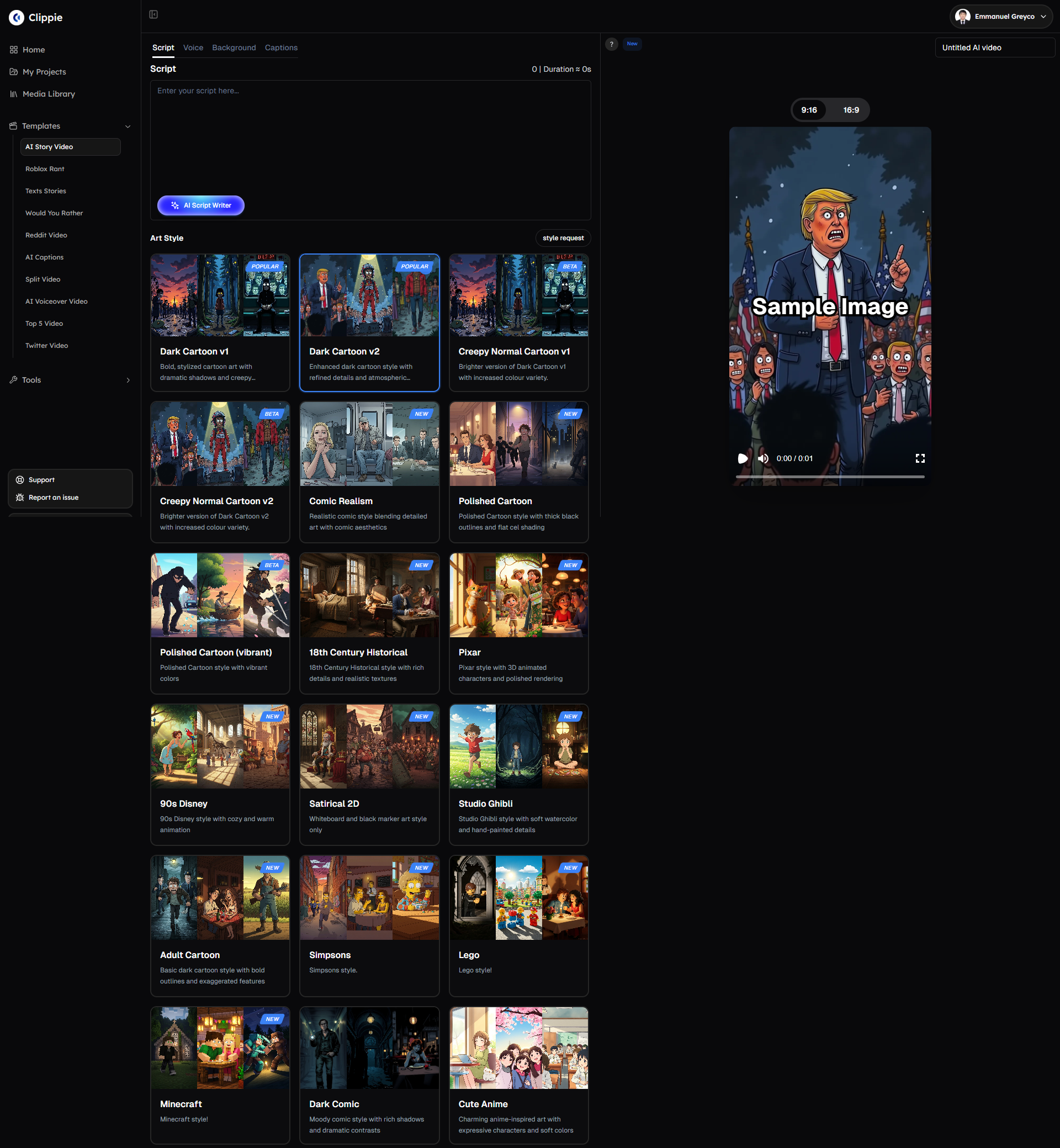
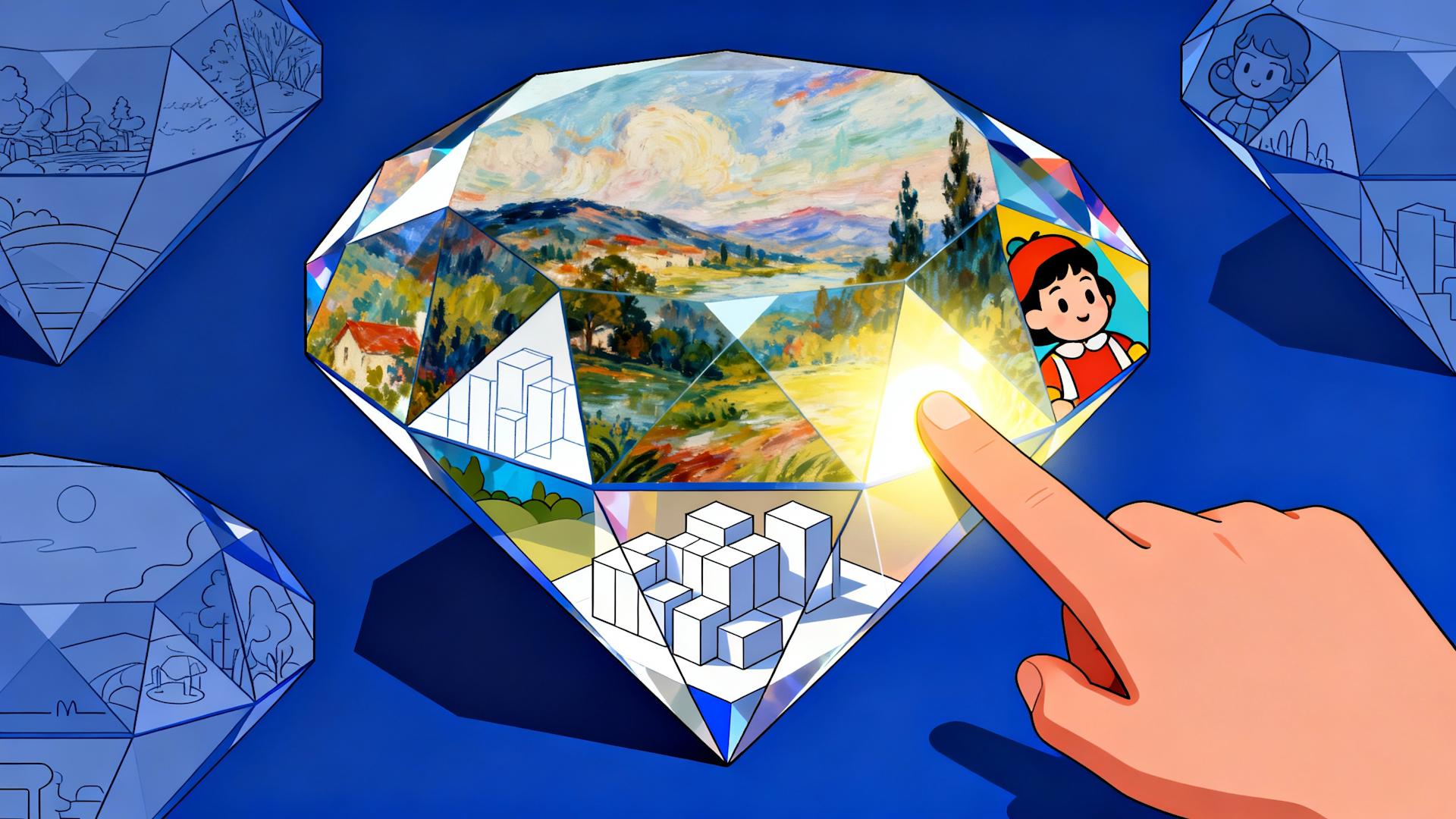
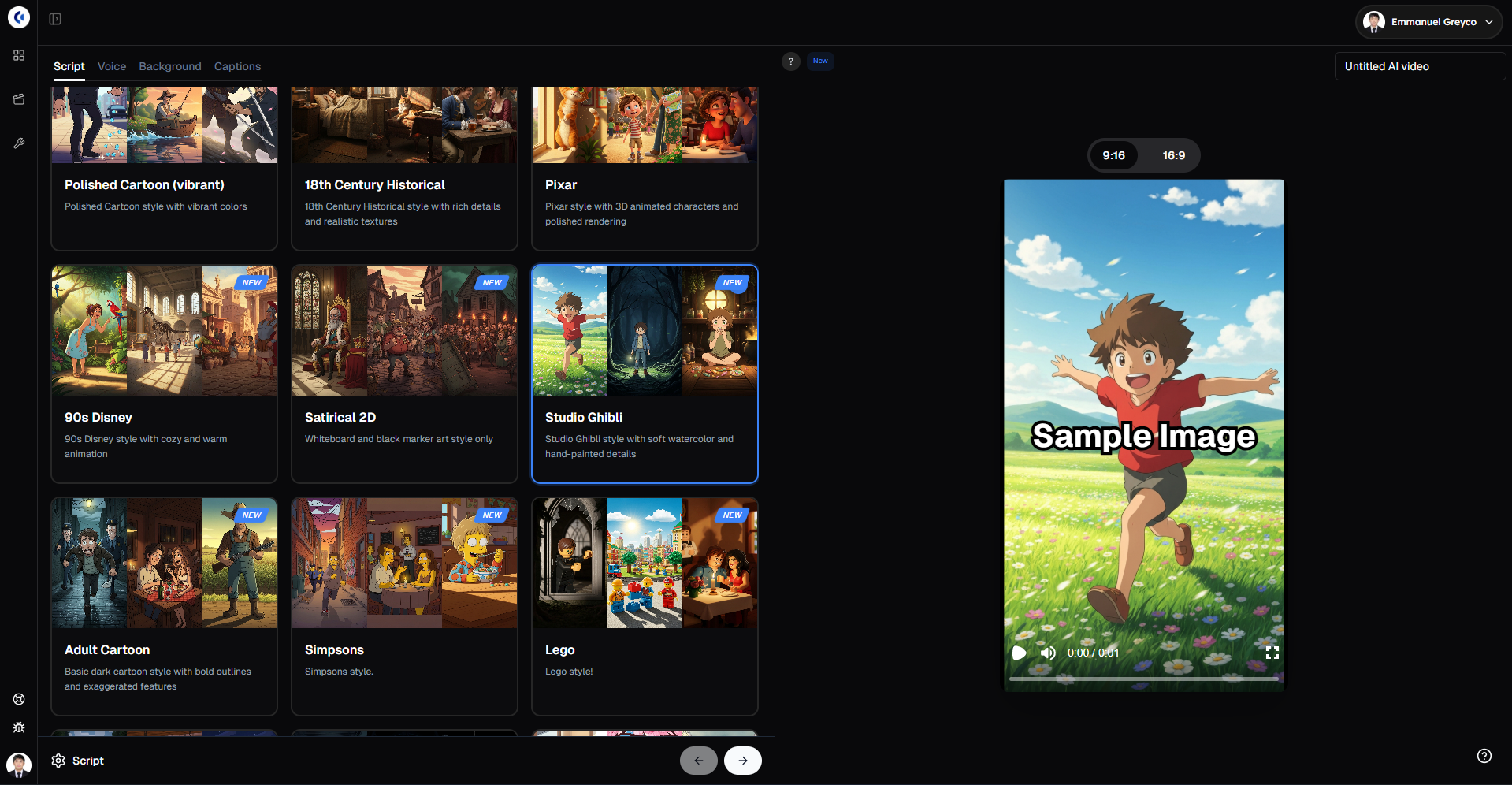
Browse available art styles by viewing the art style gallery or selector typically showing example images demonstrating each style's distinctive look. Clippie offers multiple style categories including anime and manga styles (dramatic, stylized, expressive characters), realistic and photographic styles (believable, grounded, documentary feel), 3D cartoon and animation styles (friendly, accessible, family-appropriate), cinematic and artistic styles (dramatic, film-like, premium aesthetic), and potentially others like comic book, watercolor, or sketch styles depending on Clippie's current offerings.
Consider your story content and audience when selecting style. Relationship dramas and emotional stories often work well with anime or realistic styles emphasizing characters and expressions. Horror and creepy stories benefit from darker cinematic or artistic styles creating appropriate atmosphere. Moral tales and fables suit cartoon or animated styles appealing to broad audiences including families. True crime benefits from realistic or cinematic styles lending gravitas and authenticity. Your target demographic matters too, younger TikTok audiences often prefer anime or stylized art, while YouTube's broader demographics accept more realistic styles.
Select your preferred style by clicking or tapping on the style option you want. Some platforms allow selecting multiple styles if you want visual variety within single video, or setting default styles you'll use consistently for branded content. Consider choosing style you'll use consistently across multiple videos creating recognizable visual brand identity.
Preview how your style choice affects imagery if Clippie offers preview functionality showing how your story's scenes will appear in selected style. Some platforms generate quick sample frame letting you validate style choice before committing to full generation. If preview is available, use it to confirm style meets expectations and aligns with your creative vision.
Step 4: Configuring Narration and Voice Settings
Selecting the audio characteristics that will bring your story to life.
Choose your narration voice from Clippie's voice library typically organized by gender (male, female, neutral), accent or language (American, British, Australian, etc.), and characteristics (warm, authoritative, youthful, dramatic). Listen to voice samples provided for each option ensuring the voice matches your story's tone and your intended brand identity. Consider whether you want consistent voice across all content (building brand recognition) or varying voices matching different story types or characters.
Adjust voice parameters if available including speaking speed or pacing (slower for dramatic serious stories, faster for energetic entertaining content), pitch or tone adjustments within voice capabilities, emotional emphasis or expression levels, and pauses or breathing for natural delivery. Many creators start with default settings then adjust based on preview results.
Set narration style preferences such as whether you want dramatic expressive reading emphasizing emotional beats, neutral straightforward delivery letting story speak for itself, or character-differentiated voices if story includes dialogue or multiple perspectives. Some platforms offer advanced options like automatically detecting dialogue and adjusting voice characteristics for different characters.
Configure audio mixing settings if available including narration volume level, background music type and volume (subtle atmospheric, more prominent emotional, or no music), sound effects addition for emphasis or atmosphere, and overall audio balance ensuring narration remains clearly audible over any background elements. Most platforms provide good defaults but customization enables fine-tuning to your preferences.
Step 5: Adjusting Pacing and Scene Generation
Fine-tuning how your story translates into visual scenes and timing.
Review automatic scene detection as Clippie's AI analyzes your story identifying key narrative beats and determining where scene changes or new imagery should appear. The platform typically displays this visually showing which story sections correspond to which generated scenes. Verify that scene breaks feel natural and appropriate, scenes should change when setting shifts, action occurs, or new story beats begin, not mid-sentence or mid-thought.
Adjust scene timing if needed by modifying how long each image displays on screen. Typical settings range from 3-6 seconds per scene depending on pacing preferences and narration speed. Faster scene changes (3-4 seconds) create dynamic energetic feel suitable for action-oriented or lighter stories. Slower changes (5-6 seconds) allow more contemplation and work better for emotional or complex narratives. Match pacing to your story's emotional rhythm and platform norms (TikTok trends toward faster pacing, YouTube allows more deliberate timing).
Customize specific scene imagery if desired through advanced options some platforms offer. This might include manually editing scene descriptions to guide image generation more precisely, selecting alternative generated images if platform creates multiple options per scene, adjusting scene emphasis or dramatic weight affecting image complexity or drama, or reordering scenes if AI detection didn't match your intended narrative flow. Most creators use defaults initially, customizing only as they develop preferences through experience.
Set overall video duration target if your platform allows by specifying desired final length (60 seconds, 90 seconds, 2 minutes, etc.) and having the system automatically adjust pacing to fit, or alternatively setting narration speed to compress or extend content fitting available footage. Consider platform optimal lengths: TikTok performs best under 60 seconds, Instagram Reels typically 30-60 seconds, YouTube Shorts can be up to 60 seconds, and traditional YouTube supports longer 2-5 minute story videos.
Step 6: Adding Captions and Final Customization
Enhancing accessibility and engagement through text and final polish.
Enable caption generation which should be automatic in most cases as captions dramatically improve engagement by enabling sound-off viewing (60-70% of social media video viewed without sound initially), supporting accessibility for hearing-impaired viewers, reinforcing spoken words improving comprehension and retention, adding visual interest and professional polish, and improving watch time through multiple sensory channels delivering content. Always include captions unless you have specific artistic reason not to.
Customize caption appearance through styling options including font selection balancing readability with personality (simple sans-serif fonts like Arial or Helvetica maximize readability; stylized fonts create distinctive look but risk reduced clarity), text size appropriate for mobile viewing (most viewing happens on phones requiring large enough text), color and background using high contrast for visibility (white text with black stroke or shadow works universally; colored text should contrast strongly with backgrounds), animation and timing for dynamic appearance (highlighting words as spoken, slide-in animations, etc.), and positioning typically centered or bottom-third avoiding covering key visual elements.
Review and customize music selection if your platform provides music libraries. Choose background music matching your story's emotional tone including calm ambient music for contemplative or serious stories, dramatic orchestral or cinematic music for intense or suspenseful narratives, upbeat positive music for inspiring or light-hearted stories, or minimal subtle music for stories where narration should remain primary focus. Ensure music volume supports rather than competes with narration.
Set platform-specific optimizations by selecting your primary target platform (TikTok, YouTube Shorts, Instagram Reels) and having Clippie automatically apply appropriate aspect ratio (typically 9:16 vertical for all short-form platforms), resolution and export quality, optimal duration for platform, and any platform-specific best practices for captions, hooks, or formatting. Creating platform-specific versions ensures optimal performance on each destination rather than using one-size-fits-all approach.
Step 7: Preview and Refinement
Reviewing your story video before final generation and export.
Generate preview by clicking the preview or generate preview button. Most platforms create quick preview in 30-60 seconds showing how your completed video will appear including all scenes with selected art style, narration with chosen voice and pacing, captions as styled, background music if selected, and transitions between scenes. This preview allows you to validate everything looks and sounds as intended before committing to final rendering.
Review preview carefully checking that story narrative flows naturally with good pacing and logical scene progression, art style renders appropriately and images match story content, narration sounds natural with good timing and emphasis, captions are accurate, readable, and well-timed, background music suits story tone at appropriate volume, and overall video engages and maintains interest throughout. Watch preview multiple times if needed, ideally imagining you're seeing it for first time scrolling your feed.
Make refinements as needed by returning to any previous configuration step adjusting art style if visuals don't match expectations, changing narration voice if delivery doesn't suit story, modifying pacing if video feels too rushed or too slow, editing story text if narrative needs improvement, or adjusting caption styling if text isn't sufficiently readable. Iterate until preview meets your quality standards and creative vision.
Prepare for final generation once satisfied with preview. Note that final rendering typically takes 3-8 minutes depending on video length, art style complexity, and current platform load. Some systems allow queuing multiple videos for generation sequentially, enabling batch creation while you work on other tasks.
Step 8: Final Generation and Export
Creating and downloading your completed story video ready for upload.
Initiate final generation by clicking generate, create video, or similar button. The platform will process your video applying all selected settings and creating final high-quality render. Most platforms show progress indicator estimating remaining time. Generation typically takes 3-10 minutes depending on length and complexity.
Download your completed video once generation completes. The platform typically provides download button or automatic download initiation. Verify the file downloads completely and is playable before leaving the platform. Most platforms also maintain library of your created videos allowing re-download later if needed.
Review downloaded video quality by playing the file on your device checking that video quality meets expectations for your platform, audio quality is clear without distortion, captions are complete and accurate, and file size is reasonable for uploading (most platforms handle files up to 500MB-1GB, though smaller is generally preferable for faster uploads). If quality issues exist, you may need to adjust export settings and regenerate.
Organize your content library by creating logical folder structure for your story videos organizing by topic, date, platform, or series, naming files systematically enabling easy identification later (example: "story_reddit_aita_roommate_2024-12-12.mp4"), maintaining backups of successful videos, and tracking which stories you've already used preventing accidental duplication. Organization becomes crucial as you scale to producing multiple videos daily.
Prepare for platform upload by reviewing your video one final time confirming it meets platform requirements (duration, aspect ratio, file format), creating compelling title and description you'll use when uploading, designing custom thumbnail if your platform requires or allows, and planning your hashtags, categories, or other metadata optimizing discoverability. Treat upload preparation as seriously as video creation itself.
3. Using Art Styles to Customize Your Story
Deep exploration of Clippie's art style options and strategic selection guidance.
Understanding Available Art Style Categories
Clippie offers diverse aesthetic options serving different creative visions and audiences.
Anime and Manga Styles create dramatic stylized visuals with characteristic large expressive eyes, exaggerated emotions and reactions, dynamic composition and framing, vibrant bold colors, and distinctive Japanese animation aesthetic. These styles work exceptionally well for emotional relationship stories emphasizing character feelings, dramatic or intense narratives benefiting from expressive visualization, content targeting younger demographics familiar with anime aesthetics, and stories with dialogue or character interactions where facial expressions carry meaning. Anime styles have proven extremely popular on TikTok and among Gen Z audiences. Considerations include potential cultural appropriation concerns if using anime style for non-Japanese stories without respect, style may feel juvenile or inappropriate for serious topics like true crime or tragedy, and oversaturation of anime content on some platforms requiring additional differentiation.
Realistic and Photographic Styles produce believable grounded imagery appearing like actual photographs including natural human proportions and appearances, realistic environments and settings, subtle natural lighting and shadows, muted or natural color palettes, and documentary or journalistic visual feel. These styles suit true crime and mystery content lending credibility and gravity, serious moral dilemmas or relationship advice appearing authentic rather than frivolous, educational or informational stories where believability matters, and older demographics who may find stylized art off-putting. Realistic styles build trust through appearing documentary-like rather than cartoon-like. Considerations include potential uncanny valley effect if realism isn't quite achieved, higher computational requirements potentially affecting generation speed, and less distinctive visual identity compared to stylized approaches making branding harder.
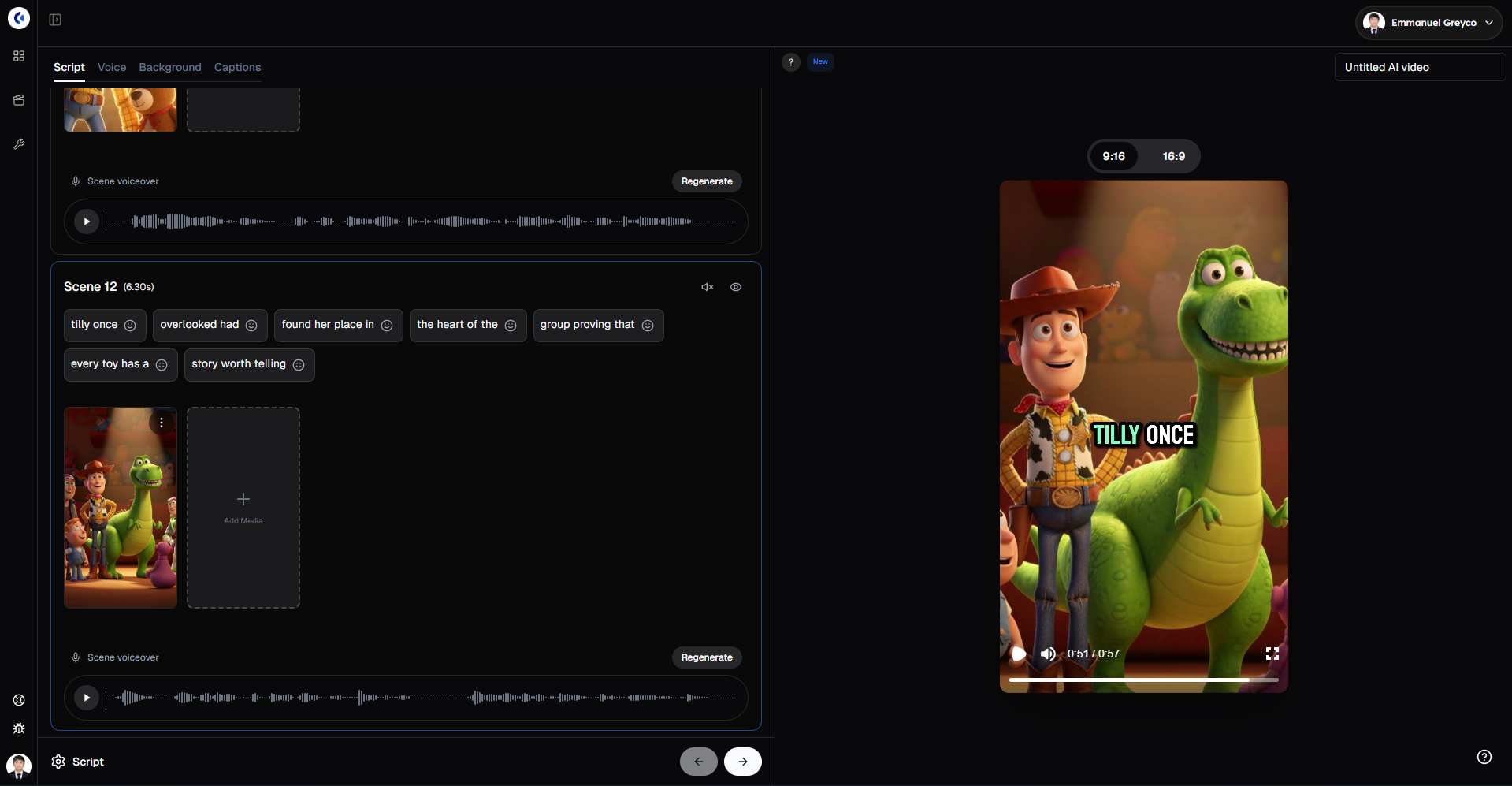
3D Cartoon and Animated Styles create friendly accessible visuals through simplified character designs and features, bright cheerful color palettes, smooth rounded forms and shapes, family-friendly appropriate imagery, and Pixar-esque or modern animation aesthetic. These styles work for moral tales and fables with lesson-based content, family-oriented or children's stories needing appropriate visuals, light-hearted or humorous narratives, and content seeking broadest possible demographic appeal. The approachability factor makes these styles effective for brands and educational content. Considerations include limited emotional range compared to more expressive styles, potential perception as childish for mature content, and common aesthetic shared across many channels requiring additional distinctiveness.
Cinematic and Artistic Styles produce dramatic film-like imagery including movie-quality lighting and composition, atmospheric mood and tone, rich color grading and effects, artistic or painterly qualities, and premium polished aesthetic. These styles suit dramatic intense narratives deserving epic treatment, horror and suspense stories benefiting from moody atmospheric visuals, inspirational or emotional stories warranting beautiful imagery, and premium branded content distinguishing from typical social media. Cinematic styles can command viewer attention through sheer visual quality. Considerations include potentially longer generation times for complex artistic rendering, style may feel over-produced for casual light stories, and maintaining consistency across scenes can be challenging with artistic styles.
Strategic Style Selection Guidelines
Choosing art styles that enhance rather than distract from your narrative.
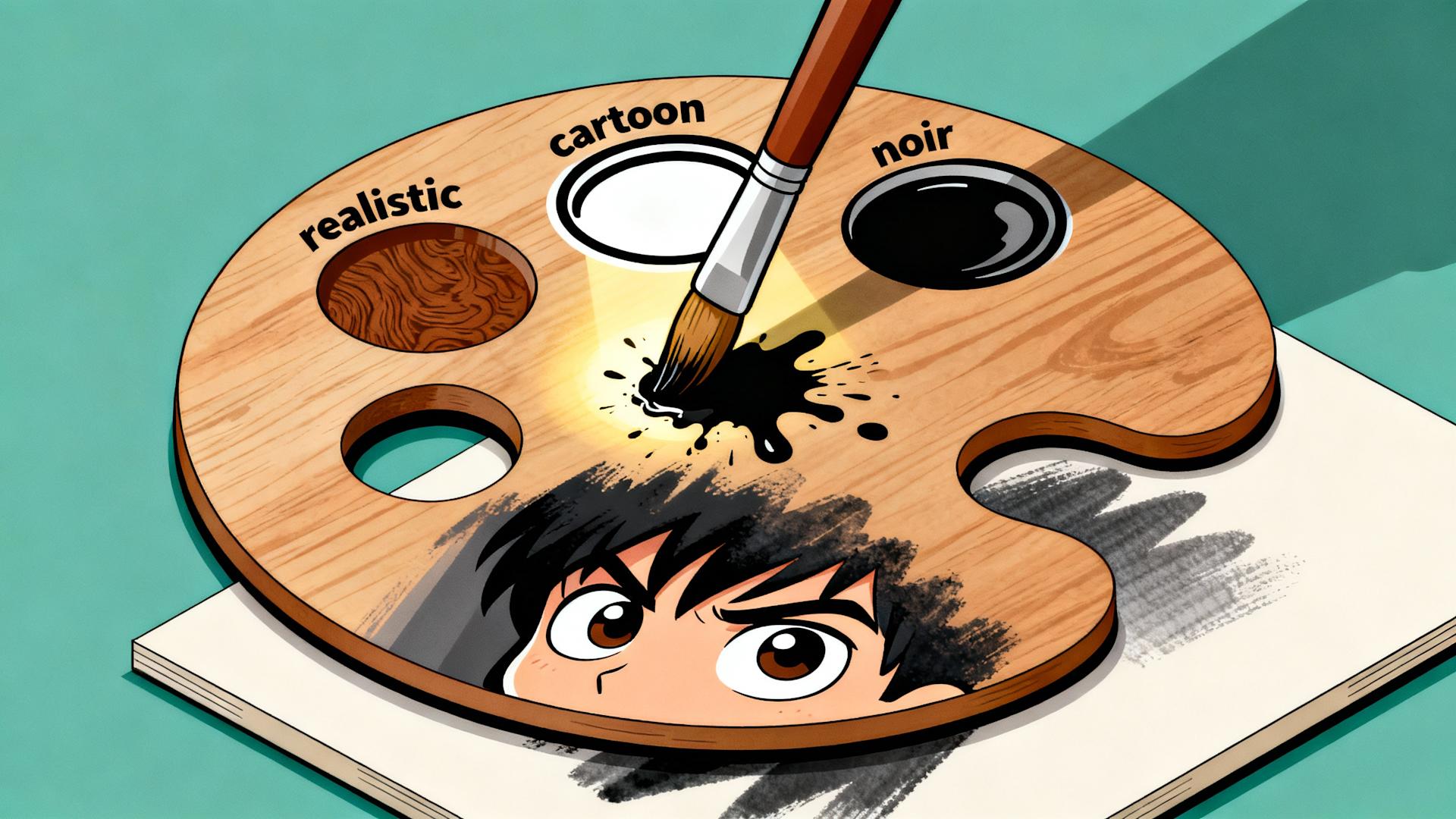
Match style to story tone and content through deliberate pairing like dramatic relationship conflicts working with expressive anime or realistic styles capturing emotional nuance, light-hearted moral tales benefiting from friendly cartoon styles creating appropriate atmosphere, horror and creepy stories requiring darker cinematic or artistic styles generating unease, inspirational uplifting stories enhanced by beautiful artistic or warm realistic visuals, and true crime or serious topics needing realistic or cinematic styles providing appropriate gravity. Mismatched style and content creates cognitive dissonance, cartoon style for tragedy feels disrespectful, overly serious style for light story feels pretentious.
Consider your target audience and their aesthetic preferences including younger TikTok and Gen Z audiences favoring anime, stylized, and trendy aesthetics, millennial audiences accepting mix of realistic and stylized with slight preference for authentic visuals, Gen X and Boomer audiences preferring realistic straightforward visuals over stylized art, family audiences needing appropriate friendly cartoon or animated styles, and international audiences potentially having different style associations and preferences. Research successful channels in your niche noting what art styles dominate, indicating audience preferences.
Build visual brand identity through consistent style choices by selecting primary art style you'll use for 70-80% of content creating recognizable visual signature, potentially using alternative styles for special series or content types providing variety within consistency, customizing caption styling, colors, and branding elements working with your art style, and ensuring style choice differentiates from major competitors rather than blending into sea of similar content. Visual consistency helps audiences immediately recognize your content in feeds while scrolling.
Test multiple styles during channel launch phase by creating same story in 2-3 different art styles comparing viewer response and performance, analyzing which styles generate better retention and engagement, soliciting audience feedback about visual preferences, and monitoring which styled videos perform best algorithmically. Data-driven style selection beats assumptions, let actual performance guide your decisions. After testing period (first 20-30 videos), commit to most successful style rather than continuing to vary randomly.
Balance distinctiveness with accessibility recognizing that unique unusual styles help you stand out and create memorable brand identity but may alienate viewers unfamiliar or uncomfortable with avant-garde aesthetics. While some differentiation is valuable, extremely niche art styles may limit potential audience. Aim for distinctive but broadly appealing aesthetics unless deliberately targeting specific art-focused niche community.
Combining Multiple Styles Strategically
Using style variety intentionally rather than randomly.
Series-based style variation applies different styles to different story series or content categories like using anime style for relationship drama series, realistic style for true crime series, and cartoon style for moral lesson series. This organization helps audiences navigate your content and sets appropriate expectations while maintaining consistency within each series.
Emotional tone-based styling matches art style to story's emotional arc or intensity, using darker more serious styles for intense dramatic moments and lighter styles for positive resolution portions. Some advanced systems might allow style transitions within single video matching emotional progression, though this requires sophisticated platform capabilities.
Character perspective styling differentiates between character viewpoints in complex narratives with multiple perspectives by using distinct art styles for different character's perspectives or narrative voices, creating visual cues helping viewers track which viewpoint they're experiencing, and adding sophistication to storytelling through visual language. This technique works best for longer-form content where complexity is sustainable.
Temporal or setting-based variation uses different styles to indicate flashbacks versus present time, dreams versus reality, or different geographic or cultural settings. Visual style becomes storytelling tool rather than just aesthetic choice.
4. Exploring the New Features
Staying current with Clippie's latest AI Story Video capabilities and enhancements.
Recent Art Style Additions
Clippie continuously expands its art style library based on user demand and technological advances.
New style categories potentially include comic book and graphic novel styles bringing sequential art aesthetics, watercolor and traditional media styles creating artistic hand-painted feels, retro or vintage styles evoking specific historical periods, cultural-specific styles representing diverse aesthetic traditions (ukiyo-e Japanese, art nouveau European, etc.), and experimental or avant-garde styles pushing creative boundaries. Each addition expands creative possibilities enabling more distinctive content.
Enhanced style quality and consistency through improved AI models generating higher-resolution clearer imagery, better cross-scene consistency maintaining characters and settings throughout videos, more accurate interpretation of style prompts producing intended looks reliably, and reduced artifacts or glitches that could break immersion. Quality improvements make generated content increasingly professional and broadcast-ready.
Style customization and control allowing users to adjust intensity or strength of style application for subtle or dramatic effects, modify specific style elements like color palettes or line weights, blend multiple styles creating hybrid unique aesthetics, and save custom style presets for reuse across multiple videos. Increased control enables sophisticated users to develop signature looks differentiating their content.
Enhanced Scene Generation and Image Quality
Improvements to how Clippie creates and manages visual scenes.
Smarter narrative understanding produces better scene selection through improved detection of story beats and dramatic moments deserving visual emphasis, better recognition of character introductions and scene changes, more sophisticated understanding of setting and environment descriptions, and enhanced ability to maintain narrative coherence across scene sequences. Intelligence improvements mean generated videos feel more intentionally designed rather than mechanically assembled.
Higher resolution output supporting 1080p or even 4K generation for premium quality, optimized compression maintaining visual quality while reducing file sizes, and platform-specific resolution optimization ensuring videos look crisp on target platforms. Quality improvements matter increasingly as platforms and audiences expect professional polish.
Improved character and object consistency maintaining recognizable characters throughout multi-scene stories, preserving important visual elements and settings across scenes, reducing dramatic appearance changes that could confuse viewers, and creating visual continuity that feels professionally produced. Consistency has been major challenge for AI-generated content, improvements make stories more coherent and immersive.
Advanced composition and framing with AI understanding cinematography principles and applying them to scene generation, varying shot types (closeups, wide shots, medium shots) maintaining visual interest, dynamic camera angles creating visual drama, and professional-quality composition following rule of thirds and other aesthetic principles. Better composition makes AI-generated content feel more like professionally produced video than assembled still images.
Expanded Voice and Narration Options
Growing library of voice choices and narration capabilities.
Additional voice varieties including more accent and language options serving international audiences, age-specific voices (child, young adult, elderly) matching story characters or demographics, character-specific voices for dialogue differentiation in complex narratives, and emotional range variations within voices (somber, energetic, mysterious, warm). Voice diversity enables more precise matching to content and audience.
Enhanced voice naturalness and expression through improved AI models creating more human-like speech patterns, better emotion and emphasis matching story content, natural breathing, pauses, and pacing creating authentic feel, reduced artifacts or robotic qualities that immediately signal AI generation, and optional voice cloning allowing you to create custom voice matching your personal delivery or brand identity. Voice quality directly affects viewer immersion and content professionalism.
Advanced narration control allowing emphasis marking highlighting specific words or phrases for dramatic effect, pacing adjustments varying speed for different story sections, pronunciation customization handling unusual names or terms correctly, and emotion direction guiding how voice interprets and delivers narrative. Control enables fine-tuning matching sophisticated creative vision.
Platform-Specific Optimization Features
Tailoring content for different social media destinations.
Automated platform formatting handling aspect ratio optimization for each platform's preferences (9:16 vertical for TikTok, Shorts, Reels; 16:9 horizontal for traditional YouTube), duration optimization matching platform sweet spots and limits, quality and compression settings balancing file size with platform requirements, and metadata and captioning following platform-specific best practices. Optimization reduces manual work and prevents technical issues causing poor performance.
Hook and retention optimization potentially including AI-powered hook generation creating attention-grabbing opening seconds, pacing analysis ensuring story maintains engagement throughout typical viewer attention span, retention weak point identification flagging where viewers might drop off, and suggested edit points optimizing for platform algorithms and audience behavior. Advanced platforms may provide data-driven recommendations improving performance.
Cross-platform batch export creating optimized versions for multiple platforms simultaneously from single story input, automatically adjusting formatting, duration, and specifications for each destination, batch processing enabling efficient multi-platform distribution, and centralized management of platform-specific versions. Multi-platform distribution crucial for modern content strategy, batch optimization makes it sustainable.

Advanced Editing and Customization Controls
Providing power users with greater creative control.
Scene-level editing allowing manual adjustment of individual scenes through replacing specific AI-generated images with alternatives, uploading custom imagery for specific scenes requiring particular visuals, reordering scenes if AI sequencing doesn't match creative vision, and extending or shortening scene duration for pacing control. Scene-level control enables fine-tuning without regenerating entire videos.
Template and preset systems for saving and reusing configurations including complete project templates with style, voice, pacing, and caption settings for easy series creation, preset collections for different content types or target platforms, and shareable templates enabling collaboration or community resource sharing. Templates dramatically accelerate production for ongoing series or consistent content types.
Collaboration and workflow tools supporting team-based content creation through multi-user projects with role-based permissions, review and approval workflows ensuring quality control, comment and feedback systems for asynchronous collaboration, and version control tracking changes and enabling rollback if needed. Team features enable scaling beyond solo creator capacity.

5. Tips for Making Your AI Story Videos Go Viral
Strategic and tactical guidance for maximizing your story content's performance and reach.
Narrative Structures and Story Types That Perform
Certain story patterns consistently drive engagement across platforms.
The dramatic reversal or twist ending hooks viewers through setup presenting situation or conflict creating expectations about resolution, middle section building tension and developing complications, and unexpected conclusion subverting expectations with surprising twist or reversal. This structure drives completion as viewers must watch through to experience twist, generates comments as viewers discuss surprise ending, encourages sharing as people want others to experience the twist, and enables rewatching as viewers catch foreshadowing they missed initially. Examples include "person seems to be victim but is revealed as villain," "apparent conflict has unexpected wholesome resolution," or "setup suggests one outcome but delivers opposite." The key is twist feeling surprising yet earned rather than arbitrary or confusing.
The escalating conflict narrative builds through introduction establishing character, situation, and initial minor conflict, escalating complications where situation worsens or stakes increase, climax representing peak of tension or conflict intensity, and resolution providing satisfying conclusion or lesson. This classic structure works because progressive intensity maintains engagement as each beat raises stakes further, clear story arc provides satisfying viewing experience, emotional investment grows as conflict deepens, and flexibility serves countless specific story types. Examples include relationship conflicts that escalate from minor annoyance to major confrontation, revenge stories where response keeps escalating, or misunderstandings that compound through poor communication. Ensure escalation feels natural and motivated rather than arbitrary.
The justice or karma story satisfies viewers through villain or wrongdoer introduction showing clearly problematic behavior that viewers want punished, escalation where bad behavior continues or worsens building audience frustration, comeuppance or consequences where wrongdoer faces justice in satisfying way, and optional redemption or lesson providing constructive resolution rather than just punishment. These stories work because moral satisfaction drives strong positive emotion, justice feels emotionally rewarding after building frustration, shareability as people tag friends in "this is that person we know" spirit, and universal appeal across cultures and demographics. Examples include entitled person facing consequences, workplace bully getting fired, or selfish behavior backfiring. The key is ensuring punishment feels proportional and earned rather than cruel or unfair which creates uncomfortable tone.
The unexpected kindness or humanity story uplifts through difficult situation establishing someone in need or struggling, unexpected help or kindness from stranger or unexpected source, emotional impact of generosity on recipient, and broader lesson or inspiration for audience. These stories drive engagement because positive emotions encourage sharing more than negative, contrast with typical negative news and content makes uplifting stories stand out, universality as everyone can relate to both needing help and desire to help others, and brand-safe content attracting sponsors and platform promotion. Examples include stranger paying for stranger's groceries when card declined, community rallying to help family after tragedy, or small act of kindness having major impact. Authenticity is crucial, these stories must feel genuine rather than manufactured or manipulative.
The dramatic secret or revelation story intrigues through mystery setup suggesting hidden truth or secret situation, clues and hints building anticipation while withholding full picture, revelation where secret is exposed or truth emerges, and consequences or implications of discovery. This structure works by creating curiosity gap viewers must resolve by watching through, dramatic revelations providing shareable "you won't believe this" moments, flexibility serving countless specific scenarios, and rewatch value as viewers catch foreshadowing after knowing truth. Examples include "discovering partner's secret life," "learning adopted/found out real parent," or "employer discovering employee's side business." The revelation must feel significant enough to justify buildup.
Hook Techniques That Stop Scrollers
First 3-5 seconds determine whether viewers commit to watching your story.
The shocking statement or statistic opens with immediately attention-grabbing claim like "I just discovered my husband has a second family" or "My roommate stole $5,000 from me and doesn't know I know." This works by immediately establishing dramatic stakes, creating immediate curiosity about how situation develops and resolves, and signaling compelling content worth investing time in. Ensure opening claim is genuinely from your story rather than clickbait that story doesn't deliver on. The opening seconds must promise story that will be worth viewers' time.
The in-media-res opening starts in middle of most dramatic moment mid-action or dialogue like "There I was, holding the evidence of my boss's embezzlement, when he walked in the office" or "The moment I saw her with my brother, everything clicked into place." This works by dropping viewers into compelling moment creating immediate engagement, generating questions viewers want answered (how did this happen? what happens next?), and hooking through drama and tension before explaining context. This technique is especially effective for longer stories where you can afford to circle back and provide setup after hooking viewers. Ensure the moment you choose is genuinely engaging rather than confusing.
The stakes-establishing question poses dilemma immediately like "Would you confront your best friend if you discovered they were lying to your partner?" or "What would you do if you found out your employer was breaking the law?" This works by engaging viewers intellectually and emotionally with hypothetical, creating investment as viewers form opinions they want validated or challenged, and implying the story will address this question they're now curious about. The question must relate clearly to your story rather than being disconnected clickbait.
The empathy or relatability hook establishes immediately relatable situation like "We've all had a terrible roommate, but this one takes it to a whole new level" or "You think your family drama is bad? Let me tell you about mine." This works by creating connection through shared experience, promising escalation or unique twist on relatable situation, and inviting viewers to compare their experience with story being told. Ensure your story delivers on being genuinely more extreme or unusual than typical experiences.
The visual hook leverages AI-generated imagery to capture attention through striking dramatic visual in opening frame, text overlay with compelling opening line, dynamic animation or transition drawing eye, or visual mystery or question prompting curiosity. Since social feeds are increasingly visual-first with sound often starting muted, strong opening visual can stop scroll even before audio engages. Combine visual and narrative hooks for maximum impact.
Pacing and Scene Timing Strategies
Maintaining engagement throughout your story through optimal rhythm and timing.
The optimal scene duration balances information delivery with maintaining visual interest. Research shows 3-5 seconds per scene works well for most story content, long enough for viewers to register and process image, short enough to prevent boredom or sense of stagnation, matching natural speech rhythm and narration pacing, and creating dynamic feeling of forward momentum. Adjust based on story intensity: faster pacing (2.5-3.5 seconds) works for action or intense moments, while slower pacing (4.5-6 seconds) allows emotional beats to land or complex information to be absorbed.
Strategic pacing variation maintains interest better than monotonous rhythm by accelerating during intense action or conflict moments creating visceral tension, slowing for emotional beats allowing feelings to resonate, using pacing shifts to emphasize important moments or reveals, and matching story's emotional arc with visual rhythm. Varied pacing feels more professional and intentional than mechanical consistency.
The attention preservation principle recognizes that viewer attention declines over time requiring progressive intensification to maintain engagement. Front-load your most engaging content rather than slow setup, escalate stakes and tension progressively throughout story, ensure middle sections maintain momentum preventing energy drop, and save strong payoff for conclusion rewarding completion. Track your average watch percentage in analytics, drops at consistent points indicate pacing problems at those timestamps.
Platform-appropriate duration varies by destination including TikTok performing best 15-60 seconds with sweet spot around 30-45 seconds, Instagram Reels similarly optimized 30-60 seconds, YouTube Shorts allowing up to 60 seconds but often performing best 30-45 seconds, and traditional YouTube supporting 2-5 minute story compilations or extended narratives. Test different lengths determining optimal duration for your specific content and audience, data beats assumptions.
Caption Strategies for Maximum Engagement
Optimizing text elements that enhance rather than distract from content.
The accessibility imperative makes captions non-negotiable since 60-70% of social media video is initially viewed without sound, captions enable viewing in sound-prohibited environments (work, public transit, etc.), accessibility for hearing-impaired viewers expands potential audience, and reinforcing narration through text improves comprehension and retention. Never publish story videos without captions unless you have specific artistic reason, you're immediately losing majority of potential engagement.
Strategic caption styling balances readability with personality through large enough text for mobile viewing (most viewing happens on phones), high contrast between text and background (white text with black outline or shadow works universally), simple clean fonts prioritizing legibility over style generally outperforming decorative fonts, animated captions highlighting words as spoken improving engagement, and consistent styling across videos creating professional branded appearance. Test different caption approaches measuring which generate better retention.
Caption positioning strategy places text thoughtfully by defaulting to bottom-third or center positioning avoiding covering important visual elements, maintaining consistent positioning across all videos creating viewer expectation, considering platform UI elements (like/comment/share buttons) that might cover captions, and occasionally breaking from consistent positioning for emphasis or style variation. Review your videos on actual mobile devices seeing how captions appear in real viewing contexts.
Text emphasis and pacing enhance narration through bolding or color-changing key words or phrases for emphasis, displaying manageable text amounts on screen at once preventing overwhelming viewers, timing text to precisely match narration without lag or rush, and using caption animation drawing attention without being distracting. Captions should feel like natural enhancement of narration rather than competing element.
Platform-Specific Optimization Tactics
Tailoring content for each platform's unique audience and algorithm.
TikTok optimization focuses on entertainment and trends including keeping majority of content 30-60 seconds with exceptions for genuinely compelling longer stories, using trending sounds or audio where appropriate though story videos often use original narration, incorporating platform-specific caption styles and text effects viewers expect, leveraging TikTok's recommendation algorithm favoring completion rate and rewatches, and engaging with comments aggressively as early engagement signals algorithmic promotion. TikTok tends to favor younger demographics and entertainment over pure information.
YouTube Shorts optimization serves slightly older and broader demographic including supporting 60 second limit but many successful Shorts are 45-55 seconds, optimizing for YouTube search as Shorts can be discovered through traditional search unlike TikTok, creating Shorts as gateway to longer traditional videos on your channel, leveraging YouTube's emphasis on watch history and returning viewers, and potentially creating Short compilations into longer videos for dual monetization. YouTube audience may appreciate slightly more depth or information than pure TikTok entertainment focus.
Instagram Reels optimization emphasizes visual polish and lifestyle by ensuring highest visual quality as Instagram culture values aesthetics highly, leveraging Instagram's existing relationship features (commenting, sharing to Stories, direct messaging), optimizing hashtags and geotags as Instagram still heavily uses these for discovery, utilizing Instagram's carousel or multi-Reel series for connected stories, and engaging with Instagram-specific features like Remixes or Reels responses. Instagram audience may skew slightly older and more lifestyle-oriented than TikTok.
Cross-platform strategy maximizes efficiency through creating master version of story video that works across all platforms with minor adjustments, posting same content to multiple platforms simultaneously or sequentially capturing different audiences, analyzing which platforms perform best for your specific content type, and potentially customizing hooks or captions slightly for each platform while maintaining core content. Multi-platform presence provides redundancy against algorithm changes on any single platform.
Posting Strategy and Community Building
Sustainable practices for building loyal audiences around story content.
Consistent posting frequency builds algorithmic favor and audience expectation including daily posting or multiple-daily for fastest growth (common for successful story channels), minimum 3-5 posts weekly to maintain meaningful momentum, establishing predictable schedule so audience knows when to expect content, and batching content creation for sustainability preventing burnout. Consistency matters more than perfection, regular good content outperforms sporadic excellent content for channel growth.
Series and recurring formats build returning viewership through creating themed series around specific story types ("Crazy Roommate Stories," "Reddit Revenge," etc.), developing consistent branding and hooks for series installments, encouraging audience investment in series format rather than just individual videos, and enabling binge-watching as viewers discover your channel and consume entire series. Series create compounding value where each video promotes all others in series.
Strategic engagement practices build community and signal algorithms including responding to comments quickly and genuinely, especially in first hours after posting, asking questions in captions encouraging comment interaction, creating community posts or polls between video uploads maintaining visibility, featuring audience suggestions or questions in content, and recognizing regular viewers and supporters building relationships. Engagement signals platforms that your content generates valuable interaction worth promoting.
Analytics-driven iteration improves performance systematically by tracking which story types generate best retention and completion rates, noting what hooks successfully stop scrollers versus getting skipped, identifying optimal video lengths for your specific audience, monitoring which art styles resonate best with viewers, and A/B testing different approaches while keeping most variables consistent. Let data rather than assumptions guide your content decisions, you may be surprised what actually performs best versus what you expect.
FAQs
1. Do I need writing experience or can I use stories from Reddit or other sources?
You don't need professional writing experience to create successful story videos, many top channels primarily curate or adapt existing stories rather than writing original content. Reddit communities (r/AmITheAsshole, r/entitledparents, r/MaliciousCompliance, r/ProRevenge, etc.) provide extensive library of engaging true stories that audiences already find compelling. However, important ethical and legal considerations require careful approach. The transformative use principle suggests adding substantial value beyond just reading original post through editing and condensing for optimal pacing, adding perspective or commentary, changing narration style or presentation, creating unique visual interpretation, and potentially combining multiple stories or providing context. Simple verbatim reading with minimal changes may constitute copyright infringement or at minimum represents low-effort content providing minimal unique value. The proper attribution approach includes clearly stating source in video description and potentially captions (example: "Story from r/AmITheAsshole on Reddit"), never claiming original stories as your own writing, considering whether original poster might object to usage especially for sensitive personal stories, and being prepared to remove content if original author requests. Some creators contact original posters asking permission which builds goodwill and prevents issues. The platform policy concerns include some Reddit communities specifically prohibiting external content usage in their rules, respect these boundaries, platforms increasingly crack down on low-effort content without transformative value even if legally permissible, and repeated copyright complaints can result in channel termination regardless of individual claim validity. The strategic approach balances curation and originality through starting with curated content while developing original writing skills over time, combining Reddit stories with your own experiences or fictional writing, creating compilations or themed collections adding organizational value, and gradually building original content library differentiating your channel. Many successful story channels use 70% curated content plus 30% original material providing best of both worlds, reliable content supply with unique differentiation. If writing original content, consider whether your story provides clear conflict and resolution keeping viewers engaged, maintains appropriate pacing without dragging, includes specific vivid details making story memorable rather than generic, and delivers satisfying emotional payoff whether through justice, surprise, inspiration, or lesson learned. Writing improves with practice, your first attempts may be rough but will improve as you understand what resonates with audiences.
2. How can I make money from AI story videos?
AI story videos offer multiple monetization paths once you build sufficient audience and meet platform requirements. The YouTube Partner Program provides primary income source through advertising revenue by requiring 1,000 subscribers and either 4,000 watch hours in past year (traditional videos) or 10 million Shorts views in past 90 days (YouTube Shorts), generating revenue from ads displayed on your videos with typical story content CPM ranging $3-8 depending on niche and audience demographics, and providing higher revenue potential as watch time accumulates since story content often maintains good retention. Story channels producing 10-15 Shorts daily can reach monetization threshold within 2-4 months with consistent quality content. The TikTok Creator Fund and similar programs offer payments based on views and engagement though often providing lower per-view rates than YouTube, requiring typically 10,000 followers and 100,000 video views in last 30 days, and potentially generating $20-80 per million views (highly variable). The brand sponsorships and partnerships become available once you demonstrate engaged audience including companies in relationship advice, mental health, legal services, or general lifestyle products sponsoring story content, typical sponsorship rates of $100-500 per sponsored mention for channels with 50-100K followers, and opportunities increasing substantially as channel grows above 100K. The affiliate marketing opportunities work for story content through promoting relevant products or services within story context or descriptions (counseling apps for relationship stories, legal services for dispute stories, etc.), earning commission on sales generated through your links, and potentially generating passive income as library of content continues driving affiliate conversions. The digital products and services channels can sell based on audience growth including ebooks or guides on storytelling, relationships, or other topics your stories address, paid memberships providing ad-free content or exclusive stories, storytelling courses teaching your creation process, and consulting or services leveraging authority you've built. The merchandise sales become viable for channels with strong brand identity including branded apparel featuring catchphrases or channel branding, books compiling your most popular stories, and physical products related to your content themes. The realistic income timeline typically shows months 1-2 focusing on content creation and growth without meaningful income, months 3-4 potentially reaching monetization thresholds, months 5-8 generating initial modest income ($200-800 monthly), months 9-12 growing to potentially $1,000-3,000 monthly for successful channels, and year 2+ providing $3,000-10,000+ monthly for established successful channels depending on size and diversification. These estimates assume consistent high-quality posting and reasonable growth, results vary dramatically. The income optimization strategies include diversifying across multiple revenue streams reducing dependence on any single source, maximizing watch time through longer-form compilations or extended storytelling formats, building email list for product launches and affiliate promotion, developing signature series or brand enabling merchandise and products, and continuously improving content quality and consistency driving audience growth. Remember that sustainable income requires audience size and engagement, focus first on creating valuable content building loyal audience, then monetization becomes feasible. Many creators err by pursuing monetization before building foundation of quality content and engaged audience worth monetizing.
3. What are the legal and ethical concerns with AI-generated story content?
AI story videos raise several important legal and ethical considerations requiring careful attention. The copyright and attribution issues include ensuring you have rights to use any stories sourced from Reddit, websites, or other platforms, properly attributing sources giving credit to original authors, understanding that some platforms' terms of service may prohibit external content usage even if technically legal, and being prepared to remove content if original authors request takedown. The transformative use defense suggests adding substantial value beyond just reading original content through editing, perspective, unique presentation, or combination with other elements, but this defense has limits and isn't guaranteed protection. The AI-generated content concerns involve disclosure requirements where some platforms require indicating AI-generated visual content, potential copyright issues around AI-generated imagery though most platforms training on licensed or public domain data address this, and authenticity questions if presenting AI-generated content as real photography which could mislead viewers. Best practice is clearly indicating your videos use AI-generated visuals either in description or occasionally in caption. The "based on true story" vs fiction distinction matters legally and ethically, if presenting stories as true events, accuracy and verification become important especially for serious topics, clearly distinguish fiction from supposedly true stories preventing misinformation, avoid defamation by not naming real people in negative or false stories, and consider that some true stories particularly about minors or victims may be inappropriate to share even if legal. The platform-specific policies require attention as YouTube prohibits certain content like graphic violence, sexual content, dangerous activities, and hateful content regardless of format, TikTok has additional restrictions around disturbing content and may restrict certain story types, Instagram similarly moderates content with particular attention to material inappropriate for younger audiences, and all platforms increasingly crack down on low-effort or purely curated content without unique value. The ethical considerations beyond legal requirements include respecting that real stories involve real people who may not want their experiences broadly shared, avoiding exploitation of traumatic or tragic stories purely for views and engagement, maintaining standards of truth and accuracy when claiming stories are real, considering potential harm your content might cause to people involved in stories, and balancing entertainment value against responsibility particularly for sensitive topics. The best practices approach includes clearly attributing sources and crediting original authors, adding substantial value through editing, perspective, or presentation, avoiding sensationalism that exploits tragedy or trauma, clearly distinguishing fiction from purportedly true stories, respecting takedown requests from original story subjects, staying informed about platform policies that change regularly, and maintaining ethical standards beyond just legal minimums. When in doubt about particular story's appropriateness, err on side of caution, abundant alternative content exists without needing potentially problematic material. Consider consulting legal professional if planning to build substantial business around story content ensuring you understand relevant regulations and protections in your jurisdiction. While most story content creators operate without significant legal issues, understanding and respecting these considerations protects you legally while ensuring your content maintains ethical standards appropriate for public platform.
4. How do I come up with fresh story ideas consistently?
Maintaining consistent content flow requires systematic story sourcing and idea generation approaches rather than relying on sporadic inspiration. The Reddit mining strategy provides extensive story libraries by identifying 5-10 subreddits aligned with your content focus (relationship advice, workplace conflicts, family drama, revenge stories, etc.), setting up RSS feeds or regular monitoring schedules checking for new engaging posts, using Reddit's search and sorting by "top" posts of week/month discovering highest-quality content, reading comments which often contain additional story ideas or perspectives, and maintaining spreadsheet tracking stories you've used preventing duplication. This systematic approach provides virtually unlimited content as Reddit communities generate thousands of new posts daily. The story bank system maintains pipeline of future content by creating master document or spreadsheet of story ideas, concepts, or full stories, adding to bank whenever you encounter potential content regardless of whether immediately using it, categorizing stories by type (relationship, revenge, moral lesson, mysterious, funny) enabling easy retrieval, rating stories by engagement potential helping prioritize which to use next, and aiming to maintain 20-30 story bank preventing scrambling when creativity is low. Never let bank empty below 10 stories. The audience sourcing approach leverages community engagement through explicitly asking audience to submit their stories or experiences, creating specific submission form or email for easy story sharing, featuring audience stories with credit building community investment, conducting polls asking what types of stories audience wants more of, and mining comments where viewers often share related experiences. Community-sourced content builds loyalty and provides authentic material. The cross-platform inspiration seeks ideas everywhere including other story channels (different presentation but similar content), "viral tweets" sharing dramatic personal stories, news articles about interesting human interest stories, books, movies, or TV shows that could inspire adapted narratives, and everyday conversations and observations in own life. Maintain notes app capturing story ideas whenever encountered. The series and format variation prevents repetition by developing recurring series formats providing structure (example: "Worst Date Stories Mondays"), creating seasonal or themed content matching holidays or current events, establishing character types or scenario templates you can vary (awful boss stories, terrible roommate stories, etc.), and occasionally trying completely different story types preventing both audience and creator boredom. The original content creation builds differentiation over time through writing fiction based on common relationship or life situations, dramatizing and elaborating on your own personal experiences, combining elements from multiple real stories creating new composite narratives, developing recurring characters or settings for fictional series, and improving original writing through practice and studying what works in successful stories. Original content provides complete creative control and eliminates attribution concerns. The quality filtering ensures you're not just producing volume by evaluating whether story has clear conflict and stakes engaging viewers, includes surprising twist, satisfying resolution, or strong emotional payoff, maintains good pacing without dragging in middle, contains specific vivid details rather than vague generalities, and aligns with your channel's general style and audience preferences. Not every story idea deserves production, be selective ensuring each video meets quality standard. The systematic weekly planning prevents last-minute scrambling by dedicating specific time weekly to story sourcing and selection, planning next week's content in advance knowing exactly what you'll produce, batching similar stories if producing multiple daily, and maintaining flexibility to incorporate timely or trending stories when opportunities arise. Systematic approach treats content creation as business process rather than hoping for inspiration.
5. Can I use Clippie's AI Story Video for commercial purposes or client work?
Clippie's commercial usage rights depend on your specific subscription tier and the platform's current terms of service, which you should review carefully before using generated content commercially. Most AI content platforms follow these general patterns though specifics vary. The personal vs commercial use distinction typically means personal use for your own social media channels and content creation is allowed on all subscription tiers, commercial use for client work, reselling content, or business purposes often requires business or enterprise tier subscriptions, and white-label or reselling generated content as your own product typically requires explicit licensing. The ownership and rights questions include that you generally retain rights to content you create using your own stories and inputs, the platform retains rights to the AI models and generation technology itself, generated imagery may have restrictions around trademark or copyright claims since AI-generated content copyright is complex evolving area, and terms of service usually explicitly address what rights you have to generated content. The client work considerations mean if creating content for clients or brands, ensure your subscription allows commercial usage, clarify with clients that content includes AI-generated elements if relevant to their usage rights, understand that clients may have their own policies about AI-generated content requiring disclosure, and consider liability if AI-generated content inadvertently includes elements similar to copyrighted material. The platform-specific policies you must follow include YouTube, TikTok, and Instagram having evolving policies about AI-generated content potentially requiring disclosure, brand partnership and sponsorship agreements often requiring disclosure of AI-generated elements, and some contexts (journalism, documentation, legal proceedings) having higher standards for authenticity. The best practices approach includes reviewing Clippie's specific terms of service and usage rights for your subscription tier, upgrading to appropriate commercial tier if planning professional usage, clearly disclosing AI-generated nature of visuals when ethically or legally required, maintaining records of your subscriptions and usage proving you had proper rights, and consulting legal professional for high-stakes commercial usage particularly involving large brands or sensitive applications. The content attribution and licensing means properly attributing sources of any stories you didn't write originally, understanding that your commercial rights to generated video may differ from your rights to underlying story content, being prepared to provide clients with documentation of your usage rights, and ensuring any music or audio elements also have appropriate licensing for your intended use. The practical reality for most creators is that using Clippie-generated content for your own channels and organic content is straightforward and allowed, using generated content for brand sponsorships or monetization is generally fine with appropriate subscription, reselling Clippie-generated content as standalone product to multiple clients is typically restricted without enterprise arrangement, and high-value commercial usage particularly for major brands warrants direct consultation with Clippie about licensing. When in doubt, contact Clippie's support team directly asking specific questions about your intended usage, they can provide authoritative guidance about what your subscription permits and whether upgraded licensing is needed. Being proactive about understanding usage rights protects you legally and professionally while ensuring you're properly compensating the platform for your business usage of their technology.
6. How long does it take to start getting views and growing an audience with story videos?
Growth timelines for story video channels vary significantly based on content quality, posting consistency, niche selection, and algorithmic factors, but certain patterns emerge from successful channels. The typical growth phases show weeks 1-2 typically generating minimal organic views (50-200 per video) as algorithms lack data about your content and audience, weeks 3-4 potentially seeing first algorithmic promotion if content quality and engagement is strong with some videos breaking 1,000-5,000 views, weeks 5-8 experiencing more consistent performance as channel establishes topical authority with good videos regularly hitting 5,000-20,000 views, and weeks 9-12 potentially reaching inflection point where successful videos hit 50,000-200,000+ views as algorithms aggressively promote proven content. This timeline assumes consistent high-quality posting throughout, sporadic posting resets progress. The key early indicators of momentum include any videos achieving organic reach beyond your subscriber count indicating algorithmic promotion, gradual subscriber growth even if modest (5-20 per day initially), improving average view duration and retention rates as you learn what works, and some videos performing substantially better than others revealing successful patterns. These indicators matter more than absolute subscriber counts, traction at 50 subscribers predicts growth more reliably than stagnation at 500 subscribers. The factors accelerating growth include posting frequency where daily posting typically grows 3-5x faster than 3x weekly, high quality that hooks viewers in first 3 seconds and maintains engagement throughout, trending or high-demand niches where audience interest is already proven, distinctive style or approach making your content memorable versus generic, and strategic optimization of titles, hashtags, and descriptions maximizing discoverability. The factors slowing growth include inconsistent posting schedule resetting algorithmic momentum, poor hooks or retention allowing most viewers to scroll past without engaging, oversaturated niches where standing out is extremely difficult, generic undifferentiated content that blends into sea of similar videos, and technical issues like poor audio quality, unreadable captions, or inappropriate aspect ratios. The realistic growth expectations show that reaching 1,000 subscribers typically takes 4-8 weeks for successful story channels with good execution, reaching 10,000 subscribers typically takes 3-6 months with continued consistent quality posting, hitting 100,000 subscribers might take 8-18 months depending on niche and execution, and beyond 100K growth can accelerate or plateau depending on continued evolution and innovation. These timelines assume good execution, poor execution could take 2-3x longer or never achieve growth. The patience and persistence requirement means most successful creators report their breakthrough coming after 50-100 videos when they were considering quitting, many channels show little traction for weeks before suddenly achieving viral video launching growth, and consistent posting through discouraging early period separates successful channels from abandoned attempts. The algorithm testing period means platforms need data to understand your content and audience, requiring time and volume before effective promotion begins, earlier videos may get second chance through algorithmic promotion if channel succeeds later, and every video contributes to algorithmic understanding even if individual video doesn't perform well. The strategic approach during early growth includes maintaining absolute consistency with posting schedule regardless of early results, systematically improving content quality through analytics and audience feedback, studying successful channels in your niche learning what works, engaging actively with any early community you build, and tracking metrics beyond just views (retention, engagement, subscriber conversion) understanding what predicts eventual success. The common mistake to avoid is giving up after 10-20 videos before algorithms have sufficient data, constantly pivoting between different content types preventing algorithmic understanding, prioritizing view count over retention and engagement which actually drive growth, and comparing your early results to established channels with years of advantage. Focus on week-over-week improvement rather than absolute metrics, and commit to minimum 100 videos before evaluating whether story content works for you. Many highly successful story channels looked unsuccessful at video 30 but became substantial businesses by video 200.
7. What story niches or topics perform best for new creators starting out?
Certain story categories consistently perform well for new channels while others present challenges requiring established audience or special approaches. The highest opportunity story niches include relationship and dating stories because universal relatability across demographics, endless content sources (Reddit, personal experiences, submissions), strong emotional engagement driving retention and comments, and family-friendly brand-safe nature attracting sponsorships. Popular subtopics include dating disasters, breakup stories, cheating discoveries, family drama, friendship conflicts, and marriage challenges. Entry barrier is low but establishing distinctive angle helps. The workplace and career stories work well including difficult coworkers or bosses, job termination or quitting stories, workplace revenge or justice, professional success or failure, and career change narratives. These stories resonate with broad working-age demographic, benefit from many real stories available on Reddit work communities, provide advice and catharsis simultaneously, and attract B2B and career-related sponsorships. The moral lesson and justice stories satisfy audiences through karma and comeuppance narratives, entitled person facing consequences, good deed rewarded stories, and wisdom or life lesson tales. These stories drive strong emotional satisfaction, share well as people tag friends, work across age ranges including older demographics, and maintain family-friendly brand-safe profile. The mystery and true crime stories generate high engagement through inherent suspense and curiosity gaps, detailed narratives supporting longer content, passionate dedicated true crime audience, and strong performance with older millennial and Gen X demographics. However, these require careful ethical handling, thorough research for factual accuracy, and content warnings for sensitive material. The scary stories and creepypasta work particularly on TikTok including r/nosleep stories, paranormal experiences, unsettling encounters, and horror fiction. These stories benefit from passionate horror community, distinctive memorable content style, strong engagement from dedicated niche audience. However, they require appropriate content warnings and age-gating. The lower-opportunity or challenging niches include overly specific niche stories with limited audience appeal (stories only relevant to small profession or hobby), extremely common generic stories without distinctive angles (basic relationship advice heard everywhere), sensitive traumatic stories requiring careful ethical handling that new creators may not execute well, and highly competitive trending topics where established channels dominate. The strategic niche selection considers audience size with sufficient potential viewers supporting growth, content availability with reliable story sources providing ongoing material, emotional engagement generating strong retention and sharing, monetization potential with brands or advertisers interested in your audience, and personal interest or expertise enabling authentic enthusiasm and eventual original content. The recommended starting approach involves beginning with broad proven categories like relationships or workplace stories establishing foundational audience, developing distinctive presentation style or angle creating memorability, gradually narrowing to more specific niche once audience established, and testing various story types within broad category learning what your specific audience responds to best. The niche evolution path typically shows starting broad gaining initial traction and learning, identifying most successful content types within broad category, doubling down on successful types becoming known for specific story style, and potentially launching specialized series or even separate channels for successful subtopics. Many successful channels started with mixed content before identifying their strongest niches through audience response. The differentiation within popular niches matters more than picking obscure niche as execution and angle matter more than raw topic selection, distinctive visual style or narration creating recognition, consistent series or format building expectation and loyalty, unique perspective or commentary adding value beyond story itself, and production quality and reliability building trust and retention. Focus on being best in your specific angle within popular niche rather than being only creator in obscure niche with insufficient audience. The key insight is that most successful story channels operate in proven popular categories but achieve success through distinctive execution, consistent quality, and understanding their specific audience rather than revolutionary niche selection. Start with proven category, execute exceptionally well, and differentiate through style and angle rather than hoping obscure niche will be easier path to success.
Conclusion
Clippie's AI Story Video feature represents the convergence of multiple technological and creative trends, the explosive growth of story-based content across short-form platforms, the maturation of AI-generated imagery reaching professional quality standards, the democratization of video production through integrated tools, and the ongoing creator economy expansion enabling individuals to build audiences and income through systematic content creation. This feature transforms what was previously multi-hour multi-tool workflow into streamlined 5-15 minute process accessible to anyone regardless of technical background or production expertise.
The comprehensive walkthrough provided in this guide, from understanding Clippie's core capabilities through detailed step-by-step creation tutorials, art style selection guidance, new feature exploration, and viral optimization strategies, equips you with both the technical knowledge to efficiently create professional AI story videos and the strategic understanding to position content for maximum performance and channel growth. The practical hands-on approach focusing on actual creation workflows rather than just theoretical concepts ensures you can begin producing content immediately rather than remaining paralyzed by overwhelming information.
The art style customization options Clippie provides enable creating visually distinctive branded content differentiating your channel from thousands of competitors using generic approaches. Whether choosing anime styles for dramatic character-focused narratives, realistic photography for grounded believable stories, cartoon animation for family-friendly accessible content, or cinematic artistic styles for premium dramatic storytelling, intentional style selection matching your content type and target audience establishes visual identity that helps audiences immediately recognize your content while scrolling feeds.
The new features and continuous platform improvements demonstrate that Clippie remains actively developed and enhanced rather than static tool, staying current with expanding art style libraries, enhanced scene generation quality, improved voice naturalness, and platform-specific optimization ensures you leverage the platform's full evolving capabilities. The commitment to ongoing improvement suggests the platform will continue expanding capabilities over time, making your investment in learning and building on Clippie increasingly valuable rather than obsoleting as better tools emerge.
The Story Video Opportunity in 2025
Story content represents one of the most accessible yet powerful content formats available to creators today. The universal human attraction to narrative transcends demographic, cultural, and linguistic boundaries enabling story videos to resonate with remarkably broad audiences. The format's inherent engagement drivers, curiosity gaps, emotional resonance, narrative tension, and satisfying resolution, naturally produce the watch time and completion rates that platform algorithms reward with expanded distribution and visibility.
The production efficiency enabled by AI-integrated workflows like Clippie's makes consistent high-volume posting sustainable for solo creators or small teams. Where traditional filming-based content creation might support 2-3 weekly uploads before creators burn out, story video workflows enable 7-15 weekly uploads maintaining quality and consistency. This volume advantage matters enormously for algorithmic success as platforms increasingly reward posting frequency and consistency in determining which channels to promote.
The monetization diversity available through story content, advertising revenue, brand sponsorships, affiliate marketing, digital products, and services, creates multiple income streams reducing dependence on any single platform or revenue source. Successful story channels commonly generate $3,000-15,000 monthly combining various monetization approaches once they build audiences of 50-250K followers across platforms. The relatively low production costs (primarily subscription fees and time investment) mean profit margins remain high compared to filming-based content requiring equipment, locations, and extensive production resources.
The competitive landscape remains manageable for new creators willing to approach story content strategically through selecting proven high-opportunity niches with validated demand, executing consistently with quality that hooks viewers and maintains retention, differentiating through distinctive style, angle, or presentation approach, and persisting through early growth phase before algorithmic promotion begins. While story content has become increasingly popular, the format still offers substantially more opportunity than oversaturated categories like gaming, beauty, or lifestyle vlogging.
Your Next Steps
Begin your AI story video journey today by signing up for Clippie's free trial testing the AI Story Video feature firsthand, exploring available art styles and voice options discovering which match your creative vision, creating your first 2-3 test videos learning the creation workflow, and reviewing results honestly evaluating quality and identifying improvements for future videos. Hands-on experimentation teaches more effectively than passive consumption of tutorials.
Select your story niche strategically by identifying 3-5 potential story categories matching your interests and expertise, researching each niche validating demand and assessing competition, choosing the option showing best balance of opportunity and personal sustainability, and committing fully for minimum 50-100 videos before reconsidering. Premature niche-hopping prevents building the consistency and authority that algorithmic success requires.
Develop your systematic content creation workflow by establishing reliable story sourcing processes (Reddit monitoring, audience submissions, original writing), creating story bank maintaining 20-30 stories ready for production, batching content creation producing multiple videos in focused sessions, and scheduling consistent posting maintaining algorithmic momentum and audience expectation. Systematic approaches enable sustainable high-volume production where ad-hoc approaches lead to burnout.
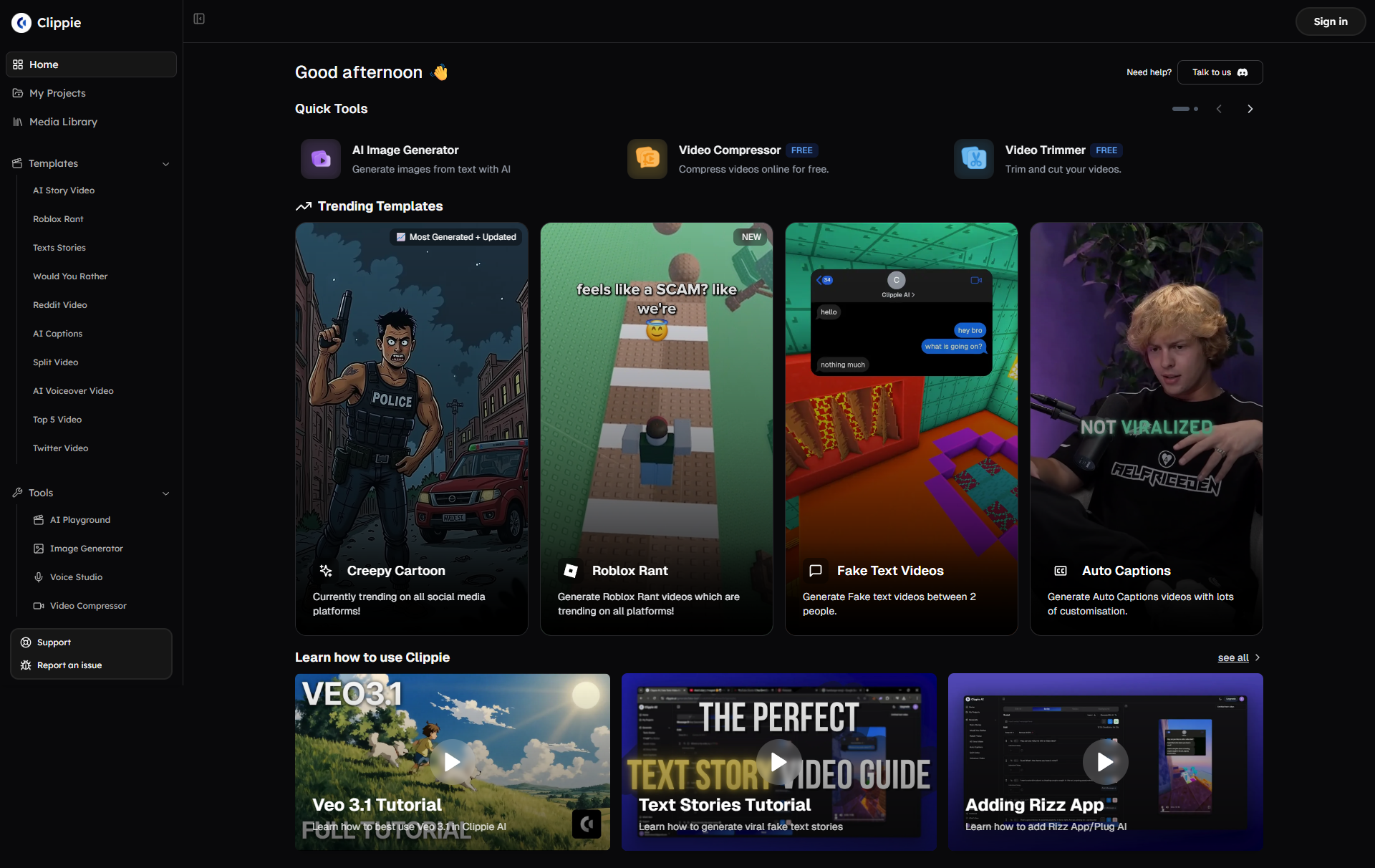
Clippie's AI Story Video feature provides the fastest, most accessible path to creating professional engaging story content that builds audiences, generates income, and establishes sustainable creator businesses. Whether you're aspiring creator seeking efficient entry into content creation, established creator wanting to scale output without proportional time investment, or agency serving clients needing consistent story content, Clippie's integrated workflow transforms story video production from complex multi-tool challenge into streamlined efficient process.
Start Clippie Now and begin creating the viral-ready AI story videos that connect with audiences, satisfy algorithms, and build the creator business you envision. Your story content journey and the audiences waiting to connect with your narratives start with the first video you create today.
Related Blog Posts
1. The Psychology of Viral Story Content: What Makes Narratives Shareworthy: Deep exploration of why certain stories resonate while others fail including narrative structures that drive completion and sharing, emotional triggers creating memorable content, psychological principles underlying story engagement, and applied strategies for crafting stories maximizing viral potential.
2. Building a Profitable Multi-Platform Story Channel: Complete Business Blueprint: Comprehensive business guide for story content creators including monetization strategies across advertising, sponsorships, and products, efficient multi-platform distribution workflows, audience building and community management tactics, and scaling from solo creator to sustainable business operation.
3. Ethical Storytelling in the AI Age: Best Practices for Responsible Content Creation: Critical examination of ethical considerations in story content including navigating copyright and attribution obligations, respecting privacy and consent of story subjects, maintaining accuracy and truth standards, and building sustainable practices that balance engagement goals with ethical responsibilities.
Make an AI story video
Write a script or let AI write one. Clippie turns it into a narrated video with AI scenes, voiceover and captions.
Read more

How to Make Top 5 Ranking Videos in 2026 (Step-by-Step)
Build ranking Shorts that can still earn: pick a debatable topic, set clear criteria, source clips you may use, script the countdown, add your commentary.

How to Create Short-Form Videos Using AI: 8 Steps (2026)
A beginner workflow for AI videos on TikTok, Reels and Shorts: pick a format, script a hook, add visuals, voice and captions, export at 9:16, label AI.

7 Free CapCut Alternatives for Short-Form Video (2026)
Compare Edits, YouTube Create, VN, Clipchamp, Canva, DaVinci Resolve and Shotcut: what each gives free users, what it caps first and where it falls short.