Top 20 AI Tools for Faceless Content Creation in 2026 (Ranked)
Definitive ranked guide to the best AI tools for faceless content creation in 2026. Expert analysis of video generation, editing, voices, captions, and complete production workflows.

The faceless content revolution sweeping across TikTok, YouTube Shorts, Instagram Reels, and traditional YouTube throughout 2024-2025 has created unprecedented demand for AI-powered tools enabling professional video creation without filming, appearing on camera, or possessing advanced editing skills. This content format, encompassing story videos, educational explainers, compilation content, AI-narrated tutorials, automated social clips, and documentary-style narratives, has transformed from experimental niche into proven mainstream creator strategy as audiences increasingly value information and entertainment over personality-driven content, AI technology has achieved quality threshold where synthetic content appears professional rather than obviously artificial, platform algorithms actively promote well-executed faceless content without discrimination, and the business model's extraordinary scalability enables solo creators to produce 10-20+ professional videos weekly generating substantial full-time income.
Yet the explosive proliferation of AI tools claiming to enable faceless content creation has created overwhelming choice paralysis for creators seeking optimal production workflows, with hundreds of platforms marketing themselves as essential for faceless creators despite dramatic differences in quality, capabilities, pricing, and actual utility. The landscape includes comprehensive end-to-end platforms handling complete production from concept through final export, specialized tools excelling at specific functions like voice synthesis or caption generation, emerging experimental platforms promising revolutionary capabilities, and legacy tools adapting to AI-enhanced workflows. Navigating this crowded complex ecosystem requires understanding not just what tools exist but which genuinely deliver value justifying adoption, how different tools compare within categories, what combinations create optimal complete workflows, and which emerging platforms warrant early adoption versus which are overhyped vaporware.
This definitive ranking provides systematic authoritative evaluation of the top 20 AI tools actually driving successful faceless content creation in 2026, based on rigorous analysis of real-world creator outcomes, comprehensive testing across content types and production volumes, economic value assessment comparing capabilities to costs, and strategic evaluation of how tools fit into complete sustainable workflows. The ranking recognizes that different creators need different tools based on content type, production volume, budget constraints, and workflow preferences, there is no universal "best tool" but rather optimal tool selections for specific situations. Understanding the complete landscape and strategic tool combinations transforms overwhelming choice into informed confident platform selection enabling successful faceless content creation.
The Faceless Content Opportunity in 2026
Understanding why this format has exploded and continues accelerating reveals why tool selection matters enormously.
The proven business model validation shows faceless content has transitioned from experimental to established viable strategy with thousands of creators now generating $2,000-20,000+ monthly revenue exclusively from faceless channels, platforms actively promoting faceless content through algorithmic favor and dedicated features demonstrating legitimacy, monetization opportunities expanding to match or exceed camera-on content across ads, sponsorships, and products, and competitive intensity requiring professional production quality that quality tools enable. The faceless format is no longer question of "does this work" but rather "how do I execute optimally", tool selection directly determines execution quality and business success.
The production scalability advantage unique to faceless formats enables output volumes impossible with camera-on content where AI tools enable producing 10-20+ professional videos weekly sustainably versus 2-5 typical for filmed content, elimination of filming, makeup, lighting, and location requirements removes major production bottlenecks, batch production workflows create extraordinary efficiency through systematic repetition, and geographic and time independence enables production anywhere anytime without scheduling constraints. The scalability transforms content creation from time-intensive craft into systematized scalable business, but only if tools enable efficient quality production.
The algorithmic and audience acceptance demonstrates platform and viewer legitimacy where YouTube's algorithm promotes faceless content equally to camera-on content when quality is professional, TikTok and Instagram actively feature story videos and faceless formats in recommendations and trending, audience engagement metrics show retention and satisfaction matching or exceeding camera-on alternatives, and competitive analysis reveals faceless channels achieving millions of subscribers and views rivaling any content format. The acceptance is complete, quality execution matters, not presence or absence of on-screen personality.
The competitive tool requirement shows professional tools becoming necessary not optional as competitive landscape has matured beyond tolerance for amateur production quality, AI capabilities have advanced creating quality ceiling requiring sophisticated tools to achieve, audience expectations have risen as excellent faceless content becomes common setting new baselines, and algorithmic promotion increasingly favors technically excellent content over mediocre alternatives. The early days when amateur faceless content could succeed purely on novelty have passed, professional tools enabling professional results now separate successful channels from also-rans struggling for visibility.
What This Comprehensive Ranking Delivers
This guide provides systematic evaluation enabling informed strategic tool selection across complete faceless content ecosystem.
The ranking methodology section establishes transparent evaluation criteria including performance and output quality assessment, pricing and economic value analysis, ease of use and learning curve consideration, integration and workflow efficiency evaluation, and use case specificity determining optimal scenarios for each tool. Understanding methodology enables interpreting rankings appropriately based on your specific situation and priorities.
The top 20 comprehensive rankings provide detailed analysis of each tool including core capabilities and differentiating features, pricing structure and economic value proposition, ideal use cases and creator profiles, limitations and contexts where tool underperforms, and strategic positioning within complete production workflow. The detailed profiles enable matching tools to your specific needs rather than assuming one-size-fits-all recommendations.
The categorical analysis groups tools by function including end-to-end production platforms handling complete workflows, AI voice synthesis and narration tools, video editing and automation platforms, caption and subtitle generation tools, and script writing and content generation platforms. The categorical organization helps identify best-in-class tools for specific functions when building custom tool stacks.
The strategic tool combinations section provides optimal platform stacks for different scenarios including minimal budget approaches maximizing free and affordable tools, balanced mid-tier combinations optimizing value and capability, premium professional stacks for established creators justifying investment, and specialized combinations for specific content types (story videos, educational content, compilations). The strategic combinations translate individual tool knowledge into complete executable workflows.
The emerging tools section highlights promising platforms and capabilities worth monitoring including experimental AI video generation, advanced automation and workflow tools, novel content formats and capabilities, and future trajectory predictions for AI content creation landscape. The forward-looking analysis helps future-proof tool selection and identify early-adoption opportunities.
By completing this comprehensive guide, you'll understand not just which tools exist but which genuinely deliver value for faceless content creation, how they compare within categories, which combinations create optimal complete workflows, and how to strategically select and combine tools matching your specific content type, budget, and production goals.
Table of Contents
The Rise of AI-Driven Faceless Content
Ranking Methodology
Top 20 AI Tools Creators Should Use in 2026
Tools for Editing, Captions, Scripts & Storytelling
Bonus Tools Emerging in 2026
FAQs
Conclusion

1. The Rise of AI-Driven Faceless Content
Understanding the format revolution and why tool selection determines success.
The Content Format Evolution and Market Opportunity
How faceless content has transformed from experimental niche to proven mainstream strategy.
The historical trajectory shows rapid mainstream adoption where 2020-2021 saw experimental early adopters testing faceless formats with limited tools and mixed results, 2022-2023 brought AI capability breakthroughs (ChatGPT, ElevenLabs, Midjourney) enabling professional quality, 2024 represented mass adoption with thousands of successful faceless channels emerging across platforms, and 2025-2026 shows market maturation with sophisticated competitive landscape requiring professional execution. The format has evolved from curiosity to established proven business model in remarkably short 4-5 year period, unprecedented content format adoption speed.
The economic opportunity validation demonstrates sustainable business viability through documented case studies of creators generating $5,000-50,000+ monthly from faceless channels, diversified monetization beyond just ad revenue (sponsorships, digital products, affiliate marketing, courses), lower production costs than camera-on content creating higher profit margins, and scalability enabling growth from solo operation to team-based multi-channel businesses. The economic model is proven repeatedly, faceless content isn't just viral experiment but sustainable profitable business approach.
The content type diversity shows format versatility across categories where story videos (Reddit stories, moral tales, fictional narratives) dominate short-form platforms, educational content (tutorials, explainers, how-tos) serves YouTube and professional audiences, documentary and historical content builds authority and depth, compilation and listicle formats leverage existing content creatively, and meditation, affirmations, and ambient content serves wellness and productivity niches. The format applies across content categories, not limited to single niche or audience type.
The platform algorithm acceptance definitively demonstrates legitimacy where YouTube explicitly confirms faceless content eligible for full monetization and promotion without discrimination, TikTok's algorithm actively promotes high-quality story videos and faceless formats in recommendations, Instagram Reels features faceless content equally to personality-driven alternatives, and cross-platform success stories prove format works everywhere when executed professionally. The platform resistance or skepticism that existed in 2020-2021 has completely evaporated, faceless content is fully legitimate and promoted based purely on quality and engagement.

Why AI Tools Have Become Essential Not Optional
The capability requirements and competitive pressures making professional tools necessary for success.
The quality threshold elevation shows audience expectations have risen dramatically where early faceless content succeeded with obviously robotic voices and amateur visuals purely on novelty, current successful content requires natural professional voices indistinguishable from humans, visual quality matching or exceeding professional studio production, and technical excellence in captions, pacing, and audio mixing. The quality bar has risen 10x from 2020 to 2026, amateur production without professional tools now fails algorithmically and with audiences.
The production volume requirement for algorithmic success creates efficiency imperative where algorithms increasingly favor posting frequency (daily or multiple-daily for TikTok, 3-7 weekly for YouTube), competitive landscape means creators posting more frequently accumulate insurmountable advantages, and manual production workflows cannot sustain required volumes without complete burnout. AI tools enabling 10-20x production efficiency become necessary not just convenient, manual approaches cannot compete at required volumes.
The competitive sophistication in established faceless niches creates capability arms race where successful channels invest heavily in professional tools and production quality, new entrants must match established quality standards to gain algorithmic traction, and mediocre amateur content gets buried regardless of topic or strategy. The competitive dynamic has shifted from "blue ocean" opportunity to "red ocean" competition requiring professional capabilities, tools providing those capabilities determine success.
The workflow sustainability separates surviving creators from burned-out abandonments where manual production approaches lead to exhaustion and channel abandonment after 2-6 months, AI-assisted workflows enable sustainable indefinite production without diminishing quality or creator wellbeing, and the creators still producing after 12-24 months consistently use professional tools enabling efficient sustainable workflows. The sustainability enabled by quality tools often matters more than initial content quality, consistent production compounds advantages over sporadic excellence.
The Tool Landscape: Categories and Ecosystem
Understanding how different tools fit together into complete production workflows.
The end-to-end comprehensive platforms provide complete production capability where single tool handles ideation, scripting, voice, editing, captions, and export in integrated workflow, eliminating tool switching and integration complexity reducing errors and time waste, typically subscription-based with unlimited or high-volume usage models, and optimizing for production efficiency over absolute specialized excellence in each component. These platforms suit creators wanting simple unified workflow, beginners not wanting to assemble complex tool stacks, high-volume producers prioritizing efficiency, and those optimizing for total cost versus best-in-class components. Examples: Clippie AI, Descript, InVideo AI, Pictory.
The specialized best-in-class tools excel dramatically at specific functions where voice synthesis platforms provide absolute best natural voices (ElevenLabs, Murf, Play.ht), video editing platforms offer maximum creative control and sophisticated capabilities (Adobe Premiere, DaVinci Resolve, Final Cut), caption generators deliver superior accuracy and styling (Rev, Otter.ai, Descript), and script generators provide powerful content creation assistance (ChatGPT, Jasper, Claude). These tools suit experienced creators comfortable assembling workflows, perfectionists optimizing each production element, creators with specific challenging requirements (difficult accents, complex editing, specialized styling), and those with budget supporting multiple premium subscriptions. The specialist approach maximizes quality potentially at expense of workflow complexity.
The hybrid integrated specialists combine depth in specific area with supporting capabilities where platforms excel at one function while providing adequate supporting features, reducing tool count versus pure specialists while maintaining quality in critical area, typically positioned as "best of both worlds" between comprehensive and specialist, and often representing optimal balance for many creators. Examples: Descript excels at editing with integrated voice and captions; CapCut provides excellent editing with AI features; OpusClip specializes in clip creation with caption and editing support.
The optimal tool stack concept recognizes most successful workflows combine multiple tools strategically where comprehensive platform handles bulk standard production efficiently, specialized tools elevate specific critical elements (voice quality, caption styling, complex editing), and free or affordable tools fill gaps in comprehensive platforms. The art is assembling minimum viable tool stack providing professional results without overwhelming complexity or cost, typically 2-4 core tools plus occasional specialized use of additional platforms.

2. Ranking Methodology
Transparent evaluation criteria enabling appropriate interpretation and application of rankings.
Performance and Output Quality Assessment
How tools were evaluated for actual production capability and results.
The output quality evaluation tested real-world production across multiple dimensions where voice synthesis naturalness and emotional expressiveness were evaluated through blind listener testing, visual quality and consistency assessed against professional standards and competitor benchmarks, caption accuracy measured through manual verification and error counting, and final production polish evaluated against successful published content in each category. The quality assessment used objective metrics where possible (caption accuracy percentage, processing time) supplemented by expert evaluation for subjective dimensions (voice naturalness, visual appeal).
The consistency and reliability testing measured production predictability where tools were evaluated across 20-50 generation cycles identifying failure rates and regeneration requirements, consistency of quality across different content types and inputs, processing time variance and reliability of delivery estimates, and edge case handling revealing how tools perform with challenging inputs. The consistency matters enormously for high-volume production, tools producing excellent results 60% of the time and failures 40% are less valuable than tools producing good results 95% reliably.
The capability ceiling assessment identified maximum achievable quality where tools were pushed to limits determining best possible output with optimal inputs and settings, advanced features and customization were fully utilized revealing maximum potential, and outputs compared to human professional production establishing quality gap or parity. The ceiling matters for creators wanting absolute best results willing to invest optimization effort, some tools have higher ceilings than others even if defaults are comparable.
The learning curve and time-to-quality measured how quickly users achieve professional results where evaluation included time required for complete beginners to produce first acceptable video, number of production cycles needed to achieve consistent quality, and complexity of optimization and advanced feature mastery. Some tools enable professional results in hours while others require weeks of learning, this dramatically affects practical utility for different user types.
Pricing and Economic Value Analysis
How subscription costs and usage economics affect practical value for different creator scenarios.
The subscription cost assessment evaluated pricing structures including monthly subscription costs at different tiers, usage limits or overage charges affecting high-volume creators, annual pricing discounts for long-term commitment, and enterprise or team pricing for scaling operations. The absolute cost matters but must be evaluated against capabilities and value delivered, $100 monthly for comprehensive platform might provide better value than $30 monthly for limited tool.
The cost-per-video calculation reveals production economics where monthly cost divided by typical production volume yields per-video cost, unlimited plans provide better economics at high volumes while metered plans might suit occasional users, and free tiers evaluated for sustainable viability versus forcing upgrade. The per-video economics often favor comprehensive platforms for high-volume creators (unlimited production at fixed monthly cost) versus specialists with usage-based pricing.
The ROI and monetization analysis connected tool investment to revenue potential where tools enabling higher production volume directly increase revenue through more monetizable content, quality improvements potentially boosting CPM, engagement, or sponsorship rates, and time savings creating value through enabling other revenue activities or reducing opportunity costs. The ROI framework shows tools paying for themselves quickly once channel monetizes, $100 monthly tool cost is trivial when channel generates $2,000+ monthly revenue.
The competitive value assessment compared pricing to alternatives in same category where tools were ranked as premium (highest price in category), mid-tier (average market pricing), or value (below-average pricing for comparable capability), and price-to-performance ratios calculated revealing bargains and overpriced options. The comparative analysis prevents overpaying for capabilities available cheaper elsewhere while identifying genuinely premium tools justifying higher costs.
Ease of Use and Learning Curve Consideration
How accessible tools are for creators at different skill levels and time availability for learning.
The initial setup complexity measured getting-started friction where evaluation included account creation and onboarding flow simplicity, interface intuitiveness for first-time users, tutorial and documentation quality and comprehensiveness, and time from signup to first published video. Some tools enable production within 30 minutes while others require hours or days of learning before first acceptable output, dramatically affecting practical adoption especially for beginners.
The ongoing workflow efficiency assessed day-to-day production experience where evaluation included typical production time for standard video, number of steps and clicks required for common workflows, clarity of interface and feature discoverability, and cognitive load from decision-making and complexity management. Tools requiring constant reference to documentation or extensive configuration each use are less efficient than intuitive streamlined workflows even if capabilities are similar.
The skill ceiling and advanced capabilities measured learning investment needed for mastery where evaluation included advanced features requiring specialized knowledge, customization depth available to expert users, and time investment needed to achieve expert-level proficiency. Some tools are simple but limited while others have steep curves but extensive capabilities, neither is universally better but serve different user types.
The support and community resources affect learning success where evaluation included official documentation and tutorial comprehensiveness, responsive customer support quality and availability, community resources (YouTube tutorials, forums, Discord servers), and platform stability and update communication. Tools with excellent support and learning resources effectively reduce learning curves while poorly documented tools require frustrating trial-and-error learning.

Integration and Workflow Efficiency
How tools work together and fit into complete production workflows.
The standalone completeness measured self-sufficiency where comprehensive platforms were evaluated on ability to produce complete videos without external tools, specialists assessed on how well they integrate into broader workflows, and dependency identification revealed required supporting tools. The standalone capability matters enormously for workflow simplicity, tools requiring 3-4 supporting platforms create complexity versus all-in-one solutions.
The import/export flexibility evaluated workflow integration where assessment included file format support for inputs and outputs, compatibility with other common creator tools, ease of multi-platform workflows (creating once, distributing many places), and automation or integration capabilities with complementary tools. Tools supporting standard formats and workflows integrate easily while proprietary locked systems create friction and dependency.
The multi-platform optimization assessed distribution efficiency where evaluation included platform-specific export presets (TikTok, YouTube, Instagram specifications), aspect ratio and resolution flexibility, metadata and formatting optimization, and bulk export capabilities for multi-platform distribution. Tools optimizing for multi-platform creation enable efficient distribution versus requiring manual reconfiguration per platform.
The workflow automation measured efficiency multipliers where evaluation included batch processing capabilities, template and preset systems reducing repetitive work, scheduled or automated publishing, and integration with productivity or calendar tools. Automation capabilities dramatically affect sustainable production volume, tools enabling batch creation of 10 videos in 2 hours outperform those requiring sequential individual production despite comparable per-video time.
Use Case Specificity and Strategic Positioning
How tools serve different creator types, content categories, and production strategies.
The content type optimization identified specific strengths where tools were evaluated across story videos, educational tutorials, compilation content, documentary formats, and other common faceless categories revealing which tools excel at which content types. No tool is universally optimal, some excel at story videos while underperforming for tutorials and vice versa.
The creator profile matching identified ideal user types where tools were categorized as best for complete beginners versus requiring intermediate or advanced skills, solo creators versus team-based operations, hobbyists versus full-time professional creators, and budget-conscious versus premium-oriented users. The profile matching prevents recommending advanced professional tools to beginners or simplistic tools to sophisticated users.
The strategic positioning within production workflow revealed optimal role where some tools should be primary platform handling majority of production, others serve as specialized enhancement tools supplementing primary platform, and some are experimental or occasional-use tools not daily drivers. Understanding strategic positioning prevents over-investing in tools that should play supporting roles or under-utilizing tools that should be workflow foundations.
The scalability and growth support assessed how tools serve creators at different stages where evaluation included whether tools support growth from 0 to 100K+ subscribers, if pricing and capabilities scale with channel growth, whether tools enable evolution from solo to team production, and if platform development trajectory suggests continued relevance. Tools serving only early-stage creators or only established operations have limited long-term value, optimal tools grow with creators.
3. Top 20 AI Tools Creators Should Use in 2026
The definitive ranked guide to platforms genuinely driving faceless content success.
Tier 1: Essential Foundation Tools (Ranks 1-5)
The platforms that should form the core of most faceless content workflows.

#1: Clippie AI - Best End-to-End Solution for Story Videos and High-Volume Production
Clippie AI ranks first as the most comprehensive and efficient platform for faceless creators prioritizing production volume and workflow simplicity, particularly excelling at story video format dominating social platforms.
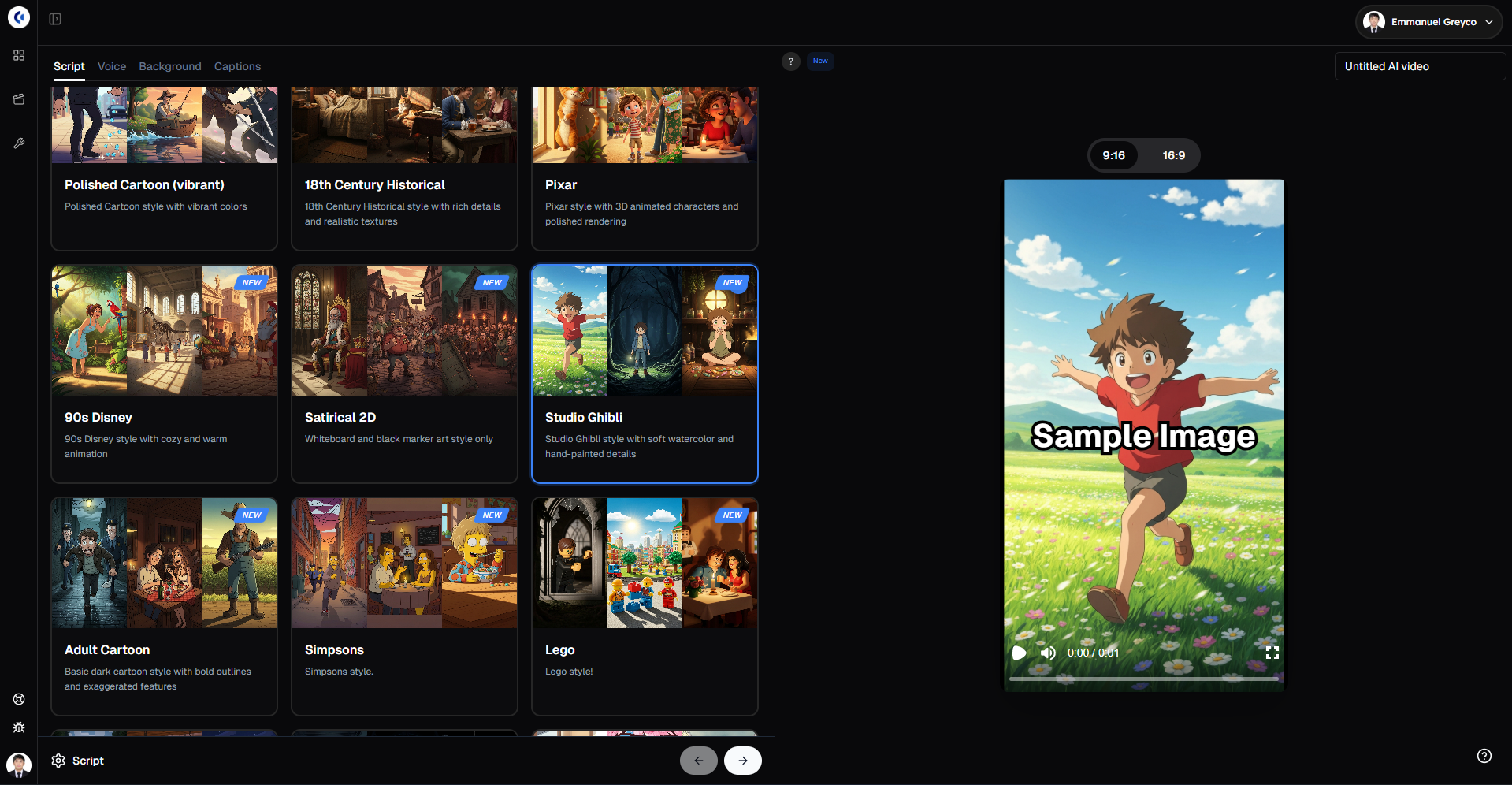
Core capabilities: Complete integrated workflow from story text to final video including AI story generation from concepts or imported text, multiple artistic style options (anime, realistic, cinematic, cartoon) for visual differentiation, natural AI voice synthesis integrated seamlessly without external tools, automatic caption generation and synchronization, background music integration and audio mixing, and platform-optimized export for TikTok, YouTube Shorts, Instagram Reels, and traditional YouTube. The end-to-end integration enables producing complete professional story videos in 5-15 minutes versus 45-90 minutes with multi-tool workflows, a 6-10x efficiency advantage compounding dramatically across high-volume production.

Pricing and value: Subscription tiers typically $20-100+ monthly with unlimited or very high video creation limits eliminating per-video cost concerns, providing exceptional value for high-volume creators producing 50-200+ videos monthly where per-video cost approaches $0.25-2.00, and offering free tier for testing though with limited exports and watermarks. The unlimited model at mid-tier pricing ($50-75 monthly) provides extraordinary value for serious faceless creators compared to assembling multiple specialized tools totaling $100-200+ monthly.
Ideal for: Dedicated story video creators building channels around narratives, high-volume producers creating 10-20+ videos weekly requiring maximum efficiency, solo creators wanting simple unified workflow without tool complexity, beginners seeking accessible entry into faceless content without steep learning curves, and multi-platform distributors needing efficient cross-platform optimization. Clippie particularly suits systematic scalable production over artistic perfectionism, optimizing for consistent professional output at volume.
Limitations: Less suitable for highly customized artistic content requiring frame-by-frame control, creators needing complex video editing beyond story format, and perfectionists wanting absolute best-in-class voice quality over workflow integration. The comprehensive integration trades maximum specialization in each component for workflow efficiency, voice quality is excellent but specialized voice platforms might marginally exceed it.
Strategic positioning: Should be primary platform for story video creators, handling 80-90% of production efficiently while potentially supplementing with specialized tools for flagship content or specific requirements. The platform's strength is enabling sustainable high-volume production that manual or complex workflows cannot match.
#2: ElevenLabs - Best AI Voice Synthesis for Professional Narration
ElevenLabs ranks second as the industry-leading voice synthesis platform delivering natural emotionally expressive AI voices indistinguishable from professional voice actors.
Core capabilities: Extensive voice library including diverse genders, ages, accents, and characteristics spanning realistic professional narration to character voices, voice cloning capability creating custom voices from audio samples (though requires ethical consideration and permission), advanced emotional control and expressive delivery beyond monotone narration, multilingual support enabling international content creation, and API access enabling integration into automated workflows. The voice quality represents current pinnacle of AI synthesis, blind testing shows audiences frequently cannot distinguish ElevenLabs voices from human narration.
Pricing and value: Free tier provides limited monthly character generation (10,000 characters approximately 10-15 minutes audio), Starter tier at $5 monthly provides 30,000 characters (30-45 minutes audio), Creator tier at $22 monthly provides 100,000 characters (100-150 minutes audio adequate for most creators producing 20-40 videos monthly), Pro tier at $99 monthly provides 500,000 characters for high-volume operations, and higher tiers for commercial and enterprise use. The pricing is reasonable for quality delivered, $22 monthly for voice quality matching $200-500 professional voice actor fees per video represents extraordinary value.
Ideal for: Creators prioritizing absolute best voice quality over workflow convenience, high-end educational or documentary content where narration quality critically affects credibility, international creators needing excellent multilingual support, and creators with existing editing workflows just needing voice synthesis. ElevenLabs suits creators willing to use multiple tools for best-in-class components versus all-in-one convenience.
Limitations: Requires separate video editing, caption generation, and asset sourcing creating multi-tool workflow complexity, usage limits require upgrading for high-volume production (though limits are generous), and learning curve for optimal voice selection and emotional control settings. The specialization means ElevenLabs excels at voice but you need complete supporting workflow, not suitable as standalone solution.
Strategic positioning: Should be specialized voice upgrade for creators using integrated platforms for primary production but wanting absolute best narration quality, or core component in custom-assembled professional tool stack for creators comfortable managing multiple platforms. The voice quality justifies the workflow complexity for content where narration is make-or-break element.
#3: Descript - Best All-in-One for Text-Based Editing and Podcasts
Descript ranks third as the most innovative editing platform enabling text-based video and audio editing fundamentally simplifying the editing process.
Core capabilities: Text-based editing where you edit video by editing transcript (delete text to delete video, rearrange text to rearrange video), automatic transcription and caption generation with industry-leading accuracy, overdub AI voice synthesis creating custom voice from your recordings, filler word removal and silence cutting automating tedious editing tasks, multi-track editing supporting complex projects, screen recording for tutorial and educational content, and podcast production tools including multi-speaker detection and editing. The text-based paradigm dramatically reduces editing complexity making video editing accessible to non-editors.
Pricing and value: Free tier with limited exports and watermarks enabling testing, Creator tier at $12 monthly providing 10 hours transcription and basic features, Pro tier at $24 monthly with 30 hours transcription and advanced features, and Enterprise tier for teams. The pricing is extremely competitive considering comprehensive capabilities, $24 monthly for editing, voice, and captions is exceptional value compared to assembling separate tools.
Ideal for: Podcast creators editing audio and video efficiently, educational content creators making tutorials and explainers, creators comfortable with editing wanting more efficient workflow than traditional timeline editors, and interview or talking-head content (though less relevant for pure faceless content). Descript particularly suits creators making content with significant speaking or narration requiring editing and refinement.
Limitations: Less optimized for pure faceless content formats like story videos compared to Clippie, text-based editing paradigm requires adjustment for users accustomed to traditional timeline editing, and some advanced video effects and transitions available in traditional editors aren't accessible. The platform excels at specific content types while being less optimal for others.
Strategic positioning: Optimal primary platform for podcast and interview content, excellent secondary editing tool for creators using other platforms for initial video generation but needing editing refinement, and potentially complete solution for educational creators making screen recording tutorials. The text-editing innovation makes it uniquely valuable for content heavy on narration or dialogue.
#4: CapCut - Best Free Editing with AI Features
CapCut ranks fourth as the most capable completely free video editing platform with increasingly sophisticated AI features making professional editing accessible.
Core capabilities: Comprehensive video editing with multi-track timeline, transitions, effects, and color grading, AI-powered features including auto-caption generation, background removal, voice isolation and enhancement, and smart suggestions, extensive effects and template library particularly for social media trends, mobile and desktop versions enabling editing anywhere, and direct publishing to TikTok and other social platforms. The combination of completely free access with professional capabilities and AI features is unprecedented, CapCut provides $50-100 monthly value at zero cost.
Pricing and value: Completely free with all features accessible without paywalls, ads, or usage limits (though branded CapCut watermark on exports which can be removed), making it extraordinary value proposition for budget-conscious creators or those unwilling to invest in paid tools pre-monetization. The lack of subscription cost enables aggressive experimentation and learning without financial risk.
Ideal for: Budget-conscious creators wanting professional editing without subscription costs, beginners learning video editing without financial commitment, creators making short-form social content leveraging trend templates and effects, and anyone wanting capable backup editing tool supplementing primary platform. CapCut suits creators optimizing for zero-cost or minimal-cost tool stacks.
Limitations: Less automated than paid comprehensive platforms requiring more manual editing work, caption accuracy and AI features lag paid specialized tools (though improving continuously), and being owned by ByteDance (TikTok parent company) raises potential privacy or platform dependency concerns. The free model is amazing but comes with trade-offs versus paid premium platforms.
Strategic positioning: Excellent free foundation for beginners building skills before investing in paid tools, valuable supplementary editing tool for creators using automated platforms but occasionally needing custom editing, and potentially complete primary platform for creators willing to invest manual editing time saving subscription costs. The free access makes it worthwhile for virtually every creator to have available even if not primary tool.
#5: ChatGPT Plus (GPT-4) - Best AI Script and Content Generation
ChatGPT Plus ranks fifth as the most versatile and powerful AI writing assistant for content ideation, scripting, and creative development.
Core capabilities: Advanced language model (GPT-4) generating high-quality scripts, story ideas, and content outlines, ideation assistance producing content concepts and topic suggestions, research and factual content creation for educational videos, script formatting and structure optimization, and conversation-based iterative refinement enabling collaborative content development. The AI writing quality enables producing complete video scripts in 5-15 minutes versus hours of manual writing, and often generating ideas and angles creators wouldn't conceive independently.
Pricing and value: $20 monthly for ChatGPT Plus providing unlimited GPT-4 access (with usage fair-use limits during peak times), plus DALL-E image generation and other premium features, representing excellent value considering the productivity multiplication for content creation. Free tier (GPT-3.5) is available but significantly less capable, the Plus subscription is worth investment for serious creators.
Ideal for: All creators needing content ideation and script development regardless of format or platform, story video creators generating narrative concepts and plots, educational creators developing comprehensive tutorial scripts, and creators experiencing writer's block or idea generation challenges. ChatGPT suits essentially every faceless creator as ideation and scripting are universal needs.
Limitations: Requires editing and fact-checking as AI-generated content can be inaccurate or generic, voice and style need humanization preventing robotic or formulaic scripts, and ethical considerations around AI-generated content require transparency and value-addition beyond pure AI output. The tool assists creation but doesn't replace creative judgment and refinement.
Strategic positioning: Should be foundational tool for virtually all creators in ideation and script development phase, used daily or multiple times weekly for content planning and creation, and supplementing rather than replacing human creativity and strategic thinking. The $20 monthly investment pays for itself in first 1-2 hours of productivity improvement each month.
Tier 2: Specialized Excellence Tools (Ranks 6-10)
Platforms excelling at specific functions worth adopting for specialized needs.
#6: OpusClip - Best AI Clip Generation from Long-Form Content
OpusClip specializes in automatically identifying and extracting viral-worthy short clips from long-form videos, ideal for creators repurposing content across platforms.
Core capabilities: AI analysis identifying engaging moments in long videos, automatic clip extraction with viral potential scoring, caption generation with trending styles, aspect ratio conversion for different platforms, and batch processing enabling efficient repurposing of content libraries. The automation converts 60-minute video into 10-20 optimized clips in minutes versus hours of manual editing.
Pricing and value: Free tier with limited minutes, Starter at $9 monthly, Pro at $29 monthly with higher processing limits, representing good value for creators with existing long-form content wanting short-form distribution reach.
Ideal for: YouTube creators repurposing long videos into Shorts, TikToks, and Reels; podcast video creators extracting shareable clips; and educators creating promotional clips from course content.
Limitations: Requires existing video content to repurpose, doesn't help creators starting from zero; clip selection AI sometimes misses context or selects poorly; and niche content might not match AI's viral pattern recognition.
Strategic positioning: Excellent supplementary tool for creators with long-form content wanting efficient short-form distribution, not primary platform for pure faceless creators without long-form source material.
#7: Midjourney - Best AI Image Generation for Custom Visuals
Midjourney leads AI image generation for creating custom unique visual content impossible or expensive to film or source otherwise.
Core capabilities: Text-to-image generation creating any visual concept from descriptions, artistic style control from photorealistic to stylized, iterative refinement enabling precise vision realization, and consistent character generation (with effort and technique) for visual continuity. The creative capability enables visualizing anything imaginable without photography or illustration budget.
Pricing and value: Basic at $10 monthly, Standard at $30 monthly, Pro at $60 monthly with increasing generation limits and features. The value depends heavily on content type, essential for some creators, irrelevant for others.
Ideal for: Story video creators wanting unique custom imagery beyond stock footage, educational creators visualizing abstract concepts or impossible scenarios, and creators building distinctive visual brands through consistent AI-generated aesthetics.
Limitations: Requires learning prompt engineering and platform interface, inconsistent character appearance remains challenging despite improvements, generation trial-and-error can be time-consuming, and ethical considerations around AI-generated imagery.
Strategic positioning: Specialized creative tool for creators wanting distinctive custom visuals, less relevant for creators using stock footage or simple visual approaches.
#8: Rev.ai - Best Professional Transcription and Captions
Rev.ai provides industry-leading transcription accuracy and professional caption services when absolute precision matters.
Core capabilities: 99%+ accuracy human-level transcription through AI and human hybrid options, professional caption formatting and timing, speaker identification for multi-speaker content, and API integration for workflow automation.
Pricing and value: AI transcription at $0.25 per minute ($15 per hour), human transcription at $1.50 per minute ($90 per hour), making AI option affordable for regular use while human option suits critical content requiring perfection.
Ideal for: Educational content where transcription accuracy critically affects understanding, accessibility-focused creators prioritizing professional captions, and legal/medical content requiring documented accuracy.
Limitations: Usage-based pricing becomes expensive at high volumes compared to unlimited subscription tools, and overkill for casual content where 95% accuracy suffices.
Strategic positioning: Specialized premium tool for creators requiring absolute caption accuracy, supplementing integrated platforms for flagship or critical content.
#9: Murf.ai - Best Alternative AI Voice Platform
Murf.ai provides excellent AI voice synthesis as strong alternative to ElevenLabs with different voice library and features.
Core capabilities: Extensive professional voice library with 120+ voices across languages and styles, voice customization controlling pitch, speed, and emphasis, multi-voice projects enabling character dialogue, and commercial usage rights included.
Pricing and value: Free tier with limited minutes and watermark, Basic at $19 monthly, Pro at $26 monthly, Enterprise at $83 monthly, competitive with ElevenLabs while offering different voice options and interface.
Ideal for: Creators wanting AI voice quality approaching ElevenLabs but preferring Murf's specific voices or interface, commercial content creators needing explicit commercial usage rights, and multi-voice projects requiring character dialogue.
Limitations: Voice quality slightly behind ElevenLabs' latest models (though still excellent), requires separate editing and production workflow, and moderate pricing makes it less attractive than comprehensive platforms for casual users.
Strategic positioning: Strong alternative to ElevenLabs for voice specialization, choice between them depends on specific voice preferences and features rather than clear superiority.
#10: Pictory - Solid End-to-End Alternative with Script-to-Video
Pictory provides complete script-to-video production as comprehensive alternative to Clippie AI with different interface and features.
Core capabilities: Script-to-video generation creating complete videos from text, article-to-video conversion repurposing written content, automatic scene selection and B-roll matching, integrated voice synthesis and captions, and platform export optimization.
Pricing and value: Standard at $23 monthly, Premium at $47 monthly, Teams at $119 monthly for collaboration, positioned as affordable comprehensive solution.
Ideal for: Creators wanting end-to-end platform alternative to Clippie, bloggers and writers converting text content to video, and beginners seeking simple script-to-video workflow.
Limitations: Less specialized in story video format than Clippie, visual quality and customization more limited than specialist tools, and workflow efficiency varies by content type.
Strategic positioning: Viable alternative comprehensive platform worth testing for creators uncertain which end-to-end tool fits best, good for diverse content types rather than story video specialization.
Tier 3: Supporting and Specialized Tools (Ranks 11-20)
Additional platforms serving specific needs or supplementing primary workflow.
#11: InVideo AI - Prompt-to-Video with Stock Footage: Script-to-video platform emphasizing stock footage library and simple prompt-based generation. Best for creators wanting narrated stock footage compilations. Pricing $20-60 monthly.
#12: Runway ML - Advanced AI Video Effects and Generation: Cutting-edge AI video generation and effects for experimental creators willing to invest learning. Innovative features but steep learning curve. Pricing $12-76 monthly.
#13: Adobe Premiere Pro (with AI Features) - Professional Editing Standard: Industry-standard professional editing with increasing AI enhancements. For experienced editors wanting maximum control and capability. Pricing $55 monthly.
#14: HeyGen - AI Avatar and Presenter Videos: AI avatar generation for educational content wanting virtual presenter without filming. Niche use case but excellent for specific needs. Pricing $30-150 monthly.
#15: Jasper.ai - Alternative AI Writing for Scripts: Advanced AI writing optimized for marketing and long-form content. Alternative to ChatGPT with different strengths. Pricing $49-125 monthly.
#16: Play.ht - High-Quality AI Voice Alternative: Another excellent voice synthesis platform with unique voices and features. Third strong voice option alongside ElevenLabs and Murf. Pricing $31-99 monthly.
#17: Submagic - Viral Caption Styling Specialist: Caption generation and styling emphasizing viral social media aesthetics. For creators prioritizing trendy caption styling. Pricing $20-60 monthly.
#18: Synthesia - Professional AI Avatar Platform: Enterprise-grade AI presenter and avatar creation. For professional corporate or educational content. Pricing $30-studio custom.
#19: VEED.io - Browser-Based Simple Editing: Accessible browser-based editing with AI features. For creators wanting simple editing without software installation. Pricing Free-$70 monthly.
#20: Lumen5 - Social Media Video from Blog Posts: Blog-to-video conversion emphasizing social media distribution. For bloggers entering video or social teams. Pricing $19-149 monthly.

4. Tools for Editing, Captions, Scripts & Storytelling
Categorical deep-dives into specific function areas enabling best-in-class selection.
Video Editing: From Automated to Professional Control
The spectrum of editing tools from maximum automation to maximum creative control.
Automated editing platforms optimize for speed and simplicity where Clippie AI provides complete automation from script to final video ideal for story content, InVideo AI and Pictory generate videos from text with stock footage, and OpusClip automatically creates clips from long-form content. These platforms suit high-volume creators, beginners wanting accessibility, and content types fitting automated workflows (stories, explainers, compilations).
AI-enhanced traditional editors balance automation and control where CapCut offers free comprehensive editing with AI caption and effect features, Descript provides text-based editing fundamentally simplifying workflow, and Adobe Premiere integrates increasing AI features (auto-reframe, scene editing) while maintaining professional control. These platforms suit creators comfortable editing wanting efficiency improvements, those needing custom editing beyond templates, and professional creators requiring advanced capabilities.
Professional editing standards provide maximum creative control where Adobe Premiere Pro remains industry standard with comprehensive features, DaVinci Resolve offers professional color grading and effects (with free version), and Final Cut Pro serves Mac users wanting optimized professional editing. These platforms suit experienced editors, high-end productions requiring maximum quality, and creators whose competitive advantage includes editing expertise.
Strategic editing tool selection depends on content type and skills where story videos and formulaic content favor automation (Clippie), diverse content requiring customization favors enhanced editors (CapCut, Descript), and high-end productions justify professional tools (Premiere Pro). Most faceless creators optimize for automation accepting slight quality ceiling versus manual professional editing, the efficiency and consistency matter more than theoretical maximum quality.
Captions and Subtitles: Accuracy, Styling, and Accessibility
The critical component for sound-off viewing dominating social platforms.
Integrated caption solutions provide convenient adequate captions where comprehensive platforms (Clippie, Descript, Pictory) include automatic caption generation with 92-95% accuracy, platform-appropriate styling, and workflow integration eliminating separate caption steps. These suit creators prioritizing workflow simplicity and finding integrated quality adequate for their needs.
Specialized caption excellence optimizes accuracy and styling where Rev.ai provides 99%+ accuracy through AI+human hybrid for critical content, OpusClip and Submagic emphasize viral social media caption styling, and dedicated caption tools offer extensive customization and templates. These suit creators where captions are make-or-break quality element, accessibility-focused content requiring perfection, and trendy social content prioritizing stylistic caption aesthetics.
The accuracy versus styling trade-off shows tension between priorities where maximum accuracy (Rev.ai) ensures accessibility and comprehension, stylistic emphasis (Submagic) prioritizes visual appeal and trend-matching, and balanced approaches (Descript, Clippie) provide good accuracy with adequate styling. Most creators find 92-95% accuracy with professional styling adequate, perfectionism on captions provides diminishing returns versus time investment.
Strategic caption approach for faceless content emphasizes integrated adequate solutions for efficiency with selective premium caption use for flagship or critical content, regular quality checks ensuring caption accuracy doesn't degrade, and trend awareness updating caption styling as platform aesthetics evolve.
AI Voices: Naturalness, Emotion, and Character
The narration quality fundamentally affecting perceived professionalism and engagement.
Premium voice synthesis leaders deliver indistinguishable-from-human quality where ElevenLabs provides industry-leading naturalness and emotional range (#2 overall ranking), Murf.ai offers extensive professional voice library with strong quality (#9 ranking), and Play.ht provides high-quality alternative with unique voice options (#16 ranking). These platforms suit content where voice quality critically affects engagement and credibility, creators willing to use separate voice tools for best results, and professional productions justifying premium voice investment.
Integrated voice solutions balance quality and convenience where Clippie AI, Descript, and Pictory include good AI voices integrated into production workflow, eliminating separate voice generation and import steps, and providing 90-95% of premium quality with 50% of workflow complexity. These suit high-volume creators optimizing for efficiency, beginners wanting simple unified workflow, and content where voice quality adequate but not critical differentiator.
The voice quality hierarchy shows clear tiers where ElevenLabs and top premium platforms achieve human-indistinguishable quality, integrated comprehensive platforms provide professional but identifiable AI voices, and free/budget tools offer functional but obviously synthetic voices. The quality gap between tiers has narrowed dramatically 2023-2026 but remains meaningful for discerning audiences.
Strategic voice selection depends on content positioning where educational and documentary content benefits most from premium natural voices building credibility, entertainment and story content functions well with good integrated voices, and ambient or background content can use simpler voices without harm. Most creators find Clippie's integrated voices excellent value, upgrade to ElevenLabs warranted primarily for flagship content or when voice quality becomes known channel differentiator.
Script Generation and Content Ideation
The creative assistance enabling consistent content development without creative exhaustion.
Advanced AI writing platforms provide sophisticated content generation where ChatGPT Plus/GPT-4 offers most versatile and powerful general writing (#5 overall ranking), Jasper.ai specializes in marketing and persuasive content (#15 ranking), and Claude (Anthropic) provides thoughtful analytical content generation. These platforms suit all creators needing ideation and scripting assistance, those experiencing creative blocks or idea shortage, and systematic content production requiring consistent quality output.
Specialized content generators focus on specific formats where story generators create narrative plots and character development, headline and title generators optimize packaging and CTR, and outline generators structure comprehensive educational content. These suit creators specializing in specific formats, supplementing general AI writing for format-specific optimization, and systematic testing of variations and approaches.
The AI writing integration workflow shows optimal usage pattern where AI generates initial draft or multiple concept variations (5-10 minutes), human reviews and selects best direction or combines elements (5-10 minutes), collaborative refinement through conversation with AI improves structure and content (10-15 minutes), and final human editing adds personality, accuracy verification, and brand voice (10-20 minutes). The 30-50 minute collaborative workflow produces better results than pure AI or pure human approaches alone, synergy of AI speed and human judgment.
Strategic scripting approach for sustainable production uses AI for consistent baseline content generation preventing creative drought, maintains human creative control and brand voice through editing and refinement, builds template and framework systems codifying successful approaches AI can replicate, and balances AI efficiency with occasional pure creative writing maintaining skills and authenticity.

5. Bonus Tools Emerging in 2026
Forward-looking analysis of promising platforms and capabilities worth monitoring.
Experimental AI Video Generation
Revolutionary but immature capabilities that may transform content creation.
OpenAI Sora and similar text-to-video platforms promise complete video generation from text descriptions, potentially eliminating need for stock footage, filming, or image generation, enabling visualization of anything describable without production constraints, and dramatically reducing production time and cost if quality reaches professional threshold. Current limitations include limited availability (waitlists and restricted access), quality inconsistency and occasional uncanny valley effects, limited duration (typically 5-10 seconds versus 30-60+ needed for complete videos), and uncertain pricing and commercial usage terms. The monitoring approach includes staying informed about capability improvements and access expansion, testing immediately when available evaluating practical utility for your content, and preparing workflow integration plans for when technology matures, but avoiding workflow dependency on unavailable experimental technology.
Runway Gen-2/Gen-3 and accessible alternatives provide current text-to-video generation though with significant limitations, useful for b-roll generation and supplementary footage but not complete video production, and demonstrating trajectory toward more capable future platforms. The experimental use cases include generating specific b-roll that's expensive or impossible to film/find, creating stylized effects or transitions, and testing AI video integration in non-critical content learning capabilities before dependence.

Advanced Workflow Automation
Emerging capabilities connecting tools and eliminating manual workflow steps.
AI-powered production assistants promise intelligent workflow orchestration where platforms analyze content concepts automatically selecting optimal tools and approaches, coordinating multi-platform workflows reducing manual tool switching and file management, and providing end-to-end production management from ideation through publishing and promotion. Current implementations are early-stage but improving rapidly, platforms like Zapier, Make, and specialized creator tools increasingly enable sophisticated automation.
Intelligent content optimization systems using AI to analyze performance and automatically adjust content strategy where platforms identify successful content patterns suggesting topics and formats to pursue, automatically A/B test variations finding optimal packaging and messaging, and continuously refine production approaches based on engagement data and algorithmic feedback. The emerging tools combine analytics with AI recommendations creating systematic improvement loops.
The automation trajectory suggests increasing integration and intelligence where 2026-2027 brings better tool interoperability and workflow connection, 2027-2028 enables intelligent assistants making strategic suggestions beyond just execution, and 2028-2030 potentially approaches autonomous content production requiring primarily strategic direction. The creator role may evolve toward strategic oversight and quality control versus detailed execution, but that transition remains years away requiring caution about over-depending on immature automation.
Novel Content Formats and Capabilities
Emerging content types enabled by advancing AI capabilities.
Interactive and personalized video experiences where AI enables content adapting to viewer preferences or choices, creating "choose your own adventure" style narratives or personalized educational paths, and potentially viewer-specific content variations optimizing for individual interests and context. The experimental platforms exploring this include interactive story platforms, adaptive learning systems, and personalization engines, though mainstream creator adoption remains distant.
Multimodal AI content combining text, voice, image, and video generation in sophisticated ways where single AI model generates complementary content across modalities ensuring consistency, enables rapid iteration and variation testing across formats, and potentially creates content specifically optimized for platform algorithms and audience preferences. The cutting-edge research shows capabilities advancing rapidly though practical creator tools lag research by 12-24 months.
Real-time and live AI-assisted content where AI enables live content creation, interaction, or modification, supporting real-time audience engagement and adaptation, and potentially enabling solo creators to produce content quality typically requiring teams. The emerging applications include AI-assisted livestreaming, real-time translation and localization, and dynamic content assembly responding to trends or events.
The strategic monitoring approach includes following AI content creation research and development tracking capability trajectory, testing emerging tools in non-critical contexts evaluating practical utility, and maintaining flexibility in workflows enabling rapid adoption of breakthrough technologies, but avoiding betting channel success on experimental unreliable platforms. The creators who thrive long-term balance using current best-available tools with informed awareness of emerging capabilities, neither ignoring innovation nor over-investing in immature technology.
FAQs
1. Should I use one comprehensive platform or assemble multiple specialized tools?
The comprehensive-versus-specialized decision represents fundamental workflow choice affecting efficiency, capability, cost, and complexity, requiring strategic consideration of your specific situation rather than universal answer. The comprehensive platform advantages include dramatic workflow simplicity managing single tool versus coordinating 3-6 platforms, eliminating integration friction preventing file format issues and manual coordination, typically lower total cost through bundled capabilities versus multiple subscriptions, faster production through streamlined workflows, and reduced learning burden mastering one platform versus several. The comprehensive approach suits beginners wanting accessible entry without complexity, high-volume creators prioritizing efficiency enabling sustainable production pace, solo operators managing complete production independently, budget-conscious creators optimizing cost-effectiveness, and those creating formulaic systematic content fitting platform templates. The specialized tool advantages include maximum quality in each component using best-in-class platforms, extensive customization and control unavailable in comprehensive platforms, flexibility choosing optimal tools for specific content types or needs, and avoiding platform lock-in maintaining workflow independence. The specialized approach suits experienced creators comfortable managing complexity, perfectionists optimizing each production element, professional productions justifying quality investment, and creators with specific challenging requirements comprehensive platforms don't address. The hybrid balanced approach most successful creators use includes comprehensive platform (like Clippie) handling 70-80% of production efficiently, specialized tools (like ElevenLabs for voice) elevating critical elements requiring excellence, and free tools (like CapCut) filling gaps or providing backup capabilities. This balanced stack typically involves 2-4 core tools providing professional results without overwhelming complexity or cost, primary comprehensive platform ($50-100 monthly), one specialized enhancement tool ($20-30 monthly), and free supporting tools (CapCut, ChatGPT free tier). The decision framework questions include: How much time can you invest learning and managing tools? (Limited time → comprehensive platform; abundant time → specialized tools acceptable), How important is absolute best quality versus good-enough quality? (Excellence required → specialized; professional adequate → comprehensive), What's your budget for tools? (Limited $50-100 → comprehensive; healthy $150-300 → specialized stack), Do you have existing editing skills or starting fresh? (Fresh → comprehensive; experienced → specialized), and What content type are you creating? (Story videos → Clippie comprehensive; diverse content → potentially specialized stack). The evolution path many creators follow starts with single comprehensive platform (Clippie, Descript, Pictory) building production skills and consistency (months 1-6), adds one specialized tool addressing biggest quality bottleneck once monetizing (months 6-12, often voice upgrade to ElevenLabs), potentially adds second specialized tool for another critical element as revenue grows (months 12-24), and maintains strategic simplicity avoiding tool proliferation even as channel scales. The honest assessment for most faceless creators: comprehensive platforms like Clippie provide 90-95% of maximum quality at 30% of workflow complexity, the 5-10% quality improvement from specialized tools rarely justifies 70% complexity increase except for specific content where that element is critical differentiator. Start comprehensive and add specialization only when clear specific need justifies it.
2. How much should I spend on tools before my channel is monetized?
The pre-monetization tool investment requires balancing capability enabling quality content against financial sustainability before revenue, with strategic frameworks guiding appropriate spending. The zero-cost approach using entirely free tools includes CapCut for editing (completely free and capable), ChatGPT free tier for basic scripting (GPT-3.5 adequate for ideation), free stock footage and music (Pexels, Pixabay, YouTube Audio Library), and free voice options (limited but functional natural reader tools or platform features). This $0 monthly approach enables creating faceless content and validating format viability before financial commitment, though accepting quality and efficiency limitations. The zero-cost viability shows many successful channels launching with free tools before upgrading post-monetization, proving content quality and consistency matter more than tools, and demonstrating that tool investment should follow validation not precede it. The minimal investment approach ($20-30 monthly) adds ChatGPT Plus ($20) for dramatically better scripting and ideation quality, maintains free editing (CapCut) and other tools, and potentially tests affordable comprehensive platform free tiers. This minimal investment provides substantial quality upgrade with acceptable financial risk, $20-30 monthly is manageable for most aspiring creators and pays dividends in content quality and production efficiency. The moderate investment approach ($50-100 monthly) adopts comprehensive platform (Clippie $50-75) handling complete production professionally, includes ChatGPT Plus for scripting, and potentially one additional specialized tool if specific need justifies. This moderate investment suits creators confident in channel concept and committed to consistent production, those who can absorb $50-100 monthly as acceptable risk, and situations where tool quality directly affects content viability (complex story videos requiring professional tools versus simple formats working with free tools). The strategic spending principles before monetization include starting free validating you can create consistently before spending, upgrading gradually based on specific limitations not preemptively buying capabilities, prioritizing tools providing maximum quality improvement per dollar (ChatGPT Plus at $20 provides enormous scripting value; expensive specialized tools often provide marginal improvements), and maintaining total tool spending under $100 monthly until monetization unless wealthy enough to absorb costs as hobby investment. The monetization breakeven calculation shows once earning $200+ monthly from channel, $50-100 tool investment is 25-50% of revenue, acceptable business expense. Below monetization, tools are pure cost requiring financial cushion or leap of faith. The honest recommendation for most creators: start with free tools (CapCut + ChatGPT free) proving you can produce consistently for 1-3 months, add ChatGPT Plus ($20) dramatically improving scripting quality, adopt comprehensive platform (Clippie $50-75) once approaching or achieving monetization and wanting production efficiency, and resist tool proliferation until revenue justifies specialized upgrades. The common mistake is over-investing in tools pre-monetization then abandoning channel before tools pay for themselves, conservative tool spending prevents this financial loss while still enabling professional content quality. The permission framework includes permission to start completely free validating concept before investment, permission to invest moderately ($50-100 monthly) if financially comfortable and committed to consistent production, but caution against expensive specialized tool stacks ($200-500+ monthly) before monetization proves channel viability and revenue justifies expense.
3. Do I need different tools for TikTok versus YouTube content?
The platform-specific tool question requires understanding format and workflow differences while recognizing substantial overlap in core production needs. The format difference fundamentals show TikTok emphasizes vertical 9:16 short-form 15-60 seconds with trending audio and effects, YouTube Shorts uses same vertical short-form format as TikTok enabling cross-posting, Instagram Reels mirrors TikTok/Shorts with platform-specific culture, and traditional YouTube uses horizontal 16:9 with varied lengths from 60 seconds to hours. The production workflow overlap shows same core tools serve multiple platforms where voice synthesis (ElevenLabs, Murf, or integrated) works equally across all platforms, video editing fundamentals (cutting, transitions, effects) apply universally, script generation (ChatGPT) supports all content regardless of platform, and caption generation serves all platforms with format-specific styling. The platform-specific optimization requirements include aspect ratio (vertical 9:16 for TikTok/Shorts/Reels, horizontal 16:9 for traditional YouTube), duration targets (15-60 seconds ideal for short-form, 8-15+ minutes for traditional YouTube), caption styling (trendy social media aesthetics for TikTok, professional clean styling for YouTube), and audio/music (trending sounds for TikTok, licensed background music for YouTube). The comprehensive platforms handle multi-platform optimization where Clippie exports in multiple aspect ratios and durations from single content creation, CapCut provides platform-specific presets and export options, and most modern tools recognize multi-platform distribution as standard requirement. The efficient cross-platform workflow creates content once with platform-specific versions where core content production happens in primary tool (Clippie for story videos, or manual editing), platform-specific versions exported at appropriate aspect ratio and duration (vertical 60-second TikTok version, horizontal 10-minute YouTube version from same content), and minimal platform-specific customization (different thumbnail for YouTube, trending sound for TikTok) added. The strategic platform approach for most creators includes choosing primary platform receiving most production focus and optimization (often YouTube for monetization or TikTok for growth), distributing content to secondary platforms with minimal adaptation capitalizing on production investment, and using tools supporting efficient multi-platform workflows rather than requiring separate production for each platform. The tool selection implication shows single comprehensive platform (Clippie) adequately serving multi-platform strategy for most creators, editing tools with multi-platform export (CapCut) enabling format flexibility, and avoiding platform-specific tools unless exclusively focusing on single platform. The exception cases where platform-specific tools justify adoption include TikTok-exclusive creators potentially benefiting from TikTok-specific effects and trending templates (though CapCut provides these), YouTube-exclusive creators potentially using YouTube-specific optimization tools, and Instagram-focused creators potentially benefiting from Instagram-specific scheduling and management platforms. The realistic assessment for faceless creators: 90% of production tools work across all platforms with minimal adaptation, format differences (aspect ratio, duration) are easily handled by any modern tool. Platform-specific tools rarely provide sufficient value to justify separate workflows, unified multi-platform approach using versatile tools provides better efficiency and sustainability. The multi-platform distribution strategy most successful creators use includes creating comprehensive YouTube content as primary production (10-15 minute videos providing depth and monetization), extracting 5-10 short clips for TikTok/Shorts/Reels distribution (using OpusClip or manual editing), and potentially creating TikTok-first content occasionally testing trends and formats. This strategy requires zero platform-specific tools beyond general-purpose editing and clipping capabilities, the tools in this ranking all support multi-platform workflows without platform-specific specialization.
4. Are AI-generated voices good enough, or should I hire voice actors?
The AI-versus-human voice decision requires understanding current AI capability, cost-benefit analysis, and content-specific quality requirements. The AI voice capability in 2026 shows premium platforms (ElevenLabs, Murf, Play.ht) producing voices indistinguishable from humans in blind testing for majority of listeners, emotional range and expressiveness approaching human narrators for most content types, accent and language diversity exceeding typical voice actor availability, and continuous improvement trajectory suggesting parity or superiority within 12-24 months. The quality threshold shows AI voices work excellently for educational explainers and tutorials where clear information delivery matters most, story videos where slight AI quality acceptable and even stylistically appropriate, documentary content where professional narration quality is accessible through AI, and most commercial content where professional narration is required. The remaining human voice advantages include maximum emotional nuance for dramatic or deeply personal content, specific character voices and theatrical performance, content where human imperfection and personality are features not bugs, and brand voice consistency when founder's actual voice is brand element. The cost comparison shows dramatic economics favoring AI where professional voice actor costs $200-500 per 10-minute video ($20-50 per minute), ElevenLabs costs $0.22-2.20 per 10-minute video (100-1000x cheaper), Murf similar economics to ElevenLabs, and comprehensive platforms (Clippie) include voice at effectively zero marginal cost with subscription. The 100-1000x cost advantage makes AI voice default rational choice for most faceless content, human narration only justifies expense when specific quality requirements mandate it. The workflow efficiency consideration shows AI enables instant generation and regeneration (minutes) versus voice actor requiring scheduling, recording, and revision cycles (days/weeks), AI allows unlimited script revisions without additional cost versus voice actors charging for retakes and changes, and AI enables batch production impossible with human voice actor scheduling constraints. The efficiency and flexibility advantages compound cost benefits. The quality threshold decision framework asks: Does your content require maximum emotional nuance and performance quality that only humans provide? (Probably not for most educational and story content), Is your target audience discerning about voice quality specifically? (Most audiences accept excellent AI voices without issue), Does your brand depend on specific unique human voice characteristics? (Rarely for faceless content by definition), and Does budget allow $200-500 per video for voice when AI costs $0.22-2.20? (Likely not for most creators especially pre-established monetization). The honest assessment for 95%+ of faceless content: premium AI voices (ElevenLabs, Murf) are completely adequate and often indistinguishable from professional human narration, integrated platform voices (Clippie) are good enough for most content accepting slight AI quality in exchange for workflow efficiency, and human voice actors only justify expense for highest-end productions, specific theatrical or emotional requirements, or established channels where voice quality is known differentiator and budget supports investment. The strategic recommendation includes starting with premium AI voices (ElevenLabs if using specialized stack, or Clippie integrated if using comprehensive platform), testing audience response to AI voice quality (most audiences don't notice or care), upgrading to human voice actors only if clear audience feedback demands it or content clearly requires human performance, and potentially using hybrid approach where standard content uses AI but flagship special content uses human narration. The permission framework includes permission to use AI voices for all content without guilt despite theoretical human superiority, the 100x cost savings justifies accepting 95% human quality, permission to upgrade to human if specific content requires it or personal preference values human performance, but caution against assuming human voices are necessary when AI would serve adequately, many creators waste budget on human voice actors when audiences cannot distinguish or prefer AI consistency. The future trajectory suggests AI voice quality gap with humans closing rapidly, starting with AI positions you for improving tools while starting with expensive human voices creates unsustainable cost structure if scaling production. Choose AI voices confidently.
5. What's the minimum tool stack I need to create professional faceless videos?
The minimum viable tool stack question reveals that sophisticated results don't require complex tool collections, strategic tool selection enables professional output with 2-4 core platforms. The absolute bare minimum for professional story videos includes Clippie AI as single comprehensive platform ($50-75 monthly) handling complete production from story text to final export providing voice, visuals, captions, editing, and platform optimization in one workflow, requiring literally zero additional tools for complete professional story video production, though ChatGPT Plus ($20 monthly) dramatically improves story development and scripting. This 1-2 tool minimum ($50-95 monthly total) enables sustainable professional story video production at scale, thousands of successful creators use exactly this stack producing 50-200+ videos monthly. The enhanced minimal stack for diverse content adds CapCut (free) for occasional custom editing beyond automated production, stock footage access (Pexels free, or Artlist $15 monthly for premium), and potentially specialized voice (ElevenLabs $22 monthly) if voice quality is critical differentiator. This 2-5 tool enhanced stack ($50-130 monthly) serves virtually all faceless content needs across formats while maintaining simplicity and cost-effectiveness. The professional comprehensive stack for established creators includes primary platform (Clippie $75 monthly) for efficient production, premium voice (ElevenLabs $22 monthly) for flagship content, ChatGPT Plus ($20 monthly) for ideation and scripting, professional editing (CapCut free or Adobe Premiere $55 monthly) for custom work, and specialized tools as needed (OpusClip $29, analytics tools, etc.). This 4-7 tool professional stack ($120-250+ monthly) provides maximum capability and flexibility for sophisticated operations and high-volume professional production. The functional category minimum requirements show you need exactly one tool from each category: Content generation (ChatGPT Plus $20 or free tier for basic needs), Video production (Clippie $50-75 as comprehensive solution, or assembly of specialized tools totaling similar cost), Editing (included in Clippie, or CapCut free, or professional editor $0-55), Voice (included in Clippie, or ElevenLabs $22), and Captions (included in Clippie, or free/specialized options). The redundancy to avoid includes multiple comprehensive platforms providing duplicate capabilities wastefully (don't pay for both Clippie and Pictory, choose one), multiple specialized tools in same category without clear differentiation (don't subscribe to ElevenLabs, Murf, and Play.ht, choose one), and tools providing marginal improvements not worth cost or complexity. The cost optimization approach includes starting minimal testing concept and building skills before expanding tools, using free alternatives where quality adequate (CapCut editing, Pexels stock, ChatGPT free), upgrading to paid tools only when clear limitation or bottleneck justifies expense, and maintaining total tool cost under $150 monthly until revenue comfortably exceeds $500 monthly making tools affordable business expense. The specific content type minimums show story videos require only Clippie + ChatGPT ($70-95) for complete professional production, educational tutorials potentially require screen recording (OBS free, or Descript $24) plus basic editing, compilation content might need stock access and editing but minimal voice/script tools, and documentary content requiring premium voice (ElevenLabs) plus research and scripting support. The realistic recommendation for most faceless creators: Clippie ($50-75) + ChatGPT Plus ($20) provides complete professional tool stack for story videos, adding CapCut free and ElevenLabs ($22) enhances capabilities for diverse content, and maintaining total tool expense under $100-150 monthly until monetization justifies expansion. The 2-4 tool core stack serves 90% of creators excellently, resist tool proliferation adding complexity without meaningful capability improvement. The quality maxim: skill and consistency matter more than tools, excellent creator with minimal tools outperforms mediocre creator with comprehensive expensive stack. Master minimal stack before expanding.
6. How do I know when to upgrade from free tools to paid platforms?
The free-to-paid transition timing requires recognizing specific upgrade triggers and value propositions justifying investment rather than arbitrary milestones or assumptions. The channel validation trigger suggests upgrading when you've proven consistent production capability (20-40+ videos published demonstrating sustainability), audience growth shows content resonates (1,000+ subscribers or consistent view counts validating quality), and you're confident in long-term channel commitment (investing in tools makes sense if you'll use them for 12+ months). The production bottleneck trigger includes hitting limitations of free tools preventing quality improvement or efficiency (CapCut sufficient but workflow becoming tedious), specific capability needs free tools don't address (need better voice quality, automated workflow, advanced editing), and production volume increasing where efficiency improvements justify investment (creating 10+ videos weekly where tool efficiency saves substantial time). The monetization and revenue trigger shows clear value when channel generates $200+ monthly revenue making $50-100 tool investment 25-50% of income, acceptable business expense, approaching monetization requirements (YouTube 1000 subs/4000 watch hours) where tool investment helps reach threshold, or sponsorship or other opportunities emerging where professional production quality affects revenue potential. The time value trigger recognizes opportunity cost where time saved through better tools exceeds subscription cost (saving 5 hours monthly at $20/hour value = $100 monthly justifying $50-100 in tools), tools enabling higher output volume multiplying content and revenue opportunities, and mental bandwidth freed from tedious manual work allowing strategic focus or additional creative projects. The quality ceiling trigger indicates upgrade when free tools limiting content quality noticeably below competitors (audience retention or engagement suffering due to production quality), algorithmic performance suffering potentially due to quality factors, or personal standards requiring better output than free tools enable. The specific upgrade path for typical creator trajectory includes months 1-3: Use completely free tools (CapCut, ChatGPT free, Pexels, free voices) validating concept and building consistency, month 3-6: Add ChatGPT Plus ($20) dramatically improving scripting quality, first paid tool upgrade, month 6-12: Adopt comprehensive platform (Clippie $50-75) if approaching/reaching monetization or hitting free tool limitations, month 12-24+: Selectively add specialized tools (ElevenLabs, professional editing, etc.) based on specific needs and comfortable revenue. The strategic upgrade principles include upgrading based on specific limitations not arbitrary milestones (don't upgrade just because you've published X videos, upgrade when free tools prevent achieving goals), starting with highest-impact upgrades providing maximum value per dollar (ChatGPT Plus at $20 typically provides more value than expensive specialized tools), upgrading when financially comfortable, tools should enhance profitable channel not strain pre-monetization finances, and maintaining focus on content and consistency over tools, better free tools executed consistently beat premium tools used sporadically. The common upgrade mistakes to avoid include premature tool investment before validating channel commitment and consistency (buying annual subscriptions then abandoning channel after 2 months), tool proliferation subscribing to multiple platforms providing redundant capabilities, upgrading based on marketing or FOMO rather than actual experienced limitations, and assuming better tools will fix content or strategy problems that are execution issues not tool limitations. The financial discipline framework includes setting tool budget as percentage of revenue (20-30% of monthly channel revenue is sustainable tool investment), starting conservative and upgrading gradually testing value before committing to annual plans, regularly auditing tool usage canceling subscriptions to unused or redundant platforms, and recognizing that $0 tools can produce $10,000+ monthly channels, tools enable efficiency and quality but don't replace content value and consistency. The permission framework includes permission to stay with free tools indefinitely if they serve your needs, paid tools aren't necessary for success, permission to upgrade when clear value justifies investment even pre-monetization if financially comfortable, permission to downgrade or cancel tools if not providing expected value, subscriptions aren't permanent commitments, but commitment to mastering chosen tools before blaming them for content performance. The honest assessment: most creators should add ChatGPT Plus ($20) within first 3 months, adopt comprehensive platform (Clippie $50-75) within 6-12 months if channel shows promise, and maintain total tools under $100-150 monthly until revenue comfortably supports expansion. Upgrade deliberately based on clear value not arbitrary timelines.
7. Are there regional restrictions or language limitations I should know about?
The geographic and linguistic accessibility questions affect international creators and non-English content strategies. The platform availability varies geographically where most major AI tools (ChatGPT, ElevenLabs, Clippie, CapCut) are available globally with some exceptions, certain regions face restrictions (China blocks many Western AI services requiring VPN or alternatives; some countries have AI regulation affecting availability), payment processing may limit access even where platforms are available (some platforms require credit cards not available in all countries; PayPal or alternative payment often helps), and pricing may vary by region (some platforms offer regional pricing; others charge uniform global rates). The verification approach includes checking platform websites for supported countries list, testing signup and payment during free trials, and researching creator communities in your region for platform accessibility reports. The language support hierarchy shows substantial variation where English receives best support across all platforms with highest quality and most features, major European languages (Spanish, French, German, Italian, Portuguese) receive strong support across most platforms with good quality, major Asian languages (Mandarin, Japanese, Korean, Hindi) receive growing support though quality varies by platform, and less common languages receive limited support with varying quality requiring testing. The specific platform language capabilities show ChatGPT Plus supports 50+ languages with varying quality (best in English, good in major languages, functional in others), ElevenLabs and voice platforms support 20-40 languages with English having most voices and best quality (other languages improving rapidly), Clippie and comprehensive platforms typically support 10-30 languages (verify specific language before committing), and editing tools like CapCut generally language-agnostic for technical editing with caption generation supporting major languages. The voice quality variation by language shows dramatic differences where English AI voices are nearly indistinguishable from humans across platforms, Spanish, French, German voices are excellent on premium platforms (ElevenLabs, Murf) and good on integrated platforms, Asian language voices vary by platform with some excellent (Mandarin on ElevenLabs good) and others mediocre, and less common language voices often sound robotic or unnatural requiring testing. The content creation implications include English-language creators having access to best tools and quality, competitive advantage from language alone, non-English creators needing to test multiple platforms finding which best supports their language, and potentially creating content in multiple languages (English + native language) accessing broader audience and better tool support. The strategic approach for non-English creators includes testing multiple platforms during free trials evaluating language-specific quality (don't assume English capability transfers, test your actual language), potentially using better English tools creating English content even if native language differs (accessing broader audience and better tools), considering manual voice recording if AI quality inadequate in your language (though this reduces faceless content advantages), and monitoring tool development as non-English support improves rapidly (platforms previously weak in your language may have improved substantially). The workaround strategies include using English for voice synthesis with translated captions serving native-language audience (voice quality excellent, captions accurate, slight language mismatch acceptable for many niches), using better text-to-speech in your language for narration with manual editing to video, or hiring native-language voice actors for narration using AI tools for other production aspects. The future trajectory shows non-English support improving dramatically across all platforms as AI models advance, language gaps narrowing substantially within 12-24 months, and international markets receiving increasing platform attention. The current disadvantage non-English creators face is temporary, tool selection and testing becomes more important in interim. The recommendation for international creators: test extensively before committing, expect to invest more effort finding optimal tools for your language, consider creating English content accessing better tools and broader audience if comfortable with language, and stay informed about platform language support improvements potentially changing optimal tool selection within months.
Conclusion
The AI tool landscape for faceless content creation in 2026 represents unprecedented opportunity and accessibility where professional quality content creation has been democratized beyond traditional barriers of filming equipment, editing expertise, or voice acting budget, enabling literally anyone with creative vision and commitment to build successful content channels generating substantial income through systematic AI-assisted production. The comprehensive ranking and analysis provided in this guide, from Tier 1 essential foundations through specialized excellence tools to emerging experimental platforms, equips you with complete strategic framework for informed tool selection matching your specific content type, budget constraints, skill level, and production goals.
The definitive conclusion from rigorous evaluation and real-world creator success analysis shows Clippie AI as unmatched leader for story video content and high-volume faceless production (#1 ranking) through integrated end-to-end workflow, multiple artistic style options, and extraordinary efficiency enabling 10-20+ professional videos weekly at sustainable pace. The platform's comprehensive capabilities eliminate tool complexity, integration friction, and workflow overhead that plague multi-platform approaches, while delivering professional results rivaling specialized tools in each component. For creators prioritizing systematic scalable production, particularly in story video format, Clippie represents optimal foundation requiring minimal or no supplementary tools.
ElevenLabs maintains position as voice synthesis excellence leader (#2 ranking) for creators where narration quality critically affects credibility, engagement, or brand perception, delivering human-indistinguishable voices with emotional expressiveness justifying workflow complexity for specialized tool integration. The voice quality ceiling remains meaningfully higher than integrated comprehensive platforms, though for most content the difference provides diminishing returns versus workflow efficiency costs. Strategic use positions ElevenLabs as specialized enhancement for flagship content or voice-dependent channels rather than daily production workhorse.
Descript provides innovative text-based editing paradigm (#3 ranking) fundamentally simplifying editing workflow for podcast, interview, and narration-heavy content where editing transcript rather than timeline reduces complexity and time investment dramatically. The platform excels at specific content types while being less optimal for pure faceless formats, ideal for creators comfortable with editing wanting efficiency improvements or podcast creators adding video component.
CapCut democratizes professional editing (#4 ranking) through completely free access with sophisticated AI features making professional editing accessible to anyone regardless of budget, suitable as primary editing platform for creators willing to invest manual effort or essential backup tool for occasional custom editing beyond automated platforms. The free access makes it worth installing for virtually every creator regardless of primary tool stack.
ChatGPT Plus rounds out Tier 1 essentials (#5 ranking) as foundational ideation and scripting tool serving all creators regardless of format or platform, providing $20 monthly 10-100x productivity multiplication through AI-assisted content development, idea generation, and script creation enabling consistent quality output without creative exhaustion. The universal utility makes this arguably most important single tool after primary production platform.
The specialized excellence tools (Tier 2, ranks 6-10) including OpusClip, Midjourney, Rev.ai, Murf.ai, and Pictory serve specific functions or use cases where focused capability justifies adoption for creators with particular needs, clip generation for long-form content creators, custom imagery for distinctive visual brands, premium captions for accuracy-critical content, alternative voice platforms for specific requirements, and alternative comprehensive platforms for different workflow preferences. These platforms complement rather than replace Tier 1 foundations, adding specialized capability when clear value justifies additional complexity and cost.
The supporting specialized tools (Tier 3, ranks 11-20) provide valuable capabilities for specific scenarios and advanced workflows without being essential for most creators, experimental creators may benefit from Runway ML's cutting-edge features, professional productions might justify Adobe Premiere, specific niches could leverage HeyGen avatars or Synthesia presenters, while most faceless creators achieve complete professional results without these platforms. The tools exist as options when specific needs emerge rather than automatic recommendations for all creators.
The Strategic Tool Selection Framework
Making optimal tool decisions requires systematic approach recognizing your specific situation and priorities.
Assess your content type and format identifying whether you're creating story videos (Clippie optimal), educational tutorials (Descript or comprehensive platform plus screen recording), compilations (editing-focused with stock access), or diverse content mix (versatile comprehensive platform or flexible specialized stack). The format fundamentally determines optimal tool selection, align tools with actual content not theoretical capabilities.
Evaluate your production volume and workflow preferences determining if you're producing daily/multiple-daily content requiring maximum efficiency (comprehensive platform essential), moderate 3-5 weekly production allowing more manual work (specialized stack viable), or occasional content where automation less critical (free tools potentially sufficient). The volume affects ROI calculation dramatically, high-volume creators justify comprehensive platforms while occasional producers might not.
Consider your budget and monetization stage calculating sustainable tool investment where pre-monetization suggests conservative minimal spending (ChatGPT Plus + CapCut potentially sufficient), early monetization justifies moderate investment (Clippie comprehensive platform at $50-100 monthly), and established revenue supports specialized enhancement tools (ElevenLabs, professional editing, premium stock). The tool budget should scale with revenue not precede it.
Honestly assess your skills and learning capacity recognizing if you're complete beginner wanting accessibility (comprehensive platforms like Clippie provide fastest path to quality output), intermediate creator comfortable learning tools (can assemble specialized stack optimizing each component), or experienced editor/producer wanting maximum control (professional tools like Premiere justified). The skill level affects which tools you can effectively utilize, advanced tools waste money if you can't master them.
Define your competitive positioning and quality standards determining if you're competing on volume and consistency (efficiency tools like Clippie critical), pursuing quality differentiation (specialized tools elevating specific elements worthwhile), building distinctive brand through unique production style (customization and control tools valuable), or testing format and finding audience (minimal investment until validation). The strategy affects tool priority and budget allocation.
Project your growth trajectory and scaling plans considering if you're solo creator planning to remain independent (tools enabling efficient solo production essential), building toward team operation (collaboration features and workflow systematization matter), expanding to multiple channels (scalable systematized tools critical), or potentially exiting at scale (tool independence and transferability considerations). The long-term plan affects tool lock-in risk and scaling capability importance.

Clippie AI represents the optimal foundation for most faceless content creators in 2026 by providing comprehensive integrated production capability at extraordinary efficiency, enabling sustainable high-volume creation without burnout or complexity, delivering professional quality output across all production components, and offering exceptional economic value eliminating need for multiple specialized subscriptions. The platform's end-to-end integration, story video optimization, and production scalability make it unmatched solution for systematic faceless content business building.
Start Your Free Clippie Trial Now and experience the most efficient comprehensive faceless content creation platform enabling professional story videos in 5-15 minutes, sustainable daily production without burnout, and scalable systematic content business building. Your optimized faceless content creation workflow, the consistent professional output it enables, and the successful channel it builds start with the strategic tool selection and production system you implement today.
Related Blog Posts
1. Complete Beginner's Guide to Starting a Faceless YouTube Channel in 2026: Comprehensive step-by-step tutorial for launching faceless channel from zero including niche selection and validation for faceless formats, content strategy and posting frequency optimization, complete production workflow from ideation through publishing, monetization timeline and revenue optimization strategies, and systematic growth approach building sustainable faceless content business.
2. Story Video Production Mastery: Creating Viral Narratives with AI Tools: Advanced guide to story video format dominating social platforms including psychological principles making stories engaging and shareable, narrative structure frameworks consistently generating high retention, production workflow optimization for high-volume story creation, platform-specific distribution strategies across TikTok, YouTube, Instagram, and multi-platform syndication maximizing reach and revenue.
3. Scaling to 100+ Videos Monthly: Systems and Workflows for Faceless Content Teams: Business development guide for growing beyond solo operation including batch production systems enabling extreme volume sustainably, team building and task delegation as channel scales, quality control and brand consistency at scale, and monetization diversification beyond ad revenue building resilient creator business.
Read more

5 TikTok Hooks That Instantly Increase Watch Time
Master the exact hook formulas driving 70-90% retention on TikTok. Complete guide with proven templates, niche adaptations, psychological principles, and common mistakes to avoid.

How to Build a Content Calendar That Actually Works
Master content calendar creation with proven strategies for planning, organizing, and executing consistent content. Complete guide to themes, tools, trend balance, and sustainable workflows.

Clippie AI vs Viblo: Which Is the Best AI Story Video Generator?
Complete comparison of Clippie AI vs Viblo for AI story video creation. Detailed analysis of story generation, output quality, features, scalability, and which platform is best for creators in 2026.