
How To Join the YouTube Partner Program in 5 Steps
Learn how to join the YouTube Partner Program with our complete guide. Meet eligibility requirements, apply successfully, and start earning from your content.
The moment you publish your first YouTube video, a question inevitably enters your mind: "When can I start making money from this?" For millions of creators worldwide, joining the YouTube Partner Program represents the pivotal milestone that transforms content creation from hobby into potential income stream. It's the difference between creating content purely for passion and building a sustainable creator business that generates revenue while you sleep, scales with your audience growth, and provides genuine financial opportunity.
But the path to YouTube monetization isn't as straightforward as simply uploading videos and waiting for checks to arrive. YouTube maintains specific requirements, review processes, and quality standards that creators must meet before accessing monetization features. These barriers exist for good reasons, protecting advertisers, maintaining platform quality, and ensuring only serious creators who've demonstrated audience value gain access to revenue opportunities. Understanding and navigating these requirements efficiently can mean the difference between monetizing in months versus years.
The challenge facing aspiring creators is that YouTube's Partner Program requirements have evolved significantly over the years, and misinformation abounds in creator communities. Some creators believe outdated requirements still apply, others think shortcuts exist that bypass legitimate qualification paths, and many simply don't understand the strategic approach that accelerates qualification. This confusion leads to wasted effort, unnecessary delays, and missed opportunities for creators who could be earning but remain stuck in pre-monetization limbo.
Why YouTube Partner Program Matters in 2025
The creator economy has exploded into a multi-billion dollar ecosystem where individuals build six and seven-figure businesses through content creation. YouTube stands at the center of this revolution, having paid out over $70 billion to creators, artists, and media companies in recent years. The platform's monetization infrastructure is mature, reliable, and accessible to creators worldwide, but only those who successfully join the Partner Program.
Monetization transforms the creator experience fundamentally. Beyond the obvious financial benefits, Partner Program access signals algorithmic credibility that often correlates with improved content distribution. YouTube invests more heavily in promoting monetized creators because they generate revenue for the platform. Monetized channels also unlock features beyond ads including channel memberships, Super Chat, Super Thanks, and merchandise shelf, diversified revenue streams that reduce dependence on ad revenue alone.
The competitive landscape in 2025 makes monetization more achievable than ever before for strategic creators. The rise of YouTube Shorts has created an additional qualification path requiring fewer total watch hours, AI tools like Clippie AI have dramatically reduced production barriers that once limited content volume, and educational resources about YouTube growth have proliferated. Creators who understand the system and approach qualification systematically are reaching monetization thresholds in 3-6 months that once took 1-2 years.
However, this accessibility also means increased competition for attention. More creators than ever are pursuing monetization, making differentiation and strategic growth essential rather than optional. The creators who succeed in reaching Partner Program requirements quickly are those who understand exactly what YouTube values, create content aligned with those priorities, and leverage modern tools to maintain production velocity without sacrificing quality.
What Is the YouTube Partner Program?
The YouTube Partner Program (YPP) is YouTube's monetization system that allows eligible creators to earn money from their content through various revenue streams. Joining YPP grants access to advertising revenue, channel memberships, Super Chat and Super Thanks during live streams and Premieres, YouTube Premium revenue, and the merchandise shelf for selling products directly through your channel.
The program operates on a revenue-sharing model where YouTube keeps approximately 45% of ad revenue while creators receive 55% for most video ads, with different splits for YouTube Shorts (creators receive 45% of ad revenue allocated to Shorts based on their share of views). This partnership model aligns incentives, YouTube succeeds when creators succeed because both parties benefit from growing viewership and engagement.
Beyond financial benefits, YPP membership provides access to enhanced platform features including advanced analytics, copyright matching tools, and priority support for channel issues. These tools help monetized creators protect their content, understand their audience more deeply, and resolve problems faster than non-monetized channels. The program essentially recognizes you as a serious creator whose success matters to YouTube's business model.
Importantly, YPP is not just about meeting initial requirements, it's an ongoing partnership with responsibilities. Monetized creators must maintain compliance with YouTube's monetization policies, community guidelines, and copyright standards. Violations can result in monetization suspension or permanent removal from the program, meaning the work doesn't end with acceptance. Sustainable monetization requires ongoing content quality and policy adherence.
What You'll Learn in This Comprehensive Guide
This guide provides everything you need to successfully join the YouTube Partner Program, from understanding precise requirements through receiving approval and optimizing your first earnings. Whether you're starting from zero subscribers or already have an audience but haven't yet qualified, you'll discover the exact strategies that accelerate your path to monetization.
We'll begin by clearly explaining every eligibility requirement you must meet, including the different thresholds for regular content versus Shorts creators, geographic requirements, and policy compliance standards. You'll understand not just what the requirements are, but why they exist and how to strategically achieve them.
Next, we'll explore how to prepare your channel for monetization success, including content strategy that accelerates qualification, optimization techniques that maximize watch time and subscriber growth, and the technical setup required before applying. This preparation phase determines how quickly you qualify and how likely you are to receive approval on your first application.
You'll get step-by-step instructions for actually submitting your application, including where to apply, what information YouTube requires, how to connect required accounts, and common mistakes that delay or derail applications. These tactical details prevent frustrating rejections based on technical errors rather than content issues.
We'll demystify the review process by explaining what YouTube evaluates, how long reviews typically take, what causes delays, and how to check your application status. Understanding this black box reduces anxiety and helps you set realistic expectations rather than obsessively refreshing your email.
Finally, you'll discover strategies to increase your approval likelihood and optimize your channel for earnings once accepted. This includes understanding what reviewers look for, addressing potential red flags before applying, and implementing best practices that maximize revenue from your first monetized month forward.
By the end of this guide, you'll have complete clarity on your path to YouTube monetization and actionable steps to implement immediately regardless of your current channel status.
Table of Contents
Eligibility Requirements You Must Meet
How to Prepare Your Channel for Monetization
Step-by-Step: Applying for the Partner Program
What Happens During the Review Process
Tips to Increase Approval and Start Earning
FAQs
Conclusion
1. Eligibility Requirements You Must Meet
Understanding YouTube's precise eligibility requirements helps you set realistic goals and develop strategic plans to reach thresholds efficiently.
Subscriber Count Requirement
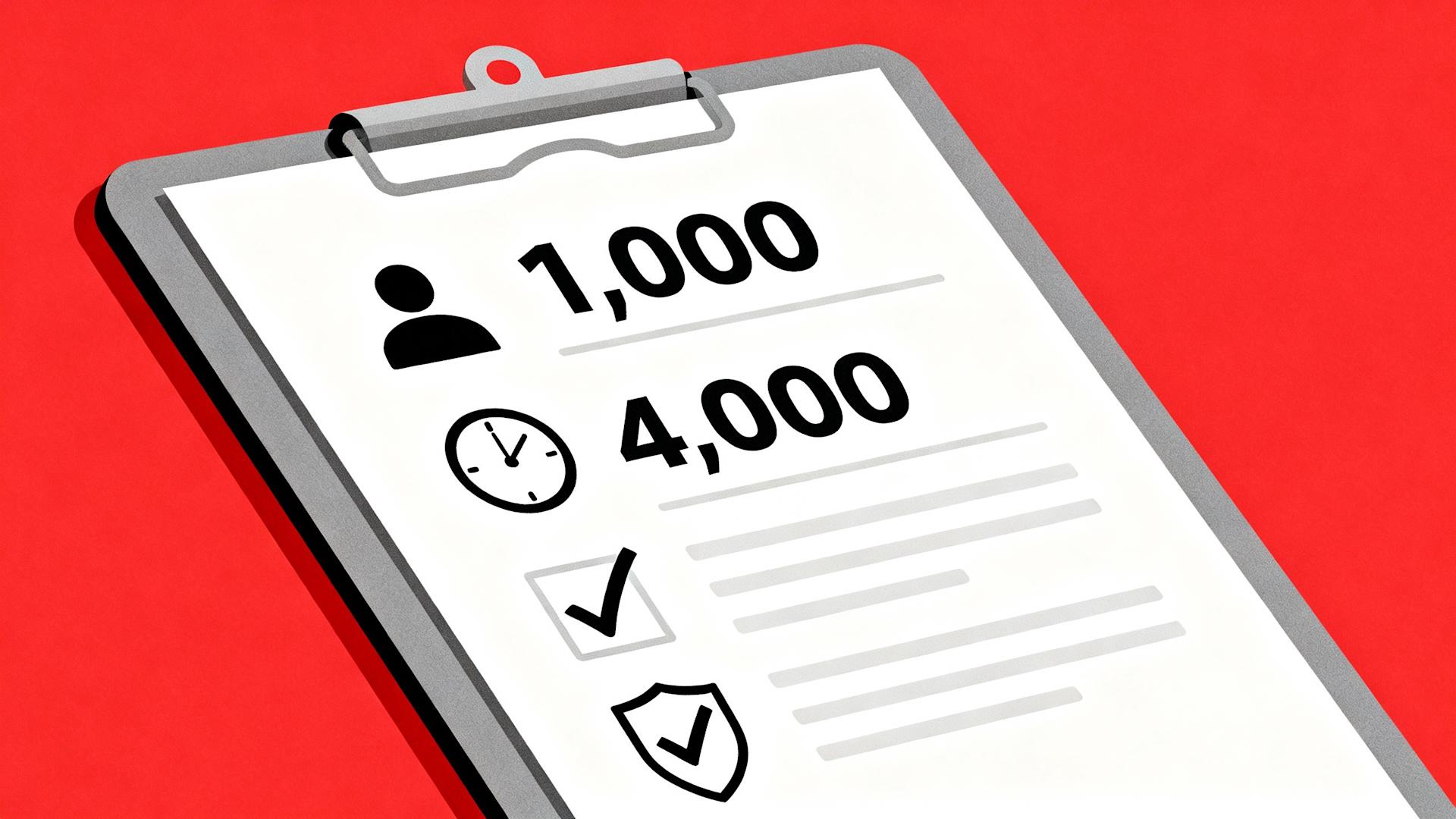
The foundational requirement across all monetization paths is 1,000 subscribers minimum. This threshold remains constant regardless of whether you focus on long-form content, Shorts, or a combination. YouTube established this subscriber minimum to ensure monetized creators have demonstrated ability to build an audience rather than monetizing completely new channels with no proven community.
Subscriber count serves as a quality signal indicating that viewers find your content valuable enough to want ongoing access. Channels with 1,000+ subscribers have typically produced enough content to establish their niche, develop consistent style, and demonstrate commitment beyond casual experimentation. This threshold filters out hobby creators who might violate policies or produce low-quality content that hurts advertiser confidence.
For strategic context, reaching 1,000 subscribers typically requires 50-150 videos for most creators, though viral success can accelerate this dramatically. Educational and entertainment niches often require more content to reach this threshold, while trending topic niches or highly searchable how-to content may reach it faster. The average creator timeline is 6-12 months from starting their channel to hitting 1,000 subscribers, though this varies enormously based on content quality, posting frequency, and niche competition.
The subscriber requirement cannot be bypassed through purchased subscribers, sub-for-sub schemes, or artificial inflation tactics. YouTube's systems detect inauthentic subscriber growth patterns and will not only reject monetization applications but may penalize channels for manipulation attempts. Every subscriber must represent a genuine viewer who actively chose to follow your channel.
Watch Time Requirements: Two Paths
YouTube offers two distinct qualification paths based on whether you focus primarily on traditional content or YouTube Shorts, recognizing that these formats require different growth strategies.
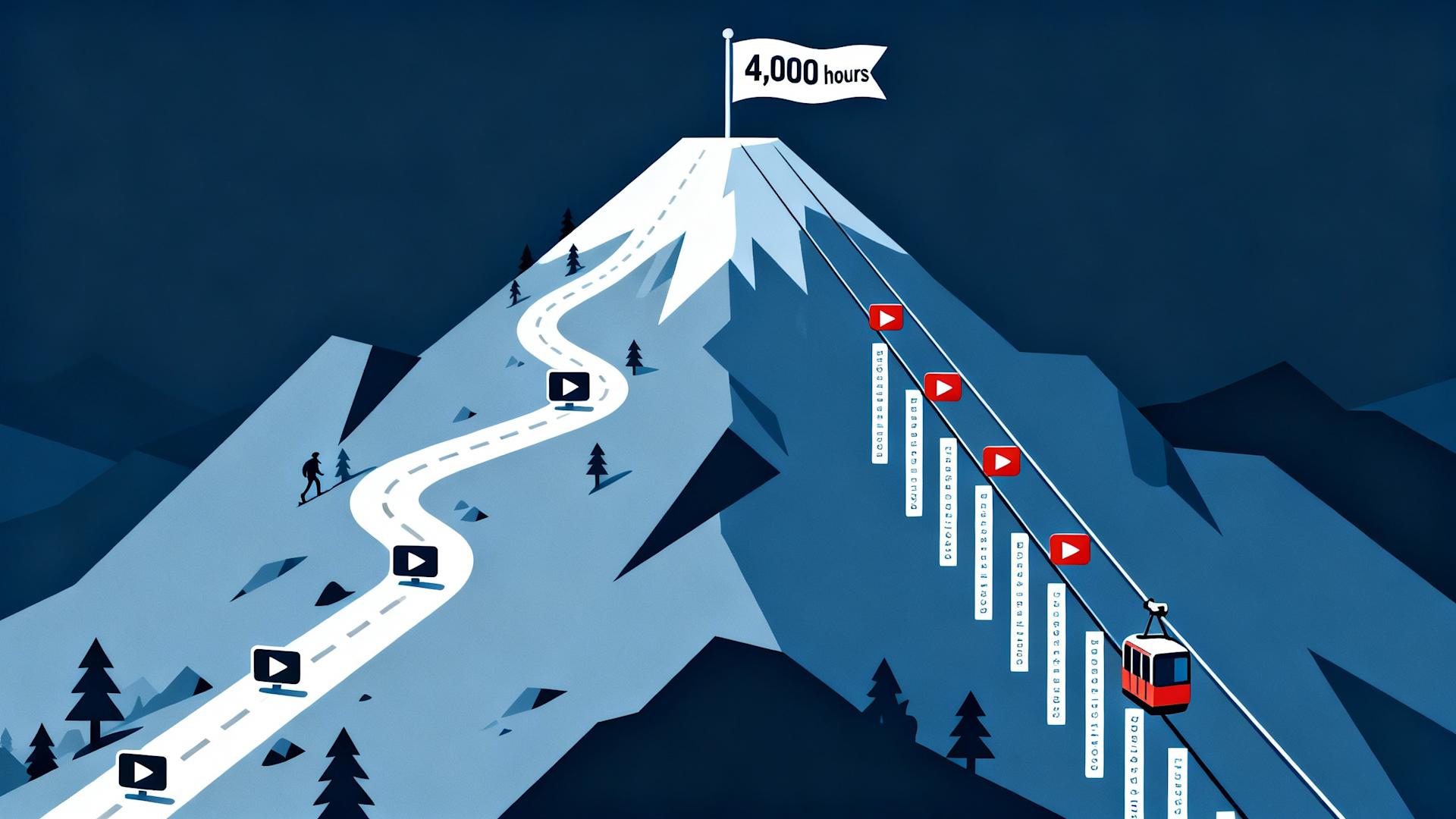
Path 1: Traditional Content (4,000 watch hours in the past 12 months)
The original and still primary monetization path requires accumulating 4,000 public watch hours within the trailing 12-month period. This means 240,000 minutes of viewer watch time on your public videos, not including Private, Unlisted, or Deleted videos, live stream watch time during the stream (though archive watch time counts), or Shorts views.
This threshold ensures monetized creators produce content that audiences actually watch rather than click away from immediately. Watch time directly correlates with content quality and audience engagement, you cannot accumulate 4,000 hours without creating content people genuinely want to watch for extended durations.
Strategically, reaching 4,000 watch hours typically proves more challenging than reaching 1,000 subscribers for most creators. A channel might have 2,000 subscribers but only 1,500 watch hours if videos don't retain audience attention effectively. Average view duration becomes critical, if your average video is 5 minutes and viewers watch 50% on average (2.5 minutes), you need approximately 96,000 views to reach 4,000 hours. Understanding this math helps you set realistic content volume targets.
The 12-month rolling window means watch time from 13 months ago doesn't count, only the trailing year matters. This creates urgency for consistent content production since gaps in posting can cause you to lose old watch time from your total before accumulating new watch time. Maintaining steady output becomes essential for preserving qualification status once reached.
Path 2: Shorts-Focused (10 million valid public Shorts views in the past 90 days)
Introduced to accommodate the explosive growth of YouTube Shorts, this alternative path recognizes that Shorts viewership metrics differ dramatically from traditional content. Ten million Shorts views in 90 days represents substantial achievement requiring consistent viral success or very high posting volume with decent performance.
This Shorts path appears more achievable numerically, 10 million sounds smaller than 4,000 hours, but actually represents approximately 33.3 million minutes of watch time if averaging 20-second views per Short. This is dramatically more watch time than the traditional path requires, but it's distributed across many more viewers engaging with much shorter content.
The 90-day window versus 12-month window for traditional content creates interesting dynamics. Shorts creators can qualify much faster if they catch viral momentum, a creator might go from 0 to qualified in a single month with several viral Shorts. However, the shorter window also means qualification is more fragile since older views drop off quickly.
Strategically, Shorts qualification works best for creators who can maintain high posting frequency (multiple Shorts daily) or consistently produce viral content in their niche. Faceless content creators, meme channels, motivational content, and fact-based educational creators often find Shorts paths more achievable than traditional content paths.
Important note: You can pursue both paths simultaneously. Your account qualifies when you meet subscriber requirements PLUS either the traditional watch hours OR Shorts views threshold. Many creators use Shorts to build subscriber base quickly while developing long-form content to accumulate watch hours, combining strategies for faster qualification.
Geographic Availability
YouTube Partner Program is available in 100+ countries and territories, but not everywhere globally. Your channel must be based in a location where YPP is available to qualify for monetization. This geographic restriction relates to payment infrastructure, legal frameworks, and advertiser demand in different regions.
Check YouTube's official list of available countries to confirm your location qualifies. Most major economies including the United States, United Kingdom, Canada, Australia, European Union countries, India, Brazil, and many others have full YPP access. However, some regions face limitations or complete unavailability due to political situations, payment processing challenges, or limited advertiser presence.
Your location is determined by your account settings and payment address, not where you physically create content or where your audience resides. A creator living in a non-monetized country cannot access YPP even if their content targets audiences in monetized regions. This geographic limitation affects creators in certain developing markets or politically isolated countries.
If you're in a borderline situation, perhaps living in a non-monetized country temporarily, understand that attempting to misrepresent your location violates YouTube's terms of service and will result in account termination if discovered. The payment requirements will ultimately reveal true location, making geographic fraud impossible to sustain.
Account Good Standing Requirements
Beyond numerical thresholds, your channel must maintain "good standing" with YouTube's policies across multiple dimensions.
No active Community Guidelines strikes means your channel cannot have any current strikes for violations including spam, deceptive practices, scams, misleading content, harassment, hate speech, or any other guideline violations. Even a single active strike disqualifies you from monetization until it expires (typically after 90 days of no additional violations).
No active copyright strikes is equally critical. Copyright strikes result from uploading content you don't own or have rights to use, movie clips, TV show footage, music, or other creators' content without permission. Three copyright strikes result in channel termination, but even a single active strike prevents monetization eligibility.
Adherence to YouTube monetization policies includes creating advertiser-friendly content that doesn't excessively feature violence, adult content, harmful or dangerous acts, hateful content, or inappropriate language. Content can exist on YouTube without being monetizable, you can create edgy content, but advertisers may not want their brands associated with it, making such channels ineligible for monetization even if they meet watch time and subscriber thresholds.
Two-step verification enabled on your Google account enhances security and is mandatory for monetization. This security requirement protects both creators and YouTube from account hijacking that could be used for fraudulent monetization schemes.
AdSense account in good standing is required since AdSense handles YouTube monetization payments. You must create an AdSense account, link it to your YouTube channel, and ensure it hasn't been closed or suspended for policy violations. Past AdSense violations can create permanent barriers to YouTube monetization.
Content Ownership and Originality Requirements
YouTube only monetizes channels that create or significantly contribute original content rather than re-uploading others' work.
Original content creation means you produce your own videos rather than compiling others' content. Gaming channels must add substantial commentary or creative editing, reaction channels must provide significant transformative value, and educational channels must create original explanations rather than just reading others' articles.
Reused content policies specifically prohibit monetization of channels that primarily consist of content from other sources without adding significant original value. Simply compiling viral videos, using stock footage with minimal editing, or creating "top 10" lists with others' clips doesn't qualify as original content worthy of monetization.
Commercial use rights for all elements in your content are essential. This includes music, sound effects, video clips, images, and any other media. Using copyrighted material without permission, even if you haven't received copyright strikes yet, can lead to monetization rejection. YouTube's Content ID system scans uploaded content, and reviewers specifically check whether monetization applicants have proper rights to monetize all elements in their videos.
AI-generated content has created new gray areas in originality requirements. Content created with AI tools like Clippie AI is monetizable as long as you add creative input, customization, and original value rather than simply generating generic content with zero human contribution. The key is demonstrating that AI serves as a production tool rather than replacing all creative input. Channels successfully monetizing AI-assisted content consistently show clear creative direction, niche expertise, and value-added editing that distinguishes their content from other AI users.
Additional Requirements and Considerations
Several other factors affect eligibility that creators often overlook until application.
Linked AdSense account must be yours personally and cannot be shared with other channels or individuals beyond what Google's terms permit. Attempting to use others' AdSense accounts or sharing accounts violates policies and results in permanent monetization ban.
Channel age and activity matter informally even though YouTube doesn't specify minimum channel age. Brand new channels applying immediately upon reaching thresholds sometimes face additional scrutiny compared to established channels with longer histories. While not a formal requirement, allowing your channel to mature slightly before applying can improve approval likelihood.
Language and content accessibility doesn't formally restrict eligibility, you can monetize content in any language, but practical considerations affect earnings potential. Languages with smaller advertiser bases generate lower CPM rates, though you can still monetize successfully.
Channel focus and consistency improve application success rates. Channels with clear niche focus and consistent content types face easier approval processes than channels that wildly vary content with no discernible theme. Reviewers need to understand what your channel is about and whether it aligns with advertiser needs.
Common Misconceptions About Requirements
Several myths about eligibility persist despite not reflecting actual policies.
Myth: You need X number of videos - False. YouTube doesn't specify minimum video count. You could theoretically qualify with a single viral video, though this rarely happens. Most creators need 50-150 videos to accumulate required watch time and subscribers.
Myth: Specific niches are ineligible - False. All content niches can monetize as long as they comply with monetization policies. Even edgy or controversial niches can monetize if content remains advertiser-friendly.
Myth: You must post weekly - False. Posting frequency doesn't affect eligibility directly, though regular posting helps accumulate watch time faster. The rolling time windows mean you must maintain sufficient activity to preserve accumulated metrics.
Myth: Shorts don't help qualification - False. Shorts views count toward the Shorts qualification path and help build subscriber base even if pursuing traditional qualification.
Myth: You can't reapply after rejection - False. You can reapply 30 days after rejection once you've addressed the issues that caused rejection.
2. How to Prepare Your Channel for Monetization
Strategic preparation before reaching eligibility thresholds accelerates qualification and increases approval likelihood when you finally apply.
Content Strategy for Accelerated Qualification
The fastest path to monetization requirements involves intentional content strategy rather than random posting hoping for success.
Identify high-retention content formats in your niche by analyzing what content types generate longest average view durations. Educational tutorials, story-driven narratives, and problem-solution videos typically retain audiences better than listicles or compilation formats. Study your YouTube Analytics to identify your highest-performing retention patterns, then create more content matching those characteristics.
Focus on searchable, evergreen topics early in your channel growth. Content answering specific questions or solving particular problems continues accumulating watch time long after publication through YouTube search and suggested video traffic. Trending topic content might generate initial spikes but stops contributing to watch time once trends pass. Educational content about "how to tie a tie" or "Excel pivot table tutorial" generates consistent search traffic for years.
Optimize for suggested video traffic by studying what content YouTube recommends alongside popular videos in your niche. Create content that naturally fits as suggested watching after successful videos. If popular gaming channels in your niche all do boss battle guides, creating similar content increases chances YouTube suggests your videos alongside theirs.
Balance Shorts and traditional content strategically. If pursuing traditional qualification (4,000 hours), focus primarily on 8-15 minute videos that accumulate watch time efficiently. If pursuing Shorts qualification, post multiple Shorts daily (3-5+) with formats proven to generate views in your niche. Many creators use Shorts to build subscriber base quickly while long-form content accumulates watch hours.
Create series and playlists that encourage binge-watching. When viewers watch multiple consecutive videos, watch time accumulates rapidly. Structure content in series where each episode naturally leads to the next. True crime story series, tutorial progressions, or character-driven entertainment content works well for this approach.
Leverage trending topics strategically by creating your niche's version of trending formats. When a challenge or format goes viral, adapt it to your specific expertise. Educational creators can explain the science behind viral trends, while entertainment creators can participate directly. This balanced approach captures trend traffic while maintaining channel identity.
Channel Optimization Fundamentals
Technical channel optimization significantly impacts both qualification speed and approval likelihood.
Create compelling channel art including a professional banner, distinctive logo/icon, and cohesive visual branding. First impressions matter, when viewers discover one video and check your channel, professional presentation increases subscription likelihood. Use tools like Canva or hire designers on Fiverr if design isn't your strength.
Write an effective channel description that clearly explains what your channel offers, who it serves, and what value viewers gain from subscribing. Include relevant keywords for search optimization but prioritize clarity over keyword stuffing. Your description should answer: "Why should I subscribe to this channel?"
Organize content with playlists that group related videos logically. Playlists serve dual purposes: improving viewer experience by making content easier to find, and increasing watch time by automatically playing related videos sequentially. Create playlists for different content series, topics, or formats.
Add channel sections to your homepage that highlight specific content. Feature your best-performing videos, most recent uploads, popular playlists, and any series you want to promote. Homepage organization guides new visitors toward content most likely to convert them to subscribers.
Enable all appropriate features including community posts (available at 500+ subscribers), channel memberships prep (research what to offer when monetized), and merchandise shelf preparation if you have products. While you cannot monetize these features before YPP acceptance, preparing for them demonstrates professional approach.
Optimize every video for discovery through strategic titles, descriptions, tags, and thumbnails. Titles should be clear, compelling, and include primary keywords naturally. Descriptions should thoroughly explain video content while incorporating relevant secondary keywords. Custom thumbnails with readable text and emotional expressions dramatically improve click-through rates.
Maintain consistent upload schedule that audiences can anticipate. Consistency doesn't necessarily mean daily posting, weekly or biweekly works fine if maintained reliably. What matters is establishing expectations viewers can count on, encouraging them to subscribe for regular content rather than randomly stumbling across occasional uploads.
Building Your Subscriber Base
Reaching 1,000 subscribers requires strategic approach rather than hoping viewers randomly subscribe.
Include subscription calls-to-action in every video at strategic moments. The most effective CTA placement is early (after hook, around 30 seconds in) when viewers have confirmed interest but before they've left, and again at the end before your outro. Explain specifically why viewers should subscribe: "Subscribe if you want to learn Python, I post new tutorials every Tuesday."
Deliver immediate value in opening seconds to prevent early dropoff that hurts retention. Viewers decide whether to continue watching in the first 5-10 seconds. Start with a hook that promises clear value, poses an intriguing question, or shows a compelling result before explaining how you achieved it.
Create subscriber-targeting content specifically designed to convert casual viewers into subscribers. "Best of" compilations, channel trailers explaining your content value, or comprehensive guides that establish authority all drive subscription behavior.
Engage with your comment section authentically to build community. Heart valuable comments, respond to questions thoughtfully, and encourage discussion. Viewers who feel connection with creators subscribe at higher rates than passive consumers.
Promote strategically on other platforms without being spammy. Share videos in relevant Reddit communities, Facebook groups, Twitter threads, or LinkedIn posts where your target audience congregates. Focus on providing value rather than self-promotion, useful content naturally attracts viewers without aggressive marketing.
Collaborate with similar-sized creators to cross-pollinate audiences. Find creators in your niche with 500-2,000 subscribers who would be open to collaboration. Create content together that introduces each audience to the other creator. Collaborations often drive substantial subscriber growth for both parties.
Optimize for browse features and suggested videos since these traffic sources convert to subscribers better than search traffic. Create content similar enough to successful videos that YouTube suggests yours alongside them, but distinctive enough to stand out. Study what thumbnails, titles, and topics perform well, then create your unique versions.
Accumulating Watch Time Efficiently
Reaching 4,000 watch hours requires maximizing average view duration across your content.
Optimize video length strategically based on your retention capabilities. If you maintain 50% retention on 10-minute videos, they accumulate 5 minutes of watch time per view. If you can only maintain 30% retention on 15-minute videos (4.5 minutes per view), shorter videos accumulate more total watch time despite longer potential. Test different lengths and analyze retention patterns to find your optimal duration.
Improve retention systematically by analyzing YouTube Analytics retention graphs. Identify precisely where viewers drop off most, then address those weak points in future content. Common issues include slow intros, tangential discussions, obvious conclusions, or insufficient payoff for promised value.
Use pattern interrupts every 30-60 seconds to maintain attention. Change camera angles, introduce new visual elements, shift topics to related points, ask questions, or use humor. The human attention span naturally wanders, so strategic interruption reengages viewers before they leave.
Create longer-form content when you can maintain retention. A 20-minute video with 45% retention accumulates 9 minutes of watch time per view versus a 5-minute video with 60% retention accumulating 3 minutes. Longer content accelerates watch time accumulation if retention remains decent.
Encourage playlist watching through cards, end screens, and verbal suggestions directing viewers to related videos. When viewers watch 3-4 consecutive videos in a session, they contribute 20-40+ minutes of watch time versus 5-10 minutes for single video viewing.
Leverage end screens effectively to promote your best-performing content, related videos, and playlists. Never waste end screen real estate on generic "subscribe" buttons when you could direct viewers to specific next videos that keep them watching.
Time-stamp longer videos to improve user experience while maintaining watch time. Viewers appreciate being able to skip to relevant sections, and paradoxically, making skipping easy often increases overall watch time because viewers stay engaged with specifically relevant content rather than leaving entirely from frustration.
Policy Compliance and Account Health
Preparing for review means ensuring spotless policy compliance before applying.
Review every uploaded video against YouTube's monetization policies. Content featuring excessive profanity, violence, sexual content, dangerous acts, or controversial topics may not qualify for monetization even if it doesn't violate community guidelines. Better to remove or private potentially problematic videos before applying than risk rejection.
Check for copyright issues systematically. Review your music sources, B-roll footage, images, and any other media elements. Content ID claims don't necessarily prevent monetization if copyright holders allow monetization, but copyright strikes definitely do. Ensure you have proper rights or licenses for all content elements.
Remove or private low-quality content that doesn't represent your current standards. Those first 10-20 videos when you were learning often contain quality issues, policy risks, or content you'd rather reviewers didn't see. Privating them preserves view counts and watch time while removing them from reviewer consideration. You can always make them public again after acceptance.
Enable two-step verification immediately if you haven't already. This account security measure is mandatory for monetization and protects your channel from hijacking.
Create or link AdSense account early to identify any issues before they delay your monetization. Some creators discover they have old suspended AdSense accounts from previous ventures that create barriers requiring resolution. Better to discover these problems before hitting thresholds than after.
Maintain regular posting leading up to application. Channels that suddenly stop posting or dramatically change patterns immediately before applying sometimes face additional scrutiny. Demonstrate ongoing channel activity and commitment to continued content creation.
Using AI Tools Like Clippie for Efficient Production
Modern AI video tools dramatically accelerate the path to monetization by enabling higher content volume without proportional time investment.
Clippie AI specifically helps monetization qualification by allowing creators to produce 3-5x more content in the same time investment compared to manual editing. This accelerated production helps accumulate watch time and subscribers faster. The platform's professional output quality ensures content meets YouTube's standards while caption accuracy and platform optimization improve retention rates that drive watch time accumulation.
Strategic AI use for qualification involves identifying which content types benefit most from AI acceleration. Faceless educational content, compilation videos with significant commentary, tutorial content with screen recordings, or motivational content all work exceptionally well with AI assistance. Clippie's customization capabilities ensure your AI-assisted content maintains distinctive style rather than looking template-generic.
Combine AI efficiency with quality control by using saved production time for content strategy, audience research, and creative planning. The goal isn't just producing more content, it's producing more strategic content that accumulates watch time efficiently. AI handles tedious editing while you focus on optimization that actually drives qualification.
Maintain originality with AI tools by adding substantial creative input, customization, and unique perspective. The most successful AI-assisted channels use tools like Clippie as production accelerators while providing clear creative direction that distinguishes their content from others using similar tools.
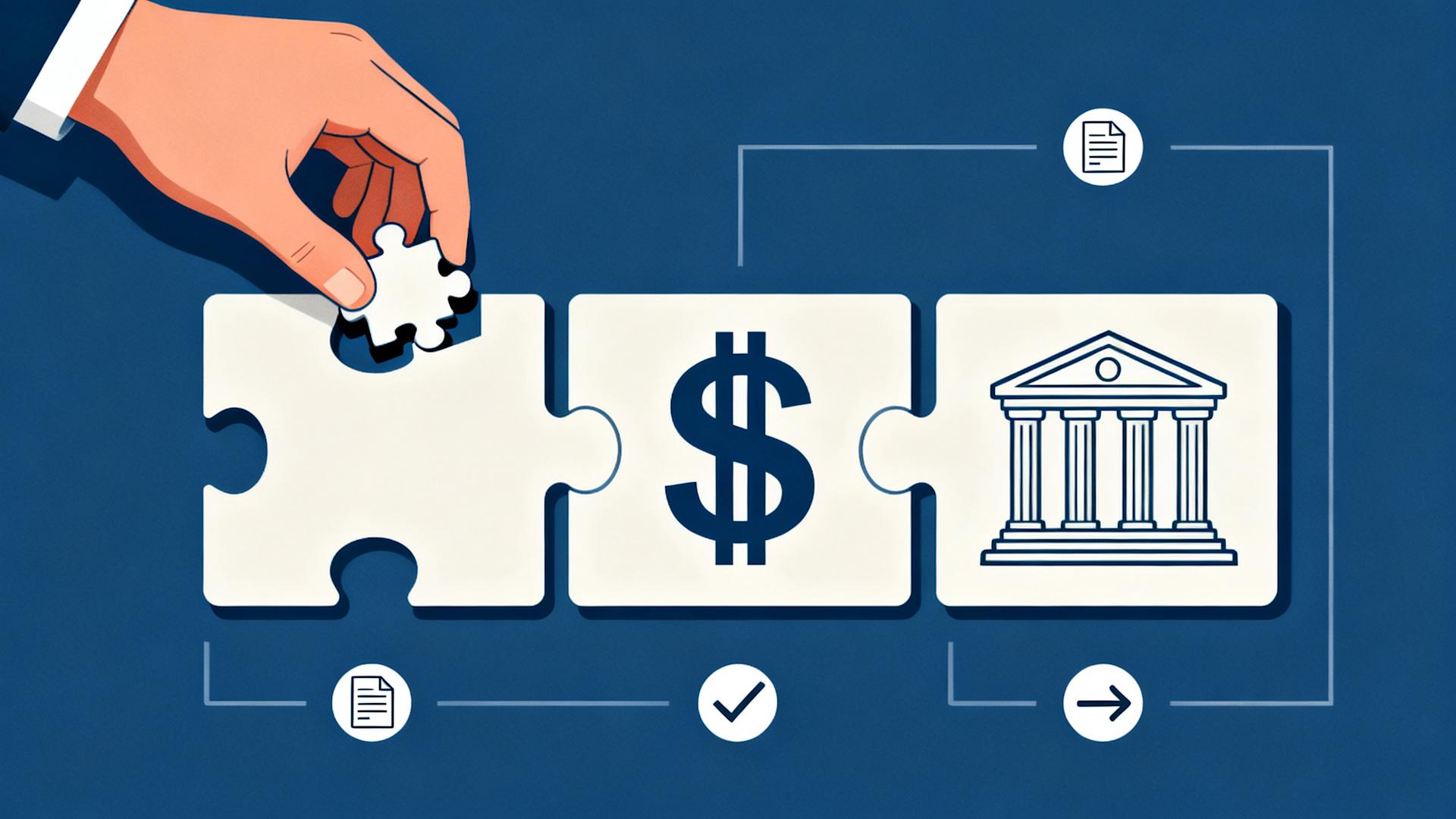
3. Step-by-Step: Applying for the Partner Program
Once you've met all eligibility requirements, the application process itself is straightforward if you understand the exact steps and avoid common mistakes.
Confirming You Meet All Requirements
Before starting your application, systematically verify every requirement to avoid wasting time on applications that will be immediately rejected for obvious deficiencies.
Check your subscriber count in YouTube Studio under "Analytics" or visible on your channel page. You need exactly 1,000 or more subscribers, 999 doesn't qualify. If you're at 998-999, wait until you hit 1,000 before applying. Applications submitted prematurely are automatically rejected and require 30-day waiting period before reapplication.
Verify your watch time for traditional qualification by navigating to YouTube Studio > Analytics > Audience tab. The "Watch time from viewers" section shows public watch hours in the last 365 days. You need exactly 4,000 or more hours. Remember that this is a rolling window, the past 365 days from today, not calendar year.
Check Shorts views if pursuing that qualification path through YouTube Studio > Analytics > Content tab, then filter to Shorts. The total views from public Shorts in the past 90 days must equal or exceed 10 million. This metric isn't displayed as prominently as traditional watch hours, requiring manual calculation from your Shorts analytics.
Confirm location eligibility by reviewing your YouTube account location settings under Settings > Channel > Basic info. Verify your location appears on YouTube's Partner Program availability list. If you've recently moved or need to update location, do so before applying and allow a few days for systems to update.
Review account standing by checking YouTube Studio > Settings > Channel > Status and features. Look for any strikes, warnings, or restrictions. If you have active strikes, wait until they expire before applying. One active strike = automatic rejection.
Ensure AdSense eligibility by attempting to sign up for AdSense or logging into your existing account to confirm it's active and unrestricted. If you encounter issues during AdSense signup, resolve them before starting YouTube monetization application.
Enable two-step verification on your Google account if you haven't already at myaccount.google.com/security. This is mandatory for monetization and cannot be skipped.
Accessing the Application
YouTube makes the application process accessible only after you've met basic numerical requirements (subscribers + watch hours or Shorts views).
Navigate to YouTube Studio by clicking your profile picture in the top right corner of any YouTube page and selecting "YouTube Studio" from the dropdown menu.
Access Monetization tab from the left sidebar menu in YouTube Studio. If you don't see a Monetization option in your sidebar, you haven't yet met basic thresholds and cannot apply. The option appears automatically once requirements are met.
Click "Apply now" button or similar prompt within the Monetization section. YouTube's interface occasionally changes exact wording, but the pathway remains: YouTube Studio > Monetization > Start/Apply.
If you don't see application options despite meeting requirements, try these troubleshooting steps: Log out and back in to refresh account status, wait 24-48 hours for systems to recognize newly achieved thresholds, check that you're accessing the correct Google account if you manage multiple channels, or contact YouTube Creator Support if problems persist beyond 48 hours.
The Four-Step Application Process
YouTube structures the application in four sequential steps that must be completed in order.
Step 1: Review YouTube Partner Program Terms
Read through YouTube's Partner Program terms and policies carefully rather than just clicking accept. These terms define your ongoing obligations as a monetized creator including continued policy compliance, content ownership responsibility, and revenue-sharing agreements.
Key sections to understand include: acceptable content policies defining what you can monetize, prohibited content and activities that violate terms, copyright and originality requirements ensuring you own or have rights to all content elements, community guidelines that remain mandatory regardless of monetization status, and payment terms explaining revenue splits and payment thresholds.
Once you've reviewed terms, check the box acknowledging you've read and understood them, then click "Accept" to proceed to step 2.
Step 2: Sign up for Google AdSense
If you don't already have an AdSense account linked to your YouTube channel, you'll create or connect one during this step. AdSense handles all YouTube monetization payments, making this connection essential.
If you have no existing AdSense account: Click "Start" when prompted to sign up for AdSense. You'll be directed to create a new account providing information including your name and address (must match future payment information), email address and phone number for account verification, website URL (not always required for YouTube-only accounts), and preferred language for AdSense communications.
If you have an existing AdSense account: You can link your existing account to your YouTube channel. Click "Use existing AdSense account" and sign in to associate it with your channel. Important: Each AdSense account can link to only one YouTube channel for monetization purposes. If your AdSense account is already linked to another channel, you'll need to create a new AdSense account for the new channel.
If you previously had an AdSense account that was closed or disabled: This creates complications. Disabled AdSense accounts often cannot be reinstated, and creating new accounts may be prohibited if the original was closed for policy violations. Contact AdSense support to understand your options before proceeding with YouTube monetization application.
After setting up or connecting AdSense, YouTube verifies the connection. This typically happens immediately but occasionally takes 24-48 hours. You cannot proceed to step 3 until AdSense linkage is confirmed.
Step 3: Set monetization preferences
This step lets you configure default monetization settings for your videos including which ad formats you'll allow and other monetization features you'll enable.
Ad format options include: Display ads (appear beside your video on desktop), Overlay ads (semi-transparent ads on video bottom portion on desktop), Skippable video ads (ads viewers can skip after 5 seconds), Non-skippable video ads (15-20 second ads that must be watched completely), and Bumper ads (6-second non-skippable ads).
Most creators enable all ad formats to maximize revenue since YouTube automatically optimizes which ads to show for best revenue and viewer experience balance. Disabling formats reduces earning potential without significantly improving viewer experience.
Other monetization settings include: Super Chat and Super Thanks (tip features allowing viewers to pay to highlight their messages), Channel memberships (monthly subscription offering exclusive perks to paying members), and Merchandise shelf (displaying your products on your channel if you meet eligibility requirements).
Enable everything you're eligible for and interested in offering. You can always adjust these settings later if you decide certain features don't align with your content strategy.
Important note: These preferences set defaults for all existing and future videos. You can override these defaults on individual videos through YouTube Studio if specific content isn't appropriate for monetization or certain ad types.
Click "Save" to preserve your preferences and proceed to the final step.
Step 4: Submit your channel for review
The final step involves reviewing everything you've configured and officially submitting your channel for human review.
Review information summary showing your subscriber count, watch time or Shorts views, connected AdSense account, and monetization preferences. Verify everything appears accurate before submitting.
Acknowledge ongoing policy compliance requirements by checking a box confirming you understand that monetization requires continued adherence to all YouTube policies and that violations can result in monetization suspension or termination.
Click "Submit" button to officially send your channel for review. After submission, YouTube displays confirmation message acknowledging receipt of your application and providing estimated review timeline.
Important: Once submitted, you cannot modify your application or withdraw it. If you realize you need to change something, you must wait for the review to complete (even if results in rejection), then address issues and reapply 30 days later.
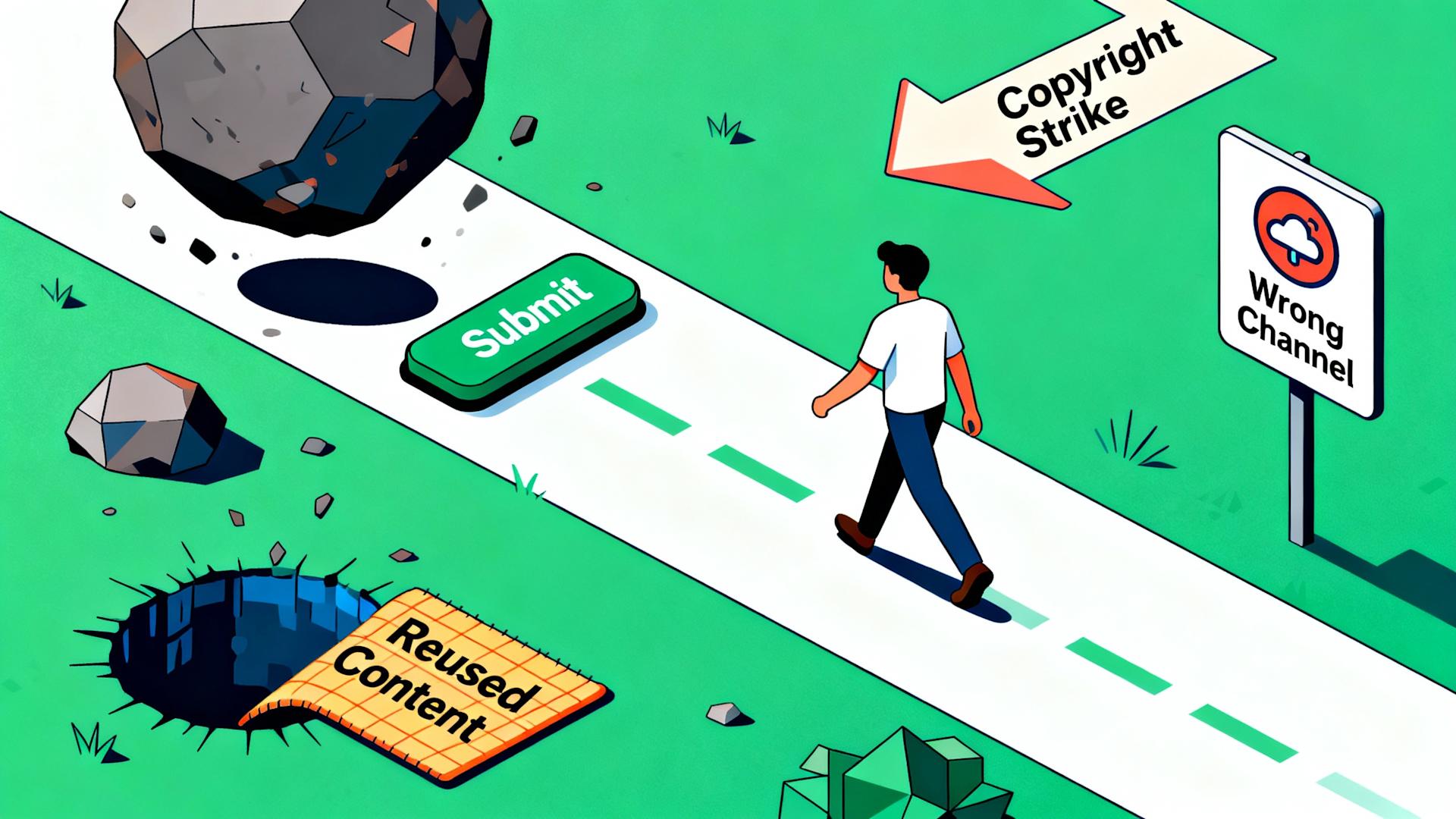
Common Application Mistakes to Avoid
Several recurring errors delay or derail applications unnecessarily.
Applying too early before fully meeting requirements wastes your application attempt. YouTube automatically rejects applications that don't meet numerical thresholds, imposing 30-day wait before reapplication even if you hit thresholds the next day.
Incorrect AdSense information including mismatched names between AdSense and government ID, wrong addresses that prevent payment verification, or invalid phone numbers causes payment setup problems that delay monetization even after channel approval.
Having policy violations you're unaware of such as old videos with copyright issues, community guideline strikes you forgot about, or content that violates monetization policies without violating community guidelines. Review your entire channel before applying.
Using others' AdSense account violates policies and results in permanent monetization ban if discovered. Each creator must have their own AdSense account with their own personal information.
Failing to enable two-step verification on your Google account before applying creates technical barriers that can delay application processing.
Applying from wrong channel if you manage multiple channels on the same Google account. Verify you're accessing YouTube Studio for the correct channel before starting application.
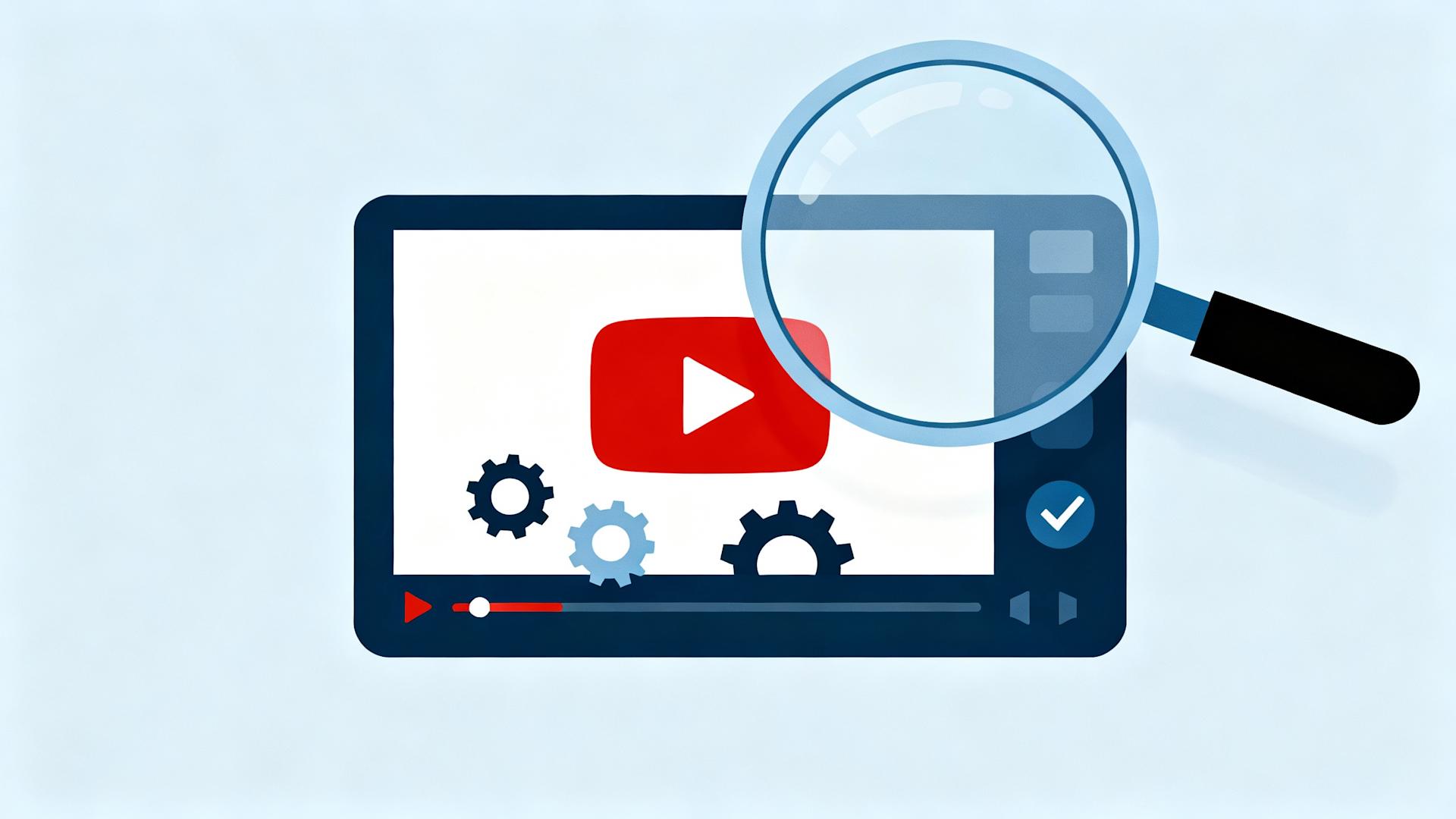
4. What Happens During the Review Process
Understanding what occurs during review reduces anxiety and helps you set realistic expectations for approval timeline.
How YouTube Reviews Applications
YouTube uses a combination of automated systems and human reviewers to evaluate Partner Program applications.
Automated pre-screening happens immediately after submission, checking whether your channel meets basic numerical requirements (subscribers and watch time/Shorts views), has any active strikes or policy violations, maintains good account standing, and has proper two-step verification enabled. Channels failing automated checks receive immediate rejection without human review.
Automated content scanning uses YouTube's existing Content ID systems, machine learning models, and policy detection algorithms to identify potential issues including copyrighted material, policy-violating content, reused content without original value, and spam or manipulation patterns. Suspicious findings flag your application for careful human review rather than streamlined approval.
Human reviewer evaluation follows automated screening. Actual YouTube employees review your channel including watching several of your videos (typically your most popular and most recent), examining channel overall theme and content consistency, checking advertiser-friendliness of your content, verifying content originality and ownership, assessing whether your channel adds value to YouTube's ecosystem, and confirming policy compliance across your catalog.
Reviewers don't watch every video in detail but sample enough to understand your channel's character and whether it aligns with Partner Program standards. They focus particularly on your highest-view content since that's what will generate most ad impressions if monetized.
Reviewer discretion means human evaluators make judgment calls about borderline cases. Channels with perfect policy compliance but low-quality content might be rejected despite meeting technical requirements. Channels with minor past issues but strong current content might receive warnings instead of rejection. This human element introduces some unpredictability but generally works in favor of genuine creators.
Review Timeline and What Affects It
YouTube estimates "about a month" for review completion, but actual timelines vary considerably based on multiple factors.
Typical timeline is 2-4 weeks for most straightforward applications. Channels with clear policy compliance, obvious content quality, and no red flags often receive approval within 2-3 weeks. More complex situations requiring careful evaluation may take the full month or occasionally slightly longer.
Factors that accelerate review include channels with extremely clear niche focus and consistent high-quality content, minimal borderline content requiring judgment calls, strong engagement metrics suggesting audience values your content, professional presentation indicating serious creator commitment, and applying during periods of lower application volume.
Factors that delay review include borderline policy compliance requiring careful evaluation, past policy violations even if resolved, inconsistent content making channel theme unclear, reused or questionable originality content, applying during peak periods (January and summer when many creators hit qualification thresholds simultaneously), and red flags from automated scanning requiring extra verification.
Geographic factors also influence timeline. Applications from countries with fewer applicants or less reviewer availability may experience longer waits. English-language content typically reviews faster than content requiring translation or specialized language reviewers.
You cannot expedite review by contacting support, posting in forums, or repeatedly checking status. The process takes as long as it takes based on queue position and case complexity. Patience is required regardless of how urgently you want monetization.
Checking Your Application Status
YouTube provides limited visibility into review progress but you can monitor status through your channel.
Check monetization tab in YouTube Studio where your application status displays as "Under review" during evaluation. This page shows estimated timeline and updates when status changes.
Email notifications arrive at your account email address when review completes whether approved or rejected. Check spam folders if you don't see notification when expecting results. YouTube typically sends notification within 24 hours of review completion.
No detailed status updates exist during review. YouTube doesn't provide information about what stage of review you're in, which reviewer is examining your channel, or how much longer until completion. The status remains "Under review" until suddenly changing to "Approved" or "Not approved."
Typical silence period lasts the entire review duration. Many creators obsessively check their status daily, but it never changes until the sudden final decision. This lack of transparency frustrates creators but reflects YouTube's need to maintain review process integrity.
Possible Review Outcomes
Your application can result in several possible outcomes, each requiring different responses.
Approved for monetization: Congratulations! Your channel is accepted into the Partner Program and you can begin earning from your content immediately. Monetization features activate within 24-48 hours of approval. You'll receive email notification and can configure monetization settings for existing videos.
Rejected - Reused content: Your channel primarily features content from other sources without sufficient original value added. This is the most common rejection reason for channels using compilation formats, stock footage without significant editing, or content that appears derivative. Resolution requires creating demonstrably original content that shows clear creative input and value addition beyond what already exists online.
Rejected - Spam, deceptive practices, or scam content: Your channel contains content that misleads viewers, promotes scams, uses deceptive practices, or constitutes spam. This serious rejection requires thoroughly removing problematic content and understanding which specific practices violated policies before reapplying.
Rejected - Repetitious content: Your channel posts the same or very similar content repeatedly without meaningful differentiation. This affects channels using templates too obviously or posting extremely similar videos constantly. Resolution requires diversifying content formats and demonstrating genuine variety.
Rejected - Content violates AdSense Program Policies: Even if your content doesn't violate YouTube's Community Guidelines, it may be inappropriate for advertiser monetization. This includes excessive profanity, violence, sexual content, dangerous activities, or controversial topics. Resolution requires removing or privating content that isn't advertiser-friendly.
Rejected - Other reasons: Catch-all category for various issues including past policy violations, lack of content originality, concerns about account ownership, or any other factors making your channel inappropriate for monetization. These rejections typically include more specific explanation of concerns.
Delayed for additional review: Occasionally, applications require extended evaluation beyond typical timeline. You might receive notification that review needs more time. This typically happens when borderline situations require careful consideration or escalation to senior reviewers. Just continue waiting rather than interpreting delays as rejection.
If Your Application Is Rejected
Rejection isn't permanent but requires addressing underlying issues before reapplying.
Understand the specific reason by carefully reading the rejection email YouTube sends. The stated reason guides what you need to fix before reapplication. Don't assume you know why you were rejected, read YouTube's explanation carefully.
Research the violation type through YouTube's help documentation, creator forums, and policy guides. Understanding exactly what YouTube considers problematic helps you identify issues you might not have recognized.
Audit your channel systematically looking for content matching the rejection reason. If rejected for reused content, identify which videos rely heavily on others' content without sufficient transformation. If rejected for policy violations, find videos containing inappropriate elements.
Remove or private problematic content that contributed to rejection. You don't necessarily need to delete everything, privating videos removes them from reviewer consideration while preserving view counts and watch time contributions. Focus on cleaning up your channel's publicly visible content.
Create new, clearly compliant content demonstrating you understand and can meet YouTube's standards. Posting 5-10 new videos that clearly avoid the issues that caused rejection shows reviewers you've learned and adapted.
Wait the required 30 days before reapplying. This waiting period is mandatory, attempting to circumvent it through contacting support or creating new channels violates policies and can result in permanent monetization bans.
Reapply with improved channel after addressing rejection reasons and waiting 30 days. Your second application will likely receive extra scrutiny since reviewers know it's a reapplication, making thorough improvement essential rather than cosmetic changes.
Most channels eventually succeed if creators genuinely address rejection reasons rather than trying to game the system. Persistence combined with actual improvement leads to approval for legitimate creators.
5. Tips to Increase Approval and Start Earning
Certain strategies improve approval likelihood and set you up for strong monetization performance immediately upon acceptance.
Content Quality Signals That Improve Approval Odds
Reviewers evaluate overall channel quality beyond just policy compliance. Demonstrating professionalism and value increases approval likelihood.
Consistent production quality across your videos signals serious creator commitment. While your oldest videos might show lower quality (completely normal), your recent 20-30 videos should demonstrate consistent standards. Good audio quality, stable camera work, decent lighting, and thoughtful editing all contribute to professional impression.
Clear channel identity and niche focus helps reviewers understand what you offer and whether it aligns with advertiser interests. Channels that wildly vary from gaming to cooking to politics with no connection appear unfocused. Successful monetized channels have clear themes that reviewers can easily categorize.
Original thumbnails on all videos rather than random freeze frames demonstrate attention to viewer experience. Custom thumbnails signal you're treating YouTube seriously rather than as passive upload destination.
Comprehensive video descriptions that thoroughly explain content while incorporating relevant keywords show SEO awareness and viewer consideration. Bare-minimum descriptions suggest low effort that concerns reviewers.
Active community engagement including responding to comments, using community posts, and interacting with viewers demonstrates you're building genuine audience relationships rather than just uploading content into the void.
Regular upload schedule with consistent activity shows ongoing commitment rather than sporadic participation. Channels that suddenly stop posting right before applying sometimes raise concerns about long-term viability.
Addressing Common Red Flags Before Applying
Proactively eliminating potential concerns prevents rejection for issues you could have resolved.
Remove videos with copyright claims if you lack confidence in your fair use defense or commercial usage rights. Even if Content ID allows a video to remain published, copyright claims during monetization review raise concerns. Better to private questionable videos temporarily than risk rejection.
Private your earliest low-quality videos that don't represent your current standards. First 10-20 videos when you were learning often contain quality issues or policy risks you'd rather reviewers didn't see. Privating preserves their watch time contribution while removing them from review consideration.
Check for policy-violating elements systematically including excessive profanity (bleeping makes content more advertiser-friendly), violence or disturbing imagery (even if not guideline violations, may not be monetizable), sexual content or suggestive thumbnails, promotion of regulated goods, and dangerous acts or harmful pranks.
Verify music licensing for every video. Even well-intentioned creators sometimes use copyrighted music thinking small channels won't get caught. YouTube's Content ID catches everything, and uncleared music creates monetization problems. Use only royalty-free music, properly licensed music, or music from YouTube's Audio Library.
Review B-roll and image sources to confirm you have proper usage rights. Stock footage requires commercial licenses for monetized content. Randomly sourced images from Google violate copyright even if you haven't been caught yet.
Clean up clickbait or misleading content where thumbnails or titles promise things videos don't deliver. Reviewers specifically look for this deceptive practice that hurts viewer trust.
Strategic Content Focus in Pre-Monetization Period
Creating the right content before monetization improves both qualification speed and approval likelihood.
Prioritize advertiser-friendly content during your qualification period even if you plan to explore edgier content after monetization. Building your foundation on content that's unquestionably monetizable makes approval straightforward. You can gradually expand boundaries after establishing monetized channel history.
Document original content creation for types where originality might be questioned. Gaming channels might include webcam footage showing you playing, educational channels could include visible you presenting even if most content is screenshare, or behind-the-scenes content proves you create rather than compile.
Focus on evergreen topics that remain relevant and continue accumulating watch time long-term. This strategy serves dual purposes: accelerating qualification through sustained watch time growth, and demonstrating content that will continue generating revenue after monetization rather than trending content with short lifespan.
Build series and recurring formats that establish clear channel identity. "Weekly news breakdown," "30-day challenges," or "Beginner to advanced skill progression" series all demonstrate organized approach that reviewers appreciate.
Create value-dense content that clearly benefits viewers rather than pure entertainment. Educational content, problem-solving content, and skill development content all align well with advertiser interests and reviewer preferences.
Optimizing Your Channel for Maximum CPM After Approval
Setting yourself up for strong earnings requires understanding what drives ad revenue rates.
Understand CPM factors that affect your earnings. CPM (cost per thousand impressions) varies dramatically based on your content niche (finance and business niches pay 5-10x more than entertainment), audience geography (US, UK, Canada, Australia viewers generate higher CPMs than developing countries), viewer age and demographics (25-54 year-olds with purchasing power generate higher CPMs), video length (8+ minute videos allow mid-roll ads dramatically increasing revenue), and advertiser competition in your niche.
Target high-CPM niches when possible without sacrificing your authentic interests. Technology, business, finance, real estate, education, and health content typically generate higher CPMs than gaming, entertainment, comedy, or music content. If you have flexibility, leaning toward monetarily valuable niches accelerates income growth.
Create content for valuable demographics by understanding who your ideal audience is. Content appealing to working professionals, business owners, or people with high purchasing power generates better ad rates than content targeting teenagers with minimal income.
Optimize video length toward 8-12 minutes for traditional content. This duration qualifies for mid-roll ads (additional ad breaks during videos) that can double or triple earnings compared to videos only showing pre-roll ads. The additional revenue usually outweighs potential retention loss from slightly longer content.
Geographic audience development can be somewhat influenced by topic selection and SEO. Creating content on topics Americans, Canadians, British, and Australian audiences search for in English can organically build higher-CPM audiences.
Immediate Actions After Monetization Approval
Once approved, several immediate steps optimize your earnings from day one.
Enable monetization on existing videos by going to YouTube Studio > Content, selecting multiple videos, clicking "Monetization" in bulk edit tools, and enabling appropriate ad settings. Don't just rely on default settings for future videos, monetize your existing library immediately.
Review individual video monetization suitability since some content might not be advertiser-friendly despite being acceptable for publication. Videos with controversial topics, strong language, or sensitive content might earn more from viewer donations than problematic ads. Consider disabling ads on such content while keeping monetization enabled for Super Chat and memberships.
Set up payment information in AdSense including bank account verification, tax information submission, and payment threshold confirmation. YouTube pays monthly once you reach $100 minimum threshold, but payment setup must be complete or funds accumulate without disbursing.
Optimize future content for revenue by understanding what content types generate best CPMs in your niche. Analyze your revenue by video type in YouTube Analytics to double down on content that performs well monetarily.
Consider diversified monetization beyond just ads by setting up channel memberships if eligible (30,000+ subscribers), creating merchandise if you have brand products, planning Super Chat-friendly live streams or Premieres, and developing affiliate relationships for product recommendations.
Maintain policy compliance vigilantly since violations can result in monetization suspension even after approval. Understand that monetization is an ongoing partnership requiring continued policy adherence rather than a permanent entitlement earned once.
Setting Realistic Income Expectations
Monetization approval creates excitement but realistic expectations prevent disappointment.
Initial earnings are typically modest for new monetized channels. If you're right at qualification thresholds with 1,000 subscribers and 4,000 watch hours, expect $50-200 monthly initially depending on your niche and audience. Entertainment niches might earn just $20-50 monthly at qualification levels while business/finance content could earn $200-400.
CPM varies dramatically by niche ranging from $1-5 for entertainment content, $4-8 for general lifestyle and educational content, $8-15 for technology and business content, to $15-30+ for specialized finance, insurance, or legal content. Your niche largely predetermines earnings ceiling at given view counts.
Revenue grows with channel growth but not always linearly. Going from 10,000 to 20,000 monthly views might double revenue, but going from 100,000 to 200,000 might only increase revenue 50% if audience demographics or advertiser competition shifts.
Shorts revenue is substantially lower than traditional content revenue due to different monetization models. Don't expect significant earnings from Shorts views alone, they build audience that can drive long-form viewership where real money lives.
Most creators need months to reach significant income even after monetization. Growing from qualification minimum to $1,000+ monthly revenue typically requires building to 100,000-500,000+ monthly views depending on niche, which might take 6-12 additional months of consistent content creation.
YouTube income is unpredictable month-to-month due to advertiser seasonality (December typically highest CPMs, January lowest), algorithm distribution variations, audience growth fluctuations, and platform-wide changes. Treating it as supplementary income initially prevents disappointment when monthly variations occur.
FAQs
1. Can I apply for the YouTube Partner Program if I haven't reached the requirements yet?
No, you cannot submit a formal application until you meet all basic eligibility requirements including 1,000+ subscribers and either 4,000 watch hours in the past 12 months or 10 million Shorts views in the past 90 days. The "Monetization" tab in YouTube Studio doesn't even appear until you've met these numerical thresholds. Some creators ask whether they can apply "early" to get in line for faster review once they hit requirements, but YouTube's systems don't work that way, the application option only becomes available after you've qualified, and submitting premature applications (if you somehow found a way) would result in automatic rejection plus a mandatory 30-day waiting period before you could reapply. The best approach is focusing all your energy on reaching thresholds rather than trying to circumvent the system. Once you legitimately meet requirements, the application option appears immediately and you can apply that same day.
2. How long does it take to get approved for YouTube monetization after applying?
YouTube's official estimate is "about a month" for application review completion, but actual timelines vary from 2-4 weeks for most straightforward cases. Several factors influence duration including review queue length at the time you apply (January and summer tend to be busiest when many creators hit thresholds), complexity of your channel and content type (channels with clear policy compliance review faster than borderline situations), content language and geography (English-language content from major markets typically reviews faster), and whether automated systems flag any issues requiring extra human evaluation. You cannot expedite the process by contacting support or checking status obsessively, the review takes as long as it takes based on queue position and case complexity. Most approved creators report 2-3 week waits while channels requiring careful evaluation may take the full month or occasionally slightly longer. If your review exceeds 60 days without resolution, contact YouTube Creator Support as something may have gone wrong with your application processing. Once approved, monetization features typically activate within 24-48 hours.
3. What happens if my YouTube Partner Program application is rejected?
Rejection isn't permanent but requires addressing the specific issues YouTube identified before you can reapply. When your application is rejected, you'll receive an email explaining the reason such as reused content, policy violations, repetitious content, spam/deceptive practices, or other advertiser-unfriendly issues. Your first step is carefully reading this rejection reason and researching exactly what YouTube considers problematic in that category through their help documentation. Next, systematically audit your channel to identify content matching the rejection reason, then remove or private those problematic videos. After cleaning up your channel, create 5-10 new videos demonstrating you understand and can meet YouTube's standards, don't just remove problems, prove you can create acceptable content. You must wait a mandatory 30 days before reapplying regardless of how quickly you address issues. After the waiting period and improvements, you can submit a new application which will likely receive extra scrutiny since reviewers know it's a reapplication. Most creators who genuinely address rejection reasons and reapply thoughtfully eventually gain approval, persistence combined with actual improvement works, while trying to game the system fails.
4. Can I monetize my YouTube channel with copyrighted music or content?
Using copyrighted music or content significantly complicates monetization and often prevents it entirely. When you use copyrighted material, several outcomes are possible depending on the copyright holder's policies. Some copyright holders allow their content to be used but claim ad revenue for themselves, your video can be monetized but you receive no earnings from it. Other copyright holders block monetization entirely, meaning even if you're in the Partner Program, that specific video cannot run ads. The worst outcome is copyright strikes where copyright holders actively remove your content, three strikes terminates your channel permanently and prevents you from ever applying for Partner Program again. During your monetization application review, channels with numerous copyright claims face rejection for lacking sufficient rights to monetize their content. The safest approach is using only content you own or have explicit permission to use commercially including royalty-free music from services like YouTube Audio Library or licensed music from services like Epidemic Sound or Artlist, original voiceover or licensed voiceover services, stock footage with commercial licenses, and content you've created entirely yourself. If you want to use copyrighted content, research fair use doctrine carefully and understand that fair use is a legal defense, not a right, it must be defended in court if challenged, making it risky for monetization purposes.
5. Do I need to show my face on camera to get approved for YouTube Partner Program?
Absolutely not, faceless content is completely eligible for YouTube monetization as long as it meets all other requirements including originality, policy compliance, and providing viewer value. Many successful monetized channels never show the creator's face including animated explainer channels, screen recording tutorials with voiceover only, compilation or commentary channels where the creator narrates over B-roll footage, whiteboard or digital illustration channels, gaming channels showing only gameplay with voiceover, nature/travel channels featuring scenery without humans, and AI-assisted content channels using generated visuals with voiceover. The critical factor isn't whether you appear on camera but whether your content provides original value, follows policies, and serves advertisers appropriately. Faceless channels must be particularly careful about originality since they're more susceptible to "reused content" rejections if they rely too heavily on stock footage without sufficient creative transformation. Using tools like Clippie AI, faceless creators can produce highly original, customized content that clearly demonstrates creative input despite never appearing on camera. The key is adding substantial value through your scripting, voiceover, editing, compilation, commentary, or unique perspective rather than just aggregating others' content with minimal transformation.
6. Can I have multiple YouTube channels in the Partner Program?
Yes, you can have multiple channels in the YouTube Partner Program, but each channel must individually meet all eligibility requirements and go through separate application processes. Each channel needs its own 1,000 subscribers and watch time/Shorts views thresholds, you cannot combine metrics across channels to qualify. However, you can link multiple YouTube channels to a single AdSense account for consolidated payment processing, which simplifies financial management when running multiple channels. This is actually recommended since creating multiple AdSense accounts often violates AdSense policies. The process involves monetizing your first channel normally, then when subsequent channels qualify for Partner Program, you connect them to your existing AdSense account during the application process rather than creating new AdSense accounts. Important limitations include that channels you personally own and control can share AdSense accounts, but channels you manage for others or brands cannot share your personal AdSense account, they need their own accounts under their own ownership. Also, if one channel receives AdSense policy violations or termination, this can affect all channels linked to that AdSense account, creating risk when running multiple channels. Many successful creators monetize multiple niche-focused channels rather than one broad unfocused channel, as niche focus often improves both qualification speed and earnings per view.
7. How much money can I realistically make once I'm approved for the YouTube Partner Program?
Realistic earnings for newly monetized channels at minimum qualification thresholds (1,000 subscribers, 4,000 watch hours) typically range from $20-400 monthly depending heavily on your content niche, audience demographics, and video length. Entertainment, gaming, comedy, and music channels at qualification minimums often earn just $20-100 monthly because these niches have lower CPMs ($1-4) and attract younger audiences with less purchasing power. General educational, lifestyle, and how-to content typically earns $50-200 monthly with moderate CPMs ($4-8). Business, technology, finance, real estate, and specialized professional content can earn $200-400+ monthly even at qualification thresholds due to high CPMs ($10-25+) from valuable audiences and advertiser competition. Geography dramatically affects earnings, channels with primarily US, Canadian, UK, and Australian audiences earn 3-10x more than channels with primarily developing country audiences. Video length matters enormously since 8+ minute videos allow mid-roll ads that can double or triple revenue compared to shorter content with only pre-roll ads. Most creators should expect modest initial earnings that grow gradually with channel growth. Reaching $1,000+ monthly typically requires 100,000-500,000+ monthly views depending on niche, which might take 6-12+ months of consistent growth beyond initial monetization. YouTube Shorts generate substantially lower revenue per view than traditional content, so Shorts-focused channels need millions of monthly views to generate meaningful income. Setting realistic expectations prevents disappointment, treat YouTube as supplementary income initially and grow it into primary income gradually rather than expecting immediate financial windfalls.
Conclusion
Joining the YouTube Partner Program represents a pivotal milestone in every creator's journey, the transition from pure passion project to legitimate income-generating asset. While the path to monetization requires meeting specific requirements, navigating application processes, and maintaining policy compliance, thousands of creators successfully reach this goal every month by understanding the system and approaching qualification strategically.
The most important insight from this comprehensive guide is that YouTube monetization isn't mysterious or arbitrary, it's a systematic process with clear requirements and predictable review procedures. The creators who reach Partner Program acceptance quickly are those who understand exactly what YouTube values, create content aligned with those priorities, and leverage modern tools to accelerate their production capacity without sacrificing quality.
The eligibility requirements, 1,000 subscribers plus either 4,000 watch hours or 10 million Shorts views, exist for good reasons. They ensure only creators who've demonstrated audience value, content quality, and channel commitment gain access to monetization. Rather than viewing these thresholds as barriers, successful creators treat them as milestones confirming they're building something genuinely valuable that deserves financial support.
Preparation before hitting thresholds determines both how quickly you qualify and how likely you are to receive first-application approval. Strategic content creation that maximizes watch time accumulation, intentional channel optimization that converts viewers to subscribers, proactive policy compliance that eliminates red flags before review, and leveraging AI tools like Clippie AI to maintain production velocity all accelerate your monetization timeline dramatically compared to creators who simply post randomly and hope for success.
The application process itself, while straightforward mechanically, requires attention to detail that prevents frustrating rejections based on technical errors rather than content issues. Understanding the four-step process, properly connecting AdSense, configuring monetization preferences thoughtfully, and avoiding common mistakes ensures your application receives fair evaluation based on your content rather than being automatically rejected for easily preventable issues.
The review process, though opaque and sometimes lengthy, follows logical patterns where human reviewers evaluate whether your channel benefits YouTube's advertiser relationships and viewer experience. Channels with clear policy compliance, obvious content quality, demonstrated originality, and advertiser-friendly content navigate reviews quickly while borderline situations require careful evaluation that extends timelines. Understanding what reviewers look for helps you present your channel in the best possible light.
The Broader Context of YouTube Monetization
YouTube Partner Program acceptance is just the beginning, not the destination. The real work of building sustainable creator income involves continuous content improvement, audience development, engagement optimization, and diversified revenue stream development beyond just ad revenue. Successful monetized creators understand that initial approval grants opportunity rather than guaranteeing income, you must capitalize on that opportunity through strategic content and channel management.
The creator economy in 2025 provides unprecedented opportunities for individuals to build significant businesses through content creation. YouTube remains the most mature, reliable, and lucrative platform for most creators due to its sophisticated monetization infrastructure, massive global audience, and revenue-sharing model that actually compensates creators fairly. But this opportunity attracts intense competition, making strategic approach and professional execution essential rather than optional.
Tools like Clippie AI have democratized professional-quality video production, enabling creators to compete on quality without expensive equipment or years learning complex editing software. The time saved through AI-assisted production can be reinvested in content strategy, audience engagement, and creative planning, the high-level activities that actually drive channel growth and monetization success. When qualifying for Partner Program, production efficiency directly impacts how quickly you accumulate watch time and how consistently you can post content that builds subscriber loyalty.
Your Path Forward
If you haven't yet reached qualification thresholds, focus entirely on strategic content creation that accumulates watch time efficiently, builds genuine subscriber relationships, and demonstrates clear value proposition. Study your analytics obsessively to understand what content performs best, double down on formats that work, and maintain consistent posting schedules that build audience expectations.
If you're currently near qualification thresholds, take time to audit your channel for policy compliance issues, remove or private potentially problematic content, and ensure your recent 20-30 videos represent the quality standard you want reviewers to evaluate. Consider whether your content mix optimally balances qualification acceleration with approval likelihood, sometimes creating slightly more advertiser-friendly content during qualification accelerates acceptance even if you plan to explore edgier topics after monetization.
If you're ready to apply, follow the step-by-step process carefully, verify every requirement before starting, double-check all information accuracy, and then submit confidently knowing you've done everything possible to ensure approval. Then practice patience during the review period, resisting the urge to obsessively check status hourly, reviews take the time they take regardless of how frequently you check.
If you've been rejected, treat it as specific feedback about what to improve rather than personal judgment or permanent barrier. Address the stated rejection reason thoroughly, create new content demonstrating improvement, wait the mandatory 30 days, and reapply with a stronger channel. Most channels that take rejection seriously and make genuine improvements receive approval on reapplication.
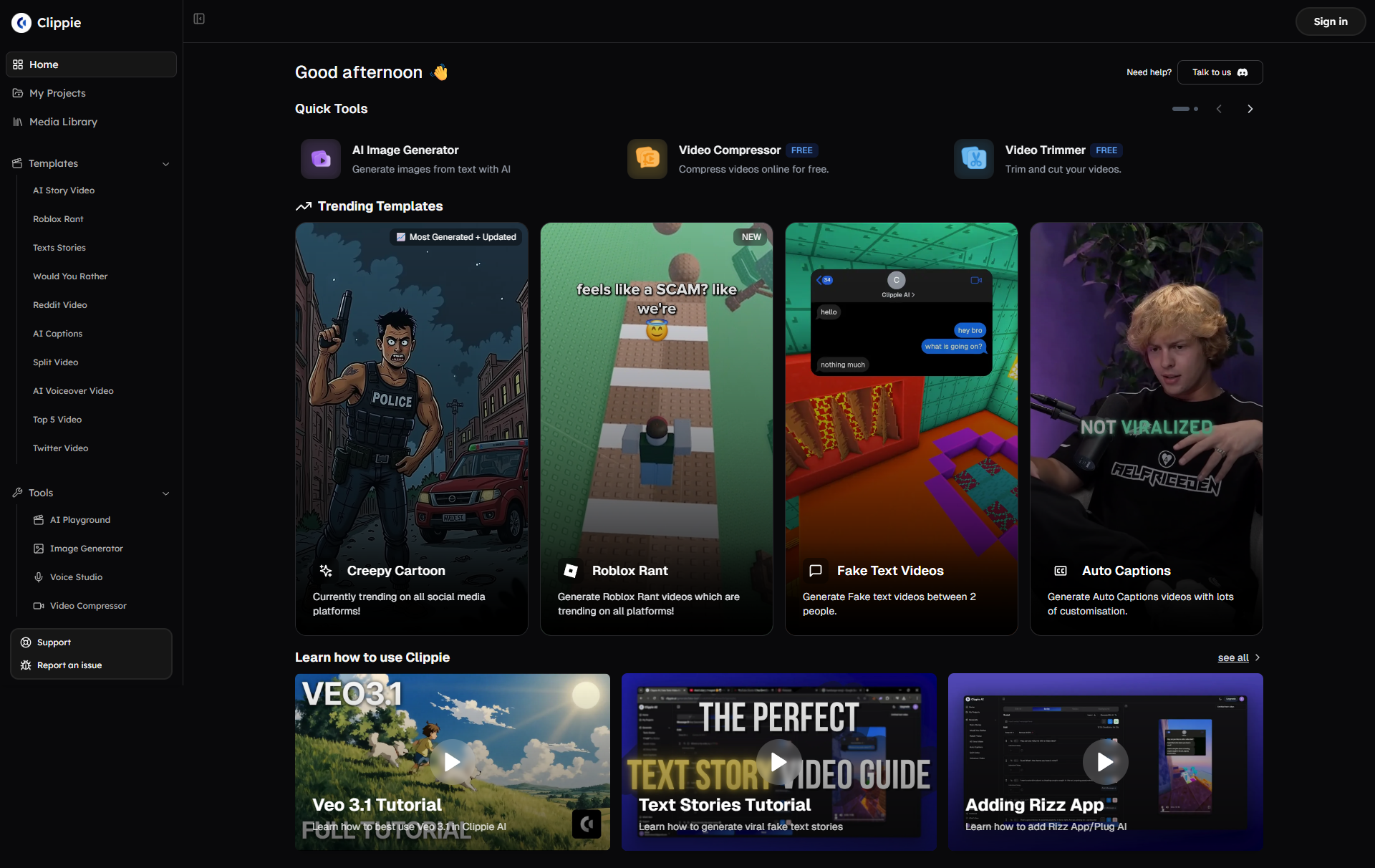
Clippie AI is the fastest way to create high-quality, policy-compliant content that accelerates your path to YouTube monetization while maintaining the professional standards that increase approval likelihood. Whether you're building toward qualification thresholds or optimizing your approved channel for maximum revenue, start creating with Clippie today, and experience how efficiently you can produce the content volume and quality that YouTube rewards.
Start Your Free Clippie Trial Now and begin your journey toward sustainable YouTube income. Your future monetized channel starts with the strategic content creation decisions you make today.
Related Blog Posts
1. YouTube Algorithm Secrets: How to Get More Views and Subscribers in 2025: Master the complete YouTube algorithm including recommendation systems, search optimization, and retention strategies that drive channel growth from zero to monetization thresholds faster than most creators think possible.
2. Complete Guide to YouTube Shorts Strategy: From Zero to Viral Success: Discover the specific strategies for leveraging YouTube Shorts to accelerate subscriber growth, drive traffic to long-form content, and potentially qualify for monetization through the Shorts path faster than traditional content approaches.
3. Maximizing YouTube Revenue: Beyond AdSense Income Strategies for Creators: Explore every monetization pathway available to YouTube creators including channel memberships, Super Chat optimization, merchandise integration, affiliate marketing, brand partnerships, and digital product creation that diversifies income beyond ad revenue alone.
Make an AI story video
Write a script or let AI write one. Clippie turns it into a narrated video with AI scenes, voiceover and captions.
Read more

How to Make Top 5 Ranking Videos in 2026 (Step-by-Step)
Build ranking Shorts that can still earn: pick a debatable topic, set clear criteria, source clips you may use, script the countdown, add your commentary.

How to Create Short-Form Videos Using AI: 8 Steps (2026)
A beginner workflow for AI videos on TikTok, Reels and Shorts: pick a format, script a hook, add visuals, voice and captions, export at 9:16, label AI.
7 Free CapCut Alternatives for Short-Form Video (2026)
Compare Edits, YouTube Create, VN, Clipchamp, Canva, DaVinci Resolve and Shotcut: what each gives free users, what it caps first and where it falls short.