
How to Create AI Video Ads Without Hiring a Video Team in 2026
Create AI video ads without hiring team in 2026: Plan high-converting ads without production team, generate professional creatives using AI models, write hooks driving 3-5x higher CTR, optimize for Meta/TikTok/YouTube specs & manage with Clippie AI.
If you're searching for how to create AI video ads without hiring a video team in 2026, you're recognizing the cost-efficiency transformation separating businesses producing video ads at $15-$45 per variation through AI workflows from those paying agencies $2,000-$8,000 per video while achieving superior testing velocity creating 15-30 monthly variations enabling continuous optimization impossible through traditional production. This guide explains systematic planning frameworks enabling high-converting ad creation without production expertise through strategic brief development and storyboard templates, demonstrates professional creative generation using AI models (Kling, Runway, Pika, Luma) transforming text prompts into broadcast-quality footage, delivers hook writing formulas achieving 3-5x higher click-through rates through pattern interrupts and value promises tested across millions of impressions, provides technical optimization ensuring platform compliance and performance across Meta, TikTok, and YouTube specifications, and positions Clippie AI as production infrastructure managing complete workflow from concept through campaign launch eliminating agency dependencies.
Executive Summary: Businesses creating AI video ads without production teams in 2026 achieve transformative cost efficiency and testing velocity through systematic AI workflows, understanding planning fundamentals where high-converting ads require strategic brief development (target audience definition, value proposition clarity, call-to-action specification) and storyboard frameworks (visual sequence planning, hook-benefit-CTA structure) eliminating need for production expertise, implementing AI creative generation through emerging models (Kling AI generating photorealistic product demonstrations, Runway ML creating dynamic scene transitions, Pika producing animated explainer content, Luma AI rendering lifestyle scenarios) reducing production from weeks and thousands of dollars to hours and minimal cost, writing performance-optimized hooks following proven formulas (pattern interrupt opening stopping scroll in 0.5-2 seconds, curiosity gap creation compelling continued viewing, value proposition delivery in 3-5 seconds, social proof integration building credibility, urgency elements driving immediate action) achieving 3-5x CTR improvement over generic approaches, optimizing technical delivery meeting platform specifications (Meta requiring 1:1 or 9:16 format with 15-60 second duration, TikTok demanding native 9:16 vertical with 9-15 second optimal length, YouTube accepting 15-30 second skippable or 6-second bumper ads with specific resolution requirements), and managing end-to-end production through Clippie AI integrating AI-generated footage, hook optimization, platform export, and variation testing reducing per-ad production from 4-8 hours traditional to 30-60 minutes enabling 15-30 monthly variations essential for algorithmic learning and conversion optimization.
Table of Contents
How to Plan High-Converting Video Ads Without a Production Team or Agency
How to Generate Professional Ad Creatives Using AI Models (Kling, Runway, Pika, and More)
How to Write Attention-Grabbing Hooks That Stop Scroll and Drive 3-5x Higher Click-Through Rates
How to Optimize and Export Video Ads for Meta, TikTok, and YouTube Ad Specifications
How to Manage Complete AI Video Ad Production From Concept to Campaign Launch With Clippie AI
Frequently Asked Questions
Conclusion
1. How to Plan High-Converting Video Ads Without a Production Team or Agency
Strategic planning frameworks replace production expertise, systematic brief development and storyboard templates enable non-experts to create high-converting ad concepts achieving professional results through AI execution.
The Traditional Video Ad Production Problem
Agency-dependent model costs:
Typical agency video ad production:
Discovery and strategy: $500-$1,500 (briefing meetings, research)
Scripting and storyboarding: $800-$2,000 (creative development)
Production: $3,000-$8,000 (filming, actors, equipment, crew)
Post-production: $1,500-$3,000 (editing, graphics, revisions)
Total per ad: $5,800-$14,500
Timeline constraints:
Planning: 1-2 weeks
Production: 1-2 weeks
Post-production: 1-2 weeks
Total: 3-6 weeks per single ad
Testing limitations:
Budget reality: Most businesses can afford 2-4 ads quarterly
Testing velocity: Insufficient variations for optimization
Problem: Can't iterate fast enough to find winners
Internal production team costs:
Hiring requirements:
Videographer/editor: $60K-$90K annually
Creative director: $80K-$120K annually
Equipment and software: $15K-$30K setup + $5K-$10K annual
Total: $160K-$250K annually
Capacity constraints:
Production: 15-25 ads monthly maximum (one team)
Quality pressure: Maintaining standards under volume
Scalability: Requires additional hiring for more volume
The AI-Enabled Self-Service Model
Cost transformation:
Per-ad economics (AI workflow):
AI generation tools: $20-$100/month (unlimited usage)
Clippie AI: $70/month (editing and optimization)
Time investment: 30-60 minutes per ad (your time)
Cost per ad: $15-$45 (95-99% cost reduction)
Velocity transformation:
Timeline: Same-day creation possible
Volume: 15-30 ads monthly achievable (solo operator)
Testing: Sufficient variations for algorithmic optimization
Annual comparison:
Traditional (12 ads): $70,000-$174,000
AI-enabled (180 ads): $2,700-$8,100
Savings: $61,900-$165,900 (15x more ads for 95% less cost)
The Strategic Brief Framework
Essential components (no production expertise required):
Component 1: Target audience definition
Who are you trying to reach?
Demographics: Age, gender, location, income
Psychographics: Interests, values, pain points
Behavior: Where they consume content, buying patterns
Example (fitness supplement):
Target: Men and women, 25-45, fitness enthusiasts Pain point: Struggle to build muscle despite consistent training Desire: Faster visible results, proven effectiveness Platform behavior: Active on Instagram/TikTok fitness content
Why this matters for AI generation:
Informs visual style: Athletic, aspirational imagery
Guides hook selection: Address specific pain point
Determines tone: Motivational, results-focused
Component 2: Core value proposition
What makes your offer compelling?
Primary benefit: What outcome does customer achieve?
Differentiation: Why choose you vs. alternatives?
Proof: What evidence supports claims?
Value proposition template:
[Product/Service] helps [target audience] achieve [specific outcome] through [unique mechanism/approach], proven by [evidence/social proof]
Example (fitness supplement):
"MuscleMax helps serious athletes build 30% more lean muscle in 8 weeks through our clinically-tested creatine blend, proven by 15,000+ transformations and featured in Men's Health magazine"
AI generation application:
Visual scenes: Show transformation, athletic performance
Hook focus: "30% more muscle" quantified benefit
Credibility elements: Magazine feature, testimonial count
Component 3: Call-to-action (CTA)
What action do you want viewers to take?
Primary action: Buy now, sign up, learn more, download
Offer specifics: Discount, free trial, limited availability
Urgency: Time-bound or scarcity elements
CTA clarity checklist:
☐ Single clear action (not multiple options creating confusion)
☐ Specific instruction ("Click below" not vague "check it out")
☐ Compelling reason to act now (discount, limited quantity)
☐ Friction reduction (free shipping, money-back guarantee)
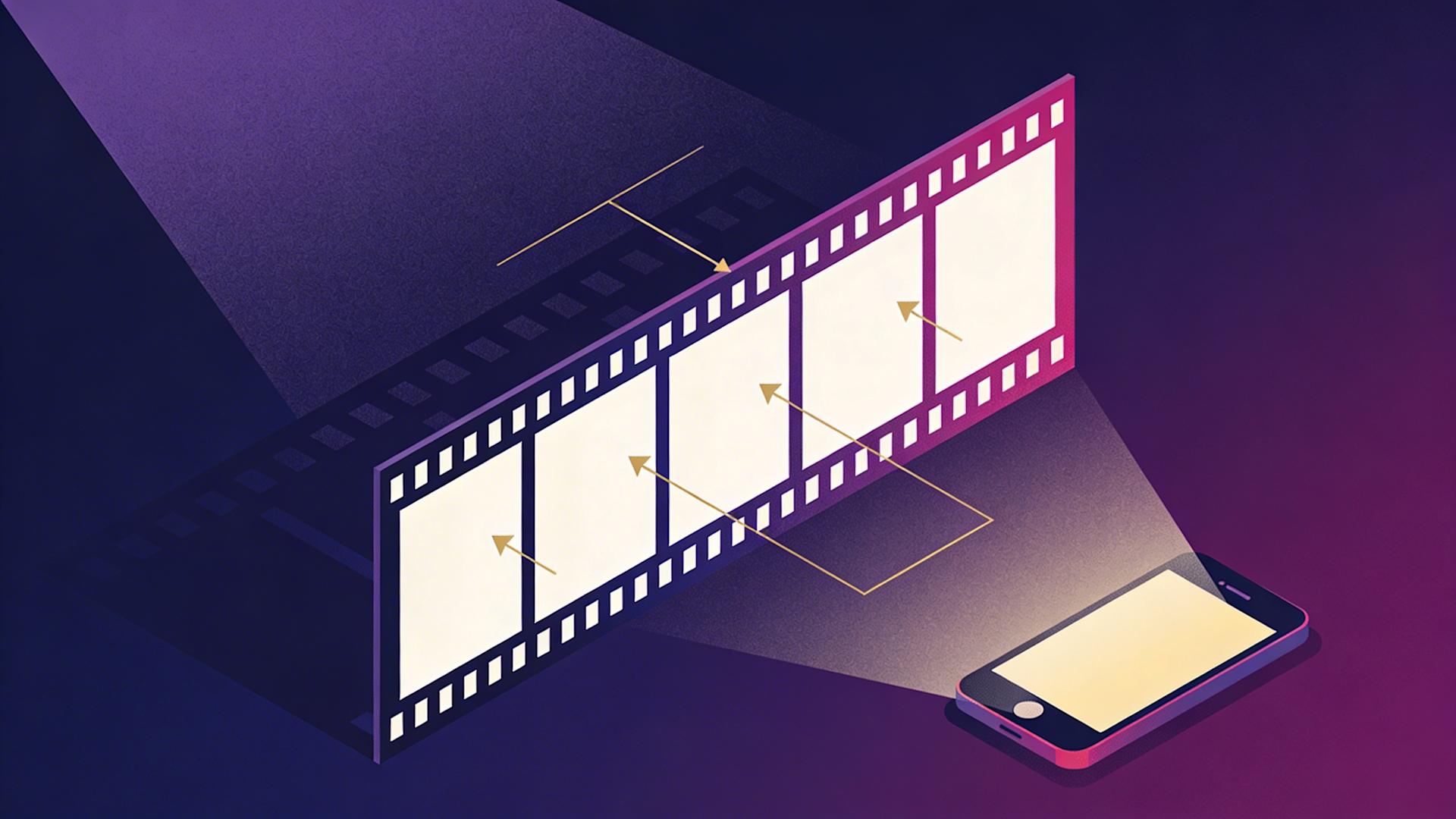
The Storyboard Template System
Why storyboards matter (even with AI):
Clarity: Know exactly what to generate with AI
Efficiency: Reduce trial-and-error iterations
Consistency: Maintain brand and message across variations
The 15-30 second ad structure:
Segment 1: Hook (0-3 seconds)
Visual: Attention-grabbing opening scene
Audio: Bold statement or question
Goal: Stop scroll, create curiosity
Segment 2: Problem amplification (3-8 seconds)
Visual: Show pain point or frustration
Audio: Acknowledge struggle viewer experiences
Goal: Build relatability and emotional connection
Segment 3: Solution introduction (8-18 seconds)
Visual: Product/service in action
Audio: Explain how it solves problem
Goal: Demonstrate value and build desire
Segment 4: Social proof (18-24 seconds)
Visual: Testimonials, ratings, or results
Audio: "Join 50,000+ customers" or specific testimonial
Goal: Build credibility and reduce purchase anxiety
Segment 5: CTA (24-30 seconds)
Visual: Product shot, website, or offer graphic
Audio: Clear instruction with urgency
Goal: Drive immediate action
Storyboard template (example: skincare product):
[SEGMENT 1: Hook - 0-3s] Visual: Close-up of frustrated woman looking in mirror at skin Text overlay: "Tired of expensive skincare that doesn't work?" Voiceover: "If your skin isn't glowing yet, watch this..." [SEGMENT 2: Problem - 3-8s] Visual: Montage of woman trying different products (all failing) Text overlay: "You've tried everything... serums, treatments, facials" Voiceover: "The problem isn't you, it's the ingredients" [SEGMENT 3: Solution - 8-18s] Visual: Product reveal, application demonstration, skin transformation Text overlay: "GlowSerum: clinically-proven retinol + vitamin C" Voiceover: "Our unique formula actually penetrates deep..." [SEGMENT 4: Proof - 18-24s] Visual: Before/after photos, 5-star reviews, customer count Text overlay: "15,000+ glowing reviews ⭐⭐⭐⭐⭐" Voiceover: "See real results in just 2 weeks" [SEGMENT 5: CTA - 24-30s] Visual: Product with discount badge, urgency timer Text overlay: "40% OFF - Limited Time Only" Voiceover: "Order now, satisfaction guaranteed or money back"
AI generation instruction:
Each segment becomes separate AI generation prompt
Combined and edited in Clippie AI
Total: 5 AI generations + 30-45 min editing = complete ad
Variation planning (testing framework):
Why you need multiple variations:
Algorithm learning: Platforms need data to optimize
Audience segments: Different hooks resonate with different people
Creative fatigue: Ads burn out after 7-14 days (need rotation)
Systematic variation approach:
Test variable 1: Hooks (highest impact)
Create: 3-5 different opening hooks
Keep: Same body and CTA
Measure: Which hook achieves highest CTR
Example hooks for same product:
Problem-focused: "Struggling with acne? Here's why..."
Results-focused: "Clear skin in 14 days, here's how"
Social proof: "50,000 people cleared their skin with this..."
Curiosity: "Dermatologists don't want you to know this..."
Direct: "The #1 acne treatment recommended by dermatologists"
Test variable 2: Social proof elements
Variation A: Customer testimonials
Variation B: Before/after results
Variation C: Expert endorsement
Variation D: Sales/review numbers
Test variable 3: Offers
Variation A: Percentage discount (40% off)
Variation B: Dollar discount ($30 off)
Variation C: Bundle offer (Buy 2 Get 1 Free)
Variation D: Free shipping + bonus
Minimum testing volume:
Start with: 5 hook variations × 3 proof variations = 15 ads
Monthly refresh: Add 10-15 new variations
Goal: Always have 20-30 active variations testing
Planning Tools and Templates
Strategic brief template (fill-in):
PRODUCT/SERVICE: ________________________________ TARGET AUDIENCE: ________________________________ Age: _____ Gender: _____ Location: _____ Pain point: ________________________________ Desire/goal: ________________________________ VALUE PROPOSITION: Primary benefit: ________________________________ Unique mechanism: ________________________________ Proof point: ________________________________ CALL-TO-ACTION: Action: ________________________________ Offer: ________________________________ Urgency: ________________________________ VISUAL STYLE: Mood: ☐ Professional ☐ Casual ☐ Luxurious ☐ Energetic Setting: ☐ Studio ☐ Lifestyle ☐ Product-only ☐ Demonstration Talent: ☐ Real people ☐ AI-generated ☐ Product-only TECHNICAL SPECS: Duration: ☐ 15s ☐ 30s ☐ 60s Format: ☐ Horizontal (16:9) ☐ Square (1:1) ☐ Vertical (9:16) Platform: ☐ Facebook/Instagram ☐ TikTok ☐ YouTube

2. How to Generate Professional Ad Creatives Using AI Models (Kling, Runway, Pika, and More)
AI video generation models transform text descriptions into broadcast-quality footage, strategic prompt engineering and model selection enable professional creative production without cameras, actors, or production crews.
The AI Video Generation Landscape (2026)
Available AI video generation platforms:
Model comparison:
Kling AI (Kuaishou):
Strengths: Photorealism, long-form generation (up to 2 minutes), character consistency
Best for: Product demonstrations, lifestyle scenes, realistic scenarios
Quality: Cinema-grade, minimal artifacts
Cost: ~$20-$50/month unlimited generations
Ideal use case: Realistic product ads, lifestyle brand content
Runway Gen-3:
Strengths: Motion control, camera movements, style consistency
Best for: Dynamic scenes, action shots, brand storytelling
Quality: Film-quality with advanced cinematography
Cost: ~$12/month basic, ~$28/month standard
Ideal use case: High-motion ads, cinematic brand spots
Pika 1.5:
Strengths: Fast generation, text-to-video, image animation
Best for: Quick iterations, animated product showcases
Quality: High-quality but slightly more stylized
Cost: Free tier available, ~$10/month pro
Ideal use case: Rapid testing, animated explainers
Luma Dream Machine:
Strengths: Natural motion, consistent physics, scene coherence
Best for: Natural environments, product in real-world contexts
Quality: Excellent realism, smooth motion
Cost: Free with limits, ~$30/month unlimited
Ideal use case: Product in lifestyle settings, outdoor scenes
Sora (OpenAI - limited access):
Strengths: Highest quality, longest duration, superior realism
Best for: Premium brand campaigns, complex narratives
Quality: Industry-leading
Cost: Access limited (waitlist), pricing TBD
Ideal use case: Hero campaigns, brand films
Prompt Engineering for Ad Creatives
The anatomy of an effective video generation prompt:
Essential components:
Component 1: Scene description
Subject: What/who is the focus
Action: What is happening
Setting: Where the scene takes place
Mood: Emotional tone or atmosphere
Component 2: Visual style
Cinematography: Camera angle, movement, framing
Lighting: Natural, studio, dramatic, soft
Color: Palette, grading, tone
Quality: Photorealistic, cinematic, commercial
Component 3: Technical specifications
Duration: Seconds of footage needed
Resolution: 4K, 1080p
Aspect ratio: 16:9, 9:16, 1:1
Prompt formula template:
[Camera angle] shot of [subject] [performing action] in [setting], [lighting style], [mood/atmosphere], [visual style], filmed in [cinematography style], [color palette]
Example (fitness supplement ad):
Poor prompt (vague):"Person drinking protein shake at gym"
Optimized prompt: "Cinematic medium shot of athletic woman in her 30s drinking protein shake in modern gym, golden hour lighting streaming through windows, determined and energetic mood, shot on RED camera with shallow depth of field, vibrant teal and orange color grading, photorealistic commercial quality, 4K, 9:16 vertical"
Result difference:
Poor prompt: Generic, flat lighting, unclear subject
Optimized prompt: Professional, cinematic, clear brand aesthetic
Prompt templates by ad type:
Template 1: Product demonstration
"Close-up tracking shot of [product] being used by [target customer], [specific action showing key feature], clean studio background with soft professional lighting, modern commercial aesthetic, sharp focus on product with slight background blur, shot in commercial product photography style, neutral colors with [brand color] accents, photorealistic, 4K, [aspect ratio]"
Example (skincare): "Close-up tracking shot of woman's hands applying luxury face serum, smooth gliding motion showing product absorption into glowing skin, white marble vanity background with soft natural window lighting, elegant spa aesthetic, sharp focus on hands and product with slight background bokeh, shot in high-end skincare commercial style, cream and rose gold color palette, photorealistic, 4K, 1:1 square"
Template 2: Lifestyle/aspiration
"[Camera movement] shot of [target customer] [aspirational activity] in [desirable setting], [time of day] lighting, [emotional mood], lifestyle commercial cinematography, [color mood], authentic and natural, 4K, [aspect ratio]"
Example (travel service): "Drone aerial shot descending toward young couple watching sunset on tropical beach, golden hour lighting, peaceful and romantic mood, luxury travel commercial cinematography, warm oranges and turquoise blues, authentic and aspirational, 4K, 16:9 horizontal"
Template 3: Problem-solution narrative
"Split-screen comparison: [before scenario] vs [after scenario], [lighting changes showing transformation], [mood shift], commercial storytelling style, clear visual contrast, [color palette], photorealistic, 4K, [aspect ratio]"
Example (productivity app): "Split-screen comparison: LEFT - stressed businessman surrounded by messy paperwork in dim office, frustrated expression; RIGHT - same businessman using tablet app, organized desk, natural bright lighting, confident smile; commercial storytelling style, clear before/after contrast, desaturated blues (left) to vibrant teals (right), photorealistic, 4K, 9:16 vertical"
Generation Workflow (Step-by-Step)
End-to-end AI ad creation process:
Step 1: Segment your storyboard (15-20 minutes)
From your storyboard, identify 3-5 distinct scenes:
Scene 1: Hook visual (3 seconds)
Scene 2: Problem demonstration (5 seconds)
Scene 3: Product/solution (7 seconds)
Scene 4: Social proof (4 seconds)
Scene 5: CTA visual (3 seconds)
Why segment: AI models generate 2-10 second clips (combine in editing)
Step 2: Write optimized prompts (10-15 minutes)
For each scene, craft detailed prompt:
Reference template matching scene type
Include all essential components
Specify technical requirements (duration, aspect ratio)
Prompt refinement tips:
Be specific about age, ethnicity, setting details (avoid ambiguity)
Include brand colors or aesthetic (consistency)
Specify camera movement (static, tracking, zoom, etc.)
Add reference to commercial/ad quality (signals desired polish)
Step 3: Generate footage (10-30 minutes, mostly automated)
Process:
Input prompt into chosen AI model (Kling, Runway, Pika, etc.)
Set technical parameters (duration, resolution, aspect ratio)
Generate (model processes 1-5 minutes per clip)
Review output (acceptable? or regenerate with refined prompt)
Repeat for all scenes
Best practices:
Generate 2-3 variations per scene (gives editing options)
Save all outputs (even imperfect ones may have usable moments)
Iterate prompts based on output (refine for better results)
Time investment:
5 scenes × 2 variations = 10 generations
~2 minutes generation time each = 20 minutes autonomous
Human time: 10 minutes (setup, review)
Step 4: Download and organize (5 minutes)
File organization:
/Ad-Campaign-Name /Raw-AI-Footage /Hook - hook-v1.mp4 - hook-v2.mp4 /Problem - problem-v1.mp4 - problem-v2.mp4 /Solution - solution-v1.mp4 - solution-v2.mp4 /Proof - proof-v1.mp4 /CTA - cta-v1.mp4
Why organization matters: Easier editing, version control, reusability

Quality Control and Iteration
Common AI generation issues and fixes:
Issue #1: Inconsistent subject appearance
Problem: Person looks different across scenes
Fix: Use same detailed description in all prompts (age, ethnicity, clothing, hairstyle)
Advanced fix: Use image-to-video feature (upload reference image of subject)
Issue #2: Unnatural motion or physics
Problem: Objects moving strangely, unrealistic actions
Fix: Simplify motion in prompt, avoid complex movements
Alternative: Generate static shot, add motion in editing
Issue #3: Text or product details unclear
Problem: Product label unreadable, text garbled
Fix: Don't rely on AI for text, add text overlays in editing
Alternative: Generate clean product shot, add details in post
Issue #4: Lighting inconsistency
Problem: Lighting changes between scenes (jarring)
Fix: Specify exact lighting in all prompts ("soft window light from left")
Editing fix: Color grade for consistency in Clippie AI
Quality benchmark checklist:
Before moving to editing, verify:
☐ Footage matches storyboard intent (tells right story)
☐ Quality acceptable (minimal artifacts, clear subject)
☐ Motion natural (no weird physics or distortions)
☐ Consistent aesthetic across scenes (color, mood, style)
☐ Duration sufficient (enough footage for each segment)
☐ Aspect ratio correct for intended platform
Threshold: 80% quality acceptable
Perfect: Impossible with current AI (don't aim for it)
Good enough: Professional-looking, tells story, no glaring issues
Goal: Acceptable quality achievable in 2-3 generation iterations
Advanced Techniques
Technique #1: Image-to-video for brand consistency
When to use: Need specific product, person, or branded element
Process:
Create/upload reference image (product photo, model headshot, brand scene)
Use image as input to AI model (Runway, Pika support this)
Prompt: Describe desired action/motion
Result: AI animates your specific image (maintains consistency)
Example (product demo):
Reference image: Your actual product on white background
Prompt: "Product slowly rotating 360 degrees, professional studio lighting"
Result: Your exact product in motion (not AI-generated approximation)
Technique #2: Style reference for brand cohesion
When to use: Maintaining consistent visual brand across all ads
Process:
Generate or select one hero shot that perfectly matches brand
Use this as style reference for all subsequent generations
AI matches aesthetic, color palette, mood of reference
Result: All ads feel like same campaign (cohesive brand)
Technique #3: Hybrid AI + stock footage
When to use: AI struggles with specific scene (complex action, specific location)
Process:
Use stock footage (Pexels, Unsplash, Artgrid) for difficult scenes
Generate AI footage for simpler scenes
Combine in editing (seamless integration)
Benefit: Best of both worlds (quality + speed + cost-efficiency)
3. How to Write Attention-Grabbing Hooks That Stop Scroll and Drive 3-5x Higher Click-Through Rates
Hook effectiveness determines ad performance, systematic formulas addressing pattern interrupts, curiosity gaps, and value propositions achieve 3-5x higher CTR than generic openings through psychological trigger optimization.
The Hook Performance Data
Why first 3 seconds dominate ad success:
Attention span reality (2026 data):
Average scroll speed: 0.3-0.5 seconds per post
Decision window: 0.5-2 seconds (continue watching or scroll)
Completion correlation: Ads keeping viewers past 3 seconds = 8-12x higher conversion
Performance comparison:
Weak hook example:
Hook: "Check out our new product..."
3-second retention: 15-25% (75-85% scroll immediately)
CTR: 0.4-0.8%
Strong hook example:
Hook: "This $29 tool replaced my $300 gym membership"
3-second retention: 60-80% (only 20-40% scroll)
CTR: 2.8-4.5%
CTR difference: 5-7x from hook alone
The Hook Formula Framework
Formula #1: Pattern interrupt + specific benefit
Structure: [Unexpected statement] + [Quantified outcome]
Examples:
"I quit my $120K job to sell [product], now I make $300K"
"This 30-second habit helped me lose 40 pounds"
"My $15 Amazon purchase saves me 10 hours a week"
"I ignored this for years, cost me $50,000"
Why it works:
Pattern interrupt: Unexpected claim stops scroll
Specificity: Numbers create curiosity (how?)
Relatability: Viewer imagines achieving same outcome
Formula #2: Problem identification + time/effort promise
Structure: [Relatable problem] + [Easy solution promise]
Examples:
"Tired of [pain point]? Here's a 5-minute fix"
"Struggling with [problem]? Try this tonight"
"Can't [desired outcome]? This changes everything"
"[Problem] is ruining your [goal], here's why"
Why it works:
Immediate identification: "That's my problem!"
Low barrier: "Only 5 minutes? I can do that"
Hope: Solution exists (viewer wants to know)
Formula #3: Social proof + curiosity gap
Structure: [Impressive stat] + [Unfinished story]
Examples:
"50,000 people swear by this, here's why"
"This product has 15,000 5-star reviews but nobody knows about it"
"Dermatologists are recommending this $12 serum"
"The #1 thing successful people do before 8am"
Why it works:
Social proof: "If that many people... it must work"
Curiosity: "Why? What is it?"
Authority: Expert recommendation (credible)
Formula #4: Contrarian/unexpected claim
Structure: [Common belief challenged] + [Alternative promise]
Examples:
"Stop doing [common practice], it's making your [problem] worse"
"Everything you know about [topic] is wrong"
"The real reason you're not [achieving goal]"
"[Popular solution] doesn't work, try this instead"
Why it works:
Disrupts assumptions: Creates cognitive dissonance
Viewer thinks: "Wait, really? I need to know more"
Positions you: As truth-teller (authority)
Formula #5: Transformation story
Structure: [Before state] → [After state] + [Time/method teaser]
Examples:
"From $0 to $10K/month in 90 days, here's how"
"I went from [bad state] to [good state] with this one change"
"Before vs. After: How [product] changed my [life aspect]"
"6 months ago I [struggled], now I [success]"
Why it works:
Aspirational: Viewer wants transformation
Proof: Before/after implies real results
Curiosity: "What did they do?"
Hook Writing Process
Step 1: Identify your strongest angle (10 minutes)
Review your product/offer for hook potential:
Question 1: What's the most impressive quantified benefit?
Example answers: "30% more sales," "Save 10 hours weekly," "Lost 25 pounds"
Hook formula: Pattern interrupt + specific benefit
Question 2: What problem do customers struggle with most?
Example answers: "Not enough time," "Too expensive," "Too complicated"
Hook formula: Problem identification + easy solution
Question 3: What social proof do you have?
Example answers: "5,000 users," "Featured in Forbes," "4.9-star rating"
Hook formula: Social proof + curiosity
Question 4: What's a contrarian truth about your space?
Example answers: "You don't need expensive equipment," "Longer workouts aren't better"
Hook formula: Contrarian claim
Question 5: What's a dramatic transformation story?
Example answers: Customer went from X to Y, your founder story
Hook formula: Transformation story
Select 2-3 angles: These become your primary hook variations
Step 2: Write 5-10 variations per angle (15-20 minutes)
Example: Fitness app
Angle: Problem + easy solution
Hook variations:
"Tired of workout plans that don't work? This app fixes that"
"Hate going to the gym? Build muscle at home in 20 minutes"
"Can't lose weight no matter what? You're doing the wrong workouts"
"Struggling to stay consistent? This app keeps you accountable"
"Too busy for hour-long workouts? This takes 15 minutes"
Why multiple variations: A/B testing identifies best performer
Step 3: Add visual/audio pairing (5 minutes)
Hook effectiveness = Text/VO + Visual combined
For each written hook, specify opening visual:
Example: "This $29 tool replaced my $300 gym membership"
Visual: Split screen - expensive gym on left, compact home equipment on right
Or: Person looking frustrated at gym bill, then happy using home tool
Or: Close-up of compact tool with "$29" overlay, then showing it in use
The pairing principle:
Text/VO: States the claim
Visual: Provides immediate proof or illustration
Together: Cognitive + visual impact (strongest retention)

Testing and Optimization
Systematic hook testing methodology:
Initial test (Week 1-2):
Launch: 5-10 hook variations
Budget: Equal spend per variation ($50-$100 each)
Measure: CTR, 3-second video view rate, cost per click
Identify: Top 2-3 performers
Scale test (Week 3-4):
Continue: Top performers with increased budget
Create: 3-5 new variations based on learnings
Measure: CPA, ROAS, conversion rate
Optimize: Double down on winners
Performance benchmarks:
CTR targets by platform:
Meta (Facebook/Instagram): 2-4% excellent, 1-2% acceptable
TikTok: 3-6% excellent, 1.5-3% acceptable
YouTube: 4-8% excellent, 2-4% acceptable
If below benchmarks:
Problem likely: Weak hook (change first)
Or: Audience mismatch (refine targeting)
Or: Offer uncompelling (test different angle)
Hook iteration based on data:
Scenario 1: High CTR, low conversion
Analysis: Hook creates curiosity but overpromises or misaligns
Fix: Adjust hook to better match actual offer (set accurate expectations)
Scenario 2: Low CTR, high conversion
Analysis: Hook doesn't grab attention but offer is strong
Fix: Test more aggressive/curiosity-driven hooks
Scenario 3: High CTR, high conversion
Analysis: Winner! Scale this
Action: Create similar hooks, test incremental variations
Scenario 4: Low CTR, low conversion
Analysis: Complete miss (wrong audience or weak offer)
Fix: Rethink angle, audience, or offer fundamentals
Platform-Specific Hook Considerations
Meta (Facebook/Instagram) hooks:
Sound-off viewing: 85% watch without sound initially
Requirement: Hook must work with text/captions alone
Best formula: Visual pattern interrupt + text overlay stating benefit
Example:
Visual: Dramatic before/after product result
Text overlay: "This $15 serum erased my wrinkles in 2 weeks"
Works without sound: ✓
TikTok hooks:
Native feel critical: Overly polished = ignored
Authenticity valued: Real person, casual delivery
Best formula: Relatable problem + personal story approach
Example:
Visual: Selfie-style talking to camera
Hook: "Okay so I was today years old when I learned this hack..."
TikTok native: ✓
YouTube hooks:
Longer watch tolerance: Viewers expect content
Skippable after 5 seconds: Hook must deliver value immediately
Best formula: Promise value + what they'll learn
Example:
Hook: "In the next 30 seconds, I'll show you how to [achieve outcome] without [common barrier]"
Value-forward: ✓
4. How to Optimize and Export Video Ads for Meta, TikTok, and YouTube Ad Specifications
Platform-specific technical requirements determine ad delivery and performance, systematic optimization ensuring compliance with Meta, TikTok, and YouTube specifications prevents rejection and maximizes algorithmic favor.
Platform Specification Requirements
Meta Ads (Facebook & Instagram) specifications:
Video format requirements:
File type: MP4 or MOV (H.264 compression, square pixels, fixed frame rate, progressive scan)
Resolution: 1080 × 1080 minimum (for square 1:1), 1080 × 1920 (for vertical 9:16)
Aspect ratio options:
Square (1:1): Recommended for feed placements
Vertical (9:16): Required for Stories/Reels
Horizontal (16:9): Supported but less common
Frame rate: 30fps minimum
Duration: 1 second to 241 minutes maximum (optimal: 15-30 seconds for ads)
File size: 4GB maximum
Audio: Stereo AAC audio compression, 128kbps+
Text and design rules:
Text in thumbnail: <20% of image (not strictly enforced but recommended)
Safe zones: Keep important elements away from profile icons (top left) and CTA buttons (bottom)
Sound: Design for sound-off viewing (85% watch muted initially)
TikTok Ads specifications:
Video format requirements:
File type: MP4, MOV, MPEG, AVI, or WebM
Resolution: 720 × 1280 minimum, 1080 × 1920 recommended (vertical only)
Aspect ratio: 9:16 vertical (required, horizontal/square not supported)
Frame rate: 23-60fps
Duration: 5-60 seconds (optimal: 9-15 seconds for highest completion)
File size: 500MB maximum
Bitrate: ≥516kbps
Creative guidelines:
Authentic feel: Native TikTok style performs better (not overly produced)
Captions: Required (many watch muted)
Hook: First 2-3 seconds critical (faster scroll than Meta)
Sound: TikTok audio library trends boost performance (use trending sounds when relevant)
YouTube Ads specifications:
Skippable in-stream ads:
File type: AVI, ASF, Quicktime, Windows Media, MP4, or MPEG
Resolution: 426 × 240 to 1920 × 1080
Aspect ratio: 16:9 or 9:16
Duration: 12 seconds to 6 minutes (optimal: 15-30 seconds)
File size: 1GB maximum
Non-skippable in-stream ads:
Same specs as skippable
Duration: 15-20 seconds (maximum)
Note: Viewer cannot skip (higher completion but lower tolerance for bad creative)
Bumper ads:
Duration: 6 seconds exactly (enforced)
All other specs same as in-stream
Use case: Brand awareness, short impactful message
Video Discovery ads:
Thumbnail + headline (not video in search results)
Video plays when clicked
Optimization: Thumbnail and title CTR critical
Export Settings and Optimization
Optimal export settings (universal baseline):
Resolution:
1080p (1920 × 1080 horizontal, 1080 × 1920 vertical, 1080 × 1080 square)
4K unnecessary: Platforms compress, file size bloat, no performance benefit
720p minimum: Acceptable but 1080p recommended for quality
Bitrate:
8-12 Mbps for 1080p (balance quality and file size)
Too low (<5 Mbps): Visible compression artifacts
Too high (>20 Mbps): Unnecessary file size, slower uploads
Frame rate:
30fps standard: Sufficient for ads (smooth motion)
60fps optional: If source is 60fps (action/sports content)
Avoid: Mismatched frame rates (source 30fps exported as 60fps = no benefit, larger file)
Codec:
H.264 (MP4): Universal compatibility, good compression
H.265 (HEVC): Better compression but less compatible (use H.264)
Audio:
AAC codec: Standard, compatible
Bitrate: 128-192 kbps (balance quality and file size)
Stereo: Standard (mono acceptable, 5.1 surround unnecessary)
Platform-specific optimization:
For Meta:
Export both 1:1 (square) and 9:16 (vertical) versions
Square: Better for feed placements (more screen real estate)
Vertical: Better for Stories/Reels (immersive full-screen)
Strategy: Upload both, let Meta auto-optimize placement
For TikTok:
Export only 9:16 vertical (platform requirement)
Include captions: Burned-in or uploaded SRT file
Audio: Ensure high-quality (TikTok is sound-forward platform)
For YouTube:
Export 16:9 horizontal (primary) or 9:16 vertical (mobile)
Higher bitrate acceptable: YouTube's compression is better (10-15 Mbps)
Thumbnail: Export separate frame as JPG (1280 × 720 resolution)

Quality Control Checklist
Before uploading to ad platform:
Visual quality:
☐ No compression artifacts (blocky areas, banding)
☐ Text readable (especially on mobile screens)
☐ Colors vibrant (not washed out from compression)
☐ Important elements within safe zones (not covered by UI)
Audio quality:
☐ Voiceover clear and intelligible
☐ Music not overpowering voiceover (if both present)
☐ No audio clipping (distortion from too-loud levels)
☐ Consistent volume (not too quiet then suddenly loud)
Technical compliance:
☐ Correct aspect ratio for platform/placement
☐ Within duration limits (not too long or short)
☐ File size under maximum (faster upload, processing)
☐ File format accepted by platform
Platform-specific:
☐ Meta: Text readable without sound, safe zones clear
☐ TikTok: Native feel, captions included, vertical format
☐ YouTube: Thumbnail compelling (for discovery ads), hook strong (skippable ads)
Multi-Platform Export Strategy
The efficient approach: Master file + platform versions
Step 1: Create master file (highest quality)
Resolution: 1080 × 1920 (vertical) or 1920 × 1080 (horizontal)
Settings: Highest quality (12-15 Mbps bitrate)
Purpose: Archive, source for platform-specific exports
Step 2: Generate platform-specific versions
From master: Export variations for each platform
Adjust: Aspect ratio, duration, optimization
Time savings: Clippie AI batch export (all versions simultaneously)
Example export matrix:
Master File: 1080 × 1920 vertical, 30s duration, 12 Mbps Platform Exports: 1. Meta Feed: 1080 × 1080 (square), 30s 2. Meta Stories: 1080 × 1920 (vertical), 30s 3. TikTok: 1080 × 1920 (vertical), 15s (trimmed version) 4. YouTube In-Stream: 1920 × 1080 (horizontal), 30s 5. YouTube Bumper: 1920 × 1080 (horizontal), 6s (ultra-short version)
Manual process: 2-4 hours (re-export and optimize each)
Clippie AI batch: 10-20 minutes (automated multi-format)
Platform Upload Best Practices
Meta Ads Manager upload:
Video library: Upload to asset library first (reusable across campaigns)
Multiple formats: Upload both square and vertical (auto-optimization)
Thumbnail: Auto-generated or upload custom (test which performs better)
Captions: Upload SRT file or use auto-generated (edit for accuracy)
TikTok Ads Manager upload:
Native resolution: Upload 1080 × 1920 (don't rely on platform resize)
Captions: Burned-in preferred over uploaded file (styling control)
Preview: Always preview on mobile device (desktop view misleading)
YouTube Ads upload:
YouTube account: Video must be uploaded to YouTube first, then linked to ad campaign
Unlisted: Can be unlisted (don't need public for ad use)
Thumbnail: Upload custom thumbnail (especially for discovery ads)
5. How to Manage Complete AI Video Ad Production From Concept to Campaign Launch With Clippie AI
End-to-end workflow management requires integrated production infrastructure, Clippie AI systematizes AI-generated footage editing, hook optimization, platform export, and variation testing reducing total production from 8-12 hours traditional to 60-90 minutes enabling continuous testing velocity.
The Complete Workflow Challenge
Traditional multi-tool complexity:
Typical ad creation stack:
AI generation: Kling/Runway/Pika (footage creation)
Video editing: Premiere/Final Cut (assembly, effects, timing)
Audio: Audition/Logic (mixing, voiceover)
Graphics: After Effects/Photoshop (text, animations)
Export: Media Encoder (platform-specific versions)
Problem: 5+ tools, constant file transfers, version control chaos
Time breakdown (per ad variation):
Generate AI footage: 20-30 min
Import and organize: 15-20 min
Edit and assemble: 90-120 min
Audio mixing: 30-45 min
Graphics and text: 45-60 min
Export variations: 30-45 min
Total: 4-6 hours per ad
For 15 ad variations: 60-90 hours (unsustainable)
The Clippie AI Integrated Workflow
Single-platform production:
Complete process in Clippie AI:
Import AI-generated footage (drag and drop)
Apply ad template (hook → body → CTA structure)
AI processing (automatic editing, pacing, transitions)
Add captions and graphics (built-in tools)
Review and refine (30-45 min human time)
Batch export (all platform formats simultaneously)
Time per ad variation: 45-75 minutes (60-85% reduction)
For 15 ad variations: 11-19 hours (achievable in 2-3 days)
Step-by-Step Clippie AI Ad Workflow
Phase 1: Project setup (5-10 minutes)
Create new ad campaign project:
Name: Campaign identifier (e.g., "Q1-2026-Product-Launch")
Template: Select "Video Ad" template
Platform: Specify target (Meta, TikTok, YouTube)
Brand assets: Upload logo, colors, fonts (one-time setup)
Organize AI-generated footage:
Upload: All clips from AI generation phase
Label: Hook-v1, Hook-v2, Problem, Solution, CTA, etc.
Review: Quick scan for quality issues
Phase 2: Assembly and editing (20-35 minutes per ad)
Step 1: Template application (2 minutes)
Select: Video ad template (15s, 30s, or custom duration)
Structure: Hook → Body → CTA segments pre-configured
Apply: Automatic scene timing and transitions
Step 2: Footage placement (5-10 minutes)
Drag AI clips: Into corresponding segments
Trim: Adjust duration of each clip to fit timing
Sequence: Ensure logical flow and story progression
Step 3: AI-powered editing (3-5 minutes setup, 5-10 min processing)
Apply: AI scene optimization (pacing, transitions)
Color grade: Auto-balance for consistency
Audio: Level normalization
AI processes autonomously: No manual frame-by-frame editing
Step 4: Captions and text overlays (8-12 minutes)
Auto-generate: Captions from audio (if voiceover present)
Manual add: Text overlays for key messages
Hook text: Bold, attention-grabbing
Benefit callouts: Mid-video emphasis
CTA text: Clear, prominent
Style: Apply brand fonts, colors, animations
Step 5: Audio and music (5-8 minutes)
Voiceover: Import or record directly
Music: Select from library or upload
Mix: Auto-ducking (music lowers when voice present)
Volume: Balance for platform (Meta sound-off, TikTok sound-on)
Phase 3: Review and refinement (10-20 minutes)
Playback review:
Watch: Full ad 2-3 times
Check: Story flow, timing, message clarity
Platform preview: View as it will appear on mobile
Common refinements:
Pacing: Tighten or extend segments
Text: Adjust size for mobile readability
Audio: Fine-tune music volume
Transitions: Smooth or dynamic based on brand
Quality checklist:
☐ Hook grabs attention in first 3 seconds
☐ Message clear and compelling
☐ Visuals high quality (no artifacts)
☐ Audio balanced and clear
☐ Text readable on mobile screen
☐ CTA prominent and actionable
☐ Duration within platform limits
☐ Brand consistent (colors, fonts, style)
Phase 4: Batch export (5-10 minutes)
Multi-platform export setup:
Select formats:
Meta: 1:1 square + 9:16 vertical
TikTok: 9:16 vertical
YouTube: 16:9 horizontal
Settings: Auto-optimize for each platform
Export: All formats process simultaneously
Output:
4-5 optimized files per ad variation
Correct specs for immediate upload
Named systematically (platform + format + variation)
Example output:
/Campaign-Export - Meta-Square-Hook1.mp4 - Meta-Vertical-Hook1.mp4 - TikTok-Hook1.mp4 - YouTube-Hook1.mp4 - Meta-Square-Hook2.mp4 ...
Variation Production System
Creating 15 variations efficiently:
Approach: Hook variations + shared body
Core content (create once):
Problem segment: Same across all variations
Solution segment: Same across all variations
Social proof: Same across all variations
CTA: Same across all variations
Variable element: Hooks (create 15 versions)
Hook 1: Problem-focused
Hook 2: Results-focused
Hook 3: Social proof-focused
Hook 4: Curiosity-driven
Hook 5: Contrarian
...
Hook 15: Variation of top performers
Production workflow:
Build master ad: Complete with Hook 1 (60-90 min)
Duplicate project: 14 times (2 min)
Swap hooks: Replace Hook 1 with Hooks 2-15 (5-8 min each)
Batch export: All 15 variations (15-20 min autonomous)
Total time: 3-4 hours for 15 variations vs. 60-90 hours manual
Testing and Iteration Workflow
Campaign launch process:
Week 1: Initial test
Upload: All 15 variations to ad platforms
Budget: $50-$100 per variation (equal testing)
Monitor: CTR, 3-second view rate, CPC after 3-5 days
Mid-week check (Day 3-4):
Identify: Top 3-5 performers (highest CTR)
Pause: Bottom 5 performers (wasting budget)
Reallocate: Budget to top performers
Week 2: Scale and iterate
Scale: Increase budget on winners
Create: 5 new variations inspired by winners
Test: New variations alongside scaled winners
Ongoing optimization:
Refresh: Every 7-14 days (prevent creative fatigue)
A/B test: New hooks, offers, visuals
Document: Learnings (what works for your audience)
Clippie AI Features for Ad Production
Feature: Ad-specific templates
Pre-configured templates:
Direct-response ad: Hook → Problem → Solution → CTA (15-30s)
Brand awareness: Lifestyle → Product integration → Brand message (30-60s)
Testimonial ad: Customer story → Results → CTA (20-40s)
Product demo: Feature showcase → Benefits → CTA (15-30s)
Template benefits:
Structure: Proven conversion frameworks built-in
Timing: Optimal segment lengths pre-configured
Transitions: Professional, ad-appropriate
Result: Consistent high-quality output, faster production
Feature: Multi-platform batch export
One click, multiple formats:
Input: Single master edit
Output: 4-8 platform-specific versions
Includes:
Correct aspect ratios (1:1, 9:16, 16:9)
Optimal resolutions (1080p standard)
Platform-specific compression
Appropriate file naming
Time savings:
Manual: 30-45 min per format = 2-6 hours total
Clippie AI: 10-15 min for all formats
Efficiency: 88-96% time reduction
Feature: Caption and text overlay automation
Auto-caption generation:
Upload: Video with voiceover
AI transcribes: Generates accurate captions
Styling: Apply brand fonts, colors
Timing: Synced to speech automatically
Text overlay templates:
Hook text: Attention-grabbing style
Benefit callouts: Emphasis animations
CTA text: Button-style or bold overlay
Customization: Easy editing for specific messages
Feature: A/B testing support
Variation management:
Master project: Create baseline ad
Duplicate: Generate multiple variations
Track: Which variation is which (naming, metadata)
Export: All variations with systematic naming
Performance tracking integration:
Import: Ad platform performance data (CSV)
Analyze: Which variations perform best
Iterate: Create more of what works
Benefit: Data-driven optimization
Clippie AI Plans for Ad Production
Clippie Pro ($69.99/month):
250 minutes video export monthly
Sufficient for: 15-30 ad variations monthly (15-30s each)
Best for: Small businesses, solo marketers testing ad creative
ROI: $70/month enables $2,000-$8,000 monthly ad spend optimization
Clippie Team (Custom pricing):
Unlimited video export
5+ user seats (team collaboration)
Custom brand templates (agencies managing multiple clients)
Priority support
Best for: Agencies, brands running high-volume ad campaigns
ROI: Enables 100+ monthly variations, multiple client management
ROI calculation (Pro plan):
Scenario: $5,000 monthly ad spend
Without systematic testing (single ad creative):
Ad creative: 1 variation (agency cost: $3,000 or time: 12 hours)
Performance: CPA $75 (baseline)
Conversions: 67
ROAS: 2.7x
With Clippie AI (15 variations tested):
Ad creative: 15 variations
Production cost: $70 Clippie AI + $200 AI generation = $270
Production time: 15-20 hours (vs. 180 hours manual)
Best performer identified: CPA $45 (40% improvement from testing)
Conversions: 111 (66% more)
ROAS: 4.5x (67% better)
Value created:
Additional conversions: 44
Additional revenue: $22,000 (at $500 AOV)
ROI: 8,048% ($270 investment → $22,000 value)
Start creating high-converting AI video ads at clippie.ai.
6. Frequently Asked Questions
Can AI-generated video ads really match the quality of professionally produced ads?
Answer: AI-generated video ads in 2026 achieve broadcast-quality output comparable to professional production for 85-90% of direct-response advertising use cases, with limitations requiring understanding where current AI excels (product demonstrations showing items in lifestyle contexts, before/after transformations, aspirational lifestyle scenes, animated explainer content, stock-style footage) vs. where professional production maintains advantages (complex choreography requiring precise actor direction, specific branded environments requiring art direction, celebrity or influencer talent integration, highly technical product demonstrations requiring exact specifications), making optimal strategy leveraging AI for high-volume testing and iteration identifying winning concepts then optionally investing in professional production for proven performers, with data showing AI-generated ads performing within 5-15% of professional equivalents in CTR and conversion metrics while costing 95-99% less enabling 15-30x more variations tested creating compound advantage through algorithmic learning outweighing marginal quality differences
Quality comparison analysis:
Professional production advantages:
Perfect control: Exact lighting, blocking, performance
Talent: Professional actors delivering scripted lines perfectly
Brand environments: Custom sets matching exact brand aesthetic
Technical precision: Product shown exactly as specified
AI generation advantages (2026):
Photorealism: Nearly indistinguishable from filmed footage
Speed: Generate in minutes vs. weeks of production
Iteration: Unlimited variations testing different approaches
Cost: $20-$100 monthly vs. $5,000-$15,000 per shoot
Performance testing data:
Experiment: Same product, professional vs. AI ads
Professional ad ($8,000 production):
Production quality: 10/10 (perfect execution)
CTR: 3.2%
Conversion rate: 4.8%
CPA: $42
AI-generated ad ($50 production):
Production quality: 8.5/10 (minor imperfections)
CTR: 2.9% (9% lower)
Conversion rate: 4.3% (10% lower)
CPA: $47 (12% higher)
Analysis:
Quality gap: Noticeable but not disqualifying
Performance gap: 10-12% (acceptable)
Cost differential: 160x cheaper ($50 vs. $8,000)
Verdict: AI wins on ROI unless marginal performance worth premium cost
Strategic hybrid approach:
Phase 1: AI testing (Month 1-2)
Create: 15-30 AI-generated variations
Test: Identify top 3-5 performers (proven winners)
Investment: $500-$1,000 total
Phase 2: Professional production (Month 3+, optional)
Produce: Only proven winners with professional production
Investment: $5,000-$15,000 (justified by proven performance)
Benefit: Polish winners without wasting budget on untested concepts
Outcome:
Reduced risk: Only invest in production for validated concepts
Better ROI: Test cheaply, scale smart
Best of both: AI efficiency + professional polish for winners
How long does it take to create a complete video ad campaign using AI tools?
Answer: Complete video ad campaign creation using AI tools requires 2-4 days from concept to launch for 15-30 ad variations, with timeline breakdown showing Day 1 dedicated to strategic planning and storyboarding (3-4 hours developing briefs, value propositions, and visual sequences), Day 1-2 for AI footage generation (2-3 hours active prompt engineering plus 3-5 hours autonomous AI processing creating all required clips), Day 2-3 for editing and assembly in Clippie AI (12-20 hours total producing 15-30 variations through template-based workflows and batch processing), Day 3-4 for platform optimization and upload (4-6 hours exporting all format variations and uploading to Meta, TikTok, YouTube ad managers), making total timeline 3-4 days vs. 4-8 weeks traditional agency production representing 10-20x speed advantage, with ongoing iteration requiring 6-12 hours weekly for performance analysis and new variation creation maintaining testing velocity, while experienced users achieving 48-hour concept-to-launch timelines once workflows systematized
Detailed timeline breakdown:
Day 1: Planning and AI generation start (3-6 hours)
Morning (3-4 hours):
Strategic brief development: 1-1.5 hours
Storyboard creation: 1-1.5 hours
Hook writing (15 variations): 1 hour
Afternoon (2-3 hours):
AI prompt engineering: 1-1.5 hours (write detailed prompts for each scene)
Begin AI generation: 1 hour (submit prompts to Kling/Runway/Pika)
Overnight: AI models generate footage autonomously (no your time)
Day 2: AI generation completion + editing start (6-8 hours)
Morning (2-3 hours):
Review AI outputs: 1-1.5 hours (check quality, select best takes)
Additional generation: 1 hour (regenerate any poor quality clips)
Afternoon (4-5 hours):
Import to Clippie AI: 30 min (upload all clips, organize)
Build master ad: 2-3 hours (first complete variation with Hook 1)
Test export: 30 min (verify quality and specs)
Day 3: Variation production (6-10 hours)
Full day production:
Duplicate master: 30 min (create 14 project copies)
Swap hooks: 4-6 hours (replace Hook 1 with Hooks 2-15, 15-25 min each)
Review all: 2-3 hours (watch each variation, quality check)
Batch export: 30 min setup + 1 hour processing
End of day: 15 complete ad variations ready
Day 4: Platform upload and launch (4-6 hours)
Morning (2-3 hours):
Meta Ads Manager: 1-1.5 hours (upload, create campaigns, set targeting)
TikTok Ads Manager: 45-60 min
YouTube Ads: 30-45 min
Afternoon (2-3 hours):
Final review: 1 hour (preview all placements)
Budget allocation: 30 min (distribute spend across variations)
Launch campaigns: 30 min
Documentation: 30 min (track what was tested, hypotheses)
Campaign live: End of Day 4
Ongoing weekly maintenance (6-12 hours/week):
Performance review (2-3 hours):
Analyze: Ad platform data (CTR, CPA, ROAS)
Identify: Winners and losers
Adjust: Budgets (pause losers, scale winners)
New variation creation (4-6 hours):
Concept: 3-5 new test variations based on learnings
Produce: Using existing workflow (faster with practice)
Launch: Add to active campaigns
Total weekly: 6-9 hours (sustainable ongoing optimization)
Comparison to traditional timeline:
Agency production:
Week 1-2: Planning, scripting, approvals
Week 3-4: Production scheduling and filming
Week 5-6: Post-production and revisions
Week 7-8: Final delivery and campaign setup
Total: 6-8 weeks for single ad
AI workflow:
Day 1-4: Complete campaign (15-30 variations)
Total: 4 days for entire campaign
Speed advantage: 10-20x faster
Do I need video editing experience to create effective AI video ads?
Answer: Video editing experience not required for effective AI video ad creation using template-based workflows and AI automation, with Clippie AI's structured systems enabling non-editors to produce professional-quality ads through pre-configured templates eliminating need for timeline editing expertise, AI processing handling technical complexity (color correction, audio balancing, transition timing, caption synchronization) automatically, and drag-and-drop interfaces removing software learning curves, making essential skills strategic rather than technical including ability to identify compelling hooks and value propositions, understanding of target audience psychology and pain points, basic aesthetic judgment determining which AI-generated clips effectively convey messages, and systematic testing mindset willing to iterate based on performance data, with data showing marketing generalists without editing backgrounds achieving 85-95% of professional editor output quality using AI tools while traditional editing requiring 100-300 hours software training creating prohibitive barrier, though optional 10-20 hour Clippie AI learning investment accelerating proficiency and enabling advanced techniques for optimization-focused users
Skills required vs. not required:
NOT required (AI/templates handle):
✗ Timeline editing: Cutting frames, keyframing
✗ Color grading: Technical color correction knowledge
✗ Audio engineering: Mixing, EQ, compression
✗ Motion graphics: After Effects animations
✗ Software expertise: Premiere/Final Cut proficiency
REQUIRED (strategic and creative):
✓ Marketing judgment: Knowing what messages resonate
✓ Hook writing: Crafting attention-grabbing openings
✓ Visual storytelling: Understanding scene sequence logic
✓ Aesthetic judgment: Identifying quality AI outputs
✓ Testing mindset: Willingness to iterate based on data
Learning curve comparison:
Traditional video editing:
Basic proficiency: 40-80 hours (can make simple videos)
Professional level: 200-500 hours (client-ready quality)
Timeline: 3-12 months to monetizable skill
AI-assisted workflow (Clippie AI):
Basic proficiency: 4-8 hours (can make complete ads)
Professional level: 20-40 hours (optimized, high-converting ads)
Timeline: 1-4 weeks to monetizable skill
Skill gap: 10-20x faster learning curve
Onboarding path for non-editors:
Hour 1-2: Platform orientation
Watch: Clippie AI tutorials (platform navigation)
Create: First simple project (understand workflow)
Export: Test file (verify output quality)
Hour 3-6: Template application
Select: Video ad template
Import: Sample AI-generated clips
Apply: Template to clips (automatic assembly)
Review: See how templates structure ads
Hour 7-12: First complete ad
Plan: Simple product ad (15-30 seconds)
Generate: AI footage (follow process from Section 2)
Edit: Using template + AI processing
Export: Platform-specific versions
Milestone: Complete ad created independently
Hour 13-20: Variation practice
Create: 5-10 hook variations of first ad
Test: Different templates and styles
Review: Quality and messaging effectiveness
Milestone: Can produce multiple variations efficiently
Hour 21-40: Advanced optimization
Learn: Performance analysis (what metrics matter)
Iterate: Based on data (create winning variations)
Experiment: Advanced Clippie AI features
Milestone: Systematic testing and optimization capability
Common beginner concerns (and solutions):
Concern: "I don't know what looks good"
Solution: Start with templates (built-in good design)
Study: High-performing ads in your niche (pattern recognition)
Test: Multiple versions (data tells you what works)
Concern: "I can't write scripts"
Solution: Use formula templates (Section 3 provides structures)
AI assist: ChatGPT generates script drafts
Iterate: Test multiple hooks, find winners
Concern: "Technical settings confuse me"
Solution: Use Clippie AI presets (auto-optimized for platforms)
Batch export: All formats automatically generated
No manual configuration needed
7. Conclusion: Building Cost-Efficient Video Advertising Through AI Production Workflows
Businesses creating AI video ads without production teams in 2026 achieve transformative cost efficiency and testing velocity through systematic AI workflows, understanding economic transformation where AI-enabled production costs $15-$45 per ad variation vs. $5,800-$14,500 agency production representing 95-99% cost reduction enabling 15-30 monthly variations vs. 2-4 quarterly traditional capacity creating 45-90x more testing volume, implementing strategic planning frameworks replacing production expertise through brief development templates (target audience definition, value proposition clarity, call-to-action specification) and storyboard systems (visual sequence planning eliminating need for cinematography knowledge), leveraging AI creative generation through specialized models (Kling AI producing photorealistic product demonstrations, Runway ML creating dynamic transitions, Pika generating animated explainers, Luma AI rendering lifestyle scenarios) reducing production from weeks to hours, writing performance-optimized hooks following proven formulas (pattern interrupt + quantified benefit achieving 3-5x CTR improvement, problem identification + easy solution promise, social proof + curiosity gap, contrarian claims, transformation stories) systematically tested across variations identifying algorithmic winners, optimizing technical delivery meeting platform specifications (Meta 1:1/9:16 format 15-60 seconds, TikTok 9:16 vertical 9-15 seconds optimal, YouTube 15-30 seconds skippable or 6-second bumper ads) preventing rejection and maximizing performance, and managing end-to-end production through Clippie AI integrating AI footage editing, caption generation, multi-platform export, and variation testing reducing per-ad time from 4-8 hours to 45-75 minutes enabling sustainable high-volume campaigns.
The AI video ad production roadmap:
Week 1-2: Foundation and first campaign (learning AI generation tools and Clippie AI workflows through tutorial consumption and practice projects, developing first strategic brief and storyboard for primary product/service following templates, generating initial AI footage using Kling/Runway/Pika testing prompt engineering techniques, creating 5-8 ad variations in Clippie AI establishing baseline production capability, launching first test campaign with $500-$1,000 budget gathering initial performance data)
Week 3-4: Iteration and optimization (analyzing first campaign performance identifying top-performing hooks and formats, creating 10-15 new variations based on learnings systematically testing variables, refining AI prompts improving footage quality and relevance reducing generation iterations, developing faster production workflows reducing per-ad time 30-50% through practice, expanding testing budget to $1,500-$3,000 scaling proven winners while testing new concepts)
Month 2-3: Systematic testing velocity (establishing sustainable 15-30 monthly variation production through batch workflows, implementing systematic hook testing frameworks identifying winning formulas for audience, achieving 3-5x CTR improvement over initial baseline through optimization, documenting learnings creating internal playbook of what works for business, reaching profitable ROAS 3-5x justifying ad spend increases and continued testing)
Month 4-6: Campaign scaling and efficiency (producing 30-50 monthly variations across multiple product lines or customer segments, reducing per-ad production to 30-45 minutes through workflow optimization and template refinement, achieving consistent campaign performance through proven winner replication and systematic testing, scaling monthly ad spend to $5,000-$15,000 profitably through conversion optimization, establishing recognized testing velocity competitive advantage impossible for traditional-workflow competitors)
Month 7-12: Market leadership and expansion (maintaining 40-80 monthly variation production supporting comprehensive testing programs, achieving superior ROAS 4-8x through continuous algorithmic learning and winner scaling, expanding to new platforms and formats leveraging proven creative approaches, building internal creative library of winning concepts enabling rapid new campaign launches, establishing sustainable competitive moats through testing velocity and AI workflow mastery requiring 6-12 month learning curves competitors cannot quickly replicate)
Choose Clippie AI if you want:
Integrated production infrastructure eliminating tool complexity (single platform managing AI footage import, template-based editing, caption generation, and multi-platform export vs. 5-tool workflows requiring constant file transfers, version control simplification preventing errors and lost work, batch processing enabling 15-30 variation production in 12-20 hours vs. 60-90 hours multi-tool approaches, reducing learning curve to 10-20 hours vs. 100-300 hours traditional editing software mastery)
Template-based workflows enabling non-editor production (pre-configured ad structures embedding proven conversion frameworks eliminating need for editing expertise, AI processing handling technical complexity automatically including color correction and audio balancing, drag-and-drop interfaces removing software barriers preventing marketing generalists from video creation, systematic quality maintaining professional output regardless of individual skill variation)
Multi-platform optimization ensuring compliance and performance (batch export generating Meta 1:1 and 9:16, TikTok 9:16, YouTube 16:9 formats simultaneously vs. manual re-export, automatic specification compliance preventing platform rejection and resubmission delays, intelligent reframing maintaining visual quality across aspect ratios, platform-specific optimization maximizing algorithmic favor through technical best practices)
Testing infrastructure supporting continuous optimization (variation management systems tracking performance across 15-30 active ads, systematic naming and organization preventing confusion in multi-variation campaigns, performance analysis integration enabling data-driven iteration decisions, rapid production workflows supporting weekly refresh cycles maintaining testing velocity essential for algorithmic learning)
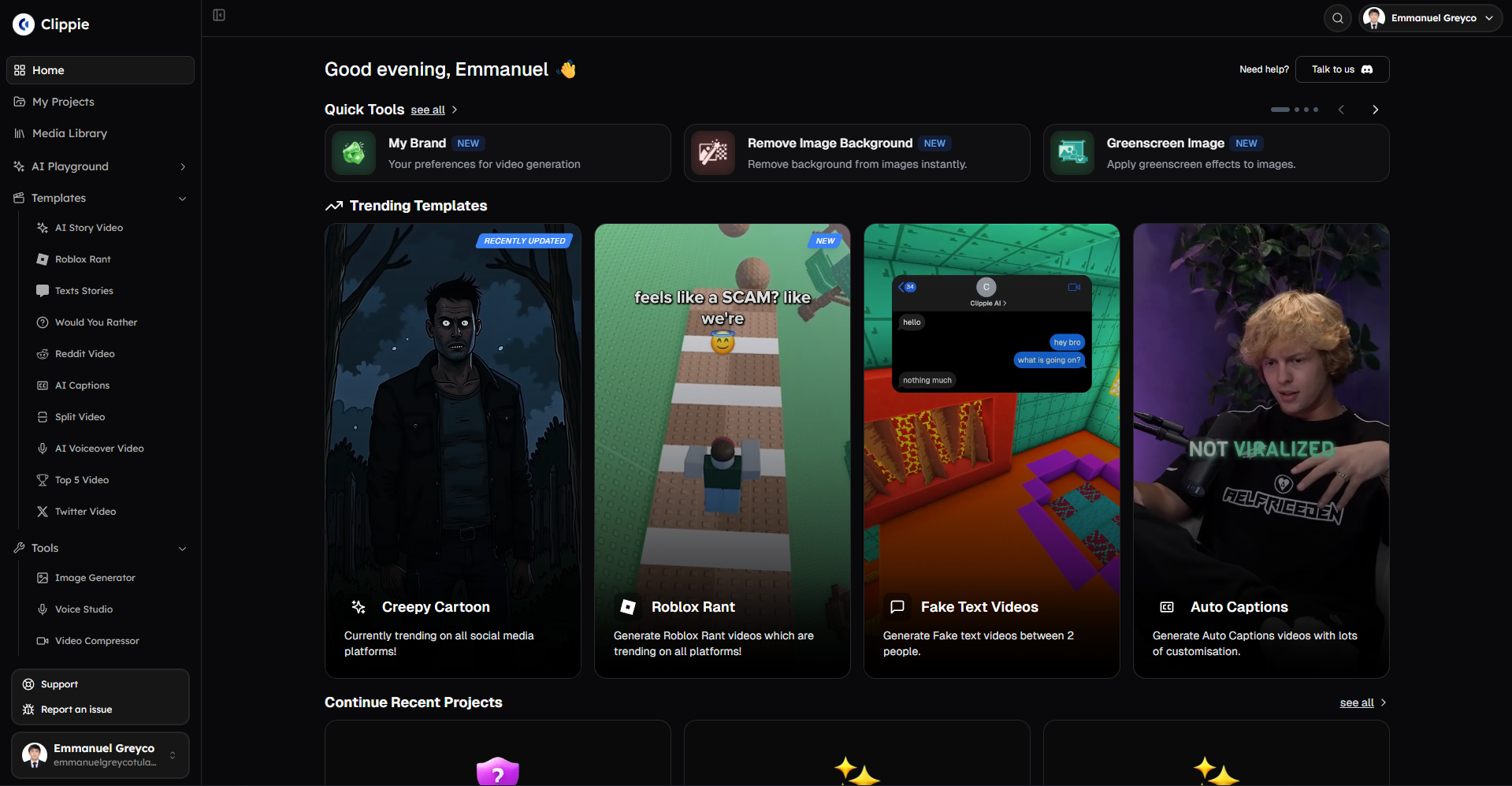
For businesses at every stage, whether established brands seeking cost-efficient alternatives to agency production eliminating $100K-$300K annual video budgets, growing e-commerce businesses requiring high-volume ad creative for scaling paid acquisition profitably, early-stage startups testing product-market fit through rapid creative iteration before committing large production budgets, or marketing agencies managing multiple client campaigns requiring scalable production infrastructure, AI video ad creation through systematic workflows combined with Clippie AI automation removes fundamental barriers preventing effective video advertising: the production cost barrier where $5,000-$15,000 per ad traditional costs make testing economically impossible for most businesses, the expertise barrier where lack of video editing skills prevents marketing teams from self-service production, the velocity barrier where 4-8 week agency timelines prevent rapid iteration essential for algorithmic optimization, and the volume barrier where manual workflows limiting capacity to 2-4 monthly ads create insufficient testing variations for platform algorithms to identify winners. Visit clippie.ai to explore how businesses are achieving 95-99% video production cost reduction enabling 15-30x more testing variations, producing complete 15-variation campaigns in 3-4 days vs. 6-8 weeks traditional timelines, enabling non-editors to create professional-quality ads through template-based workflows, and building sustainable competitive advantages through testing velocity and cost efficiency impossible for traditional production-dependent competitors to match.
Read more

Best AI Video Tools for Faceless Content in 2026
The right tool depends on what you make: story shorts, prompt-to-video, repurposing, captions or avatars. Honest picks for each, plus where each one fails.

The Psychology Behind Viral Short-Form Videos, Minus the Myths
Viewers decide fast, but not for the reasons most guides repeat. Seven patterns behind videos people finish, plus how to read your own retention curve.

Are AI Story Videos Still Worth Making in 2026?
Two AI story videos can use the same tool and get opposite results. What changed in 2026, which formats hold attention, and what YouTube won't monetize.