
Clippie AI vs Viblo: Which Is the Best AI Story Video Generator?
Complete comparison of Clippie AI vs Viblo for AI story video creation. Detailed analysis of story generation, output quality, features, scalability, and which platform is best for creators in 2026.

The AI story video explosion has transformed social media content creation throughout 2024-2025, with story-format videos, narrative content combining AI-generated visuals, synthetic voiceovers, and synchronized captions telling engaging stories, becoming one of the fastest-growing and most monetizable content formats across TikTok, YouTube Shorts, and Instagram Reels. This format's explosive success stems from multiple converging factors including viewers' demonstrated preference for narrative content over static posts or talking-head videos, AI technology finally achieving quality threshold where synthetic content appears professional and engaging rather than obviously artificial, the format's perfect fit for sound-off mobile viewing dominating social platforms, and the business model's extraordinary scalability enabling creators to produce 5-15+ videos daily without filming, complex editing, or appearing on camera.
The story video gold rush has created intense demand for platforms specifically designed to streamline this production workflow, with two platforms emerging as leading dedicated AI story video generators: Clippie AI, positioning its comprehensive AI Story Video feature as part of broader video production platform offering integrated end-to-end workflow from story concept through platform-ready export, and Viblo, focusing specifically and exclusively on story video generation as specialized standalone tool optimizing every element around narrative video production. Both platforms target the same lucrative creator segment, those building channels around story content, yet approach the solution from fundamentally different angles reflecting distinct philosophies about optimal tool design and creator needs.
Understanding the meaningful differences between these platforms matters enormously for creators making platform decisions because story video success depends heavily on production efficiency enabling consistent daily posting that algorithms reward, output quality determining whether content goes viral or gets buried by algorithm as low-engagement, workflow sustainability preventing burnout that destroys channels after initial enthusiasm fades, cost-effectiveness ensuring profitable operation even before substantial monetization, and platform-specific optimization maximizing performance on TikTok, YouTube, and Instagram where story content thrives. Choosing the optimal platform can mean the difference between building sustainable profitable story video channel generating $2,000-10,000+ monthly or struggling with inefficient workflow producing mediocre results that never gain algorithmic traction.
Why Story Video Platform Choice Matters in 2026
Several critical factors elevate story video platform selection from minor technical decision to strategic business choice.
The story video format maturation shows this content type transitioning from experimental trend to proven sustainable business model with hundreds of successful channels now generating substantial full-time income exclusively from story videos, platforms actively promoting story content through algorithmic preference and dedicated features, monetization opportunities expanding beyond just ad revenue to include sponsorships and products, and competitive intensity requiring professional production quality to stand out in increasingly crowded space. This maturation means tool selection directly affects competitive positioning and revenue potential rather than just personal workflow preferences.
The production volume imperative intensifies as algorithms increasingly reward posting frequency creating pressure for 1-3 daily uploads sustaining algorithmic favor, competitive landscape meaning consistent high-volume creators accumulate massive advantages over sporadic posters, and audience expectations evolving to anticipate regular content from channels they follow. The platform enabling you to sustainably produce 10-15 videos weekly versus 3-5 videos weekly often determines whether channel succeeds or fails regardless of storytelling talent, volume enables testing, learning, and algorithmic momentum that quality alone cannot achieve.
The AI capability differentiation has become more nuanced as multiple platforms now offer story video generation but with meaningful quality differences in visual generation quality and consistency affecting perceived professionalism, voice synthesis naturalness determining whether content feels engaging or robotic, story structure and pacing optimization influencing completion rates and retention, and platform-specific formatting ensuring optimal display on target social platforms. These quality differences directly impact engagement metrics that determine algorithmic promotion, higher quality leading to better retention, more shares, and exponentially more views.
The economic sustainability question determines whether story video creation remains profitable hobby or becomes viable business through subscription costs that must be covered by channel revenue or growth, cost-per-video economics affecting profitability at different revenue levels, time investment requirements determining opportunity costs, and scalability limits affecting maximum sustainable output volume. Platform choice often determines whether story video channel is profitable at 50K subscribers, requires 100K subscribers to break even, or never achieves profitability regardless of size.
What This Comprehensive Analysis Covers
This comparison provides detailed examination enabling informed platform selection based on your specific story video strategy rather than surface-level feature comparisons or marketing claims.
The platform overview section establishes foundational understanding of what each platform actually is and does including Clippie AI's integrated story video approach within comprehensive production platform, Viblo's specialized focus on story video generation exclusively, their respective target audiences and positioning, and their development trajectories and platform maturity. This context prevents misunderstanding what each platform optimizes for and enables appropriate expectation setting for evaluation.
The story generator comparison conducts deep analysis of core story creation capabilities including how each platform handles story input and generation, visual quality and artistic style options available, narrative structure and pacing optimization, customization and control over story elements, and output consistency across multiple videos. This functional analysis reveals practical differences in what stories you can create and how much creative control you maintain versus accepting automated decisions.
The production features section examines supporting capabilities beyond basic story generation including caption quality and customization options, voiceover synthesis and voice library breadth, music and audio integration approaches, export options and platform-specific optimization, and workflow efficiency from concept to final video. These production features often differentiate platforms as much as core story generation since complete workflow matters more than any single element.
The scalability analysis addresses high-volume creator needs examining bulk creation and batch processing capabilities, template and automation systems for consistency, workflow sustainability at 10-15 daily video production, cost economics at various production volumes, and team collaboration features for scaling beyond solo operation. Scalability determines whether platforms support growing from beginner experimentation to serious business operation.
The platform recommendation synthesizes analysis into actionable guidance identifying who each platform serves best, specific scenarios where one platform dramatically outperforms the other, hybrid approaches or tool combinations worth considering, and decision framework helping you match platform to your specific situation and goals. This practical guidance translates detailed comparison into clear decision-making tools.
By completing this analysis, you'll have comprehensive clarity on which AI story video generator, Clippie AI or Viblo, best supports your story video creation goals, workflow preferences, and business model.
Table of Contents
Viblo Overview vs Clippie Overview
Story Generator Differences & Output Quality
Caption, Voiceover & Export Tools Compared
Scalability for Bulk Content Creators
Best Choice for 2026 AI Video Creation
FAQs
Conclusion
1. Viblo Overview vs Clippie Overview
Establishing clear understanding of each platform's core identity, capabilities, and strategic approach to story video generation.
Viblo: The Dedicated Story Video Specialist
Viblo positions itself as purpose-built platform exclusively focused on AI story video generation and optimization.
The specialized focus philosophy shapes Viblo's entire design around optimizing every element specifically for story video creation with no feature dilution serving other video types, deep investment in story-specific AI models and generation quality, workflow designed explicitly for narrative content production, platform development prioritizing story format improvements, and user experience tailored to creators focused exclusively on story videos. This specialization means Viblo can potentially excel at story video generation while not attempting to serve broader video production needs that might dilute focus and resources.
The target audience Viblo serves includes creators building channels exclusively around story content (Reddit stories, moral tales, fictional narratives, relationship stories), high-volume story video producers requiring efficient systematic workflow for daily multi-video posting, creators transitioning from manual story video production to AI-assisted seeking quality improvement, agencies or teams producing story content for multiple channels or clients, and international creators producing story videos in various languages. Viblo particularly suits creators who've committed to story video format as primary or exclusive content type and want tools optimized specifically for this format rather than general-purpose video platforms.
Core differentiating claims that Viblo emphasizes include story-specific AI optimization trained and refined exclusively on narrative content, superior visual consistency maintaining character and scene coherence across story progression, advanced narrative pacing and structure understanding improving story flow and engagement, extensive story template library providing proven story structures and frameworks, and specialized story editing controls enabling precise refinement of generated narratives. These claims position Viblo as best-in-class story generator worth adopting even if it requires separate tools for other production needs.
Platform maturity and development shows Viblo as relatively newer focused platform having launched specifically to address story video creator needs, rapid development velocity adding features responding to creator feedback, growing user base in story video creator community suggesting product-market fit, and sustainable specialized business model around single content format. The platform represents focused bet on story video format's continued growth rather than diversified broader video platform approach, higher upside if story format continues thriving, potentially higher risk if format declines or platform can't maintain competitive technical edge.
The workflow assumptions Viblo makes include that creators are primarily or exclusively producing story videos not mixing with other content types, that story quality and output volume are primary optimization targets justifying specialized tools, that creators will handle publishing and analytics in platform-native tools (TikTok, YouTube) not expecting Viblo to manage entire content business, and that creators value story-specific excellence over all-in-one convenience. These assumptions align perfectly with dedicated story video channels but less well with creators producing diverse content types or wanting comprehensive business management platforms.
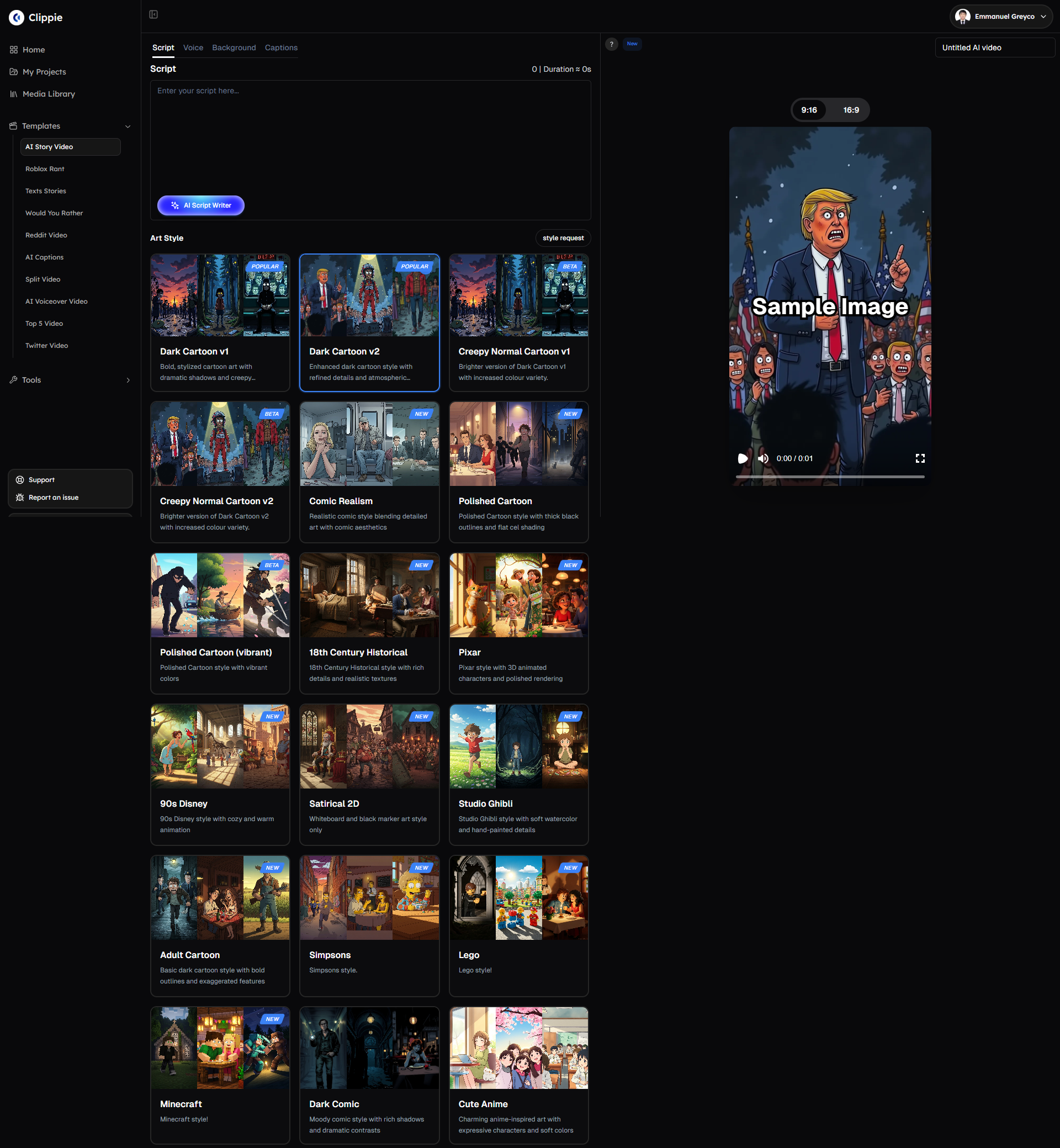
Clippie AI: Story Videos Within Comprehensive Platform
Clippie AI approaches story videos as important format within broader video production ecosystem.
The integrated platform philosophy positions story video generation as one capability among many in comprehensive production system including AI Story Video feature designed specifically for narrative content, but integrated with broader editing, voice, and export capabilities, workflow designed for creators potentially producing multiple content types, platform development balancing story video improvements with other format support, and user experience serving diverse creator needs beyond just story videos. This integration means story video feature might not be as deeply optimized as Viblo's specialized approach but provides workflow convenience and flexibility for creators not wanting multiple separate tools.
The target audience Clippie serves for story videos includes creators producing story videos alongside other content types (tutorials, explainers, compilations), solo creators wanting single platform handling all production needs, creators building multi-format content businesses, beginners exploring story videos without committing to format exclusively, and creators valuing workflow simplicity and integration over specialized optimization. Clippie particularly suits creators who want story video capability without managing separate specialized tools or who haven't committed exclusively to story format.
Core value propositions Clippie emphasizes for story video creation include end-to-end workflow from story concept to final export without separate tools, multiple art style options enabling creative expression and brand differentiation, integrated voice library providing narration without external voice generation, comprehensive caption and export tools completing production in single platform, and batch processing enabling efficient multi-video creation. These capabilities serve creators wanting complete production solution rather than assembling multiple specialized tools for different workflow stages.
Platform maturity and breadth shows Clippie as established comprehensive platform having evolved story video feature within broader production system, regular updates improving story video alongside other capabilities, substantial user base across multiple content types providing platform stability, and diversified business model reducing dependence on any single content format's continued popularity. The platform represents lower-risk more diversified approach, story video feature might not be absolute best-in-class but platform viability doesn't depend entirely on story format continuing to thrive.
The workflow integration advantage Clippie provides includes using same platform for story videos, educational content, tutorials, and other formats, maintaining consistent branding and assets across all content types, batch processing multiple video types efficiently, single subscription covering all production needs, and simplified learning curve mastering one platform rather than multiple specialized tools. This integration particularly benefits creators with diverse content strategies or those uncertain about committing exclusively to single format.
Fundamental Approach Difference
The core philosophical distinction reflects different optimization targets and assumptions about creator needs.
Viblo's specialization thesis assumes story video format is sufficiently important and enduring to justify dedicated platform investment, believing that format-specific optimization delivers meaningfully better results than general-purpose platforms, that story video creators value excellence in story generation above all-in-one convenience, and that dedicated community and development focus around single format creates competitive advantage. This thesis serves creators who've committed to story video format and want absolute best tools for this specific purpose.
Clippie's integration thesis assumes most creators benefit from platform handling multiple content types and workflow stages, believing that good-enough story video capability within comprehensive platform provides better overall value than best-in-class story generation requiring separate tools for other needs, that workflow simplicity and consolidation matter as much as specialized optimization, and that diversification across content types and formats reduces business risk. This thesis serves creators wanting complete production solution or maintaining strategic flexibility across formats.
Neither approach is universally superior, the right choice depends entirely on your specific situation including whether you're committed exclusively to story videos (favoring Viblo) or produce diverse content (favoring Clippie), whether you optimize for absolute story quality (Viblo) or workflow efficiency (Clippie), whether you accept multi-tool complexity for specialized excellence (Viblo) or prefer integrated simplicity (Clippie), and whether you're building story-video-exclusive channel (Viblo) or diversified content business (Clippie). Understanding this philosophical difference clarifies which platform aligns with your strategy and values.
2. Story Generator Differences & Output Quality
Detailed comparison of core story video generation capabilities and output quality.
Story Input and Generation Process
How each platform handles the transformation from story concept or text to generated video.
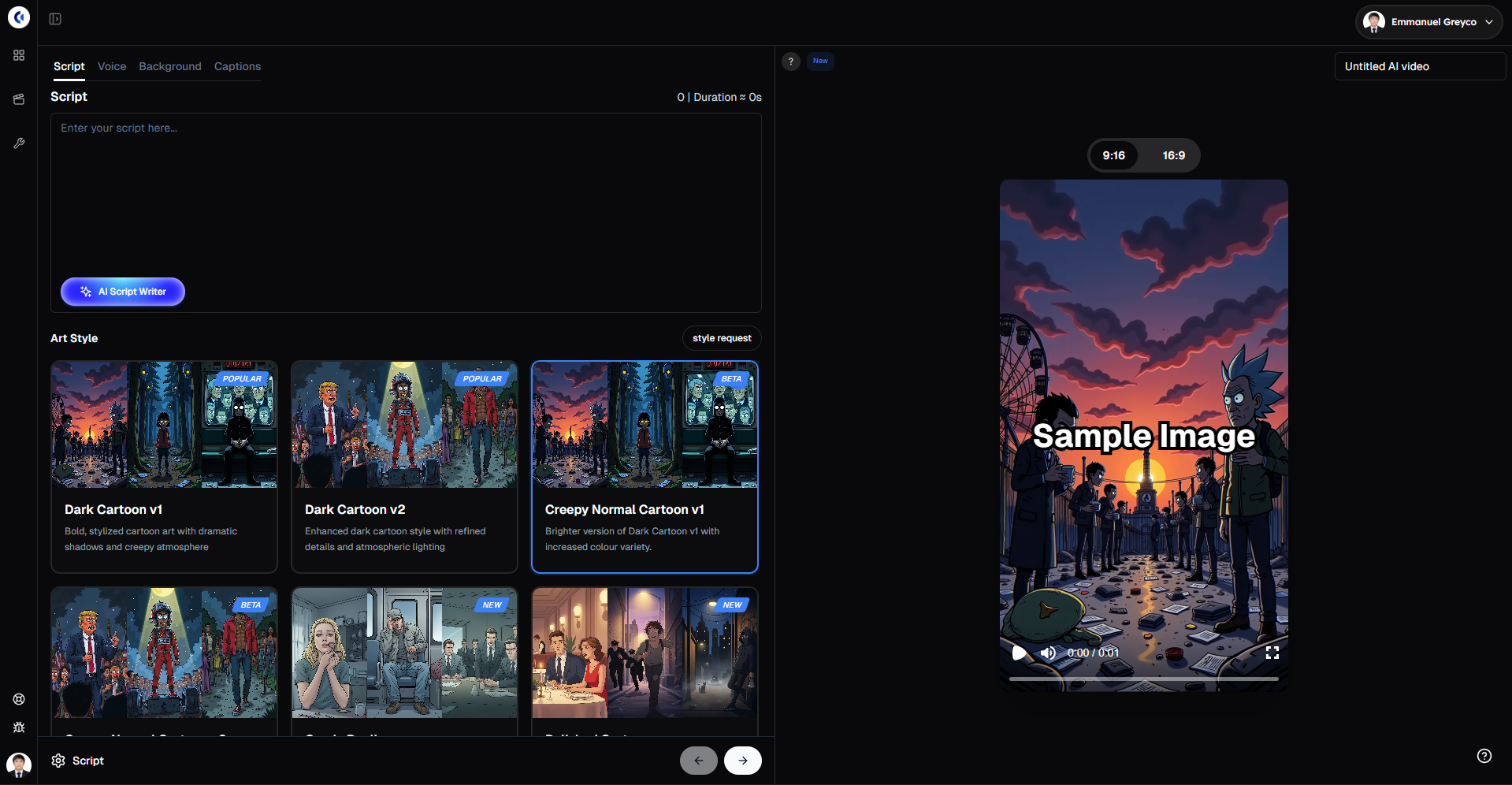
Clippie's story input approach provides flexible starting points through pasting complete story text (150-500 words optimal) that AI converts to video, using AI story generation from brief concept or prompt creating original stories, importing stories from external sources or saved library, and editing generated stories before final video production. The flexibility serves creators with existing story sources (Reddit posts, story archives, original writing) as well as those wanting AI assistance generating original narratives. The typical workflow involves either pasting story text or providing concept ("moral story about honesty and consequences"), AI analyzes narrative structure identifying key scenes and beats, platform generates visual scene plan with image prompts for each story beat, user reviews and optionally refines scene selections, and final generation produces complete video. The generation time typically runs 3-10 minutes for standard 30-60 second story video depending on complexity and server load.
Viblo's story input approach similarly supports multiple input methods including text paste, AI generation, and story templates, but with potentially more sophisticated story structure analysis given specialized focus, more extensive template library specifically for story formats (Reddit revenge stories, wholesome tales, relationship drama, moral fables), and more granular control over story pacing and scene allocation. The specialized approach might provide better results for creators wanting to maintain specific story structures or formats consistently. The workflow likely involves similar steps but with more story-specific optimization at each stage, template selection providing proven narrative structures, AI generation understanding story-specific patterns and conventions, and scene allocation optimized specifically for narrative coherence and pacing.
The AI generation quality comparison for original story creation shows both platforms using modern language models (likely GPT-4 or similar) producing comparable story quality for given prompts, with differences primarily in interface and template guidance rather than underlying AI capability. The story generation quality depends more on prompt quality and creative direction than platform choice, both can generate engaging stories with good prompting. The meaningful differences emerge in how platforms guide story structure, pacing, and format rather than raw AI writing quality.
The story editing and refinement capabilities differ in how much control creators have post-generation where Clippie provides scene-level editing allowing replacement of specific scenes or visual adjustments, story text editing enabling refinement before final generation, and regeneration options if entire video doesn't meet standards. Viblo potentially provides more granular story-specific editing given specialized focus including narrative pacing adjustments, character consistency controls, scene transition optimization, and story arc refinement tools. The editing depth matters primarily for creators wanting precise control versus accepting good automated results with minimal refinement.
The template and framework systems both platforms provide serve different creator needs where Clippie offers general story structures appropriate across content types, while Viblo potentially provides extensive story-format-specific templates (Reddit story structure, moral tale framework, relationship conflict pattern, revenge story arc) refined through analyzing viral story videos. The template value depends on whether you're creating varied diverse stories (less template dependency) or producing systematic consistent format content (high template value).
Visual Generation Quality and Artistic Styles
How each platform creates and styles the visual elements bringing stories to life.
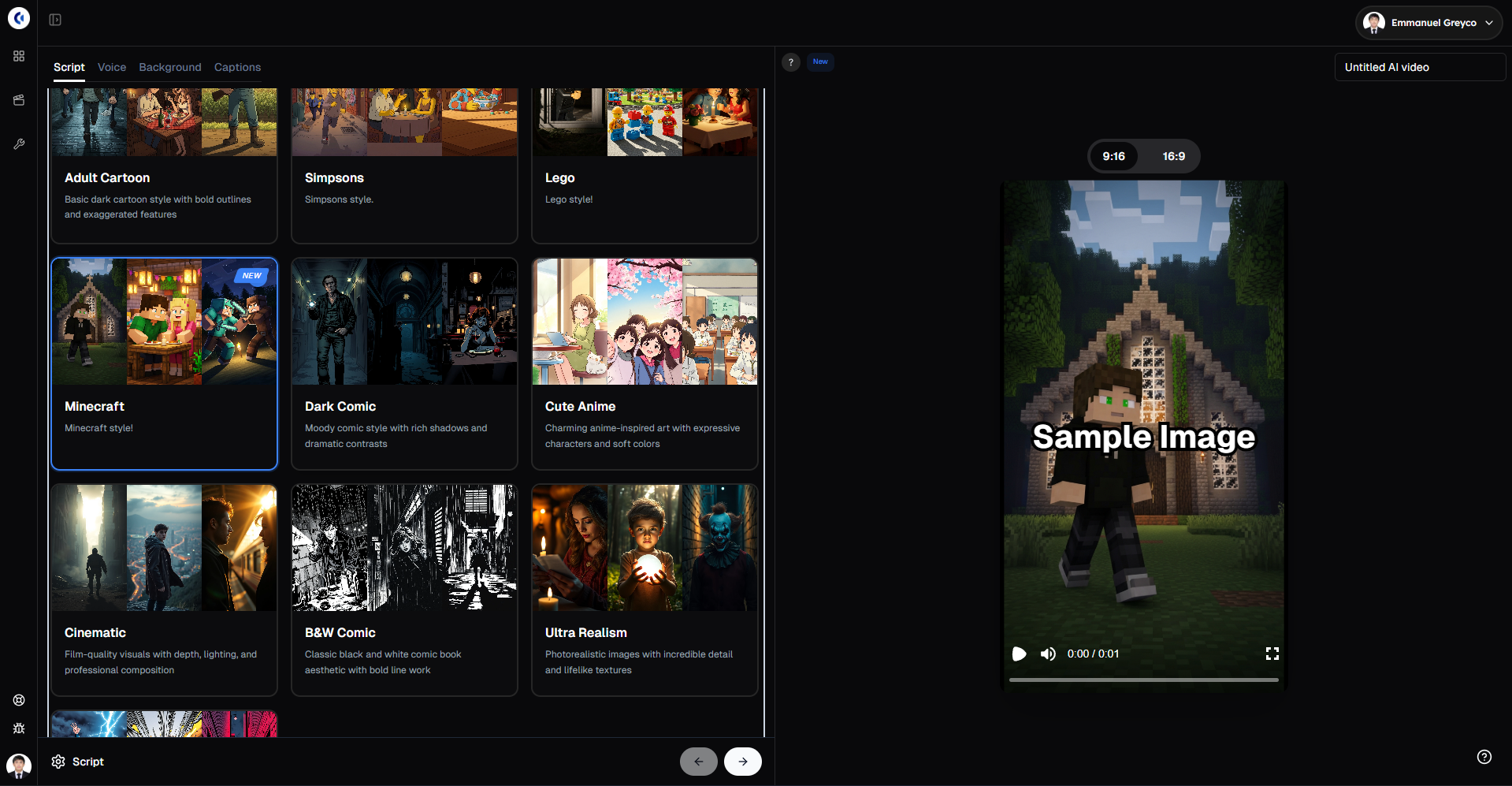
Clippie's visual generation approach uses modern AI image generation (likely Midjourney, DALL-E, or Stable Diffusion-based) creating scene visuals from story content with multiple distinct art style options including anime/manga styles popular for dramatic narratives, realistic/photographic rendering for grounded believable stories, 3D cartoon/animated aesthetic for friendly accessible content, cinematic/artistic styles for dramatic film-like appearance, and potentially additional specialized styles. The style diversity enables creative expression and brand differentiation, channels can establish distinctive visual identity through consistent style selection. The visual quality is generally good, meeting professional standards for social media story content with occasional imperfections requiring regeneration or acceptance.
Viblo's visual approach likely uses similar underlying AI generation technology but potentially with story-specific optimization including character consistency systems maintaining protagonist appearance across scenes, scene coherence ensuring visual elements relate logically to narrative, emotional tone matching where visuals reflect story mood and intensity, narrative-appropriate detail level balancing clarity with appropriate complexity, and potentially proprietary enhancements or training improving story-specific visual generation. The specialization might deliver noticeably better character consistency and narrative visual coherence compared to general-purpose platforms, a meaningful advantage for story format specifically.
The character consistency challenge represents critical technical problem for story videos where general AI image generation struggles maintaining consistent character appearance across multiple scenes, resulting in protagonist looking different in each scene breaking immersion, requiring either accepting inconsistency or time-consuming manual intervention ensuring consistency, and significantly harming perceived quality and professionalism. Viblo's specialized focus potentially addresses this challenge more effectively through proprietary character systems or enhanced training, if true, this represents substantial quality advantage for story content specifically. Clippie likely experiences typical AI character consistency challenges requiring either style selection minimizing visibility (cartoon/anime where consistency is less critical) or accepting some variation.
The visual quality assessment across both platforms shows professional baseline quality suitable for social media story content, occasional generation errors requiring regeneration or acceptance (malformed hands, incorrect scene elements, style inconsistencies), variation in quality based on story complexity and scene description clarity, and continuous improvement as underlying AI models advance. The practical quality difference between platforms may be marginal for most stories with specialization advantages becoming visible primarily in complex multi-character narratives or stories requiring strong character consistency. Testing both platforms with your specific story types reveals which delivers better results for your content.
The style customization and branding capabilities affect how much creative control and brand consistency you can maintain where Clippie's multiple style options enable distinctive channel branding through consistent style selection, but style changes require starting new videos rather than adjusting mid-creation. Viblo potentially offers more granular style controls given specialization including color palette customization, character design parameters, scene composition preferences, and style consistency systems maintaining brand across videos. The customization depth matters primarily for established channels with strong brand guidelines versus new creators accepting platform defaults.
Narrative Pacing and Scene Timing
How platforms optimize story flow and maintain engagement through pacing.
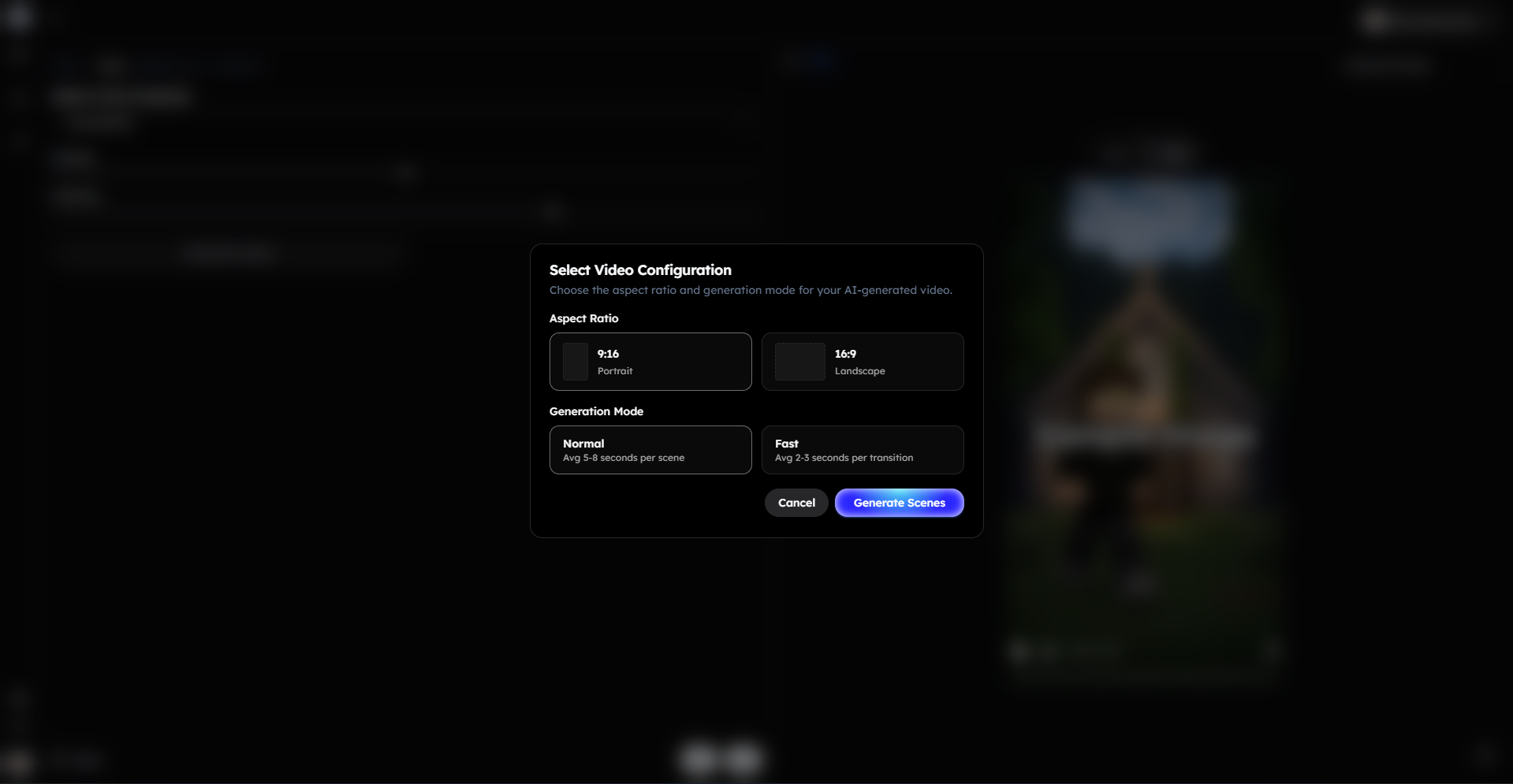
Clippie's pacing approach provides automated scene timing based on story length and platform with default 3-6 second per scene allocation typical for engaging pacing, adjustable timing controls for specific scenes requiring more or less time, overall duration targeting ensuring video fits platform requirements (60 seconds for Shorts/TikTok), and pacing presets for different story intensity levels (fast-paced action, slower reflective stories). The automated pacing works well for most stories producing engaging flow without manual intervention, though creators wanting precise control can adjust timing scene-by-scene. The pacing optimization balances story comprehension (enough time to understand each scene) against attention maintenance (fast enough to prevent boredom).
Viblo's pacing optimization likely includes more sophisticated story-specific timing through narrative beat recognition identifying story structure (setup, conflict, climax, resolution) and pacing appropriately, emotional intensity mapping adjusting timing based on story emotional content, dialogue and narration synchronization ensuring visuals match voice pacing, retention optimization based on analyzing successful story video patterns, and format-specific pacing for different story types (revenge stories might pace differently than wholesome tales). The specialization enables potentially superior pacing naturally feeling more engaging and maintaining higher completion rates.
The engagement and retention impact of pacing optimization directly affects video performance where proper pacing maintains viewer attention through story completion increasing average view duration metric that algorithms reward, inappropriate pacing loses viewers mid-story tanking retention and algorithmic promotion, and completion rate differences of even 5-10 percentage points compound dramatically in algorithmic visibility. If Viblo's specialized pacing delivers even modest retention improvements, this translates directly to better video performance and channel growth, making it potentially worth platform choice even if other factors are comparable.
The customization versus automation trade-off differs between platforms where Clippie likely provides good automated pacing with some manual override capability suitable for most creators accepting efficient defaults, while Viblo potentially offers both superior automation (through story-specific optimization) and more granular manual control for creators wanting precise pacing control. The optimal balance depends on whether you trust automated pacing (most creators) or want detailed control (advanced creators or specific story requirements).
Output Consistency and Reliability
How reliably platforms produce quality results across multiple video generations.
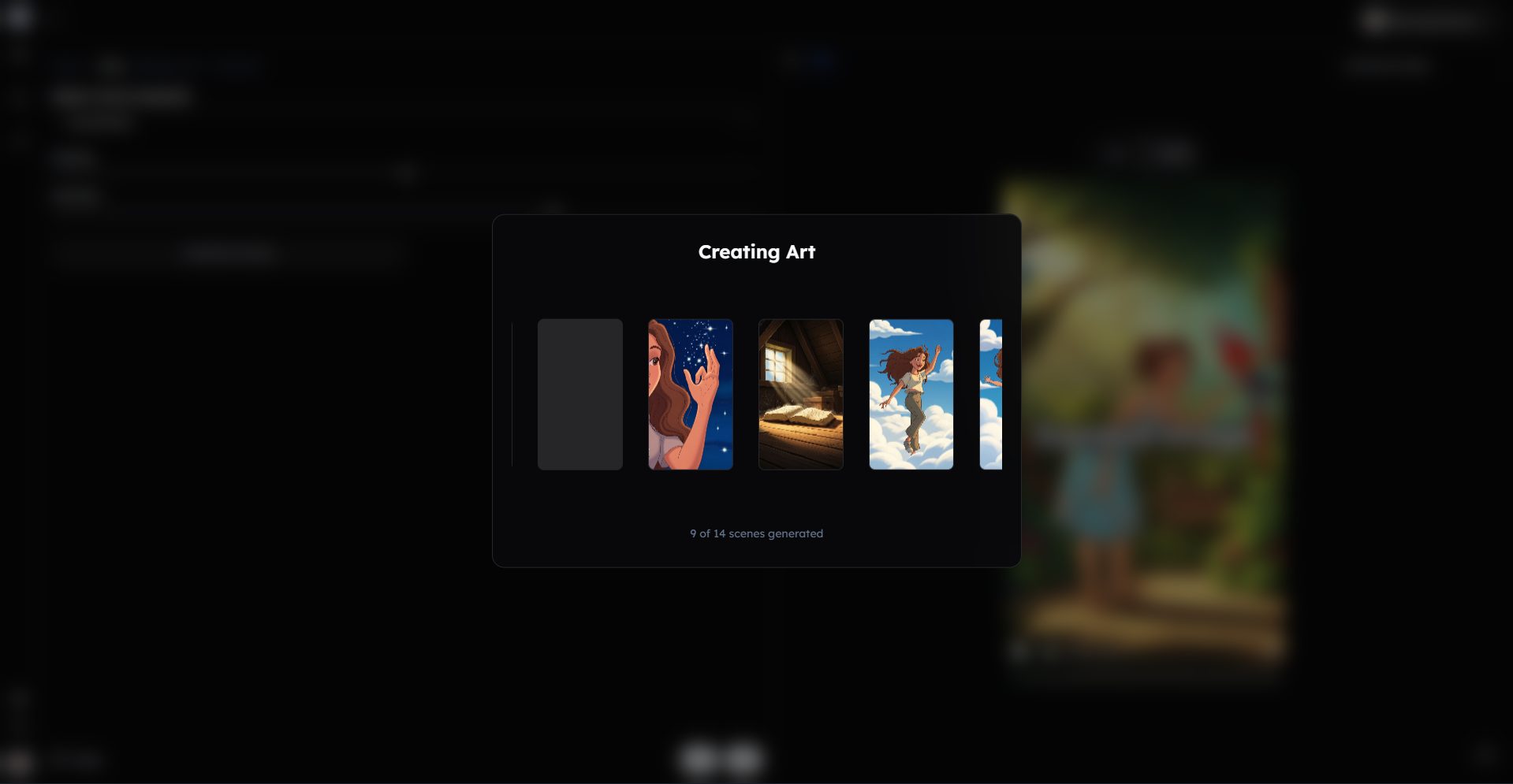
Clippie's consistency profile shows generally reliable output quality with most generations producing acceptable professional results, occasional generation failures or quality issues requiring regeneration (5-15% of generations might need retry), consistent style application maintaining chosen aesthetic across videos, and predictable workflow timing (3-10 minutes per video consistently). The reliability enables sustainable high-volume production where you can confidently batch-create multiple videos knowing most will meet quality standards. The occasional regeneration requirement is manageable nuisance rather than workflow-breaking problem.
Viblo's consistency profile potentially shows advantages from specialized optimization through potentially higher first-generation success rates (fewer regeneration requirements), more consistent character and scene quality across story progression, predictable output matching creator expectations from platform experience, and potentially faster generation times through optimized story-specific processing. If specialization delivers meaningfully more consistent results, this saves substantial time across high-volume production reducing frustration and improving workflow sustainability.
The workflow reliability considerations affect production planning and efficiency where inconsistent platforms requiring frequent regeneration make batch production difficult and time-consuming, while reliable platforms enable confident scheduling and systematic creation, and reliability differences compound across volume (at 10 videos daily, 10% regeneration rate means 1 video redone versus 20% meaning 2 videos redone, substantial time difference). Platform reliability often matters as much as generation speed for sustainable high-volume workflows.
The quality improvement trajectory over time as platforms develop shows both actively improving as underlying AI models advance, Viblo potentially improving faster in story-specific dimensions through focused development, Clippie improving across broader capabilities but perhaps slower in story-specific areas, and both platforms benefiting from general AI advancement (better Midjourney, DALL-E, language models). The improvement trajectory suggests platforms will converge toward high quality over time as AI improves, reducing current quality gaps but potentially maintaining workflow or specialization differences.
3. Caption, Voiceover & Export Tools Compared
Analysis of supporting production features completing story video creation workflow.
Caption Quality and Customization
How platforms handle text overlays critical for sound-off viewing dominating social platforms.
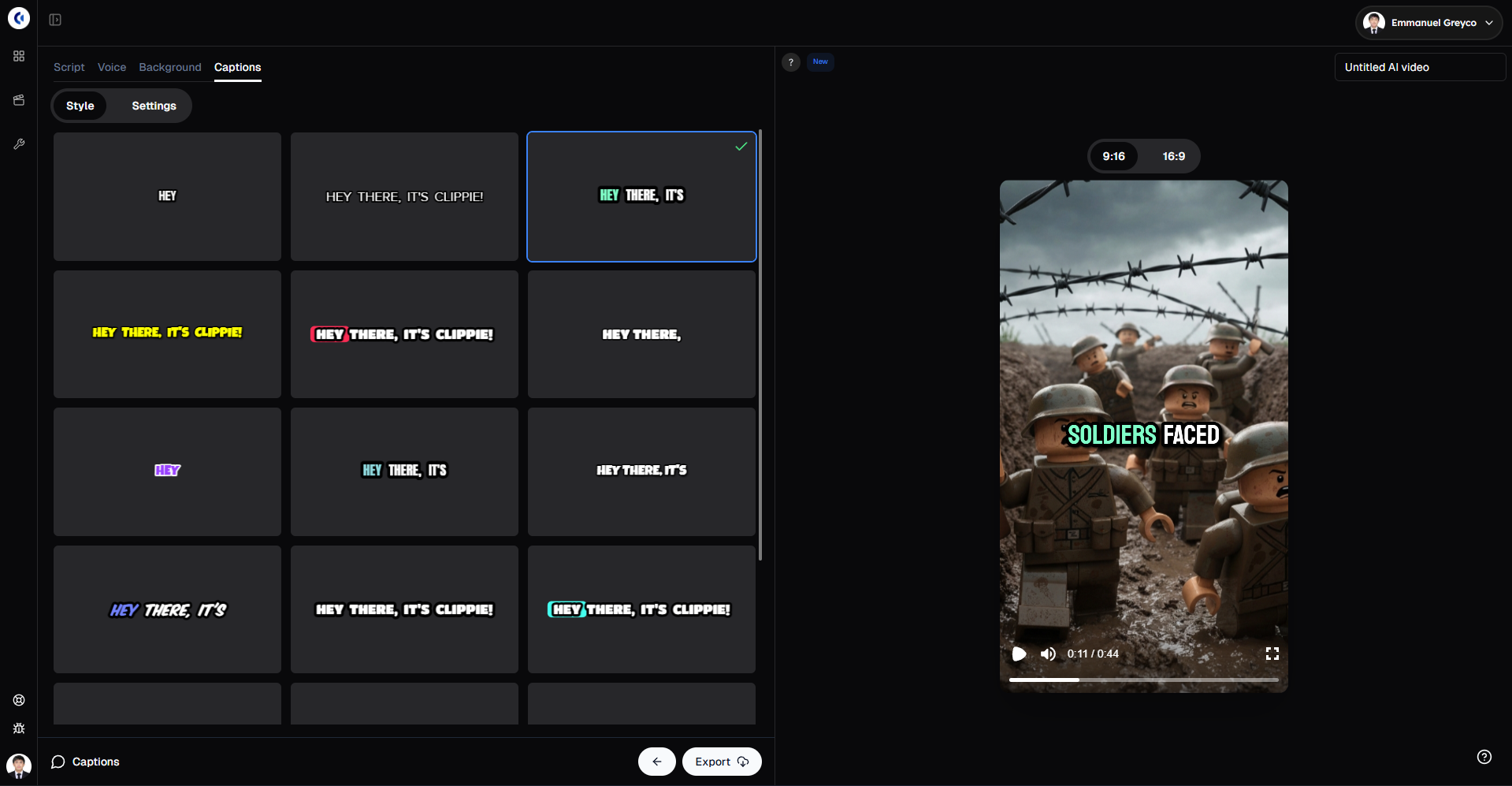
Clippie's caption capabilities provide comprehensive professional functionality with automatic synchronization timing captions precisely to voiceover, 92-95% accuracy on clear AI-generated narration requiring minimal correction, platform-appropriate styling for TikTok, YouTube, Instagram, basic customization options covering font, size, color, positioning, and animation, and word-level highlighting drawing attention to currently-spoken words. Clippie's captions meet professional baseline enabling accessible sound-off viewing, substantially better than manual captioning and comparable to dedicated caption tools for straightforward narration. The caption functionality is good, enabling viewers to follow story without audio which is critical since 60-70% of social video initially viewed without sound.
Viblo's caption approach likely provides similar technical quality given both use modern speech-to-text technology, potentially with story-specific optimizations including narrative-appropriate styling matching story tone and intensity, character dialogue attribution if story includes multiple speakers, emphasis and pacing matching story dramatic beats, and potentially viral story-specific caption templates. The specialization might deliver captions feeling more narratively integrated rather than just functional text overlays, subtle but potentially meaningful difference for story content specifically.
The caption styling and templates differ in how much creative control and trend-alignment you achieve where Clippie provides solid professional styles appropriate for general use, while Viblo potentially provides story-specific trending templates analyzed from successful viral story videos, if your goal is replicating proven viral patterns rather than creating unique style, Viblo's templates might provide advantage. The template value depends on whether you're trend-chasing (high template value) or brand-building with distinctive style (lower template value).
The practical caption workflow for both platforms involves automatic generation during video creation, optional review and correction (typically minimal for AI-generated narration), style application from templates or custom settings, and export with captions embedded in video or available as separate subtitle files. The workflow efficiency is comparable between platforms with any differences marginal rather than workflow-defining. The caption quality differences likely minimal in practice since both use mature speech-recognition technology producing similar accuracy.
Voiceover Synthesis and Voice Library
How platforms generate narration bringing stories to life through audio.
Clippie's voice capabilities integrate natural AI voices directly into production workflow with diverse voice library including various genders, ages, accents, and characteristics, voice customization allowing speed, pitch, and emotional tone adjustments, integrated text-to-speech generating narration seamlessly during video creation, character consistency maintaining same voice for protagonist across video series, and continuous voice library expansion adding new options regularly. Clippie's voices are professional quality using modern neural text-to-speech (likely ElevenLabs, Google, or similar) producing natural-sounding narration suitable for story content. The integration advantage means narration happens seamlessly within video production rather than requiring separate generation and import.
Viblo's voice approach likely provides similar technical quality through comparable AI voice technology partnerships or integrations, potentially with story-specific optimizations including emotional range appropriate for narrative content (excitement, sadness, tension), character voice variation if story includes dialogue between characters, pacing and emphasis naturally matching story dramatic structure, and extensive voice library specifically selected for story narration. The specialization might deliver voices feeling more naturally expressive for storytelling versus general-purpose narration, meaningful for story content specifically where voice performance affects engagement substantially.
The voice quality and naturalness comparison shows both platforms using modern AI voices that sound professional and engaging rather than robotic, with occasional awkward pronunciations or emphasis requiring script adjustment, emotional expressiveness sufficient for story content without requiring perfect human-level performance, and continuous improvement as voice AI technology advances. The practical voice quality differences between platforms likely minimal, both provide good voices suitable for successful story videos. The meaningful differences emerge in voice selection, interface, and integration rather than absolute quality ceiling.
The voice customization and character control affects how much you can optimize narration for specific stories where basic platforms provide voice selection without much fine-tuning, while advanced platforms enable adjusting emotional tone, pacing emphasis, character voice assignments, and pronunciation customization. Viblo potentially provides more story-specific voice controls given specialization enabling precise narrative delivery optimization. Most creators likely accept good default voice performance without extensive customization making advanced controls valuable primarily for perfectionists or specific story requirements.
The workflow integration efficiency for voice generation shows Clippie's comprehensive platform advantage where voice generation happens automatically during video creation without separate steps, eliminating file exports, imports, and synchronization reducing error potential and time investment. Viblo likely provides similar integration since story video generation inherently requires synchronized narration, both platforms should handle voice seamlessly rather than requiring manual coordination. The workflow differences likely minimal since both platforms designed specifically for integrated story video production.
Music and Audio Integration
How platforms handle background music and sound effects enhancing story atmosphere.
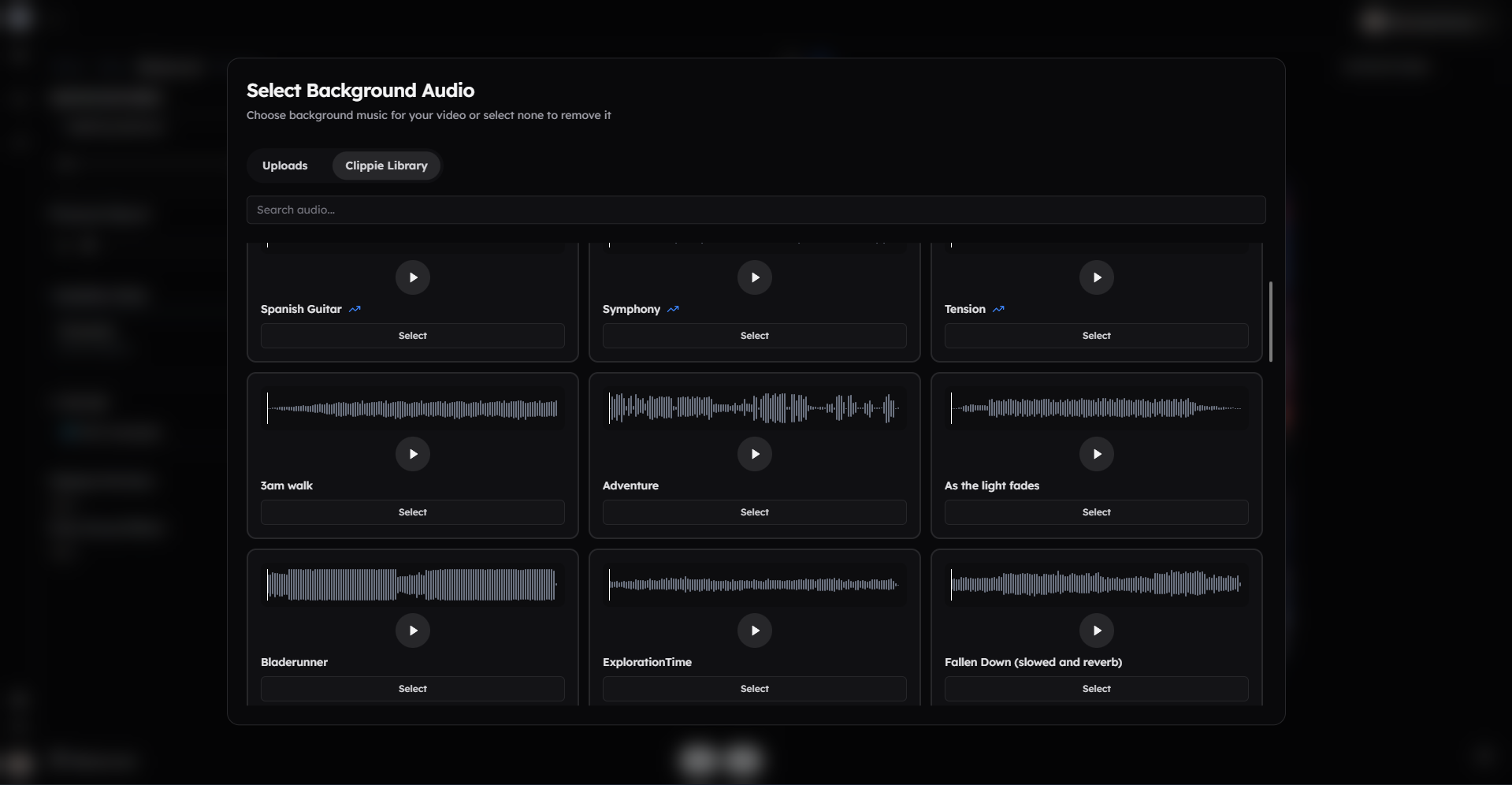
Clippie's music capabilities include integrated music library with platform-licensed tracks appropriate for various story moods, automatic music selection based on story tone and content, volume balancing ensuring narration remains clear over background music, simple music customization allowing music changes if default selection doesn't fit, and export with properly mixed audio ready for publishing. The music functionality provides convenient licensed options eliminating need to source music separately or risk copyright issues, sufficient for most story video needs without requiring audio expertise.
Viblo's music approach potentially includes story-specific music curation where library focused specifically on narrative-appropriate background tracks, mood-matching systems selecting music based on story emotional arc, potentially more sophisticated audio mixing optimizing for story format, and possibly sound effect integration adding atmospheric elements enhancing story immersion. The specialization might deliver better audio atmosphere for stories specifically versus general-purpose video music, subtle but potentially meaningful quality improvement.
The music licensing and copyright considerations are critical for YouTube monetization where platforms must provide properly licensed music avoiding copyright claims and demonetization, both Clippie and Viblo should offer licensed music for commercial use (verify specific licensing terms), and using external unlicensed music risks copyright strikes and revenue loss. The platform-provided music, even if limited in selection, provides peace of mind for monetization versus sourcing external tracks requiring licensing verification.
The audio customization depth varies between basic music selection and advanced audio mixing where basic platforms provide simple music on/off or volume controls suitable for most creators, while advanced platforms might offer multi-track mixing, sound effect libraries, audio effect processing, and precise timing synchronization. Viblo potentially provides more audio control given story focus though most creators likely accept good automated audio mixing without extensive customization.
Export Options and Platform Optimization
How platforms prepare final videos for publishing across social platforms.
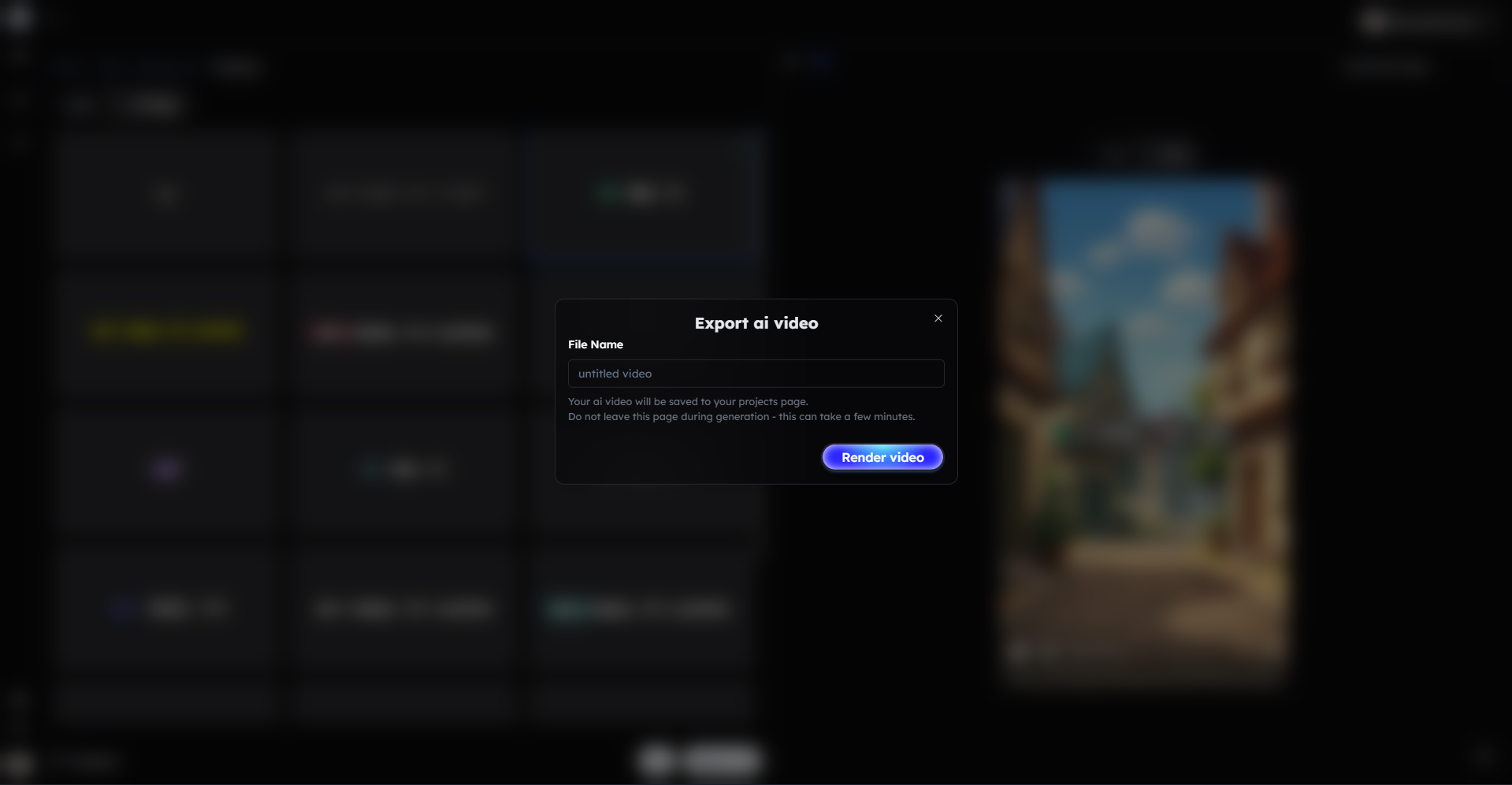
Clippie's export capabilities provide comprehensive platform-specific optimization with automatic formatting for TikTok (9:16 vertical, 60 seconds), YouTube Shorts (9:16 vertical, 60 seconds), Instagram Reels (9:16 vertical, 60 seconds), traditional YouTube (16:9 horizontal, any length), and custom specifications for other platforms. The platform optimization includes appropriate resolution and compression, aspect ratio and safe area adjustments, caption positioning avoiding platform UI elements, and file size optimization for smooth uploading. The export automation prevents common technical mistakes and ensures videos display properly on target platforms, valuable for creators focusing on content rather than technical details.
Viblo's export optimization likely provides similar platform-specific presets given story video formats are inherently platform-focused, potentially with additional story-specific optimizations including thumbnail generation from story key moments, first-frame optimization ensuring compelling scroll-stopper, hook enhancement emphasizing story opening for maximum retention, and viral-pattern optimization based on successful story video analysis. The specialization might deliver exports slightly more optimized for story video success specifically versus general video optimization.
The batch export and efficiency features enable high-volume production workflows where creators can queue multiple videos for export, process overnight or during off-peak times, organize exports systematically by series or topic, and maintain consistent export settings across videos. Clippie's comprehensive platform likely provides robust batch processing given broader user base needing efficiency. Viblo may or may not match this depending on development priorities, worth verifying if high-volume batch production is critical requirement.
The file management and organization capabilities help creators managing libraries of content where platforms might provide project libraries organizing created videos, export history tracking what's been published where, asset management systems maintaining story source texts and media, and potentially analytics integration showing performance data. These business management features matter more for established creators with extensive libraries than beginners with handful of videos. Neither platform likely provides comprehensive business management, both focus on production rather than complete business operations.
4. Scalability for Bulk Content Creators
Analysis of how well platforms support high-volume systematic production at 10-20+ videos weekly.
Bulk Creation and Batch Processing
The systems and workflows enabling efficient multi-video production.
Clippie's batch capabilities likely include queuing multiple story videos for sequential processing, template systems maintaining consistent styling across batches, bulk import of multiple story texts for batch conversion, overnight processing for large batches, and systematic organization of batch outputs. The comprehensive platform approach suggests robust batch processing meeting high-volume creator needs, Clippie serves agencies and multi-channel operators requiring systematic production at scale. The batch efficiency enables creating 5-10 videos in single work session then processing overnight rather than creating videos sequentially consuming entire day.
Viblo's batch approach may vary depending on platform maturity and development priorities where specialized platforms sometimes excel at individual video quality but lack robust batch processing, alternatively, story-video focus might drive excellent batch capabilities since format inherently suits high-volume production, and economic model likely requires supporting high-volume creators driving subscription revenue and platform growth. The batch capability quality significantly affects platform suitability for bulk creators, worth verifying through trial or user reports before committing if high-volume production is core strategy.
The template and automation systems for maintaining consistency across high volumes show both platforms likely providing style templates maintaining visual consistency, voice selection persistence using same narrator across series, caption styling templates ensuring brand consistency, and export presets avoiding repeated configuration. The template robustness determines whether batch production maintains quality and consistency or requires extensive per-video intervention destroying efficiency advantages. Well-designed templates enable systematic branded production while poor templates force manual customization for each video.
The workflow efficiency at scale differs dramatically between platforms optimized for bulk production versus those designed for individual video creation where bulk-optimized platforms might produce 10 videos in 2-3 hours active time plus automated processing, while individual-focused platforms might require 20-30 minutes per video totaling 3-5 hours for same output, and efficiency differences compound across weeks and months determining sustainable production capacity. The scalability directly affects business model viability, sustainable daily posting versus unsustainable burnout-inducing workflows.
Cost Economics at High Production Volumes
How subscription costs and usage limits affect profitability at different scales.
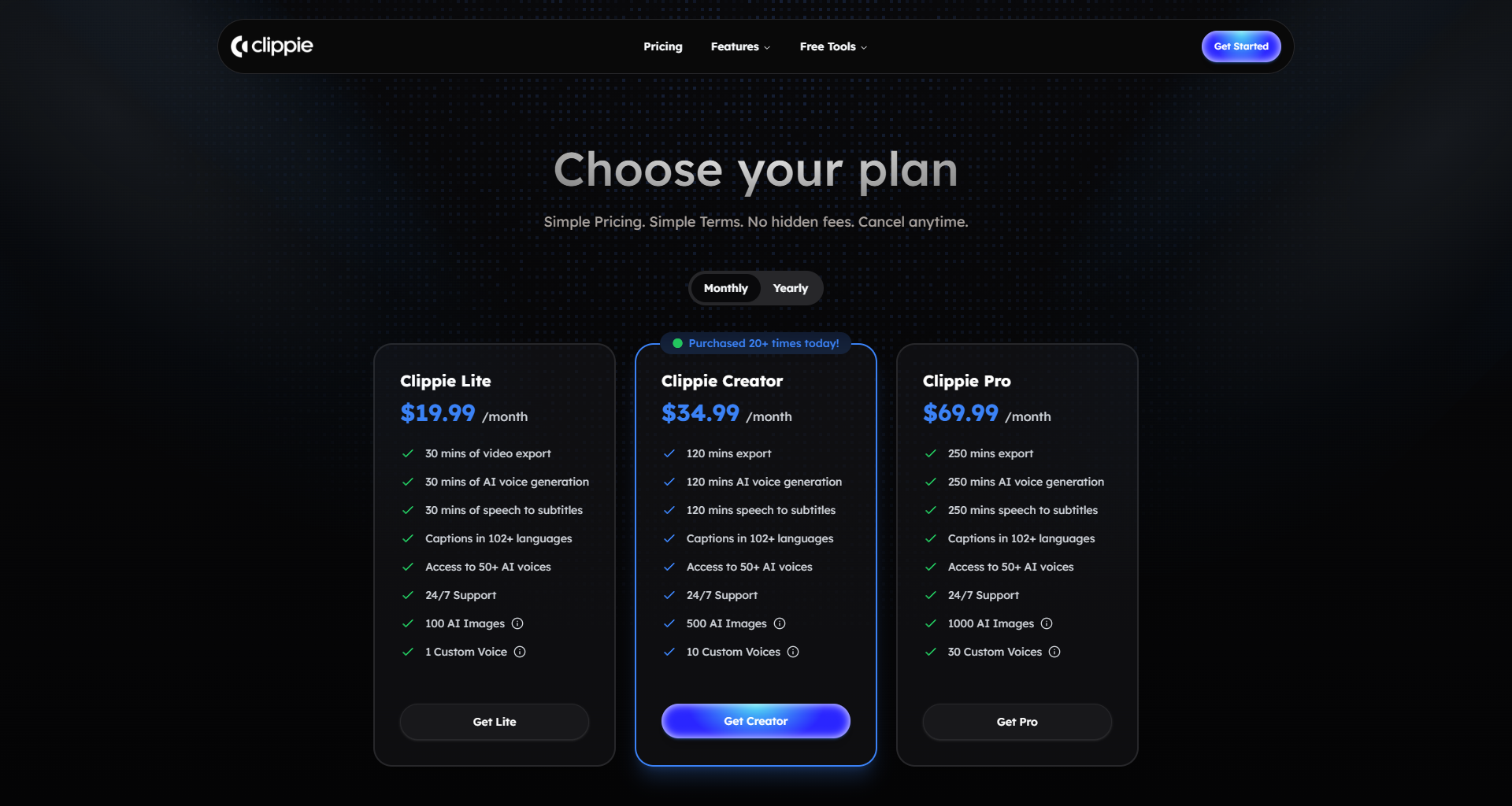
Clippie's pricing structure for high-volume production typically includes unlimited or very high video creation limits on paid tiers eliminating per-video cost concerns, flat monthly subscription ($50-150 depending on tier) enabling predictable budgeting, no additional charges for bulk processing or batch creation, and potentially volume discounts or enterprise tiers for agencies producing hundreds of videos monthly. The unlimited approach makes economics simple and predictable, pay monthly fee, create as much as you can produce. The per-video cost decreases with volume making platform increasingly economical for high-volume creators ($100 monthly at 200 videos = $0.50 per video versus $5 per video at 20 videos monthly).
Viblo's pricing approach may follow similar unlimited model or potentially use tiered limits where basic tier allows 20-50 videos monthly, professional tier allows 100-200 videos monthly, and enterprise tier provides unlimited creation. The pricing model significantly affects economics for bulk creators, unlimited model at reasonable price ($50-100 monthly) supports any production volume, while tiered limits might force expensive upgrade or multiple accounts for highest-volume operations. The economic viability requires understanding pricing structure relative to planned production volume.
The cost-per-video analysis at different scales shows dramatic economies of scale where 10 videos monthly at $50 subscription = $5 per video, 50 videos monthly at $75 subscription = $1.50 per video, 150 videos monthly at $100 subscription = $0.67 per video, and 500 videos monthly at $150 subscription = $0.30 per video. The unit economics improve radically with volume making platform costs negligible for successful high-volume operations. The relevant comparison is subscription cost versus channel revenue, once monetizing at $1,000+ monthly, even $150 monthly platform cost is minimal 15% of revenue versus enormous value provided.
The profitability breakeven for story video channels varies by monetization strategy where ad revenue requires substantial views (100K-500K monthly views generating $200-1,000 at typical CPM), sponsorships require engaged audience (typically 50K-100K+ subscribers), and other monetization (courses, products, services) varies dramatically by business model. The platform costs become immaterial once channel generates $500-1,000+ monthly revenue, choosing platform based on production efficiency and growth enablement rather than minimizing subscription cost maximizes long-term profitability.
Template Systems and Systematic Production
How platforms enable consistent branded production at scale.
Clippie's template approach provides brand kit functionality maintaining colors, fonts, and styling across all productions, project templates for different story series or content types, batch application of templates to multiple videos, and template refinement improving quality systematically rather than video-by-video. The template system enables systematic branded production where channel maintains consistent professional appearance across hundreds of videos without manual styling each time, critical for building recognizable brand and efficient scaling.
Viblo's template systems potentially include extensive story format templates as discussed earlier (Reddit stories, moral tales, relationship content), visual style templates maintaining consistent artistic approach, narrative structure templates providing proven story frameworks, and potentially sequence templates for story series or continuing narratives. The story-specific templates might provide more systematic production specifically for story format versus Clippie's more general template approach, meaningful advantage for creators producing formulaic consistent story content.
The template library value for different creator strategies shows high value for systematic producers creating consistent format content (daily Reddit revenge stories all following similar structure and style), moderate value for varied producers creating diverse story types requiring different templates, and lower value for highly custom producers wanting unique approach for each video. Most successful high-volume story channels use systematic approaches with consistent formats, templates enable this systematization critical for sustainable scaling.
The production workflow systematization beyond just templates includes content calendars planning weeks of stories in advance, batch recording voice variations for different stories, systematic asset organization maintaining libraries of elements, quality control checklists ensuring consistency, and automated publishing workflows reducing manual per-video effort. The platform's workflow design either facilitates or hinders this systematization, platforms designed for systematic scaled production integrate smoothly with these practices while platforms focused on individual video creation may require workarounds.
Team Collaboration and Multi-User Features
How platforms support scaling from solo creator to team-based operation.
Clippie's collaboration features may include multi-user accounts for team access, role-based permissions (creators, editors, managers), project sharing and handoff between team members, comment and review systems for quality control, and team asset libraries maintaining shared resources. The collaboration capability enables scaling beyond solo operation toward sustainable team-based production, critical for agencies or channels growing to require multiple creators or specialized roles. The collaboration features matter primarily for growing operations beyond solo production toward team-based businesses.
Viblo's collaboration approach may or may not provide extensive team features depending on platform focus and development stage where specialized platforms sometimes lack robust collaboration tools, focusing instead on individual creator experience, or alternatively recognize that story video agencies represent high-value customers justifying collaboration investment. The team capability significantly affects scalability for agency or multi-channel operations, worth verifying if team production is part of growth plan.
The scaling beyond solo operation trajectory typically progresses from solo creator doing everything, to hiring virtual assistant for publishing and engagement, to hiring additional creators multiplying content output, to specialized roles (story writers, video specialists, analysts, community managers), and potentially to multi-channel network managing entire portfolio. The platform's team features either facilitate or hinder this growth, platforms enabling team workflows support growth while individual-focused platforms create friction requiring workarounds or platform switching mid-growth.
The workflow handoff and quality control for team operations requires clear handoff points between roles (writer to video creator to publisher), quality assurance systems ensuring consistency and standards, approval workflows preventing publishing before review, and performance tracking attributing results to specific team members. The platform may or may not support these business processes, most focus on core creation rather than business workflow. Creators planning team scaling should verify collaboration features meet anticipated needs or plan to use external project management tools coordinating platform usage.
5. Best Choice for 2026 AI Video Creation
Synthesizing comparison into actionable recommendations for different creator scenarios.
When Viblo Is the Superior Choice
Specific situations where Viblo's specialized story focus provides optimal value.
Dedicated story video channels producing exclusively or primarily story content benefit maximally from Viblo's specialization where you've committed to story format as primary or exclusive content type, your entire business model centers on story video success and optimization, you're not producing other content types requiring different tools, and you value absolute best story-specific features over platform versatility. For creators building businesses entirely around story videos, specialized optimization potentially justifies any workflow or integration trade-offs.
High-volume systematic story production at 10-20+ videos daily finds value in story-specific optimization where marginal quality improvements compound across massive volume (5% better retention across 200 monthly videos dramatically affects total views), workflow optimizations for story format specifically save time that compounds substantially, template and automation systems designed explicitly for story production enable systematic scaling, and production economics at this volume justify platform cost even if premium-priced. Volume producers often justify paying more for tools delivering superior scalability and quality.
Creators chasing viral story trends replicating successful formats find Viblo's specialization valuable where platform analyzes and replicates trending story video patterns, templates match current viral story structures and styling, optimization focuses specifically on story video engagement and completion, and development velocity on story-specific features keeps platform current with format evolution. For trend-dependent strategies, having platform specifically tracking story video trends provides competitive advantage.
Quality-focused story creators prioritizing individual video excellence over efficient volume find Viblo's deep capabilities valuable where advanced customization enables precise story control and refinement, superior character consistency and narrative coherence justify potential workflow complexity, story-specific editing tools enable optimization that general platforms can't match, and audience expectations or brand positioning require absolute best story quality justifying specialized tools. Quality-over-quantity strategies benefit from specialized deep capabilities.
International story creators producing content in multiple languages might find Viblo's potential language optimization valuable where story formats are universal across cultures making specialization globally relevant, platform potentially supports extensive language options with story-specific optimization, and serving multiple markets increases production volume justifying platform investment. The language support and quality varies, verify for your specific languages before assuming advantage.
When Clippie AI Is the Superior Choice
Specific situations where Clippie's integrated comprehensive approach provides optimal value.
Multi-format content creators producing story videos alongside other content types benefit from Clippie's versatility where you're creating educational content, tutorials, compilations, or other formats beyond just stories, maintaining single platform for all production eliminates tool switching and integration complexity, workflow efficiency across content types provides better overall productivity than specialized tools for each format, and diversified content strategy reduces business risk of depending on single format's continued popularity. Most creators benefit from strategic flexibility rather than format lock-in.
Beginners exploring story video format uncertain about committing exclusively find Clippie's lower-risk approach valuable where you can test story videos without separate specialized tool investment, learning single platform serves both story videos and other experiments, integrated workflow reduces complexity during learning phase, and flexibility enables pivoting if story format doesn't work for your channel. Starting with versatile platform makes more sense than immediately committing to specialized tools before validation.
Solo creators wanting workflow simplicity prioritizing efficiency over specialized optimization benefit from integration where managing single comprehensive platform is simpler than coordinating multiple specialized tools, integrated workflow from concept through export saves time and reduces errors, learning burden is concentrated rather than distributed across multiple tools, and workflow sustainability matters more than marginal quality improvements. Most solo creators optimize for sustainable efficient production over theoretical quality maximization.
Budget-conscious creators seeking maximum value find Clippie's comprehensive coverage economical where single subscription replaces multiple specialized tools (editing, voice, captions, story generation), consolidated pricing is more affordable than assembling specialist tool stack, and avoiding workflow complexity saves time that has monetary value. The economic advantage of integrated platforms increases for creators with limited budgets unable to afford multiple premium subscriptions.
Creators building comprehensive content businesses producing diverse video types across platforms find Clippie's breadth essential where multi-platform distribution requires versatile production capability, content diversification strategy spans formats and types, workflow systematization across content types creates operational efficiency, and business sustainability requires avoiding over-dependence on single format or platform. Sustainable content businesses typically diversify rather than concentrating entirely on single format.
Teams or agencies serving multiple clients or managing multiple channels benefit from Clippie's versatility where different clients or channels require different content types and formats, systematic workflow across diverse production needs creates operational efficiency, team training concentrates on single platform rather than multiple specialists, and business model requires serving varied needs rather than specializing narrowly. Agencies and multi-channel operations typically need versatile platforms over specialized single-format tools.
The Hybrid Approach Consideration
Using both platforms strategically for different purposes or video types.
The tiered quality strategy uses both platforms for different content tiers where Clippie handles bulk daily content maintaining posting frequency and algorithmic favor, Viblo produces weekly flagship story content where maximum quality justifies additional investment, and overall content strategy balances volume and quality optimizing algorithmic performance and audience satisfaction. This approach requires managing two platforms and workflows but potentially optimizes both dimensions.
The format segregation approach assigns platforms based on content type where Viblo handles story videos exclusively optimizing this critical format, Clippie handles all other video types (tutorials, compilations, other formats) providing comprehensive capability, and workflow organization segregates cleanly by content type. This segregation makes sense primarily for creators producing substantial volume of both story and non-story content.
The practical hybrid challenges that often prevent successful dual-platform usage include subscription costs totaling $100-200+ monthly for both platforms, workflow complexity managing two separate systems, cognitive overhead switching between platforms and workflows, efficiency losses from context switching reducing overall productivity, and diminishing returns where marginal quality improvements from specialized tool don't justify complexity and cost. Most creators attempting hybrid approaches eventually simplify to single primary platform once complexity costs become apparent.
The realistic assessment suggests hybrid approaches work primarily for well-established operations with substantial revenue ($5,000+ monthly) justifying platform costs, teams with specialized roles where different people use different tools, or genuinely distinct content tiers or formats justifying separate optimization. Most solo creators and smaller operations benefit more from choosing one platform and optimizing execution within it rather than attempting to optimize every dimension simultaneously across multiple platforms.
The Decision Framework
Systematic questions revealing your optimal platform choice.
Question 1: Are you committed exclusively or primarily to story video format? If yes → Viblo's specialization potentially valuable. If no, producing diverse content → Clippie's versatility better match.
Question 2: What's your target production volume? If 10-20+ videos weekly → Either platform but verify scalability. If 2-5 weekly → Either platform viable, other factors determine choice.
Question 3: How important is absolute best story quality versus workflow efficiency? If quality is paramount and you'll accept complexity → Viblo. If efficiency and simplicity are priorities → Clippie.
Question 4: Are you producing other content types beyond stories? If yes → Clippie provides better overall value. If exclusively stories → Viblo's focus aligns with your focus.
Question 5: What's your budget and revenue stage? If pre-monetization or early stage → Clippie's versatility reduces risk. If established ($2,000+ monthly) → Can justify specialized tools if meaningful benefit.
Question 6: Do you value specialized optimization or integrated simplicity? If willing to manage complexity for specialized excellence → Viblo. If prioritize simple efficient workflow → Clippie.
The decision matrix synthesis suggests Viblo for dedicated high-volume story specialists prioritizing quality optimization and willing to accept potential workflow complexity, while Clippie serves most other creators including beginners, multi-format producers, efficiency-focused creators, and those building diversified content businesses. The majority of creators benefit more from Clippie's integrated versatility, while specific high-volume story specialists might justify Viblo's specialized focus.
FAQs
1. Can I switch platforms later if I start with one and it doesn't work out?
Switching between story video platforms is definitely possible and many creators migrate as their needs evolve, but the transition involves both opportunities and challenges worth understanding before committing. The content ownership reality is that you fully own all videos you've created and exported regardless of platform, your finished MP4/MOV files remain yours forever and can be republished, repurposed, or archived as you see fit even after canceling subscriptions. However, the platform-specific project files and source materials may not transfer between platforms where story texts exist as simple text files that transfer easily, but visual scenes, generated images, voice recordings, and editing decisions are platform-specific and don't transfer, requiring essentially recreating videos from scratch if you want to reproduce or modify them on new platform. The practical switching considerations include timing your switch during natural content break rather than mid-series to avoid visual inconsistency, downloading all completed videos and source stories before canceling original platform ensuring nothing is lost, accepting that switching means abandoning any custom templates, presets, or optimizations you built in original platform, and planning transition period where you might maintain both subscriptions briefly while migrating workflow. The learning curve resets when switching where even if new platform is conceptually similar, you need to learn specific interface, features, and workflow, testing and optimization start over as you learn what works on new platform, and productivity typically drops 30-50% for first 2-4 weeks while building proficiency. The financial considerations for switching include potentially paying two subscriptions during transition (1-2 months overlap typical), losing any annual subscription savings if you cancel early, opportunity cost of reduced productivity during learning period costing more than subscription fees, and sunk cost of time invested learning original platform (though this shouldn't prevent beneficial switch). The scenarios where switching makes sense include outgrowing free or basic tier requiring upgrade anyway making platform change viable alternative, fundamental platform limitations or problems preventing achieving your goals, dramatically better capabilities in alternative platform justifying transition costs, or strategic pivot in content approach requiring different toolset. The scenarios where switching is questionable include minor dissatisfaction or grass-is-greener syndrome not justifying disruption, comparing platforms theoretically without testing alternatives properly, switching impulsively before mastering current platform and determining if limitations are tool-related or execution-related, or being influenced by marketing or testimonials without verifying fit for your specific needs. The best practice for avoiding painful switches includes thoroughly evaluating platforms using free trials before committing, starting with versatile platforms (like Clippie) if uncertain about long-term focus reducing lock-in risk, mastering chosen platform before blaming tool for suboptimal results, and planning switches deliberately during natural breaks rather than impulsively mid-crisis. The honest assessment is that switching is manageable but disruptive, worth it for clear strategic reasons, questionable for minor perceived advantages. Most creator struggles stem from execution challenges not tool limitations, ensure problem is genuinely tool-related before switching.
2. How do these platforms handle trending story topics and viral formats?
The approach platforms take to trending topics and viral story formats significantly affects success for creators pursuing trend-dependent strategies versus evergreen content approaches. Clippie's approach to trends is more indirect and creator-driven where platform provides tools and flexibility enabling creators to implement any story type or format they choose, updates story templates occasionally to reflect broad format categories and popular approaches, but doesn't actively track or promote specific trending topics or viral story patterns, and assumes creators independently research trends on TikTok, YouTube, Reddit and implement using Clippie's flexible tools. This approach gives creative control and flexibility but requires creators doing their own trend research and adaptation. Viblo's potential approach to trends (worth verifying as this is specialized platform's potential differentiator) might include actively analyzing viral story videos identifying successful patterns, creating templates matching current trending formats (specific Reddit story structures, trending moral tale patterns, popular relationship conflict formats), regularly updating template library as new trends emerge, potentially suggesting trending topics or story types to users, and optimizing generation specifically for viral story patterns. If Viblo delivers sophisticated trend analysis and templates, this provides substantial value for trend-dependent creators versus having to manually analyze and replicate successful patterns. The practical value of trend features depends entirely on your content strategy where trend-chasing creators posting 2-3 daily videos trying to ride viral waves benefit enormously from platforms actively identifying and enabling trending formats, evergreen content creators building libraries of timeless stories benefit minimally from trend features preferring stable reliable production tools, and hybrid creators mixing trending and evergreen might occasionally use trend features but don't depend on them. The content lifecycle differences matter because trending topics might generate 10-100x views for 2-7 days then die completely requiring constant new trend identification, while evergreen content generates modest steady views for months or years accumulating substantial total value, and sustainable channels typically balance both rather than depending entirely on trend-chasing. The platform trend support should match your strategy rather than forcing strategy change. The research and analysis burden for trend-dependent strategies requires substantial time investment where manually analyzing successful story videos, identifying common patterns and structures, adapting patterns to your content, and testing variations consume 5-10+ hours weekly, if platform automates substantial portion of this research, time savings are significant justifying platform choice. However, if platform's "trend support" is minimal or superficial, you're doing research anyway making feature less valuable. The verification approach before committing to platform for trend features includes researching actual user testimonials about trend features' usefulness and accuracy, testing platform's trend templates or suggestions during trial period, comparing suggested trends against your independent research, and determining if features actually save time and improve results or are superficial marketing claims. The realistic expectation is that no platform completely automates trend research and adaptation, successful trend-chasing requires creator insight, creativity, and timing that AI can support but not replace. Platforms might provide helpful research assistance and templates but you're still responsible for trend identification, strategic selection, creative adaptation, and timely execution.
3. What happens if the story video format declines in popularity?
The business risk of building entirely around single content format, story videos, deserves consideration when choosing specialized versus versatile platforms. The format longevity assessment for story videos shows strong evidence of sustained viability where format has thrived for 18-24+ months through 2024-2025 suggesting genuine audience demand not fleeting trend, multiple successful creators generating substantial sustainable income demonstrating business model viability, platforms actively promoting story content through algorithmic preference and dedicated features, and format fundamentals (narrative structure, mobile-optimized, sound-off friendly) aligning with enduring platform and consumption patterns. These factors suggest story videos represent sustainable format rather than temporary fad, though nothing is guaranteed forever in rapidly evolving digital landscape. The historical format evolution patterns show some formats (vlogs, tutorials, reviews) remaining viable for 10+ years with gradual evolution, while others (specific meme formats, challenge videos, certain trend-dependent styles) peak then decline within 1-3 years, and most successful formats evolve rather than disappear entirely (gaming content fundamentally same but presentation constantly evolves). Story videos likely fall into evolving-but-enduring category rather than fleeting trend category. The platform risk mitigation shows different exposure levels where Viblo's specialized focus on story videos creates concentrated risk if format declines dramatically, platform would need to pivot or potentially fail, while Clippie's diversified platform serving multiple content types reduces format-specific risk, story video decline wouldn't threaten platform viability. The creator risk exposure similarly varies where creators using specialized tools face potentially worthless skills and infrastructure if format dies, while creators using versatile platforms maintain productive capabilities for other formats, and smart creators diversify content types regardless of current format success reducing dependency on any single format's continued viability. The practical risk management strategies include starting with versatile platform (Clippie) unless you're absolutely committed to story videos long-term, diversifying content strategy producing story videos alongside other formats building resilience, developing transferable skills (storytelling, audience building, optimization) rather than platform-specific technical knowledge, and monitoring format health watching for declining engagement, algorithmic changes, or competitive saturation suggesting format maturation. The hedge strategies if you're committed to specialized platform include maintaining alternative monetization not entirely dependent on views (community, products, services), building audience loyalty transcending specific format enabling evolution with audience if format changes, and staying informed about platform developments and creator community trends watching for early warnings of format decline. The realistic probability assessment suggests story videos remaining viable for 2-5+ years minimum given current trajectory, with gradual evolution rather than sudden death more likely scenario, making format-specific investment reasonable especially if you're building sustainable business not depending entirely on platform ad revenue. The decision framework balancing risk includes higher risk tolerance and confident format commitment justifying specialized platform, while moderate risk tolerance or uncertainty favoring versatile platform providing strategic flexibility. Most creators benefit from erring on side of versatility rather than over-specializing unless absolutely certain of long-term commitment.
4. How do these platforms compare for different story video niches like Reddit stories, moral tales, or relationship content?
Different story video sub-niches have varying technical and creative requirements that might favor one platform over the other. Reddit story videos (revenge stories, malicious compliance, entitled people) represent highly formulaic systematic format where stories typically follow similar structure and length (2-5 minute narratives), visual style can be consistent across all videos (often simple illustrations or stock images), voice narration is straightforward informational delivery, and production volume is typically very high (daily or multiple-daily posting). For Reddit stories, platform enabling systematic efficient high-volume production matters more than deep customization, Clippie's batch processing and template systems might serve this niche excellently, while Viblo's potential specialized Reddit story templates could also be optimal if they truly streamline this specific format. The Reddit niche particularly benefits from production efficiency since competitive advantage comes from posting frequency and consistency rather than exceptional individual video quality. Moral tale and fable content (life lessons, inspirational stories, wisdom narratives) requires more emotional resonance and narrative sophistication where stories vary more in structure and pacing requiring flexible generation, visual style should reflect emotional tone and thematic content requiring more aesthetic control, voice performance needs emotional expressiveness beyond just information delivery, and production volume might be moderate (3-5 weekly) focusing more on quality than quantity. For moral tales, platform providing sophisticated narrative understanding and emotional optimization might deliver better results, Viblo's specialization could provide advantages if story-specific AI truly understands moral narrative structure better than general platforms. The moral tale niche benefits from quality optimization since engagement depends on emotional impact and meaningful narrative arc. Relationship and dating content (relationship problems, dating disasters, romantic conflicts) requires character consistency and dialogue quality where stories often involve multiple characters requiring visual differentiation, dialogue between characters needs voice variation or clear attribution, emotional intensity and relationship dynamics must be conveyed effectively, and production volume varies by creator strategy. For relationship content, platform providing character consistency and sophisticated dialogue handling delivers better results, Viblo's potential character systems could be meaningful advantage, though Clippie's versatile voice library and scene customization might also serve well. The relationship niche particularly benefits from character and dialogue quality since audience investment in characters drives engagement. True crime and mystery stories (unsolved cases, crime analysis, mysterious events) require factual accuracy and atmospheric tension where information must be presented clearly and accurately without embellishment, visual style should create appropriate suspense and seriousness, pacing must build tension while conveying information efficiently, and production might involve research beyond just story writing. For true crime, platform providing precise control and serious professional aesthetic matters, either platform could serve well depending on execution, though creators might supplement with additional editing for maximum quality. The true crime niche benefits from credibility and production polish since audience scrutinizes accuracy and professionalism. The niche selection and platform fit assessment suggests Reddit stories and high-volume formulaic content favor platforms with robust batch processing and systematic production (Clippie excels here), emotional and character-driven content favor platforms with sophisticated narrative understanding (Viblo's potential advantage if specialization delivers meaningful improvement), and diverse multi-niche strategies favor versatile platforms serving multiple story types efficiently (Clippie's breadth). The practical recommendation is testing your specific niche during free trials evaluating whether platform handles your story type well, produces results matching successful examples in your niche, enables efficient workflow for your target volume, and provides necessary customization for your quality standards. The niche-specific success depends more on story quality and strategic execution than platform choice between quality options, both Clippie and Viblo can produce excellent results across story niches if used skillfully.
5. Can I use content created on these platforms for commercial purposes and client work?
The commercial usage rights and licensing terms for platform-generated content are critical for creators monetizing through ads, sponsorships, or client services. Clippie's commercial usage policy (verify current terms as policies evolve) typically grants users full commercial rights to content they create where you can monetize videos through YouTube ads, sponsorships, or any other method, you can create content for clients and charge for services, you can include videos in courses, products, or other commercial offerings, and you retain copyright ownership of finished videos. The platform essentially provides production tools while you own outputs, standard SaaS model for creative tools. However, you must verify specific licensing terms for included assets where stock footage and music provided by Clippie must be properly licensed for commercial YouTube/social use (typically is, but verify), AI-generated images and voices should have appropriate commercial usage rights (modern AI tools generally grant these rights but legal landscape evolves), and any third-party content you upload remains your licensing responsibility. Viblo's commercial usage approach (verify current specific terms) likely follows similar patterns granting commercial rights to user-generated content, enabling client work and monetization, and ensuring included assets are commercially licensed. The standard industry practice is platforms providing production tools grant commercial rights to outputs, anything else would be unusual and significantly limit platform utility. The verification before committing includes reading actual terms of service and commercial license sections (not just marketing claims), testing support with specific commercial use questions if terms are unclear, researching user community experiences with commercial usage and monetization, and consulting attorney if planning substantial commercial operation wanting absolute certainty. The YouTube monetization specifically requires that all content used (footage, music, voices) is either original, properly licensed, or fair use where platforms' included assets should be properly licensed but you must verify, AI-generated content is legally complex but generally considered acceptable for monetization currently, and any copyrighted content without proper license can trigger copyright claims preventing monetization. The client work and agency considerations include ensuring platform terms allow creating content for others not just yourself (typically yes), verifying you can include platform costs in client pricing (relevant for business deductibility and pricing), understanding if platform logo or watermark appears on free tier requiring paid tier for client work, and maintaining appropriate licenses if reselling content or templates rather than providing services. The content ownership and portability questions include confirming you own exported videos perpetually even after subscription ends (typically yes, you own standard video files), verifying you can archive and redistribute your own content freely (typically yes), understanding platform's rights to use your content in marketing (common for platforms to request permission showcasing user content), and ensuring ability to backup and maintain content independently of platform. The intellectual property considerations for commercial operations include that you're responsible for ensuring your story content doesn't infringe others' copyrights or trademarks, platform tools don't absolve you of legal responsibility for content you create and publish, AI-generated elements have unsettled legal status but currently treated as usable commercially by major platforms, and conservative approach maintains documentation of licensing and creation process for potential future disputes. The practical advice for commercial users includes starting with paid tier avoiding any watermark or limitation issues, verifying all included assets are properly licensed reading platform documentation carefully, maintaining records of content creation and licensing for business/legal purposes, considering media liability insurance if building substantial commercial operation, and staying informed about evolving AI content and copyright law through legal resources or counsel.
6. How steep is the learning curve for each platform, and how long until I can create quality videos consistently?
The time investment required to achieve proficiency and consistent quality output affects platform selection particularly for creators wanting fast time-to-market. Clippie's learning curve for story videos is generally moderate and accessible where basic story video creation is learnable in 1-3 hours of focused experimentation through tutorials and trial, producing first acceptable quality video typically achievable within first session or two, reaching consistent good quality across multiple videos typically requires 5-10 videos of practice and refinement, and mastering advanced features for optimization might require 20-50 videos of experience. The learning accessibility stems from relatively intuitive interface with guided workflows, comprehensive tutorials and documentation available, template systems reducing decisions for beginners, and forgiving experimentation where mistakes are low-cost (just regenerate). Most creators produce publishable videos within first week of platform use, quality improves with practice but baseline is accessible immediately. Viblo's learning curve potentially varies depending on platform design philosophy where specialized platforms sometimes have steeper curves due to advanced features and controls, or alternatively have simpler focused interfaces since they don't try to serve multiple use cases, with actual difficulty depending on implementation. The specialized focus might mean fewer features to learn (just story generation, not full editing suite) enabling faster basic proficiency, but advanced story-specific features might require more learning to optimize fully. The realistic timeline expectations show most platforms enabling first video creation within 1-2 hours, acceptable quality within first few attempts (3-5 videos), consistent reliable quality within 2-3 weeks (20-40 videos total), and advanced optimization within 2-3 months (100-200 videos). The learning accelerators include actively using available tutorials and documentation rather than trial-and-error exclusively, studying successful examples in your niche understanding what works, joining platform communities learning from experienced users, systematically testing variables rather than random experimentation, and accepting iterative improvement rather than demanding perfection immediately. The common beginner mistakes slowing learning include constantly changing approaches without testing systematically preventing learning what actually works, blaming platform for poor results caused by story quality or strategic issues, switching platforms prematurely before mastering current tool, over-customizing initially rather than using good templates and defaults, and neglecting platform documentation assuming features are intuitive. The skill transfer between platforms shows that story video concepts (pacing, visual storytelling, narrative structure) transfer completely between platforms making time invested in one platform partially transferable to alternatives, while platform-specific technical knowledge (interface, specific features, workflows) doesn't transfer requiring relearning if switching. The differentiation between platform learning and broader skills suggests investing time in understanding story video success principles (what makes stories engaging, how to optimize for retention, platform-specific best practices) provides better long-term value than just learning platform-specific technical execution, skills that transfer to any platform or format are more valuable than platform-specific technical knowledge. The accessibility for non-technical creators differs between platforms but both Clippie and Viblo design for creator accessibility not requiring video editing expertise, some AI and automation comfort helpful but not requiring coding or technical background, basic computer literacy and comfort with web applications sufficient, and willingness to learn and experiment being more important than prior technical knowledge. The time-to-proficiency optimization includes blocking focused learning time rather than sporadic experimentation (3-4 focused hours more valuable than 10 hours of distracted trying), creating deliberate practice schedule producing videos systematically with reflection, documenting what works building your own playbook, seeking feedback from audience or peers identifying blind spots, and remaining patient through initial quality improvement period accepting that skill develops through practice.
7. What analytics and performance tracking do these platforms provide?
The built-in analytics and performance measurement capabilities affect how well you can optimize content and track business success. Clippie's analytics approach typically focuses on production metrics rather than extensive post-publication performance tracking where platform provides creation statistics (videos generated, time saved, features used), basic export and publishing tracking (what's been created and when), potentially generation quality metrics (how often videos require regeneration), and workflow efficiency analytics (production time, batch sizes, templates used). However, Clippie likely doesn't provide extensive view counts, engagement rates, or social platform performance metrics since those exist natively on publishing platforms (YouTube, TikTok, Instagram). The platform's role is production not performance analytics, you track video performance in platform-native analytics (YouTube Studio, TikTok Creator Center, Instagram Insights) rather than expecting Clippie to aggregate this data. Viblo's analytics approach probably similar focusing on production metrics rather than comprehensive performance tracking, potentially with story-specific creation analytics (story formats used, completion rates during generation, quality scores), and possibly light integration with platform APIs pulling basic view/engagement data if platform prioritizes this feature. The expectation management is important because production tools typically don't provide comprehensive business analytics, their role is creation not performance analysis. The performance tracking workflow for serious creators involves creating content in production platform (Clippie or Viblo), publishing to social platforms (YouTube, TikTok, Instagram), tracking performance in platform-native analytics (YouTube Studio providing extensive data), and using third-party analytics tools if wanting cross-platform aggregation or advanced analysis (Social Blade, VidIQ, TubeBuddy for YouTube). The production platform may or may not integrate with this workflow, nice if it does but not essential since platform analytics are comprehensive. The critical metrics for story video success that you need to track include views and impressions measuring total reach, average view duration and retention rate showing engagement quality, click-through rate on thumbnails measuring packaging effectiveness, audience retention graphs showing where viewers drop off, traffic sources showing where viewers discover content, and engagement metrics (likes, comments, shares) measuring community building. These metrics exist in platform analytics not necessarily in production tools. The business analytics layer beyond individual video performance includes revenue tracking from various sources (ads, sponsorships, products), cost accounting including platform subscriptions and other expenses, ROI analysis determining profitability by content type or strategy, audience growth and retention measuring long-term success, and content performance patterns identifying what consistently works. These business analytics require either spreadsheet tracking or business intelligence tools, production platforms don't typically provide this level of business management. The recommended analytics stack for serious creators includes production platform analytics for workflow efficiency (how many videos you're creating, how long production takes), platform-native analytics for video performance (YouTube Studio, TikTok analytics, Instagram insights), potentially YouTube-specific tools for advanced analysis (VidIQ, TubeBuddy providing competitive intelligence and optimization suggestions), and spreadsheet or business software for overall business tracking (revenue, costs, profitability, strategic planning). The analytics time investment increases with channel sophistication where beginners might just check basic view counts and subscriber growth informally, growing creators actively monitor retention and traffic sources optimizing based on data weekly, and established creators implement comprehensive analytics reviewing detailed metrics weekly and strategic performance monthly. The optimization based on analytics includes identifying high-performing story types or topics producing more of what works, analyzing retention patterns improving story structure and pacing, testing thumbnails and titles measuring click-through improvements, tracking audience growth patterns understanding what builds sustainable audience, and conducting ROI analysis on different content strategies allocating resources to most profitable approaches. The platform integration wish-list includes automated performance data pulling basic metrics from social platforms, centralized dashboard showing all content performance in one view, AI-powered insights suggesting optimization based on performance patterns, and workflow optimization recommendations based on efficiency metrics. Some platforms provide these features while others focus purely on creation, verify if analytics matter significantly to your workflow.
Conclusion
The AI story video generator landscape in 2026 presents dedicated story creators with sophisticated specialized options reflecting different approaches to optimal production workflow. Clippie AI and Viblo represent the philosophical spectrum of integrated versatility versus specialized excellence for story video generation, each serving distinct creator needs and strategic approaches rather than one being universally superior across all scenarios and creator types. Understanding which philosophy and platform aligns with your specific story video strategy, production goals, content diversification approach, and business model determines whether you'll thrive with comprehensive integrated production or specialized story-focused optimization.
Viblo's specialized story video focus potentially serves dedicated high-volume story creators who've committed to story format as primary business model, prioritize absolute best story-specific features and optimization over platform versatility, accept potential workflow complexity or premium pricing for specialized excellence, and value platform development dedicated exclusively to story video advancement. The specialized approach provides potential advantages through story-specific AI optimization and narrative understanding, superior character consistency and visual coherence for narrative content, extensive story format templates and trending pattern analysis, and focused development resources dedicated entirely to story video capability improvement. For creators building businesses entirely around story video channels, particularly Reddit stories, moral tales, or other formulaic high-volume story content, specialized optimization can justify any integration or versatility trade-offs if meaningful quality or efficiency improvements materialize.
Clippie AI's comprehensive integrated approach serves the broader creator population including beginners exploring story videos without committing to format exclusively, multi-format creators producing story videos alongside educational, tutorial, or other content types, efficiency-focused solo creators prioritizing simple unified workflow over specialized optimization, and creators building diversified content businesses reducing dependence on any single format's continued viability. The platform's end-to-end story video production, multiple artistic style options, integrated voice synthesis and captions, batch processing and systematic workflow support, and platform-specific export optimization enable efficient professional story video creation within comprehensive production environment serving multiple needs. For creators wanting story video capability without managing separate specialized tools or maintaining strategic flexibility across content formats, integrated versatility provides compelling practical advantages.
The feature and capability comparison reveals meaningful differences in approach and optimization where Clippie excels at workflow integration and efficiency, production versatility across content types, accessible learning curve for non-specialists, cost-effective comprehensive coverage, and strategic flexibility supporting content evolution, while Viblo potentially excels at story-specific generation optimization, narrative structure and pacing sophistication, character consistency and visual coherence, trending story format analysis and templates, and focused development on story excellence. Neither platform is comprehensively superior, each optimizes different dimensions producing different optimal outcomes for different creator types and strategies.
The scalability and production volume analysis shows both platforms likely supporting high-volume systematic production required for successful story video channels, with differences in batch processing robustness, template and automation sophistication, workflow sustainability at extreme volumes, and cost economics at various scales. The scalability assessment requires testing platforms with your target production volume during trials, both claim high-volume support but actual experience may vary. The sustainable production capacity often determines channel success more than individual video quality since algorithms reward consistent posting frequency and volume enables testing, iteration, and momentum accumulation.
The Strategic Platform Selection Framework
Making optimal choice requires honest assessment and strategic clarity about your specific situation and goals.
Define your content strategy clearly determining whether you're committed exclusively to story videos or producing diverse content, whether you're pursuing high-volume systematic production or selective quality-focused creation, whether you're building story-focused brand or diversified content business, and whether you're optimizing for rapid growth through volume or sustainable quality-focused development. Strategy clarity reveals whether specialized focus or versatile integration aligns with your approach.
Assess your production goals and constraints calculating your target video volume (videos per week), determining your available time investment for production and learning, identifying your budget for platform subscriptions and tools, and evaluating your technical comfort and willingness to manage complexity. The honest assessment reveals whether you need maximum efficiency (Clippie) or can invest in specialized optimization (Viblo).
Evaluate economic reality and business model determining current and projected channel revenue justifying platform investment, calculating acceptable cost-per-video based on monetization model, considering opportunity costs of time spent on production versus other activities, and projecting when platform investment pays for itself through growth or efficiency. Economic analysis grounds decisions in business reality rather than feature comparison abstractions.
Test platforms empirically before committing using free trials creating 5-10 actual videos in realistic workflow, tracking actual time invested and output quality achieved, comparing results to successful examples in your niche, and soliciting audience feedback on test content if possible. Empirical testing beats theoretical analysis, what works for you matters more than generalized recommendations.
Choose decisively and commit to mastery selecting platform best fitting honest assessment and testing, committing to chosen workflow for 50-100 videos before reconsidering (prevents premature platform-hopping), systematically improving within chosen system rather than blaming tools for execution challenges, and accepting that no platform is perfect across all dimensions. Committed execution within chosen system typically delivers better results than perpetually seeking marginally better alternatives.
Clippie AI represents the optimal choice for most story video creators in 2026 particularly those building sustainable content businesses around efficient systematic production, serving creators who want comprehensive production capability without managing multiple specialized tools, and enabling consistent professional story video creation alongside other content types within unified workflow. The platform's integrated efficiency, accessible learning curve, and versatile production capabilities democratize professional story video creation for creators at all experience levels.
Start Your Free Clippie Trial Now and experience the integrated efficient story video production workflow enabling thousands of creators to build successful story video channels through systematic professional creation. Your optimized story video creation strategy and the sustainable profitable channel it enables start with the platform decision and workflow commitment you make today.
Related Blog Posts
1. Ultimate Guide to Clippie's AI Story Video Feature: Complete Tutorial for 2026: Comprehensive step-by-step guide to mastering Clippie's story video creation including detailed walkthrough of story input and generation process, complete art style selection and optimization guidance, advanced customization techniques for brand building, and proven strategies for creating viral-ready story videos.
2. 50 Story Video Ideas That Go Viral on TikTok and YouTube Shorts in 2026: Extensive ideation resource for story creators including proven story formats and structures consistently achieving viral success, platform-specific optimization strategies for TikTok versus YouTube, niche-by-niche story idea libraries (Reddit stories, moral tales, relationship content), and strategic frameworks for systematic viral content creation.
3. Building a Profitable Story Video Channel: Complete Business Model Guide: Strategic business guide for monetizing story video channels including revenue model analysis from ads through sponsorships and products, audience building and growth strategies specific to story content, content calendar and posting frequency optimization, and scaling from solo creator to sustainable story video business operation.
Read more

The Psychology Behind Viral Short-Form Videos, Minus the Myths
Viewers decide fast, but not for the reasons most guides repeat. Seven patterns behind videos people finish, plus how to read your own retention curve.

Are AI Story Videos Still Worth Making in 2026?
Two AI story videos can use the same tool and get opposite results. What changed in 2026, which formats hold attention, and what YouTube won't monetize.

How to Create YouTube Shorts Faster Using AI (2026 Workflow)
AI can take a YouTube Short from script to export in one sitting. Here's the six-step workflow, the 2026 specs, and what to keep manual as volume rises.