
How to Create Multi-Language Faceless Videos With AI in 2026 (Reach a Global Audience)
Learn how to create multi-language faceless videos with AI in 2026, which languages to target, how Clippie AI's 102+ language captioning works, and how to stack AdSense and affiliate income globally.
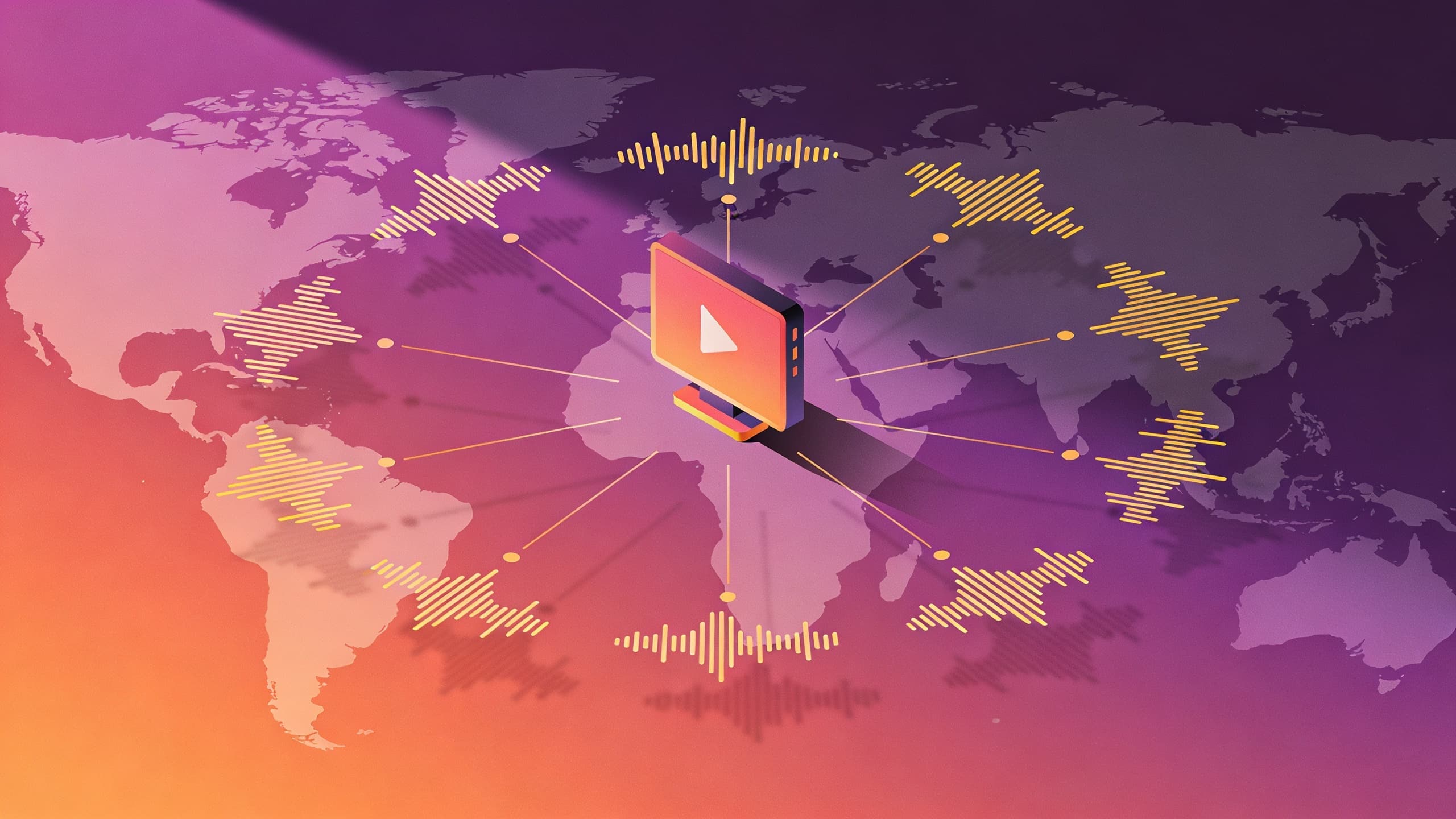
Searching for how to create multi-language faceless videos with AI in 2026 and grow a global audience without hiring translators or voice actors?
Most faceless creators are leaving the majority of their potential audience unreached. YouTube's global audience is overwhelmingly non-English-speaking, and the creators who understand how to produce multi-language content at scale using AI are capturing audience segments that English-only channels cannot touch.
This guide covers exactly how to build a multi-language faceless video strategy in 2026, which languages to target, how AI captioning changes the economics of global reach, how to produce language-specific videos inside Clippie AI, and how to monetise across multiple regional markets simultaneously.
Executive Summary
This guide is for faceless content creators who want to expand beyond English-language audiences and build genuine international reach in 2026. It covers why multi-language video is the fastest-growing organic growth strategy available to faceless creators, which languages deliver the most views and revenue, how Clippie AI's 102+ language caption support works in practice, the step-by-step workflow for producing and distributing multi-language content, how to build and manage language-specific channels from a single production operation, and how to stack AdSense and affiliate income across multiple regional markets. No translation experience, language fluency, or additional production tools required.
Table of Contents
Why Multi-Language Video Is the Fastest-Growing Opportunity for Faceless Creators in 2026
Which Languages Drive the Most Views and Revenue for Faceless Channels
How AI Auto-Captioning in 100+ Languages Works (And Why It Changes Everything)
How to Create and Export Multi-Language Videos Step-by-Step With Clippie AI
How to Grow Separate Language-Specific Channels From One Production Workflow
Multi-Language Monetisation, How to Stack AdSense and Affiliate Income Across Regions
Frequently Asked Questions

1. Why Multi-Language Video Is the Fastest-Growing Opportunity for Faceless Creators in 2026
The global YouTube audience is approximately 2.7 billion monthly active users. English-language content serves roughly 25–30% of that audience. The remaining 70–75%, almost 2 billion people, primarily consume content in their native language.
Most faceless creators are competing for 25% of the available audience. The other 75% is significantly less contested.
The Competitive Landscape in Non-English YouTube Markets
English-language YouTube is saturated across almost every major niche. Finance, self-improvement, true crime, history, and AI tools all have established channels with hundreds of thousands or millions of subscribers competing for the same search queries.
Non-English YouTube markets tell a different story:
Spanish-language YouTube:
500+ million Spanish speakers globally
Finance, self-improvement, and technology niches are significantly under-served by quality faceless content
A channel that would rank 50th in English can rank in the top 5 in Spanish for the same topic
Portuguese-language YouTube (Brazil focus):
Brazil is YouTube's third-largest market by total watch time
Creator economy is growing faster in Brazil than in the US
Faceless content in Portuguese faces a fraction of the competition of English equivalents
Hindi-language YouTube:
India is YouTube's largest market by user count, over 450 million users
Hindi finance, education, and self-improvement content is among the fastest-growing content categories on the platform
English content does not serve this audience, native language content is the only viable approach
Arabic-language YouTube:
400+ million Arabic speakers across 22 countries
YouTube usage is extremely high across the Middle East and North Africa
Quality faceless educational and informational content in Arabic is scarce relative to audience size
Why Faceless AI Production Is Uniquely Suited to Multi-Language Strategy
Traditional face-on-camera channels cannot easily scale across languages, the presenter's face, voice, and delivery are fixed. Producing Spanish content requires either a Spanish-speaking presenter or an expensive dubbing process.
Faceless AI channels have no such constraint:
The visual content, AI-generated images, VEO3.1 footage, text overlays, is language-agnostic
The voiceover can be generated in any language from the same script with an appropriate AI voice
Captions can be generated in any of 102+ languages automatically
The entire production workflow for a Spanish video is identical to an English video, just a different script language and voice selection
This means a single production system, Clippie AI, can power channels in multiple languages simultaneously, with minimal incremental effort per language.

The Timing Advantage in 2026
The window for early-mover advantage in non-English YouTube markets is still open, but it is closing. As more creators recognise the opportunity, competition in Spanish, Portuguese, Hindi, and Arabic YouTube will increase. The creators who build authority in these markets in 2026 will hold algorithmic and subscriber advantages that are difficult for later entrants to overcome.
The investment required to capture this advantage is a translated script and a language-appropriate AI voice. For a creator already producing English faceless content in Clippie AI, the marginal production cost of a Spanish or Portuguese version of the same video is measured in minutes, not hours.

2. Which Languages Drive the Most Views and Revenue for Faceless Channels
Not all non-English markets offer the same combination of audience size, advertiser CPM, and content demand. Strategic language selection maximises the return on the additional production effort.
Tier 1 Languages: Highest Combined View Volume and CPM
Spanish
Audience size: 500+ million speakers across Spain, Mexico, Colombia, Argentina, and 18 other countries
YouTube reach: The second-largest language market on YouTube globally
CPM by market:
Spain: $4–$10 CPM (comparable to mid-tier English markets)
Mexico: $2–$5 CPM
Latin America combined: $1.50–$5 CPM
Best performing faceless niches in Spanish:
Personal finance and investing, extremely high demand, limited quality supply
Self-improvement and productivity, Spanish-speaking millennials are the fastest-growing YouTube demographic
Technology and AI tools, creators in this niche face minimal competition in Spanish
Content strategy note: Scripts for the Spanish market should be written or translated with cultural specificity. Mexican financial regulations differ from Spanish ones, content that speaks to the specific market rather than "generic Spanish-speaking world" performs significantly better.
Portuguese (Brazil focus)
Audience size: 230+ million speakers, Brazil alone has over 147 million YouTube users
YouTube reach: Brazil is consistently YouTube's 3rd largest market by watch time
CPM by market:
Brazil: $2–$6 CPM
Portugal: $3–$8 CPM
Best performing faceless niches in Portuguese:
Business and entrepreneurship, Brazil has one of the fastest-growing entrepreneurship communities globally
Personal finance, financial literacy content is in extremely high demand in Brazil
True crime and mystery, one of the most popular content categories in Brazil
Content strategy note: Brazilian Portuguese differs from European Portuguese in vocabulary, pronunciation, and cultural references. A channel targeting Brazil should produce content written in Brazilian Portuguese, not European Portuguese.
Hindi
Audience size: 600+ million Hindi speakers, India is YouTube's largest market by user count
YouTube reach: Over 450 million YouTube users in India, predominantly mobile viewers
CPM:
India: $0.50–$2 CPM (lower than Western markets but offset by enormous volume potential)
Best performing faceless niches in Hindi:
Education and career guidance, exam preparation, government job content, skill development
Personal finance, high demand for savings, investment, and insurance content
Technology explainers, smartphone and app content is extremely high volume
Content strategy note: CPM is lower than Western markets, but the sheer volume of the Indian YouTube audience means a channel generating 10 million monthly views earns substantial absolute income even at lower per-view rates. Hindi channels also monetise effectively through affiliate marketing for Indian financial products and services.
Tier 2 Languages: Strong Niche Opportunity With Lower Competition
Arabic
Audience size: 400+ million speakers across 22 countries
CPM: $2–$8 CPM (Gulf states - UAE, Saudi Arabia, pay significantly higher CPMs than North Africa)
Best performing faceless niches: Finance, business, self-improvement, Islamic finance-specific content
Why now: Arabic YouTube is growing rapidly but quality faceless educational content is scarce. A well-produced Arabic finance or self-improvement channel faces dramatically less competition than the equivalent English channel.
French
Audience size: 300+ million speakers across France, Canada, Belgium, Switzerland, and West Africa
CPM: $3–$9 CPM
Best performing faceless niches: Finance, business, technology, true crime
Why now: French-speaking Africa (100+ million users) is one of YouTube's fastest-growing markets and is almost entirely underserved by quality faceless educational content.
German
Audience size: 100+ million speakers across Germany, Austria, and Switzerland
CPM: $6–$15 CPM, among the highest non-English CPMs globally
Best performing faceless niches: Finance, technology, self-improvement
Why now: German CPMs rival or exceed many English-language market CPMs. A German finance or technology channel generating 500,000 monthly views produces AdSense revenue comparable to an English-language channel with 1–2 million monthly views.
Indonesian
Audience size: 270+ million people, Indonesia is YouTube's 4th largest market
CPM: $0.50–$2 CPM
Best performing faceless niches: Finance, business, lifestyle, self-improvement
Why now: Extremely high YouTube usage with minimal quality faceless educational content in Indonesian. First-mover advantage is significant.
3. How AI Auto-Captioning in 100+ Languages Works (And Why It Changes Everything)
Clippie AI's speech-to-subtitles feature supports captions in 102+ languages, and understanding how this works in practice changes how creators think about the economics of multi-language content.
What AI Auto-Captioning Does
When a video is produced in Clippie AI with AI voiceover narration:
The platform transcribes the spoken content automatically
It generates timed caption lines synced to the voiceover audio
The creator selects the target language from 102+ options
Captions are applied to the video in the selected language
For an English video, this produces English captions automatically. For a Spanish video, it produces Spanish captions. For a Portuguese video, Portuguese captions. The process is the same regardless of language, it takes the same 2–3 minutes of review time in any of the 102 supported languages.
Why This Changes the Economics of Global Reach
Before AI auto-captioning, producing a Spanish-captioned version of an English video required:
A human translator to translate the script ($0.10–$0.20 per word, $100–$200 for a 1,000-word script)
A caption timing service or manual timing in an editing platform (30–60 minutes)
Quality review by a native Spanish speaker
Total cost: $100–$250 and 1–3 hours per video.
With Clippie AI's auto-captioning:
Select Spanish from the language menu
Auto-captions generate and sync in seconds
Review takes 3–5 minutes
Total cost: included in the Clippie AI subscription. Time: 5 minutes.
This changes the economics of multi-language content from "expensive strategic project" to "practical standard workflow addition", and it is why multi-language faceless video is accessible to solo creators in 2026 in a way it simply was not 2–3 years ago.

The Two Multi-Language Strategies Clippie AI Supports
Strategy 1: Captions-Only Multi-Language
Produce the video in English with English voiceover. Apply captions in a second language, Spanish, Portuguese, or French, for distribution to international markets.
Use case: Testing a new language market before committing to full voiceover production in that language. A Spanish-captioned English video can be cross-posted to Spanish-language TikTok and YouTube Shorts to assess audience response before investing in Spanish-language voiceover.
Limitations: Caption-only reaches viewers who can follow the English audio, primarily bilingual viewers, rather than the full native-language audience.
Strategy 2: Full Multi-Language Production
Produce separate versions of each video: one with English voiceover for the English channel, one with Spanish AI voiceover for the Spanish channel, one with Portuguese AI voiceover for the Portuguese channel.
Use case: Building a genuinely separate language-specific channel that ranks in YouTube's native language search results and serves a monolingual audience.
The production reality: A full Spanish video requires a Spanish script (translated or written natively) and a Spanish AI voice selection from Clippie AI's voice library. The rest of the workflow, image generation, captioning, export, is identical to the English production. The incremental production time for a second language version is approximately 25–35 minutes per video.
What 102+ Language Caption Support Means for TikTok and Reels
On TikTok and Instagram Reels, captions are the primary engagement tool for international audiences, not all international viewers have auto-translation enabled, and platform-generated auto-captions are often less accurate than native-language captions applied during production.
A TikTok video with native Spanish captions, produced inside Clippie AI, reaches Spanish-speaking audiences more effectively than a video with English captions that relies on TikTok's translation feature. This distinction drives meaningful differences in completion rate, comment rate, and follow conversion within Spanish-speaking audience segments.

4. How to Create and Export Multi-Language Videos Step-by-Step With Clippie AI
This is the complete production workflow for a creator running an English primary channel and expanding into Spanish as a second language market.
Phase 1; Script Translation or Native Writing
Option A; Translate the existing English script:
Use ChatGPT or Claude to translate the English script into Spanish:
"Translate this English YouTube script into Spanish (Latin American Spanish dialect, appropriate for a Mexican/Colombian audience). Maintain the same structure, hook, and CTA. Ensure natural conversational tone, not a word-for-word translation. Preserve all numbered section headings."
Review the translated script with Google Translate or a Spanish-proficient reviewer for:
Unnatural phrasing that reads as translated rather than native
Cultural references that do not translate, replace with locally relevant equivalents
Financial or technical terms that have different Spanish equivalents in different markets
Option B: Write the Spanish script natively:
For creators investing seriously in the Spanish market, commissioning native Spanish script writing, either through a freelancer on Upwork or a bilingual ChatGPT prompt with native tone specification, produces better audience resonance than translation.
"Write a faceless YouTube script in Latin American Spanish about [topic] for a Mexican audience aged 25–40. The tone should be conversational, direct, and culturally appropriate for that market. Do not translate from English, write as a native Spanish content creator would."
Phase 2: Voiceover Generation in Spanish
Inside Clippie AI:
Navigate to the voiceover tool
Select a Spanish voice from Clippie AI's 50+ voice library, look for voices labelled as Spanish or Latin American Spanish for market appropriateness
Paste the Spanish script
Generate narration
Voice selection criteria for Spanish:
Confirm the voice sounds native, not accented, test with 200 words from the script
Match the regional accent to your target market where possible (Mexican, Colombian, Spanish Castilian, and neutral international Spanish sound distinct to native speakers)
Confirm pacing is natural for conversational Spanish, some AI voices default to slower delivery when handling Spanish that sounds unnatural to native listeners
Phase 3: Auto-Captioning in Spanish
In the captioning section of Clippie AI, select Spanish from the 102+ language options
Auto-captions generate and sync to the Spanish voiceover automatically
Review captions for:
Accurate transcription of Spanish words (AI captioning occasionally mishears specific sounds)
Correct punctuation and paragraph breaks
Accurate rendering of numbers, percentages, and financial terms
Typical review time: 3–5 minutes for a 1,000-word Spanish script.
Phase 4: Export
Export the Spanish version at the same settings as the English version:
16:9 MP4 at 1080p for YouTube long-form
9:16 MP4 at 1080p for YouTube Shorts, TikTok, and Instagram Reels
One important export distinction:
The AI-generated images used in the English version are language-agnostic, landscapes, atmospheric footage, abstract visuals, and can be reused in the Spanish version without regeneration. If the images include text overlays in English (section title cards, for example), regenerate these with Spanish text for the Spanish version.
Phase 5: Upload to the Spanish-Language Channel
Upload to the separate Spanish-language channel (not the English channel)
Title in Spanish: include the primary keyword in Spanish
Description in Spanish: 150–250 words naturally including Spanish keywords
Tags in Spanish: 5–8 relevant Spanish-language tags
Total additional production time for a Spanish version: 30–45 minutes per video beyond the English version production time.

5. How to Grow Separate Language-Specific Channels From One Production Workflow
The most scalable multi-language strategy is separate channels per language, each channel operating as an independent content asset with its own subscribers, its own search rankings, and its own monetisation stack.
The Multi-Language Channel Architecture
English channel: Primary channel. Full content library. All production resources.
Spanish channel: Mirror channel for Spanish-language market. Same topics, Spanish scripts, Spanish voiceover, Spanish captions.
Portuguese channel (Brazil): Mirror channel for Brazilian market. Brazilian Portuguese scripts, appropriate regional voice, Portuguese captions.
Each channel builds its own subscriber base, its own watch hour accumulation, and its own algorithmic relationship with YouTube's search and recommendation system. A video that ranks on page 1 of English YouTube search for "how to invest for beginners" can simultaneously rank on page 1 of Spanish YouTube search for "cómo invertir para principiantes" and Brazilian Portuguese search for "como investir para iniciantes."
Three separate rankings. Three separate audience pools. Three separate revenue streams. One production system.
Managing Multiple Language Channels With Clippie AI Pro
Clippie AI's Pro plan supports 30 custom voices, sufficient to maintain a distinct cloned or custom voice identity for 30 separate channels.
Recommended voice setup for a 3-language operation:
English channel: 1 custom cloned English voice
Spanish channel: 1 custom Spanish voice (cloned from a Spanish speaker or selected from the voice library)
Portuguese channel: 1 custom Brazilian Portuguese voice
Each channel has a distinct audio identity. Viewers of the Spanish channel who discover the English channel will hear a different voice, the channels feel like separate operations to the audience, even though they are produced in the same Clippie AI account.

The Multi-Language Weekly Production Schedule
For a creator running English + Spanish channels simultaneously:
Monday: Research 3 topics for the week (same topics work for both channels)
Tuesday: Script English versions (2 hours)
Tuesday (extended): Translate scripts to Spanish (1 additional hour)
Wednesday: Produce English videos in Clippie AI (2 hours for 3 videos)
Wednesday (extended): Produce Spanish versions in Clippie AI (1.5 additional hours for 3 videos)
Thursday: Upload and optimise English videos (1 hour)
Thursday (extended): Upload and optimise Spanish videos (45 additional minutes)
Total weekly time for dual-language operation: 9–11 hours (vs 6–7 hours for English-only)
Output: 3 English videos + 3 Spanish videos = 6 complete, platform-ready videos across two channels
The YouTube Search Advantage of Language-Specific Channels
A single video uploaded to a multi-language channel with both English and Spanish subtitles does not rank in both English and Spanish search. YouTube's search ranking is language-specific, a video ranks in the language of its title, description, and audio content.
Separate channels with native-language titles, descriptions, and voiceover rank independently in each language's search ecosystem. This is why separate channels outperform subtitle-only multi-language strategies for long-term search traffic and subscriber growth.

6. Multi-Language Monetisation, How to Stack AdSense and Affiliate Income Across Regions
Multi-language channels do not just multiply views, they multiply income streams. Each language channel operates as an independent revenue asset with its own AdSense account, its own affiliate relationships, and its own sponsorship market.
AdSense Revenue Across Language Markets
Each YouTube channel requires a separate Google AdSense account. Each AdSense account generates independent revenue based on the CPM rates of that channel's primary audience geography.
Example multi-language AdSense stack:
English channel (primary US/UK audience): $8–$20 CPM
Spanish channel (Mexico/Colombia audience): $2–$5 CPM
Spanish channel (Spain audience): $4–$10 CPM
Portuguese channel (Brazil audience): $2–$5 CPM
German channel (Germany/Austria/Switzerland audience): $7–$15 CPM
The combined monthly AdSense from a 4-language operation at 100,000 monthly views per channel:
English: $800–$2,000
Spanish (Latin America): $200–$500
Portuguese (Brazil): $200–$500
German: $700–$1,500
Total combined AdSense: $1,900–$4,500/month from 400,000 total monthly views across 4 channels.
The English-only channel generating 400,000 monthly views would earn $800–$2,000 from AdSense alone, demonstrating the income multiplication effect of the multi-language approach.
Affiliate Marketing Across Regional Markets
Each language market has its own affiliate ecosystem, financial products, investment platforms, and digital tools that are specific to that market and pay commissions to creators who refer regional users.
Spanish-language affiliate opportunities:
Latin American investment platforms and fintech apps, pay $20–$100 per referred account
Spanish-language online learning platforms, 30–50% commission per course sale
Regional insurance and financial product affiliates
Portuguese/Brazil affiliate opportunities:
Brazilian investment apps (NuInvest, XP Investimentos, Rico), competitive referral commissions
Brazilian digital product marketplaces, strong affiliate commission structures
Brazilian e-commerce affiliate programmes
German affiliate opportunities:
German investment platforms and robo-advisors, high-value referrals with strong commissions
German software and SaaS affiliates, business-audience commissions are particularly strong
The affiliate compounding effect:
A finance creator running English + Spanish + Portuguese + German channels can simultaneously participate in four separate regional affiliate ecosystems, with different products, different commission structures, and different audience demographics. A product that does not convert well with English-speaking audiences may convert exceptionally well with Brazilian audiences if it solves a problem specific to the Brazilian financial context.
Digital Products Across Language Markets
A digital product created for the English market, a budget template, an investment tracker, a productivity system, can be adapted for other language markets with minimal incremental effort.
How to adapt digital products for language markets:
Translate the product interface or document into the target language (ChatGPT handles this efficiently)
Adjust any currency, regulatory, or market-specific references for the regional context
Create a separate sales page in the target language
Promote via the language-specific channel's video descriptions
The digital product geography advantage:
A budget spreadsheet template sold at $19 to an English-speaking audience can be sold at the same price, in local currency equivalents, to Spanish-speaking, Portuguese-speaking, and German-speaking audiences through their respective channels. Each language channel represents an additional distribution channel for the same digital product with minimal localisation effort.
Brand Sponsorships in Regional Markets
Regional brands actively seek creator partnerships in their specific markets, and they are willing to pay for access to niche, targeted audiences in their language.
A Spanish-language finance channel with 30,000 engaged subscribers in Mexico is more valuable to a Mexican fintech brand than a general-audience channel with 300,000 subscribers. Regional specificity commands premium sponsorship rates from brands that cannot efficiently reach their target demographic through large-audience English channels.
Sponsorship development for multi-language channels:
Maintain separate media kits for each language channel, include audience geography breakdown, CPM data, and engagement rates
Approach regional brands proactively once each channel reaches 10,000 subscribers
List multi-language channel packages in pitches, a brand that wants to reach Spanish-speaking audiences across multiple countries may pay for the full Spanish channel audience rather than per-country rates
Clippie AI Plans: Matched to Multi-Language Production Scale
Lite: $19.99/month
30 mins video export (~3–5 videos/month)
30 mins AI voice generation
30 mins speech-to-subtitles
100 AI images
1 custom voice
Captions in 102+ languages
50+ AI voices
24/7 support
Best for: Testing a second language market with 2–3 videos before committing to a full dual-language operation
Creator: $34.99/month
120 mins video export (~8–12 videos/month)
120 mins AI voice generation
120 mins speech-to-subtitles
500 AI images
10 custom voices
Captions in 102+ languages
50+ AI voices
24/7 support
Best for: Running 2 language channels (English + Spanish or English + Portuguese) at 4–6 videos per month per channel
Pro: $69.99/month
250 mins video export (~15–20 videos/month)
250 mins AI voice generation
250 mins speech-to-subtitles
1,000 AI images
30 custom voices
Captions in 102+ languages
50+ AI voices
24/7 support
Best for: Running 3–5 language channels simultaneously, 30 custom voices supports a distinct voice identity per channel across a full multi-language portfolio
No free tier is available on Clippie AI.
💡 For the complete production system that powers this multi-language workflow, read our guide on the ultimate faceless content workflow from idea to viral video
💡 For the full monetisation strategy that multi-language channels unlock across every income stream, read our guide on the complete faceless content monetisation blueprint for 2026
💡 Start building your multi-language faceless channel with Clippie AI today →
Conclusion: 70% of YouTube's Audience Is Waiting for Content in Their Language
The creators who will dominate faceless YouTube in 2026 and beyond are not those who produce the most English content. They are those who understand that the global non-English audience is larger, less contested, and more accessible in 2026 than it has ever been, and who build multi-language production systems before their competitors realise the opportunity.
Clippie AI's 102+ language caption support, 50+ AI voices across multiple languages, and integrated production platform make multi-language faceless content creation a practical addition to any existing workflow rather than a separate strategic project.
One production system. Multiple language channels. Audiences across six continents. Revenue from four separate AdSense accounts, four separate affiliate ecosystems, and regional sponsorship markets that English-only creators cannot access.
The infrastructure is built. The audience is waiting. The window for first-mover advantage is open.
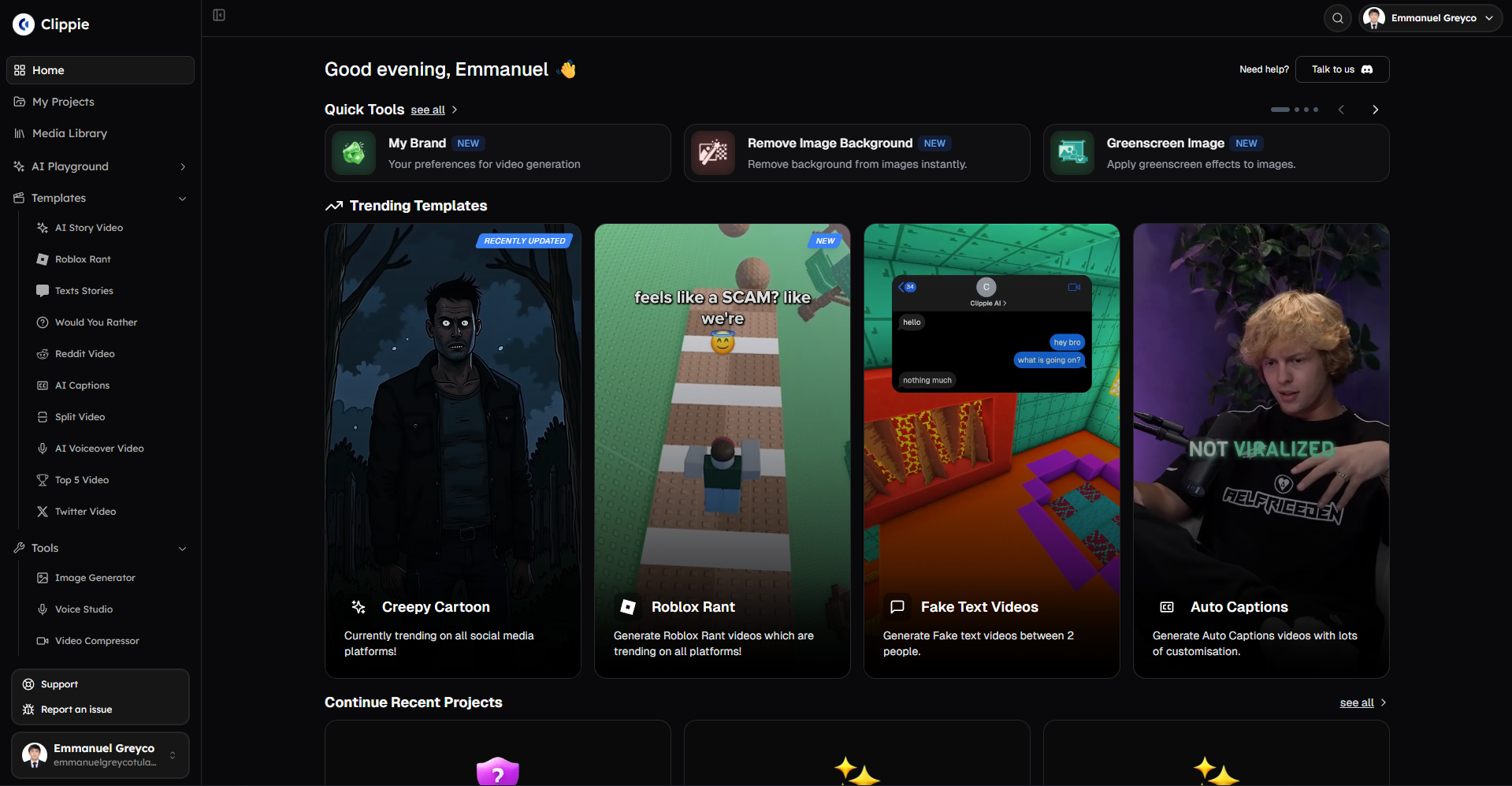
Start creating multi-language faceless videos with Clippie AI today →
7. Frequently Asked Questions
Q1: Do I need to speak another language to create multi-language faceless videos?
No. The entire multi-language production workflow can be executed without language fluency. Script translation is handled by ChatGPT or Claude with a specific prompt for natural native-language output. AI voiceover in the target language is selected from Clippie AI's voice library without requiring the creator to speak or understand the language. Auto-captioning generates and syncs in the target language automatically. The creator's role is strategic, topic selection, quality review of the translated script via a native speaker check, and publishing, not linguistic fluency.
Q2: Which language should I add to my English faceless channel first?
Spanish is the strongest first addition for most English-language creators. It offers the second-largest YouTube audience globally, strong CPM rates particularly in Spain and Latin America, well-developed affiliate ecosystems across finance and technology niches, and a large base of existing search volume that English creators are entirely missing. Portuguese (Brazil focus) is the second strongest addition, Brazil's enormous and rapidly growing YouTube market provides significant view volume potential with lower competition than Spanish in most niches.
Q3: How much additional time does producing a Spanish version of each video take?
Approximately 30–45 minutes per video beyond the English production time. This includes script translation review (10–15 minutes), Spanish voiceover generation in Clippie AI (5 minutes), Spanish caption review (5 minutes), export (5 minutes), and Spanish-language title, description, and upload optimisation (10 minutes). At this incremental investment, a creator producing 3 English videos per week adds 90–135 minutes of total weekly production time to also publish 3 Spanish videos, maintaining a complete second-language channel at under 2.5 additional hours per week.
Q4: Should multi-language content go on the same channel or separate channels?
Separate channels, always. YouTube's search ranking is language-specific, a video ranks in the language of its title, description, and audio content. A video uploaded to a single channel with Spanish subtitles does not rank in Spanish YouTube search. A separate Spanish channel with native Spanish titles, descriptions, and voiceover ranks independently in Spanish search, builds a Spanish-speaking subscriber base, and generates its own AdSense revenue at regional CPM rates. The incremental setup cost of a separate channel (30 minutes) is minimal compared to the long-term search and revenue advantages.
Q5: How does Clippie AI's 102+ language caption support work in practice?
Clippie AI's speech-to-subtitles feature transcribes the AI voiceover audio and generates timed captions automatically. The creator selects the target language from a menu of 102+ options. Captions generate and sync to the voiceover in the selected language without requiring manual timing or translation input. The process takes the same 2–3 minutes of review time regardless of which language is selected. For a creator producing videos in multiple languages, this eliminates what would otherwise be a $100–$250 per-video cost and 1–3 hour time investment for professional translation and caption timing.
Q6: Which Clippie AI plan is right for running 2 language channels simultaneously?
The Creator plan at $34.99/month is the right fit for running 2 language channels, English plus one additional language. Its 120-minute export capacity supports approximately 8–12 videos per month across both channels combined, its 500 AI image allocation covers the visual production for both, and its 10 custom voice slots allow distinct voice identities for each channel. Creators running 3 or more language channels simultaneously should upgrade to the Pro plan at $69.99/month, the Pro plan's 250-minute export capacity, 1,000 images, and 30 custom voices provide the infrastructure for a full multi-language portfolio operation.
Make an AI story video
Write a script or let AI write one. Clippie turns it into a narrated video with AI scenes, voiceover and captions.
Read more

How to Make Top 5 Ranking Videos in 2026 (Step-by-Step)
Build ranking Shorts that can still earn: pick a debatable topic, set clear criteria, source clips you may use, script the countdown, add your commentary.

How to Create Short-Form Videos Using AI: 8 Steps (2026)
A beginner workflow for AI videos on TikTok, Reels and Shorts: pick a format, script a hook, add visuals, voice and captions, export at 9:16, label AI.

7 Free CapCut Alternatives for Short-Form Video (2026)
Compare Edits, YouTube Create, VN, Clipchamp, Canva, DaVinci Resolve and Shotcut: what each gives free users, what it caps first and where it falls short.