
How to Start a Faceless True Crime Channel With AI in 2026 (Step-by-Step Monetisation Guide)
Learn how to start a faceless true crime channel with AI in 2026, story sourcing, retention scripting, Clippie AI production workflow, full monetisation strategy, and platform content rules.

Searching for how to start a faceless true crime channel with AI in 2026?
True crime is one of the most loyal, engaged, and consistently growing audiences on YouTube and TikTok, and it is one of the formats most perfectly suited to faceless AI production. No camera. No presenting. No expensive studio. Just compelling storytelling over atmospheric visuals, delivered through an AI narrator that your audience comes to recognise and trust.
This guide is the complete blueprint, from understanding why true crime is a premium faceless niche, to sourcing stories ethically, to scripting for maximum retention, to producing a complete video inside Clippie AI, to growing and monetising from day one.
Executive Summary
This guide is for faceless content creators who want to build a profitable true crime YouTube and TikTok channel using AI production tools in 2026. It covers why the true crime niche is uniquely well-suited to faceless AI production, how to research and source stories responsibly, the specific scripting structure that maximises retention in this format, the step-by-step production workflow inside Clippie AI, a complete monetisation strategy from subscriber count zero, and the platform rules every true crime creator must understand before publishing. By the end of this guide, you have everything needed to launch a true crime channel that grows consistently and monetises across multiple income streams.
Table of Contents
Why True Crime Is One of the Most Profitable Faceless Niches on YouTube and TikTok in 2026
How to Research and Source True Crime Stories That Drive Millions of Views
How to Script True Crime Videos for Maximum Retention and Watch Time
How to Produce a Complete True Crime Video With Clippie AI (No Camera Required)
How to Grow and Monetise a Faceless True Crime Channel From Day One
True Crime Content Rules, What Platforms Allow and What to Avoid
Frequently Asked Questions

1. Why True Crime Is One of the Most Profitable Faceless Niches on YouTube and TikTok in 2026
True crime is not a trend. It is a permanently established content category with one of the most loyal audience bases on any digital platform, and the characteristics that make audiences loyal to true crime content are the same characteristics that make the niche exceptionally monetisable.
The Audience Loyalty Advantage
True crime audiences are not passive content consumers. They are active, invested communities who:
Return consistently to channels they trust for new stories
Subscribe at higher rates than entertainment audiences, they want to be notified of new content, not just stumble upon it
Comment prolifically, discussing theories, sharing additional context, debating interpretations
Share content within their communities, dedicated true crime communities on Reddit, Facebook, and Discord actively share and discuss content from trusted channels
This audience loyalty translates directly into measurable channel metrics:
Higher average view duration than entertainment channels, true crime viewers complete stories at significantly higher rates than viewers of non-narrative content
Higher subscriber-to-view conversion, the percentage of viewers who subscribe after watching is consistently above average for the niche
Lower subscriber churn, true crime subscribers stay subscribed for longer than subscribers in most other niches

The Monetisation Profile
True crime channels monetise across a broader range of income streams than most faceless niches:
AdSense CPM: True crime attracts advertisers from entertainment, streaming services, insurance, security products, and legal services, a range of advertiser categories that pushes CPM above the platform average. Realistic CPM range: $3–$10 per thousand views (higher for channels with US-dominant audiences).
Sponsorship market: True crime channels have one of the most active sponsorship markets on YouTube. VPN services, identity protection platforms, home security brands, true crime streaming services (Peacock, Discovery+), and book subscription services actively seek true crime channel partners.
Affiliate marketing: True crime audiences convert well on affiliate products for streaming services, audiobook platforms (Audible), home security systems, and true crime book titles. These are commission-generating referrals with minimal friction.
Merchandise: True crime channels develop strong community identity that supports merchandise, branded apparel, themed accessories, and community-specific items perform well for channels with engaged subscriber bases above 50,000.
Why Faceless AI Production Is Ideal for True Crime
True crime is a pure narration-over-visuals format. The story is carried by the narrator's voice and the atmospheric footage or imagery behind it. There is no reason, functional or aesthetic, for the creator to appear on camera.
The most successful true crime channels in history are primarily voice-first operations: the narrator tells the story while documentary-style footage, crime scene maps, atmospheric imagery, and period-appropriate visuals provide the visual backdrop.
AI production tools replace every manual element of this format:
AI voiceover replaces the narrator's recording sessions
Clippie AI's image generation and VEO3.1 integration replaces documentary stock footage sourcing
Auto-captioning replaces manual subtitle creation
The integrated workflow replaces multi-tool production pipelines
A creator who understands true crime storytelling and produces consistently compelling scripts can build a significant true crime channel in 2026 without a camera, a studio, or a production team.
The Scale Opportunity
True crime is a global niche. The audience exists in every major YouTube and TikTok market, English, Spanish, Portuguese, French, German, and dozens of other languages have active true crime communities with limited quality faceless content serving them.
A creator building a true crime channel in English while simultaneously repurposing content for Spanish or Portuguese audiences (using Clippie AI's 102+ language caption support and Spanish AI voiceover) multiplies their audience reach with minimal incremental production effort.

2. How to Research and Source True Crime Stories That Drive Millions of Views
Story selection is the most important creative decision in true crime content. Not all crimes are equally appropriate for content creation, and not all appropriate crimes generate the same level of audience interest.
Story Selection Criteria
Criterion 1: Public Record Status
Every true crime story covered should be a matter of public record, documented through official court records, police reports, news coverage, or public criminal proceedings.
Public record status means:
The case information was legally published and is factually established
Reporting on it does not expose the creator to defamation liability
The individuals involved were public figures through the criminal justice process
Never cover: Unverified allegations, rumours, or cases where no conviction or official proceedings exist. Covering unverified accusations as factual true crime is both ethically wrong and legally dangerous.
Criterion 2: Documented Outcome
The most content-appropriate true crime cases have a documented outcome, a conviction, an acquittal, an ongoing official investigation, or a cold case status formally established by law enforcement.
Cases with documented outcomes allow the narrator to present the full arc of the story, the crime, the investigation, and the resolution or ongoing mystery, without speculating on guilt or innocence.
Criterion 3: Audience Interest Potential
Not all documented crimes generate audience interest at the level required for channel growth. The cases that generate the most views share one or more of these characteristics:
An unexpected twist in the investigation or outcome
A mystery element, unsolved aspects, cold case status, or unexplained details
A high-profile setting or prominent individuals involved
A case that challenged or changed the justice system
A story with strong emotional resonance, wrongful conviction, unexpected heroism, or extraordinary survival
Criterion 4: Ethical Treatment of Victims
True crime creators have a responsibility to treat victims, and their families, with respect. Cases where the victim's family has publicly objected to media coverage of their loved one's story deserve particular consideration.
The ethical standard for a reputable true crime channel:
Focus the narrative on the crime, investigation, and justice system, not on graphic details of the victim's suffering
Name victims and describe what happened to them with dignity, they are not props for the story
Do not speculate on victims' personal lives in ways that are not relevant to the case and investigation
True crime channels that prioritise sensationalism over responsible storytelling build audiences quickly and lose them, and their advertiser relationships, equally quickly.
Primary Research Sources for True Crime Content
Source 1: Court Documents and Official Records
Court documents are the gold standard of true crime research. They contain:
Detailed factual accounts of the crime and investigation established through legal proceedings
Evidence descriptions and forensic findings
Witness testimony and official statements
Sentencing decisions and legal outcomes
Where to access them:
PACER (Public Access to Court Electronic Records), federal court records in the US
State court online portals, most US states have publicly accessible court document databases
CourtListener, aggregates federal court records for free access
Local court clerk offices, physical records available for in-person review
Source 2: Established News Archives
Major newspaper archives contain documented reporting on criminal cases that has been fact-checked and legally reviewed before publication. Established sources:
ProPublica
The Marshall Project (specialises in criminal justice reporting)
Local newspaper archives, often the most detailed early reporting on regional cases
Associated Press and Reuters archives, reliable wire service reporting on major cases
Important: Always cross-reference across multiple news sources before treating any reported detail as fact. Single-source reporting occasionally contains errors that court documents or subsequent reporting corrects.
Source 3: True Crime Databases and Communities
Several platforms aggregate true crime case information with sourcing:
Murderpedia, comprehensive database of documented murder cases
The Crime Museum, educational resource with documented case histories
r/UnresolvedMysteries and r/TrueCrime on Reddit, community-compiled case information with sourcing
Using Reddit as a research source: Reddit true crime communities often surface detailed case information and sourcing. Always verify community-compiled information against primary sources (court documents and news archives) before including in scripts, community posts occasionally contain errors or unverified speculation alongside accurate sourcing.
Source 4: Documentaries and True Crime Books as Entry Points
Established true crime documentaries and published true crime books are research entry points, not primary sources. They provide a narrative framework and point to primary source material that the creator can verify independently.
How to use them correctly:
Watch or read the documentary/book → identify the primary sources cited → verify those primary sources directly before scripting.
Never quote documentary narration or book text directly in your scripts, this is both a copyright issue and a factual reliability risk. Use them to discover source material, not as the source material itself.

Building a Story Pipeline
A true crime channel needs a consistent pipeline of story ideas to maintain weekly or bi-weekly publishing without scrambling for content.
The monthly story pipeline process:
Spend 2 hours once per month researching and identifying 8–12 story candidates
Screen each against the four story selection criteria
Rank by expected audience interest
Add to the content calendar in priority order
Maintain a minimum 6-week content buffer, stories confirmed and research-complete, ready for scripting
A 6-week buffer means no production session is ever delayed by insufficient story selection.

3. How to Script True Crime Videos for Maximum Retention and Watch Time
True crime scripting is a specific craft. The elements that make a true crime story compelling in audio format are different from those that make news or documentary content effective, and they are learnable.

The True Crime Script Structure
Element 1: The Cold Open (First 15–30 Seconds)
The cold open begins in media res, at the most dramatic moment of the story, before pulling back to establish context.
What this means in practice:
Instead of beginning: "On March 14th, 1987, in a quiet suburb of Cincinnati, Ohio, a woman named Carol...", begin: "The 911 call came in at 3:47 in the morning. The dispatcher would later say it was the most disturbing call she had ever received."
The cold open drops the viewer into the emotional peak of the story before any context is established. The psychological effect is immediate forward tension, the viewer needs to know what led to this moment.
Cold open formats that perform:
The 911 call or distress moment, "The night it happened..."
The discovery, "When [person] arrived at [location], nothing could have prepared them for what they found..."
The reversal, "By the time investigators understood what had actually happened, it was already too late..."
The survival, "She survived. But what she had endured over the previous [timeframe] would take investigators years to fully understand..."
Element 2: The Background and Context (30 Seconds – 2 Minutes)
After the cold open, pull back to establish the context viewers need to understand the full story:
Who are the key individuals?
What was the setting and relationship between the people involved?
What was the state of things before the crime?
The crucial scripting note: Context should be delivered with emotional texture, not as a list of biographical facts. "Carol had lived in that house for twenty-three years. Her neighbours described her as the kind of person who remembered everyone's birthday.", not "Carol, age 47, was a resident of [address] and was described by neighbours as a friendly person."
Emotional texture creates the investment that keeps viewers watching through sections that are necessary but not dramatic.
Element 3: The Crime (2–4 Minutes Depending on Video Length)
Present the crime itself, what happened, when, and what was known immediately afterward. This section should:
Be factually precise, every detail verifiable from primary sources
Be described with appropriate gravity, not sensationalised, but not sanitised to the point where the severity is unclear
Establish the central mystery or question the rest of the video will address
Scripting discipline for the crime section:
The crime section is where some true crime creators lapse into graphic detail that serves sensation rather than storytelling. The rule: describe what happened at the level of detail that is necessary to understand the investigation and outcome. Nothing more.
Element 4: The Investigation (3–6 Minutes Depending on Video Length)
The investigation section is the core of the true crime narrative. This is where the story's complexity lives, the clues found and missed, the suspects considered, the breakthroughs and setbacks, the moments where investigators came close and then lost the trail.
Scripting elements that drive retention in the investigation section:
The wrong suspect, if investigators initially pursued someone innocent, this creates dramatic tension around the moment of realisation
The overlooked clue, detail that seems minor when first mentioned but proves decisive later
The witness who came forward, the source of the breakthrough and what motivated them
The timeline discrepancy, a factual inconsistency in the official account that changed the investigation's direction
Each of these elements creates a forward-pulling micro-narrative within the investigation section.
The midpoint retention hook:
At the exact midpoint of the video, include a statement that re-engages viewers who may be beginning to passively watch:
"What investigators discovered next changed everything they thought they knew about this case."
"The break in the case came from the most unexpected source imaginable."
"The answer had been there from the beginning. No one had looked for it because no one believed it was possible."
Element 5: The Resolution or Ongoing Mystery (2–3 Minutes)
Present the outcome, conviction, acquittal, cold case status, or ongoing investigation, with factual accuracy and appropriate tonal weight.
For resolved cases: What was the verdict, what was the sentence, and what happened to the key figures afterward?
For cold cases or unresolved mysteries: What do investigators currently believe, what evidence remains, and what questions are still unanswered? Cold case endings perform particularly well for channel growth because they generate comment activity, viewers who have theories or additional information share them.
Element 6: The CTA and Close (15–30 Seconds)
The true crime CTA should be specific to the format:
"If this case is new to you, subscribe, I release a new case every [day of week]"
"If you have information about this case, the [agency] tip line is in the description"
"What do you think happened? Drop your theory in the comments, I read every one"
For series: "Part 2 covers what happened at the trial. It posts [day/time], subscribe so you don't miss it"
Script Length and Format
Short-form TikTok / Shorts: 150–250 words (60–90 seconds)
YouTube mid-length: 1,200–1,800 words (8–12 minutes)
YouTube long-form documentary: 2,500–4,000 words (15–25 minutes)
For most faceless true crime channels starting out, the 8–12 minute format is optimal, long enough to tell a complete story with investigation detail, short enough to produce consistently and maintain viewer completion rates above 40%.

4. How to Produce a Complete True Crime Video With Clippie AI (No Camera Required)
Step 1: Voiceover: Selecting the Right Voice for True Crime
Inside Clippie AI's 50+ voice library, true crime content requires specific voice characteristics:
What to listen for:
A measured, serious delivery, not overly dramatic, but clearly conveying the gravity of the subject
Lower to mid pitch range, higher pitches read as less authoritative in documentary-style narration
Natural pacing with deliberate pauses, true crime benefits from the narrator appearing to choose their words carefully
Emotional range, the voice should convey empathy for victims and gravity around the crime without tipping into theatrical performance
Testing approach:
Test 3–4 candidate voices on your cold open paragraph, the most emotionally demanding section of the script. The voice that delivers "The 911 call came in at 3:47 in the morning" with appropriate weight without sounding sensationalistic is your true crime channel voice.
Custom voice cloning for true crime:
For long-term channel building, cloning a voice creates a proprietary audio identity that becomes synonymous with the channel. True crime audiences develop strong parasocial relationships with narrator voices, the voice is the personality of a faceless channel. A cloned voice that is consistent across every episode is the most powerful audience retention tool available to a true crime creator.
Step 2: Visual Generation: Atmospheric True Crime Imagery
True crime visuals serve a specific function: they create atmosphere and emotional context for the narration without depicting graphic or exploitative imagery.
Effective true crime visual categories:
Environmental Establishing Shots
These set the scene geographically and emotionally before the crime is described.
Prompt examples:
"Dark atmospheric illustration of a quiet suburban street at night, single street lamp creating a pool of light on wet pavement, empty and unsettling, cinematic style, high quality"
"Dark cartoon illustration of a rural farmhouse at dusk, isolated, surrounded by bare trees, single light visible in window, ominous and atmospheric, high quality"
Investigation and Evidence Imagery
These accompany the investigation section of the script, visually representing the procedural elements without depicting real crime scenes.
Prompt examples:
"Dark editorial illustration of an empty police station at night, single desk lamp illuminating case files, atmospheric and serious, documentary aesthetic, high quality"
"Dark atmospheric illustration of a courtroom interior, empty, dramatic lighting from high windows, justice system setting, serious and weighty, cinematic quality"
Timeline and Map Visuals
These help viewers understand the geographic context or chronological sequence of events.
Prompt examples:
"Dark editorial illustration of a stylised map with marked locations, documentary aesthetic, minimal colour palette, serious and informative, high quality illustration"
Emotional Resolution Imagery
These accompany the resolution or ongoing mystery section, conveying the weight of the outcome without depicting individuals.
Prompt examples:
"Dark atmospheric illustration of an empty courthouse steps at dusk, symbolic of justice, dramatic sky, cinematic quality, editorial style"
"Dark illustration of a memorial candle and flowers, respectful and solemn, minimal colour palette, dignified and respectful, high quality"
VEO3.1 Motion Clips for True Crime
Atmospheric motion footage elevates true crime content from illustrated narration to documentary-style storytelling.
Effective VEO3.1 prompts for true crime:
"Slow cinematic pan along an empty suburban street at 3am, wet pavement reflecting distant streetlights, fog in the distance, unsettling and atmospheric, dark blue and grey colour palette, cinematic quality, 4K"
"Slow aerial drone shot over a dense forest at dawn, grey overcast sky, remote and isolated landscape, documentary aesthetic, cinematic 4K footage"
"Interior: slow camera drift across an empty room, single window with grey light, still and silent atmosphere, dark tones, cinematic documentary style, 4K"
Step 3: Auto-Captioning
Clippie AI auto-syncs captions to the AI voiceover. For true crime:
Review accuracy on proper nouns, names of individuals, locations, agencies, and case-specific terminology
Confirm accurate rendering of dates and statistics
Check that emotional delivery pauses in the narration are reflected in appropriate caption timing
Step 4: Export
For YouTube long-form true crime:
16:9 MP4 at 1080p minimum
Frame rate: 30fps
Duration: 8–25 minutes depending on case complexity
For TikTok and YouTube Shorts:
9:16 MP4 at 1080p
Duration: 60–90 seconds
Clip the most dramatic moment from the long-form video, typically the cold open or the investigation breakthrough
Production Time Per Video With Clippie AI
Voiceover generation (8–12 minute script): 3–5 minutes
VEO3.1 clip generation (4–6 clips): 15–25 minutes
AI image generation (5–8 images): 10–15 minutes
Caption review: 5–8 minutes
Export (long-form + Shorts cut): 8–10 minutes
Total production time inside Clippie AI: 40–65 minutes per complete long-form true crime video

5. How to Grow and Monetise a Faceless True Crime Channel From Day One
Growth Strategy for True Crime Channels
Phase 1: Building the Foundation (0–100 Subscribers)
Post consistently above all else:
The true crime algorithm responds to consistency more than almost any other factor. Post one long-form video per week and two Shorts per week (repurposed clips from the long-form) without exception for the first 12 weeks.
Target low-competition cases first:
Well-known cases (Zodiac Killer, Ted Bundy, Jonbenét Ramsey) are dominated by established channels with years of authority. New channels rank faster and grow faster when they cover:
Regional cases with real victims but limited national coverage
Historical cases that received mainstream coverage once and have not been revisited recently
International cases that English-language true crime has not extensively covered
Cold cases, the ongoing mystery element drives sustained search traffic and comment engagement
Phase 2: Building Algorithmic Momentum (100–1,000 Subscribers)
Series content:
A multi-part case series drives subscriber conversion more effectively than standalone videos. A viewer who watches Part 1 of a complex case and wants Part 2 will subscribe to ensure they receive notification when it posts.
Structure 3–5 part series on complex cases, trials with multiple suspects, cold cases with evolving theories, or cases with significant post-conviction developments.
Comment engagement:
Reply to every comment in the first 72 hours after each video publishes. YouTube weights channel comment engagement as a quality signal. True crime comment sections are naturally active, viewers share theories, additional sourcing, and personal connections to cases. Responding to these builds community loyalty that converts to long-term subscribers.
Phase 3: Monetisation Activation (1,000+ Subscribers)
YouTube Partner Programme eligibility:
1,000 subscribers + 4,000 watch hours OR 10 million Shorts views in 90 days
True crime's high average view duration means watch hours accumulate faster than in entertainment niches
The Full True Crime Monetisation Stack
Income Stream 1: YouTube AdSense
Activated at Partner Programme eligibility. True crime CPM rates: $3–$10 per thousand views.
Maximising true crime AdSense:
Longer videos (15–25 minutes) support more mid-roll ad placements, a 20-minute documentary-style true crime video can carry 4–6 mid-roll ads without significant viewer impact when placed at natural narrative pause points
US, UK, Australian, and Canadian audiences pay premium CPM rates, content that attracts these geographies earns significantly more per view
Mid-roll placement timing: place ads at section transitions, not mid-sentence, jarring mid-roll placement damages retention at the ad point and lowers the overall completion rate signal
Income Stream 2: Brand Sponsorships (Most Active Market for True Crime)
True crime has one of the most active brand sponsorship markets on YouTube. The following brand categories actively seek true crime channel partnerships:
VPN services: Nordvpn, ExpressVPN, Surfshark, extremely active in true crime sponsorships
Identity protection services: LifeLock, Aura, Identity Guard
Home security brands: SimpliSafe, Ring
True crime streaming services: Peacock, Discovery+, Crime+Investigation
Audiobook and book subscription platforms: Audible, Storytel
True crime merchandise companies
Realistic sponsorship rates for true crime channels:
10k–50k subscribers: $200–$800 per integration
50k–200k subscribers: $800–$4,000 per integration
200k+ subscribers: $4,000–$15,000 per integration
True crime commands premium rates relative to subscriber count because of audience loyalty and engagement metrics.
Income Stream 3: Affiliate Marketing
Highest-converting true crime affiliate products:
Audible: $5–$15 per new trial sign-up, true crime audiences are heavy audiobook consumers; Audible's true crime catalogue is a natural affiliate fit
Amazon true crime book affiliates: 4–8% commission on book sales driven by description links
VPN affiliates: $30–$80+ per sign-up, VPN affiliates pay some of the highest commissions in content creator marketing
Home security system affiliates: $50–$150 per sale
Affiliate placement strategy for true crime:
Add affiliate links to every video description with a brief contextual sentence connecting them to the content: "If this case made you think about your own personal security, I've linked the service I personally use below.", contextual placement dramatically outperforms generic link-in-description placements.
Income Stream 4: Merchandise
True crime channels develop strong community identity around their visual aesthetic, narrator voice, and recurring catchphrases. Merchandise that reflects this identity, branded apparel, case-specific designs, community-specific phrases, converts well for channels with engaged subscriber bases above 50,000.
Start with a Printful or Printify integration through Shopify, no inventory investment required, and merchandise revenue can begin within one week of setup.
Clippie AI Plans: Matched to True Crime Channel Scale
Lite: $19.99/month
30 mins video export (~3–5 videos/month)
30 mins AI voice generation
30 mins speech-to-subtitles
100 AI images
1 custom voice
Captions in 102+ languages
50+ AI voices
24/7 support
Best for: Launching the channel and producing 2–4 long-form true crime videos per month while validating the format
Creator: $34.99/month
120 mins video export (~6–10 videos/month)
120 mins AI voice generation
120 mins speech-to-subtitles
500 AI images
10 custom voices
Captions in 102+ languages
50+ AI voices
24/7 support
Best for: A weekly posting true crime channel with consistent long-form plus Shorts cross-posting
Pro: $69.99/month
250 mins video export (~12–18 videos/month)
250 mins AI voice generation
250 mins speech-to-subtitles
1,000 AI images
30 custom voices
Captions in 102+ languages
50+ AI voices
24/7 support
Best for: High-volume true crime operations, multi-language expansion, or content agencies managing multiple true crime channels
No free tier is available on Clippie AI.
💡 For the complete monetisation strategy that activates across all income streams once the channel grows, read our guide on the complete faceless content monetisation blueprint for 2026
💡 For the production workflow that supports consistent true crime output at scale, read our guide on the ultimate faceless content workflow from idea to viral video
💡 Start building your faceless true crime channel with Clippie AI today →

6. True Crime Content Rules, What Platforms Allow and What to Avoid
Understanding platform content policies for true crime is not optional, violating them results in demonetisation, content removal, or channel termination. These rules are also the ethical foundation of responsible true crime content creation.
YouTube True Crime Content Policies
What YouTube permits:
Documentary-style coverage of public record criminal cases
Historical crime cases with factual sourcing
Cold case coverage with appropriate treatment
Commentary and analysis of criminal justice proceedings
True crime cases where victims and families are treated with dignity
What YouTube restricts or removes:
Content that glorifies, celebrates, or normalises violence or criminal acts
Graphic or disturbing depictions of violence beyond what is necessary for the story
Content that reveals personal information about living individuals connected to a case (addresses, phone numbers, locations), this is also a legal liability
Content that makes unverified allegations of criminal activity against specific named individuals
Re-enactment footage that depicts violence in graphic detail
Monetisation-specific restrictions:
YouTube's advertiser-friendly content guidelines restrict mid-roll ad revenue on videos containing:
Graphic crime scene descriptions beyond general documentary standards
Extended focus on methods of violence
Content that could be interpreted as exploitative toward victims
True crime content that presents cases with investigative focus, appropriate treatment of victims, and sourced factual content generally qualifies for full monetisation. Sensationalised or gratuitously detailed content may be limited to limited ads or demonetised.
TikTok True Crime Content Rules
TikTok's content policies for true crime are stricter than YouTube's in several areas:
What TikTok permits:
Factual case summaries of public record criminal cases
Historical true crime content
Cold case awareness content
True crime commentary on publicly documented cases
What TikTok restricts:
Content depicting or describing violent acts in graphic detail, TikTok enforces this more strictly than YouTube
Content featuring crime scene imagery or recreations that depict violence
Content that names living individuals with personal identifying information
Content that glorifies or sensationalises criminal activity
The TikTok true crime format:
The most successful true crime format on TikTok is the 60–90 second case summary, focusing on the mystery, investigation, or unresolved elements rather than the crime itself. TikTok's stricter content guidelines mean the investigation and mystery elements of true crime perform better than graphic crime description.
Instagram Reels True Crime Guidelines
Instagram follows Meta's community standards, which are broadly similar to TikTok's in restricting graphic content. True crime content on Reels should:
Focus on the investigative and justice-system elements of cases
Avoid graphic descriptions of violence or crime scenes
Not include re-enactment footage depicting violence
Treat victims with dignity and avoid exploitative framing
Legal Considerations for True Crime Creators
Defamation
Publishing false statements of fact about a named individual that damage their reputation is defamation. For true crime creators:
Only state as fact what can be verified through primary sources (court documents, established news reporting)
Clearly distinguish between established facts and speculation or theories
Never state as fact that a named individual committed a crime if they have not been convicted
Framing speculation as speculation, "investigators considered the possibility that," "some theorists believe", is not the same as stating it as fact.
Privacy
Even public criminal cases involve individuals who retain privacy rights in certain areas. Avoid:
Publishing the current addresses or contact information of anyone connected to the case, this constitutes doxxing and is illegal in many jurisdictions
Publishing information about minor children connected to cases
Publishing information about victims' private lives that is not relevant to the case and that they or their families have not made public
Copyright
Using documentary footage, news broadcast clips, or other copyrighted material requires either licensed use or adherence to fair use principles. The safest approach for faceless AI true crime:
Use only AI-generated visuals (Clippie AI image generation and VEO3.1 footage)
Do not use news broadcast clips or documentary footage without licensing
Do not reproduce written content from news articles directly in scripts, paraphrase and attribute the source
Conclusion: True Crime Is a Premium Faceless Niche With a Long-Term Compounding Advantage
Every true crime video published is a permanent asset. A case covered in 2026 continues generating search traffic, watch hours, and affiliate revenue in 2028, because the case does not expire, the search queries do not disappear, and the audience's appetite for compelling, responsibly told true crime stories does not diminish.
The combination of high audience loyalty, strong monetisation across multiple income streams, a format perfectly suited to faceless AI production, and the compounding nature of evergreen content makes true crime one of the strongest long-term channel investments available to a faceless creator in 2026.
Clippie AI handles the production infrastructure. The scripting framework in this guide provides the storytelling structure. The research methodology provides the content pipeline.
The only remaining element is the first case, researched, scripted, and published.
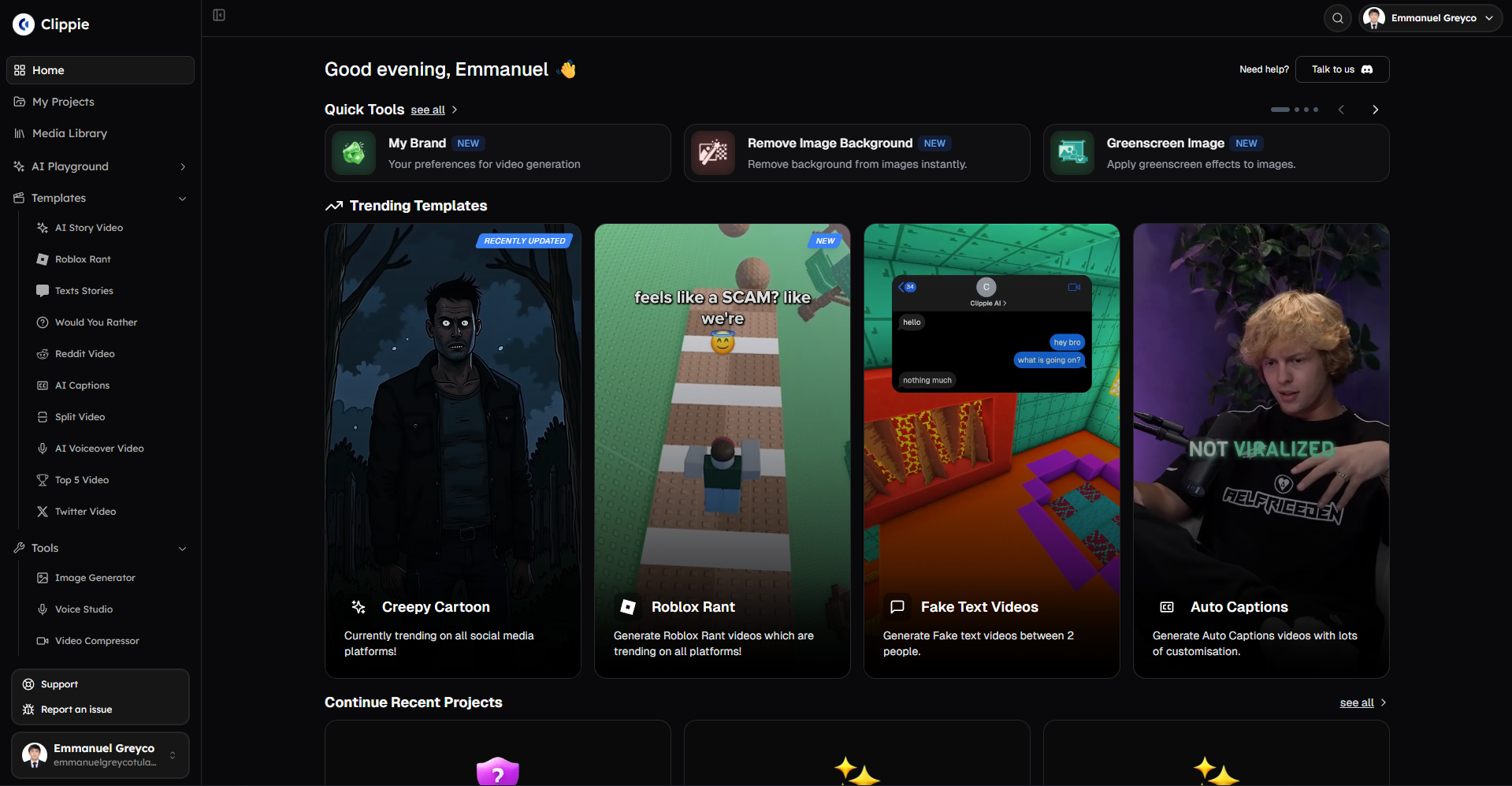
Start building your faceless true crime channel with Clippie AI today →
Frequently Asked Questions
Q1: Do I need legal or journalism expertise to run a faceless true crime channel?
No, but you do need research discipline and ethical responsibility. The foundation of responsible true crime content is sourcing from primary records (court documents, established news archives) and clearly distinguishing between documented facts and speculation. You do not need a journalism degree to apply these standards consistently. What you do need is the commitment to verify every claim before publishing it as fact, to treat victims and their families with dignity, and to understand the platform content policies covered in Section 6 of this guide. Many of the most successful true crime channels are run by creators with no formal journalism or legal background who apply these principles consistently.
Q2: How long does it take to research and produce one true crime video with Clippie AI?
Research varies by case complexity, a well-documented case with comprehensive court records and established news coverage takes 2–4 hours to research thoroughly. Scripting an 8–12 minute video takes 1–2 hours. Production inside Clippie AI, voiceover, visuals, captions, and export, takes 40–65 minutes. Total end-to-end production time per video: approximately 4–8 hours, concentrated into 2–3 focused sessions. This is sustainable alongside most professional commitments at one video per week.
Q3: Is true crime content eligible for full YouTube monetisation?
Yes, provided it meets YouTube's advertiser-friendly content guidelines. True crime content that presents cases in documentary style, focusing on investigation and justice system elements, treating victims with dignity, avoiding graphic violence beyond documentary standards, and sourcing from public record, qualifies for full mid-roll ad monetisation. Content that is excessively graphic, glorifies violence, or is exploitative toward victims may be limited to restricted ads or demonetised. The scripting framework in this guide produces content within YouTube's full monetisation eligibility standards.
Q4: What types of true crime cases perform best on YouTube for a new channel?
Regional cases with genuine public record documentation but limited national coverage consistently perform best for new channels. They have real search volume from audiences interested in the case but limited competition from established channels, meaning a new channel can rank in YouTube search within weeks rather than competing against channels with years of authority. Cold cases also perform exceptionally well because the ongoing mystery element drives sustained search traffic and comment engagement long after the video's initial publication. Avoid starting with the most famous cases (Zodiac, JonBenét, Ted Bundy), these are dominated by established channels and require significant authority to rank for.
Q5: How should I handle cases where the victim's family has objected to media coverage?
Treat such objections seriously and with respect. If a victim's family has publicly and explicitly objected to media coverage of their loved one's case, not simply expressed grief, but specifically asked for the case not to be covered, consider whether covering the case is appropriate given that context. For cases where family objections exist, focus the narrative entirely on the investigation and justice system elements rather than the victim's personal life, omit any details the family has specifically requested not be published, and do not profit from content where the subject's family has directly asked for it not to exist. Some true crime creators choose not to cover cases with explicit family objections as a categorical ethical standard.
Q6: Which Clippie AI plan is right for a new true crime channel posting one video per week?
The Creator plan at $34.99/month is the right starting point for a weekly true crime channel. Its 120-minute export capacity supports 6–8 long-form videos per month (at 10–15 minutes average length per video), plus additional capacity for Shorts cross-posts. Its 500 AI image allocation covers 6–10 images per episode across 6–8 episodes monthly. The 10 custom voice slots allow immediate custom voice cloning for the channel, which is particularly valuable in true crime, where the narrator's voice is the primary brand signal. The Lite plan at $19.99/month is suitable for the first 2–4 videos while testing the format before committing to weekly posting.
Make an AI story video
Write a script or let AI write one. Clippie turns it into a narrated video with AI scenes, voiceover and captions.
Read more

How to Make Top 5 Ranking Videos in 2026 (Step-by-Step)
Build ranking Shorts that can still earn: pick a debatable topic, set clear criteria, source clips you may use, script the countdown, add your commentary.

How to Create Short-Form Videos Using AI: 8 Steps (2026)
A beginner workflow for AI videos on TikTok, Reels and Shorts: pick a format, script a hook, add visuals, voice and captions, export at 9:16, label AI.

7 Free CapCut Alternatives for Short-Form Video (2026)
Compare Edits, YouTube Create, VN, Clipchamp, Canva, DaVinci Resolve and Shotcut: what each gives free users, what it caps first and where it falls short.