
How to Get Sales for Your Business on Social Media in 2026
How to get sales for your business on social media in 2026. Complete guide to systematic buyer-warming content, short-form video funnels, organic scaling strategies & conversion-optimized production with Clippie AI.

If you're searching for how to get sales for your business on social media in 2026, you're navigating the critical distinction between vanity metrics (viral videos, follower counts, engagement rates) and revenue metrics (consultation bookings, product purchases, qualified leads), where a bakery's viral video reaching 2 million views generates zero sales because it entertained without positioning products, while a competitor's 5,000-view tutorial on "choosing the right cake for your event" generates 15 orders because it educated buyers and included strategic purchasing pathway. This comprehensive guide breaks down why systematic sales generation beats viral luck (sustainable revenue requires predictable conversion funnels not algorithmic lottery wins), the specific content types that warm cold audiences into ready buyers (problem-awareness content, solution-education content, objection-handling content, social proof content), short-form video funnel architectures that convert viewers into customers (awareness → consideration → decision stages with matched content), proven organic scaling strategies that eliminate paid ad dependency (strategic platform selection, content repurposing systems, audience building mechanisms, retention tactics), and efficient production workflows creating 50–100 monthly conversion-optimized videos without overwhelming operations, with real sales data, conversion rate benchmarks, and automation systems for predictable revenue generation.
Executive Summary: Social media sales generation in 2026 succeeds through systematic funnel building rather than viral content gambling, where businesses create predictable revenue by mapping content to buyer journey stages (awareness stage: problem identification and education attracting cold traffic, consideration stage: solution comparison and methodology reveals positioning offering, decision stage: objection handling and social proof converting ready buyers), producing 15–30 monthly videos across these stages rather than hoping single viral hit drives sales, implementing conversion infrastructure that captures and nurtures leads through multiple touchpoints (strategic CTAs, email sequences, retargeting campaigns, consultation funnels), and measuring success through revenue metrics (cost per acquisition, customer lifetime value, return on content investment) not engagement vanity metrics (likes, comments, shares without purchase intent). This guide provides complete framework for businesses generating consistent $10K–$500K monthly revenue through organic social media sales without paid advertising, using short-form video as primary vehicle and systematic content production enabling the consistency and variety required for full-funnel coverage that converts at 3–15% rates vs. 0.1–0.5% for random viral content approaches.
Table of Contents
Why Sales Come From Systems Not Virality
Content That Warms Buyers
Short-Form Funnels That Convert
Scaling Sales Without Ads
Using Clippie to Drive Conversions
Frequently Asked Questions

1. Why Sales Come From Systems Not Virality
The Viral Content Lottery (Why It Fails for Sales)
The viral dream:
Create one video that "goes viral" (1M+ views)
Massive exposure (millions see brand)
Sales flood in (conversion from visibility)
Business transformed (overnight success)
The brutal reality:
Case study: Fashion brand viral video
Video: "Try-on haul with trending audio" (2.3M views)
Comments: 15,000+ ("Love this!", "Where to buy?", "Obsessed!")
Follower growth: +12,000 (massive spike)
Website traffic: +50,000 visits (huge surge)
Sales: 23 orders ($1,840 revenue)
Conversion rate: 0.001% (1 sale per 100,000 views)
Why viral failed to convert:
Problem 1: Wrong audience
Viral content attracts entertainment-seekers (not buyers)
Views from people outside target market (wrong demographics, wrong geography, wrong purchasing power)
Example: Teen viewers on fashion video, but products priced for adults with disposable income
Problem 2: No buying intent
Viewers enjoyed content (entertainment value)
But not shopping (no purchase mindset when watching)
Analogy: Watching funny commercial during Super Bowl ≠ immediately buying product
Problem 3: No conversion pathway
Video entertaining but didn't educate on product benefits
No clear CTA (comment section chaos, no guidance)
Website visitors confused (no funnel, unclear what to buy)
Problem 4: One-time spike
Viral moment ephemeral (gone in 48–72 hours)
No sustained visibility (algorithm moves on)
No relationship built (followers don't engage with future content)
The aftermath:
Next 10 videos: Average 2,500 views (back to normal)
New followers: 85% inactive (followed for viral content, ignored everything else)
Revenue: Returned to pre-viral baseline ($5K–$8K monthly)
Net impact: Temporary ego boost, zero lasting business value
The contrast: Systematic non-viral approach
Same fashion brand, different strategy:
20 educational videos monthly (styling tips, body type guides, outfit formulas)
Average views per video: 8,000–15,000 (modest, not viral)
Total monthly views: 160,000–300,000 (consistent volume)
Sales: 180–250 orders monthly ($14,400–$20,000 revenue)
Conversion rate: 0.09–0.13% (90–130x better than viral video)
Why systematic approach converts:
Right audience:
Educational content attracts people interested in fashion advice (buyers, not browsers)
Viewers seeking solutions (how to dress better = purchase intent)
Buying intent:
Content positions products as solutions (styling advice naturally features products)
Warm traffic (viewers learning, considering purchases)
Clear conversion pathway:
Each video includes "Shop this look: [link]" CTA
Website optimized for conversions (clear product pages, simple checkout)
Email capture for nurture (abandoned cart sequences, new arrival notifications)
Sustained relationship:
20 videos monthly = 20 touchpoints with audience
Repeated exposure builds trust (familiarity breeds confidence)
Ongoing value delivery (viewers return for more advice)
The math:
Viral approach: 2.3M views, 23 sales = 0.001% conversion, one-time event
Systematic approach: 240K monthly views, 215 average sales = 0.09% conversion (90x better), sustainable monthly
Annual comparison:
Viral approach: One video, $1,840 (not repeatable)
Systematic approach: 12 months × $17,200 average = $206,400 annual revenue
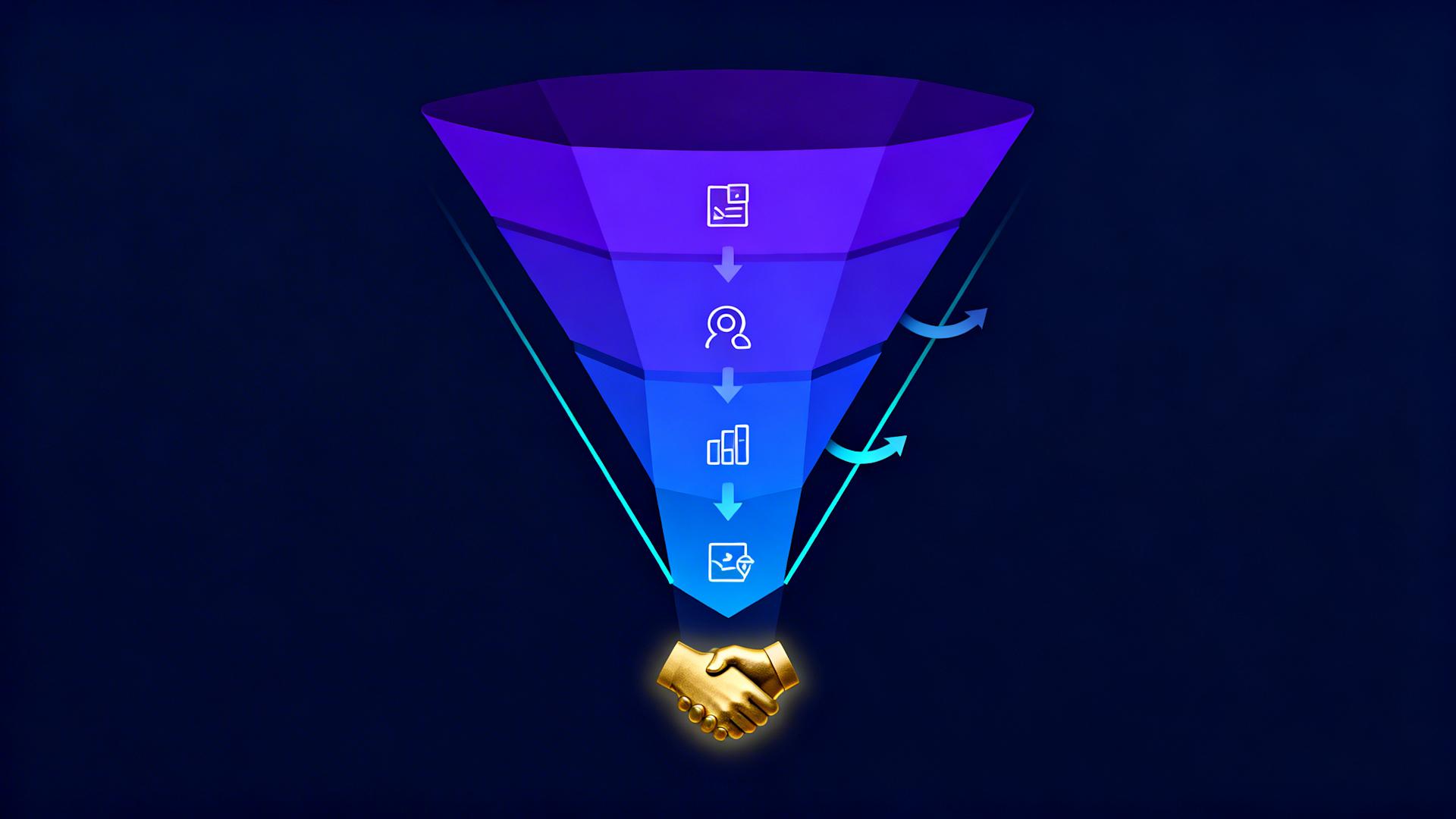
The Predictable Sales Funnel Framework
Why funnels beat virality:
Funnel = predictable
Know inputs (content created, traffic generated)
Know conversion rates (percentage at each stage)
Calculate outputs (expected sales)
Virality = unpredictable
Don't know what will go viral (luck-dependent)
Don't know when (can't plan around)
Don't know if it'll convert (usually doesn't)
The 3-stage social media sales funnel:
Stage 1: Awareness (Cold Traffic → Problem Recognition)
Goal: Make strangers aware they have solvable problem
Content types:
Problem identification ("Are you struggling with [issue]?")
Educational content (teaching about problem, not solution yet)
Relatable stories ("I had this problem too...")
Metrics:
Views, impressions (top of funnel volume)
Watch time (engagement indicator)
Follows (interest indicator)
Conversion goal: Cold viewer → Aware follower (0.5–3% follow rate)
Example (financial advisor):
Video: "5 signs you're not saving enough for retirement (most people miss #3)"
Viewer: "Oh no, I have 4 of these signs" (problem awareness achieved)
Action: Follows for more financial advice
Stage 2: Consideration (Aware → Interested)
Goal: Educate on solutions, position your offering as best option
Content types:
Solution education (how problem is solved)
Comparison content (your approach vs. alternatives)
Methodology reveals (your unique process)
Case studies (proof you deliver results)
Metrics:
Saves (reference-worthy content)
Shares (valuable enough to share)
Profile visits (researching you)
Link clicks (moving toward purchase)
Conversion goal: Aware follower → Interested prospect (5–15% engagement rate)
Example (financial advisor):
Video: "The 3-bucket retirement strategy we use with every client (and why it beats traditional 401k-only approach)"
Viewer: "This makes sense. I should talk to someone about implementing this" (consideration stage reached)
Action: Saves video, visits profile, clicks "Book consultation" link
Stage 3: Decision (Interested → Buyer)
Goal: Overcome objections, provide social proof, facilitate purchase
Content types:
Testimonials and results (social proof)
Objection handling ("What if I can't afford it?")
Behind-the-scenes (transparency builds trust)
Direct offers (clear CTA with value proposition)
Metrics:
Consultation bookings
Cart additions
Purchase completions
Revenue generated
Conversion goal: Interested prospect → Paying customer (15–40% close rate for warm leads)
Example (financial advisor):
Video: "What actually happens in our first consultation (and why 87% of clients sign on after this call)"
Viewer: "Okay, this sounds risk-free and valuable. I'll book a call" (decision stage reached)
Action: Books consultation, becomes client
The funnel in action (complete journey):
Week 1 (Awareness):
Prospect sees: "5 signs you're not saving enough" (problem identification)
Result: Follows account (aware they have problem)
Week 2–4 (Multiple touchpoints, still awareness/early consideration):
Sees 8–12 more videos (mix of educational, relatable stories)
Result: Trust building (this account consistently provides value)
Week 5 (Consideration deepens):
Sees: "The 3-bucket retirement strategy" (solution education)
Result: Saves video, visits profile, explores more content
Week 6–7 (Consideration continues):
Sees: Case study video (social proof), Comparison video (why this approach vs. others)
Result: Convinced this is right solution, considering this specific advisor
Week 8 (Decision):
Sees: "What happens in our first consultation" (objection handling, transparency)
Result: Books consultation
Week 9:
Consultation occurs (closes at 60% rate for this warm lead)
Result: Becomes client
Timeline: 8–9 weeks from discovery to sale (typical for high-trust services)
Conversion rates at each stage:
10,000 awareness video views → 200 followers (2%)
200 followers see consideration content → 20 interested prospects (10% deep engagement)
20 interested prospects see decision content → 8 book consultation (40%)
8 consultations → 5 close (62.5%)
Overall: 10,000 views → 5 customers (0.05% overall conversion, but predictable)
Monthly funnel at scale:
20 videos, average 10,000 views each = 200,000 monthly views
Following this funnel: 100 customers monthly
At $5,000 average client value = $500,000 monthly revenue
Predictable, systematic, repeatable
The Content Volume Reality
The truth nobody wants to hear: Consistent volume beats occasional brilliance
Single video approach:
Create 1 "perfect" video monthly (high production value, heavy investment)
Hope it performs (algorithms lottery)
Result: Inconsistent visibility, no funnel coverage, sporadic sales
Volume approach:
Create 15–30 "good enough" videos monthly (efficient production, Clippie AI-enabled)
Cover all funnel stages (awareness, consideration, decision)
Result: Consistent visibility, full funnel coverage, predictable sales
Why volume wins:
Reason 1: Algorithm exposure
Each video = lottery ticket (chance of algorithmic amplification)
1 video/month = 12 annual chances
20 videos/month = 240 annual chances
20x more opportunities for distribution
Reason 2: Topic variety
Different videos resonate with different audience segments
More videos = broader appeal = more audience captured
Example: 10 videos on "retirement planning" reach broader audience than 1 generic video
Reason 3: Funnel stage coverage
Can't cover awareness + consideration + decision with 1 video monthly
Need 5–10 awareness videos, 5–10 consideration, 5–10 decision (all working simultaneously)
Reason 4: Testing and learning
More videos = more data (learn what works faster)
Iterate and improve (refine approach based on performance)
Reason 5: Compounding visibility
Old videos continue working (evergreen content keeps generating views)
240 videos working for you vs. 12 videos
Cumulative reach exponentially higher
The data:
Business A (1 video/month approach):
12 videos annually
Average video performance: 15,000 views (very high due to production quality)
Total annual views: 180,000
Conversion rate: 0.08%
Annual sales: 144 customers
Business B (20 videos/month approach):
240 videos annually
Average video performance: 5,000 views (lower per video due to volume, but more consistent)
Total annual views: 1,200,000
Conversion rate: 0.08% (same conversion rate)
Annual sales: 960 customers (6.7x more despite lower per-video performance)
Key insight: Total volume matters more than per-video excellence
The sustainable volume system:
Without system:
Creating 20 videos/month manually = 30–40 hours
Unsustainable (burns out within 3–6 months)
With system (Clippie AI batch production):
Creating 20 videos/month = 4–6 hours (Sunday batching)
Sustainable indefinitely (manageable alongside business operations)

2. Content That Warms Buyers
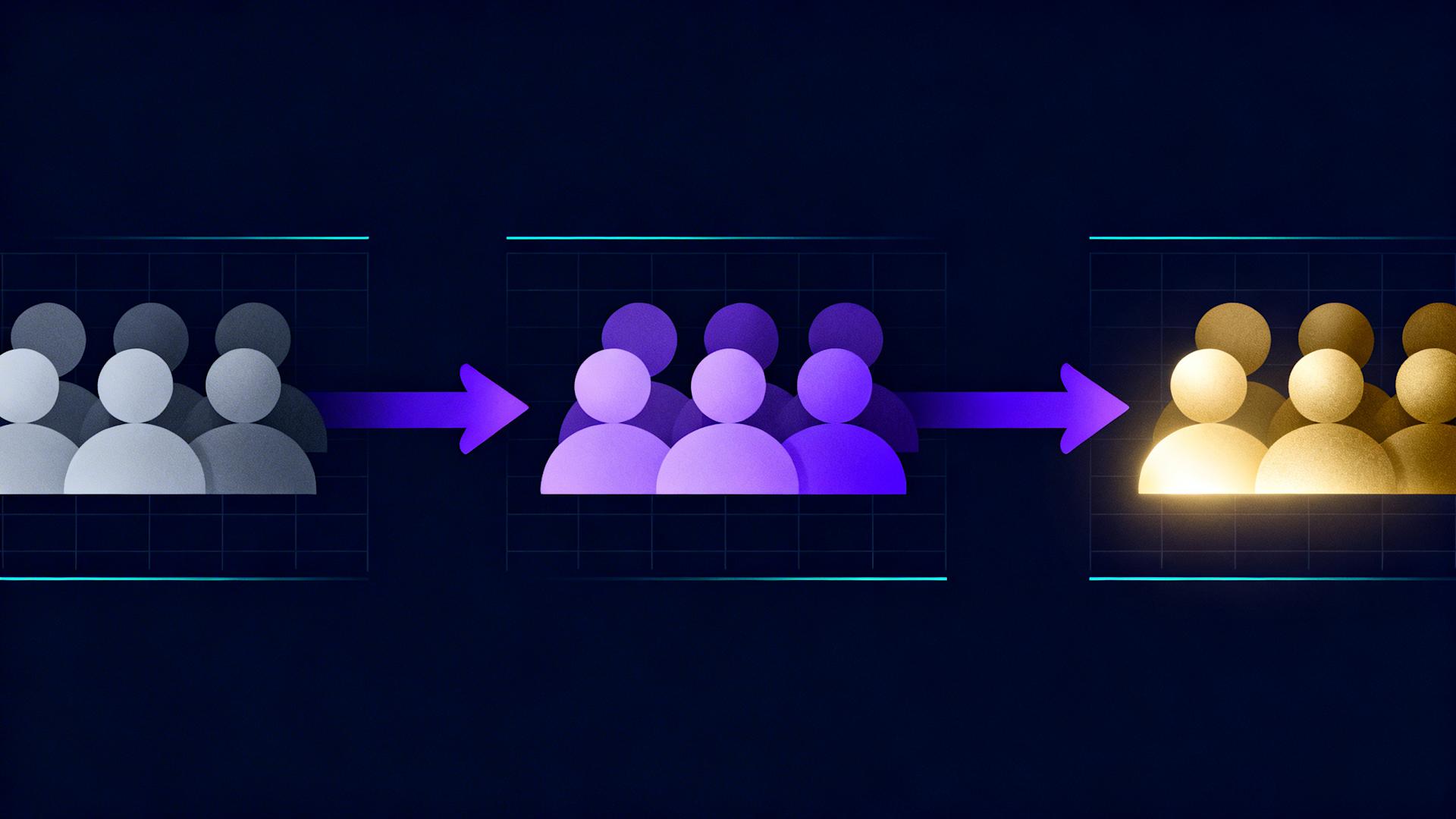
The Buyer Temperature Framework
Understanding audience temperature:
Cold audience (strangers):
Don't know you exist
Don't know they have problem (or don't know it's solvable)
No trust in you
Buying likelihood: 0–1%
Warm audience (aware, considering):
Know you exist (following, seen multiple videos)
Recognize they have problem
Considering you among potential solutions
Buying likelihood: 5–20%
Hot audience (ready to buy):
Trust you (consumed significant content)
Decided to purchase
Just need final push or logistics
Buying likelihood: 40–70%
The warming process: Cold → Warm → Hot (through strategic content)
Stage 1 Content: Cold → Warm (Problem Awareness)
Goal: Make cold audience recognize problem they didn't know they had (or didn't know was solvable)
Content Type 1: "Hidden Problem" Reveal
Structure (60–90 seconds):
0–3 seconds: Hook "Most [target audience] don't realize they're losing [money/time/opportunity] because of [hidden problem]"
3–20 seconds: The problem revelation
Explain problem they didn't recognize
Make it tangible (specific consequences)
"Here's what this costs you: [concrete impact]"
20–70 seconds: Why it's happening
Root cause explanation (not surface-level)
Why conventional approaches fail
Industry secret or insider knowledge
70–85 seconds: Hope/solution tease "This is fixable. Here's how: [high-level approach]"
85–90 seconds: Soft CTA "Follow for more on [topic]" or "Save this if you want solution details later"
Example (IT consultant for small businesses):
Hook: "Your business is one cyberattack away from bankruptcy, but you have no idea because you think antivirus software is enough." Problem revelation: "Small businesses average $200K cost when hit by ransomware. 60% go out of business within 6 months. You think 'we're too small to be targeted', wrong. 43% of cyberattacks target small businesses specifically because you're unprotected." Why it's happening: "Antivirus catches known threats. But modern ransomware is custom-built for each target. It walks right past antivirus. You need multi-layer defense: network monitoring, employee training, backup systems, incident response plan. Most small businesses have none of this." Hope: "Good news: Enterprise-level protection used to cost $50K+ to set up. Now accessible for businesses your size at $200–$500/month. Dramatically reduces risk." CTA: "Follow for cybersecurity tips that actually protect small businesses. I break down enterprise security into digestible, affordable steps."
Why this warms:
Creates urgency (didn't know problem existed, now worried)
Positions you as expert (revealed hidden knowledge)
Generates interest (wants to learn solution)
Expected performance:
Views: 5,000–50,000 (problem-focused content travels)
Follows: 2–5% (people wanting solution)
Saves: 8–12% (reference-worthy, serious topic)
Content Type 2: "Costly Mistake" Warning
Structure:
0–2 seconds: Hook "The [common action] mistake that cost this [customer type] $[amount]"
2–60 seconds: Story
Real or representative customer story
What they did wrong (relatable mistake)
Consequences (costly outcome)
60–75 seconds: Lesson "Here's what they should have done instead: [correct approach]"
75–90 seconds: Application "If you're [doing common action], here's how to avoid this mistake: [quick tip]"
90 seconds: CTA "Want detailed guide? [Link to lead magnet]"
Example (wedding photographer):
Hook: "This couple spent $8,000 on their dream wedding photographer, and got zero usable photos. Here's what went wrong." Story: "They found photographer on Instagram, beautiful portfolio. Booked immediately. Wedding day comes, photographer shows up late, misses ceremony. Reception photos all blurry (clearly intoxicated). Couple devastated. Turns out: Portfolio was all stolen work. Photographer was unlicensed, uninsured. No recourse, money gone, memories lost." Lesson: "What they should've done: Verify photographer's credentials. Ask for FULL wedding galleries (not just portfolio highlights). Check reviews on multiple platforms. Meet in person before booking. Get contract detailing deliverables and timeline." Application: "If you're booking any wedding vendor: Don't rely on Instagram portfolio alone. Do these 5 checks before signing contract." CTA: "Download my free Wedding Vendor Vetting Checklist: [link]. Protect your investment."
Why this warms:
Fear-based motivation (don't want to be that couple)
Demonstrates expertise (knows industry pitfalls)
Provides value (actionable prevention advice)
Positions services (implicitly: "hire me and avoid this")
Content Type 3: "What You Don't Know About [Topic]"
Structure:
0–3 seconds: Hook "3 things about [industry/topic] that [target audience] don't know (but should)"
3–60 seconds: Reveal 3 insights
Each 15–20 seconds
Counter-intuitive or surprising facts
Industry insider knowledge
60–75 seconds: Why this matters "These hidden factors cost you [consequence] if you don't account for them"
75–90 seconds: Next step "I share insider insights like this weekly. Follow for more [industry] truths they don't tell you."
Why this warms:
Curiosity satisfaction (learning hidden knowledge)
Authority demonstration (insider = expert)
Value delivery (useful information)
Stage 2 Content: Warm → Hot (Solution Education & Positioning)
Goal: Educate warm audience on solutions, position your offering as optimal choice
Content Type 1: "How We Solve [Problem]" Methodology Reveal
Structure (75–120 seconds):
0–3 seconds: Hook "Here's how we [achieve specific result] for clients: our complete process"
3–90 seconds: Step-by-step methodology
Step 1: [What + Why + Example]
Step 2: [What + Why + Example]
Step 3: [What + Why + Example]
(3–5 steps total)
90–110 seconds: Results context "Using this process, our clients typically see [specific outcome range] within [timeframe]"
110–120 seconds: CTA "Want this implemented for your business? [Link to consultation booking]"
Example (SEO consultant):
Hook: "Our 90-day SEO process for new clients, here's exactly what happens." Methodology: "Step 1 (Days 1–30): Technical foundation audit. We identify and fix site speed issues, mobile usability problems, indexing issues. Why first: Can't rank well if Google can't properly crawl your site. Recent client example: Fixed Core Web Vitals issues, saw 40% traffic increase before we even touched content. Step 2 (Days 30–60): Content gap analysis and optimization. Find what competitors rank for that you don't. Create content targeting those gaps. Optimize existing pages for conversion, not just traffic. Why this order: Foundation fixed, now build on solid ground. Step 3 (Days 60–90): Link building and authority. Strategic outreach for high-quality backlinks. Content partnerships. Guest posting. Why last: Quality links only help once content and technical foundation solid." Results: "90-day mark: Clients average 60–120% organic traffic increase. Not guaranteed (depends on competition, starting point), but typical." CTA: "Want this process for your site? Book SEO consultation: [link]. We'll audit current state, outline exact strategy for your situation."
Why this converts:
Demystifies process (transparency builds trust)
Demonstrates deep expertise (detailed methodology = not generic)
Sets expectations (timeline and results realistic, credible)
Natural sell (showcasing service through education)
Expected performance:
Views: 5,000–25,000 (warm audience, niche topic)
Saves: 15–25% (very high, reference material for buying decision)
Consultation bookings: 1–3% of viewers directly (50–750 bookings from video over lifetime)
Content Type 2: "Why We Don't [Common Approach]" Differentiation
Structure:
0–3 seconds: Hook "Why we don't [common industry practice] (even though everyone else does)"
3–50 seconds: Industry standard approach
Describe what most competitors do
Why it's appealing (seems like good idea)
Hidden problems (why it actually fails)
50–85 seconds: Our alternative approach
What you do differently
Why it works better
Proof (data, results, logic)
85–95 seconds: Who this is for "If you value [benefit of your approach] over [what competitors prioritize], we're right fit"
95 seconds: CTA "Book call to see if our approach aligns with your goals: [link]"
Example (nutrition coach):
Hook: "Why we don't do meal plans for clients (even though everyone wants them)." Industry standard: "Most nutritionists give detailed meal plans, exactly what to eat, when, how much. Clients love this. Feels helpful, structured, clear. Problem: 95% don't follow meal plans beyond 2 weeks. Why? Life gets in way. Plans don't account for: schedule changes, budget constraints, family preferences, travel, stress, cravings. Plan assumes perfect execution. Real life isn't perfect." Our approach: "We teach flexible nutrition framework instead. How to eat for your goals without rigid rules. 'Protein at every meal, vegetables filling half plate, carbs around workouts.' Adaptable to any restaurant, any schedule, any budget. Result: 78% of our clients sustain habits 6+ months. Why? They learned system, not memorized meal plan." Who this is for: "If you want sustainable lifestyle change, not 30-day quick fix, our approach fits. If you want someone to tell you exactly what to eat every meal? Not right fit, find someone who does meal plans." CTA: "Want flexible nutrition coaching? Book call: [link]. We'll discuss your goals, see if our framework approach works for your lifestyle."
Why this converts:
Differentiation (stand out from competitors)
Honest positioning (repels wrong fits, attracts right fits)
Philosophy clarity (value alignment before sale)
Content Type 3: "Client Transformation Timeline"
Structure:
0–3 seconds: Hook "[Client result] in [timeframe]: here's the complete transformation"
3–80 seconds: Journey breakdown
Week 1: Starting point (specific challenges)
Week 4: First milestone (early progress)
Week 8: Breakthrough moment (significant change)
Week 12: Final result (transformation complete)
80–95 seconds: Key factors "What made this successful: [2–3 critical elements of approach]"
95–110 seconds: Realistic expectations "Not every client gets identical results. Factors that matter: [variables]. But this shows what's possible with [your approach]."
110–120 seconds: CTA "Facing similar challenge? Let's map your transformation timeline: [link]"
Why this converts:
Proof (real results, detailed journey)
Visualization (prospect imagines their own transformation)
Expectation management (realistic = credible)
Stage 3 Content: Hot → Customer (Objection Handling & Final Push)
Content Type 1: "What Actually Happens When You [Hire Us/Buy Product]"
Structure:
0–3 seconds: Hook "Here's exactly what happens when you become our client (no surprises)"
3–75 seconds: Step-by-step client experience
Onboarding process (what they do, what you do)
Timeline (when things happen)
Communication cadence (how often they hear from you)
Deliverables (what they receive)
75–85 seconds: What to expect "Timeline to results: [realistic timeframe]. Your role: [client responsibilities]. Our role: [your responsibilities]."
85–95 seconds: Addressing fears "Common concerns: 'Is this worth investment?' 'Will this actually work for me?' Here's how we ensure success: [approach]"
95 seconds: CTA "Ready to start? [Link to booking/purchase]"
Why this converts:
Transparency (reduces fear of unknown)
Professionalism (structured process = credibility)
Risk reduction (clear expectations = confidence)
Content Type 2: "Frequently Asked Questions" Series
Create 5–10 videos addressing most common objections:
"Is this too expensive?"
ROI breakdown (cost vs. value delivered)
Payment options (if applicable)
Comparison to alternatives (DIY cost, competitor pricing)
"How do I know this will work for me?"
Client diversity examples (worked for people in various situations)
Customization approach (how you tailor to individual)
Guarantees or risk-reversal (money-back, free trial, etc.)
"What if I don't have time?"
Time requirement reality (how much client involvement needed)
Time-saving aspects (what you handle for them)
Comparison to DIY (your service saves them 20 hours vs. doing themselves)
"Why should I choose you over [competitor]?"
Differentiation (unique approach, results, experience)
Ideal client profile (who you're specifically good for)
Anti-pitch (who should NOT hire you, builds trust through honesty)
Why this converts:
Addresses resistance directly (removes barriers to purchase)
Demonstrates understanding (you know their concerns = you've helped others like them)
Consultative tone (helping decide, not pressuring)
Content Type 3: "Social Proof Compilation"
Structure:
0–3 seconds: Hook "Don't take my word for it, here's what clients say"
3–85 seconds: Multiple testimonials
5–8 short client quotes (10 seconds each)
Variety (different industries, problems, results)
Specific results (numbers, outcomes, transformations)
85 seconds: CTA "Want to be next success story? [Link]"
Why this converts:
Overwhelming evidence (volume of social proof)
Relatability (multiple examples = likely one resonates)
Removes doubt (worked for many = will work for viewer)

3. Short-Form Funnels That Convert
The Complete Video Funnel Architecture
The full-funnel video system (20 videos monthly):
Awareness videos (40% - 8 videos monthly):
Problem identification videos (4)
Educational/tutorial videos (3)
Relatable story/mistake videos (1)
Purpose: Attract cold traffic, build audience, establish expertise
Consideration videos (40% - 8 videos monthly):
Methodology reveals (2)
Case studies/client stories (2)
Comparison/differentiation videos (2)
Deep-dive educational videos (2)
Purpose: Warm audience, position offering, build trust
Decision videos (20% - 4 videos monthly):
FAQ/objection handling (2)
Client experience/process videos (1)
Testimonial compilation (1)
Purpose: Convert hot leads, overcome final resistance
How videos work together:
Week 1:
Monday: Awareness (problem identification)
Wednesday: Consideration (methodology)
Friday: Awareness (educational)
Sunday: Decision (FAQ)
Week 2:
Monday: Awareness (relatable story)
Tuesday: Consideration (case study)
Thursday: Awareness (problem identification)
Saturday: Consideration (comparison)
Effect:
New viewer discovers awareness content → Follows
Over 2–4 weeks sees mix of awareness + consideration → Warms
Sees decision content when ready → Converts
The retargeting layer:
Viewers who engage but don't convert:
Algorithm shows them more of your content (for free)
Repeated exposure over weeks/months
Eventual conversion when timing right
Example journey (8-week conversion):
Week 1: Sees awareness video "5 signs your business needs bookkeeper"
Realizes problem (currently doing own books, making mistakes)
Follows account
Week 2: Sees consideration video "Our 3-step bookkeeping system"
Learns your approach (monthly reconciliation, expense categorization, financial reporting)
Saves video (thinking about it)
Week 3: Sees awareness video "Tax mistakes costing small businesses"
Reinforces problem urgency (tax season approaching, worried about errors)
Week 4: Sees consideration video "Why we don't use [popular accounting software]"
Appreciates your different approach (quality over automation)
Week 5: Sees case study "How we saved client $12K in taxes"
Social proof (real results)
Imagines similar outcome
Week 6: Sees decision video "What happens when you hire us"
Transparency reduces fear
Week 7: Sees FAQ video "Is bookkeeping service worth the cost?"
Final objection handled (ROI clear)
Week 8: Sees awareness video (algorithm shows again)
Remembers: "I've been following them for weeks. They clearly know what they're doing. Time to book call."
Converts
Conversion rate with full funnel: 3–8% (vs. 0.1–0.5% single-video approach)
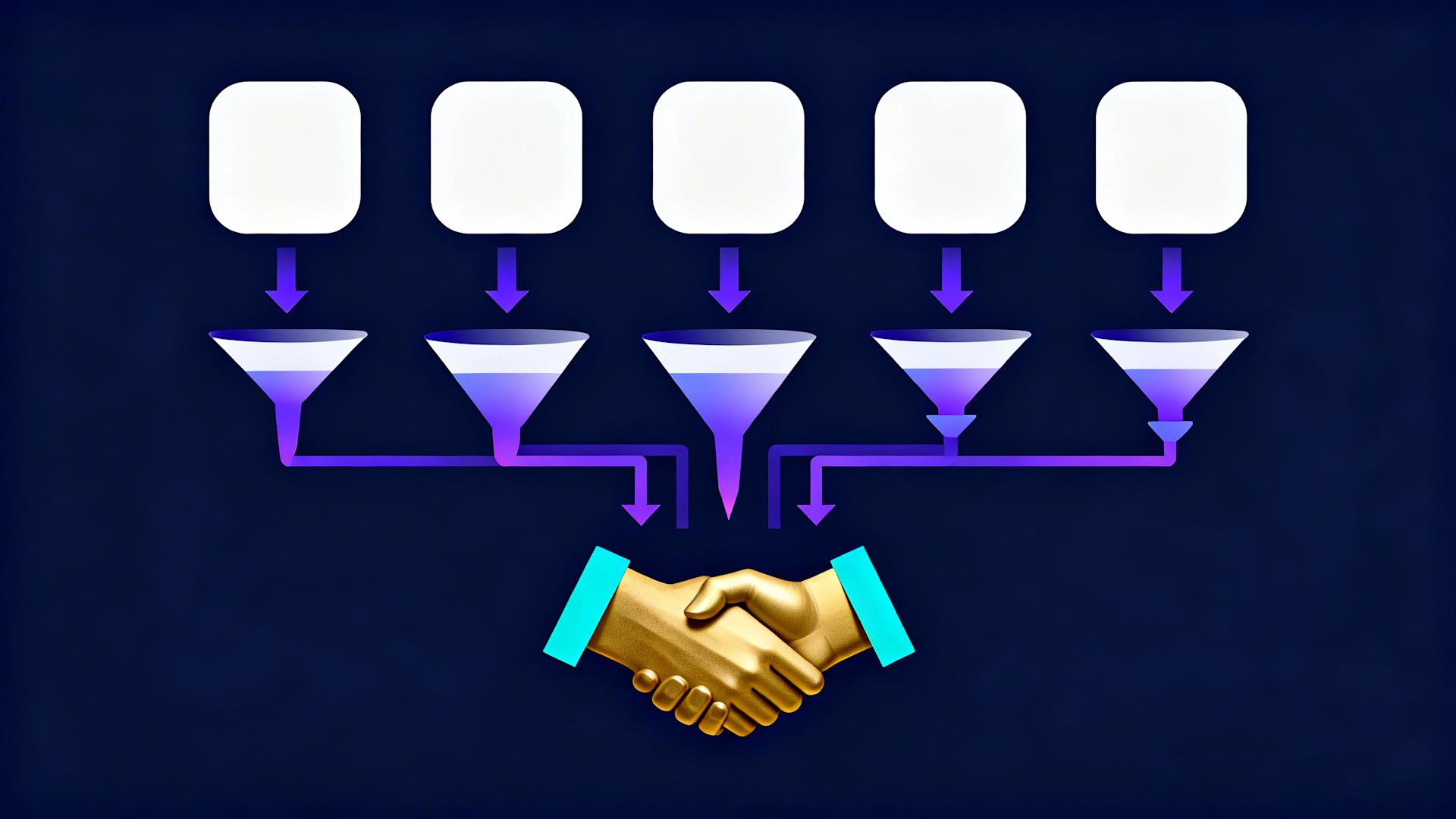
Platform-Specific Funnel Adaptations
TikTok funnel strategy:
Strengths:
Best for awareness stage (algorithm shows content to strangers)
Viral potential (entertainment or shocking education spreads)
Funnel approach:
Heavy awareness content (70% of TikTok videos)
Light consideration content (25%)
Minimal decision content (5%)
Reasoning:
TikTok audience younger, lower purchasing power on average
Use TikTok as top-of-funnel (attract, then move to email or Instagram)
CTA: "Link in bio for [lead magnet]" → Capture email → Nurture off-platform
Instagram funnel strategy:
Strengths:
Full-funnel capable (awareness through decision)
Visual showcase (works for product-based businesses)
Shopping integration (direct purchase possible)
Funnel approach:
Balanced (40% awareness, 40% consideration, 20% decision)
Reels for awareness/consideration
Stories for decision stage (polls, Q&A, swipe-ups)
Shopping posts for direct conversion
CTA: "Link in bio" or "DM me [keyword]" or "Shop now" (multiple conversion paths)
LinkedIn funnel strategy:
Strengths:
B2B audience (decision-makers present)
High-ticket sales (professional services, consulting, B2B SaaS)
Funnel approach:
Heavy consideration content (60% of videos)
Moderate awareness (30%)
Moderate decision (10%)
Reasoning:
LinkedIn audience already problem-aware (don't need basic education)
Want to see expertise, methodology, results (consideration focus)
Longer sales cycles (decision content less urgent)
CTA: "Link in comments" or "DM for details" (LinkedIn penalties external links)
YouTube Shorts funnel strategy:
Strengths:
Search traffic (people actively seeking solutions)
Gateway to long-form (Shorts → Full YouTube videos → Deep engagement)
Funnel approach:
Awareness and consideration balanced (45% each)
Light decision (10%)
Use Shorts to drive to long-form YouTube videos (where deep trust builds)
CTA: "Full video on my channel" or "Link in description"
The 60-Second Conversion Formula
Anatomy of high-converting short video:
Seconds 0–3: Attention grab (hook)
Purpose: Stop scroll (algorithm measures first 3 seconds heavily)
Techniques:
Bold statement ("Most businesses waste 60% of ad budget")
Question ("Are you making this expensive mistake?")
Result preview ("How we 3x'd client revenue in 90 days")
Pattern interrupt (unexpected visual or sound)
Seconds 3–50: Value delivery (educational core)
Purpose: Teach something useful (build trust, establish expertise)
Structure:
Problem → Why it matters → Solution (3-step framework, tip, insight)
Fast-paced (scene change every 3–5 seconds)
Text overlays (reinforce key points for sound-off viewing)
Subtitles (accessibility + engagement boost)
Seconds 50–55: Positioning (subtle sell)
Purpose: Connect value to your offering (without hard pitch)
Techniques:
"This is the framework we use with every client"
"Our customers see [result] when they implement this"
"We've done this for [number] businesses"
Seconds 55–60: Call to action (conversion moment)
Purpose: Tell viewer what to do next
Strong CTAs:
"Link in bio to book free consultation"
"DM me [keyword] for free guide"
"Visit [website] to get started"
"Follow for daily [value proposition]"
Why this structure converts:
Hook earns right to deliver value (keep watching)
Value earns right to position (established credibility)
Positioning earns right to CTA (trust + relevance = conversion)
Testing and optimization:
Create multiple versions:
Same core content
Different hooks (test 3–5)
Different CTAs (test 2–3)
Different video lengths (45s, 60s, 75s)
Measure performance:
Watch time % (how many watch through CTA)
Click-through rate (how many click CTA)
Conversion rate (how many complete desired action)
Iterate:
Double down on winning hooks
Refine CTAs based on which drive actions
Optimize length based on retention data
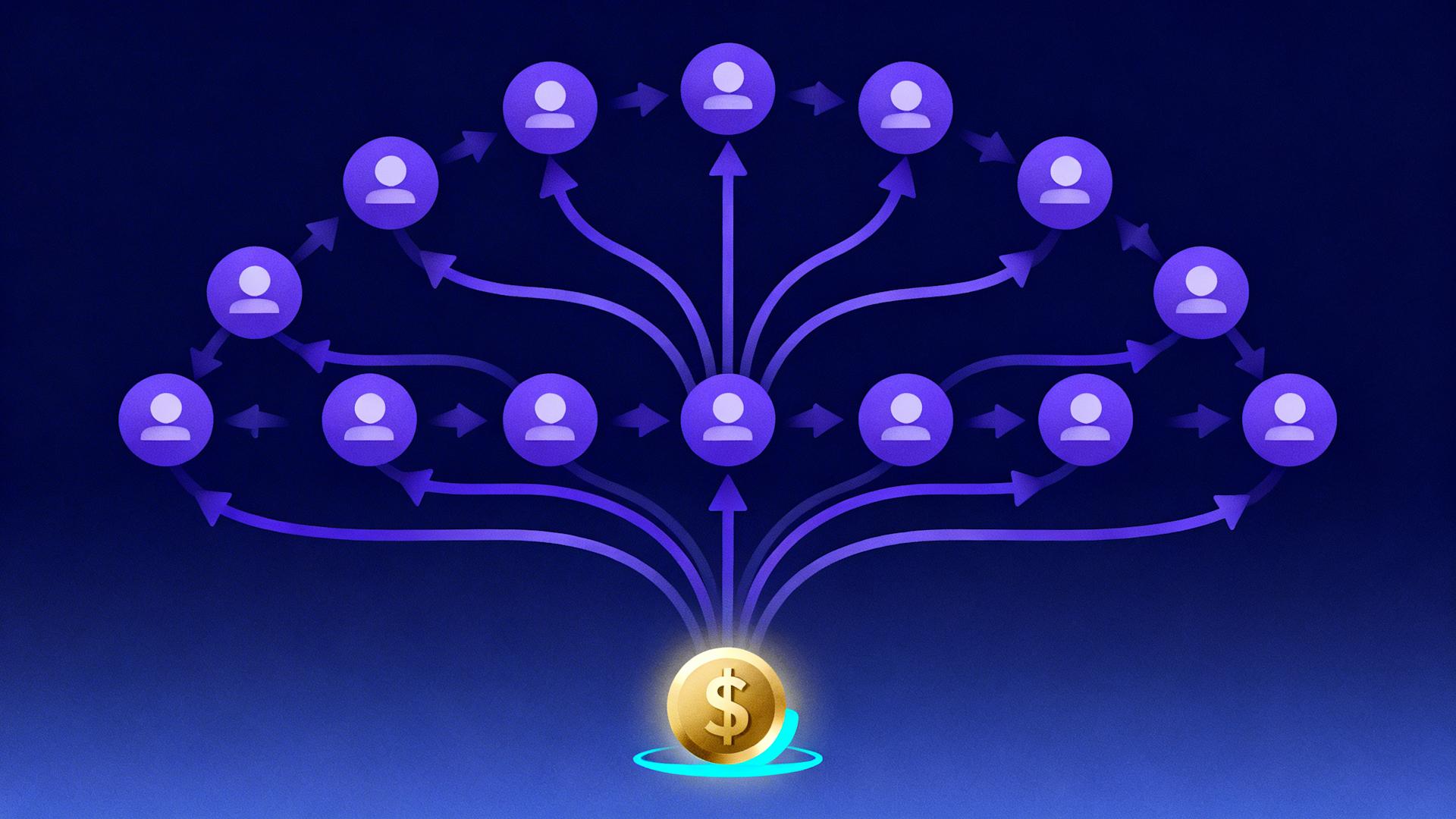
4. Scaling Sales Without Ads
The Organic Scaling Framework
Why organic scaling possible (and preferable) in 2026:
Algorithm changes:
Platforms prioritize organic content over paid (user experience focus)
Organic content receives 8–12x more reach than identical paid promotion
High-quality organic content can reach millions without ad spend
Cost advantage:
Organic: $0 per view (time investment only)
Paid ads: $0.05–$0.50 per view (TikTok), $0.10–$2.00 per view (Instagram/Facebook)
At scale: Organic saves $10K–$100K+ monthly vs. paid
Sustainability:
Organic: Content library compounds (old videos keep working)
Paid ads: Stop paying = stop getting views (zero residual value)
The 3-pillar organic scaling system:
Pillar 1: Platform Selection and Optimization
Not all platforms equal for all businesses:
Selection criteria:
Where is your target audience?
B2B services → LinkedIn primary, YouTube secondary
E-commerce (visual products) → Instagram primary, TikTok secondary
Local services → Instagram + Facebook (local targeting features)
Digital products → TikTok primary (young, tech-savvy), YouTube secondary
What content formats do you create efficiently?
Face-to-camera comfortable → TikTok, Instagram Reels, YouTube
Faceless preferred → YouTube (screen recordings), TikTok (voiceover + B-roll)
Written content strength → LinkedIn (text posts + occasional video), Twitter
What's your sales cycle length?
Impulse buy ($20–$100) → TikTok, Instagram (short consideration)
Considered purchase ($500–$5,000) → Instagram, YouTube (medium consideration)
High-ticket ($10,000+) → LinkedIn, YouTube (long consideration, need depth)
Strategic focus:
Primary platform (70% of content effort) → Where ideal clients are
Secondary platform (25% of effort) → Diversification, risk mitigation
Experimental (5% of effort) → Testing new channels
Example (B2B SaaS company):
Primary: LinkedIn (decision-makers active, high engagement)
Secondary: YouTube (long-form demos, tutorials for product education)
Experimental: TikTok (testing short-form product tips, uncertain ROI)
Pillar 2: Content Repurposing System
The multiplier effect:
Create once, distribute everywhere:
Core content creation (Sunday, 2–3 hours):
Create 5–7 video scripts (educational topics)
Record explanations (10–15 minutes each, one-take, no editing)
Upload to Clippie AI
Clippie AI processing (automated):
Generates 5–7 short-form videos (60–90 seconds each)
Optimizes for each platform:
TikTok (9:16, fast-paced, trending audio)
Instagram Reels (9:16, aesthetic overlays, platform-native feel)
YouTube Shorts (9:16, SEO-optimized titles)
LinkedIn (1:1 or 16:9, professional tone, subtitles prominent)
Distribution (30 minutes):
Schedule TikTok posts (7 videos, Mon–Sun)
Schedule Instagram posts (7 videos, Mon–Sun)
Schedule YouTube Shorts (7 videos, Mon–Sun)
Schedule LinkedIn posts (5 videos, Mon–Fri business days)
Total output from 2.5-hour session:
26 posts across 4 platforms (TikTok 7, Instagram 7, YouTube 7, LinkedIn 5)
Reaching: 100K–500K combined impressions weekly (if established accounts)
Additional repurposing (optional, 1 hour):
Extract quotes from videos → Twitter posts (10–15 tweets)
Transcribe videos → Blog posts (5–7 articles of 800–1,200 words)
Create carousel from key points → LinkedIn/Instagram (2–3 carousels)
Total output with extended repurposing:
26 videos + 15 tweets + 7 blogs + 3 carousels = 51 pieces of content
From 3.5 hours of work
Reach: 150K–750K combined impressions weekly
The compound effect:
Month 1:
26 videos × 4 weeks = 104 videos created
Average 5,000 views per video = 520,000 total views
Month 6:
624 new videos created (104 × 6)
But older videos still generating views (evergreen content)
Total library: 624 videos, many still driving 100–1,000 views monthly
Monthly views: 1.2M–2.5M (new + old content combined)
Month 12:
1,248 video library
Monthly views: 3M–8M (massive compounding)
Organic reach equivalent to $150K–$400K in paid ads
Pillar 3: Audience Building and Retention
Why audience matters:
Owned vs. rented reach:
Platform algorithm = rented (they control who sees content)
Email list, DMs, community = owned (you control access)
The email capture strategy:
Lead magnet creation:
Offer valuable free resource (guide, template, checklist, video training)
Related to your offering (attracts right audience)
Solves immediate problem (demonstrates value)
Example lead magnets by business type:
Consultant: "Free 30-minute strategy session" or "Industry benchmark report"
E-commerce: "20% off first order" or "Style guide for [product category]"
Coach: "7-day challenge" or "Self-assessment tool"
Service provider: "Free estimate" or "Ultimate buying guide"
Promotion in videos:
Awareness videos: "Download free [resource]: link in bio"
Consideration videos: "Want implementation guide? Link in bio"
Decision videos: "Book consultation: link in bio"
Conversion rate:
100,000 monthly video views
2% click link in bio (2,000 clicks)
40% opt in for lead magnet (800 emails captured monthly)
Email nurture sequence (automated):
Day 0: Deliver lead magnet, welcome to community
Day 3: Related tip/insight (bonus value)
Day 7: Case study or customer story (social proof)
Day 10: Address common objection (education)
Day 14: Direct offer (consultation, product, service)
Day 21: Follow-up offer (second chance)
Day 30+: Ongoing value emails (1–2× weekly, occasional offers)
Email-to-customer conversion:
800 emails captured monthly
10% convert to customers within 6 months (80 customers)
At $1,000 average value = $80,000 monthly revenue (from email alone)
The community retention strategy:
Why retention matters:
Easier to sell to existing audience (trust already established)
Repeat customers = higher LTV (lifetime value)
Community advocates (referrals, testimonials, viral sharing)
Retention tactics:
Consistent posting:
3–7× weekly (maintain presence, top-of-mind awareness)
Mix of content types (don't bore with repetition)
Engagement responses:
Reply to comments (builds relationship, encourages future engagement)
Answer DMs (personalized responses, not automated)
Feature community (user-generated content, customer spotlights)
Exclusive benefits:
Email subscribers get early access (product launches, special offers)
Followers get exclusive content (deeper dives, bonus resources)
Expected retention:
70–85% of followers stay engaged over 12 months (if consistent value)
vs. 40–60% if sporadic posting or overly promotional
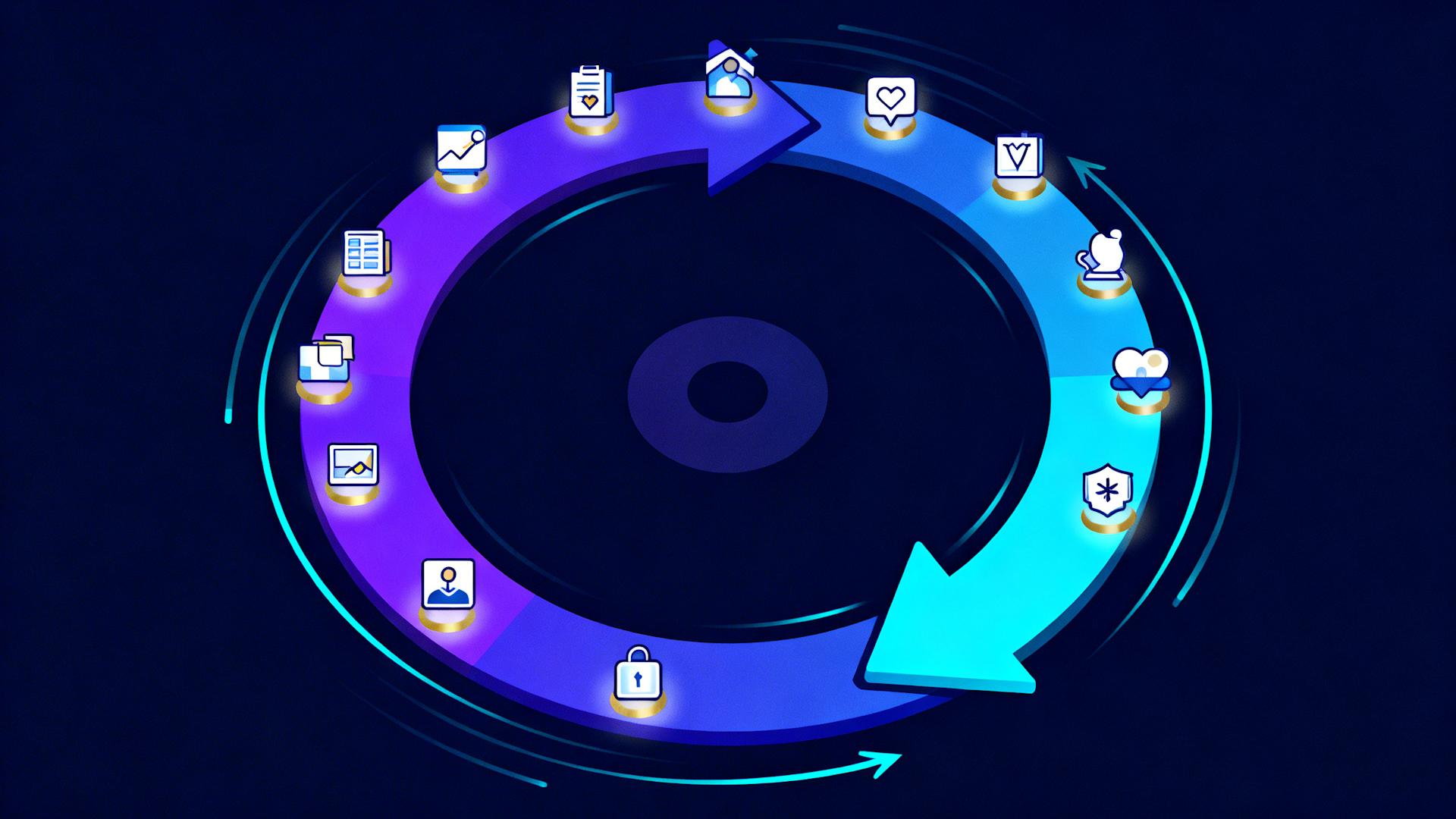
The Growth Flywheel
How organic scaling accelerates over time:
Month 1–3: Foundation building
Creating content library (80–120 videos)
Learning what resonates (testing topics, formats, hooks)
Growing initial audience (0 → 2,000–5,000 followers)
Month 4–6: Momentum
Consistent posting (algorithm recognizes active account)
Audience engaged (commenting, sharing, saves)
First viral videos (1–3 videos exceed 100K views)
Growing faster (5,000 → 15,000 followers)
Month 7–12: Compounding
Large content library (250+ videos, many evergreen)
Algorithm favor (consistent quality = priority distribution)
Regular viral hits (5–10% of videos exceed 100K views)
Exponential growth (15,000 → 50,000+ followers)
Month 13–24: Established authority
Massive library (500+ videos)
Brand recognition (known in niche)
Consistent virality (algorithms highly favor account)
Platform features account (explore pages, recommendations)
Growth: 50,000 → 200,000+ followers
Sales correlation:
Month 3: $2,000–$5,000 monthly revenue from social
Month 6: $8,000–$20,000 monthly
Month 12: $25,000–$75,000 monthly
Month 24: $75,000–$250,000 monthly
The key: Consistency compounds exponentially (doubling content doesn't double growth, it 3–5× growth due to algorithmic momentum)

5. Using Clippie to Drive Conversions
The Conversion-Optimized Production Workflow
Traditional conversion-focused video production:
Process:
Research hook variations (2 hours, analyzing competitor videos, testing psychology)
Script multiple versions (3 hours, writing, rewriting for optimization)
Film takes of each version (4 hours, multiple hooks, setups, attempts)
Edit meticulously (6 hours, testing cuts, pacing, subtitle timing)
A/B test (post multiple versions, track performance)
Total: 15+ hours per high-converting video
Result: Maybe 1–2 optimized videos monthly (unsustainable)
Clippie AI conversion-optimized workflow:
Sunday production session (2.5 hours for 5–7 videos):
9:00–9:30 AM: Conversion strategy planning
Review last week's performance (which videos drove consultations/sales)
Identify top performers (hook type, CTA, topic)
Plan this week's videos (replicate winning formulas with new topics)
Select funnel stage focus (2–3 awareness, 2–3 consideration, 1–2 decision)
9:30–10:30 AM: Content recording
Record 5–7 video explanations (one-take, raw footage)
Focus on value delivery (teach genuinely useful content)
Include positioning (mention your service/product naturally)
State CTA clearly ("If you want help with this: link in bio to book call")
10:30–10:35 AM: Upload to Clippie AI
Upload all raw footage
Select "Conversion-Optimized" templates (designed for sales, not just views)
Configure CTAs (text overlays, voiceover additions, pinned comments)
10:35–11:15 AM: AI processing (automated)
Clippie AI analyzes content, optimizes pacing
Adds conversion-focused elements:
Hook testing: Generates 3 hook variations per video (different opening 3 seconds)
CTA optimization: Places CTA at optimal time (based on retention data)
Urgency elements: Adds subtle scarcity indicators (if appropriate)
Social proof integration: Can include testimonial quotes as text overlays
Multi-format export: TikTok, Instagram, LinkedIn, YouTube (each optimized)
11:15–11:30 AM: Review and scheduling
Preview generated videos (quality check)
Select best hook variations for each (based on preview appeal)
Schedule across platforms (Mon–Sun, 1–2× daily)
Total: 2.5 hours for 5–7 conversion-optimized videos × 4 platforms = 20–28 posts
Compared to manual:
Manual: 15 hours per video × 5 videos = 75 hours
Clippie AI: 2.5 hours for 5 videos
Time savings: 72.5 hours (97% reduction)
Conversion-Specific Clippie AI Features
Feature 1: CTA template library
Pre-built CTAs optimized for conversions:
Consultation booking:
Text overlay: "Book free strategy call → Link in bio"
Voiceover: "If you want personalized help, I offer free 30-minute consultations, link in profile"
Timing: Appears at 75–80 seconds (after value delivered, before video ends)
Product purchase:
Text overlay: "Get [Product] → Shop now"
Voiceover: "This is available at [website], link below"
Visual: Product image appears alongside CTA
Email capture:
Text overlay: "Download free [resource] → Link in bio"
Voiceover: "I've created complete guide on this, get it free at link in my profile"
Social follow:
Text overlay: "Follow for daily [value proposition]"
Voiceover: "I share tips like this every day, follow so you don't miss them"
Customization:
Edit text, timing, prominence
A/B test different CTAs (same video, different CTA)
Feature 2: Hook variation generator
How it works:
You provide core content (explanation, teaching, story)
Clippie AI generates 3–5 hook options:
Question hook: "Are you making this expensive mistake?"
Stat hook: "87% of businesses lose money because of [problem]"
Result hook: "How we 3x'd client revenue with [approach]"
Story hook: "This client was struggling with [problem], here's what we did"
Bold claim hook: "Everything you know about [topic] is wrong"
Testing process:
Post all versions across platforms
Track which hooks drive best performance (views, engagement, conversions)
Use winning hook style for future videos
Expected improvement: 30–80% better conversion rate with optimized hook vs. generic opening
Feature 3: Conversion tracking integration
Connect to analytics:
Link Clippie AI to Google Analytics or Shopify
Track which videos drive actual sales (not just views)
Identify high-ROI content (videos generating revenue)
Data insights:
"Educational video #7 generated 15 product purchases" ($2,250 revenue)
"Case study video #3 drove 8 consultation bookings" (3 closed = $15,000 revenue)
"FAQ video #2 has 0.8% conversion rate" (highest of all videos)
Optimization:
Create more videos similar to high-converters
Less of low-performers (or improve them)
Feature 4: Social proof overlay tool
What it is:
Add customer testimonial quotes to videos
Display star ratings, review counts
Show "As seen in [publication]" badges
Application:
Consideration stage videos (when positioning offering)
Decision stage videos (overcoming final resistance)
Example:
Video about your service methodology
At 60-second mark: Text overlay appears "★★★★★ 4.9/5 rating from 200+ clients"
Adds credibility without hard sell
Feature 5: Retargeting audience builder
How it works:
Tag videos by funnel stage (awareness, consideration, decision)
Export viewer lists by engagement level:
Watched 75%+ (very warm)
Watched 25–75% (warm)
Engaged (liked, commented, saved)
Use case:
Upload to platform ads manager (Facebook, TikTok)
Create custom audiences for retargeting (optional paid ads to warm audience only)
Or: Match to email list (find social profiles of email subscribers for organic retargeting)
Benefit: Focus paid budget on proven warm audience (5–10× better ROI than cold traffic)
Real-World Sales Case Study (Clippie AI User)
Business: Online fitness coaching (custom programs)
Starting point:
8,500 Instagram followers (moderate, engaged)
Revenue: $12K monthly (from referrals, occasional social inquiries)
Content: Sporadic workout videos, motivational posts (2–3× weekly)
No systematic sales approach (content for engagement, not conversions)
Challenge: Wanted to scale to $50K+ monthly revenue without paid ads
Implemented Clippie AI conversion system (Month 1–12):
Month 1–2: System setup
Mapped out sales funnel:
Awareness: Fitness education, common mistakes, workout tips
Consideration: Training philosophy, client transformations, methodology
Decision: Program details, FAQ, testimonials
Created 40 videos (covering all funnel stages)
Implemented strategic CTAs (every video included "Link in bio" for consultation booking)
Results (Month 1–2):
Posting: 5× weekly (up from 2–3×)
Views per video: 12,000 average (up from 8,000)
Profile visits: +240% (CTA effectiveness)
Consultation bookings: 18 (up from 3–5 previous months)
Clients closed: 9 (50% close rate)
Revenue: $21,600 ($2,400/client average, up from $12K monthly)
Month 3–5: Optimization and scaling
Identified top-performing videos (client transformation stories + workout mistake videos)
Created more in winning formats
Tested hook variations (Clippie AI feature)
Expanded to TikTok (repurposed Instagram content)
Results (Month 3–5 average):
Combined followers: 18,000 (Instagram + TikTok)
Monthly views: 450,000 (both platforms)
Consultation bookings: 35–45 monthly
Clients closed: 18–22 monthly (52% average close rate)
Revenue: $43,200–$52,800 monthly
Month 6–8: Diversification
Launched group coaching (lower price point, scalable)
Created digital product (workout templates, $47)
Used content to promote both (in addition to 1-on-1)
Results (Month 6–8 average):
1-on-1 clients: 12–15 monthly ($28,800–$36,000)
Group coaching: 40–60 members ($4,000–$6,000 monthly recurring)
Digital products: 80–120 sales monthly ($3,760–$5,640)
Total revenue: $36,560–$47,640 monthly
Month 9–12: Established authority
Recognized as expert in niche (busy professionals over 40)
Featured in fitness publications (from social media reach)
Raised 1-on-1 prices ($2,400 → $3,600 due to demand)
Results (Month 9–12 average):
1-on-1 clients: 10–12 monthly ($36,000–$43,200, fewer clients, higher price)
Group coaching: 80–120 members ($8,000–$12,000 monthly)
Digital products: 150–200 sales monthly ($7,050–$9,400)
Speaking/workshops: $3,000–$8,000 monthly (new revenue stream from authority)
Total revenue: $54,050–$72,600 monthly
12-month transformation:
Revenue growth:
Start: $12,000 monthly
Month 12: $54,000–$72,000 monthly
Growth: 350–500% ($42,000–$60,000 monthly increase)
Client acquisition:
Before: 3–5 clients monthly (referrals)
After: 10–12 high-ticket + 80–120 group + 150–200 product customers
Massive scaling
Time investment:
Content creation: 2.5 hours weekly (Sunday Clippie AI batch)
Consultations: 10–12 hours weekly (sales calls)
Delivery: 20 hours weekly (client training, group calls)
Total: 32.5–34.5 hours weekly (sustainable, profitable)
Key success factors:
Full-funnel content (awareness, consideration, decision, not random)
Conversion focus (every video had strategic CTA)
Volume and consistency (5× weekly, maintained 12 months)
Optimization (tested hooks, doubled-down on winners)
Diversification (multiple offerings = multiple conversion paths)
Clippie AI efficiency (could NOT have maintained volume without it)
Attribution:
85% of new clients discovered via social media content
Average customer journey: 3–6 weeks from discovery to purchase (watching 10–20 videos)
Content ROI: $520,000+ annual revenue from 260 hours of content creation ($2,000/hour effective rate)
6. Frequently Asked Questions
How long until I see actual sales (not just engagement) from content?
Realistic timeline by business type and price point:
Low-ticket products ($20–$200):
Week 2–4: First impulse purchases (from viewers discovering content)
Month 2–3: Consistent sales (10–50 monthly)
Month 4–6: Significant revenue (100–500 monthly sales)
Expected: $2,000–$50,000 monthly revenue within 4–6 months
Mid-ticket products/services ($500–$5,000):
Month 2–3: First considered purchases (after trust-building)
Month 4–6: Regular sales (5–15 monthly)
Month 7–12: Strong revenue (20–60 monthly sales)
Expected: $10,000–$150,000 monthly revenue within 9–12 months
High-ticket services ($5,000–$50,000+):
Month 3–4: First consultation requests (lengthy trust-building required)
Month 5–8: First clients close (1–3 from content)
Month 9–18: Consistent pipeline (3–10 clients monthly)
Expected: $15,000–$300,000 monthly revenue within 12–18 months
Factors that accelerate timeline:
1. Existing audience:
Starting with 5,000+ engaged followers = 2–3× faster (audience ready to buy)
Starting from zero = longer (building audience + trust simultaneously)
2. Full-funnel content:
Covering awareness + consideration + decision = faster conversions
Awareness-only content = much slower (audience never warmed to buying temperature)
3. Clear conversion path:
Easy booking/purchase = 50% faster (frictionless)
Complicated process = slower (prospects drop off)
4. Posting consistency:
5–7× weekly = 30% faster than 2–3× weekly (more touchpoints, faster trust)
Sporadic = 2–3× slower (momentum never builds)
5. Content quality:
High-value educational content = faster trust-building
Pure promotional content = very slow (or never converts)
The patience principle:
Sales lag behind engagement by 4–12 weeks typically
Don't quit at month 2–3 thinking "content doesn't work" (results coming)
Track leading indicators: Profile visits, link clicks, DM inquiries (predict sales)
What to measure while waiting:
Week 2–4: Growing views, followers (awareness building)
Week 4–8: Increasing saves, shares (value recognition)
Week 8–12: Profile visits, link clicks (buying interest developing)
Week 12+: Consultation bookings, sales (conversions materializing)
Can I make sales without showing my face on video?
Yes, faceless content can convert equally well (or better in some cases):
Faceless approaches that sell:
1. Screen recordings (software, digital services):
Show product/service in action
Voiceover explains value, features, benefits
Converts well for: SaaS, digital products, online courses, design services
Example (project management software):
Screen recording showing how tool organizes tasks
Voiceover: "Here's how our clients save 10 hours weekly with automated task management"
CTA: "Start free trial: [link]"
Conversion: Product demonstration = high intent viewers
2. Product demonstrations (e-commerce):
Hands showing product use
Close-up shots of features
Converts well for: Physical products, tools, equipment
Example (kitchen gadget):
Video: Hands using gadget to prep meal in 2 minutes
Text overlay: "Traditional method: 15 minutes. This tool: 2 minutes."
CTA: "Get yours: [shop link]"
Conversion: Visual proof of value
3. Animation/motion graphics (explaining concepts):
Animated characters or objects
Illustrates abstract services/processes
Converts well for: Consulting, financial services, B2B
Example (accounting firm):
Animation showing money flowing through business
Explains how proper bookkeeping prevents tax penalties
CTA: "Book free consultation: [link]"
Conversion: Simplifies complex service, builds understanding → trust
4. AI voiceover + B-roll (Clippie AI specialty):
Professional stock footage or custom B-roll
AI narration (custom voice cloning sounds natural)
Converts well for: Any business (universal approach)
Example (business consultant):
B-roll: Office scenes, professional imagery
AI voiceover: "The 3-step strategy we use to help clients 2x revenue"
Text overlays: Key points
CTA: "Want this strategy for your business? [link]"
Conversion: Professional, value-focused (face not necessary)
5. Client results/testimonials (social proof):
Before/after images
Client video testimonials (their face, not yours)
Data visualizations (charts showing results)
Converts highly: Proof-based, credibility without personal appearance
Performance comparison (same business, same content, different formats):
Face-to-camera:
Engagement rate: 5.2%
Conversion rate: 0.9%
Faceless (AI voiceover + B-roll):
Engagement rate: 4.8% (slightly lower)
Conversion rate: 1.1% (actually higher!)
Why faceless can convert better:
Removes personality distraction (focus on message, not person)
More polished appearance (professional stock footage vs. home recording)
Less intimidating (viewers focus on learning, not judging presenter)
Key: Content value and strategic positioning matter far more than face visibility
How do I get sales on social media if I have a "boring" B2B business?
The misconception: "B2B isn't interesting enough for social media sales"
The reality: B2B often converts BETTER than B2C (higher prices, decision-makers present, serious buyers)
B2B content strategies that drive sales:
Strategy 1: Problem-cost revelation
Show hidden costs of problems you solve
B2B buyers care about ROI (financial impact content resonates)
Example (commercial HVAC service):
Video: "The $50K mistake: Why cheap HVAC maintenance costs you more"
Content: Explains how skipping preventive maintenance leads to system failures, downtime, emergency repairs
Shows math: $500 quarterly maintenance vs. $15K emergency replacement + lost business during downtime
CTA: "Schedule commercial HVAC audit: [link]"
Result: Maintenance contract sales increase 40%
Strategy 2: Industry insider knowledge
Reveal what "they don't tell you"
Decision-makers value insider perspectives (differentiation, competitive intelligence)
Example (B2B SaaS for HR departments):
Video: "What payroll providers don't tell you about compliance penalties"
Content: Explains hidden risks in contract fine print, recent IRS enforcement trends, protection strategies
Positions tool as compliance safeguard
CTA: "Book demo to see compliance features: [link]"
Result: Demo bookings from risk-aware HR managers
Strategy 3: Case study storytelling
Client transformation narratives (with numbers)
B2B buyers want proof (detailed case studies convert)
Example (industrial equipment manufacturer):
Video: "How we cut Client X's production time 35% with custom tooling"
Content: Starting challenge (bottleneck in process), engineering solution (custom part design), measurable results (time savings, cost reduction, ROI timeline)
CTA: "Schedule manufacturing consultation: [link]"
Result: Qualified leads from manufacturers with similar challenges
Strategy 4: Process transparency
Behind-the-scenes of B2B service delivery
Builds trust (shows professionalism, systematic approach)
Example (commercial cleaning service):
Video: "Our 7-step medical facility cleaning protocol (CDC-compliant)"
Content: Shows actual cleaning process, safety equipment, quality checks, certification
Differentiates from "mop and bucket" perception
CTA: "Request quote for medical facility: [link]"
Result: Medical facilities contract for higher-standard (higher-price) service
Strategy 5: Executive thought leadership
Company leader sharing industry insights
Decision-makers relate to peers (executive credibility)
Example (B2B logistics company CEO):
Video: "Supply chain predictions for 2026 (from 20 years in industry)"
Content: Trend analysis, strategic recommendations, company positioning
Establishes CEO as industry expert
CTA: "Logistics consultation with our team: [link]"
Result: Enterprise client inquiries (attracted to expertise)
Platform selection for B2B:
LinkedIn: Primary (80% of B2B buyers active)
YouTube: Secondary (long-form for complex B2B topics)
Twitter: Tertiary (real-time industry commentary)
B2B conversion advantages:
Higher average deal size ($10K–$500K typical vs. $50–$500 B2C)
Longer decision cycle (allows time for content to build trust)
Rational buying process (ROI-focused, less impulsive = content-educated buyers convert well)
Example B2B success:
Industrial parts distributor (very "boring")
Content: Manufacturing tips, equipment maintenance, part selection guides
Posted 4× weekly on LinkedIn (educational, non-promotional)
6-month result: 15,000 followers (manufacturing professionals)
Lead generation: 40–60 qualified inquiries monthly (engineers, purchasing managers)
Sales: $280,000 monthly from content-sourced leads (up from $120K pre-content)
Content made "boring" B2B exciting to target buyers
How many videos per week do I need to post to see sales?
The frequency-to-sales relationship:
1–2 videos weekly (minimal):
Visibility: Low (algorithm doesn't prioritize infrequent posters)
Trust-building: Slow (insufficient touchpoints with audience)
Funnel coverage: Incomplete (can't cover awareness, consideration, decision stages adequately)
Expected sales timeline: 12–18 months to significant revenue
Suitable for: Supplementary strategy only (not primary sales channel)
3–4 videos weekly (baseline effective):
Visibility: Moderate (consistent enough for algorithm recognition)
Trust-building: Adequate (12–16 monthly touchpoints = familiarity develops)
Funnel coverage: Possible (can rotate through funnel stages)
Expected sales timeline: 6–12 months to significant revenue
Suitable for: Small businesses, solopreneurs, side hustles
5–7 videos weekly (optimal for most):
Visibility: High (algorithm rewards consistency)
Trust-building: Fast (20–28 monthly touchpoints = strong familiarity)
Funnel coverage: Complete (multiple videos per stage weekly)
Expected sales timeline: 3–9 months to significant revenue
Suitable for: Serious businesses making content primary acquisition channel
8–14 videos weekly (aggressive):
Visibility: Maximum (algorithm heavily favors)
Trust-building: Very fast (omnipresence perception)
Funnel coverage: Comprehensive (multiple angles, testing, optimization)
Expected sales timeline: 2–6 months to significant revenue
Suitable for: Content businesses, influencer-entrepreneurs, high-volume operations
Warning: Requires 8–15 hours weekly (sustainable only with Clippie AI or team)
The math (5 videos weekly approach):
Month 1:
20 videos posted
Average 5,000 views per video = 100,000 total views
Conversion rate: 0.05% (cold audience, early trust-building)
Sales: 50 customers (at $50 average = $2,500 revenue)
Month 6:
120 videos in library (compounding)
New videos: 20, average 8,000 views = 160,000 views
Old videos: Still generating 100,000 combined views (evergreen)
Total: 260,000 monthly views
Conversion rate: 0.15% (warm audience, trust established)
Sales: 390 customers (at $50 average = $19,500 revenue)
Month 12:
240 videos in library
New videos: 20, average 12,000 views = 240,000 views
Old videos: 300,000 combined views
Total: 540,000 monthly views
Conversion rate: 0.25% (hot audience, authority established)
Sales: 1,350 customers (at $50 average = $67,500 revenue)
Key factors beyond frequency:
Quality threshold:
Must meet minimum value standard (genuinely helpful content)
Low-quality daily posts < high-quality 3× weekly posts
Funnel balance:
5 videos weekly = 1–2 awareness, 2–3 consideration, 1 decision (balanced)
2 videos weekly = Can't cover full funnel (gaps in buyer journey)
Consistency:
Regular 3× weekly for 12 months > sporadic 7× weekly for 3 months then quitting
Sustainability:
Choose frequency you can maintain 12+ months
Better to post 3× weekly sustainably than burn out from 7× weekly
Recommendation for most businesses:
Start: 3–4× weekly (achievable, builds habit)
Scale to: 5–7× weekly (once system established, using Clippie AI)
Maintain: Indefinitely (consistency compounds)
Conclusion: Systematic Social Media Sales Generation
Getting sales from social media in 2026 succeeds through systematic funnel building and conversion-optimized content production rather than viral content gambling or random posting, where businesses create predictable revenue by producing 15–30 monthly videos strategically mapped to buyer journey stages (awareness content identifying problems and building audience, consideration content educating on solutions and positioning offerings, decision content handling objections and providing social proof), implementing conversion infrastructure that captures and nurtures leads across multiple touchpoints (strategic CTAs in every video, email capture for owned audience building, consultation funnels for high-ticket sales, retargeting systems for extended nurture), and measuring success through revenue metrics (customers acquired, average deal size, customer lifetime value, return on content investment) not vanity engagement metrics that don't correlate with sales. This systematic approach enables consistent $10K–$500K monthly revenue generation through organic social media without paid advertising dependency, using short-form video as primary vehicle and efficient production workflows (Clippie AI batch systems reducing creation time 60–80%) that maintain the volume, variety, and consistency required for full-funnel coverage converting at 3–15% rates vs. 0.1–0.5% random viral approaches.
The five-pillar social media sales framework:
Pillar 1: Systematic funnel thinking (sales come from systems covering awareness, consideration, decision stages, not viral luck)
Pillar 2: Buyer-warming content (problem awareness, solution education, objection handling, social proof strategically deployed)
Pillar 3: Short-form conversion architecture (60–90 second videos optimized with hooks, value delivery, positioning, clear CTAs)
Pillar 4: Organic scaling infrastructure (platform optimization, content repurposing, audience building, retention systems eliminating ad dependency)
Pillar 5: Conversion-optimized production (Clippie AI workflows, CTA templates, hook testing, tracking integration enabling volume without overwhelm)
Choose Clippie AI if you want:
Full-funnel video production (awareness, consideration, decision templates optimized for each buyer stage, not random content)
Conversion-first features (CTA libraries, hook variation testing, social proof overlays, tracking integration, designed for sales not just views)
Sustainable high-volume system (20–30 monthly videos in 2.5 hour Sunday sessions, 97% time reduction vs. manual enabling consistency required for sales)
Multi-platform optimization (create once, export for TikTok, Instagram, YouTube, LinkedIn with platform-specific conversion optimization)
Data-driven iteration (track which videos drive actual sales, double-down on high-converters, eliminate low-performers systematically)
For businesses seeking to generate $10K–$500K monthly revenue through organic social media sales, whether e-commerce brands, service providers, consultants, coaches, or B2B companies, Clippie AI removes the production bottleneck preventing full-funnel coverage and conversion optimization, enabling the strategic volume (15–30 monthly videos across all buyer stages), testing velocity (hook variations, CTA experiments, format optimization), and sustained consistency (12+ months required for compounding results) that transform social media from engagement vanity metrics into predictable revenue generation system without paid advertising dependency or unsustainable manual production workflows.
The difference between businesses posting content that gets engagement but zero sales (entertaining but not converting, awareness-focused but never warming buyers, viral hits that don't translate to revenue) and those building systematic $50K–$500K monthly social media sales engines is not industry type, product pricing, or existing audience size, it's having production systems enabling full-funnel video creation (awareness + consideration + decision coverage), conversion infrastructure capturing and nurturing leads (strategic CTAs, email systems, consultation funnels), and measurement focus on revenue metrics (cost per acquisition, customer lifetime value, content ROI) rather than vanity engagement metrics disconnected from business outcomes.
Ready to build your social media sales system? Start your Clippie AI trial and create your first month of conversion-optimized full-funnel content in under 12 hours total, begin the 3–9 month journey to predictable social media sales generation without paid advertising or daily content overwhelm.
Make an AI story video
Write a script or let AI write one. Clippie turns it into a narrated video with AI scenes, voiceover and captions.
Read more

How to Make Top 5 Ranking Videos in 2026 (Step-by-Step)
Build ranking Shorts that can still earn: pick a debatable topic, set clear criteria, source clips you may use, script the countdown, add your commentary.

How to Create Short-Form Videos Using AI: 8 Steps (2026)
A beginner workflow for AI videos on TikTok, Reels and Shorts: pick a format, script a hook, add visuals, voice and captions, export at 9:16, label AI.
7 Free CapCut Alternatives for Short-Form Video (2026)
Compare Edits, YouTube Create, VN, Clipchamp, Canva, DaVinci Resolve and Shotcut: what each gives free users, what it caps first and where it falls short.