
Why Short-Form Content Is Dominating in 2026 (And How to Win)
Discover why short-form content dominates in 2026, how TikTok and Shorts algorithms work, the 7 formats that hold attention, and how to build a scalable short-form system with Clippie AI.

Still wondering whether short-form content is worth building a strategy around in 2026?
The data has already answered that question. TikTok, YouTube Shorts, and Instagram Reels now collectively deliver more video views per day than traditional long-form YouTube, and the gap is widening. Creators who understand how to produce, optimise, and monetise short-form content are building audiences and revenue streams faster than any previous era of online video.
This guide breaks down exactly why short-form is winning, how the algorithms work in your favour, which formats capture attention, and how to turn views into consistent revenue, with a full system for producing at scale.
Executive Summary
This guide is for content creators, faceless channel operators, and digital entrepreneurs who want to understand the short-form content landscape in 2026 and build a system that actually generates growth and income. It covers the data behind short-form dominance, platform algorithm mechanics, the highest-performing content formats, monetisation pathways, and how to use Clippie AI to produce short-form content at the volume modern growth requires.
Table of Contents
Why Short-Form Content Is Outperforming Long-Form in 2026 (The Data)
How TikTok, Shorts, and Reels Algorithms Push Short Videos to New Audiences
7 Short-Form Content Formats That Capture Attention and Hold It
How to Turn Short-Form Views Into Real Revenue in 2026
How to Build a Scalable Short-Form Content System With Clippie AI
Frequently Asked Questions

Why Short-Form Content Is Outperforming Long-Form in 2026 (The Data)
Short-form content isn't a trend anymore. It's the default behaviour of the internet's largest audiences.
Here's what's driving it:
Attention Has Fundamentally Shifted
The average mobile user makes a content decision within 1.7 seconds of a video starting. Platforms optimised for this behaviour, TikTok, Shorts, Reels, have trained their algorithms to surface the most engaging content instantly, regardless of creator size or subscriber count.
This is structurally different from long-form YouTube, where watch history, subscriptions, and SEO determine distribution. On short-form platforms, a brand new creator with zero followers can reach millions of viewers on their first video, if the content holds attention.
Platform Investment Is Accelerating
Every major platform is doubling down on short-form in 2026:
YouTube Shorts crossed 70 billion daily views and continues to grow its monetisation programme
TikTok remains the fastest platform for new creator growth and has expanded its Series and Live monetisation tools
Instagram Reels is now the primary reach driver across Meta's ecosystem
Platforms follow creator and advertiser money. The money is in short-form.

The Discoverability Advantage
Long-form content primarily reaches existing subscribers. Short-form content reaches strangers first.
For creators building an audience from scratch, or expanding into new audience segments, short-form is the highest-leverage discoverability tool available. A single viral Short can add thousands of subscribers to a channel in 48 hours. The equivalent result from long-form content takes months of consistent SEO work.
Production Cost vs Return
Short-form videos require significantly less production investment than long-form:
Average production time for a quality 60-second Short: 20–45 minutes with AI tools
Average production time for a quality 10-minute YouTube video: 4–8 hours
A creator posting 5 Shorts per week reaches the same weekly audience potential as 1–2 long-form videos, at a fraction of the time cost
For faceless creators using AI production tools, this ratio makes short-form the obvious primary format for growth.
How TikTok, Shorts, and Reels Algorithms Push Short Videos to New Audiences
Understanding how each algorithm works is not optional, it's the difference between content that gets 200 views and content that gets 2 million.
How TikTok's Algorithm Works in 2026
TikTok distributes content in progressive testing pools. Every video starts by being shown to a small test group of 200–500 users.
The algorithm measures:
Completion rate - did viewers watch the whole video?
Re-watch rate - did viewers watch it more than once?
Engagement rate - likes, comments, shares, and saves
Shares - the strongest signal (sharing = high-value content)
If your video passes the first pool's benchmarks, TikTok pushes it to a larger pool of 2,000–10,000 users. This process repeats, each successful pool unlocks a larger one.
What this means for creators:
The hook (first 1–3 seconds) determines whether most viewers stay or scroll
Completion rate matters more than follower count
Controversial, surprising, or emotionally resonant content gets shared, shares unlock the largest distribution pools
How YouTube Shorts Algorithm Works in 2026
YouTube Shorts operates differently from TikTok. It combines interest graph signals (what you've watched before) with engagement signals (how the video performs against similar content).
Key differences from TikTok:
Shorts from established YouTube channels get an initial boost from existing subscribers
For new channels, Shorts performance is compared against similar content, not subscriber count
Strong Shorts performance can push viewers to your long-form catalogue, a compounding advantage TikTok doesn't offer
What this means for creators:
Shorts that drive long-form watch time are doubly rewarded
Repurposing key moments from long-form videos as Shorts is one of the highest-ROI content strategies in 2026
Consistent posting in a niche trains the algorithm on your audience, distribution improves over time
How Instagram Reels Algorithm Works in 2026
Reels prioritises saves and shares above all other engagement signals. A Reel with 10,000 views and 500 saves will outperform a Reel with 50,000 views and 50 saves in terms of long-term distribution.
What this means for creators:
Create content worth saving, practical tips, resources, how-to guides
Include a verbal or text CTA to save the video
Reels that generate saves get pushed to Explore, the primary discovery surface on Instagram

The Cross-Platform Advantage
The creators winning in 2026 are not platform-specific. They produce one piece of content and distribute it across TikTok, Shorts, and Reels simultaneously.
With minor format adjustments (aspect ratio, caption style, hashtags), the same 60-second video can:
Reach TikTok's discovery algorithm
Feed YouTube Shorts' subscriber compounding loop
Hit Instagram Explore through Reels saves
Three audiences. One production effort.

7 Short-Form Content Formats That Capture Attention and Hold It
The format you choose determines your completion rate, the most important algorithmic signal across all three platforms.
Format #1: The List Video
Best for: Tips, tools, mistakes, hacks, niches
Why it works:
Viewers mentally track progress ("I've seen 3 of 7, I'll stay for the rest")
Easy to consume and re-watch
Naturally drives saves ("I want to come back to this list")
Structure:
Hook: "7 things killing your TikTok growth"
Deliver each point in 5–8 seconds
Final point should be the most surprising or counterintuitive
Format #2: The Hook and Reveal
Best for: Surprising facts, counterintuitive takes, "you won't believe this" content
Why it works:
Creates a curiosity gap the viewer needs to close
Forces completion, the reveal only lands at the end
Extremely shareable when the reveal is genuinely surprising
Structure:
Open with a bold claim or question
Build context and tension through the middle
Deliver the reveal in the final 5–10 seconds
Format #3: The Story Arc
Best for: Reddit stories, confessions, personal finance journeys, relationship content
Why it works:
Narrative tension holds attention better than information alone
"Part 2" potential drives followers and return views
Works entirely faceless with AI voiceover
Structure:
Drop the most dramatic moment first (in media res)
Build context: who, what, where
Escalate the conflict
Deliver the resolution or cliffhanger

Format #4: The Tutorial or How-To
Best for: AI tools, productivity, cooking, fitness, design
Why it works:
High save rate, viewers save tutorials to use later
Evergreen, continues performing months after posting
Positions creator as an expert in the niche
Structure:
Hook: state the outcome upfront ("Here's how to do X in 60 seconds")
Step-by-step delivery, one step per 5–10 seconds
End with the finished result
Format #5: The Rant or Hot Take
Best for: Gaming, finance, career advice, entertainment commentary
Why it works:
Maximises comments, both agreement and disagreement drive algorithmic distribution
Highly shareable, people tag others to debate
Strong creator personality signal builds loyal following
Structure:
Open with a strong, opinionated statement
Support with 2–3 quick evidence points
Land a hot take conclusion
CTA: "Tell me if you agree"
💡 For a complete guide on building rant content that goes viral, read our breakdown of, How to Make Roblox Rant Videos with Clippie AI (2026 Guide), the framework applies to any niche.
Format #6: The Comparison
Best for: Product reviews, tool comparisons, before/after, lifestyle choices
Why it works:
Audiences love having decisions made for them
Clear winner/loser structure drives comments from people who disagree
Works extremely well for affiliate monetisation
Structure:
Present Option A vs Option B clearly upfront
Give each option 10–15 seconds of fair coverage
Deliver a definitive verdict
Explain the one scenario where the losing option wins (nuance drives saves)
Format #7: The Trend Hijack
Best for: Any niche, this is a distribution strategy, not a content type
Why it works:
Trending audio, formats, and challenges get algorithmic preference on TikTok and Reels
Applying a trend to your niche reaches the trend's audience AND your niche audience simultaneously
Low effort, high potential when timed correctly
How to execute:
Monitor TikTok's Trending tab and Creative Centre daily
Identify trends that can be adapted to your niche without stretching credibility
Post within 24–48 hours of a trend breaking, early adoption gets the largest distribution

How to Turn Short-Form Views Into Real Revenue in 2026
Views without a monetisation strategy are just vanity metrics. Here's how to convert short-form audiences into income.
Revenue Stream #1: Platform Creator Funds and Bonuses
All three major platforms now pay creators directly for views:
TikTok Creator Rewards Programme - pays per qualified view on videos over 1 minute
YouTube Shorts Monetisation - ad revenue sharing on Shorts (requires 1,000 subscribers + 10M Shorts views in 90 days)
Instagram Reels Bonuses - invite-only performance bonuses for qualifying creators
Realistic expectations:
Creator Fund income alone is not a business model
It's a supplement, the real revenue comes from the streams below
Revenue Stream #2: Affiliate Marketing
Affiliate marketing is the highest-ROI monetisation strategy for short-form creators in 2026.
Why it works for short-form:
A single viral video can drive thousands of clicks to an affiliate link in 24–72 hours
TikTok Shop now allows in-video product tagging, purchase without leaving the app
Link-in-bio tools (Linktree, Stan Store) consolidate multiple affiliate links
Best niches for affiliate revenue:
Personal finance (budgeting apps, investing platforms, high commissions)
AI tools (SaaS affiliates pay 20–40% recurring commissions)
Health and wellness (supplements, fitness equipment)
Tech and productivity tools

Revenue Stream #3: Digital Product Sales
Short-form content is the fastest way to build an audience for digital product sales.
Products that work well:
Templates (budget spreadsheets, content calendars, prompt packs)
Mini-courses or workshops
Ebooks and guides
Notion dashboards and systems
The funnel:
Short-form video demonstrates expertise and builds trust
Link-in-bio drives traffic to a simple sales page
Low-ticket product ($9–$47) converts without requiring a long sales cycle
Revenue Stream #4: Brand Sponsorships
Once a channel reaches 10,000–50,000 engaged followers in a defined niche, brand sponsorship opportunities open up.
What brands pay for in 2026:
Niche-specific audiences with high purchase intent
Authentic integration (not scripted ads)
Consistent posting frequency
Realistic rates:
Nano influencers (10k–50k): $100–$500 per sponsored video
Mid-tier (50k–500k): $500–$5,000 per video
Rates vary significantly by niche, finance and B2B command the highest CPMs
Revenue Stream #5: Paid Content and Subscriptions
TikTok Series and YouTube channel memberships allow creators to charge directly for premium content.
Best content types for paid tiers:
Extended tutorials or deep-dives
Behind-the-scenes production content
Exclusive niche research or analysis
Live Q&A sessions

How to Build a Scalable Short-Form Content System With Clippie AI
The biggest challenge for short-form creators isn't ideas, it's production speed at volume.
Posting 5–7 Shorts per week manually takes 15–30+ hours. That's a full-time job before you factor in strategy, research, and distribution.
Clippie AI is built to collapse that production time dramatically.
What Clippie AI Replaces in Your Short-Form Workflow
Manual voiceover recording → AI voiceover
50+ natural-sounding AI voices
Custom voice cloning, build a consistent channel identity without recording every video
Generates narration in seconds from a pasted script
Stock footage sourcing → AI image generation
Custom scene visuals, title cards, and supporting images generated inside the platform
No stock library subscription required
Images immediately available in the editing workflow
Manual subtitle creation → Auto-captioning
Speech-to-subtitles synced automatically to AI voiceover
102+ languages, reach international audiences without additional production effort
No manual alignment or timing adjustments
Multi-tool fragmentation → Single platform export
Everything produced inside one platform
Export-ready output for direct upload to TikTok, Shorts, and Reels
No file transfers between tools
The Short-Form Production Workflow With Clippie AI
Step 1: Script (5–10 minutes): Write a tight 100–200 word script using the format structure above. Short declarative sentences. Hook in the first line.
Step 2: Voiceover (2–3 minutes): Paste script into Clippie. Select voice or use your cloned custom voice. Generate narration.
Step 3: Visuals (5–10 minutes): Generate title card and supporting images using Clippie's built-in AI image generation. No external sourcing required.
Step 4: Captions (automatic): Clippie auto-syncs captions to the voiceover. Select language. Done.
Step 5: Export and publish (2–3 minutes): Export in vertical format. Upload directly to your platforms.
Total production time per video: 15–25 minutes.
At that speed, 5 Shorts per week requires roughly 1.5–2 hours of production time.
Clippie AI Plans: Matched to Short-Form Volume
Lite: $19.99/month
30 mins video export (~3–5 videos/month)
30 mins AI voice generation
30 mins speech-to-subtitles
100 AI images
1 custom voice
Captions in 102+ languages
50+ AI voices
24/7 support
Best for: Creators testing formats and validating content before scaling
Creator: $34.99/month
120 mins video export (~10–15 videos/month)
120 mins AI voice generation
120 mins speech-to-subtitles
500 AI images
10 custom voices
Captions in 102+ languages
50+ AI voices
24/7 support
Best for: Creators posting consistently across TikTok, Shorts, and Reels simultaneously
Pro: $69.99/month
250 mins video export (~15–25 videos/month)
250 mins AI voice generation
250 mins speech-to-subtitles
1,000 AI images
30 custom voices
Captions in 102+ languages
50+ AI voices
24/7 support
Best for: Creators running multiple channels or producing both short-form and long-form content
No free tier is available on Clippie AI.
💡 For a deeper look at which AI tools belong in a complete faceless content stack, read our guide on Best Tools for Faceless Video Creation in 2026 (Ranked by Use Case)
💡 Start building your short-form content system with Clippie AI →
Conclusion: Short-Form Is the Fastest Path to Audience and Revenue in 2026
The window for early-mover advantage in short-form content is still open, but it won't stay open indefinitely.
Every month that passes, more creators enter established niches, competition for algorithmic distribution increases, and the cost of building an audience from scratch grows higher.
The creators who act now, who build a systemised, high-volume short-form workflow in the next 60–90 days, will own the algorithmic advantages that compound throughout 2026 and beyond.
The tools exist. The platforms are actively rewarding consistent creators. The audiences are there.
The only variable left is whether you build the system.
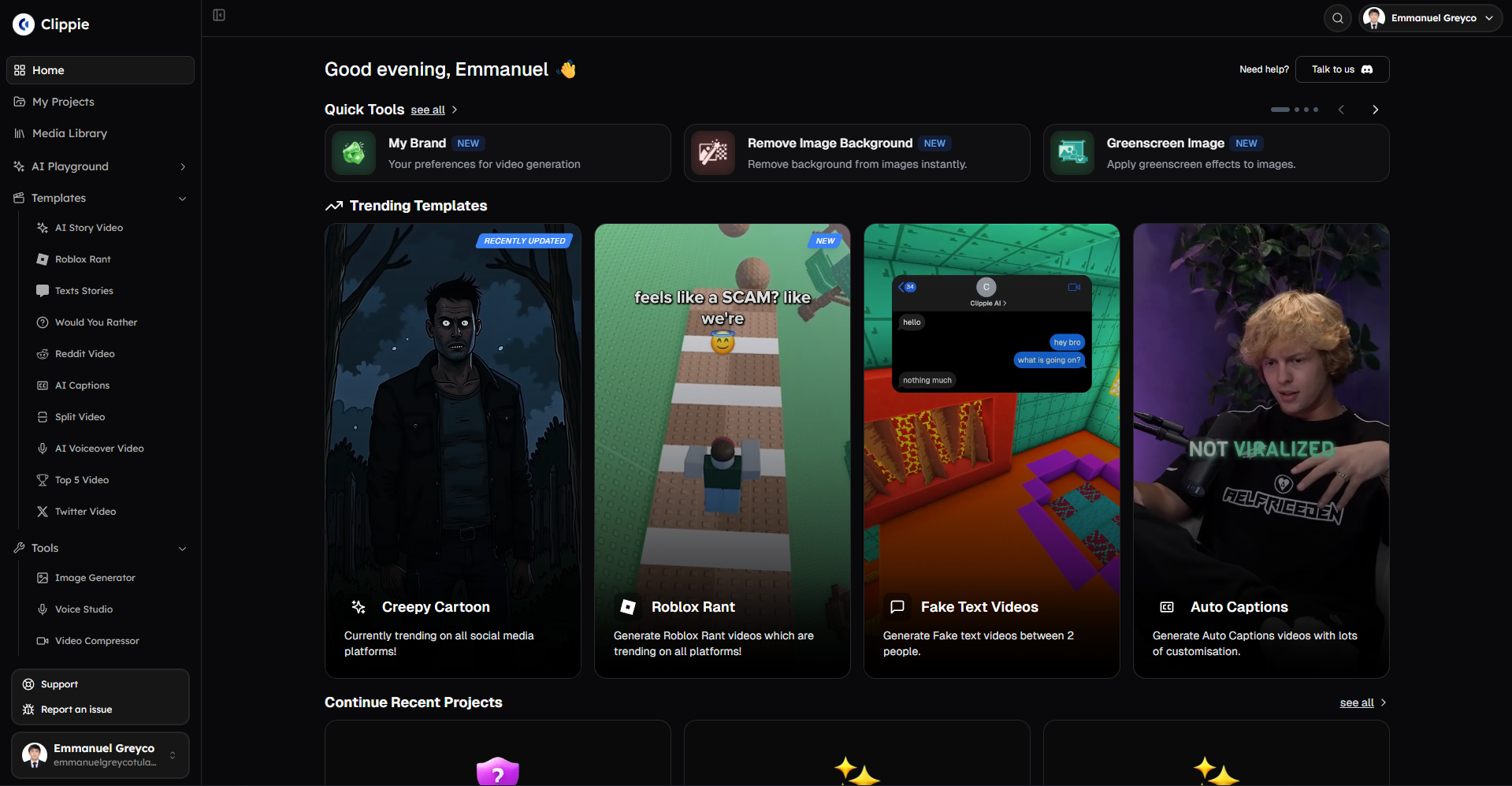
Explore Clippie AI plans and start producing short-form content at scale →
Frequently Asked Questions
Q1: Is short-form content actually better than long-form for growing an audience in 2026?
For discovery and audience growth, short-form is faster. A new creator will reach their first 10,000 followers significantly faster through consistent short-form posting than through long-form YouTube alone. That said, the most successful creators in 2026 use short-form for discovery and long-form for depth, the two formats compound each other when used together strategically.
Q2: How long should a short-form video be for maximum algorithmic reach?
On TikTok, videos between 30–60 seconds consistently generate the highest completion rates, the most important distribution signal. YouTube Shorts performs best at 45–60 seconds for new channels. Instagram Reels currently shows the strongest reach at 15–30 seconds for entertainment content and 45–60 seconds for educational content. Test both lengths in your niche and let your completion rate data guide the decision.
Q3: How many short-form videos per week do I need to post to grow?
The minimum effective posting frequency for algorithmic growth is 3–4 videos per week. The optimal frequency for fast growth is 5–7 per week. Below 3 videos per week, the algorithm doesn't have enough data to consistently recommend your content to new audiences. Consistency matters more than occasional viral videos, a creator posting 5 average videos per week will outgrow a creator posting 1 excellent video per week.
Q4: Can I make a full-time income from short-form content alone?
Yes, but not from platform creator funds alone. The creators earning full-time income from short-form content in 2026 combine multiple revenue streams: affiliate marketing, digital product sales, brand sponsorships, and platform bonuses. A creator with 50,000 engaged niche followers across TikTok and Shorts can realistically generate $2,000–$8,000/month combining these streams, depending heavily on niche and conversion rate.
Q5: Is it too late to start a short-form content channel in 2026?
No. The short-form content space is large enough that new creators enter the top 10% of their niche every month. The key is niche specificity, broad entertainment channels face genuine saturation, but niche-specific content channels (AI tools, personal finance, language learning, health optimisation) still have significant room for new authoritative voices. The algorithm does not penalise new accounts, it only rewards content that holds attention.
Q6: How does Clippie AI help with short-form content production specifically?
Clippie AI handles every production stage after scripting, voiceover generation, AI image creation, auto-captioning, and video export, inside a single platform. For short-form creators, this eliminates the fragmented multi-tool workflow that makes high-volume posting unsustainable. On the Creator plan ($34.99/month), a creator can produce 10–15 short-form videos per month with a production time of approximately 15–25 minutes per video.
Read more

Faceless YouTube Automation Ideas That Stay Monetizable
Channel concepts built for a repeatable script, voice and visuals pipeline, each checked against YouTube's July 2026 rules and where human input matters.

Anonymous Content Ideas: 30 Faceless Videos to Post in 2026
Video ideas that never need your face or your own voice, grouped by format: stories, rankings, quizzes, explainers and commentary, with the policy line.

CapCut vs Clippie AI: Video Editor or Faceless Video Maker?
Choosing between CapCut and Clippie AI comes down to workflow: one is a hands-on editor, the other builds a finished short from a script. Pricing and fit.