
How to Start an Online Business in 2026
Start online business in 2026: Content-first models, short-form platform strategies, traffic-to-sales conversion, revenue stream stacking & automated content creation with Clippie AI.
If you're searching for how to start an online business in 2026, you're entering a landscape where traditional business models (building websites hoping for organic traffic, running paid ads burning $2,000-$10,000 monthly testing, cold emailing prospects facing 1-3% response rates) have been superseded by content-first approaches (TikTok creators converting 2-5% of followers to $100+ customers without paid ads, YouTube Shorts driving 15-30% of e-commerce traffic for strategic brands, Instagram Reels generating $50,000-$500,000 product launches from engaged audiences built over 6-12 months). This comprehensive guide explains why content-first businesses dominate 2026 economics (attention abundance on short-form platforms creating zero-cost customer acquisition vs. $50-$500 paid acquisition costs, algorithmic distribution rewarding value delivery over advertising budgets, owned audiences reducing platform dependency through email list building), identifies business models naturally aligned with short-form content (digital products selling $1,000-$50,000 monthly from educational content funnels, service businesses booking $3,000-$15,000 monthly retainers through expertise demonstration, physical products launching $10,000-$100,000+ Kickstarters from engaged communities, affiliate businesses generating $2,000-$20,000 monthly recommending solutions to built audiences), provides systematic content-to-sales frameworks (educational content establishing authority and trust, transformation showcases creating aspiration and proof, behind-the-scenes building relationship and authenticity, strategic CTAs converting passive viewers into email subscribers and customers), and delivers AI-powered production systems (Clippie AI enabling 20-40 monthly content pieces in 6-8 hours vs. 40-80 hours manual creation, systematic workflows maintaining quality while scaling output, multi-platform distribution maximizing reach without multiplication of effort).
Executive Summary: Online businesses in 2026 succeed through content-first customer acquisition, where entrepreneurs build audiences through valuable short-form content (educational tutorials, transformation stories, expert insights distributed across TikTok, YouTube Shorts, Instagram) converting 1-5% of engaged followers into customers generating $3,000-$50,000 monthly revenue within 12-24 months without paid advertising. The competitive advantages of content-first approaches, zero customer acquisition cost beyond time investment (vs. $50-$500 per customer through paid ads), algorithmic reach multiplying effort (single viral video reaching millions vs. paid impressions capped by budget), owned audience building (email lists reducing platform dependency and enabling unlimited retargeting), and authentic relationship development (trust-based sales vs. interruption marketing), make content creation the essential foundation for sustainable online businesses. Success requires rejecting get-rich-quick schemes (dropshipping courses promising $10,000 monthly in 30 days, MLM recruiting disguised as entrepreneurship, crypto trading "systems") in favor of legitimate value creation (solving real problems for defined audiences, building genuine expertise and authority, creating products or services worth recommending, investing 6-12 months building audience before expecting significant revenue), with realistic expectations that first dollar arrives within 2-4 months through early product sales or affiliate commissions, $1,000 monthly income achievable by month 6-9 with consistent content creation and strategic monetization, and $3,000-$10,000 monthly sustainable by month 12-18 through diversified revenue streams and audience growth.
Table of Contents
Why Content-First Businesses Win in 2026
Choosing a Business Model That Matches Short-Form Platforms
Creating Content That Drives Traffic and Sales
Turning Views Into Revenue Streams
Automating Business Content Creation With Clippie
Frequently Asked Questions
1. Why Content-First Businesses Win in 2026
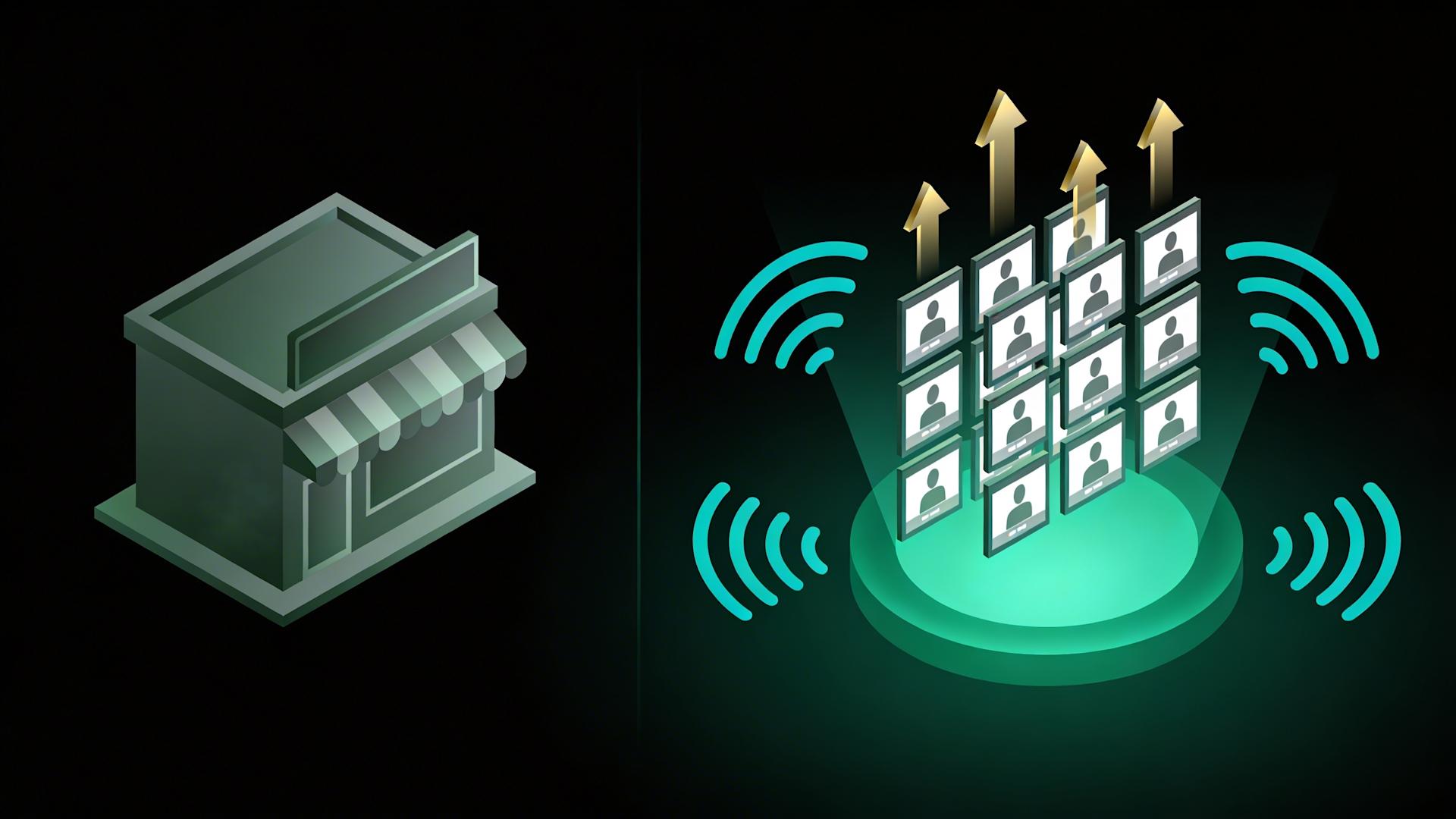
The Economics of Attention vs. Advertising
Traditional customer acquisition (2015-2022 model):
Paid advertising approach:
Facebook/Instagram ads: $50-$200 per customer acquisition (CPM $10-$30, 1-3% conversion)
Google Ads: $100-$500 per customer (competitive keywords $5-$50 per click, 2-5% conversion)
Influencer sponsorships: $500-$5,000 per integration (uncertain ROI, one-time exposure)
Total marketing budget needed:
To acquire 100 customers: $5,000-$50,000 (depending on industry, product price)
Profitable only if: Customer lifetime value >3x acquisition cost (requires high margins or recurring revenue)
Who could succeed:
Well-funded startups (raised capital, $50,000-$500,000 marketing budgets)
Established businesses (profitable, reinvesting revenue into paid acquisition)
High-ticket offers (coaching $3,000-$10,000, enterprise software $10,000-$100,000 annually)
Who struggled:
Bootstrapped entrepreneurs ($0-$5,000 starting budget, can't afford testing)
Low-margin products (physical goods with 20-40% margins, ads eat profitability)
Unproven offers (new products without conversion data, waste budget on testing)
Content-first acquisition (2023-2026 model):
Organic content approach:
TikTok/YouTube Shorts/Instagram Reels: $0 direct cost (time investment only)
Algorithmic distribution: Platforms promote valuable content (millions of impressions possible without spending)
Follower conversion: 1-5% of engaged followers become customers (trust built through consistent value delivery)
Total marketing investment:
Time: 10-20 hours weekly creating content (6-12 months building audience)
Tools: $50-$200 monthly (editing software, email marketing, hosting)
Customer acquisition cost: $5-$50 per customer (mostly time, minimal monetary cost)
Who succeeds:
Bootstrapped entrepreneurs (can start with $0, grow purely on effort)
Service providers (coaching, consulting, freelancing, demonstrating expertise through content)
Digital product creators (courses, templates, tools, solving problems visible in content)
Physical product brands (building communities around lifestyle, values, Kickstarter launches without ads)
Economic comparison (real business example):
Business: Productivity coaching ($500 course + $2,000 1-on-1 coaching)
Paid advertising approach:
Monthly ad budget: $5,000
Cost per customer: $250 (optimized campaigns, proven funnel)
Customers acquired: 20 monthly
Revenue: $10,000 monthly (10 course sales at $500, 5 coaching clients at $2,000)
Profit: $5,000 monthly (50% margin after ad costs)
Sustainability risk: Stop ads = revenue stops (no owned audience, platform dependent)
Content-first approach:
Monthly content investment: 60 hours (15 hours weekly × 4 weeks)
Tools cost: $100 monthly (Clippie AI, ConvertKit, hosting)
Followers: 50,000 (after 12 months consistent posting)
Email subscribers: 5,000 (10% opt-in from link in bio)
Monthly content views: 2M (across TikTok, YouTube, Instagram)
Customers acquired: 50 monthly (1% of email list purchases monthly)
Revenue: $25,000 monthly (25 course sales, 10 coaching clients)
Profit: $24,900 monthly (99.6% margin, no ad costs, only tool costs)
Sustainability: Owned audience (can email anytime, platform changes don't kill business)
Key insight: Content-first generates 5x revenue at 5x profit margin (time investment vs. ad budget)

Algorithmic Distribution as Competitive Advantage
The traditional distribution problem:
Pre-social media era (1990s-2000s):
Build website → Hope for Google traffic (SEO taking 6-24 months, uncertain results)
Buy ads → Limited reach by budget (can't outspend large competitors)
PR and press → Gatekeepers control access (need connections, luck, newsworthiness)
Social media 1.0 (2010-2018):
Build followers → Organic reach declining (Facebook reach dropped from 16% to 2% of followers)
Pay to play → Ads become requirement even for existing followers
Influencer economy emerges → But most people can't access (need existing audience)
Social media 2.0 (2020-2026 - algorithmic distribution era):
Platform incentives changed:
TikTok pioneered: Views not dependent on follower count (new creators can go viral)
YouTube Shorts followed: Algorithm promotes based on watch time, not subscriber count
Instagram Reels adapted: Reach beyond followers (Explore page, suggested reels)
What this means for businesses:
Old model:
Need 10,000 followers to reach 500 people (5% organic reach)
Growth limited by existing audience (slow compounding)
New model:
Single video can reach 100,000-1M+ people (regardless of follower count)
Growth can be explosive (one viral video → 10,000 new followers overnight)
Real example: Zero-to-business story
Creator: Productivity software tutorial channel
Month 1-3: Building foundation
Followers: 0 → 800 (consistent posting, low viral)
Monthly views: 50,000 total (small but engaged audience)
Revenue: $0 (building trust, no offers yet)
Month 4: First viral video
Video: "Notion template that tripled my productivity"
Views: 1.2M (algorithmic explosion, TikTok promoted heavily)
New followers: 15,000 (1.25% conversion from viral viewers)
Revenue: $3,500 (launched $50 Notion template bundle, 70 sales from bio link)
Month 5-6: Compounding effect
Followers: 16,000 → 35,000 (continued viral hits + existing audience growth)
Monthly views: 800,000 average (multiple videos hitting 100K-300K)
Revenue: $8,000 monthly (template sales + affiliate commissions from tools mentioned)
Month 7-12: Sustainable business
Followers: 35,000 → 120,000
Email list: 12,000 (10% opt-in rate from link in bio lead magnet)
Monthly views: 2.5M average
Revenue: $15,000-$25,000 monthly (templates $8K, course $10K, affiliate $5K, coaching $2-7K)
Total investment: Time only (15-20 hours weekly content creation), $100 monthly tools
Customer acquisition cost: ~$8 per customer (time cost at $50/hour ÷ customers acquired) vs. Paid ads equivalent: Would require $50,000-$100,000 monthly ad spend for same reach
Why algorithms favor valuable content:
Platform motivations:
Keep users on platform longer (more ad revenue for platform)
Satisfy user intent (users return if they find valuable content)
Compete with other platforms (TikTok vs YouTube vs Instagram, race to surface best content)
What platforms promote:
High retention (viewers watch 60-80% of video = quality signal)
Engagement (saves, shares, comments = valuable to others signal)
Session watch time (viewer watches multiple videos after yours = sticky content)
What platforms suppress:
Clickbait without payoff (high click, low retention = user dissatisfaction)
Low-quality production (poor audio, unclear value)
Reposted content (identical videos across accounts = spam)
Strategic implication: Create genuinely valuable content (educational, entertaining, inspiring) and algorithms become free marketing team (distributing to millions of ideal customers)
Owned Audience as Moat
The platform dependency problem:
Relying solely on social media:
Algorithm changes hurt reach (Instagram 2018: organic reach dropped 50% overnight)
Platform bans or restrictions (TikTok ban threats, account suspensions)
No direct communication (can't email followers, at platform's mercy for notifications)
Example: Creator losing everything
Built 500,000 TikTok followers over 2 years
Generated $30,000 monthly revenue (affiliate links, sponsorships)
Account banned (false spam report, appeal denied)
Revenue: $30,000 → $0 overnight (no owned audience, no recovery path)
The owned audience solution:
Email list building:
Collect emails through lead magnets (free templates, guides, challenges in exchange for email)
Direct communication (email whenever you want, not dependent on algorithm showing your content)
Platform independent (if TikTok banned tomorrow, still have audience)
Real business protection:
Creator: Fitness coaching
TikTok followers: 200,000
Email subscribers: 25,000 (12.5% conversion through lead magnet)
Monthly revenue: $20,000 ($15K from email launches, $5K from social)
Scenario: TikTok account issues
Account suspended 2 weeks (false violation)
Social revenue: $5,000 → $0 (can't post)
Email revenue: $15,000 → $15,000 (unaffected, emailed list normally)
Revenue protection: 75% (would have lost everything without owned audience)
How to build owned audience:
Lead magnet strategy:
Create free valuable resource (template, guide, checklist, mini-course)
Mention in videos: "Free [resource] in bio, link below" (every video includes CTA)
Landing page: Simple opt-in (name + email in exchange for resource)
Welcome sequence: 5-7 emails (deliver resource, provide additional value, build relationship)
Conversion rates:
Video viewers → bio link clicks: 1-3% (1M video views = 10K-30K clicks)
Bio link clicks → email opt-ins: 30-60% (compelling lead magnet)
Total: 1M video views = 3,000-18,000 new email subscribers
Email list monetization:
Launch frequency: Monthly or quarterly (product releases, promotions)
Conversion rate: 1-5% of list purchases (engaged subscribers)
Average order value: $50-$500 (depending on offer)
Example:
Email list: 10,000 subscribers
Monthly launch: New course at $200
Conversion: 3% purchase (300 buyers)
Revenue: $60,000 per launch (vs. hoping algorithm shows content to followers)
Owned audience value:
Email subscriber worth: $1-$5 per month in revenue (engaged list, regular monetization)
10,000 subscribers = $10,000-$50,000 monthly revenue potential
Business valuation: Email lists often valued at 12-24x monthly revenue in acquisitions
2. Choosing a Business Model That Matches Short-Form Platforms
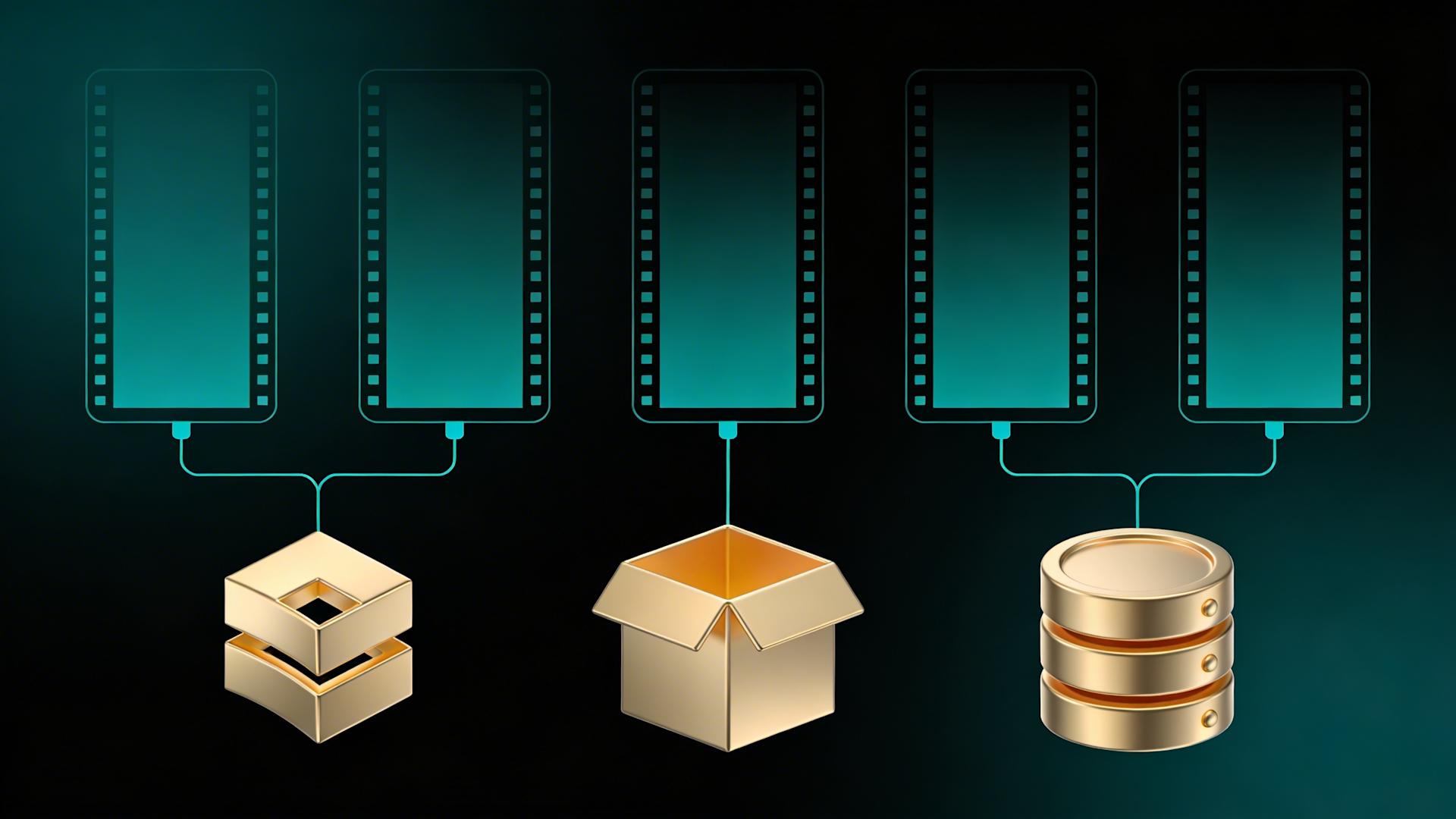
Model 1: Digital Products ($1,000-$50,000 monthly potential)
What are digital products:
Downloadable or accessible online (templates, courses, ebooks, software, tools)
Create once, sell infinitely (no marginal cost per sale)
Deliverable immediately (no shipping, no physical inventory)
Why they work with short-form content:
Educational content sells education: Tutorial videos establish expertise (viewers trust you, buy comprehensive solution)
Problem-solution fit: Content identifies problem, product provides solution
Low barrier purchase: Digital products $10-$500 (impulse buyers from video viewers)
Digital product types:
Templates and tools ($10-$100 price point):
Examples: Notion templates, Excel spreadsheets, Canva designs, code snippets
Creation time: 2-10 hours per product
Content strategy: Show template in use (tutorial using your template), results achieved (before/after), how to customize (personalization guide)
Mini-courses ($50-$300):
Examples: Email course (5-7 lessons), video modules (3-5 hours content), challenge programs (30-day transformation)
Creation time: 20-40 hours
Content strategy: Free lessons as teasers (teach fundamentals, course goes deeper), student results (testimonials, case studies), module previews (show inside course)
Comprehensive courses ($200-$2,000):
Examples: Full skill mastery (50+ video lessons), certification programs, cohort-based learning
Creation time: 100-300 hours
Content strategy: Free content builds authority (prove expertise), course offers complete system (beginner to expert), community and support (ongoing value beyond content)
Software and apps ($10-$100 monthly recurring):
Examples: Productivity tools, automation software, SaaS products
Creation time: 200-2,000 hours (or outsource development)
Content strategy: Problem demonstration (show pain point), tool walkthrough (how software solves it), use cases (different applications)
Content-to-product funnel:
Phase 1: Educational content (build trust and authority)
Video topic: "How I organize my week in Notion"
Value delivered: Viewer learns basic system (actionable, immediate value)
CTA: "Want my complete Notion productivity system? Link in bio"
Phase 2: Lead magnet (capture email)
Free offer: "Notion Quick Start Template"
Opt-in page: Name + email for free template
Delivery: Email with template + welcome sequence
Phase 3: Email nurture (build relationship)
Email 1: Template delivery + how to use
Email 2: Case study (how template helped someone)
Email 3: Advanced tips (going beyond basics, teasing paid product)
Email 4: Product launch (full Notion system for $50)
Phase 4: Sales (convert to customers)
Launch email sequence (problem agitation, solution presentation, urgency/scarcity)
Conversion rate: 3-8% of engaged email list
Example: 1,000 subscribers × 5% = 50 sales × $50 = $2,500 revenue
Revenue scaling:
Beginner (Months 1-6):
Followers: 5,000-15,000
Email list: 500-2,000
Product: Single template or mini-course ($30-$100)
Monthly revenue: $300-$2,000 (early traction)
Intermediate (Months 7-18):
Followers: 20,000-100,000
Email list: 3,000-12,000
Products: 3-5 templates, 1-2 courses ($30-$300 range)
Monthly revenue: $3,000-$15,000 (multiple products, growing audience)
Advanced (Months 19-36):
Followers: 100,000-500,000
Email list: 15,000-60,000
Products: Template library, flagship course, membership ($10-$500 range)
Monthly revenue: $15,000-$100,000+ (diversified product line, large audience)

Model 2: Service Business ($3,000-$30,000 monthly potential)
What are service businesses:
Selling your time or expertise (coaching, consulting, freelancing, agency services)
Customized solutions (not one-size-fits-all products)
Higher ticket pricing ($500-$10,000+ per client)
Why they work with short-form content:
Expertise demonstration: Content proves you know what you're talking about (credibility without resume)
Results showcase: Before/afters, case studies, client wins (social proof in 60 seconds)
Trust building: Consistent valuable content (relationship before sales conversation)
Service types:
Coaching and consulting ($1,000-$10,000 per client):
Examples: Business coaching, career coaching, health coaching, marketing consulting
Content strategy: Free advice (80% of your knowledge shared), client transformations (case studies), Q&A format (answering common questions demonstrates expertise)
Freelancing ($500-$5,000 per project):
Examples: Video editing, graphic design, copywriting, web development
Content strategy: Portfolio showcase (before/after edits), process reveals (how you work), tips and tricks (demonstrating skill level)
Agency services ($2,000-$20,000 monthly retainers):
Examples: Social media management, SEO services, paid advertising, content production
Content strategy: Results first (client metrics, ROI), behind-the-scenes (your process), industry insights (trends, updates)
Content-to-client funnel:
Phase 1: Authority content (prove expertise)
Video: "How I helped client 3x their revenue in 90 days" (case study format)
Value: Specific strategies used (viewers learn tactics)
CTA: "Want similar results? DM 'GROWTH' for free strategy call"
Phase 2: Discovery call (qualify and convert)
Application form: Qualify leads (ensure good fit before spending time)
Strategy call: 30-45 minutes (identify problems, present solution)
Pitch: Service package (clear deliverables, timeline, investment)
Phase 3: Client onboarding
Contract and payment (clear terms, upfront payment or deposit)
Kickoff call (set expectations, gather info)
Service delivery (execute, communicate progress, exceed expectations)
Phase 4: Results and referrals
Document results (screenshots, metrics, testimonials)
Request referral ("Who else do you know who could benefit?")
Create case study content (with permission, showcase results in future videos)
Pricing strategy:
Beginner (building portfolio):
Price: $500-$1,500 per client (lower to get testimonials)
Clients: 2-5 monthly (manageable while building systems)
Monthly revenue: $1,000-$7,500
Intermediate (proven results):
Price: $2,000-$5,000 per client or project
Clients: 3-8 monthly (mix of one-time and retainers)
Monthly revenue: $6,000-$40,000
Advanced (high-demand expert):
Price: $5,000-$15,000 per client (premium positioning)
Clients: 3-10 monthly (selective, high-quality)
Monthly revenue: $15,000-$150,000
Time investment vs. digital products:
Service business pros:
Faster to revenue (can book clients within weeks of starting content)
Higher immediate income (one $3,000 client beats selling 60 × $50 products)
Relationship-based (fulfilling for those who enjoy working with people)
Service business cons:
Time-capped (trading hours for dollars, limited by your availability)
Less scalable (can only serve 5-20 clients well before quality suffers)
Requires sales skills (discovery calls, proposals, negotiation)
Digital product pros:
Infinitely scalable (sell to 10 or 10,000, same effort)
Passive income potential (course sells while you sleep)
No sales calls needed (automated funnel converts)
Digital product cons:
Slower to revenue (building audience + creating product = 3-6 months before sales)
Requires marketing skills (email funnels, launches, copywriting)
Hybrid model (optimal for many):
Months 1-6: Services (quick revenue, client testimonials)
Months 7-12: Create digital products from service learnings (productize expertise)
Months 13+: Both (services for high-touch revenue, products for scalable income)
Model 3: Physical Products & E-commerce ($5,000-$100,000+ monthly potential)
What are physical product businesses:
Tangible goods sold online (dropshipping, private label, handmade, print-on-demand)
Shipped to customers (inventory and logistics management)
Brand-building opportunity (community around products)
Why they work with short-form content:
Visual demonstration: Products look better in video than photos (TikTok Shop driving impulse purchases)
Lifestyle positioning: Show products in use (aspirational context)
Community building: Followers become brand advocates (user-generated content)
Physical product approaches:
Print-on-demand ($0 upfront inventory):
Products: T-shirts, mugs, phone cases, art prints (designs printed per order)
Platforms: Printful, Printify, Redbubble (integrate with Shopify)
Content strategy: Design reveals (your creative process), customer photos (social proof), niche humor (memes, inside jokes for target audience)
Margins: 20-40% (lower, but zero inventory risk)
Private label ($2,000-$10,000 upfront inventory):
Products: Supplement brands, skincare, pet products (generic product + your branding)
Sourcing: Alibaba manufacturers (minimum orders 100-1,000 units)
Content strategy: Behind-the-scenes (sourcing, testing), ingredient education (why yours is better), customer results (before/after, testimonials)
Margins: 50-70% (higher, but inventory risk)
Handmade and artisan ($100-$2,000 upfront materials):
Products: Jewelry, art, crafts, specialty foods (you create)
Uniqueness: One-of-a-kind or limited runs (premium positioning)
Content strategy: Creation process (mesmerizing to watch), story (why you make it), limited drops (scarcity and FOMO)
Margins: 60-80% (high, creative fulfillment, but time-intensive)
Dropshipping ($0-$500 startup, testing products):
Products: Various (supplier ships directly to customer, you never touch inventory)
Risk: Low (test products without buying inventory)
Content strategy: Product demonstrations (show features, benefits), reviews (honest take), problem-solution (what it solves)
Margins: 10-30% (lowest, but easiest to start)
Content-to-purchase funnel:
Phase 1: Product showcase content (viral potential)
Video: "This $15 gadget changed my morning routine"
Format: Problem (hard to wake up) → Solution (sunrise alarm) → Result (waking up energized)
CTA: "Link in bio to shop"
Phase 2: TikTok Shop or link in bio
TikTok Shop: Native purchasing (viewers buy without leaving app, higher conversion)
Link in bio: Shopify store (email capture opportunity, upsells)
Phase 3: Email follow-up (abandoned cart, upsells)
Cart abandonment: Email reminder + discount (recover 10-30% of carts)
Post-purchase: Thank you + cross-sell (recommend complementary products)
Reviews request: Incentivize with discount code (generate social proof)
Scaling strategy:
Month 1-3: Product testing
Content: 30-50 videos featuring product (different angles, use cases)
Goal: Identify winning products (which videos go viral, which products convert)
Investment: $0-$1,000 (testing 3-10 products via dropshipping or print-on-demand)
Revenue: $500-$5,000 (learning phase, validating demand)
Month 4-6: Doubling down
Content: 50-100 videos (focus on winning products, variations)
Investment: $2,000-$10,000 (if private label, order inventory of winners)
Revenue: $5,000-$20,000 (scaling winning products)
Month 7-12: Brand building
Content: 100-200 videos (lifestyle, community, user-generated content)
Investment: $5,000-$30,000 (inventory, branding, influencer partnerships)
Revenue: $15,000-$100,000+ (established brand, loyal customer base)
Model 4: Affiliate Marketing ($1,000-$20,000 monthly potential)
What is affiliate marketing:
Recommending others' products (earn commission on sales)
No product creation (leverage existing products)
Pure marketing play (content drives traffic to affiliate offers)
Why it works with short-form content:
Trust-based recommendations: Audience trusts your opinion (convert trust into clicks and purchases)
Low barrier to start: No product creation (begin earning immediately)
Authenticity: Only recommend what you use (credibility maintained)
Affiliate categories:
Software and tools (20-50% recurring commissions):
Examples: Notion, Canva Pro, email marketing tools, productivity apps
Commission: $5-$50 per month per subscriber (recurring revenue)
Content strategy: Tutorial using tool (demonstrate value), comparisons (vs. alternatives), tips and tricks (advanced usage)
Online courses and education (30-50% per sale):
Examples: Udemy courses, Skillshare, specific skill courses
Commission: $15-$500 per sale (depending on course price)
Content strategy: Teach fundamentals (free content), recommend course for mastery, showcase your results from course
Physical products (4-10% per sale via Amazon Associates):
Examples: Books, gear, equipment, supplies
Commission: $1-$50 per sale (lower percentage, but high volume potential)
Content strategy: Reviews (honest take), recommendations (best in category), how-to using product
High-ticket affiliate programs ($100-$1,000 per sale):
Examples: Web hosting (Bluehost $65-$130 per signup), business software, financial services
Commission: $50-$1,000 per conversion
Content strategy: Tutorials (how to set up), comparisons (which to choose), case studies (results achieved)
Content-to-commission funnel:
Phase 1: Value-first content
Video: "5 productivity tools I use daily"
Content: Genuinely helpful (viewers get value from watching)
Mention: Natural product references (show tools in use)
CTA: "Links to all tools in bio"
Phase 2: Link in bio or description
Linktree page: "My favorite productivity tools" (organized by category)
Each link: Affiliate link (tracked for commissions)
Disclosure: "These are affiliate links, I earn commission at no cost to you" (FTC compliance, builds trust)
Phase 3: Click and conversion
Click rate: 1-3% of viewers (1M video views = 10K-30K clicks)
Purchase rate: 2-10% of clickers (depends on trust, product fit, price)
Total conversion: 0.02-0.3% of viewers purchase
Revenue example:
Monthly views: 2M
Clicks: 40,000 (2%)
Purchases: 800 (2% of clicks)
Average commission: $30
Monthly affiliate revenue: $24,000
Affiliate marketing advantages:
Start immediately (no product creation delay)
Test multiple niches (see what resonates before committing)
Passive income potential (old videos continue generating commissions)
Disadvantages:
Lower margins (vs. own products, you're sharing revenue with product creator)
Platform dependency (affiliate program changes or ends = revenue loss)
No customer ownership (you send traffic, vendor captures email and future sales)
Optimal strategy: Hybrid affiliate + own products
Months 1-6: Pure affiliate (learn audience needs, generate income)
Months 7-12: Create own product (addressing gap affiliates don't fill)
Months 13+: Promote both (affiliates for complementary products, own products for primary offering)

3. Creating Content That Drives Traffic and Sales
Educational Content (Authority Building)
Why educational content converts:
Solves immediate problem (viewer gets value from video alone)
Demonstrates expertise (proves you know subject deeply)
Creates reciprocity (viewer feels indebted, more likely to purchase)
Educational format structures:
Format 1: Step-by-step tutorial (60-90 seconds)
Structure:
Hook (0-3 sec): "How to [achieve result] in [timeframe]"
Problem (3-8 sec): "Most people struggle because [common mistake]"
Solution (8-50 sec): Step 1, Step 2, Step 3 (actionable, specific)
Payoff (50-60 sec): "Now you can [result]. For my complete system, link in bio."
Example: Budgeting tutorial
Hook: "How I saved $1,000 monthly in 30 days"
Problem: "Most budgets fail because they're too restrictive"
Solution: Step 1 - Track spending for 7 days. Step 2 - Identify top 3 expenses. Step 3 - Cut 20% from each.
Payoff: "That's $1,000 saved. Want my complete budget system? Link in bio."
CTA integration:
Natural transition (tutorial → comprehensive solution)
Free lead magnet (budget template) or paid product (full course)
Format 2: Common mistakes / "What not to do" (45-75 seconds)
Structure:
Hook (0-3 sec): "3 [topic] mistakes costing you [negative outcome]"
Mistake 1 (3-20 sec): What it is + why it's wrong
Mistake 2 (20-37 sec): What it is + why it's wrong
Mistake 3 (37-55 sec): What it is + why it's wrong
CTA (55-75 sec): "Avoid these and [positive outcome]. Full guide in bio."
Example: Email marketing mistakes
Hook: "3 email mistakes killing your sales"
Mistake 1: Generic subject lines (why: 90% never open)
Mistake 2: Selling in every email (why: subscribers unsubscribe)
Mistake 3: No clear CTA (why: confused subscribers don't buy)
CTA: "Fix these and double your email revenue. Free guide in bio."
CTA integration:
Diagnostic offer ("Take my quiz to see if you're making these mistakes")
Solution offer ("My email course fixes all 3, $100 in bio")
Format 3: Contrarian take / "What they don't tell you" (50-80 seconds)
Structure:
Hook (0-3 sec): "What [authority/industry] won't tell you about [topic]"
Conventional wisdom (3-12 sec): "Everyone says [common advice]"
Contrarian truth (12-50 sec): "But here's the reality [evidence/reasoning]"
Alternative approach (50-65 sec): "Instead, do [your method]"
CTA (65-80 sec): "This is how I [result]. Complete framework in bio."
Example: Freelancing advice
Hook: "What freelancing gurus don't tell you about pricing"
Conventional: "Everyone says charge per hour"
Contrarian: "But hourly punishes efficiency. I finish in 2 hours what takes others 8. Would earn 75% less."
Alternative: "Charge per project based on value delivered, not time spent"
CTA: "I 3x'd my income with this. Pricing guide in bio ($50)."
CTA integration:
Insider knowledge positioning (you're revealing secrets)
Premium guide or course (deep dive beyond video)
Transformation Content (Aspiration and Proof)
Why transformation content converts:
Visual proof (before/after undeniable)
Aspiration (viewers want same results)
Relatability ("If they did it, I can too")
Transformation format structures:
Format 1: Time-lapse transformation (30-60 seconds)
Structure:
Hook (0-2 sec): After result (dramatic visual, stop scroll)
Before state (2-10 sec): Starting point (relatable struggle)
Process overview (10-45 sec): What you did (high-level, not every detail)
Timeline (45-55 sec): How long it took (realistic expectations)
CTA (55-60 sec): "Want the complete plan? Link in bio."
Example: Fitness transformation
Hook: [After photo, fit, confident]
Before: "6 months ago, I weighed 200 lbs, couldn't run a mile"
Process: "3 workouts weekly, 1800 calorie deficit, tracked everything"
Timeline: "This is 6 months progress, no shortcuts, just consistency"
CTA: "Full workout plan + meal guide in bio ($100)"
CTA integration:
Detailed plan (workout specifics, meal plans)
Accountability program (coaching or group)
Format 2: Income transformation (40-70 seconds)
Structure:
Hook (0-3 sec): Current income ("From $0 to $10K monthly")
Starting point (3-15 sec): Where you were (job, income, struggles)
Strategy (15-50 sec): What changed (specific tactics, not vague inspiration)
Results (50-65 sec): Current state (income, lifestyle, freedom)
CTA (65-70 sec): "Learn my exact system, link in bio"
Example: Freelancing income
Hook: "$0 to $8,000 monthly as freelance writer in 8 months"
Starting: "Corporate job, $55K salary, hated it"
Strategy: "Built writing portfolio, pitched 50 clients weekly, specialized in fintech"
Results: "Now $8K monthly, work 20 hours weekly, location independent"
CTA: "My freelance blueprint: $200 in bio"
CTA integration:
Exact system (not theory, your specific steps)
Premium course or coaching (high-ticket for income claims)
Format 3: Skill development transformation (35-60 seconds)
Structure:
Hook (0-3 sec): Skill demonstration (impressive result, draw portrait, speak language, build app)
Starting point (3-12 sec): "I couldn't [skill] 90 days ago"
Learning method (12-45 sec): How you learned (resources, practice routine, key insights)
Current level (45-55 sec): What you can do now (showcase skill)
CTA (55-60 sec): "Want my learning roadmap? Link in bio"
Example: Language learning
Hook: [Speaking fluent Spanish]
Starting: "3 months ago, I knew zero Spanish"
Method: "30 min daily Duolingo, 1 hr conversation practice, watched Spanish Netflix"
Current: [Demonstrating conversation]
CTA: "My 90-day Spanish plan, free download in bio"
CTA integration:
Learning framework (your system for others to replicate)
Resource list (courses, apps, tools, affiliate revenue)

Behind-the-Scenes Content (Relationship Building)
Why BTS content converts:
Authenticity (shows real you, not polished persona)
Relatability (struggles and wins, human connection)
Trust (transparency builds credibility)
BTS format structures:
Format 1: Income/revenue reveal (50-80 seconds)
Structure:
Hook (0-3 sec): "How much I made [timeframe]"
Breakdown (3-50 sec): Revenue by source (specific numbers, not ranges)
Expenses (50-65 sec): What it cost (transparency, not all profit)
Lessons (65-75 sec): What worked, what didn't (educational value)
CTA (75-80 sec): "Want to build similar income streams? Guide in bio"
Example: Content creator revenue
Hook: "I made $12,500 last month, here's how"
Breakdown: YouTube ads $3,200, Sponsorships $5,000, Course sales $3,800, Affiliate $500
Expenses: Editor $800, Software $150, Ads $0 (organic only)
Lessons: "Sponsorships most lucrative but inconsistent. Course is passive income. Need to diversify more."
CTA: "My monetization playbook, $150 in bio"
CTA integration:
Income diversification guide (how to replicate your model)
Coaching (help them build similar business)
Format 2: Day in the life (60-90 seconds)
Structure:
Hook (0-3 sec): Intriguing lifestyle teaser ("Day as [role], $15K monthly")
Morning (3-15 sec): How day starts (routine, mindset)
Work blocks (15-60 sec): What actual work looks like (demystify)
Results (60-75 sec): What was accomplished (tangible outcomes)
Reality check (75-85 sec): Hard parts, not just highlights
CTA (85-90 sec): "Want this lifestyle? Link to my course"
Example: Freelance designer day
Hook: "Day in my life, freelance designer, $10K monthly"
Morning: Wake up 7 AM, no commute, coffee and quick client check
Work: Client call 9 AM, design work 10-2, lunch break, emails 3-4
Results: Finished 2 client projects, invoiced $2,500
Reality: "Looks easy but took 2 years building client base, some months are slow"
CTA: "How I built this, freelance course $300 in bio"
CTA integration:
Lifestyle achievement course (how to get there)
Freelance/remote work guide (specific to that path)
Format 3: Failure and pivot story (60-90 seconds)
Structure:
Hook (0-3 sec): "I lost $5,000 and quit my business, here's what I learned"
Failure context (3-20 sec): What happened, why it failed
Emotions (20-35 sec): How you felt (vulnerability builds connection)
Pivot (35-70 sec): What you did next, why it worked
Current state (70-85 sec): Where you are now (redemption arc)
CTA (85-90 sec): "Don't make my mistakes, learn from them (link in bio)"
Example: Failed product launch
Hook: "I spent $5,000 on a product that sold $200, here's why"
Failure: Created course without validating demand, nobody wanted it
Emotions: Devastated, questioned everything, almost quit
Pivot: Surveyed audience, created what they asked for, pre-sold before building
Current: Next launch made $15,000, now do pre-sales always
CTA: "How to validate before you build, free guide in bio"
CTA integration:
Mistakes to avoid guide (learning from your failures)
Validation framework (process that now works)
Strategic CTA Placement
The CTA hierarchy (what to ask for):
Tier 1: Email opt-in (lowest barrier, highest volume)
Offer: Free template, guide, checklist, mini-course
Conversion: 10-30% of bio link clickers
Purpose: Build owned audience (nurture to sale later)
When to use: Viewer not ready to buy yet, early in content journey
Tier 2: Low-ticket product ($10-$100)
Offer: Template, ebook, mini-course, tool
Conversion: 1-5% of bio link clickers
Purpose: Convert viewers to buyers (easier future sales)
When to use: Educational or transformation content (demonstrated value)
Tier 3: Mid-ticket product ($100-$500)
Offer: Comprehensive course, template bundle, group program
Conversion: 0.3-2% of bio link clickers
Purpose: Primary revenue driver (balance volume and value)
When to use: High-value content, established trust, large following
Tier 4: High-ticket ($500-$5,000)
Offer: Coaching, consulting, done-for-you services
Conversion: 0.1-0.5% of bio link clickers
Purpose: Maximum revenue per customer (smaller volume, higher touch)
When to use: Deep expertise demonstrated, premium positioning, application-based
CTA optimization:
Weak CTA (generic, low conversion):
"Link in bio for more info"
Problems: Vague (what is "more info"?), no value stated, no urgency
Strong CTA (specific, higher conversion):
"Free Notion productivity starter kit in bio, grab it before I take it down Friday"
Why better: Specific offer (Notion kit), clear value (free, productivity boost), urgency (deadline creates FOMO)
CTA formula:
What you're offering (specific)
Benefit/result (what they get)
Where to get it (link in bio, DM keyword)
(Optional) Urgency or scarcity (limited time, limited quantity)
Examples by business model:
Digital products:
"My $50 Notion template that saved me 10 hours weekly, link in bio. 50% off ends Sunday."
Services:
"Want results like this? DM me 'COACHING' for free strategy session (taking 5 clients only)"
Physical products:
"This $20 gadget changed my mornings, link in bio to shop. Free shipping this week only."
Affiliate:
"Tool I use for [result], link in bio saves you 20% (affiliate link, I earn commission)"

4. Turning Views Into Revenue Streams
Email List Building and Nurture
Why email > social media followers:
Ownership: You own the list (platform can't take away)
Reach: 20-40% open rate (vs. 2-10% social media organic reach)
Revenue: Email generates $36-$72 for every $1 spent (highest ROI marketing channel)
Lead magnet creation:
Effective lead magnet characteristics:
Immediate value: Solves specific problem right away (not "someday" value)
Quick consumption: 5-15 minutes to consume (not 40-page ebook requiring hours)
Relevant to offer: Logical next step is your paid product (bridges free to paid)
Lead magnet types:
Template or tool (easiest to create, high perceived value):
Examples: Notion template, Excel budget, Canva design, checklist
Creation time: 2-6 hours
Why it works: Immediately useful (copy-paste, start using), visual (looks substantial), evergreen (always relevant)
Mini email course (5-7 lessons, high engagement):
Format: Daily emails teaching concept (day 1 intro, days 2-6 lessons, day 7 pitch)
Creation time: 8-12 hours
Why it works: Builds habit (daily emails, frequent touchpoints), progressive learning (each lesson builds), warm-up to sale (day 7 pitch feels natural)
Challenge or sprint (7-30 days, high commitment):
Format: Daily tasks or lessons (30-day productivity challenge, 7-day business sprint)
Creation time: 12-20 hours
Why it works: Transformation promise (complete challenge, achieve result), accountability (group or individual), community (participants bond, higher loyalty)
Cheat sheet or quick-start guide (fastest to create):
Format: 1-2 page PDF (key concepts, steps, resources)
Creation time: 1-3 hours
Why it works: Low commitment (quick scan), high utility (reference material), easy to deliver
Opt-in page optimization:
Weak opt-in page (low conversion ~10-20%):
Headline: "Download My Free Guide"
Copy: "Enter your email to get my guide"
Form: Name + Email
Button: "Submit"
Strong opt-in page (high conversion ~40-60%):
Headline: "Get My Notion Productivity System That Saved Me 10 Hours Weekly (Worth $100, Free Today)"
Subhead: "Join 12,584 people using this exact system to reclaim their time"
Copy: Bullet points of what's included + specific benefit of each
Social proof: "This template finally made Notion click for me. Game-changer!" - Sarah M.
Form: Email only (name optional, reduces friction)
Button: "Send Me The Template (Free)" (benefit-driven, not generic "submit")
Urgency: "Offering free for limited time, grab it now"
Conversion rate improvement: 3-4x (strong vs. weak page)
Email welcome sequence (relationship building):
Email 1 (immediate delivery):
Subject: "Here's your [lead magnet] + quick start tip"
Content: Lead magnet link, how to use it (5-minute quick-start)
CTA: Reply with biggest challenge (engagement, learn about subscriber)
Email 2 (day 2, credibility building):
Subject: "How [case study name] achieved [result] with [your method]"
Content: Detailed case study (social proof, prove method works)
CTA: "Want similar results? Check out [paid product]" (soft pitch)
Email 3 (day 4, value add):
Subject: "[Advanced tip] to go beyond the basics"
Content: Premium content (more valuable than lead magnet, demonstrate paid product worth)
CTA: "Loved this? My [course/product] has 50+ tips like this"
Email 4 (day 6, product pitch):
Subject: "Ready to [achieve bigger outcome]? Here's how"
Content: Problem agitation (limits of free content, need for comprehensive solution)
CTA: "Enroll in [product] today, $[price], [discount] expires [date]"
Email 5 (day 8, objection handling):
Subject: "Still on the fence? Let me address your concerns"
Content: Common objections answered (too expensive? here's ROI calc. No time? it's self-paced.)
CTA: "Last chance, offer ends in 48 hours"
Email 6 (day 10, final pitch):
Subject: "Offer closes tonight, don't miss this"
Content: Recap value, limited time warning, testimonials (final push)
CTA: "Enroll now before price increases to $[higher price]"
Email 7 (day 12, pivot to nurture):
Subject: "Okay, maybe next time, here's a free gift"
Content: No hard feelings, another free resource (staying in their good graces)
CTA: Regular newsletter signup (if not interested in product, at least stay engaged)
Conversion rates:
Email list → Product purchase: 3-8% (through 7-day sequence)
Example: 1,000 subscribers × 5% = 50 sales × $200 product = $10,000 revenue from single launch

Launch Strategies (Maximizing Revenue Events)
Why launches work:
Urgency: Limited-time creates FOMO (vs. evergreen "available anytime" = procrastination)
Event feel: Excitement, momentum (vs. quiet background sale)
Focus: All attention on one offer (vs. ongoing distractions)
Launch types:
Open-cart launch (doors open for limited time):
Structure: 5-7 day cart open window (enroll only during this period)
Pre-launch: 7-10 days content and emails (building anticipation, teasing what's coming)
Launch: Cart opens (emails, content, all-hands promotion)
Close: Cart closes (deadline, last-chance messaging)
Frequency: Quarterly or twice yearly (scarcity maintained if infrequent)
Revenue: 70-90% of sales on final 48 hours (urgency-driven buying)
Evergreen launch (always available, automated):
Structure: Visitor triggers automated sequence (enters email, receives 5-7 day pitch sequence with "deadline")
Artificial scarcity: Personal deadline (you have 7 days from opt-in to purchase at discount)
Frequency: Continuous (new subscribers always entering funnel)
Revenue: Steady flow (5-10 sales weekly vs. 100 sales once quarterly)
Launch content strategy:
Pre-launch (7-10 days before cart opens):
Goal: Build anticipation, demonstrate value, seed product benefits
Content examples:
"The 3 biggest mistakes I see people make with [topic], here's how my course fixes them" (planting seed that course solves problems)
"Behind-the-scenes: Creating my new [product]" (transparency, building excitement)
"Student wins: How [name] achieved [result] with my method" (social proof, proving it works)
Launch period (cart open, 5-7 days):
Goal: Drive immediate action, handle objections, create urgency
Content examples:
"Cart is open for [product], here's everything inside" (overview, value demonstration)
"Common question: 'Will this work for me?' Answer: [case studies showing different people succeeding]" (objection handling)
"48 hours left to enroll, bonuses disappear after that" (urgency, scarcity)
Post-launch (cart closed):
Goal: Pivot to nurture, leave door open for next launch
Content examples:
"Cart is closed, but here's a free preview of module 1" (value for those who missed it, taste of what they could have had)
"Next launch is [date], get on waitlist for early-bird pricing" (future opportunity, maintain interest)
Launch revenue example:
Business: Productivity course ($300)
Email list: 5,000 subscribers
Pre-launch engagement: 25% open rate on launch emails (1,250 engaged)
Purchase conversion: 4% of engaged subscribers (50 sales)
Revenue: $15,000 single launch
Minus: Affiliate commissions if applicable, refunds (typically 3-8%)
Net: ~$14,000 (one-week event)
Annual strategy: 4 launches yearly = $56,000 revenue (+ evergreen background sales)
Upsells, Downsells, and Product Ladders
The product ladder concept:
Why single products limit revenue:
Customer value variance: Some willing to pay $50, others $5,000 (single product leaves money on table)
Lifetime value: Sell once, relationship ends (vs. multiple purchases over time)
Product ladder structure:
Bottom rung: Free lead magnet ($0)
Purpose: Email capture, relationship start
Example: Free Notion template
Rung 2: Tripwire ($10-$30)
Purpose: Convert freebie-seekers to buyers (much easier to sell $200 product to someone who bought $10 vs. someone who only took free)
Example: Notion starter template bundle ($15)
Rung 3: Core product ($100-$500)
Purpose: Main revenue driver (majority of sales volume)
Example: Complete Notion productivity course ($200)
Rung 4: Premium product ($500-$2,000)
Purpose: Serve buyers wanting more, max revenue per customer
Example: Notion productivity course + 1-on-1 coaching ($1,000)
Rung 5: High-touch service ($2,000-$10,000)
Purpose: Highest willingness to pay (done-for-you, consulting)
Example: Done-for-you Notion workspace setup + consulting ($3,500)
Upsell sequences:
Immediately after purchase (order bump):
Offer: Complementary product at discount (related to what they bought)
Example: Bought course? "Add printable workbook for $20 (usually $40)"
Conversion: 10-30% take upsell
Revenue boost: 10-30% per transaction
Thank-you page upsell (one-time offer):
Offer: Premium version or additional training at special price (only available now)
Example: "Upgrade to premium coaching edition for $500 more (saves $800 vs. buying later)"
Conversion: 5-15% upgrade
Revenue boost: Additional $25-$75 per customer on average
Email sequence upsell (days after purchase):
Timing: 3-7 days post-purchase (after initial satisfaction, before buyer's remorse)
Offer: Next-level product (natural progression)
Example: Completed beginner course? "Ready for advanced strategies? Save 30% as existing student"
Conversion: 5-20% purchase second product
Lifetime value increase: 30-50%
Downsell strategy (recovering lost sales):
When to downsell:
Cart abandonment (added to cart, didn't purchase)
Declined upsell (said no to premium, might say yes to something smaller)
Downsell examples:
Abandoned $200 course cart → Email: "Not ready for full course? Try $30 starter module"
Declined $1,000 coaching upsell → Offer: "$200 group coaching instead? Same curriculum, less 1-on-1 time"
Conversion: 10-25% of those who said no to main offer accept downsell
Revenue recovery: 15-35% of otherwise lost sales
Product ladder revenue impact:
Without product ladder (single $200 product):
100 customers × $200 = $20,000 revenue
With product ladder:
100 customers buy core product: $20,000
25 buy $20 order bump: $500
10 upgrade to $700 premium: $5,000 (additional $500 each)
5 buy $3,500 done-for-you: $17,500
Total: $43,000 (2.15x revenue from same 100 customers)

5. Automating Business Content Creation With Clippie
Template-Based Content Production
The content treadmill problem:
Need 20-30 monthly posts (algorithm demands consistency)
Each video 45-90 minutes manual creation (30-45 hours monthly)
Burnout within 3-6 months (unsustainable, quit before seeing results)
Template solution:
Content template structure:
Educational tutorial template:
Hook: "How to [achieve result] in [timeframe]"
Problem: "Most people fail because [common mistake]"
Solution: [3-5 steps]
CTA: "Complete system in bio"
Fill-in template for batch creation:
Sunday batch session (create 20 tutorials in 4 hours):
Hour 1: Topic ideation (20 topics)
Brainstorm 20 "how to" questions in niche (audience pain points, frequent questions)
Examples for productivity niche: "How to organize digital files in 5 minutes," "How to plan your week in Notion," "How to stop procrastinating on important tasks"
Hour 2: Script templates (20 scripts)
Use template structure for each
Write hook + 3 steps for each topic (5-10 minutes per script)
Save as numbered scripts: Script01.txt, Script02.txt, etc.
Hour 3: Batch filming (20 videos)
Set up once (camera/phone, lighting, background)
Record all 20 consecutively (2-3 takes each, 2-3 minutes per video)
No editing during filming (just record raw footage)
Hour 4: Clippie AI batch editing
Upload all 20 raw videos
Apply tutorial template (consistent intro, caption style, music, outro)
AI processes simultaneously (automated silence removal, caption generation)
Human reviews each (3-5 minutes per video, 60-100 minutes total)
Total: 20 videos ready to post (schedule across month)
Template customization by business model:
Digital products business:
Template focus: Educational tutorials (demonstrate expertise, sell courses/templates)
CTA template: "Want the complete [system/template]? Link in bio."
Service business:
Template focus: Case studies and results (social proof, sell coaching/consulting)
CTA template: "Want results like this? DM '[KEYWORD]' for free call"
Physical products:
Template focus: Product demonstrations (show in use, lifestyle context)
CTA template: "Shop this [product] - link in bio. [Discount/urgency]"
Affiliate business:
Template focus: Reviews and comparisons (honest recommendations)
CTA template: "Link to [product] in bio (affiliate link, I earn commission)"
AI-Powered Editing Workflow
Manual editing bottleneck:
Edit one video: 45-90 minutes (finding best moments, cutting silence, adding captions, music, export)
20 monthly videos: 15-30 hours editing (unsustainable for solo entrepreneur)
Clippie AI workflow (20 videos in 4-6 hours):
Phase 1: Upload and template selection (15 minutes)
Upload all 20 raw videos to Clippie AI
Select business template (educational, promotional, BTS, etc.)
Set brand elements (colors, fonts, logo, saved in template)
Phase 2: AI processing (10-15 minutes autonomous)
Clippie AI automatically:
Removes silence (pauses over 0.5 seconds, maintains natural pacing)
Generates captions (speech-to-text, 98% accuracy)
Syncs to template (intro, outro, caption style, music, consistent brand)
Suggests B-roll (if relevant keywords mentioned, stock footage matched)
Human does other work while AI processes (this time is free)
Phase 3: Human review and refinement (3-4 hours for 20 videos)
Watch each video (3-5 minutes per video)
Check: Captions accurate? Pacing good? Hook strong? CTA clear?
Adjust: Swap B-roll if needed (5-10% of suggestions), fix caption errors (1-3 per video), trim if too long
Approve for export
Phase 4: Export and scheduling (30 minutes)
Batch export all 20 (Clippie AI renders simultaneously)
Upload to scheduling tool (Later, Hootsuite, native platform schedulers)
Schedule across month (Mon/Wed/Fri posting, for example)
Time savings:
Manual editing: 20 videos × 60 min = 20 hours
Clippie AI workflow: 4-6 hours total
Savings: 14-16 hours (70-80% reduction)
Quality maintenance at scale:
Common fear: "Won't template-based content feel repetitive and lower quality?"
Reality: Templates ensure consistency (which audiences appreciate, not resent)
Evidence:
Successful creators use 3-5 formats repeatedly (Mr. Beast, productivity channels, educational creators, recognizable structure)
Viewers subscribe FOR consistent format (know what to expect, return for more)
Template ≠ identical (different topics, different hooks, different examples, structure same, content varies)
Quality checklist (before posting):
[ ] Hook grabs attention (first 3 seconds compelling)
[ ] Value delivered (viewer learns or gains something)
[ ] CTA clear (know what to do next)
[ ] Captions accurate and readable
[ ] Brand consistent (colors, fonts, style match other content)
[ ] Mobile optimized (text readable on phone, visual clear)
Multi-Platform Distribution Strategy
Single creation, multi-platform distribution:
The inefficient approach:
Create unique content for each platform (TikTok video, separate YouTube Short, separate Instagram Reel)
Time: 3x effort (3 videos for same topic)
The efficient approach:
Create one master video (optimized for vertical short-form)
Adapt for each platform (minor tweaks, not complete recreation)
Time: 1.5x effort (one creation, slight variations)
Platform-specific optimization:
TikTok optimization:
Trending sound consideration (if naturally fits content, use trending audio, discovery boost)
Text overlays (TikTok users expect on-screen text, native style)
Hashtag mix (3-5 hashtags: 2 niche-specific, 1-2 broader reach)
YouTube Shorts optimization:
SEO-focused title (include keyword, clear benefit, "How to [X]: 3-Step Guide")
Description with timestamps (helps YouTube understand content)
#Shorts tag (ensure categorized as Short, not regular video)
Instagram Reels optimization:
First frame hook (Instagram shows thumbnail before autoplay, make it compelling)
Caption in first 100 characters (users see preview before "...more")
Hashtags at end of caption (cleaner appearance vs. mid-caption)
Clippie AI multi-platform export:
Single master video → Three optimized versions:
Upload to Clippie AI
Select "Multi-Platform Export"
AI creates three versions:
TikTok: Adds trending sound option, TikTok-style captions, optimized hashtags
YouTube: SEO-optimized title suggestion, description with timestamps, #Shorts tag
Instagram: First-frame hook emphasized, caption formatting, hashtag placement
Download all three
Upload to each platform via scheduler
Time investment:
Manual platform-specific creation: 3 hours (1 hour per platform)
Clippie AI multi-platform: 20 minutes (5 min setup, 10 min AI processing, 5 min review)
Savings: 2 hours 40 minutes per video (88% reduction)
Monthly savings:
20 videos × 2.67 hours savings each = 53.3 hours saved monthly
Reinvest in: More content creation, product development, customer service, or personal time
Content Repurposing for Maximum Leverage
Long-form to short-form strategy:
If creating long-form content (YouTube videos, podcasts, webinars):
One 30-minute video → 8-15 short-form clips (maximize reach)
Repurposing workflow:
Step 1: Identify clip-worthy moments (10 minutes for 30-min video)
Watch long-form content
Note timestamps of:
Valuable teachings (standalone tips, frameworks)
Storytelling moments (case studies, personal anecdotes)
Controversial takes (engagement drivers)
Viewer questions answered (FAQ content)
Step 2: Clippie AI clip extraction (15 minutes for 8 clips)
Upload long-form video
Select timestamp ranges (60-90 second segments)
AI creates short-form versions:
Reframes to vertical (crops to 9:16)
Adds hook (text overlay or rearranges to start strong)
Captions and music (shorts-optimized)
Export all clips
Step 3: Schedule distribution (15 minutes)
8 clips distributed over 2 weeks (4 per week across platforms)
Extends reach of single long-form piece
Leverage calculation:
One 30-minute video creation: 4-6 hours
Extract 8 short-form clips: 40 minutes
Result: 8 additional content pieces (40% of one piece's time)
Reach multiplier: 8x content output from same effort
Blog/written content to video:
If you write (blog posts, newsletters, LinkedIn articles):
Repurpose into short-form videos (maximize existing research)
Text-to-video workflow:
Step 1: Identify visual concepts (5 minutes per blog post)
Find 3-5 key points from article (each can be standalone video)
Determine visual approach: Talking head (film yourself explaining), B-roll + voiceover (stock footage + narration), Screen recording (if tutorial)
Step 2: Script adaptation (10 minutes per video)
Take key point from article
Adapt to hook-solution-CTA structure (blog is detailed, video is condensed)
Step 3: Clippie AI video creation (15 minutes per video)
Record voiceover (reading adapted script)
Upload to Clippie AI
AI matches B-roll or processes screen recording
Export
Efficiency: One 2,000-word blog post → 5 short-form videos (1.5 hours total repurposing)
6. Frequently Asked Questions
How much money do you need to start an online business in 2026?
Answer: $0-$500 sufficient for content-first businesses (free social media platforms for distribution, $35-$100 monthly tools for email marketing and content creation, optional $200-$500 initial product inventory for physical goods businesses), compared to traditional $5,000-$50,000 startup costs requiring paid advertising, website development, and significant inventory, with lean content-first approach enabling profitability within 3-6 months vs. 12-24+ months for capital-intensive models
Minimum viable budget (content-first business):
$0 startup option (completely bootstrapped):
Tools:
Social media platforms: Free (TikTok, Instagram, YouTube)
Email marketing: Free tier (Mailchimp 500 subscribers free, ConvertKit 300 free, MailerLite 1,000 free)
Content creation: Phone camera + free editing apps (CapCut, VN Editor)
Website: Free options (Linktree, Carrd free tier for simple landing pages)
Total monthly cost: $0
Limitations:
No AI editing assistance (manual editing 3-5x slower)
Email limits (hit ceiling quickly, need to upgrade)
Basic landing pages (less professional, may reduce conversions)
Who this works for:
Complete beginners testing viability (validate idea before investing)
Time-rich, money-poor (willing to trade time for tools)
Service businesses (don't need sophisticated funnels initially)
$50-$100/month option (recommended minimum):
Tools:
Social media: Free (platforms)
Content creation: Clippie AI ($35/month, dramatically faster editing)
Email marketing: Paid tier ($10-$30/month for 1,000-3,000 subscribers)
Landing pages: Carrd Pro ($19/year) or ConvertKit free landing pages
Total: $50-$70/month
Benefits:
AI editing saves 15-25 hours monthly (massive time savings, sustainable)
Email automation (nurture sequences, launch campaigns)
Professional landing pages (higher conversions)
Who this works for:
Serious entrepreneurs (committed to building real business)
Part-time builders (limited time, need efficiency)
Scaling past initial validation (proven concept, ready to invest)
$200-$500 initial option (optimal start):
One-time investments:
Microphone: $50-$100 (Blue Snowball, Samson Q2U, dramatically better audio quality)
Ring light: $30-$60 (better video quality, worth it if filming yourself)
Total one-time: $80-$160
Monthly tools:
Clippie AI: $35/month
Email marketing: $30-$50/month (3,000-5,000 subscriber tier)
Landing page builder: $20-$30/month (Unbounce, Leadpages, higher converting)
Hosting: $5-$15/month (if creating website beyond landing pages)
Total monthly: $90-$130
First 3 months total: $350-$550 (one-time equipment 3 months tools)
Benefits:
Professional quality (better audio/video = higher retention and trust)
Advanced email automation (segmentation, abandoned cart, complex sequences)
Higher-converting landing pages (A/B testing, professional templates)
Scalable infrastructure (won't hit limits quickly, room to grow)
Who this works for:
Former employees with savings (can afford small investment)
Serious business builders (treating as real business, not hobby)
Those with proven concept (tested free model, ready to scale)
Budget comparison by business model:
Digital products business:
Startup: $50-$200 (tools only, no inventory)
Monthly: $50-$130 (Clippie AI, email marketing, hosting)
12-month total: $650-$1,760
Service business:
Startup: $50-$150 (tools, maybe portfolio website)
Monthly: $35-$80 (minimal tools, Clippie AI for content, basic email)
12-month total: $470-$1,110
Physical products (e-commerce):
Startup: $500-$5,000 (initial inventory, varies wildly by product)
Monthly: $150-$300 (tools + ads testing + inventory replenishment)
12-month total: $2,300-$8,600
Affiliate marketing:
Startup: $35-$100 (tools only)
Monthly: $35-$100 (Clippie AI, email marketing)
12-month total: $455-$1,300
Traditional business comparison (paid advertising model):
E-commerce with paid ads:
Startup: $5,000-$10,000 (inventory $3K-$5K, website $1K-$2K, initial ad testing $1K-$3K)
Monthly: $3,000-$10,000 (ads $2K-$8K, tools $500-$1K, inventory $500-$1K)
12-month total: $41,000-$130,000
Key insight: Content-first approach requires 95-98% less capital (under $2,000 vs. $50,000+)
ROI timeline by investment level:
$0 investment (free tools only):
Months to first dollar: 2-4 months (slower content production, longer to build audience)
Months to $1,000/month: 9-15 months (manual workflows limit output)
12-month revenue: $3,000-$8,000 (slow ramp, limited by time constraints)
ROI: Infinite (no investment, pure profit, but opportunity cost of time)
$50-$100/month investment:
Months to first dollar: 1-3 months (efficient production enables faster audience growth)
Months to $1,000/month: 6-10 months (2-3x faster content output)
12-month revenue: $8,000-$20,000 (accelerated growth)
Total investment: $600-$1,200
ROI: 667-3,233% (excellent return, minimal risk)
$200-$500 initial + $90-$130/month:
Months to first dollar: 1-2 months (professional quality = faster trust building)
Months to $1,000/month: 4-8 months (professional infrastructure)
12-month revenue: $15,000-$40,000 (professional quality commands premium pricing)
Total investment: $1,430-$2,110
ROI: 711-1,795% (high return, scalable foundation)
Funding sources for initial investment:
If starting with $0:
Side hustle current job income (save $100-$200 monthly for 2-3 months)
Sell unused items (declutter, generate $200-$500 startup capital)
Client prepayment (if service business, get paid upfront before investing in tools)
Bottom line: Can start online business with $0 (free tools sufficient for validation), but $50-$200 initial investment dramatically accelerates timeline to profitability and reduces burnout risk through efficiency tools
How long does it take to make money from an online business in 2026?
Answer: 1-4 months to first dollar through early product sales, affiliate commissions, or client bookings; 6-10 months to consistent $1,000+ monthly income through audience building and monetization diversification; 12-24 months to sustainable $3,000-$10,000 monthly revenue through compounding audience growth, proven offers, and systematic content production, significantly faster than traditional businesses requiring 24-36+ months to profitability
Revenue timeline by business model:
Digital products business:
Months 1-3: Foundation (building audience, no revenue expectations):
Followers: 0 → 3,000-8,000 (consistent posting, some viral hits)
Email subscribers: 0 → 300-800 (10% conversion from link in bio)
Content: 40-90 videos posted (3-7 weekly cadence)
Revenue: $0-$500 (maybe early affiliate commissions, but primarily audience building)
Action: Create first lead magnet, build email list, study audience needs
Months 4-6: First product launch:
Followers: 8,000 → 15,000-30,000 (growth accelerating)
Email subscribers: 800 → 2,000-4,000 (growing with follower count)
First product: Template or mini-course ($30-$100 price point)
Launch conversion: 3-5% of email list
Revenue: $1,500-$8,000 (first product launch)
Monthly average: $500-$2,700 (launch revenue amortized + affiliates)
Months 7-12: Scaling and diversification:
Followers: 30,000 → 80,000-150,000 (established creator)
Email subscribers: 4,000 → 10,000-20,000 (10-15% conversion rate)
Products: 2-4 offers (templates, courses, different price points)
Quarterly launches: $8,000-$25,000 each (growing list, proven offers)
Revenue: $3,000-$12,000 monthly (launches + affiliates + evergreen sales)
Service business (coaching, consulting, freelancing):
Months 1-2: Credibility building (faster than products):
Followers: 0 → 1,000-3,000 (smaller audience needed for services)
Content: 20-50 videos (demonstrating expertise, case studies)
Outreach: Direct DMs to potential clients (proactive, not waiting for inbound)
Revenue: $500-$3,000 (first 1-3 clients at $500-$1,000 each)
Action: Portfolio building, testimonials, refining service offer
Months 3-6: Client acquisition systems:
Followers: 3,000 → 10,000-25,000 (growing authority)
Inbound inquiries: 5-15 monthly (content attracting leads)
Conversion rate: 20-40% of qualified leads (discovery calls to clients)
Revenue: $3,000-$10,000 monthly (3-8 active clients, mix of one-time and retainers)
Months 7-12: Premium positioning:
Followers: 25,000 → 60,000-120,000 (established expert)
Pricing: $2,000-$5,000 per client (proven results command premium)
Clients: 3-8 monthly (selective, high-quality)
Revenue: $8,000-$30,000 monthly (premium services, possible waitlist)
Physical products / E-commerce:
Months 1-3: Product testing (longer validation period):
Followers: 0 → 5,000-15,000 (building brand community)
Products: Testing 5-10 items (dropshipping or print-on-demand, low risk)
Investment: $200-$2,000 (testing inventory or samples)
Revenue: $500-$3,000 (testing phase, identifying winners)
Action: Analyze which products get engagement and sales, double down
Months 4-8: Scaling winners:
Followers: 15,000 → 40,000-80,000 (community growing around brand)
Products: 2-5 hero products (proven sellers, focus inventory)
Investment: $2,000-$10,000 (inventory for winners, private label)
Revenue: $5,000-$20,000 monthly (growing sales, repeat customers)
Months 9-15: Brand establishment:
Followers: 80,000 → 150,000-300,000 (loyal brand community)
Revenue diversification: Products + affiliate + possible digital add-ons
Revenue: $15,000-$80,000+ monthly (mature brand, multiple products, strong margins)
Affiliate marketing:
Months 1-4: Audience building (slowest initial revenue):
Followers: 0 → 10,000-25,000 (need substantial audience for meaningful affiliate income)
Content: 60-100 videos (educational, establishing trust and authority)
Affiliate links: In all video descriptions/bios (early setup, minimal revenue)
Revenue: $100-$1,000 (small commissions, proving concept)
Months 5-8: Momentum building:
Followers: 25,000 → 60,000-100,000 (reaching scale for affiliate income)
Click-through rate: 1-2% of viewers (trust established)
Conversion rate: 3-8% of clickers purchase
Revenue: $2,000-$6,000 monthly (multiple affiliate products, growing audience)
Months 9-15: Affiliate optimization:
Followers: 100,000 → 200,000-400,000 (substantial reach)
Strategic partnerships: Direct deals with brands (higher commissions)
Revenue: $6,000-$20,000 monthly (optimized affiliate strategy, large audience)
Factors accelerating timeline:
Factor 1: Existing audience (biggest accelerator):
5,000+ existing social media followers (any platform): 2-4 months faster to first revenue
Email list (even 500 subscribers): 3-6 months faster to $1,000/month
Impact: Audience building is the bottleneck, starting with one eliminates it
Factor 2: High-demand niche:
Proven buyer niches (productivity, finance, health/fitness): 2-3 months faster
vs. Saturated or low-intent niches (entertainment, general lifestyle): Slower monetization
Impact: Some audiences more ready to purchase than others
Factor 3: Premium positioning:
Services $2,000+ vs. $300: Same client acquisition effort, 6.7x revenue per client
Digital products $300+ vs. $30: Reach $1,000 monthly with 3-4 sales vs. 33 sales
Impact: Pricing strategy dramatically affects timeline
Factor 4: Content volume:
7 videos weekly vs. 3 weekly: 2x visibility, faster audience growth (30-50% faster to revenue milestones)
Batch production enabling higher volume: Sustainable pace without burnout
Impact: Volume (with quality) drives faster growth
Factors slowing timeline:
Factor 1: Inconsistent posting:
Posting sporadically (2 videos one week, 0 the next): Algorithm penalizes inconsistency
Impact: Can extend timeline 6-12 months (momentum lost each gap)
Factor 2: No clear monetization strategy:
Building audience without knowing how to monetize: Wasting growth opportunity
Impact: Large following but no revenue (missing critical business element)
Factor 3: Poor product-market fit:
Creating products nobody wants: Wasted time, no sales
Impact: Delays first revenue 3-6 months (until pivoting to validated offer)
Factor 4: Perfectionism:
Waiting to post until content is "perfect": Reduced volume, slower growth
Impact: 40-60% slower growth (posting 3 videos vs. potential 7 weekly)
Realistic expectations by effort level:
Part-time (10-15 hours weekly):
First dollar: 2-4 months
$1,000/month: 8-12 months
$3,000/month: 15-24 months
Sustainable as side income (maintain job, build gradually)
Full-time (30-40 hours weekly):
First dollar: 1-3 months
$1,000/month: 4-8 months
$3,000/month: 8-15 months
$10,000/month: 18-30 months
Viable as primary income (faster timeline, more output)
Key insight: Online business income follows J-curve (slow initial months, then acceleration as audience compounds and systems optimize)
Can you really build a business without paid advertising in 2026?
Answer: Yes, content-first businesses routinely reach $50,000-$500,000 annual revenue without paid ads through organic short-form content distribution (TikTok, YouTube Shorts, Instagram Reels algorithmic reach), email list monetization generating $1-$5 per subscriber monthly, and strategic partnerships or affiliate relationships amplifying reach, with successful creators reporting 70-95% of revenue from organic channels vs. paid acquisition
The paid ads vs. organic content economics:
Paid advertising model:
Monthly ad spend: $5,000 (modest e-commerce budget)
Platform: Facebook/Instagram ads
Cost per click: $1-$3 (competitive niches)
Conversion rate: 2-4% (typical e-commerce)
Customer acquisition cost: $50-$150
Customers acquired: 33-100 monthly
Revenue (at $100 average order): $3,300-$10,000
Profit: -$1,700 to +$5,000 (often unprofitable initially, relying on lifetime value)
Sustainability issues:
Stop ads = revenue stops (no owned audience)
Rising costs (ad platforms increase prices 10-20% annually)
Requires significant capital (need $5,000-$20,000 monthly budget to scale)
Organic content model:
Monthly content investment: 40-60 hours (10-15 hours weekly)
Content: 20-30 short-form videos
Tool cost: $100 monthly (Clippie AI, email marketing)
Algorithmic reach: 1M-5M views monthly (zero cost distribution)
Email subscribers: 200-800 monthly new (from bio link clicks)
Customer acquisition cost: $5-$25 (time investment divided by customers)
Customers acquired: 20-100 monthly (1-5% of new email subscribers purchase)
Revenue (mix of products/services): $3,000-$25,000
Profit: $2,900-$24,900 (99% margin after tool costs)
Sustainability advantages:
Owned audience (email list continues generating revenue)
Compounding reach (old videos continue getting views)
No capital requirement (sweat equity only)
Real business case studies (no paid ads):
Case 1: Digital products creator (productivity niche)
Platform: TikTok primary, YouTube Shorts secondary
Followers: 250,000 (18 months organic growth)
Email list: 28,000 subscribers
Products: Notion templates ($30-$150), productivity course ($300)
Ad spend: $0 lifetime
Revenue: $35,000 monthly (template sales $12K, course $18K, affiliates $5K)
Method: Daily educational content, strong CTAs to lead magnets, quarterly course launches
Case 2: Service business (business coaching)
Platform: Instagram Reels primary, LinkedIn secondary
Followers: 85,000 Instagram, 15,000 LinkedIn
Email list: 12,000 subscribers
Service: 1-on-1 coaching ($3,000) and group program ($1,000)
Ad spend: $0 lifetime
Revenue: $25,000 monthly (8-10 clients monthly, mix of 1-on-1 and group)
Method: Case study content, behind-the-scenes, application-only positioning (scarcity)
Case 3: E-commerce brand (sustainable products)
Platform: TikTok + Instagram (equal focus)
Followers: 400,000 combined
Email list: 45,000 subscribers
Products: Reusable household items ($15-$80 range)
Ad spend: $0 first 18 months (now testing $2,000 monthly for scale)
Revenue: $80,000 monthly (70% organic, 30% paid ads now)
Method: Lifestyle content, user-generated content resharing, community building
Why organic works in 2026 (better than 2015-2020):
Algorithmic distribution improved:
2015: Social media organic reach ~16% of followers (Facebook)
2020: Organic reach ~2-5% of followers (pay-to-play era)
2026: Short-form reach 50-500x followers (TikTok, YouTube Shorts, IG Reels, algorithm over follower count)
Impact: One video reaching 1M+ views without ads (was impossible organically in 2020)
Trust factor shifted:
2015-2020: Ads still somewhat effective (users tolerated, clicked)
2026: Ad blindness epidemic (users scroll past ads instinctively, trust organic creators)
Impact: Organic creator recommendations convert 5-10x better than ads (trust built through value delivery)
Content creation accessibility:
2015: High production barrier (expensive cameras, editing software, skills)
2026: Phone + Clippie AI = professional quality (democratized, anyone can create)
Impact: Competition on value and creativity, not production budget
Hybrid approach (organic foundation + strategic paid ads):
When to add paid advertising:
Milestone 1: $5,000+ monthly organic revenue
Proven offer (validated through organic sales, know it converts)
Profitable unit economics (clear profit margin after ads)
Purpose: Amplify winning organic content (boost videos already performing)
Milestone 2: $10,000+ monthly organic revenue
Mature funnel (email sequences converting reliably)
Customer lifetime value known (can calculate acceptable CAC)
Purpose: Scale beyond organic ceiling (100K followers to 500K faster)
Strategic ad usage (amplification, not dependence):
Boost top organic content (spend $100-$500 boosting videos that already viral organically)
Retargeting (ads to people who visited website but didn't purchase, warm audience)
Email list building (ads driving to lead magnet, then organic email nurture converts)
Ad budget as percentage of revenue:
Early stage ($5K-$10K monthly): 0-10% to ads (primarily organic)
Growth stage ($10K-$30K monthly): 10-20% to ads (testing and scaling)
Mature stage ($30K+ monthly): 20-40% to ads (optimized channels, scaling)
Never: 80-100% of revenue from ads (fragile business, one algorithm change = death)
Bottom line: Organic content-first businesses not only viable but often more profitable and sustainable than paid-advertising-dependent models, proven path to $50,000-$500,000+ annual revenue without advertising budget
Conclusion: Building a Sustainable Content-First Business
Online businesses in 2026 succeed through content-first customer acquisition, where entrepreneurs build engaged audiences through valuable short-form content (educational tutorials establishing authority, transformation showcases creating aspiration, behind-the-scenes building authenticity) distributed across algorithmic platforms (TikTok, YouTube Shorts, Instagram Reels) converting 1-5% of followers into customers generating $3,000-$50,000 monthly revenue within 12-24 months without paid advertising. The competitive advantages of content-first approaches—zero customer acquisition cost beyond time investment (vs. $50-$500 per customer through paid ads), algorithmic distribution multiplying effort (single viral video reaching millions vs. paid impressions capped by budget), owned audience building through email lists (reducing platform dependency and enabling unlimited retargeting), and authentic relationship development (trust-based sales vs. interruption marketing), make systematic content creation the essential foundation for sustainable online businesses generating six-figure annual income.
The three-pillar online business framework:
Pillar 1: Strategic business model selection (choosing digital products, services, physical goods, or affiliate marketing based on skills, interests, and capital availability; aligning content strategy with monetization model through educational funnels for products, case studies for services, lifestyle content for physical goods; building product ladders from $0 lead magnets to $10,000 premium offers maximizing customer lifetime value)
Pillar 2: Systematic content production (creating 20-40 monthly short-form videos through template-based batch workflows and AI assistance; distributing across multiple platforms while optimizing for each algorithm's unique preferences; converting views into owned audience through strategic lead magnets capturing 10-30% of engaged viewers as email subscribers)
Pillar 3: Revenue stream diversification (stacking ad revenue, affiliate commissions, digital products, services, and physical goods reducing single-source vulnerability; implementing launch strategies creating urgency and event momentum; building email nurture sequences converting 3-8% of subscribers to customers through value delivery and strategic pitching)
Choose Clippie AI if you want:
Accelerated content production (creating 20-30 monthly videos in 6-8 hours vs. 40-80 hours manual workflows through AI-powered editing, template systems, and batch processing enabling sustainable content consistency without burnout)
Multi-platform efficiency (single creation workflow exporting optimized versions for TikTok, YouTube Shorts, Instagram Reels in 5 minutes vs. 60+ minutes manual platform-specific editing maximizing distribution without multiplying effort)
Professional quality at scale (template-based consistency ensuring brand cohesion across hundreds of videos, AI assistance maintaining production standards enabling competitive positioning against well-funded brands)
Business sustainability (efficient workflows preventing creator burnout, systematic approaches enabling team delegation and business scaling, owned audience building reducing platform dependency)
For aspiring online entrepreneurs seeking sustainable income, whether employees exploring side business opportunities, recent graduates avoiding traditional career paths, creative professionals seeking location independence, or established business owners diversifying revenue streams, content-first approaches eliminate traditional barriers preventing most people from succeeding: no significant capital required ($0-$500 sufficient vs. $5,000-$50,000 traditional startups), no paid advertising expertise needed (organic algorithmic distribution replaces paid acquisition), no technical skills necessary (AI tools democratizing professional content production), and no existing audience required (platforms promoting valuable content regardless of follower count).
The difference between aspiring entrepreneurs who quit within 6 months (overwhelmed by daily content demands, frustrated by slow initial growth, discouraged by lack of immediate revenue) and those building $50,000-$300,000 annual businesses is not niche selection, natural charisma, or lucky viral videos, it's systematic execution (consistent 20-30 monthly uploads through batch workflows and templates vs. sporadic 4-8 posts when inspired), strategic patience (investing 6-12 months building audience before expecting significant revenue vs. quitting after 2-3 months without sales), business fundamentals (clear monetization strategy from day one vs. hoping to "figure it out later"), and production efficiency (AI-assisted workflows enabling sustainable pace vs. manual methods causing burnout).
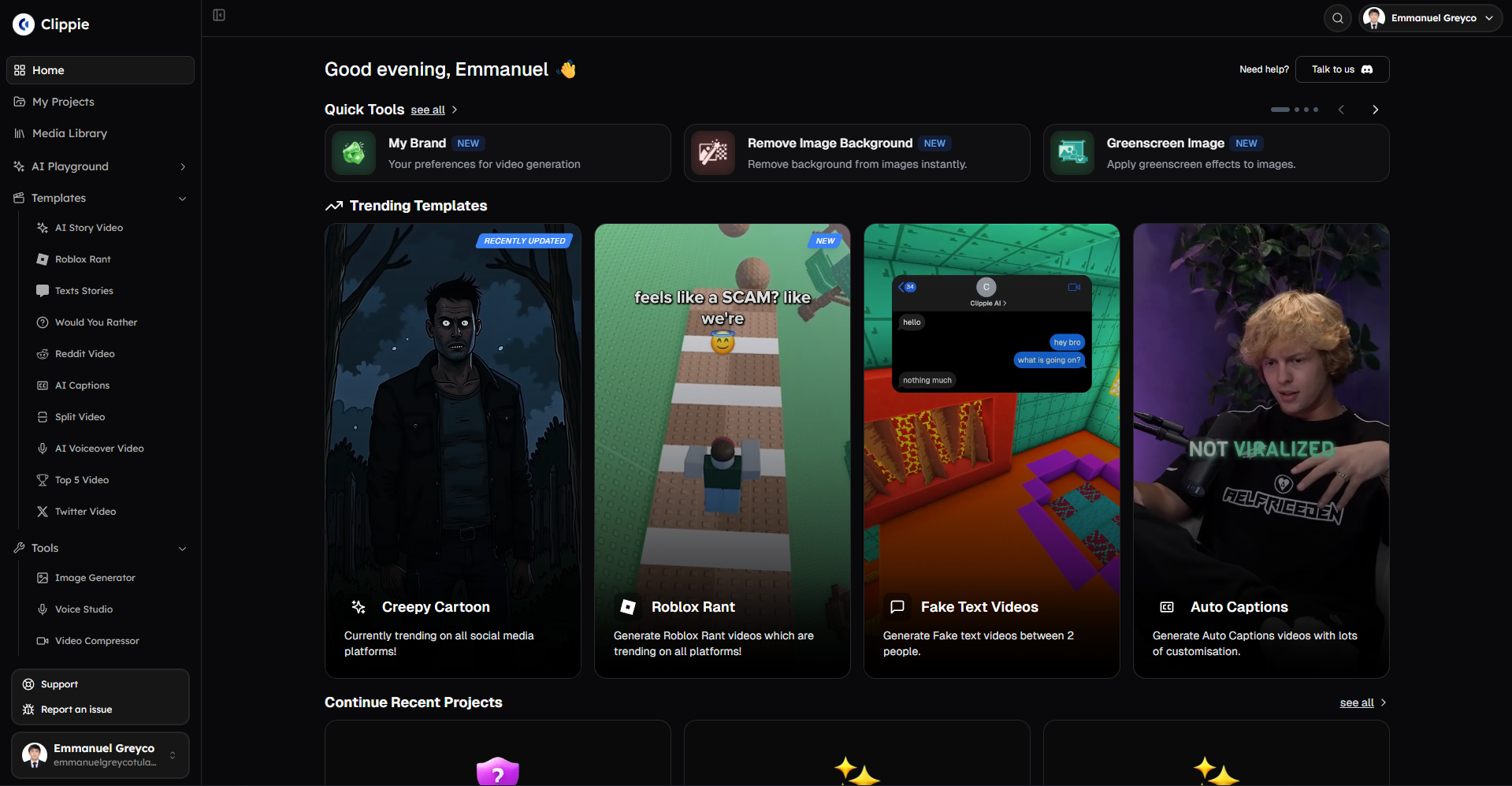
Ready to build your content-first business? Experience Clippie AI's integrated production platform, create month's worth of business-driving content in weekend batch sessions through template systems, AI editing, multi-platform optimization, building toward $3,000-$15,000 monthly income within 12-24 months through consistent audience growth, strategic monetization, and systematic content production.
Make an AI story video
Write a script or let AI write one. Clippie turns it into a narrated video with AI scenes, voiceover and captions.
Read more

How to Make Top 5 Ranking Videos in 2026 (Step-by-Step)
Build ranking Shorts that can still earn: pick a debatable topic, set clear criteria, source clips you may use, script the countdown, add your commentary.

How to Create Short-Form Videos Using AI: 8 Steps (2026)
A beginner workflow for AI videos on TikTok, Reels and Shorts: pick a format, script a hook, add visuals, voice and captions, export at 9:16, label AI.
7 Free CapCut Alternatives for Short-Form Video (2026)
Compare Edits, YouTube Create, VN, Clipchamp, Canva, DaVinci Resolve and Shotcut: what each gives free users, what it caps first and where it falls short.