
How Freelancers Can Use Video to Build Authority in Their Niche in 2026
Freelancers build authority with video in 2026: Why authority matters 10x more than followers, 5 educational formats that position expertise, 52 weeks content system, attract high-paying clients & maintain consistency with Clippie AI.
If you're searching for how freelancers can use video to build authority in their niche in 2026, you're recognizing the positioning gap separating freelancers commanding $150-$300+ hourly rates through demonstrated expertise (educational video content establishing thought leadership attracting inbound inquiries from ideal clients, systematic content production proving depth of knowledge impossible to fake through portfolio alone, visibility creating pricing power where clients seek you specifically not generic "freelancer who does X") from those competing on price in commoditized marketplaces (Upwork/Fiverr positioning as interchangeable service providers, hourly rates of $25-$75 determined by market competition not individual value, constant outbound prospecting required as undifferentiated positioning generates zero inbound interest). This comprehensive guide explains why authority matters exponentially more than follower count for freelancer income (1,000 highly targeted followers in specific niche generate more revenue than 100,000 generic audience, demonstrated expertise through educational content creating premium positioning impossible through self-promotion, inbound client acquisition eliminating need for proposals and competitive bidding reducing sales friction 70-85%), identifies the 5 educational video formats systematically building expertise perception (case study breakdowns showing real project problem-solving process, framework and methodology videos revealing proprietary approaches, industry trend analysis positioning as forward-thinking expert, common mistake videos demonstrating experience-based wisdom, tool and technique tutorials establishing technical competency), delivers systematic 52-week content planning framework (quarterly theme structure organizing content around major niche topics, question mining from client conversations and community forums identifying audience pain points, content batching producing 4-8 videos in single filming session, repurposing single master video into 6-10 derivative pieces maximizing production efficiency), provides strategic client attraction methodology (portfolio enhancement where video demonstrates thinking process not just final deliverables, consultation-replacement videos answering common prospect questions reducing sales cycle length, niche-specific SEO positioning content for high-intent searches, social proof accumulation where consistent expertise demonstration compounds credibility), and positions Clippie AI as production infrastructure enabling sustainable weekly publishing (reducing per-video editing from 60-90 minutes to 10-15 minutes preventing burnout, template-based consistency maintaining professional quality across all content, batch processing workflows supporting monthly production sessions creating 4-6 weeks of ready content).
Executive Summary: Freelancers building authority through video in 2026 systematically transition from commodity service providers to premium experts commanding 3-5x higher rates, achieved through consistent educational content production demonstrating depth of expertise (case study videos revealing problem-solving methodologies, framework explanations showing proprietary approaches, industry analysis establishing forward-thinking positioning, mistake-prevention content proving experience-based wisdom, tutorial videos demonstrating technical mastery), organized through sustainable 52-week content system (quarterly thematic structure ensuring comprehensive niche coverage, question-driven ideation mining client conversations and community forums, monthly batch filming sessions producing 4-8 videos preventing creative burnout, master video repurposing creating 6-10 derivative pieces from single source maximizing efficiency), strategically attracting premium inbound clients (video portfolio showing thinking process eliminating "can they actually do this?" doubt, consultation-replacement content answering common questions upfront reducing sales friction, niche SEO positioning content for specific high-intent searches, social proof compounding where consistent expertise builds unassailable credibility), measuring success through business outcomes not vanity metrics (inbound inquiry rate tracking client magnetism, average project value increase measuring premium positioning effectiveness, client qualification efficiency monitoring sales cycle improvements, referral rate indicating authority-driven word-of-mouth), and maintaining weekly consistency through AI automation platforms like Clippie AI preventing production bottlenecks (10-15 minute editing workflows vs. 60-90 minute manual preventing overwhelm, template systems maintaining quality without reinventing process weekly, enabling sustainable one-person content operations compatible with client service delivery). Success requires patience accepting 6-12 month timeline for authority building (immediate ROI expectations cause premature abandonment), commitment to educational value-first content resisting promotional temptation (teaching builds trust while selling triggers skepticism), and systematic consistency prioritizing publishing schedule integrity over perfection (good video posted weekly compounds faster than perfect video posted sporadically).
Table of Contents
Why Authority Matters 10x More Than Follower Count for Freelancer Income
The 5 Educational Video Formats That Build Trust and Position You as the Expert
How to Turn Your Expertise Into 52 Weeks of Consistent Video Content
How to Attract High-Paying Inbound Clients Through Strategic Authority Videos
How to Maintain Weekly Video Consistency Without Burnout Using Clippie AI
Frequently Asked Questions

1. Why Authority Matters 10x More Than Follower Count for Freelancer Income
The freelance income equation fundamentally changes when authority replaces volume as primary positioning strategy. Understanding the specific mechanisms through which demonstrated expertise translates to premium rates and inbound client flow reveals why 1,000 targeted followers generate more revenue than 100,000 undifferentiated audience.
The Commodity Freelancer Trap
Typical freelancer positioning (marketplace dependence):
Upwork/Fiverr/Freelancer.com approach:
Profile listing: Generic skills description ("I'm a graphic designer with 5 years experience")
Portfolio: 10-15 completed project samples (final deliverables only)
Pricing: Market-determined hourly rate ($25-$75 typical)
Client acquisition: Submit 10-20 proposals weekly competing against 20-50 other freelancers
Win rate: 5-15% (1-3 projects won from 10-20 proposals)
The competitive dynamics:
Differentiation impossible: All profiles look identical (skills, experience, portfolio structure)
Price-driven selection: Client cannot assess quality differences, defaults to lowest price
Race to bottom: Freelancers undercut each other to win projects (margins compress)
Constant hustle: Must continuously prospect to maintain pipeline (unsustainable)
Income reality:
Average project value: $800-$2,500
Projects monthly: 2-4 (if winning consistently)
Monthly income: $1,600-$10,000 (feast-famine volatility)
Effective hourly rate: $35-$65 (after proposal writing, revisions, platform fees)
The authority gap:
What commodity positioning lacks:
No expertise demonstration: Portfolio shows "what" was created, not "how" or "why"
No thought leadership: No content establishing you as expert in specific domain
No inbound interest: Must chase every opportunity proactively
No premium justification: Cannot command $150-$300/hour without differentiated positioning
Client perspective:
Viewing 50 similar profiles: "They all look the same, who's cheapest?"
Risk perception: "Will they actually deliver quality?" (uncertainty = lower price willing to pay)
Trust level: Low (no relationship, no demonstrated expertise beyond portfolio images)
The Authority-Based Income Model
Authority-positioned freelancer:
Visible expertise foundation:
Video content library: 52+ educational videos (weekly publishing for 1+ year)
Each video: Teaches specific aspect of your expertise (frameworks, methodologies, case studies)
Platform presence: YouTube channel, LinkedIn, portfolio site with embedded video
Search visibility: Content ranks for "[niche] + [problem]" searches
Inbound client acquisition:
Prospect discovers video: Searching for solution to problem you explained
Watches 3-5 videos: "This person clearly knows what they're doing"
Reaches out directly: "I watched your videos on [topic], can you help with my project?"
No proposal required: Client pre-sold through educational content
Premium pricing:
Hourly rate: $150-$300 (vs. $35-$65 commodity rates)
Project minimums: $5,000-$15,000 (vs. $800-$2,500)
Client volume: 1-2 monthly (vs. 2-4 required at commodity rates)
Monthly income: $5,000-$30,000 (from fewer, higher-value clients)
The authority premium:
Same skills, same experience level
Different positioning: Expert vs. service provider
Income difference: 3-10x from authority positioning alone
The Math: Followers vs. Authority
Scenario A: Large unfocused audience
Profile:
100,000 Instagram followers (general business/entrepreneurship content)
Average post: 2,000-4,000 likes, 50-150 comments
Content: Motivational quotes, general business tips, lifestyle content
Niche focus: None (broad appeal audience)
Revenue generation:
Inbound client inquiries: 2-5 monthly (0.005% of audience)
Qualification rate: 30% (most not ideal fit)
Actual clients: 0-2 monthly
Average project: $2,000-$4,000 (general positioning = moderate pricing)
Monthly income: $0-$8,000 (inconsistent)
The problem:
Followers not targeted (general business audience, not specific buyers)
Content doesn't demonstrate deep expertise (surface-level tips)
Low conversion: Followers enjoy content but don't hire (entertainment vs. education)
Scenario B: Small hyper-targeted authority audience
Profile:
1,200 LinkedIn followers (niche: SaaS copywriting for B2B sales pages)
Average post: 40-80 engagements
Content: Case studies showing conversion improvements, copywriting frameworks, SaaS messaging strategies
Niche focus: Laser-focused (SaaS marketing decision-makers)
Revenue generation:
Inbound client inquiries: 8-15 monthly (0.67-1.25% of audience, higher conversion)
Qualification rate: 70% (targeted audience attracts ideal clients)
Actual clients: 5-10 monthly (more than can handle)
Average project: $8,000-$15,000 (premium positioning justified by demonstrated expertise)
Monthly income: $40,000-$150,000 (select 3-5 best-fit clients)
Why it works:
Audience comprised of buyers (SaaS marketing decision-makers with budget)
Content proves expertise (case studies show results achieved)
High conversion: Viewers become clients (educational content builds trust)
Comparison:
Scenario A: 100K followers → $0-$8,000 monthly
Scenario B: 1.2K followers → $40,000-$150,000 monthly
83x fewer followers, 5-18x more revenue
The Authority Income Mechanisms
Mechanism #1: Premium pricing justification
Commodity freelancer conversation:
Client: "What's your hourly rate?"
Freelancer: "$75/hour"
Client: "I found someone for $45/hour, can you match?"
Freelancer: Either loses project or compresses margin
Result: Price-driven negotiation
Authority freelancer conversation:
Client: "I watched your video on SaaS landing page optimization, can you help us?"
Freelancer: "My projects start at $12,000 for comprehensive landing page strategy and copy"
Client: "That works, when can we start?"
No price negotiation: Client pre-qualified by content (if watching videos, willing to pay premium)
The psychological shift:
Commodity: "Hope they're good enough" (uncertainty = price resistance)
Authority: "I know they're expert" (certainty = willingness to pay premium)
Mechanism #2: Inbound vs. outbound efficiency
Outbound acquisition (commodity approach):
Proposals written weekly: 15-20
Time per proposal: 45-90 minutes (research, customization, pricing)
Weekly time investment: 11.25-30 hours
Win rate: 10-15%
Projects won: 1.5-3 monthly
Effective hourly rate including proposal time: $25-$45 (proposal time + project delivery)
Inbound acquisition (authority approach):
Inbound inquiries: 8-15 monthly
Qualification calls: 30 minutes each (determine fit)
Win rate: 60-70% (pre-qualified through content)
Projects won: 5-10 monthly (select best-fit)
Proposal time: 0 hours (clients reach out ready to hire)
Effective hourly rate: $150-$300 (only project delivery time)
Time efficiency:
Outbound: 45-120 hours monthly (proposals + projects)
Inbound: 30-80 hours monthly (projects only, no proposal grinding)
25-40% time savings with higher rates
Mechanism #3: Client quality and fit
Commodity client characteristics:
Price-sensitive (selected you for low bid)
High revision requests (unclear on what they want)
Scope creep common (didn't understand deliverables)
Payment delays (budget-constrained)
Difficult working relationship
Authority client characteristics:
Value-focused (selected you for expertise)
Clear expectations (educated by your content)
Respectful of scope (understand professional process from videos)
Prompt payment (see you as investment not expense)
Pleasant working relationship, referrals common
Retention and referral:
Commodity clients: 20-30% return for additional work
Authority clients: 60-80% return, 40-60% refer others
Lifetime value: 3-5x higher for authority-sourced clients

The Follower Count Misconception
What most freelancers believe:
"I need 100K followers to make good money"
"More followers = more clients = more income"
Assumption: Volume solves everything
The reality:
Follower count measures reach, not relevance
100K random followers < 500 ideal client profiles
What matters: Audience composition (who follows) > audience size (how many follow)
The minimum viable audience:
300-500 highly targeted followers: Can generate $5,000-$15,000 monthly
800-1,200 targeted followers: Can generate $15,000-$40,000 monthly
2,000-5,000 targeted followers: Can generate $40,000-$100,000+ monthly
At each level:
1-3% convert to inquiries monthly
60-80% of inquiries convert to projects (right targeting)
Math works without massive audience
Case study: Two copywriters comparison
Copywriter A:
Twitter following: 45,000
Content: Writing tips, productivity hacks, general business advice
Niche: General (no specific focus)
Inbound inquiries: 5-8 monthly
Average project: $3,000
Monthly income: $9,000-$18,000
Copywriter B:
LinkedIn following: 900
Content: Email sequence teardowns, e-commerce conversion case studies, DTC brand strategy
Niche: E-commerce email marketing for DTC brands
Inbound inquiries: 6-10 monthly
Average project: $12,000 (email sequence + strategy)
Monthly income: $36,000-$60,000
Analysis:
Copywriter A: 50x larger audience, 50-70% lower income
Copywriter B: Hyper-focused content, premium rates, selective clients
Key difference: Authority in specific valuable niche vs. general visibility
The Authority Timeline and Compounding
Month 1-3: Foundation (minimal income impact yet)
Published videos: 12-15
Audience growth: +150-300 followers
Inbound inquiries: 0-2
Feels slow: Temptation to quit
Month 4-6: Emergence (early returns)
Published videos: 24-30 total
Audience growth: +300-600 (accelerating)
Inbound inquiries: 3-8 monthly
Projects from video: 1-3
Traction visible: Persistence rewarded
Month 7-12: Authority established
Published videos: 48-60 total
Audience growth: +800-1,500 (compounding)
Inbound inquiries: 8-20 monthly
Projects from video: 5-12 (selective)
Pricing power: Can raise rates 50-100%, clients still come
Month 13-24: Market leader
Published videos: 72-120 total
Audience growth: +2,000-4,000 (momentum)
Inbound inquiries: 15-40 monthly (more than can handle)
Position: Recognized expert, speaking invitations, partnership opportunities
The compounding effect:
Month 1 video: Still generating views and inquiries in Month 24
Each video adds to cumulative authority signal
Unlike ads: Authority content works indefinitely (no ongoing spend)
2. The 5 Educational Video Formats That Build Trust and Position You as the Expert
Generic promotional content builds followers, educational formats demonstrating depth of expertise build authority and trust. These five structures systematically prove competence while providing genuine value attracting ideal clients.
Format #1: Case Study Breakdown Videos
What they are: 5-12 minute deep-dive analyses of real projects showing problem, approach, solution, and results, revealing thinking process behind successful work.
Why they build authority:
Proof of competence: Real results speak louder than claims
Methodology demonstration: Shows how you think and approach problems (cannot be faked)
Specificity: Concrete details build credibility vs. vague generalizations
Structure:
Segment 1: Context and challenge (60-90 seconds)
Client industry and situation
Specific problem they faced
Why it mattered (business impact)
Example: "E-commerce brand doing $2M annually, conversion rate stuck at 1.8%, costing them $400K yearly in lost revenue"
Segment 2: Diagnosis and strategy (2-3 minutes)
What you discovered through analysis
Why problem existed (root cause)
Strategic approach you recommended
Example: "Analyzed 47 customer recordings, discovered 68% abandoned at checkout due to unclear shipping timeline. Strategy: Redesign checkout flow with progressive disclosure"
Segment 3: Execution and tactics (3-5 minutes)
Specific actions taken
Show actual work (mockups, screenshots, frameworks)
Decisions made and why
Example: [Screen share showing before/after checkout designs, explaining each change]
Segment 4: Results and lessons (90-120 seconds)
Quantified outcomes
What worked unexpectedly well
What you'd do differently
Example: "Conversion rate increased 1.8% → 3.2% (78% improvement), $630K additional annual revenue. Key lesson: Customer research beats assumptions always"
Production approach:
Preparation (30-45 minutes):
Select completed project (get client permission if needed)
Gather: Before/after visuals, data screenshots, process documents
Outline: Key points for each segment
Filming (20-30 minutes):
Record screen + voiceover (showing actual work)
Face-to-camera for intro/outro (personal connection)
Don't script word-for-word (conversational, authentic)
Editing with Clippie AI (10-15 minutes):
Auto-remove filler words and silence
Add captions (essential for screen recordings)
Insert graphics/screenshots at relevant moments
Example: Web designer case study
Video title: "How I Increased E-commerce Sales 78% Through Checkout Redesign (Full Case Study)"
Segment breakdown:
0:00-1:30: Client background and $400K problem
1:30-4:00: User research findings and strategic approach
4:00-9:00: Design process walkthrough (show mockups, explain decisions)
9:00-11:00: Results and key lessons learned
Viewer takeaway: "This designer knows what they're doing, they think strategically, not just make things pretty"
Authority signal: Methodology revealed (competitors cannot replicate without genuine expertise)
Format #2: Framework and Methodology Videos
What they are: 3-8 minute explainers of your proprietary approach, process, or framework, showing systematic methodology differentiating you from generic practitioners.
Why they build authority:
Unique intellectual property: Your framework = your expertise made tangible
Systematic approach: Demonstrates repeatable process (not luck-based results)
Teaching credibility: Only experts can teach (frauds exposed when teaching)
Framework examples by niche:
Freelance copywriter:
"The 5-Part Email Sequence Framework That Generates 40% Open Rates"
Shows: Hook, value delivery, social proof, objection handling, CTA structure
Teaches: Exact template clients can conceptually understand
Freelance developer:
"My 3-Phase App Development Process (Why Projects Stay On-Time and On-Budget)"
Shows: Discovery phase, iterative development, testing and optimization
Teaches: Why systematic process prevents scope creep
Freelance consultant:
"The RAPID Decision Framework for B2B SaaS Pricing Strategy"
Shows: Research, Analysis, Positioning, Implementation, Data-driven optimization
Teaches: Acronym-based methodology (memorable, shareable)
Structure:
Introduction (30-45 seconds):
Problem framework solves
Why standard approaches fail
Preview of framework
Framework breakdown (4-6 minutes):
Each component explained
Why it matters
Example of application
Visual: Diagram or slide showing framework structure
Implementation guidance (90-120 seconds):
How to apply framework
Common pitfalls to avoid
When to use vs. when to adapt
Call-to-action (15-30 seconds):
"Want help implementing this? Link in description"
Soft sell (educational content does heavy lifting)
Why frameworks work:
Intellectual property signal:
Generic freelancer: "I do [service]"
Authority freelancer: "I use the [Your Name] Framework for [outcome]"
Difference: Proprietary methodology = expert positioning
Teaching credibility:
Anyone can claim expertise
Only true experts can teach coherently
Framework video proves: You understand subject deeply enough to systematize and teach
Memorability:
"5-Part Email Framework" > "I write good emails"
Named frameworks: Stick in memory, shareable
Word-of-mouth: "You should check out [Name]'s framework on [topic]"
Format #3: Industry Trend Analysis and Future Predictions
What they are: 4-8 minute videos analyzing current trends, predicting future developments, and providing strategic recommendations, positioning as forward-thinking expert.
Why they build authority:
Thought leadership: Shows you're thinking about industry evolution (not just executing current work)
Strategic mindset: Clients want advisors, not just executors
Differentiation: Most freelancers don't publish thought leadership (you stand out)
Trend analysis structure:
Current state observation (60-90 seconds):
What's happening now in industry
Data or examples supporting observation
Example: "73% of SaaS companies shifted to product-led growth in 2025, up from 42% in 2023"
Why it's happening (90-120 seconds):
Underlying forces driving trend
Economic, technological, or behavioral factors
Example: "Traditional enterprise sales too expensive for $50-$200/month products, PLG enables profitability at lower price points"
What it means (2-3 minutes):
Implications for businesses in your niche
Opportunities and threats
Strategic recommendations
Example: "For B2B SaaS: If not PLG-ready, need strong ROI story to justify sales-assisted model. Opportunity: Build self-service experiences competitors lack"
Future prediction (60-90 seconds):
Where trend is heading (next 12-24 months)
How to prepare or capitalize
Example: "By late 2027, expect 85%+ adoption in SMB SaaS. Prepare now: Invest in product UX and onboarding flows"
Example topics by niche:
Freelance marketer:
"Why Performance Marketing is Dying (And What's Replacing It)"
"The Rise of Dark Social: How to Track Attribution in 2026"
"Privacy-First Marketing: Preparing for Cookie-less Tracking"
Freelance designer:
"Why Everyone's Design Looks the Same (And How to Stand Out)"
"The Death of Stock Photography: AI-Generated Visual Trends"
"Accessibility is the New Responsive: Design Implications"
Freelance developer:
"Serverless is Now Standard: What This Means for Project Architecture"
"The AI Coding Assistant Impact on Development Timelines"
"Web3 Integration: Hype vs. Real Opportunity for Businesses"
Authority positioning through predictions:
When predictions prove accurate:
"You called this 8 months ago, impressive foresight"
Credibility compounds (seen as expert who understands market)
When predictions miss:
Rarely mentioned (everyone forgets predictions that don't pan out)
Low downside risk (making predictions expected of thought leaders)
Net effect: Asymmetric upside (credit for accuracy, forgiveness for misses)
Format #4: Common Mistakes and "What NOT to Do" Videos
What they are: 3-6 minute videos identifying frequent errors in your niche and explaining correct approaches, demonstrating experience-based wisdom.
Why they build authority:
Pattern recognition: Only experienced practitioners spot common mistakes
Risk reduction: Shows you'll help clients avoid pitfalls
Differentiation: Reveals what separates amateur from expert work
Structure:
Mistake identification (45-60 seconds per mistake):
Describe common error specifically
Show example if possible
Explain why people make this mistake
Example: "Mistake #1: Writing homepage copy that explains WHAT you do instead of WHY it matters. Happens because founders think inside-out (their perspective) not outside-in (customer perspective)"
Consequence explanation (30-45 seconds per mistake):
What happens when mistake is made
Business impact quantified when possible
Example: "Result: 74% of visitors leave homepage confused. Customer recordings show average 12 seconds on page before bounce. You're invisible to Google because no clear keyword targeting"
Correct approach (45-60 seconds per mistake):
How to do it right
Specific actionable guidance
Example: "Instead: Lead with customer's problem and desired outcome. Framework: [Problem statement] → [Outcome promise] → [How you deliver] → [Proof]. Example: 'Sales teams waste 15 hours weekly on admin work. Automate your CRM and focus on closing deals. Our AI assistant handles data entry, follow-ups, and reporting. Used by 2,400+ sales teams.' Clear, outcome-focused, differentiated"
Example videos:
Freelance copywriter:
"5 Landing Page Mistakes Killing Your Conversion Rate"
"Why Your Email Subject Lines Get Ignored (And How to Fix It)"
"The #1 Call-to-Action Mistake (You're Probably Making It)"
Freelance developer:
"3 Database Design Mistakes That Will Haunt You Later"
"Why Your App Loads Slowly (Common Performance Killers)"
"Security Mistakes Every Developer Makes Early On"
Freelance consultant:
"Why Your B2B Pricing Strategy is Leaving Money on the Table"
"The Biggest Product-Market Fit Mistake Startups Make"
"How to Screw Up Customer Research (And What to Do Instead)"
The experience signal:
Why mistakes content builds authority:
Theoretical knowledge vs. practical wisdom:
Anyone can learn theory (read books, take courses)
Only practitioners learn common pitfalls (experience-based)
Mistake identification = proof of experience
Client psychology:
"If they know all these mistakes, they'll prevent me from making them"
Risk mitigation: Hiring experienced person protects investment
Format #5: Tool, Technique, and Tutorial Videos
What they are: 4-10 minute how-to videos demonstrating specific tools, techniques, or workflows you use, establishing technical credibility.
Why they build authority:
Competence demonstration: Shows you know tools deeply (not surface level)
Generosity signal: Giving away expertise builds trust
SEO advantage: "How to [specific task]" searches (high intent traffic)
Tutorial categories:
Tool mastery:
"Advanced Figma Techniques Most Designers Don't Know"
"Google Analytics 4: Setting Up E-commerce Conversion Tracking"
"Webflow Interactions Tutorial: Creating Scroll-Based Animations"
Technique deep-dives:
"How to Conduct Effective User Research Interviews"
"My Process for Writing High-Converting Product Descriptions"
"Code Review Best Practices for Catching Bugs Early"
Workflow walkthroughs:
"My Complete Design Handoff Process (Designer to Developer)"
"How I Plan and Execute Content Audits for Clients"
"My Git Workflow for Solo Projects and Team Collaboration"
Structure:
Introduction (30-60 seconds):
What you'll teach
Why it matters
What viewer will be able to do after watching
Step-by-step demonstration (5-8 minutes):
Screen recording showing exact process
Voiceover explaining each step
Tips and shortcuts throughout
Key: Show real work, not simplified demo (authenticity matters)
Common problems and solutions (60-90 seconds):
"If you see [error], here's what to do..."
Troubleshooting common issues
Shows: You've done this many times (anticipate problems)
Conclusion and next steps (30-45 seconds):
Recap key points
Suggest related topics to learn
Soft CTA: "Need help implementing this for your business? Link below"
The technical credibility signal:
Why tutorials work:
Proof of capability:
Claiming expertise: "I'm good at X" (unverified)
Teaching X: "Here's how to do X" (verifies expertise through demonstration)
Tutorials = proof you actually know what you're doing
Searchability advantage:
SEO: Tutorial videos rank for specific searches
Example: "How to set up Facebook conversion API" → Your tutorial appears
Searcher: Has immediate problem, discovers your expertise through solution
Perfect authority funnel: Problem → Solution (your video) → Inquiry
Ongoing value:
Tutorial from 2 years ago: Still generating views and inquiries
Evergreen content: Continues working indefinitely
Compound ROI: One tutorial can generate dozens of inbound leads over years
3. How to Turn Your Expertise Into 52 Weeks of Consistent Video Content
Creative burnout and "not knowing what to film" cause 70% of freelancers to abandon video within 8-12 weeks. Systematic content planning frameworks eliminate decision fatigue and enable sustainable weekly publishing indefinitely.
The Quarterly Theme Structure
Why quarterly themes work:
Decision fatigue elimination:
Without structure: "What should I film this week?" (paralyzing question)
With quarterly themes: "Which aspect of Q1 theme should I cover next?" (constrained choice)
Comprehensive coverage:
13 weeks per quarter × 4 quarters = 52 videos
Each quarter: Deep-dive one major topic area
Over year: Complete coverage of niche expertise
Audience education journey:
Quarter focuses build knowledge progressively
Viewers become educated on complete topic
Authority compounds: Systematic teaching establishes mastery perception
Quarterly theme framework:
Q1 (Weeks 1-13): Foundations and fundamentals
Core concepts in your niche
Common misconceptions clarified
Essential frameworks and methodologies
Example (freelance copywriter): "Conversion Copywriting Foundations" (13 videos on fundamentals)
Q2 (Weeks 14-26): Advanced techniques and case studies
Deeper tactical execution
Real client case studies
Common challenges and solutions
Example: "Advanced Email Sequence Strategies" (13 videos on email mastery)
Q3 (Weeks 27-39): Industry trends and thought leadership
Current trends analysis
Future predictions
Strategic positioning insights
Example: "The Future of E-commerce Marketing" (13 videos on trends)
Q4 (Weeks 40-52): Tools, workflows, and processes
Tool tutorials and comparisons
Workflow optimizations
Behind-the-scenes process reveals
Example: "Copywriting Tools and Systems" (13 videos on practical execution)
Example: Freelance web developer annual content plan
Q1: Web Development Fundamentals
Clean code principles for maintainable projects
Responsive design: Mobile-first approach
Accessibility standards every site needs
Performance optimization basics
SEO fundamentals for developers
Version control best practices
Testing strategies (unit, integration, E2E)
Common security vulnerabilities
Database design principles
API integration best practices
Error handling and debugging
Documentation that actually helps
Code review framework
Q2: Advanced Development Techniques
14. Case study: E-commerce platform build 15. Progressive web app implementation 16. Advanced CSS animations and interactions 17. State management in modern apps 18. GraphQL vs. REST (when to use which) 19. Serverless architecture explained 20. Real-time features with WebSockets 21. Third-party integration patterns 22. Headless CMS implementation 23. Case study: SaaS dashboard build 24. Performance profiling and optimization 25. Advanced security patterns 26. Scalability considerations
Q3: Web Development Trends
27. The rise of Edge computing 28. AI tools impacting developer workflow 29. Web3 integration (realistic assessment) 30. No-code/low-code impact on custom development 31. Privacy-first tracking solutions 32. JAMstack evolution and future 33. Component-driven development 34. Design systems and their importance 35. Micro-frontends architecture 36. The future of web frameworks 37. Emerging browser capabilities 38. Remote work impact on development 39. Predictions for 2027
Q4: Tools, Workflows, and Processes
40. My complete development setup 41. Figma to code workflow 42. VS Code tips and extensions 43. Git workflows for solo and team 44. Testing tools comparison 45. Deployment and CI/CD setup 46. Monitoring and analytics tools 47. Project estimation process 48. Client communication systems 49. Time tracking and productivity 50. Learning new technologies efficiently 51. Building a component library 52. Year in review: Biggest lessons
Question Mining for Infinite Content Ideas
Where to find content ideas:
Source #1: Client conversations
Questions asked during sales calls
Common confusion points during projects
Repeated requests for clarification
Capture: Note questions as they arise, convert to video topics
Example questions → video topics:
"How long will this take?" → "Realistic Timelines for [Your Service] Projects"
"Can you explain the difference between [X] and [Y]?" → "[X] vs. [Y]: Which is Right for Your Business?"
"Is this really necessary?" → "Why [Specific Aspect] Matters More Than You Think"
Source #2: Online communities
Reddit (r/[your niche], r/entrepreneur, r/smallbusiness)
Facebook groups for your target audience
Industry-specific Slack communities
Quora questions in your domain
Mining process:
Spend 30 minutes weekly browsing relevant communities
Note recurring questions (asked 3+ times = validates demand)
Controversial or highly-engaged topics (passion = viewership)
Example (freelance marketer in r/marketing):
Recurring question: "Google Ads vs. Facebook Ads for local service business?"
Video topic: "Local Service Advertising: Google vs. Facebook (Real ROI Comparison)"
Source #3: Competitor gap analysis
Review competitor video content (top 10 in your niche)
Identify topics they haven't covered
Find topics covered poorly (opportunity to do better)
Process:
List competitor channels (YouTube, LinkedIn, TikTok)
Catalog their topics (spreadsheet)
Find gaps: Topics in your expertise not covered
Create: Superior content on underserved topics
Example gaps:
Competitor covers: "Social media basics"
Gap: "Advanced social media for [specific industry]"
Your video: Industry-specific deep-dive competitors missed
Source #4: Your own project experience
Every project generates learnings
Challenges faced and overcome
Unexpected discoveries
Client results achieved
Post-project reflection:
"What was hardest part of this project?"
"What did I learn that others should know?"
"What surprised the client most?"
Convert insights to educational content
The Content Batching System
Why batching works:
Creative efficiency:
"Getting into filming mode" takes 15-20 minutes
Once there: Can film 4-6 videos consecutively efficiently
Batching: 4-6 videos in 3-4 hours (vs. 1 video per hour scattered)
Consistency enablement:
Film once monthly = 4-6 weeks of content banked
Buffer prevents "missed week" when life interferes
Sustainable long-term
Monthly batching workflow:
Week 1: Planning session (90 minutes)
Review quarterly theme
Select 4-6 topics for upcoming month
Create brief outlines (3-5 bullet points each)
Gather any needed materials (screenshots, data, examples)
Week 2: Filming day (3-4 hours)
Setup: Lighting, camera, microphone once
Film all 4-6 videos consecutively
Video 1: 25 minutes
Video 2: 20 minutes (warmed up, faster)
Video 3: 20 minutes
Video 4: 20 minutes
Video 5: 20 minutes (if doing 5)
Total: 105-125 minutes of filming (4-5 videos)
Week 2-3: Editing with Clippie AI (4-6 hours total)
Upload all videos to Clippie AI
Batch process (AI handles overnight)
Review and refine each video: 15-20 minutes per video
Create thumbnails: 10 minutes each (Canva templates)
Spread across week: 1-2 videos per day (manageable)
Week 3-4: Scheduling and publishing
Upload all to YouTube, LinkedIn, TikTok
Schedule: One per week for next 4-6 weeks
Write descriptions, optimize titles
Ahead: 3-5 weeks of content ready
The Repurposing Multiplier
One master video → 8-10 derivative pieces
Master video: 8-12 minute YouTube video
Comprehensive tutorial or case study
Detailed, substantial content
Derivative content:
1. YouTube Shorts (3-5 clips):
Extract 45-60 second key insights
Each short: One specific tip or takeaway
Platform: YouTube Shorts
2. Instagram Reels (3-5 clips):
Same 45-60 second clips as Shorts
Optimize captions for Instagram
Platform: Instagram
3. TikTok videos (2-3 clips):
30-45 second fastest-paced versions
Hook-heavy for TikTok algorithm
Platform: TikTok
4. LinkedIn native video:
Full master video or 3-5 minute edit
B2B audience appreciates depth
Platform: LinkedIn
5. Blog post:
Transcribe video (Clippie AI generates captions = transcript)
Edit transcript into article format
Embed master video
Platform: Personal website/blog
6. Email newsletter:
Key insights from video as email content
Link to full video for those wanting more
Platform: Email list
7. Twitter/X thread:
Break video into 8-12 tweet thread
Each tweet: One key point
Final tweet: Link to full video
Platform: Twitter/X
8. Podcast audio (if applicable):
Extract audio track from video
Light editing for audio-only format
Platform: Podcast platforms (Spotify, Apple Podcasts)
Production efficiency:
Without repurposing:
1 master video = 1 piece of content
Need 52 unique ideas and productions annually
With repurposing:
1 master video = 8-10 pieces of content
Need 26 master videos annually (filming half as much)
Same output volume, 50% less production
Clippie AI role in repurposing:
Automated processes:
Multi-platform export: Generates YouTube, Instagram, TikTok formats from one master
Clip extraction: AI identifies best 45-60 second segments for shorts
Caption generation: Transcript for blog post creation
Time savings: 70-80% (vs. manual repurposing)
4. How to Attract High-Paying Inbound Clients Through Strategic Authority Videos
Educational content builds authority, strategic video placement and optimization converts authority into qualified inbound client flow. Understanding client research behavior enables targeted video creation driving premium project inquiries.
The Client Research Journey
How high-paying clients find freelancers:
Stage 1: Problem awareness (initial search)
Search: "[Niche problem] solution" or "How to [achieve outcome]"
Example: "How to reduce SaaS customer churn"
Discover: Educational video explaining problem and solutions
Your opportunity: Rank for problem-based searches
Stage 2: Solution exploration (evaluating options)
Search: "[Solution type] for [specific need]"
Example: "Customer success consultant for SaaS"
Review: Multiple providers, portfolios, thought leadership
Your opportunity: Appear in solution-specific searches with authority content
Stage 3: Provider evaluation (vetting specific freelancers)
Search: "[Your name]" or visit your website directly
Watch: Multiple videos to assess expertise depth
Evaluate: Case studies, frameworks, client results
Your opportunity: Video portfolio demonstrating competence
Stage 4: Outreach decision (ready to hire)
Action: Contact via website, LinkedIn, or email
Mindset: Pre-sold through content (high close rate)
Your opportunity: Simple, clear contact path
Strategic video placement at each stage:
Stage 1 videos: Problem-focused
SEO-optimized for "[problem] solution" searches
Educational, generous value
Soft mention of your services at end
Goal: Awareness and authority establishment
Stage 2 videos: Solution-focused
Demonstrate your specific approach
Framework and methodology videos
Differentiation from alternatives
Goal: Preference building for your approach
Stage 3 videos: Proof-focused
Case studies with results
Client testimonials and success stories
In-depth project walkthroughs
Goal: Credibility and trust completion
Stage 4 enablement: Clear CTA
Every video: Link to contact page or calendar
Website: Prominent "Work with me" section
Goal: Friction-free inquiry process
SEO Optimization for High-Intent Searches
The search opportunity:
Low-intent searches (avoid prioritizing):
"[Industry] news"
"What is [general topic]"
"Top 10 [generic list]"
Problem: Large audience, low buyer intent
High-intent searches (prioritize):
"How to [achieve specific outcome] for [niche]"
"[Problem] solution for [industry]"
"[Service] for [specific need]"
Advantage: Smaller audience, high buyer intent (closer to purchase decision)
Keyword research process:
Step 1: Identify ideal client searches
What problem do your ideal clients face?
How do they describe it? (their language, not yours)
What outcome do they want?
Step 2: Keyword tools (free options)
YouTube search autocomplete (start typing, see suggestions)
Google search autocomplete
AnswerThePublic.com (free tier)
Find: Actual searches people perform
Step 3: Competitive analysis
Search your identified keywords
Review top-ranking videos
Identify: Gaps in existing content (what's missing?)
Opportunity: Create superior content on underserved searches
Optimization tactics:
Title optimization:
Include target keyword in first 5 words
Promise specific outcome or answer
Example: "SaaS Customer Churn: Reduce by 40% Using This Framework" (keyword-rich, outcome-focused)
Description optimization:
First 2 lines (visible without "show more"): Include keyword and CTA
Full description: Timestamp chapters, keyword mentions, related resources
Example first line: "Reduce SaaS customer churn 40%+ using the RETAIN framework. Book consultation: [link]"
Tag optimization:
5-8 relevant tags including target keyword
Mix: Specific (lower competition) and broader (higher volume)
Thumbnail optimization:
Text readable at small size (mobile preview)
High contrast colors (stands out in search results)
Face (when possible) increases CTR 20-30%
The Portfolio Enhancement Strategy
Traditional freelancer portfolio:
8-12 project images
Brief description of each
Client testimonial (text)
Limitation: Shows WHAT was created, not HOW or WHY
Video-enhanced portfolio:
For each project:
Written case study (traditional):
Challenge, approach, solution, results
Plus: 3-5 minute video walkthrough
Video content:
Screen recording or project demo
Voiceover explaining: Thinking process, decisions made, why this approach
Results with data
Advantage: 10x more information conveyed, proves competence through explanation
Example: Designer portfolio enhancement
Project: E-commerce website redesign
Traditional portfolio:
Before/after screenshots
Bullet points: "Improved conversion 47%"
Video-enhanced:
4-minute video showing:
Original site usability issues (recorded)
User research findings
Design decisions and rationale
Before/after comparison with metrics
Impact: Prospect sees thinking process, not just final design
Conversion impact:
Portfolio without video:
Prospect impression: "Nice work, but can they do it for me?"
Inquiry rate: 8-15% (portfolio viewers who contact)
Portfolio with video:
Prospect impression: "I understand their process, confident they can help"
Inquiry rate: 25-40%
2-3x conversion improvement
The Consultation-Replacement Video Series
The sales call problem:
Typical freelancer sales process:
Inbound inquiry received
Schedule 30-60 minute consultation call
Answer: Project process, timeline, pricing, approach
Provide proposal
Time investment: 90-120 minutes per prospect (many don't convert)
Consultation-replacement videos:
Create: 5-8 videos answering common consultation questions
Prospect watches before reaching out
Result: Only pre-qualified, educated prospects schedule calls
Essential consultation-replacement videos:
1. "How I Work: My Complete [Service] Process" (5-8 minutes)
Step-by-step workflow
Timeline expectations
What client needs to provide
Eliminates: "How does this work?" calls
2. "Pricing Explained: What [Service] Actually Costs (And Why)" (4-6 minutes)
Pricing tiers or typical ranges
What affects pricing
What's included at each level
Eliminates: "How much does this cost?" inquiries from unqualified prospects
3. "Is [Your Service] Right for You? Ideal Client Profile" (3-5 minutes)
Who you work best with
Red flags (when NOT to hire you)
Self-assessment criteria
Eliminates: Poor-fit prospects from reaching out
4. "Common Mistakes When Hiring a [Your Role]" (4-6 minutes)
What to look for
Questions to ask
Red flags to avoid
Positions: You as advisor helping them hire well (even if not you)
5. "Frequently Asked Questions" (6-10 minutes, chaptered)
Timestamp each question
Address: Revisions, timeline, communication, deliverables
Eliminates: Repetitive questions on sales calls
Implementation:
Portfolio/website integration:
Create: "Work with me" page
Embed: All 5 consultation videos
Instruction: "Watch these before booking a call"
Filter: Only serious prospects invest time watching
Sales call transformation:
Before videos:
Call length: 45-60 minutes
Content: 70% explaining process, 30% understanding client need
Conversion: 30-40% (many unqualified prospects)
After videos:
Call length: 20-30 minutes
Content: 10% process clarification, 90% understanding client need and fit
Conversion: 60-75% (pre-qualified through videos)
Time savings: 50-60% reduction in sales time per client acquired

Niche-Specific Content Targeting
The riches in niches principle:
Broad positioning:
"I'm a freelance web developer"
Competition: Tens of thousands globally
Differentiation: Difficult (skill-based only)
Niche positioning:
"I build e-commerce sites for sustainable fashion brands"
Competition: Dozens globally
Differentiation: Industry expertise, values alignment
Niche content strategy:
Industry-specific content:
Address problems unique to niche
Use industry terminology and jargon
Reference industry trends and challenges
Example: "Sustainable Fashion E-commerce: Solving the Returns Problem"
Audience self-selection:
Niche content attracts niche buyers
Generic content attracts price shoppers
Quality over quantity: 100 ideal prospects > 10,000 random viewers
Example: Copywriter niche positioning
Generic positioning:
Videos: "How to Write Better Headlines" (broad appeal)
Viewers: Aspiring copywriters, marketers, business owners (mixed)
Inquiries: Mix of qualified and unqualified
Niche positioning:
Videos: "SaaS Email Onboarding: Reducing Trial-to-Paid Drop-off" (specific)
Viewers: SaaS marketing managers (exact target)
Inquiries: Pre-qualified (they wouldn't watch if not relevant)
Niche video topics:
[Your Service] for [Specific Industry]:
"Conversion Optimization for Subscription Box Companies"
"Mobile App Development for Healthcare Startups"
"SEO Strategy for B2B Manufacturing Companies"
[Industry Problem] Solutions:
"Solving the High Refund Rate Problem in Digital Course Businesses"
"Reducing Cart Abandonment for Premium E-commerce Brands"
"Improving Lead Quality for B2B SaaS Companies"
5. How to Maintain Weekly Video Consistency Without Burnout Using Clippie AI
Sustainable content creation requires production systems preventing burnout, manual workflows averaging 90-120 minutes per video create unsustainable weekly time demands for client-serving freelancers. AI automation reduces per-video time to 15-25 minutes enabling consistent publishing compatible with full client workload.
The Freelancer Time Constraint Reality
Typical freelancer weekly schedule:
Client work: 30-40 hours
Active project delivery
Client communication
Revisions and refinement
Business operations: 5-10 hours
Invoicing and administration
Prospecting and proposals (if not inbound yet)
Learning and skill development
Available for content: 5-10 hours maximum
Realistically: Need 4-6 hours for one weekly video manually
Problem: Barely sustainable, easily dropped when busy
Manual video production time (per video):
Pre-production: 20-30 minutes
Topic selection and outline
Equipment setup
Filming: 30-45 minutes
Multiple takes
Dealing with mistakes
Post-production: 60-90 minutes
Importing and organizing footage
Rough cut and sequence
Removing filler words and silence (tedious)
Adding captions (time-consuming)
Color and audio correction
Exporting
Publishing: 15-20 minutes
Thumbnail creation
Title and description optimization
Uploading to platforms
Scheduling
Total: 125-185 minutes (2.1-3.1 hours) per video
Monthly burden (4 videos):
500-740 minutes = 8.3-12.3 hours monthly
For busy freelancer: Often unsustainable (content gets skipped)
The Clippie AI Workflow Transformation
AI-optimized production time (per video):
Pre-production: 15-20 minutes (unchanged)
Topic selection
Brief outline (bullet points, not script)
Setup
Filming: 25-35 minutes (slightly faster)
Single take (AI removes mistakes)
Don't worry about filler words (AI handles)
More natural delivery (less pressure)
Post-production: 12-18 minutes (80% reduction)
Upload to Clippie AI: 2 minutes
AI processing (autonomous): 8-10 minutes (work on other tasks)
Review and refine: 10-15 minutes
Verify AI caption accuracy (fix 1-2 errors typical)
Adjust pacing if needed
Approve final output
Publishing: 10-12 minutes (faster with templates)
Thumbnail (Canva template): 5 minutes
Upload and optimize: 5-7 minutes
Total: 62-85 minutes (1-1.4 hours) per video
Time savings: 48-63% per video
Monthly burden (4 videos):
248-340 minutes = 4.1-5.7 hours monthly
Sustainable: Compatible with full client workload
The Batching and Automation System
Monthly production calendar:
Week 1: Planning (60 minutes)
Review quarterly theme
Select 4 topics for month
Create outlines (bullet points)
Gather needed materials
Week 2: Filming day (2.5-3 hours)
Setup once
Film all 4 videos consecutively
Video 1: 30 minutes
Video 2: 25 minutes (warmed up)
Video 3: 25 minutes
Video 4: 25 minutes
Total filming: 105 minutes
Week 2-3: Batch editing (3-4 hours spread across week)
Upload all 4 to Clippie AI: 10 minutes
AI processes overnight: Autonomous
Review all 4 videos: 15 minutes each = 60 minutes
Create 4 thumbnails: 5 minutes each = 20 minutes
Total: 90 minutes active time (spread over several days)
Week 3: Scheduling (45 minutes)
Upload to YouTube, LinkedIn, TikTok
Optimize titles and descriptions
Schedule: One per week for next 4 weeks
Ahead: Month of content ready
Total monthly time investment: 6-7 hours (vs. 8.3-12.3 hours manual)
Plus: Work concentrated in 2-3 sessions (vs. scattered weekly)
Clippie AI Features Preventing Burnout
Feature: Automatic filler word removal
The burnout factor:
Manual removal: Listen to entire video, identify every "um," "uh," "like"
Cut individually: 40-80 filler words per 10-minute video
Time: 20-30 minutes of tedious work
Clippie AI solution:
Automatically identifies and removes
Time: 0 minutes (autonomous processing)
Mental energy saved: Massive (tedious work eliminated)
Feature: AI caption generation
The burnout factor:
Manual captions: Type while watching, sync timing
Essential for accessibility and mobile viewing
Time: 15-25 minutes per video
Clippie AI solution:
Speech-to-text with auto-synchronization
Styled captions (brand colors, fonts)
Time: 30 seconds (review and approve)
Feature: Template-based consistency
The burnout factor:
Applying branding every video: Intro, outro, colors, fonts
Decision fatigue: "Should I change anything?" each time
Time: 10-15 minutes setup per video
Clippie AI solution:
Create template once (30 minutes one-time)
Apply automatically to all videos
Time: 0 minutes per video
Mental energy: Eliminate decisions (consistency automatic)
Feature: Multi-platform export
The burnout factor:
Export for YouTube: 1920×1080
Resize for Instagram: 1080×1920
Resize for LinkedIn: 1080×1080
Time: 15-20 minutes (3 separate exports and uploads)
Clippie AI solution:
Generate all formats simultaneously
Time: 3 minutes total
Frustration eliminated: No repetitive manual resizing
The Sustainable Publishing Checklist
Weekly publishing workflow (15 minutes):
Monday (or your chosen day):
Video already edited and scheduled (from batch session)
Auto-publishes per schedule
Your task: Monitor comments, engage with viewers (15 minutes)
No filming stress: Content banked 2-4 weeks ahead
No editing stress: Already completed in batch session
No decision fatigue: Topics pre-planned in quarterly themes
Sustainable indefinitely: System vs. willpower
Emergency Content Buffer
The buffer system:
Primary content: 4 videos monthly (52 annually)
Buffer content: 4-6 "evergreen" videos created in advance
Topic: Timeless, always relevant
Examples: "My complete process," "Common mistakes," "Tool recommendations"
Purpose: Life happens, buffer prevents missed weeks
When to deploy buffer:
Sick week
Family emergency
Client crisis requiring full attention
Publish buffer video: Maintain consistency without stress
Replenish buffer:
During lighter client months
Film 1-2 extra videos
Maintain: 4-6 video buffer at all times
Clippie AI Plans for Freelancers
Clippie Lite ($19.99/month):
30 minutes video export
Best for: Testing authority video strategy (2-4 videos monthly)
Clippie Creator ($34.99/month):
120 minutes video export
Best for: Weekly publishing freelancers (4-8 videos monthly)
Recommended: Optimal for sustainable authority building
Clippie Pro ($69.99/month):
250 minutes video export
Best for: High-frequency publishers or repurposing-heavy strategies (10-15 videos monthly)
ROI calculation (Creator plan, 4 videos monthly):
Time saved:
Manual: 8.3-12.3 hours monthly
With Clippie AI: 4.1-5.7 hours monthly
Savings: 4.2-6.6 hours monthly
Value of time saved:
At freelancer rate of $100/hour: $420-$660 monthly
At $150/hour: $630-$990 monthly
At $200/hour: $840-$1,320 monthly
Plan cost: $34.99 monthly
ROI: 1,101-3,674% ($35 enabling $420-$1,320 in time value)
Plus: Enables consistency (authority compounds through regular publishing)
Start building your authority through sustainable video at clippie.ai.
6. Frequently Asked Questions
How long until video authority translates to higher rates and better clients?
Answer: Authority-driven rate increases and premium client acquisition typically manifest in 6-12 month timeline with consistency being critical success factor, early indicators emerging around Month 4-6 (first premium inquiries from video discovery, ability to mention "as I discussed in my video on..." during sales conversations adding credibility), material business impact visible Month 7-12 (inbound inquiry rate sufficient to be selective about projects, successful rate increase conversations referencing demonstrated expertise, client quality improving as educational content pre-qualifies prospects), with full authority positioning established Month 13-24 (recognized expert status in niche, speaking/partnership opportunities emerging, ability to command 2-3x initial rates), making patience and consistent publishing essential while measuring leading indicators not just revenue to maintain motivation during ramp-up period
Realistic timeline expectations:
Month 1-3: Foundation (no immediate income impact)
Videos published: 8-12
Views per video: 50-300 (small but growing)
Inbound inquiries: 0-1 (if any)
Rate impact: None yet
Focus: Building library, improving content quality, establishing rhythm
Month 4-6: Early signals (subtle authority indicators)
Videos published: 16-24 total
Views per video: 200-800 (algorithm recognition)
Inbound inquiries: 1-3 monthly
Inquiry quality: Mixed (some tire-kickers, some qualified)
Rate impact: Can mention expertise ("as I covered in my video...") in sales calls
Milestone: First client who found you through video content
Month 7-12: Traction (measurable business impact)
Videos published: 28-48 total
Views per video: 500-2,000 (established viewership)
Inbound inquiries: 4-10 monthly
Inquiry quality: Improving (viewers pre-qualified through education)
Rate impact: Successfully raise rates 25-50% ("My expertise demonstrated through my content justifies premium positioning")
Milestone: Can be selective about projects (don't need to take everything)
Month 13-24: Authority established (market leader status)
Videos published: 52-96 total
Views per video: 1,000-5,000+ (some breakout videos)
Inbound inquiries: 8-20+ monthly
Inquiry quality: High (serious buyers only)
Rate impact: 2-3x initial rates, project minimums enforceable
Milestone: Recognized expert, invited to speak/collaborate, referred by peers
Leading indicators to track (monthly):
Month 1-6 focus:
Publishing consistency: Did I post weekly? (yes/no)
Video quality improvement: Do recent videos feel better than first ones?
Engagement: Are viewers commenting, asking questions?
Don't obsess over: Revenue (too early)
Month 7-12 focus:
Inbound inquiry trend: Increasing month-over-month?
Client quality: Are inquiries better-fit than before?
Sales cycle: Are conversations easier than before?
Start measuring: Revenue attribution to video
Month 13+ focus:
Premium positioning: Can I raise rates successfully?
Selectivity: Am I turning down projects (have options)?
Referrals: Are people recommending me based on content?
Optimize: Revenue per client, lifetime value
What accelerates timeline:
Niche specificity:
Generic freelancer: "I'm a web developer" (12-18 months to authority)
Niche freelancer: "I build Shopify sites for sustainable fashion brands" (6-9 months to authority)
Focus matters: Smaller audience, faster recognition
Publishing frequency:
Weekly: 6-12 months to impact (recommended)
Bi-weekly: 9-18 months to impact (slower but sustainable)
Monthly: 15-24 months to impact (too slow for momentum)
Consistency beats perfection
Content quality:
Tactical, specific teaching: Faster authority
Generic motivational content: Slower authority
Education > inspiration for freelancer positioning
Common mistakes causing slower timeline:
Mistake #1: Inconsistency
Publishing sporadically (1 month on, 2 months off)
Algorithm never learns to promote content
Audience forgets about you
Fix: Buffer system prevents missed weeks
Mistake #2: Impatience
Quit at Month 4-6 ("it's not working")
Just before traction would arrive
Fix: Commit to minimum 12 months before evaluating
Mistake #3: Promotional content
Videos selling services instead of teaching
Viewers tune out (promotional content = distrust)
Fix: 90% education, 10% soft promotion
Do I need expensive equipment or can I use my phone?
Answer: Modern smartphones (iPhone 12+, flagship Android from 2021+) produce video quality exceeding freelancer authority-building requirements, with professional appearance achieved through three affordable accessories (lighting $40-$80, lavalier microphone $30-$80, tripod $20-$50 totaling $90-$210 investment), making expensive camera equipment unnecessary and often counterproductive (complex gear slows production and intimidates beginners preventing consistency), while production quality hierarchy prioritizes audio clarity (poor audio destroys credibility despite perfect video), consistent lighting (enables reliable professional look), and stable footage (tripod eliminates shaky camera destroying professionalism), with content quality and teaching ability mattering 10x more than equipment specs
Equipment recommendations:
Camera: Smartphone (already owned, $0)
iPhone 12 or newer: Excellent video quality
Flagship Android (Samsung S21+, Google Pixel 6+): Equivalent quality
Capability: 4K recording, image stabilization, excellent low-light
Advantage: Familiar device, always with you
Lighting: LED panel or ring light ($40-$80)
Neewer LED panel ($60-$80): Professional look
Ring light ($40-$60): Good for face-to-camera content
Alternative: Natural window light (free, excellent for daytime)
Impact: Biggest quality improvement per dollar
Microphone: Lavalier clip-on ($30-$80)
Rode SmartLav+ ($79): Best quality
Boya BY-M1 ($20-$30): Budget option
Essential: Phone internal mic picks up room echo (unprofessional)
Impact: Audio quality = credibility
Tripod: Phone mount ($20-$50)
Basic tripod with phone mount ($25-$35): Sufficient
Flexible tripod ($20-$30): Versatile positioning
Essential: Stable footage (shaky camera = amateur)
Total investment: $90-$210 (vs. $2,000-$5,000 camera setup)
Setup process:
Filming location:
Clean background (wall, bookshelf, minimal distractions)
Natural light from window (if daytime)
OR: Positioned LED light 45° from face
Quiet room (no echo, minimal ambient noise)
Camera positioning:
Eye level (not looking down or up at camera)
3-4 feet from face (comfortable framing)
Rule of thirds: Position face slightly off-center
Audio:
Lavalier mic clipped to shirt (6 inches from mouth)
Test recording: Speak at normal volume, verify audio clear
Total setup time: 5-10 minutes (once familiar with process)
Why expensive equipment doesn't help:
Diminishing returns:
Phone to $2,000 camera: 10-15% quality improvement
Good lighting + audio: 80% quality improvement
Invest in: Lighting and audio first
Complexity slows production:
DSLR camera: Manual settings, learning curve
Result: Videos get delayed (perfectionism paralysis)
Phone advantage: Simplicity enables consistency
Viewer perspective:
Viewers evaluate: Is this helpful? Does this person know their stuff?
Viewers don't care: "Was this shot on iPhone or Sony A7?"
Content > production quality for authority building
Quality hierarchy:
Tier 1: Audio (most important)
Clear, no echo, consistent volume
Bad audio = unwatchable (even with perfect video)
Investment priority: #1
Tier 2: Lighting
Face clearly visible, no harsh shadows
Consistent (not changing throughout video)
Investment priority: #2
Tier 3: Stability
No shaky camera
Tripod eliminates this issue
Investment priority: #3
Tier 4: Camera quality
Modern phone: Exceeds needs
Investment priority: Last (least important)
When to upgrade equipment:
Don't upgrade until:
Publishing consistently for 6+ months
Equipment limiting quality (rarely the case)
Revenue justifies investment
Upgrade path (if needed later):
Better microphone: $150-$300 (Shure MV7, Rode PodMic)
Upgraded lighting: $150-$300 (multi-light setup)
Camera (only if needed): $800-$1,500
Most freelancers: Never need to upgrade beyond phone + basic accessories
What if my niche seems too narrow for 52 weeks of content?
Answer: Perceived narrow niches actually contain exponentially more content depth than initially apparent, systematic topic generation through multi-dimensional analysis (core service has 5-8 components, each component has 3-5 subtopics, each subtopic supports 2-3 videos creating 30-120 video ideas from single service dimension), combined with audience perspective variation (beginner vs. advanced content, industry-specific applications, seasonal relevance, tool/technique evolution), common problem mining (client questions generate 20-40 video topics, community forums yield 30-50 recurring questions, competitor gaps reveal 15-25 underserved topics), and temporal content opportunities (industry trends, case study updates, annual reviews, prediction videos) reveals minimum 150-200 viable video topics in any substantial freelance niche, making 52 weeks easily achievable with strategic planning
Topic generation framework:
Dimension 1: Service component breakdown
Example: Freelance copywriter
Core service: Conversion copywriting
Components:
Landing pages (10 videos: structure, headlines, body copy, CTAs, etc.)
Email sequences (10 videos: welcome series, nurture, sales, cart abandonment, etc.)
Sales pages (8 videos: long-form structure, testimonials, guarantees, etc.)
Product descriptions (6 videos: e-commerce, SaaS, services, etc.)
Ad copy (8 videos: Facebook, Google, LinkedIn, etc.)
Total: 42 videos from component breakdown alone
Dimension 2: Skill level variation
Beginner content: Fundamentals and basics
Intermediate: Tactical execution
Advanced: Nuanced strategies
Same topic, 3 different angles:
"Email Copywriting Basics for Beginners"
"Advanced Email Segmentation Strategies"
"Psychology-Based Email Personalization Techniques"
Dimension 3: Industry application
Same skill, different industries
Example: "Landing Page Optimization for..."
E-commerce brands
SaaS companies
B2B services
Course creators
Local businesses
5 videos from single topic by changing industry context
Dimension 4: Format variation
Framework videos: "My 5-step process for X"
Case studies: "How I achieved Y result for client"
Mistakes: "Common errors in X (and fixes)"
Tools: "Best tools for accomplishing X"
Trends: "Future of X in 2027"
5 formats × 10 topics = 50 videos
Topic mining sources:
Source 1: Every client project (2-3 videos per project)
Project challenge video: "How I solved [specific problem]"
Process video: "Behind-the-scenes of [project type]"
Results video: "Case study: [Outcome] achieved"
4 projects yearly = 8-12 videos
Source 2: Tools and software (15-25 videos)
Tool tutorial for each tool you use
Tool comparison videos
Workflow videos combining multiple tools
Example tools: Figma, Webflow, Google Analytics, Hotjar, etc.
Source 3: Mistakes and lessons (10-15 videos)
Every mistake you've made (and learned from)
Client mistakes you've witnessed
Industry-wide common errors
Source 4: Frequently asked questions (20-30 videos)
Every question clients ask (before, during, after projects)
Questions from communities
Sales call common questions
Annual content calendar (example: Freelance Web Developer)
Q1: Fundamentals (13 videos)
Clean code principles
Responsive design approach
Accessibility essentials
Performance optimization
SEO for developers
Version control basics
Testing strategies
Security fundamentals
Database design
API integration
Error handling
Documentation
Code review process
Q2: Advanced Techniques + Case Studies (13 videos)
14-17: 4 project case studies (actual builds) 18. Progressive web apps 19. Advanced CSS 20. State management 21. GraphQL implementation 22. Serverless architecture 23. Real-time features 24. Headless CMS 25. Performance profiling 26. Security patterns
Q3: Industry Trends (13 videos)
27. Edge computing rise 28. AI tools for developers 29. Web3 realistic assessment 30. No-code impact 31. Privacy-first tracking 32. JAMstack future 33. Component-driven development 34. Design systems 35. Micro-frontends 36. Framework evolution 37. Browser capabilities 38. Remote work impact 39. 2027 predictions
Q4: Tools and Workflows (13 videos)
40. Development setup 41. Figma to code workflow 42. VS Code optimization 43. Git workflows 44. Testing tools comparison 45. CI/CD setup 46. Monitoring tools 47. Project estimation 48. Client communication 49. Time tracking 50. Learning efficiently 51. Component library 52. Year review
Total: 52 videos (some are case studies of actual projects, ensuring real-world examples)
When you genuinely run low on ideas:
Expand scope slightly:
Include adjacent skills (web developer discussing design basics)
Broader industry trends (not just your niche)
Career and business advice (freelancing itself as topic)
Ask audience:
Post on social: "What should I make a video about next?"
Review comments: Questions asked = video topics
Community-driven content
Repurpose with new angles:
Older video topic revisited with updated perspective
"I was wrong about X" (evolution of thinking)
Same topic, different depth or angle
Conclusion: Building Sustainable Authority Through Strategic Video
Freelancers building authority through video in 2026 systematically transition from commodity pricing to premium expert positioning, achieved through consistent educational content demonstrating depth of expertise (case study breakdowns revealing problem-solving methodologies, framework videos showing proprietary approaches, industry trend analysis establishing forward-thinking positioning, common mistake content proving experience-based wisdom, tool tutorials demonstrating technical mastery), organized through sustainable 52-week content systems (quarterly thematic structure ensuring comprehensive niche coverage, question mining from client conversations and community forums identifying audience pain points, monthly batch filming producing 4-8 videos preventing creative burnout, master video repurposing creating 6-10 derivative pieces maximizing production efficiency), strategically attracting premium inbound clients (video portfolio showing thinking process eliminating competence doubt, consultation-replacement content answering common questions upfront reducing sales friction, niche SEO positioning content for high-intent searches, social proof compounding where consistent expertise builds unassailable credibility), measuring success through business outcomes not vanity metrics (inbound inquiry rate tracking client magnetism, average project value increase measuring premium positioning effectiveness, client qualification efficiency monitoring sales cycle improvements, referral rate indicating authority-driven word-of-mouth), and maintaining weekly consistency through AI automation platforms like Clippie AI preventing production bottlenecks (reducing per-video editing from 60-90 minutes to 10-15 minutes, template systems maintaining quality without reinventing process weekly, enabling sustainable one-person content operations compatible with full client service delivery).
The freelancer authority video roadmap:
Month 1-3: Foundation establishment (publishing first 8-12 videos following 5 core educational formats, establishing Clippie AI workflow reducing production time 60-70%, developing quarterly theme structure organizing content systematically, measuring baseline engagement and early viewer feedback refining content approach, maintaining patience accepting minimal immediate business impact during foundation building)
Month 4-6: Momentum building (increasing to weekly publishing achieving 16-24 total videos, implementing SEO optimization for high-intent niche searches, experiencing first inbound inquiries from video discovery, integrating video mentions into sales conversations adding credibility, refining content based on performance data identifying highest-engagement topics)
Month 7-12: Authority recognition (achieving 28-48 video library establishing comprehensive expertise demonstration, inbound inquiry rate reaching 4-10 monthly enabling client selectivity, successful rate increase conversations referencing demonstrated expertise, client quality improving as educational content pre-qualifies prospects, experiencing compounding effects where older videos continue generating discovery)
Month 13-24: Market leader positioning (recognized expert status with 52-96+ videos, inbound inquiry volume 8-20+ monthly exceeding capacity, premium pricing commanding 2-3x initial rates justified by authority, speaking and partnership opportunities emerging from visibility, sustainable competitive moat where consistent expertise demonstration creates barriers competitors cannot quickly replicate)
Choose Clippie AI if you want:
Sustainable production compatible with client work (10-15 minute editing workflow vs. 60-90 minute manual preventing overwhelm, monthly batch sessions producing 4-6 weeks content eliminating weekly production pressure, template-based consistency maintaining quality without decision fatigue each video)
Professional quality without video expertise (automated filler removal eliminating tedious manual editing, AI caption generation ensuring accessibility and mobile viewing optimization, intelligent audio/video enhancement compensating for amateur production setup)
Scalable content operations (multi-platform export creating YouTube, LinkedIn, Instagram, TikTok versions simultaneously, clip extraction identifying best short-form segments for social distribution, repurposing workflows transforming single master into 6-10 derivative pieces)
Business-focused efficiency (time investment compatible with full client workload maintaining revenue during authority building, cost structure at $35-$70 monthly vs. hiring video editor at $500-$1,500 monthly, enabling focus on teaching and expertise demonstration not technical production complexity)
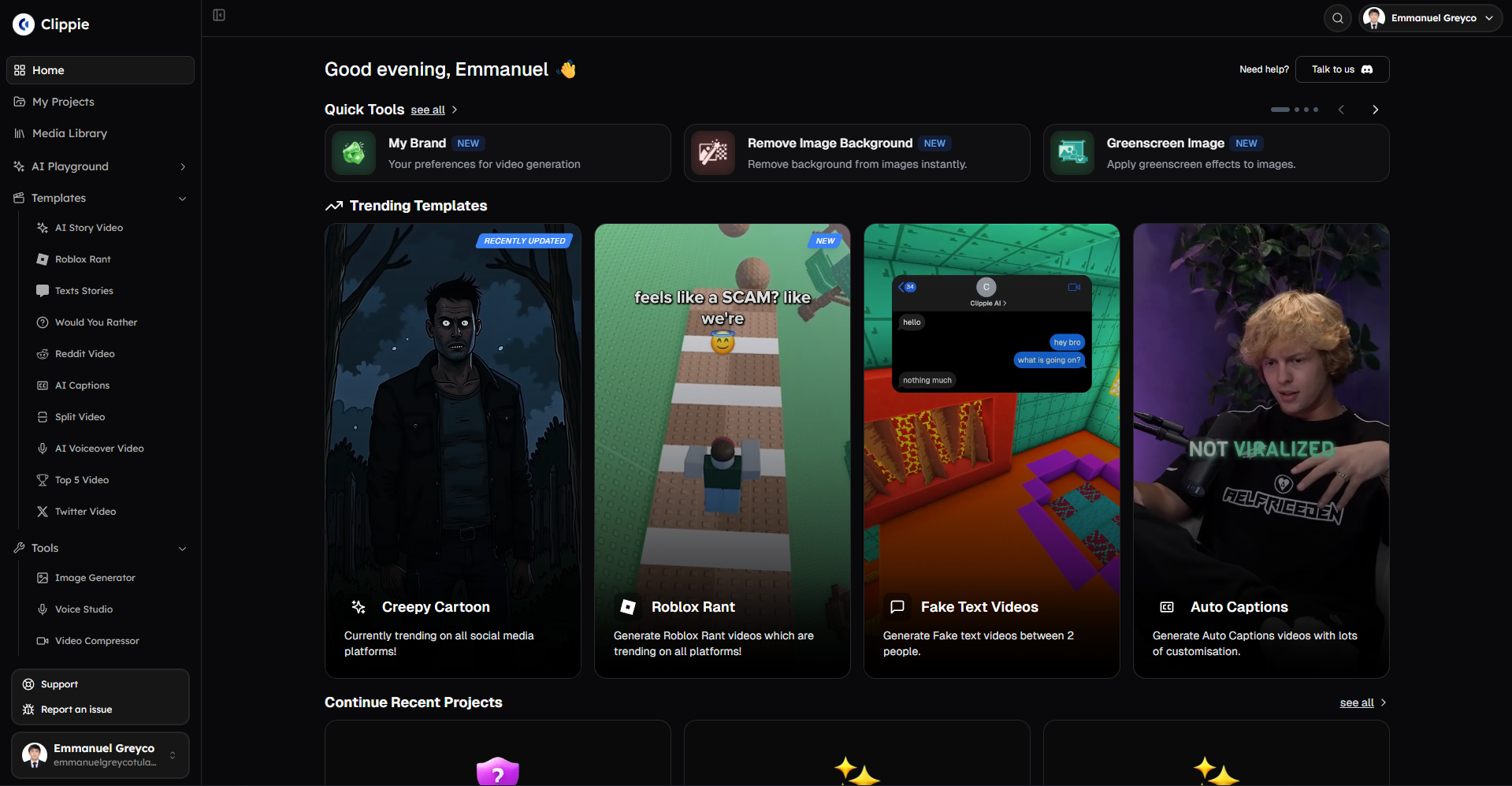
For freelancers at every stage, whether just starting authority building seeking premium positioning, established practitioners hitting income ceiling from commoditized pricing, or recognized experts seeking to systematize and scale thought leadership, authority video creation through educational content frameworks combined with AI production efficiency via Clippie AI removes fundamental barriers preventing freelancer video adoption: the 8-12 monthly hours manual production requires making weekly publishing economically impossible for client-serving freelancers, and the 6-12 month timeline to meaningful business impact requiring patience and systematic consistency most abandon prematurely. Visit clippie.ai to explore how freelancers are building sustainable authority through weekly video publishing, commanding 2-5x rate premiums through demonstrated expertise, and attracting selective inbound client flow eliminating proposal grinding and competitive bidding through positioning impossible to replicate without systematic content investment.
Read more

How to Post One Faceless Video to TikTok, Reels and Shorts
One vertical export works on all three platforms, but the rules don't. Lengths, payout thresholds, caption styles and what you should never cross-post.

Best AI Tools for Faceless YouTube Channels in 2026
A faceless YouTube channel needs one good tool per stage, not thirty. Research, scripting, voice, video and thumbnail picks, plus three stacks by budget

Best AI Video Tools for Faceless Content in 2026
The right tool depends on what you make: story shorts, prompt-to-video, repurposing, captions or avatars. Honest picks for each, plus where each one fails.