
How to Make Faceless History Videos With AI in 2026 (High Watch Time, High CPM Guide)
Learn how to make faceless history videos with AI in 2026, sub-niche selection, research workflow, retention scripting, Clippie AI production guide, growth roadmap, and full revenue stack.

Searching for how to make faceless history videos with AI in 2026?
History is one of YouTube's most durable and profitable content categories, and it is almost perfectly suited to faceless AI production. No camera. No studio. No on-screen presenting. Just compelling historical storytelling, atmospheric visuals, and an AI narrator that makes viewers feel as though they are discovering something genuinely important.
The history niche generates some of YouTube's highest average view durations, attracts premium advertisers, and produces evergreen content that continues accumulating views and watch hours for years after publication. A faceless history channel built correctly in 2026 is a compounding asset.
This guide is the complete blueprint, from understanding why history is one of the strongest niches for faceless creators, to researching and scripting videos that hold viewers for 10+ minutes, to producing a complete history video inside Clippie AI, to growing and monetising the channel across multiple income streams.
Executive Summary
This guide is for faceless content creators who want to build a profitable history YouTube channel using AI production tools in 2026. It covers why history is structurally one of the best niches for faceless AI channels, the specific sub-niches generating the highest views and CPM, how to research topics and script for 10+ minute retention, the step-by-step production workflow inside Clippie AI, a realistic growth roadmap to monetisation, and the complete revenue stack for a history channel. By the end, you will have everything needed to start producing and growing a faceless history channel from scratch.
Table of Contents
Why History Is One of YouTube's Most Profitable Niches for Faceless Channels in 2026
The History Sub-Niches That Generate the Highest Views and CPM in 2026
How to Research and Script History Videos That Hold Viewers for 10+ Minutes
How to Produce a Complete Faceless History Video With Clippie AI (Step-by-Step)
How to Grow a Faceless History Channel to Monetisation in 2026
How to Maximise History Channel Revenue With AdSense, Affiliates, and Sponsorships
Frequently Asked Questions

1. Why History Is One of YouTube's Most Profitable Niches for Faceless Channels in 2026
History content has characteristics that most YouTube niches simply cannot match, and those characteristics translate directly into channel growth mechanics and income generation that compound over time.
The Watch Time Advantage
History content consistently generates the highest average view durations on YouTube outside of pure documentary and educational programming. The reason is structural: historical narratives are stories with built-in forward tension.
When a viewer clicks on "The Rise and Fall of the Roman Empire," they have a predetermined desire to see the narrative through to its conclusion. The story arc creates a psychological commitment to watching that entertainment content, which requires constant hook renewal, cannot sustain over the same duration.
What this means for channel growth:
YouTube's primary ranking and recommendation signal is watch time, specifically, total minutes of viewing generated by a video. A history video that generates 60% average view duration on a 15-minute video produces 9 minutes of watch time per view. A TikTok-style entertainment video that generates 75% completion on a 4-minute video produces 3 minutes per view.
At equivalent view counts, the history channel accumulates 3x more watch hours, compressing the timeline to YouTube Partner Programme eligibility (4,000 watch hours) and improving the channel's standing in YouTube's recommendation algorithm.

The Evergreen Traffic Advantage
Most content has a shelf life. A TikTok trend video performs for 48 hours. A news commentary video performs for 1–2 weeks. A history video, about an event that happened 2,000 years ago, performs indefinitely.
Search queries about historical events, figures, and periods are permanent. "How did the Roman Empire fall?" is searched today and will be searched in 2030. "What caused World War 1?" generates consistent search volume every day of every year. "The life of Cleopatra" accumulates views from YouTube search traffic long after the video's initial publication.
The compounding catalogue effect:
A history channel with 100 videos does not just have 100 times the views of a channel with 1 video, it has 100 times the evergreen search surface area. Every video ranks for its own set of long-tail historical search queries. The catalogue is a search traffic asset that grows without additional production investment.
The CPM Advantage
History content attracts premium advertisers, educational platforms, streaming services, book publishers, documentary distributors, and heritage brands, who pay higher CPMs than general entertainment advertisers.
Realistic history channel CPM rates in 2026:
US audience: $5–$15 CPM
UK audience: $4–$12 CPM
Australian / Canadian audience: $4–$11 CPM
These rates are significantly higher than gaming ($1–$5 CPM) or general lifestyle content ($2–$6 CPM), and the audience demographics that history channels attract (educated adults, 25–54, with higher-than-average income) are precisely the demographic advertisers in these categories pay premium rates to reach.
Why Faceless AI Production Is Ideal for History
History content is narration-first by nature. The most successful history channels on YouTube, channels with millions of subscribers, are primarily voice-driven storytelling operations. The narrator tells the story; atmospheric footage, period-appropriate imagery, maps, and illustrations provide the visual context.
This format is exactly what AI production tools produce most effectively:
AI voiceover delivers the historical narrative at a natural, engaging pace
Clippie AI's image generation and VEO3.1 integration produces atmospheric, period-relevant visual content that stock libraries cannot provide
Auto-captioning makes the content accessible to viewers who watch with sound off or who are non-native speakers of the video's language
The integrated workflow produces a complete history video in under 90 minutes, at the production quality that viewers associate with authoritative history content
2. The History Sub-Niches That Generate the Highest Views and CPM in 2026
History is a large category. Strategic sub-niche selection within it determines the growth trajectory and revenue ceiling of the channel.
Sub-Niche 1: Ancient Civilisations (Highest Combined Views and CPM)
Content covering ancient Rome, ancient Greece, ancient Egypt, ancient Mesopotamia, ancient China, and other major civilisations of antiquity.
Why this sub-niche leads:
Enormous, multigenerational audience, ancient history has universal cultural recognition
School and university curriculum alignment drives consistent search traffic from students
Strong documentary and educational advertiser presence drives premium CPM
VEO3.1 and Seedance footage can generate atmospheric ancient civilisation imagery that stock libraries cannot provide, significant visual quality advantage
Top-performing ancient civilisation formats:
"The Rise and Fall of [Empire]", full arc documentary style
"Daily Life in [Ancient Civilisation]", lifestyle and culture format with high curiosity appeal
"The Mysteries of [Ancient Site or Practice]", mystery element drives completion
"Who Was [Historical Figure] Really?", biographical revisionism with counterintuitive framing
"10 Things You Didn't Know About [Ancient Civilisation]", high-CTR listicle format
Competitive landscape:
Major ancient civilisation channels have millions of subscribers. A new channel should not attempt to compete for the highest-competition queries immediately. Instead, target specific sub-topics within the broad ancient civilisation category that established channels have not covered comprehensively, specific lesser-known figures, regional variations, archaeological discoveries, or cultural practices.
Sub-Niche 2: World War History (Highest Search Volume)
World War I and World War II content generates some of YouTube's highest absolute search volumes for history content. Specific battles, commanders, weapons, and strategic decisions all have dedicated search audiences.
Why this sub-niche performs:
WWI and WWII generate more YouTube search volume than any other historical period
Military history audiences are highly engaged and loyal, strong subscriber conversion
Documentary advertisers and streaming services (Netflix, Disney+, Peacock) actively sponsor WWII content
The combination of military strategy content and human stories of survival and sacrifice holds attention across long video durations
Top-performing WWII format types:
Battle deep-dives, "The Battle of [Location]: What Really Happened"
Command decisions, "Why [Commander] Made the Worst Decision of WWII"
Survival stories, "The [Unit/Individual] That Survived the Impossible"
"What If" alternate history, "What If [Historical Event] Had Gone Differently?"
Technology and weapons, "The Secret Weapon That Changed [Battle/Campaign]"
Competitive landscape:
WWII is competitive. New channels should focus on specific battles, units, or figures that have not been covered exhaustively by established channels, there are thousands of individual battles, commanders, and stories within WWI and WWII that have never been made into dedicated YouTube videos.

Sub-Niche 3: Medieval History (Highest Engagement Rate)
Medieval content, covering roughly 500–1500 CE across Europe, the Middle East, Asia, and Africa, has a passionate, loyal audience with extremely high engagement rates.
Why this sub-niche performs:
Medieval history has strong crossover appeal with fantasy (Game of Thrones effect), audiences interested in fantasy fiction actively seek medieval historical content
Comment sections are highly active, medieval history audiences are knowledgeable and enjoy debating historical interpretations
Strong sponsorship market from video game companies (Crusader Kings, medieval games), fantasy entertainment platforms, and historical fiction publishers
Top-performing medieval format types:
Medieval daily life and social structure, surprisingly popular with audiences who want to understand what medieval life actually felt like
Famous battles and sieges, Agincourt, Constantinople, Hastings
Medieval diseases, medicine, and public health, morbid curiosity format with high completion
Castle and architecture deep-dives, visual content that benefits strongly from AI-generated atmospheric imagery
Medieval crime and punishment, true crime crossover format
Sub-Niche 4: Dark and Hidden History (Highest Completion Rate)
The darker, lesser-known, and more morally complex aspects of historical events, hidden histories, revisionist perspectives, controversial figures, and suppressed accounts.
Why this sub-niche performs:
Curiosity-driven content has inherently high completion rates, viewers stay to find out the hidden truth
Titles with "The Hidden History of," "What They Don't Tell You About," and "The Truth Behind" generate above-average CTR
Crossover appeal with true crime, conspiracy-adjacent content, and mystery, access to those audiences' algorithms
Top-performing dark history format types:
"The History [Topic] That Schools Never Taught You"
"The Dark Side of [Historically Positive Figure or Event]"
"The Hidden History of [Widely Known Topic]"
"What Really Happened to [Historical Person or Group]"
Colonial and empire histories told from non-dominant perspectives
Sub-Niche 5: Biography and Historical Figures (Highest Series Potential)
Deep-dive biographical content on historical figures, both the famous and the obscure, formats well as series content and generates strong subscriber conversion.
Why this sub-niche performs:
Biographical content structures naturally as multi-part series, building subscriber loyalty through episodic content
Covers both famous (Caesar, Napoleon, Elizabeth I) and overlooked figures, the overlooked figure format generates curiosity-driven clicks from audiences who have never heard of the subject
Strong association with educational advertising and book publisher sponsorships
Top-performing biography format types:
"The Life of [Historical Figure]: Part 1/2/3"
"The Woman/Person History Forgot: [Figure]"
"Why [Historical Figure] Was More Influential Than You Think"
"The [Historical Figure] Nobody Talks About"

3. How to Research and Script History Videos That Hold Viewers for 10+ Minutes
The scripting quality of a history video determines its retention more than any other factor. History audiences are knowledgeable, they can identify when content is inaccurate, shallow, or derivative. A well-researched, well-written history script holds 50–65% of viewers for the full duration. A poorly researched one loses 70% within the first 3 minutes.
Primary Research Sources for History Content
Source 1: Academic Databases and Peer-Reviewed Articles
The most authoritative research for history content comes from academic publications. Key sources:
JSTOR the largest archive of academic journals in history, accessible through many public libraries
Google Scholar free access to academic papers, historical research, and citations
Academia.edu academic research shared by scholars, including historical studies
How to use academic sources without being inaccessible:
Academic research provides the factual foundation. The creator's job is to translate this research into compelling narrative, retaining the accuracy while removing the academic density that makes journal articles inaccessible to a general audience.
Source 2: Primary Source Archives
Primary sources, documents, records, and artefacts from the historical period being covered, are the gold standard of historical evidence.
Archive.org (Internet Archive) digitised historical documents, books, and records
Project Gutenberg public domain historical texts and primary sources
National Archives (US, UK) official government and military records
Library of Congress Digital Collections extensive primary source archive
Using primary sources effectively:
When a primary source contains a direct quote from a historical figure or a specific documented fact that contradicts popular understanding, these are premium content moments, the "actually" moments that make viewers sit up and pay attention.
Source 3: Established Historical Reference Works
Published historical scholarship from recognised historians provides reliable, citation-supported secondary source material:
University press publications (Oxford University Press, Cambridge University Press, Harvard University Press)
National Geographic History
Smithsonian Magazine
History Today
Important: Never cite Wikipedia as a primary research source. Use Wikipedia's citations (the numbered footnotes at the bottom of articles) to find the original sources, then read those sources directly.
Source 4: Documentary Research as a Starting Point
Well-researched historical documentaries (Ken Burns productions, BBC historical documentaries, PBS Frontline historical editions) can serve as research orientation, they identify the key themes, figures, and turning points of a historical period, but should never be the only research source or directly quoted.
Use documentaries to build your initial understanding and identify which primary and secondary sources to investigate further.

The History Video Script Structure
Element 1: The Hook (First 30–45 Seconds)
History video hooks follow a specific pattern that differs from entertainment content: they lead with the most surprising, counterintuitive, or dramatic element of the story before establishing any context.
Effective history hook formats:
The Reversal Hook: "Everything you know about [historical event/figure] is incomplete. The real story is far more [dramatic/disturbing/surprising]."
The Consequence Hook: "The decision [historical figure] made on [date] changed the course of human history. But nobody at the time knew it was happening."
The Forgotten Truth Hook: "For [number] years, historians believed [conventional wisdom]. Then [archaeological discovery/declassified document/new evidence] changed everything."
The Stakes Hook: "If [historical event] had gone differently, the world you live in today would be unrecognisable."
What makes a weak history hook:
Starting with geography or date-based context. "The Roman Empire was founded in 27 BC and covered a vast territory...", this is an encyclopedia, not a hook. The viewer's curiosity is not engaged. Start with the most interesting element of the story, not the most foundational.
Element 2: The Context Establishment (1–3 Minutes)
After the hook, provide the context viewers need to understand the significance of what they are about to learn:
Who are the key figures and what were their roles?
What was the historical setting, political, geographic, cultural?
What did people at the time believe that turned out to be wrong?
What is the conventional understanding this video is going to complicate or enrich?
Scripting note: Context should be delivered with narrative energy, not as a factual checklist. Each contextual detail should serve the larger story, if a fact does not connect to the narrative thread, cut it.
Element 3: The Narrative Body (Minutes 4–12)
This is where the historical story unfolds in full detail. For a 15-minute video, the narrative body runs approximately 8–10 minutes.
Narrative body structure for maximum retention:
Act 1 (minutes 3–5): The situation before the critical events. Establish what was at stake and why it mattered.
Act 2 (minutes 5–10): The critical events themselves, the decisions made, the actions taken, the turning points that changed everything. This should have genuine dramatic pacing, not a chronological list of events, but a story with rising tension.
Act 3 (minutes 10–12): The consequences and aftermath. What did this mean? What changed? What were the long-term effects that viewers can trace to the present?
The midpoint retention hook (at minute 6–8):
Explicitly re-engage viewers at the midpoint with a forward-tension statement:
"What happened next is the part most history books leave out."
"The decision [figure] made at this point is still debated by historians today, and the evidence is more disturbing than the textbook version."
"By the time this was over, [consequence] had happened. But the story of how it got there is not what you have been told."
Element 4: The Resolution and Significance (Minutes 12–14)
Bring the narrative to a satisfying close:
What was the immediate outcome?
What does this history tell us that is still relevant today?
What ongoing questions does it leave unresolved?
The "relevance today" element is particularly important for history channels, it answers the viewer's implicit question of "why should I care about something that happened 500 years ago?" and elevates the content from educational to genuinely meaningful.
Element 5: The CTA and Close (Final 30–45 Seconds)
History video CTAs that perform best:
"If you want to understand the full [empire/war/period], not just this one moment, subscribe. I publish a new piece of history every [day of week]."
"What aspect of this history do you want to understand better? Comment below, I read every suggestion."
For series: "Part 2 covers [next chapter]. It posts [date], subscribe so you don't miss it."
Script Length Targets by Format
YouTube mid-length (8–12 minutes): 1,200–1,800 words
YouTube long-form documentary (15–20 minutes): 2,200–3,000 words
YouTube shorts history clip (60 seconds): 150–200 words
For most new history channels, starting with 10–12 minute videos is optimal, long enough for strong watch time accumulation, short enough to produce consistently while maintaining research quality.

4. How to Produce a Complete Faceless History Video With Clippie AI (Step-by-Step)
History content has a specific visual challenge: the events, locations, and figures being depicted are historical, they cannot be filmed today. This means history channels are traditionally dependent on stock footage of modern equivalents, museum photographs, and art reproductions, a visual approach that feels generic and limits visual distinctiveness.
AI generation, specifically VEO3.1 and Seedance 1.0 through Clippie AI, changes this completely. A creator can generate atmospheric, period-appropriate, cinematic footage that no stock library contains.
Step 1: Voiceover: Selecting the Right History Channel Voice
Inside Clippie AI's 50+ voice library, history content requires specific characteristics:
What makes a strong history narrator voice:
Deep gravitas, the voice should convey that the subject matters
Measured pacing, history narration that is too fast feels rushed; too slow loses the dramatic momentum
Clear authoritative delivery without theatrical overperformance
Emotional range, the voice should be capable of conveying reverence, drama, and intellectual curiosity without sounding like a theatrical performance
Testing approach:
Test your top 3 voice candidates on the hook paragraph, the most dramatically demanding section. The voice that delivers "Everything you know about the fall of the Roman Empire is incomplete" with appropriate gravity and forward tension without sounding like a documentary cliché is your history channel voice.
Custom voice cloning for history channels:
Cloning a voice for a history channel creates the audio identity that history audiences bond with over time. The narrator's voice in history content is the equivalent of the documentary filmmaker's presence, it becomes the channel's personality. A consistent, distinct cloned voice across hundreds of hours of historical content is a significant brand asset.
Step 2: Visual Generation: Atmospheric History Imagery
History video visuals serve two functions: they create atmosphere appropriate to the historical period, and they provide visual variety that prevents the visual monotony that kills watch time on narration-heavy content.
VEO3.1 for History Establishing and Atmospheric Shots
VEO3.1 produces photorealistic footage that works strongly for:
Ancient landscape and environmental footage
Architectural and archaeological site imagery
Period-appropriate weather and atmospheric footage
Wide establishing shots of historical geographic settings
VEO3.1 history prompt examples:
"Slow cinematic aerial shot over an ancient Roman architectural landscape, Mediterranean sun, terracotta and stone structures, empty of modern elements, documentary-style cinematography, golden hour lighting, photorealistic 4K quality, broadcast quality"
"Slow pan across a medieval battlefield at dawn, fog rolling across a wide plain, distant figures of soldiers assembling, overcast dramatic sky, documentary aesthetic, muted colour palette, cinematic 4K quality"
"Aerial view of ancient Egyptian desert landscape, sand dunes extending to the horizon, early morning light casting long shadows, photorealistic documentary style, 4K broadcast quality"
Seedance 1.0 for Narrative and Character-Driven History Scenes
Seedance's filmic aesthetic is better suited for history scenes that require character presence and narrative staging, scenes where the emotional weight of a historical moment needs to be conveyed through composition rather than just environment.
Seedance history prompt examples:
"Cinematic dramatic scene: a lone figure in period clothing seen from behind, standing at the edge of a vast plain at sunset, contemplating a battle scene in the distance, slow static medium shot, historical drama aesthetic, muted earth tones, feature film quality, film grain, 4K"
"Filmic narrative scene: hands of an unseen figure writing by candlelight at a wooden desk, quill pen, period-appropriate setting, warm candlelight creating dramatic shadows, slow push-in toward the paper, historical drama aesthetic, cinematic 4K"
AI Image Generation for History
For sections of the video that do not require motion footage, Clippie AI's built-in image generation produces atmospheric history imagery:
Map and geography imagery: "Dark editorial illustration of an ancient empire map with marked borders and key cities, documentary aesthetic, aged parchment colour palette, authoritative and historical, high quality"
Portrait and figure imagery: "Dark editorial illustration in the style of a historical portrait, dramatic classical lighting, aged painting aesthetic, authoritative and serious, high quality illustration"
Battle and conflict imagery: "Dark atmospheric illustration of an ancient battlefield at dawn, silhouettes of soldiers in formation, dramatic sky, documentary historical aesthetic, cinematic quality, high quality"
Archaeological and artefact imagery: "Clean documentary illustration of ancient artefacts arranged on a neutral background, editorial museum-quality aesthetic, educational and authoritative, high quality"
Maintaining Visual Period Consistency
One of the most important visual disciplines in history content is maintaining period consistency, visuals that look anachronistic relative to the historical period being discussed undermine the video's credibility.
Period consistency principles:
Avoid modern architectural elements in ancient period footage
Use appropriate colour palette for the period, ancient content benefits from warm earth tones and stone colours; WWII content benefits from desaturated grey-green palettes
Specify "no modern elements" in VEO3.1 prompts for ancient period footage
For medieval content, ensure architectural style in generated images reflects the correct regional and temporal period
Step 3: Auto-Captioning
Clippie AI auto-syncs captions to the AI voiceover. For history content:
Review accuracy on historical proper nouns, names of ancient figures, places, and empires are occasionally mistranscribed
Confirm accurate rendering of dates in BCE/CE format
Check that battle names, treaty names, and historical event names are correctly transcribed
History content has a higher density of non-standard proper nouns than most other niches, the caption review step takes 5–8 minutes rather than the 2–3 minutes typical for simpler content types.
Step 4: Export
YouTube long-form history:
Format: MP4
Resolution: 1080p minimum (1440p or 4K if the production pipeline supports it)
Aspect ratio: 16:9
Frame rate: 30fps (24fps acceptable for a more filmic, documentary aesthetic)
History Shorts and TikTok cross-posts:
Format: MP4
Resolution: 1080 x 1920
Aspect ratio: 9:16
Frame rate: 30fps
Production time per history video inside Clippie AI:
VEO3.1 / Seedance clip generation (6–8 clips): 18–30 minutes
AI image generation (5–7 images): 10–15 minutes
Voiceover generation (1,500-word script): 3–5 minutes
Caption review: 5–8 minutes
Export: 5–8 minutes
Total production time inside Clippie AI: 40–65 minutes per video

5. How to Grow a Faceless History Channel to Monetisation in 2026
The Growth Trajectory for History Channels
History channels grow differently from entertainment or trending content channels, they grow through accumulated search traffic rather than viral events. Understanding this distinction shapes the entire growth strategy.
The history channel growth curve:
Months 1–2: Minimal views. The channel has no search history and no algorithmic authority. Each video accumulates a small number of views from direct search on specific historical queries.
Months 3–4: Gradual search traffic accumulation. The first 15–20 videos begin appearing in YouTube search results for their specific historical queries. Views per video stabilise at 100–500.
Months 5–6: Algorithmic recommendation begins. The channel's consistent watch time data tells YouTube's algorithm what kind of viewer engages with this content. The first video recommendations appear on related videos.
Months 7–9: Compounding phase. The catalogue is large enough that related videos within the channel appear as recommendations after each video. Viewers watch multiple videos per session, significantly increasing total watch hours per visitor.
The 4,000 watch hour calculation:
At 60% completion on a 12-minute video with 200 views per video, each video generates approximately 1,440 minutes (24 hours) of watch time. To reach 4,000 watch hours (240,000 minutes), the channel needs either:
167 videos at this performance level, or
Fewer videos that perform above this average through strong keyword targeting and search ranking
Strong keyword targeting, positioning each video for specific historical search queries with manageable competition, compresses this timeline significantly.
Keyword Strategy for History Channels
Finding rankable historical keywords:
Use YouTube search autocomplete to identify specific historical queries that have search volume but limited competition:
Type "History of [topic]" and note autocomplete suggestions
Type "[Historical figure] [action]", "Julius Caesar assassination," "Cleopatra death," "Napoleon Waterloo"
Type "[Historical event] explained", these tend to have educational search intent with consistent volume
Type "[Historical period] daily life", lifestyle and culture queries have high completion rates because they satisfy genuine curiosity
Low-competition keyword patterns to prioritise:
Specific battles or engagements within larger wars
Regional history within broadly covered periods (e.g., a specific province of Rome rather than the whole empire)
Lesser-known historical figures with genuine historical significance
Archaeological discoveries and what they revealed
Specific historical mysteries with ongoing scholarly debate
Series Content for History Channels
Series content is the most powerful subscriber conversion tool available to a history channel. A multi-part series on a complex historical topic creates a structural reason for viewers to subscribe, they want to be notified when the next part publishes.
Series structure for history:
Plan 4–7 part series on complex topics: "The Fall of Rome: Parts 1–6"
Each episode ends with a cliffhanger or forward-looking statement: "In Part 3, we cover the decisions that sealed Rome's fate, and they were made 50 years before the end"
Title each episode clearly: "The Fall of Rome Part 2: The Military Crisis"
Publish on a consistent schedule, same day, same time, every episode
Series topic recommendations for new channels:
"The Complete History of [Ancient Civilisation], Parts 1–5"
"Every [War/Conflict] Battle Explained, Parts 1–N"
"The Greatest [Leaders/Rulers/Generals] in History, Episode by Episode"
"World War [I/II], Month by Month"
The YouTube Partner Programme Timeline for History Channels
Based on the typical history channel growth curve:
Conservative estimate (1 video per week, average research quality): 12–18 months to 4,000 watch hours
Moderate estimate (2 videos per week, strong keyword targeting): 8–12 months
Aggressive estimate (3 videos per week, series content, strong keyword targeting): 5–8 months
Channels that hit strong early videos, videos that rank in YouTube search for their specific historical query within the first month of publication, compress this timeline significantly. A single video that ranks for a moderately competitive historical query and generates 1,000–5,000 views can contribute 200–1,000 watch hours on its own.

6. How to Maximise History Channel Revenue With AdSense, Affiliates, and Sponsorships
Revenue Stream 1: YouTube AdSense
AdSense is activated at YouTube Partner Programme eligibility (1,000 subscribers + 4,000 watch hours).
Maximising AdSense on history content:
Produce videos of 12–20 minutes, longer videos support more mid-roll ad placements, increasing ad impression count per view
Target US, UK, Australian, and Canadian viewers for premium CPM, title and describe content in English with search queries that these markets use
Use mid-roll ad placement at natural narrative pause points, between major sections of the historical narrative, not mid-sentence
Maintain completion rates above 45%, history content that achieves this generates significantly more ad impressions per view than content with lower completion
Realistic AdSense projections for history channels:
50,000 monthly views (CPM $8): $400/month
200,000 monthly views (CPM $8): $1,600/month
500,000 monthly views (CPM $10): $5,000/month
History channels accumulate monthly views from a growing catalogue, month 12 views are not just new videos but continued views on the entire 12 months of previously published content.
Revenue Stream 2: Affiliate Marketing
History channels have a specific affiliate ecosystem that aligns naturally with audience interests:
History-specific affiliate opportunities:
Audible/audiobook platforms: History audiences are voracious readers. Audible's affiliate programme pays $5–$10 per new trial sign-up, and history audiobooks are among Audible's strongest performing categories. "I've linked the audiobook version in the description" is a natural, non-intrusive referral.
MagellanTV / CuriosityStream: History and documentary streaming services offer creator affiliate programmes. Payments of $10–$20 per referred subscriber.
Book affiliate programmes (Amazon Associates): Recommending the primary scholarly works on each historical topic covered generates ongoing book affiliate commissions at 4–8% per sale.
VPN services: Extremely active in history content sponsorship and affiliate, history audiences frequently access geo-restricted content (documentaries, archive access). Commissions of $30–$80+ per sign-up.
Online learning platforms (Great Courses/Wondrium): Educational content platforms with strong affiliate programmes targeting the same audience that watches history YouTube content.
Revenue Stream 3: Brand Sponsorships
History channels attract a specific and active sponsorship market:
Brands that actively sponsor history channels:
Streaming services with history and documentary content (Netflix, Peacock, Discovery+, BBC iPlayer where accessible, MagellanTV, CuriosityStream)
VPN services extremely active across history channels (NordVPN, ExpressVPN, Surfshark)
Audiobook platforms Audible, Storytel
Online education platforms Wondrium (formerly The Great Courses), Masterclass (occasionally)
Historical video games Age of Empires, Crusader Kings, Total War series, other history-adjacent games
Book publishers particularly university presses and popular history imprints, who partner with YouTube history channels for promotional campaigns around new releases
Historical subscription boxes a growing niche of curated historical artefact and book subscription services
Realistic history channel sponsorship rates:
10k–50k subscribers: $200–$800 per integration
50k–200k subscribers: $800–$3,500 per integration
200k+ subscribers: $3,500–$12,000 per integration
History channels at relatively modest subscriber counts (25,000–50,000) with high watch time and strong audience engagement often command sponsorship rates equivalent to entertainment channels with 5–10x the subscribers, because the history audience's demonstrated intellectual engagement is exactly what educational and cultural advertisers pay to reach.
Revenue Stream 4: Digital Products
History channel audiences are strong buyers of educational content that deepens their understanding of the topics they find through the channel.
History-specific digital products:
"Complete Guide to [Historical Period]" ebooks: $9–$27, serving audiences who want to go deeper than the YouTube content
History quiz and activity packs: $9–$19, popular with educators who use history YouTube content in classroom settings
Historical timeline and reference guides: $7–$15, reference material that serves the audience's desire to contextualise the topics covered
Research reading lists: $5–$12, curated scholarly reading for each major historical period covered on the channel
Clippie AI Plans: Matched to History Channel Production Scale
Lite: $19.99/month
30 mins video export (~2–4 history videos/month at 10–15 min avg)
30 mins AI voice generation
30 mins speech-to-subtitles
100 AI images
1 custom voice
Captions in 102+ languages
50+ AI voices
24/7 support
Best for: Launching the channel and producing 1 video per week in the first 4–6 weeks while validating research workflow and visual aesthetic
Creator: $34.99/month
120 mins video export (~8–12 history videos/month)
120 mins AI voice generation
120 mins speech-to-subtitles
500 AI images
10 custom voices
Captions in 102+ languages
50+ AI voices
24/7 support
Best for: A history channel posting 2 videos per week at 10–15 minutes each, the right volume for meaningful watch time accumulation and algorithmic momentum
Pro: $69.99/month
250 mins video export (~15–20 history videos/month)
250 mins AI voice generation
250 mins speech-to-subtitles
1,000 AI images
30 custom voices
Captions in 102+ languages
50+ AI voices
24/7 support
Best for: A channel posting 3+ history videos per week, running multi-language history channels, or a content agency managing multiple history channel clients
No free tier is available on Clippie AI.
💡 For the complete keyword and content strategy that applies across all YouTube niches including history, read our guide on How to Start a Faceless YouTube Automation Channel in 2026 (Zero Experience Required)
💡 For the production workflow that powers consistent history video output at scale, read our guide on the ultimate faceless content workflow from idea to viral video
💡 Start building your faceless history channel with Clippie AI today →
Conclusion: History Is the Best Long-Term Niche Investment for Faceless Creators in 2026
The compounding nature of history content, evergreen search traffic, high watch time, a catalogue that grows without expiring, makes it one of the strongest long-term channel investments available to a faceless creator in 2026.
A finance channel published in 2026 will still generate views on "compound interest explained" in 2030. A true crime channel's 2026 videos will still generate views on cold cases in 2029. A history channel's 2026 video on the fall of Rome will still generate views in 2035, because that question is searched by students, enthusiasts, and curious people every single day and will continue to be.
The visual barrier that traditionally limited faceless history production, the inability to source period-appropriate footage from stock libraries, has been eliminated by Clippie AI's VEO3.1 and Seedance 1.0 integration. A creator can now generate atmospheric ancient civilisation footage, medieval battlefield scenes, and period-appropriate documentary imagery without a production budget, a film crew, or a stock footage subscription.
The research methodology is learnable. The scripting structure is teachable. The production workflow is systematised. The only variable is the decision to start.
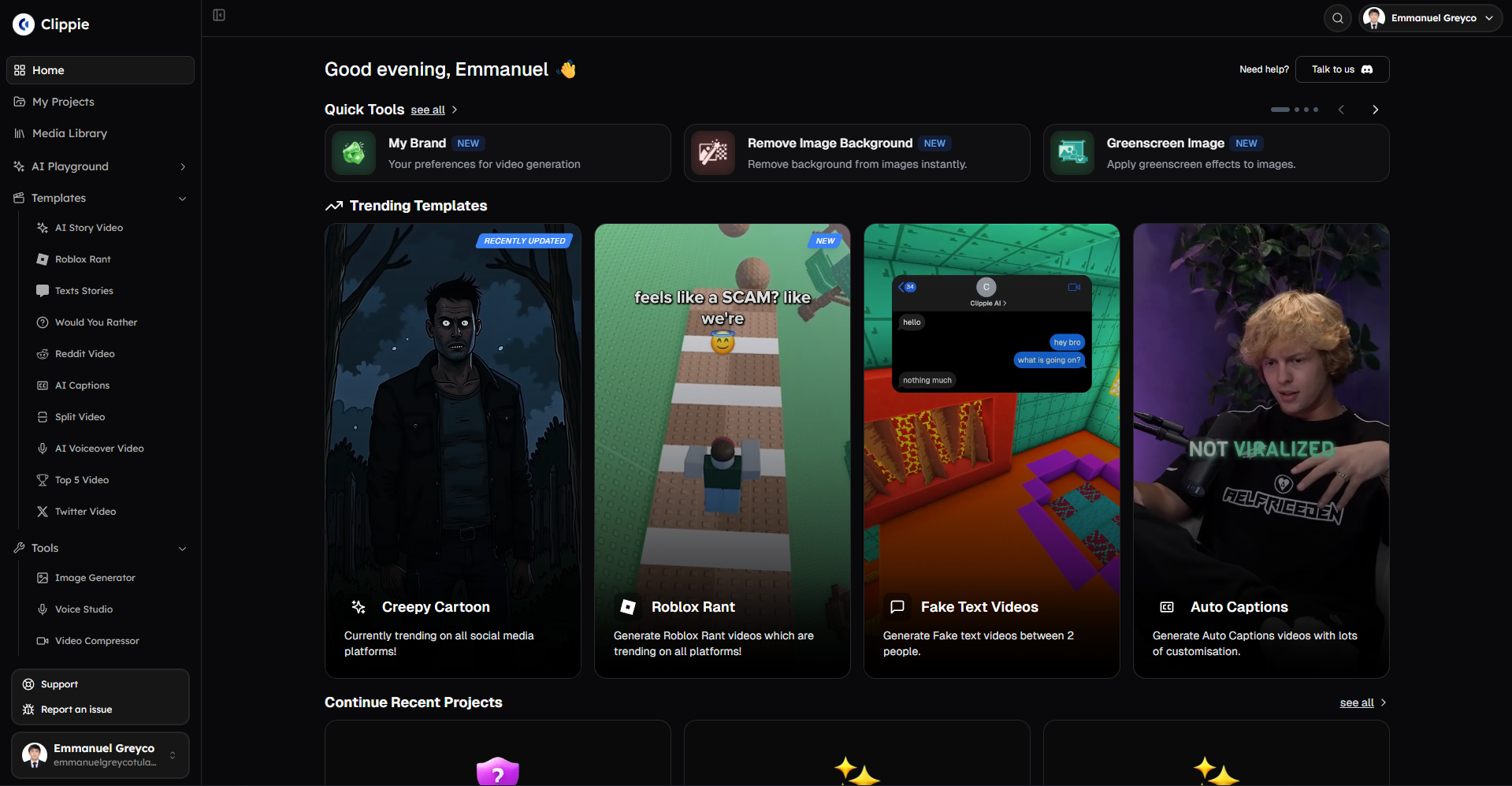
Start building your faceless history channel with Clippie AI today →
7. Frequently Asked Questions
Q1: Do I need to be a history expert or have a history degree to run a faceless history YouTube channel?
No, but you need research discipline and factual accuracy. The most successful faceless history channels are run by creators with genuine intellectual curiosity about historical topics, not necessarily academic credentials. What matters is the commitment to verify every claim against primary or reputable secondary sources before scripting it as fact, to cite specific sources for significant claims, and to acknowledge genuine historical debate where historians disagree. History YouTube audiences are knowledgeable and will call out inaccuracies in comments, treating research with appropriate seriousness is both ethically correct and practically necessary for maintaining channel credibility.
Q2: What is the best history sub-niche for a new faceless channel in 2026?
Ancient civilisations, particularly Rome, Greece, and Egypt, offer the best combination of broad audience size and specific sub-topic availability. The broad category has enormous search volume; specific sub-topics within it (individual emperors, specific battles, cultural practices, archaeological discoveries) have manageable competition for a new channel. Ancient history also benefits most dramatically from AI-generated visual content, since stock footage of ancient environments simply does not exist and VEO3.1 can generate atmospheric period-appropriate footage that immediately distinguishes the channel visually.
Q3: How long does it take to research and produce one history video with Clippie AI?
Research for a 12-minute history video on a well-documented topic takes 3–6 hours for thorough research from primary and reputable secondary sources. Scripting takes 1.5–2.5 hours. Production inside Clippie AI, VEO3.1 or Seedance clip generation, AI image generation, voiceover, captions, and export, takes 40–65 minutes. Total end-to-end time per video: approximately 6–10 hours. For a creator posting twice per week, this represents a 12–20 hour weekly research and production commitment.
Q4: Which Clippie AI plan is right for a history channel posting 2 videos per week?
The Creator plan at $34.99/month is the right fit for a history channel at 2 videos per week. Two 12-minute videos per week generates approximately 96 minutes of content per month, within the Creator plan's 120-minute export capacity. The 500 AI image allocation supports 5–7 images per video across 8 videos monthly. The 10 custom voice slots allow custom voice cloning for channel identity alongside testing alternative voice styles. The Lite plan (30 minutes export) is only appropriate for 1 video per week during the initial channel-building phase.
Q5: How do AI-generated visuals compare to real documentary footage for history channels?
In 2026, VEO3.1 and Seedance 1.0 generate footage that is genuinely cinematic and visually distinct from the generic stock footage that most faceless history channels rely on. The primary advantage is not just quality but relevance, AI generation produces footage specific to the historical period and setting being described, whereas stock footage is limited to contemporary equivalents or low-quality historical recreations. The primary limitation is that AI footage cannot depict specific historical figures with accuracy and should not claim to represent real events. The optimal approach is using AI footage for atmospheric establishing shots, environmental context, and emotional staging, while using AI-generated illustrations for specific historical periods, figures, and events that require more specific representation.
Q6: Is there enough demand for history content on YouTube to justify building a new channel in 2026?
Yes, history YouTube demand significantly exceeds supply. YouTube search data shows consistent and growing search volume across every major historical period and topic. The vast majority of that search volume is served by a small number of large established channels, leaving thousands of specific historical topics (specific battles, specific historical figures, specific regional histories, specific archaeological discoveries) underserved or unserved entirely. A new history channel that focuses on specific, well-researched topics within the broad category rather than competing head-to-head with established channels on their strongest content can build significant search traffic within 6–12 months.
Make an AI story video
Write a script or let AI write one. Clippie turns it into a narrated video with AI scenes, voiceover and captions.
Read more

How to Make Top 5 Ranking Videos in 2026 (Step-by-Step)
Build ranking Shorts that can still earn: pick a debatable topic, set clear criteria, source clips you may use, script the countdown, add your commentary.

How to Create Short-Form Videos Using AI: 8 Steps (2026)
A beginner workflow for AI videos on TikTok, Reels and Shorts: pick a format, script a hook, add visuals, voice and captions, export at 9:16, label AI.

7 Free CapCut Alternatives for Short-Form Video (2026)
Compare Edits, YouTube Create, VN, Clipchamp, Canva, DaVinci Resolve and Shotcut: what each gives free users, what it caps first and where it falls short.