
Clippie AI vs Virlo: The Ultimate 2026 AI Video Tool Comparison
Complete head-to-head comparison of Clippie AI vs Virlo for AI video creation. Detailed analysis of automation, storytelling, features, pricing, and which platform is best for your content strategy in 2026.

The AI-powered faceless content creation landscape in 2026 presents creators with increasingly sophisticated platform options claiming to revolutionize video production, with Clippie AI and Virlo emerging as two prominent tools serving the exploding story video and faceless content markets yet approaching the problem from fundamentally different philosophical and technical directions. Both platforms promise to enable creators to produce professional short-form and long-form video content without filming, appearing on camera, or possessing advanced editing skills, yet their divergent approaches to automation, workflow design, feature prioritization, and creator experience create dramatically different user experiences, optimal use cases, and ultimate value propositions that make one significantly superior to the other for most creator situations while potentially making the alternative preferable for specific niche requirements.
Understanding the meaningful differences between these platforms requires moving beyond superficial feature comparisons and marketing claims to examine the actual workflows, realistic production capabilities, economic value propositions, and strategic positioning for different creator types and content strategies. The platforms differ not just in specific features but in fundamental philosophy about optimal video creation workflows, whether comprehensive end-to-end automation serves creators better than modular manual control, whether speed and efficiency or customization and perfectionism should be prioritized, and whether integrated simplicity or specialized depth provides more value. These philosophical differences cascade into every aspect of platform design, user experience, and ultimate creator outcomes.
The comparison stakes matter enormously for creators making platform commitments because tool selection determines production efficiency affecting sustainable output volume and burnout prevention, directly impacts content quality through capability ceilings and workflow optimization, influences economic viability through subscription costs and monetization potential, and affects long-term channel trajectory through systematic advantages or disadvantages compounding over months and years. Choosing the optimal platform for your specific situation can mean the difference between building sustainable profitable content channel generating $2,000-10,000+ monthly or struggling with inefficient workflows producing mediocre results that never gain algorithmic traction or audience loyalty. The platform decision is strategic business choice not just technical tool selection.
The Faceless Content Market Context
Understanding what both platforms are solving reveals evaluation framework and decision criteria.
The story video explosion dominating social platforms shows this content format, narrative-driven videos combining AI-generated visuals, synthetic voiceovers, and synchronized captions telling engaging stories, has become one of fastest-growing and most monetizable content types across TikTok, YouTube Shorts, Instagram Reels, and traditional YouTube throughout 2024-2025. The format's success stems from audiences demonstrating consistent preference for narrative content over static posts or raw information, AI technology achieving quality threshold where synthetic content appears professional and engaging, perfect fit for sound-off mobile viewing dominating social consumption, and extraordinary scalability enabling solo creators to produce 10-20+ videos daily without filming or complex editing.
The production challenge these platforms address shows manual story video creation traditionally requiring 45-90 minutes per video through writing or sourcing story text, sourcing or creating appropriate visual imagery, recording or generating voice narration, editing video synchronizing visuals with narration, adding captions and music, and optimizing for platform specifications and export. The time investment makes high-volume systematic production difficult or impossible for solo creators, limiting sustainable output to 2-5 videos weekly versus 10-20+ required for optimal algorithmic performance on platforms like TikTok.
The AI solution promise both platforms make involves automating substantial portions of production workflow reducing 45-90 minute manual process to 5-20 minute AI-assisted creation, eliminating need for filming equipment, editing expertise, or voice acting, enabling consistent professional quality across all productions regardless of creator skill, and providing scalability supporting sustainable high-volume production necessary for social media success. The core value proposition is democratizing professional video creation making it accessible to anyone regardless of technical skills or production budget.
The competitive differentiation between platforms emerges from different answers to key questions including how much automation versus manual control optimizes creator outcomes, whether integrated end-to-end platforms or modular specialized tools serve creators better, what balance between speed/efficiency and customization/quality provides maximum value, and how pricing and business models should align with creator needs and revenue potential. These philosophical differences create distinct platform personalities and optimal use cases.
What This Comprehensive Comparison Delivers
This analysis provides complete framework for informed strategic platform selection.
The platform overview section establishes foundational understanding of each tool including what Virlo actually is and its core workflow approach, Clippie AI's comprehensive integrated production system, philosophical differences in platform design and creator experience, and realistic expectations about capabilities and limitations of each. The overview prevents misunderstanding what each platform optimizes for enabling appropriate evaluation.
The automation and workflow comparison examines production efficiency and user experience including end-to-end automation capabilities and workflow simplicity, production speed and time investment requirements, learning curves and skill requirements, and sustainable scalability for high-volume production. The workflow analysis reveals practical daily creator experience beyond marketing claims.
The feature and capability deep-dive compares specific production elements including storytelling and narrative generation capabilities, template systems and customization options, voice synthesis quality and options, visual generation and artistic styles, caption generation and styling, and music and audio integration. The feature comparison reveals quality ceilings and creative control available in each platform.
The economic analysis examines pricing and value propositions including subscription costs and usage limits, cost-per-video economics at different production volumes, ROI analysis for creators at different revenue stages, and total cost of ownership including required supporting tools. The economic framework reveals which platform provides better value for different creator situations.
The strategic selection guidance synthesizes analysis into actionable recommendations including which creators should choose Clippie AI, which should choose Virlo, specific scenarios where one platform dramatically outperforms, decision framework for evaluating your specific situation, and hybrid approaches or tool combinations. The selection guidance translates comparison into confident platform decisions.
By completing this comprehensive comparison, you'll understand not just superficial feature differences but the fundamental strategic distinctions between platforms enabling informed choice aligned with your content type, production goals, skill level, and business model.
Table of Contents
What Is Virlo and How Does It Work?
Clippie's Automation vs Virlo's Manual Workflow
Storytelling, Templates & Voice Features Compared
Monetization Potential With Each Platform
Which Tool Creators Should Choose in 2026
FAQs
Conclusion
1. What Is Virlo and How Does It Work?
Establishing clear understanding of Virlo's platform approach and positioning before comparative analysis.
Virlo's Platform Overview and Core Concept
Understanding what Virlo actually provides and its fundamental approach to video creation.
Virlo's positioning and market approach presents the platform as AI-powered story video creation tool specifically designed for social media short-form content, targeting creators building channels around narrative content (Reddit stories, moral tales, relationship stories, fictional narratives), emphasizing customization and creative control as key differentiators, and marketing itself as solution for creators wanting professional story videos without technical expertise. The positioning suggests hybrid approach between fully automated and fully manual video creation, more automated than traditional editing but more manual than comprehensive platforms like Clippie.
The core workflow architecture Virlo employs involves multiple discrete stages requiring user input and decision-making where story text input or generation happens through text paste or AI story generation from prompts, visual scene planning requires manually selecting or approving images/scenes for story beats, voice narration generated through integrated AI voice synthesis with voice selection and customization, video assembly combining approved visuals with generated narration, caption generation and styling added with formatting options, and final export and platform optimization producing deliverable files. The multi-stage workflow provides control points for customization while requiring more active user involvement than single-click automation.
The user interface and experience emphasizes guided workflow through sequential stages where platform walks users through story creation in defined steps reducing decision paralysis, preview and approval gates at each stage enable quality control before proceeding, customization options within each stage allow personalizing output, and the overall experience balances automation with user control. The interface design suggests focus on accessibility for non-technical users while providing customization for users wanting specific creative control.
The technical capabilities and limitations reveal platform scope where Virlo handles story video format specifically, not general-purpose video creation, focuses on short-form content (30-90 seconds) optimized for TikTok, Shorts, and Reels, provides AI-powered generation for visuals, voice, and captions within story context, but requires external tools for non-story video types or advanced editing needs. The specialization creates depth in story video capabilities while limiting versatility compared to broader platforms.
Virlo's Story Generation and Content Creation
How the platform handles the critical story development and narrative creation phase.
The story input and generation options Virlo provides include text paste functionality accepting pre-written stories from any source (Reddit posts, personal writing, story databases), AI story generation from concepts or prompts creating original narratives, story templates providing structure and frameworks for specific story types, and editing and refinement capabilities adjusting generated or imported stories. The story origin flexibility serves creators with existing content sources and those needing AI assistance generating original material.
The AI story generation quality and capabilities (if Virlo provides this feature, verification needed) would include language model quality determining narrative coherence and engagement, story structure and pacing optimization ensuring proper dramatic arc, character development and consistency maintaining believable characters, and genre or format specialization understanding Reddit stories, moral tales, relationship content. The generation quality directly affects whether AI-created stories are usable as-is or require substantial editing.
The story editing and customization enables refining narratives where direct text editing allows manual refinement of generated stories, structure visualization helps understand story pacing and arc, character and scene management enables consistency checking, and collaboration features (if available) support team-based story development. The editing capability determines whether platform serves only as starting point requiring external editing or handles complete story development.
The story-to-scene translation represents critical technical capability where platform analyzes story text identifying key scenes and visual moments, generates scene descriptions or image prompts for visual generation, allocates timing and pacing determining how long each scene displays, and maintains narrative flow ensuring visual progression matches story. The translation quality determines whether visuals appropriately support narrative or create disconnect between story and imagery.
Virlo's Visual Generation and Artistic Approach
How the platform creates the visual elements bringing stories to life.
The visual generation technology Virlo uses likely involves AI image generation (Midjourney, DALL-E, Stable Diffusion, or proprietary) creating scenes from story content, stock image integration supplementing or replacing AI generation, combination approaches blending AI-generated and stock imagery, and the specific implementation determining visual quality and consistency. The generation technology fundamentally affects output quality and artistic possibilities.
The artistic style options and customization available determine creative flexibility where style presets might include realistic, anime/manga, 3D cartoon, cinematic, or illustrated approaches, customization depth allows adjusting color palettes, character designs, or specific visual elements, consistency systems attempt maintaining visual coherence across scenes, and brand customization enables establishing distinctive channel visual identity. The style flexibility determines whether creators can differentiate visually or are limited to generic aesthetics.
The character and scene consistency challenge represents critical technical problem where maintaining consistent character appearance across multiple scenes is extremely difficult with current AI technology, Virlo's approach to this challenge (proprietary character systems, manual oversight, or accepting inconsistency) significantly affects output quality, and the problem is particularly acute for story content where character recognition is important. Poor consistency creates unprofessional appearance and viewer confusion, critical quality factor for story videos.
The visual quality and resolution determine output professionalism where image resolution affects clarity on different screen sizes and platforms, visual artifacts or generation errors occur with varying frequency based on technology, style coherence and aesthetic appeal separate professional from amateur output, and continuous improvement as underlying AI models advance. The visual quality directly affects perceived production value and audience engagement.
Virlo's Production Workflow and Time Investment
The actual user experience and time requirements for creating videos.
The typical production timeline from story to final video involves story input or generation (5-15 minutes for paste or AI generation plus editing), scene planning and visual approval (5-10 minutes reviewing and selecting scene visuals), voice generation and audio customization (3-7 minutes selecting voice and generating narration), video assembly and synchronization (automated but requiring review, 2-5 minutes), caption and styling finalization (3-5 minutes), and export and download (2-5 minutes). Total realistic production time appears to range 20-45 minutes per video depending on customization level and user experience, faster than manual creation but slower than fully automated platforms.
The user involvement and active work required shows Virlo is not single-click automation but requires continuous user decision-making and oversight through approving or regenerating visual scenes, customizing voice and audio settings, refining caption styling and positioning, and reviewing assembled video before export. The active involvement provides control but requires sustained attention and decision-making versus "set and forget" automation.
The learning curve and skill development affects time-to-productivity where initial videos require learning platform workflow and options (3-10 videos to achieve competence), developing intuition about what works in each customization area, building template or preset library for efficiency, and continuous optimization improving speed without sacrificing quality. Experienced users likely produce videos in 15-25 minutes while beginners might require 45-60 minutes.
The batch production and scalability capabilities determine high-volume feasibility where sequential nature of workflow makes truly parallel production difficult (unlike batch processing in some platforms), sustainable daily output likely ranges 3-8 videos for experienced users producing 20-45 minutes each, fatigue from continuous decision-making and oversight affects sustainable volume, and workflow efficiency improvements through templates and presets enable gradual scaling. The scalability ceiling appears lower than fully automated platforms but higher than manual editing.
The Virlo Value Proposition Summary
What the platform actually promises and delivers versus alternatives.
The core benefits Virlo provides include story video production significantly faster than manual editing (3-5x efficiency), AI assistance reducing technical skill requirements making creation accessible, customization and control greater than fully automated platforms, and specialization in story format potentially providing depth automated general platforms lack. The benefits serve specific creator segment prioritizing balance between efficiency and control.
The limitations and trade-offs acknowledge the platform requires more time and active involvement than fully automated alternatives (Clippie), likely higher per-video cost if pricing includes usage limits versus unlimited production, potential technical limitations in visual consistency or quality, and specialization in story format limiting versatility for creators wanting diverse content types. The trade-offs affect platform suitability for different creator types and strategies.
The competitive positioning places Virlo between fully automated comprehensive platforms (like Clippie) offering maximum efficiency with less customization, and manual editing workflows providing maximum control but requiring substantial time and skill. The middle-ground position serves creators wanting more control than automation provides but more efficiency than manual editing requires, a specific niche within creator spectrum.
2. Clippie's Automation vs Virlo's Manual Workflow
Direct comparison of production workflows revealing practical creator experience differences.
End-to-End Automation: Clippie's Integrated Approach
How Clippie's comprehensive automation fundamentally differs from multi-stage workflows.
Clippie's single-workflow automation provides complete production in one integrated process where story text input (paste or AI generation) leads directly to complete video through automated scene detection analyzing story identifying key visual moments, automatic visual generation creating scenes without manual approval or oversight, integrated voice synthesis generating narration seamlessly, automatic caption generation and synchronization, music selection and audio mixing, and platform-optimized export ready for publishing. The entire process from story to final video completes in 5-15 minutes with minimal user intervention after initial story input.
The decision-making minimization philosophy underlying Clippie's design recognizes that excessive user decisions create decision fatigue reducing sustainable production volume, each approval gate or customization point adds time and cognitive overhead, automated defaults should be "good enough" for professional output without requiring optimization, and user involvement should focus on high-value creative decisions (story quality, strategic direction) not low-value technical decisions (scene selection, caption positioning). The philosophy prioritizes efficiency and sustainability over maximum customization.
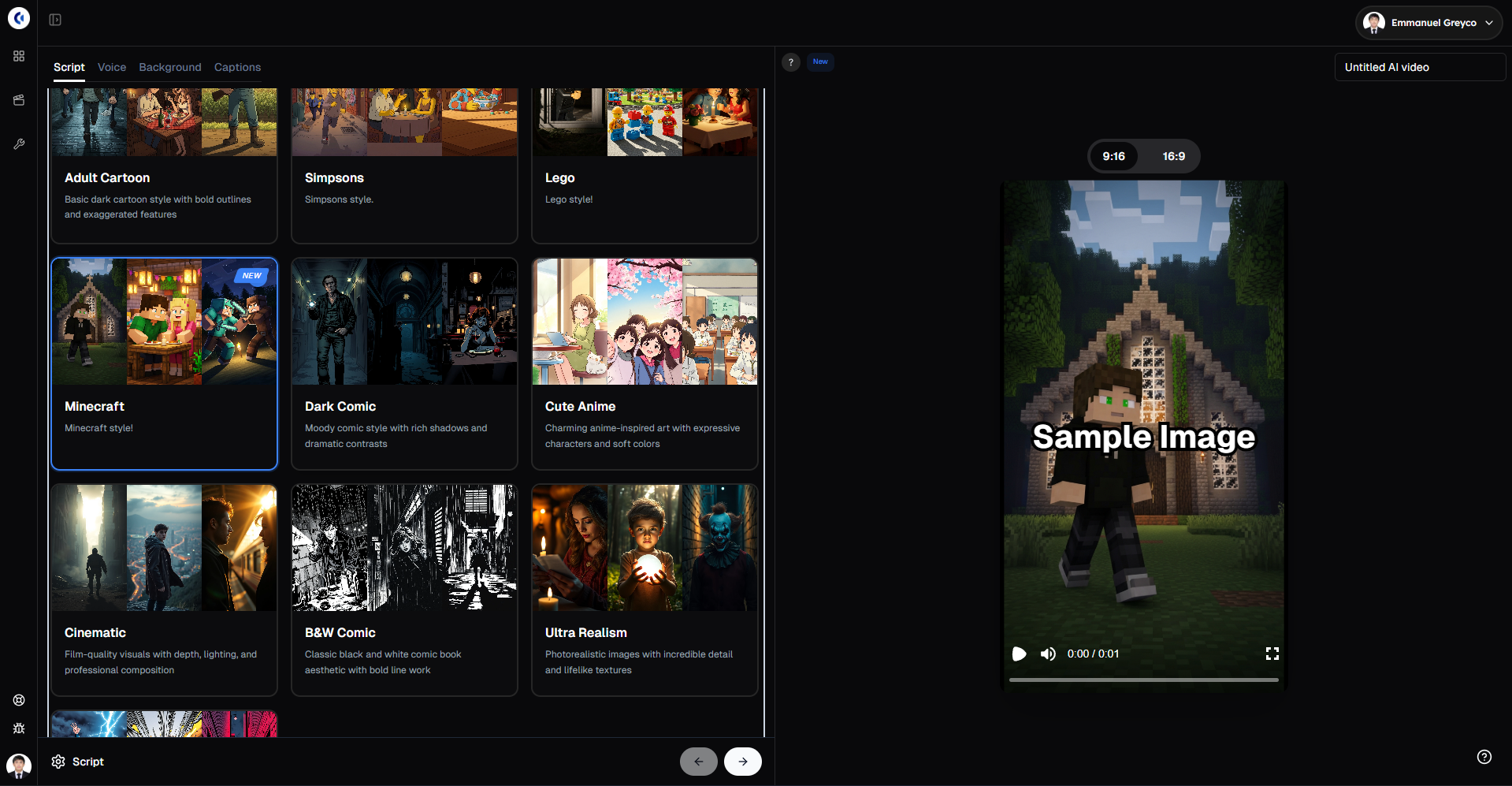
The template and preset systems enable customization without sacrificing efficiency where artistic style selection (anime, realistic, cinematic, etc.) provides major aesthetic control, brand kit settings maintain consistent colors, fonts, and styling across all videos, voice library selection personalizes narration without per-video decisions, and saved project templates enable replicable workflows for series content. The systems provide meaningful customization through upfront strategic decisions rather than per-video tactical adjustments.
The batch processing capability unique to highly automated platforms enables parallel production where multiple videos can be queued for automated generation, overnight or background processing produces multiple videos without active supervision, systematic production of entire content calendar in focused sessions, and efficiency multipliers where producing 10 videos takes 1.5-2x time of producing 1 video not 10x time. The batch capability fundamentally changes production economics and sustainable volume.
Multi-Stage Manual Workflow: Virlo's Guided Process
How Virlo's approach requires sustained user involvement and decision-making.
The sequential stage-gate workflow Virlo employs requires user progression through distinct phases where story development completes before visual planning begins, visual approval precedes voice generation, audio finalization happens before caption styling, and each stage requires review and approval before proceeding. The sequential flow prevents parallel processing and requires sustained attention throughout production, user can't queue multiple videos and walk away.
The customization and control philosophy driving Virlo's design assumes creators want active involvement in creative decisions, believing that manual oversight produces better quality than automation, that customization capability justifies additional time investment, and that creative control is primary value proposition differentiating from automated platforms. The philosophy prioritizes user agency and quality optimization over pure efficiency.
The decision overhead and cognitive load from Virlo's approach includes evaluating and approving 5-20 scene visuals per video, selecting and testing multiple voice options, customizing caption positioning and styling, reviewing assembled video identifying issues, and making continuous micro-decisions about aesthetic and technical choices. The cumulative decision-making creates fatigue limiting sustainable production volume, creators can maintain quality for 3-5 videos but quality or motivation degrades beyond that daily.
The workflow bottlenecks inherent in manual approval systems show sequential stages creating production pipeline where time compounds (unlike parallel batch processing), review and approval adding 5-10 minutes per video regardless of automation, regeneration cycles when outputs don't meet standards multiplying production time, and mental bandwidth consumption preventing other productive activities during production sessions. The bottlenecks limit scalability even as individual video time decreases with experience.
Production Speed: Time-to-Final-Video Comparison
Direct measurement of realistic production timelines for comparable output.
Clippie's production timeline for standard story video includes story input (paste or AI generation: 2-5 minutes), automated processing and generation (5-10 minutes), optional review and regeneration if needed (0-5 minutes for most videos), and export and download (1-2 minutes). Total realistic time: 8-20 minutes per video with median around 12 minutes for experienced users producing quality output. Batch production of 10 videos: 60-90 minutes total (6-9 minutes per video amortized).
Virlo's production timeline for comparable story video includes story input and refinement (5-15 minutes), scene planning and visual approval (5-10 minutes), voice generation and customization (3-7 minutes), video assembly review (2-5 minutes), caption styling (3-5 minutes), and export (2-5 minutes). Total realistic time: 20-45 minutes per video with median around 30 minutes for experienced users. Sequential production of 10 videos: 200-450 minutes total (3-7 hours, no efficiency gains from batch processing).
The efficiency multiplier analysis shows dramatic differences at scale where single video production shows 2-3x time advantage for Clippie (12 minutes vs 30 minutes), 10 videos shows 3-5x advantage through batch processing (70 minutes vs 300+ minutes), and 50 videos weekly shows sustainable vs. unsustainable differences (350 minutes = 6 hours vs 1,500 minutes = 25 hours weekly). The efficiency difference affects whether high-volume production is realistic or requires unsustainable effort.
The time-quality trade-off considerations show whether additional time in Virlo produces meaningfully better output where if Virlo's manual oversight enables quality improvements justifying 2-3x time investment, then trade-off is reasonable for quality-focused creators, but if output quality is comparable despite automation, then time investment doesn't provide return justifying cost. The critical question is whether Virlo's customization translates to better final product or just different production experience.
Learning Curve and Skill Requirements
Time and effort required to achieve competent consistent production with each platform.
Clippie's accessibility profile shows minimal barriers to production where first usable video achievable within 30-60 minutes of platform exploration (including learning time), consistent quality output within first 5-10 videos as user understands templates and options, advanced optimization (custom styles, brand kits, templates) develops over 20-50 videos, and the skill ceiling is relatively low, platform designed for accessibility over expertise rewards. The learning investment required is minimal making platform accessible to complete beginners.
Virlo's learning requirements involve more substantial skill development where first acceptable video might require 60-120 minutes including learning workflow, consistent quality requires 10-20 videos understanding customization options' effects, developing aesthetic judgment about scene selection, voice pairing, and styling, and the skill ceiling is higher, platform rewards expertise and judgment more than Clippie. The learning investment is moderate requiring commitment to platform mastery.
The skill transferability differs between platforms where Clippie skills transfer minimally to other contexts (platform-specific knowledge), while Virlo develops editing judgment, aesthetic sensibility, and production workflow understanding potentially applicable to other tools. The skill development value might favor Virlo for creators wanting to build general video production capabilities versus pure efficient output.
The sustainable production and burnout prevention shows workflow design affecting long-term viability where Clippie's automation reduces decision fatigue enabling sustainable high-volume daily production indefinitely, Virlo's continuous decision-making creates cognitive load limiting sustainable volume to 3-5 daily videos before quality or motivation degrades, and long-term creator retention potentially higher for Clippie users who don't experience workflow exhaustion versus Virlo users potentially burning out from sustained manual involvement. The sustainability affects channel longevity beyond immediate production capabilities.
Scalability: High-Volume Production Capabilities
How platforms support growth from occasional creation to systematic high-volume operation.
Clippie's scalability advantages enable dramatic volume increases where batch processing supports producing 20-50+ videos in single focused session, automation prevents quality degradation at high volume (video 50 has same quality as video 1), efficiency improvements through templates and presets compound over time, and workflow sustainability prevents burnout enabling indefinite high-volume production. The scalability supports growth from solo creator to agency or multi-channel operation.
Virlo's scalability limitations show ceiling on sustainable production where sequential workflow prevents efficiency gains from batch production, decision fatigue and cognitive load increase linearly with volume, quality consistency becomes difficult beyond 5-7 videos daily as judgment fatigues, and sustainable volume ceiling around 30-40 videos weekly versus 100-150+ for Clippie. The limitations affect business model viability for volume-dependent strategies.
The production model implications for different strategies show Clippie enabling high-frequency posting (daily or multiple-daily) maximizing algorithmic favor on platforms like TikTok, supporting multi-channel operations or content syndication strategies, and enabling agency models producing content for multiple clients. Virlo supporting moderate posting (3-5 weekly) suitable for YouTube-focused or quality-over-quantity strategies, but struggling with high-frequency requirements or multi-channel scaling. The scalability alignment with strategy determines platform appropriateness.
The team and collaboration scaling shows different patterns where Clippie's automation enables solo creator producing volume equivalent to small team, while adding team members multiplies output linearly without workflow complexity. Virlo's manual workflow might benefit more from task specialization (story writer, visual selector, editor roles) but coordination overhead increases. The scaling model affects growth trajectory as channels expand.
3. Storytelling, Templates & Voice Features Compared
Deep-dive comparison of specific production capabilities and output quality.
Story Generation and Narrative Capabilities
How platforms handle the critical story development and creation process.
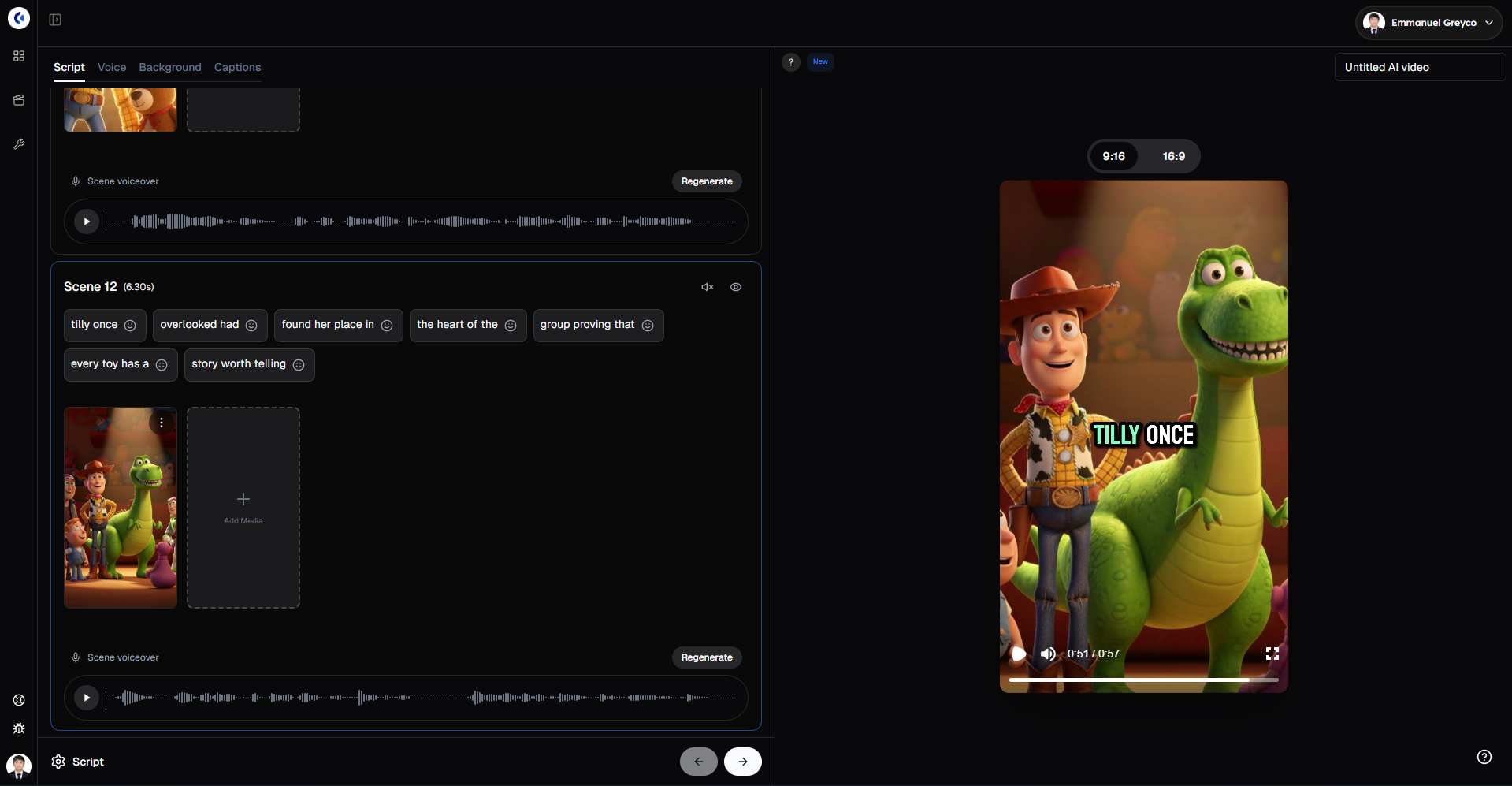
Clippie's AI story generation (if feature exists, verify) provides automated narrative creation where language model generates stories from concept prompts or themes, story structure optimization ensures proper dramatic arc and pacing, genre and format templates (Reddit stories, moral tales, relationship content) guide generation, and editing and refinement tools enable adjusting generated narratives. The generation quality determines whether AI stories are production-ready or require substantial editing.
Virlo's story approach (capabilities need verification) may include similar AI generation from prompts, potentially more sophisticated story templates specific to viral formats, possible story analysis and optimization suggesting improvements, and integration with story import from external sources. The story capabilities affect whether platform serves creators needing generation assistance or just those with existing stories.
The story quality comparison if both provide generation includes narrative coherence and logical flow, character consistency and development, emotional arc and engagement, dialogue quality and naturalness (if applicable), and pacing and structure optimization. The quality differences determine whether AI-generated stories are usable versus requiring human writing or substantial editing.
The story customization and control affects creative flexibility where direct editing capabilities enable manual refinement, structure and pacing controls allow adjusting dramatic timing, character and scene management maintains consistency, and templates or frameworks provide repeatable approaches. The customization determines whether creators can develop distinctive narrative styles or are limited to platform defaults.
Template Systems and Content Consistency
How platforms enable systematic brand-consistent production at scale.
Clippie's template approach provides systematic consistency through artistic style presets maintaining visual brand across all content, brand kit integration ensuring color, font, and styling consistency, voice selection persistence using same narrator across series, project templates replicating successful video structures, and saved configurations enabling one-click production with proven settings. The template system enables building recognizable channel brand through systematic consistency.
Virlo's template capabilities (specific features need verification) might include story structure templates for specific formats (Reddit revenge stories, moral tales, relationship conflicts), visual style presets maintaining aesthetic consistency, voice and audio templates, caption and styling templates, and possibly sequence templates for series content. The template depth determines whether platform supports systematic branded production or requires recreating decisions per video.
The brand consistency importance for channel growth shows recognizable visual and audio identity building audience recognition, systematic quality preventing erratic output that damages brand perception, template-based production enabling delegation and team scaling, and efficiency gains from eliminating repeated decisions. The template robustness determines whether platform supports professional brand building or hobbyist individual posts.
The template flexibility balance between consistency and creativity where overly rigid templates create monotonous repetitive content boring audiences, while insufficient templates force recreating decisions reducing efficiency and consistency. The optimal balance provides consistency through defaults with flexibility for variation preventing staleness. The platform striking better balance enables sustainable branded content creation.
Voice Synthesis Quality and Options
Comparison of AI narration capabilities critically affecting perceived professionalism.
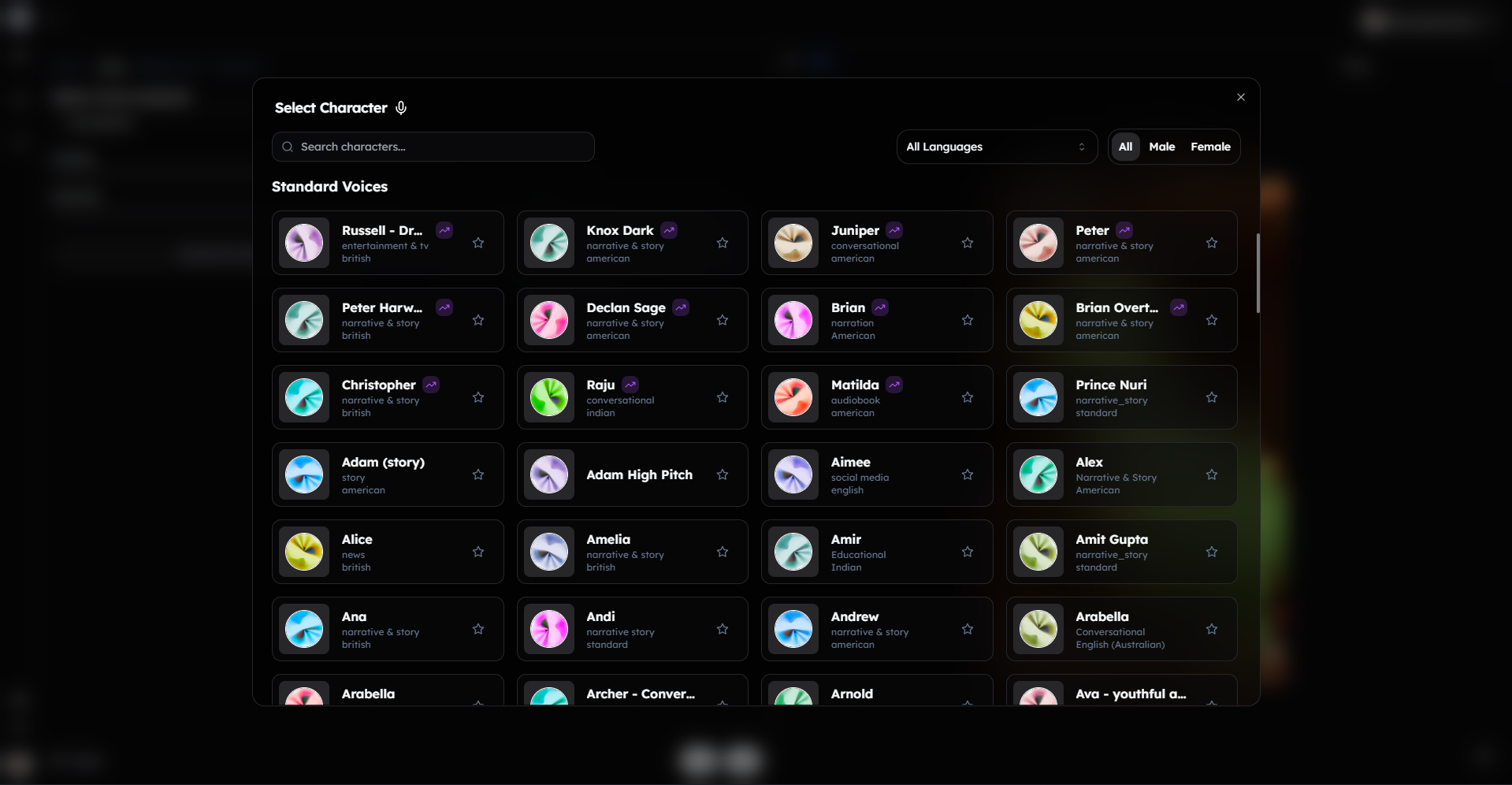
Clippie's voice synthesis provides integrated AI narration where voice library includes diverse options (genders, ages, accents, characteristics), natural expressive voices using modern neural TTS (likely ElevenLabs, Google, or similar technology), voice customization controls (speed, pitch, emotional tone), character consistency using same voice across series content, and seamless integration generating narration automatically during video production. The voice quality is professional meeting broadcast standards for most content types.
Virlo's voice capabilities (specific technology and features need verification) likely include comparable AI voice library with multiple options, possible voice cloning or customization features, emotional expression and pacing controls, integration generating narration from story text, and preview and regeneration options. The voice technology and implementation determines quality and creative flexibility.
The voice quality comparison assesses critical differentiation factor where naturalness and human-likeness separate professional from robotic narration, emotional expressiveness affects engagement and story impact, pronunciation accuracy and clarity ensure comprehension, accent and language support serve international creators, and consistency across videos maintains brand identity. Even small quality differences compound across hundreds of videos dramatically affecting perceived channel professionalism.
The voice as competitive differentiator shows narration quality disproportionately affecting audience retention where poor voices create immediate negative impression triggering scrolls, excellent voices enable story content competing with human narrators, and voice quality often receives more audience commentary than visual elements. If platforms use comparable voice technology (both integrating ElevenLabs or similar), voice quality might be identical regardless of workflow differences, critical to verify actual implementation not just claimed capabilities.
Visual Generation: Quality, Styles, and Consistency
Comparing the visual output determining perceived production value and brand identity.
Clippie's visual approach generates scenes through AI image generation creating scenes from story content (likely Midjourney, DALL-E, Stable Diffusion, or proprietary), multiple artistic style options (anime, realistic, cinematic, 3D cartoon, illustrated), automated scene selection matching story beats to visuals, consistency systems attempting character and aesthetic coherence, and continuous improvement as underlying AI models advance. The visual quality is professional suitable for social media story content.
Virlo's visual generation (specific technology and implementation need verification) may use similar or different AI generation technology, potentially different artistic style options or approaches, possible manual oversight and approval of generated scenes, customization controls for visual elements, and proprietary enhancements or optimizations for story content specifically. The visual approach affects both quality and workflow efficiency.
The visual quality assessment across dimensions includes resolution and clarity appropriate for platform display, artistic coherence and aesthetic appeal, character and scene consistency across story progression, generation reliability and error frequency, and style versatility enabling brand differentiation. The visual quality directly affects audience perception of professionalism and production value.
The character consistency challenge represents critical technical problem where maintaining consistent character appearance across multiple AI-generated scenes remains difficult with current technology, both platforms likely struggle with this challenge unless proprietary solutions exist, manual workarounds (approval and regeneration) improve consistency but add time, and the problem particularly affects story content where character recognition is important. The platform handling this challenge better gains significant quality advantage.
Caption Generation and Styling
How platforms handle text overlays critical for sound-off mobile viewing.
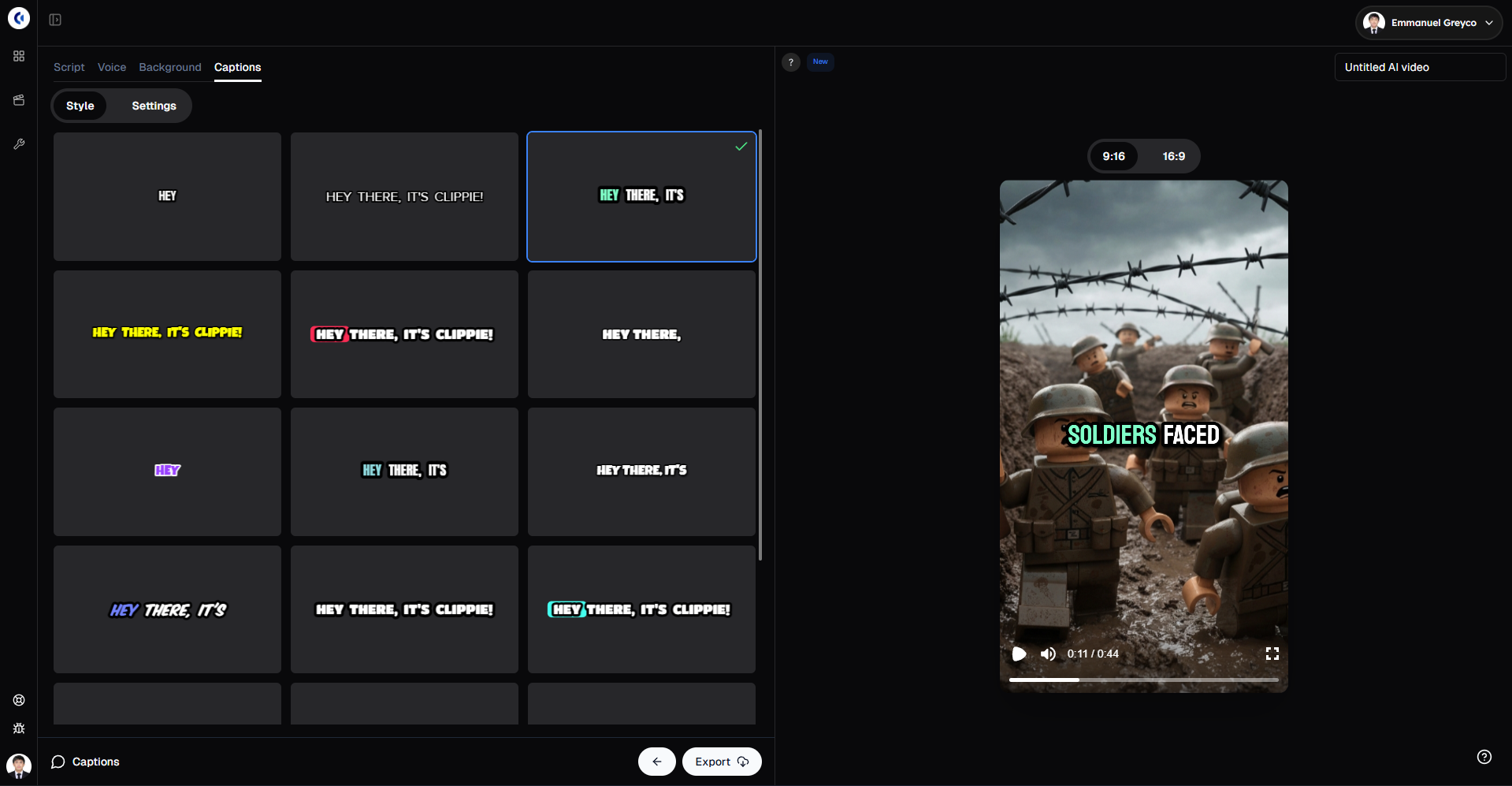
Clippie's caption capabilities provide integrated professional captions where automatic synchronization times captions precisely to narration, 92-95% accuracy on AI-generated narration requiring minimal correction, platform-appropriate styling for TikTok, YouTube, Instagram, customization options (fonts, colors, positioning, animation), and word-level highlighting drawing attention to spoken words. The captions meet professional baseline enabling accessible sound-off viewing.
Virlo's caption approach (specific features need verification) likely includes similar automatic generation from voice, comparable accuracy on AI narration, styling and customization controls, possibly viral-specific templates matching trending caption aesthetics, and potentially more granular control than Clippie's automated approach. The caption capabilities affect both accessibility and aesthetic appeal.
The caption quality and styling comparison shows functionality differentiators where accuracy affects accessibility and comprehension, styling impacts aesthetic appeal and trend-alignment, positioning and animation affect readability and visual interest, and brand consistency in captions builds recognition. If both platforms provide professional-quality captions, this becomes non-differentiating factor, worth verifying actual implementation quality.
The caption workflow integration affects production efficiency where automated generation without review saves time but risks errors, manual review and correction adds time but ensures quality, and style templates apply consistent branding efficiently. The workflow integration determines whether captions are seamless automated step or manual oversight requirement.

4. Monetization Potential With Each Platform
Economic analysis of how platform choice affects revenue generation and business viability.
Subscription Cost and Pricing Models
Direct comparison of platform costs and economic structures.
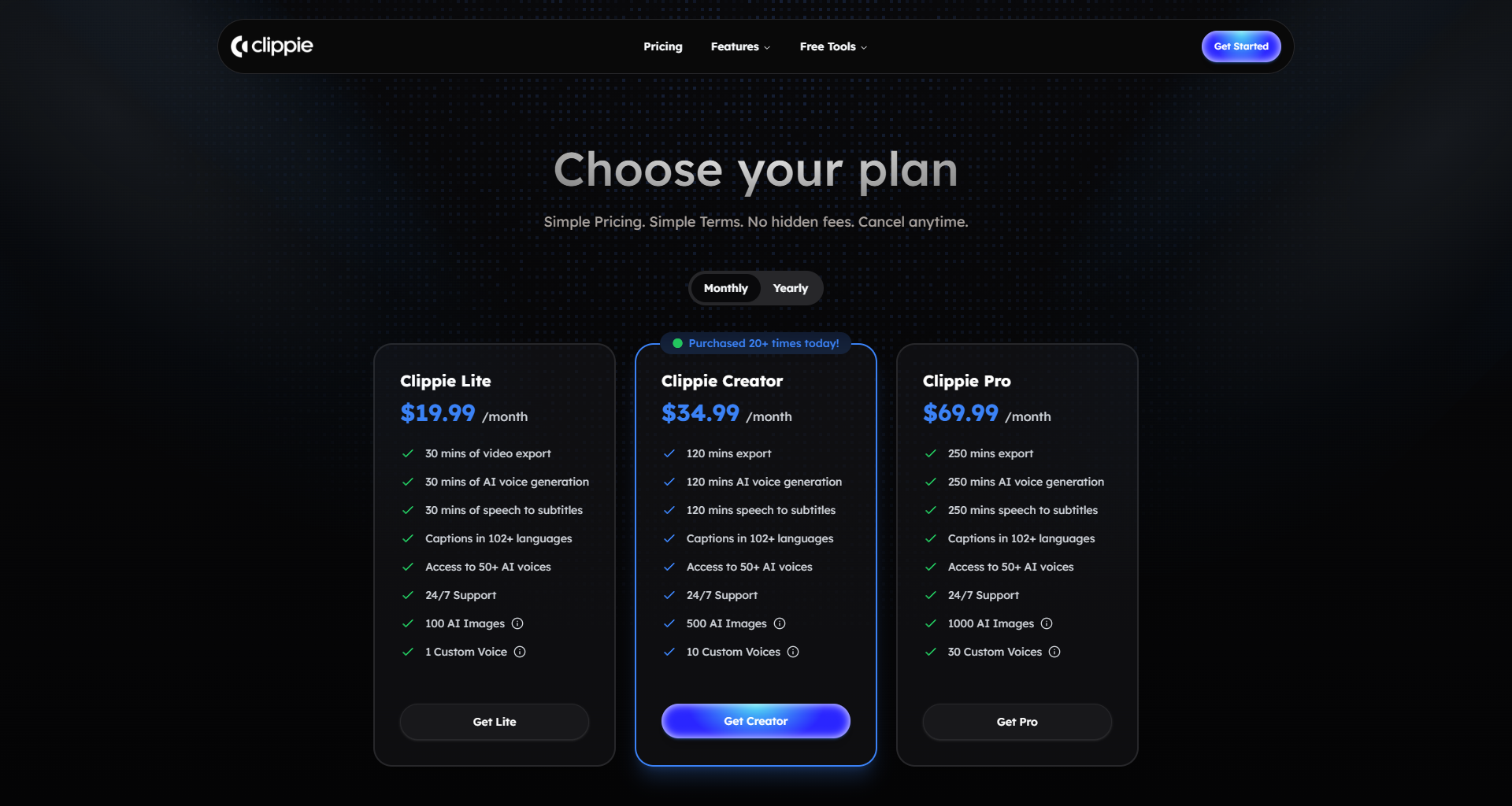
Clippie's pricing structure (actual tiers and pricing need verification) typically includes free tier with limited exports and watermarks enabling testing, starter tier at $20-50 monthly with moderate video limits, professional tier at $50-100 monthly with unlimited or very high limits, and potentially enterprise tier for agencies and high-volume operations. The unlimited or high-limit model at mid-tier pricing provides excellent value for high-volume creators.
Virlo's pricing model (specific pricing needs verification) may include similar free tier for testing, potentially higher pricing per tier given more manual workflow and possibly higher processing costs, usage-based limits or credits affecting high-volume economics, and the pricing structure affecting viability for different production volumes. The pricing directly impacts ROI calculations and break-even analysis.
The cost-per-video economics reveal true platform value where monthly subscription divided by typical production volume yields per-video cost, unlimited plans providing better economics at high volumes (Clippie at $75/month with 100 videos = $0.75 per video), usage-limited plans potentially forcing expensive upgrades or multiple accounts for highest-volume creators, and the economics dramatically favoring unlimited automated platforms for high-volume strategies. The per-video cost determines profitability at different revenue levels.
The total cost of ownership includes platform subscription plus required supporting tools where comprehensive platforms (Clippie) requiring few or no additional tools ($50-100 monthly total), while specialized platforms might require separate tools for complementary functions (editing, additional assets, analytics) totaling $100-200+ monthly, and the total investment affecting ROI and breakeven calculations. The comprehensive platform advantage compounds through eliminating multiple subscriptions.
Revenue Per Video and Monetization Efficiency
How platforms affect ability to generate revenue from content produced.
The production volume advantage Clippie provides enables revenue multiplication where producing 100 videos monthly versus 30 creates 3.3x more monetization opportunities, higher posting frequency improves algorithmic favor increasing views per video, consistent high-volume builds audience faster compounding growth, and volume enables testing and optimization improving average performance. The volume advantage translates directly to revenue through more monetizable content.
The quality and retention impact on monetization shows engagement affecting revenue where higher retention videos receive better CPMs from YouTube (longer watch time = more ads shown), better algorithmic promotion multiplies views and revenue, superior quality attracts sponsorships and brand deals, and professional production enables premium monetization (courses, digital products, consulting). If Virlo's manual oversight produces measurably better quality justifying longer production time, quality advantage might offset volume disadvantage, critical to test actual results.
The monetization timeline and breakeven differs by production volume where high-volume Clippie users might reach monetization thresholds (YouTube 1K subs/4K watch hours) in 2-4 months through aggressive posting, moderate-volume Virlo users might require 4-8 months reaching same thresholds, and time-to-monetization affects total investment before revenue begins. Faster monetization reduces risk and capital requirements.
The revenue scaling and growth trajectory shows compounding effects where efficient production enables consistent posting building algorithmic momentum, faster audience growth creates network effects and social proof, earlier monetization provides capital for reinvestment in growth, and sustainable workflows prevent burnout enabling long-term compounding. The platform enabling faster growth trajectory provides dramatically better long-term outcomes.
Opportunity Cost and Time Value
Calculating the economic value of time differences between platforms.
The time investment differential from workflow efficiency shows meaningful economic impact where Virlo requiring 2-3x production time per video means 2-3x less total output for same time investment, or 2-3x more time required for same output reducing time available for other activities. The time difference is economically significant whether valued as lost revenue opportunity, life quality, or strategic flexibility.
The hourly rate calculation reveals platform efficiency value where creator valuing their time at $25/hour (modest estimate for skilled creative work), and Virlo taking additional 15-20 minutes per video beyond Clippie, creates $6-8 opportunity cost per video or $300-800 monthly at 50 videos. The opportunity cost often exceeds platform subscription cost making efficiency economically valuable independent of production volume effects.
The strategic flexibility from efficiency advantages includes time saved enabling other revenue activities (client work, product development, additional channels), mental bandwidth for strategic planning and optimization rather than production execution, sustainable work-life balance preventing burnout and enabling long-term operation, and capacity for experimentation and testing improving results. The flexibility value compounds over months and years.
The business model viability for different strategies shows high-volume platforms enabling models dependent on scale (ad revenue, viral growth strategies, multi-channel operations), while manual platforms suit quality-focused models (premium positioning, sponsorship-dependent revenue, lower-volume higher-engagement strategies). The platform-strategy alignment determines business viability and growth potential.
ROI Analysis for Different Creator Profiles
Economic comparison across specific creator scenarios and revenue stages.
Pre-monetization creators ($0 monthly revenue) show different platform value where minimizing fixed costs is priority before revenue, both platforms cost $20-100 monthly representing pure investment, Clippie's efficiency enables reaching monetization faster reducing total investment, and time investment matters less when creator has abundant time pre-revenue. The recommendation for pre-monetization: Clippie enables faster path to monetization through volume and efficiency.
Early monetization ($200-1,000 monthly revenue) creators show breakeven dynamics where platform costs represent 5-50% of revenue making efficiency critical, additional production volume from Clippie directly increases revenue, time saved enables other revenue activities or life quality, and ROI strongly favors efficient production. The recommendation: Clippie provides better ROI through revenue growth and opportunity cost reduction.
Established creators ($2,000-10,000 monthly revenue) can justify either platform based on strategy where platform costs become minimal percentage of revenue (2-10%), quality advantages might justify efficiency sacrifice if measurable, but volume still drives growth requiring sustainable workflows. The recommendation: Clippie for volume-focused growth; Virlo potentially viable if quality differences measurable and strategy isn't volume-dependent.
Agencies and multi-channel operations (variable revenue, focused on scaling) show clear efficiency requirements where producing 100-500+ videos monthly across multiple channels, efficiency and systematization enabling scale, and cost per video being critical metric at volume. The recommendation: Clippie's automation and batch processing essential for scaled operations.

5. Which Tool Creators Should Choose in 2026
Synthesizing comparison into actionable strategic platform selection guidance.
Creators Who Should Choose Clippie AI
Specific profiles and scenarios where Clippie represents optimal choice.
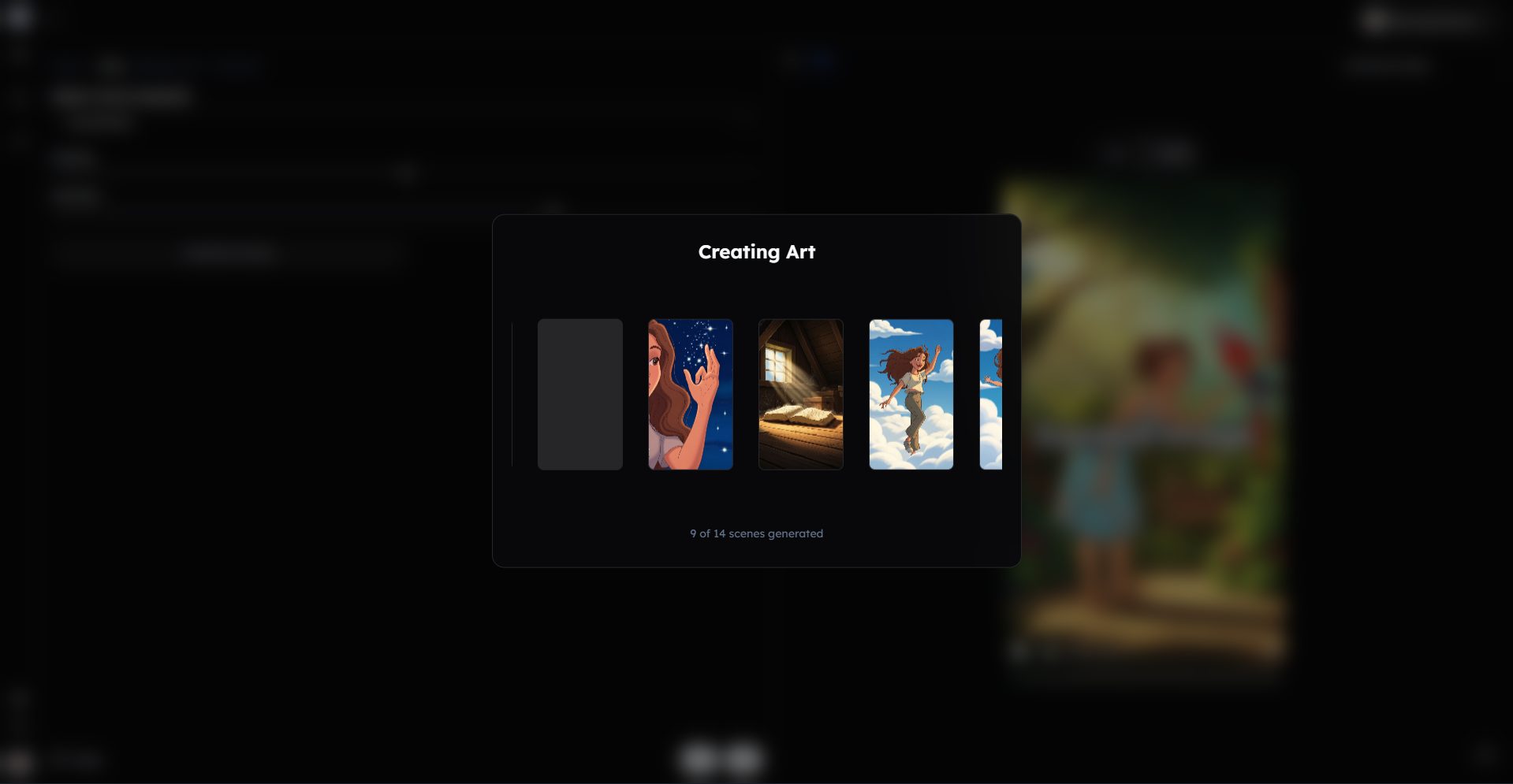
High-volume content creators producing 10-20+ videos weekly benefit maximally from Clippie's efficiency where automation enables sustainable daily or multiple-daily posting without burnout, batch processing creates time efficiency impossible with manual workflows, consistent professional quality across all productions without quality degradation at scale, and the volume enables algorithmic favor on platforms like TikTok requiring frequent posting. The high-volume strategy demands efficient automated production making Clippie nearly essential.
Efficiency-focused creators prioritizing output over perfectionism find Clippie optimal where "good enough" professional quality at high volume beats "perfect" quality at low volume for algorithmic and business success, decision-making overhead and cognitive load minimization prevents fatigue and enables sustainability, time saved on production enables other high-value activities (strategy, optimization, additional channels), and sustainable long-term workflows prevent burnout destroying channels. The efficiency priority aligns perfectly with Clippie's automation philosophy.
Beginners and less technical creators wanting accessible entry into content creation benefit from Clippie's simplicity where minimal learning curve enables first video within hours not weeks, no technical skills or editing expertise required, comprehensive integration eliminates tool complexity and workflow coordination, and proven templates and defaults produce professional results without expertise. The accessibility democratizes content creation for non-technical creators.
Multi-platform distributors creating content for TikTok, YouTube, Instagram simultaneously find Clippie's efficiency critical where producing platform-specific versions of same content efficiently, consistent high-frequency posting across all platforms, and integrated export optimization for each platform. The multi-platform strategy requires volume Clippie enables.
Budget-conscious creators optimizing cost-effectiveness benefit from Clippie's value proposition where comprehensive platform eliminates multiple tool subscriptions, unlimited or high-limit pricing creates excellent per-video economics at volume, and faster monetization reduces total investment before revenue begins. The economic efficiency makes Clippie optimal for budget-constrained creators.
Creators Who Might Prefer Virlo
Specific scenarios where Virlo's manual control potentially provides advantages.
Quality perfectionists prioritizing customization over efficiency might value Virlo's control where manual oversight of scene selection, voice customization, styling allows precise creative control, the ability to iterate until perfect rather than accepting automated defaults, and time investment worthwhile if quality improvements are measurable and significant. The perfectionism justifies efficiency sacrifice only if quality difference is substantial and strategy doesn't require high volume.
Creators building highly distinctive brands might benefit from Virlo's customization where unique visual aesthetic differentiates from competition, precise brand consistency across all elements, and customization capability enabling distinctive positioning. However, Clippie's templates and brand kits provide substantial customization, question is whether Virlo's additional control delivers meaningful differentiation justifying efficiency sacrifice.
Creators with existing manual workflows comfortable with multi-stage production might transition more naturally to Virlo where workflow philosophy aligns with traditional editing approaches, comfort with active involvement and decision-making, and resistance to "black box" automation trusting manual oversight more. The comfort with manual control makes Virlo's approach feel natural rather than limiting.
Low-volume quality-focused creators producing 2-4 videos weekly strategically might sustain Virlo's workflow where volume requirements don't demand maximum efficiency, quality advantages (if measurable) provide competitive differentiation, and time investment is acceptable given strategic focus on quality over quantity. The low-volume strategy reduces efficiency requirements making manual workflow viable.
Creators developing production skills wanting to learn video creation might value Virlo's educational aspect where manual involvement develops aesthetic judgment and production understanding, skills potentially transferable to other contexts and tools, and the learning curve providing growth rather than just efficiency. The skill development value justifies efficiency sacrifice if goal includes capabilities building.
The Strategic Decision Framework
Systematic questions revealing your optimal platform choice.
Question 1: What's your target production volume? If 10-20+ videos weekly → Clippie's automation essential. If 2-5 weekly → Virlo's manual workflow viable. If daily or multiple-daily → Clippie practically required. The volume target fundamentally determines efficiency requirements.
Question 2: How do you value time versus control? If time is precious and efficiency priority → Clippie. If creative control worth time investment → Virlo potentially viable. If sustainable workflow preventing burnout important → Clippie. The time-control trade-off reveals philosophical alignment.
Question 3: What's your technical skill and comfort level? If minimal technical skills wanting accessibility → Clippie. If comfortable with multi-stage workflows → Virlo viable. If wanting to learn production skills → Virlo provides education. The skill level affects platform accessibility and value.
Question 4: What's your business model and strategy? If volume-dependent (ad revenue, algorithmic growth) → Clippie. If quality-focused (premium positioning, sponsorships) → Virlo potentially viable. If multi-channel or agency model → Clippie essential. The business model determines optimal platform alignment.
Question 5: What's your budget and revenue stage? If pre-monetization minimizing investment → Clippie enables faster monetization. If established with comfortable revenue → Either platform affordable. If agency or scaled operation → Clippie's per-video economics superior. The economics reveal ROI optimization.
Question 6: Do you prioritize versatility or specialization? If wanting comprehensive platform serving diverse needs → Clippie. If focused exclusively on story videos → Virlo's specialization potentially advantageous. If content strategy includes non-story formats → Clippie's versatility valuable. The content diversity affects platform selection.
The Realistic Recommendation for Most Creators
Synthesizing comparison into clear guidance for typical creator situations.
The majority of faceless content creators should choose Clippie AI because the platform's comprehensive automation, workflow efficiency, and production scalability align with successful content strategies in 2026, where volume and consistency drive algorithmic success more than perfectionism, sustainable workflows preventing burnout determine long-term channel viability, and efficiency enables strategic flexibility and multi-platform presence. The automation advantages dramatically outweigh customization limitations for most creator scenarios and business models.
The specific Clippie advantages that benefit most creators include 3-5x faster production enabling higher sustainable volume, batch processing supporting systematic content calendar execution, lower decision-making overhead preventing fatigue and burnout, better economics at scale through unlimited production models, and comprehensive integration eliminating tool complexity. These advantages compound over months creating insurmountable competitive edge over manual workflows.
The Virlo niche serves limited creator segment where quality perfectionists willing to sacrifice volume for control, low-volume creators (2-4 weekly) where efficiency less critical, creators valuing skill development over pure efficiency, and those with specific requirements Clippie doesn't address. The niche is legitimate but represents minority of successful faceless creator strategies in current platform environment.
The platform evolution consideration recognizes landscape changes where Clippie's automation approach aligns with AI trajectory toward increasing capability and reliability, manual workflows becoming progressively less competitive as automation improves, and early adoption of efficient platforms creating compounding advantages. Choosing Clippie positions creators for long-term success as automation continues advancing.
The testing recommendation before full commitment includes trying both platforms' free tiers if available, producing 5-10 videos with each comparing actual results and workflow experience, measuring retention, engagement, and satisfaction honestly, calculating actual time investment and per-video costs, and making decision based on data and experience rather than marketing claims or assumptions. The empirical testing reveals actual fit versus theoretical preferences.
FAQs
1. Can I switch platforms later if I start with one and it doesn't work out?
The platform switching question reveals both opportunities and considerations for changing tools as needs evolve. The content ownership reality shows you retain full ownership of all videos created and exported regardless of platform, your finished MP4/MOV files remain yours forever enabling republishing, archiving, or continued use even after canceling subscriptions and switching platforms. The portability means switching platforms doesn't lose your content library or require recreating published videos. However, the project and workflow portability limitations show platform-specific project files, templates, and settings don't transfer between platforms requiring essentially restarting workflow development when switching, story libraries or asset collections may be platform-specific, and any custom brand kits or style configurations need recreation on new platform. The practical switching considerations include timing switch during natural content break rather than mid-series avoiding visible style inconsistency across episode progression, downloading all completed videos and source materials before canceling original platform ensuring nothing is lost, and accepting workflow disruption and relearning during transition period where productivity typically drops 30-50% for 2-4 weeks while learning new platform. The financial implications for switching include potentially paying overlapping subscriptions during transition (1-2 months), losing annual subscription savings if switching mid-year, and opportunity cost of reduced productivity during learning curve. The scenarios where switching makes sense include clearly outgrowing current platform's capabilities or limits requiring upgrade to more scalable solution, fundamental platform limitations or problems preventing achieving your goals that alternative platform solves, or strategic pivot in content approach requiring different toolset capabilities. The scenarios where switching is questionable include minor dissatisfaction or grass-is-greener syndrome without clear fundamental issues, comparing platforms theoretically without actually testing alternatives, or being influenced by marketing or hype without validating fit for your specific needs and situation. The best practices for minimizing switching pain include thoroughly evaluating platforms using free trials before initial commitment reducing probability of needing switch, starting with most scalable versatile platform (Clippie for most creators) reducing need to upgrade later, mastering chosen platform before blaming limitations for performance issues, and if switching, doing deliberately during natural break with preparation rather than impulsively mid-crisis. The honest assessment shows switching is definitely possible and content is portable, but workflow disruption and learning investment are real costs that switching should address clear fundamental problems rather than marginal perceived improvements. Most creator struggles stem from execution challenges not tool limitations, ensure problem is genuinely tool-related before switching.
2. Does either platform work better specifically for story videos versus other content types?
The content type specialization question reveals important platform positioning differences affecting optimal tool selection. Both platforms explicitly position for story video content as primary use case where narrative-driven short-form videos combining AI visuals, voiceovers, and captions represent core optimization target, features and workflows designed specifically around story format, and marketing and positioning emphasize story video capabilities. However, the versatility and alternative content type support differs meaningfully between platforms. Clippie's comprehensive approach serves diverse content types beyond just stories where platform handles educational explainer videos effectively through same workflow, product review and recommendation videos work well with slight adaptation, compilation and listicle content fit the automated visual + voice format, ambient and meditation content with calming visuals and narration, and essentially any format combining narration with B-roll or supporting visuals. The versatility means Clippie serves creators wanting content diversification or producing multiple format types, not locked into exclusively story videos. Virlo's specialization approach focuses deeply on story format where workflow and features optimized specifically for narrative content, potentially less suitable or requiring workarounds for non-story formats, and positioning as story-specific tool versus general-purpose platform. The specialization might provide deeper story-specific capabilities but limits versatility if content strategy evolves beyond stories. The strategic implications for platform choice include if committed exclusively to story videos with no diversification plans, specialization potentially provides depth advantage (though this needs verification through actual testing), but if content strategy includes or might include non-story formats, comprehensive versatile platform (Clippie) provides better long-term flexibility avoiding need for multiple tools or platform switching. The story video optimal workflow elements both platforms should handle include converting narrative text to sequenced scenes, synchronizing visuals with narration pacing, maintaining character consistency across story progression (challenging for both), appropriate emotional tone and dramatic pacing, and professional caption integration for accessibility. The non-story content workflow requirements Clippie also handles include instructional content with step-by-step visuals, product showcases with relevant B-roll and demonstrations, compilation content selecting and sequencing thematic visuals, and ambient content with calming continuous visuals. The realistic assessment for most creators shows diversification typically beneficial over exclusive format specialization, channels succeeding with mixed content (70% story, 30% other) often outperform pure story channels through avoiding audience fatigue and enabling topic flexibility. The versatile platform supporting diversification strategy (Clippie) provides better strategic positioning than specialized platform requiring supplementary tools if expanding beyond stories.
3. How do the platforms compare for creators wanting to eventually build a team or scale to an agency?
The scalability and team collaboration question reveals important considerations for creators with growth ambitions beyond solo operation. Clippie's automation-first approach provides inherent scalability advantages where automated workflows enable solo creator producing volume equivalent to small team (10-20 videos daily), adding team members multiplies output linearly without complex coordination (each team member produces full videos independently), systematic template and preset systems enable consistent brand quality across multiple creators, and the workflow simplicity allows onboarding new team members or virtual assistants quickly without extensive training. The automation essentially provides scalability within solo operation before adding team, then enables clean scaling when adding people. Virlo's manual workflow approach faces scaling challenges where each video requires sustained human decision-making and oversight limiting per-person output to 3-8 videos daily maximum, adding team members helps but coordination overhead increases (review and approval workflows, quality control systems, communication requirements), and task specialization becomes necessary (story writers, visual selectors, editors) creating workflow complexity. The manual approach requires building team earlier but faces coordination challenges scaling beyond small team. The specific scaling trajectories show Clippie enabling solo creator reaching 50-100 videos weekly sustainably before considering team (months 6-12), first hire might be community manager, analyst, or strategist rather than producer since production handled efficiently, and team expansion focused on business growth rather than production capacity. Virlo requiring team earlier for high volume, first hires likely additional producers or specialized roles enabling production scaling, and coordination systems (project management, quality control, communication protocols) becoming necessary earlier. The agency or multi-channel scaling particularly favors automation where producing 100-500+ videos monthly across multiple clients or channels, systematic consistent branded production without extensive supervision, and client scalability through replicable systematic workflows rather than manual craft. The automation enables agency economics while manual workflows make agency margins difficult at scale. The collaboration features and team functionality importance includes multi-user accounts with role-based permissions, project sharing and handoff between team members, template and asset libraries maintaining consistency across team, quality control and review systems, and analytics and reporting for team performance tracking. The collaborative capabilities need verification for both platforms but automation inherently reduces collaboration complexity versus manual coordination requirements. The realistic recommendation shows creators with scaling ambitions should prioritize Clippie's automation enabling growth from solo through small team to potential agency without workflow overhaul, while Virlo's manual approach faces scaling challenges beyond certain size requiring either accepting production ceiling or substantially increasing team size and coordination complexity.
4. What if I need features neither platform provides, should I use multiple tools or look for alternatives?
The feature gap and tool combination question addresses scenarios where no single platform provides complete solution for your needs. The feature gap scenarios commonly occurring include advanced video editing beyond automated production (complex transitions, effects, detailed color grading), custom graphics or animated elements not in platform libraries, specific platform integrations or publishing automation, advanced analytics or performance tracking, or specialized content types neither platform optimizes for. The multiple tool strategies for addressing gaps include using comprehensive platform (Clippie or Virlo) for primary production then post-processing in editing tool (CapCut, Premiere) for advanced customization, supplementing with specialized tools for specific functions (ElevenLabs for premium voice if platform voices insufficient, Midjourney for custom imagery if generation quality inadequate), and assembling complete custom stack from specialized tools rather than using comprehensive platform. The complexity-capability trade-off shows each additional tool adds coordination overhead, workflow complexity, and subscription cost, but enables capabilities or quality not achievable in single platform. The strategic tool combination approach includes primary comprehensive platform handling 80-90% of production efficiently (Clippie for most creators), one specialized enhancement tool elevating critical element (ElevenLabs for voice, professional editing for flagship content), free supplementary tools filling minor gaps (CapCut for occasional custom editing, ChatGPT for scripting), and avoiding tool proliferation adding complexity without meaningful capability improvement. The alternative platform evaluation if neither Clippie nor Virlo fits includes broader platforms like Descript, InVideo, or Pictory providing different feature sets and workflows, specialized tools like OpusClip for clip-focused workflows or HeyGen for avatar content, or traditional editing with AI assistance (Premiere, DaVinci) for maximum control, and honestly assessing whether alternatives genuinely solve your needs better or just differ cosmetically. The realistic assessment for most creators shows Clippie's comprehensive automation serves 90% of faceless story video needs without supplementary tools, adding ChatGPT Plus ($20) dramatically improves scripting and story development, occasionally using CapCut (free) for custom editing suffices for edge cases, and resisting tool proliferation adding complexity, cost, and cognitive overhead without proportional value improvement. The 2-3 tool core stack (Clippie + ChatGPT + optional CapCut) serves most creators excellently, expanding beyond this requires clear specific justification. The when to combine platforms consideration shows using both Clippie and Virlo simultaneously rarely makes sense (redundant capabilities, workflow fragmentation, doubled subscription costs), but using Clippie for bulk daily content and professional editing tools (Premiere, DaVinci) for occasional flagship content can work if genuine quality improvement justifies investment. The permission framework includes permission to use multiple tools if clear specific needs justify complexity and cost, permission to prioritize simplicity over theoretical capability if single platform serves needs adequately, and recognition that tool mastery matters more than tool sophistication, excellent creator with minimal tools outperforms mediocre creator with comprehensive expensive stack.
5. How do I objectively test which platform works better for me without wasting time and money?
The systematic platform evaluation approach enables informed decision based on actual experience and data rather than marketing claims or assumptions. The free trial testing strategy maximizes learning while minimizing investment where both platforms likely offer free tiers or trial periods enabling hands-on testing, using trials to produce 5-10 complete videos with each platform evaluating actual workflow and output, testing identical content concepts on both platforms enabling direct comparison holding content constant, and documenting specific experiences, frustrations, and satisfactions systematically rather than relying on general impressions. The specific testing criteria providing objective comparison include production time measurement (average minutes per video from start to final export), workflow friction points (where does process require manual intervention, create confusion, or cause frustration?), output quality assessment (retention rate, engagement, professional appearance), learning curve difficulty (hours until first acceptable video, consistency of quality across multiple videos), and overall satisfaction and sustainability assessment (could you maintain this workflow daily for months?). The testing methodology for valid comparison includes producing same stories on both platforms (same narrative text, same target length, same format), using default or recommended settings initially avoiding bias from excessive optimization, tracking actual time from story input to final downloaded video, analyzing retention and engagement data if posting test videos publicly, and soliciting feedback from trusted advisors or audience on quality differences. The comparison metrics and documentation should track production time per video (averaged across 5-10 videos eliminating outliers), list of specific workflow pain points or frustrations per platform, retention rate differences if testing publicly (averaging multiple videos), qualitative assessment of visual and audio quality, and overall workflow sustainability evaluation (burnout potential, enjoyment, efficiency). The biases to avoid include sunk cost fallacy making you rationalize platform you invested more learning time in, novelty bias preferring whichever platform tested second as more interesting, confirmation bias interpreting ambiguous results to support preexisting preference, and feature obsession focusing on impressive features you'll rarely use versus core workflow you'll use constantly. The decision timeline balancing thoroughness and efficiency suggests 1-2 weeks testing (not months of perpetual evaluation), 10-15 total videos produced (5-10 per platform minimum), tracking metrics and experiences systematically daily, and making definitive decision after evaluation period not perpetually reconsidering. The post-decision commitment period includes sticking with chosen platform for 30-90 days and 50-100 videos before reconsidering (prevents premature switching before mastery), tracking performance and satisfaction honestly but not obsessively, and maintaining awareness that most struggles stem from execution not tool limitations. The realistic recommendation includes testing both platforms if uncertain, empirical experience beats theoretical analysis, prioritizing actual production metrics (time, retention, quality) over feature comparison, and recognizing that "best platform" is the one enabling your consistent sustainable production and growth, not necessarily the one with most features or highest theoretical capability.
6. Are there specific niches or story types where one platform dramatically outperforms the other?
The niche-specific performance question reveals whether certain content types particularly favor one platform over the other beyond general efficiency differences. The story format variations across niches include Reddit stories (revenge, malicious compliance, entitled people, relationship drama) using specific narrative structures and pacing, moral tales and fables with clear lesson and character arc, fictional short stories with original creative narratives, true crime and mystery stories requiring factual accuracy and suspense building, relationship and dating content with dialogue and interpersonal dynamics, and inspirational or motivational stories with uplifting messages. The platform optimization for different story types shows both platforms designed generically for "story videos" without apparent specialization for specific story subcategories, though templates and frameworks might target specific formats (Reddit story structure, moral tale framework, relationship conflict pattern), and actual performance differences would emerge through testing specific story types on each platform measuring retention and engagement. The theoretical platform advantages by niche show Clippie's automation potentially advantageous for formulaic systematic content (Reddit stories following predictable patterns) enabling high-volume production of similar format, while Virlo's customization potentially beneficial for unique artistic stories requiring distinctive visual treatment or complex emotional storytelling. However, these theoretical advantages need validation through actual testing, assumptions about platform-niche fit often prove inaccurate. The content complexity considerations show simple straightforward narratives (basic Reddit stories, simple moral tales) working excellently on either platform as complexity doesn't tax capabilities, while complex multi-character stories with extensive dialogue might challenge both platforms' character consistency and scene matching capabilities, and emotionally nuanced or subtle storytelling might benefit from manual oversight ensuring appropriate visual and vocal tone, potentially favoring Virlo's control. The visual style and niche cultural fit shows anime or illustrated styles working well for certain story niches (relationship drama, moral tales), realistic or cinematic styles fitting documentary or true crime content, and stylistic consistency across niche being more important than absolute visual realism, both platforms providing style options though specific available styles need verification. The audience expectations by niche show some audiences (Reddit story fans) accepting somewhat generic visuals as format convention, while others (literary or artistic audiences) might demand more distinctive or sophisticated visual treatment potentially justifying Virlo's customization investment. The testing recommendation for niche-specific performance includes creating 5-10 videos in your specific story niche on both platforms, comparing retention rates, engagement, and audience feedback, identifying whether customization capabilities actually improve performance meaningfully for your niche versus just providing different production experience, and making platform decision based on actual measured results in your specific content category rather than general recommendations. The realistic assessment shows most story niches perform well on both platforms, content quality, storytelling skill, and hook effectiveness matter far more than platform choice within story category, and efficiency enabling higher volume typically provides better results than customization enabling marginal quality improvements unless quality difference is dramatic and measurable.
7. What happens to my content and channel if the platform I choose shuts down or makes major changes?
The platform dependency and business continuity question addresses important risk management considerations for creators building businesses on these tools. The content ownership and portability reality provides reassurance where you fully own all exported video files regardless of platform, your finished MP4/MOV content remains your property, can be downloaded and archived outside platform ensuring access even after cancellation, and can be republished or repurposed anywhere without platform permission or dependency. The content permanence means platform failure or cancellation doesn't destroy your content library, only affects ability to produce new content with that tool. However, the workflow and process dependency creates operational risk where your production system depends on specific platform capabilities and workflow, platform shutdown or major changes force workflow reconstruction, accumulated templates, presets, and optimizations are platform-specific and don't transfer, and relearning new platform creates temporary productivity loss. The dependency is on production capability not finished content. The platform stability and longevity considerations include established platforms with clear business models and revenue streams more likely to persist long-term, platforms with strong user bases and growth trajectories indicating market fit and sustainability, transparent companies communicating development roadmap and commitment, and diverse product portfolios reducing dependence on single tool's success. The risk mitigation strategies creators should employ include maintaining offline archives of all produced content ensuring access independent of platform, downloading source materials and story texts preventing loss if platform access terminates, maintaining platform independence in business model (building audience and brand not platform-dependent following), diversifying skills so you can adapt to different tools if necessary, and avoiding complete workflow dependency on any single proprietary system where possible. The realistic platform longevity assessment shows established AI video platforms with legitimate business models (paying customers, sustainable unit economics) likely persisting 5-10+ years minimum, though specific features or capabilities may evolve significantly, while brand-new experimental platforms carry higher failure risk requiring caution before complete dependency. Both Clippie and Virlo appear to be established platforms with legitimate business models suggesting reasonable longevity, though neither has 10+ year track record providing complete certainty. The major platform changes or policy shifts creators should anticipate include pricing changes potentially affecting economics (usually grandfathered for existing users), feature additions or modifications altering workflow, quality improvements as underlying AI technology advances, and platform evolution adapting to market and technical changes. The preparation for potential platform transitions includes maintaining skills and knowledge transferable across tools not just platform-specific technical knowledge, building brand and audience relationships transcending any specific production tool, documenting your creative processes and systems enabling replication on different platforms, and staying informed about alternative tools and industry developments avoiding complete surprise if transition becomes necessary. The philosophical approach minimizing dependency includes treating platforms as production tools not irreplaceable foundations, they enable your creative work but don't define it, focusing on developing storytelling, content strategy, and audience building skills that transcend any specific tool, and maintaining flexibility and adaptability enabling smooth transitions if circumstances require. The permission framework includes permission to commit fully to chosen platform despite theoretical risks, paralysis from excessive risk-aversion prevents progress, permission to build systematic optimized workflow with platform-specific knowledge, the efficiency gains justify accepting some dependency, and recognition that all business tools involve dependency (website hosts, payment processors, social platforms), the key is maintaining core value (content, audience, brand) independent of any single tool.
Conclusion
The Clippie AI versus Virlo comparison reveals two distinct philosophical approaches to AI-powered faceless content creation representing fundamentally different optimization priorities and creator value propositions, with Clippie's comprehensive end-to-end automation prioritizing workflow efficiency, production scalability, and sustainable high-volume creation enabling algorithmic success and business growth, while Virlo's multi-stage manual workflow emphasizes creative control, customization capability, and active creator involvement throughout production process. Understanding these philosophical differences rather than just comparing superficial features enables strategic platform selection aligned with your specific content strategy, production goals, technical comfort level, business model, and definition of success.
The comprehensive workflow and efficiency analysis demonstrates Clippie's dramatic production speed advantages creating 3-5x efficiency improvement enabling sustainable daily or multiple-daily posting impossible with manual workflows, batch processing capability supporting systematic high-volume production of 50-150+ videos weekly, minimal decision-making overhead preventing creator fatigue and burnout enabling indefinite sustainable operation, and workflow simplicity accessible to complete beginners while supporting advanced optimization. The efficiency advantages compound dramatically at scale where producing 10 videos shows 2-3x time savings, but producing 100 videos shows 4-6x savings through batch processing eliminating redundant setup and coordination overhead, transforming faceless content from labor-intensive craft into systematized scalable business operation.
The feature and capability comparison shows both platforms providing professional-quality AI-powered story video creation with natural voice synthesis, AI-generated visuals, automated captions, and platform-optimized exports meeting broadcast standards for social media content. The meaningful differences emerge in workflow integration where Clippie's seamless automation handles complete production pipeline versus Virlo's staged approach requiring sustained user involvement, customization depth where Virlo potentially provides more granular control over specific elements versus Clippie's template-based efficient customization, and versatility where Clippie serves diverse content types beyond just story videos while Virlo specializes deeply in story format potentially limiting diversification strategies.
The economic analysis reveals Clippie providing superior value proposition for most creator scenarios through unlimited or high-limit production models creating excellent per-video economics at scale ($0.50-2.00 per video at 50-100 monthly production), comprehensive platform eliminating multiple tool subscriptions reducing total cost of ownership, production efficiency enabling faster path to monetization reducing total investment before revenue begins, and scalability supporting growth from solo creator through small team to potential agency operation without platform limitations forcing expensive migrations. The economic advantages compound over channel lifetime where efficient production multiplies revenue through higher volume while reducing costs through workflow optimization, creating dramatically better unit economics and business viability.
The strategic platform selection framework synthesizes comparison into clear actionable guidance where most faceless content creators (80-90%) should choose Clippie AI for its efficiency, scalability, and economic advantages aligning with successful content strategies in 2026 platform environment, small niche of quality perfectionists or low-volume creators (10-20%) might prefer Virlo's manual control if customization produces measurable quality improvements justifying efficiency sacrifice, and the decision ultimately depends on honest assessment of your production volume targets, time-efficiency priorities, technical comfort levels, business model requirements, and strategic positioning versus pure feature comparison or marketing claims.
Your Platform Selection Action Plan
Make informed strategic platform decision through systematic evaluation:
Week 1: Requirements definition and self-assessment - Define your target production volume (videos per week/month), identify your content type focus (exclusively stories or diverse formats), assess your time availability and efficiency priorities, evaluate technical comfort with manual versus automated workflows, and clarify business model and monetization strategy informing platform requirements.
Week 2: Platform testing and comparison - Sign up for free trials or tiers of both platforms if available, produce 5-10 videos with each platform testing identical story concepts, measure actual production time and workflow friction points systematically, assess output quality through retention metrics and audience feedback if posting publicly, and document honest experiences with both platforms creating comparison framework.
Week 3: Economic and strategic analysis - Calculate subscription costs and per-video economics at your target volume, analyze ROI and breakeven scenarios for your revenue stage, evaluate scalability and growth trajectory each platform enables, consider workflow sustainability preventing burnout over months and years, and assess strategic flexibility supporting content evolution and business expansion.
Week 4: Decision and commitment - Select platform based on comprehensive evaluation not marketing claims or superficial preferences, commit to chosen platform for 90 days and 50-100 videos before reconsidering preventing premature switching, invest in mastering platform developing templates and optimizing workflow, track performance systematically validating decision through actual results, and remember that execution quality matters more than platform choice, consistent production with good platform beats sporadic production with perfect platform.
Clippie AI represents the optimal strategic choice for most faceless content creators in 2026 through its comprehensive automation enabling sustainable high-volume production, workflow efficiency preventing burnout and enabling long-term channel growth, production scalability supporting evolution from solo creator to professional operation, economic advantages through superior per-video economics and ROI, and versatility serving diverse content strategies beyond just story videos providing strategic flexibility as your channel evolves.
Start Your Free Clippie Trial Now and experience the comprehensive automated workflow enabling professional story video creation in 5-15 minutes, sustainable daily production without burnout, and scalable systematic content business building. Your optimized faceless content workflow, the consistent professional output it enables, and the successful channel growth it drives start with the strategic platform selection and systematic implementation you commit to today.
Related Blog Posts
1. Complete Guide to Faceless Content Creation: Building Profitable Channels Without Showing Your Face: Comprehensive strategy guide for faceless content business including niche selection and validation for faceless formats, content strategy and production systems for consistent output, monetization approaches from ads through sponsorships and products, growth strategies driving algorithmic promotion and audience building, and systematic frameworks for sustainable profitable faceless content business.
2. Story Video Mastery: Creating Viral Narratives That Drive Million-View Content: Advanced guide to story video content format including psychological principles making stories engaging and shareable, narrative structure frameworks consistently generating high retention, production optimization for efficient high-quality story creation, platform-specific distribution strategies across TikTok, YouTube, Instagram, and systematic approaches to building successful story video channels.
3. The AI Content Creator's Complete Tech Stack: Tools, Platforms, and Systems for Professional Production: Comprehensive guide to building optimal creator tool ecosystem including essential tools every creator needs (production, analytics, optimization), specialized tools elevating specific capabilities (voice, editing, graphics), workflow integration creating efficient systematic production, and strategic tool selection matching budget, skill level, and content strategy for maximum ROI and productivity.
Make an AI story video
Write a script or let AI write one. Clippie turns it into a narrated video with AI scenes, voiceover and captions.
Read more

How to Make Top 5 Ranking Videos in 2026 (Step-by-Step)
Build ranking Shorts that can still earn: pick a debatable topic, set clear criteria, source clips you may use, script the countdown, add your commentary.

How to Create Short-Form Videos Using AI: 8 Steps (2026)
A beginner workflow for AI videos on TikTok, Reels and Shorts: pick a format, script a hook, add visuals, voice and captions, export at 9:16, label AI.

7 Free CapCut Alternatives for Short-Form Video (2026)
Compare Edits, YouTube Create, VN, Clipchamp, Canva, DaVinci Resolve and Shotcut: what each gives free users, what it caps first and where it falls short.