
The Best Ways to Earn With AI Video Monetization in 2026
Master AI video monetization with proven strategies for TikTok, YouTube, Instagram. Platform requirements, affiliate programs, scaling workflows, and most profitable niches for 2026.
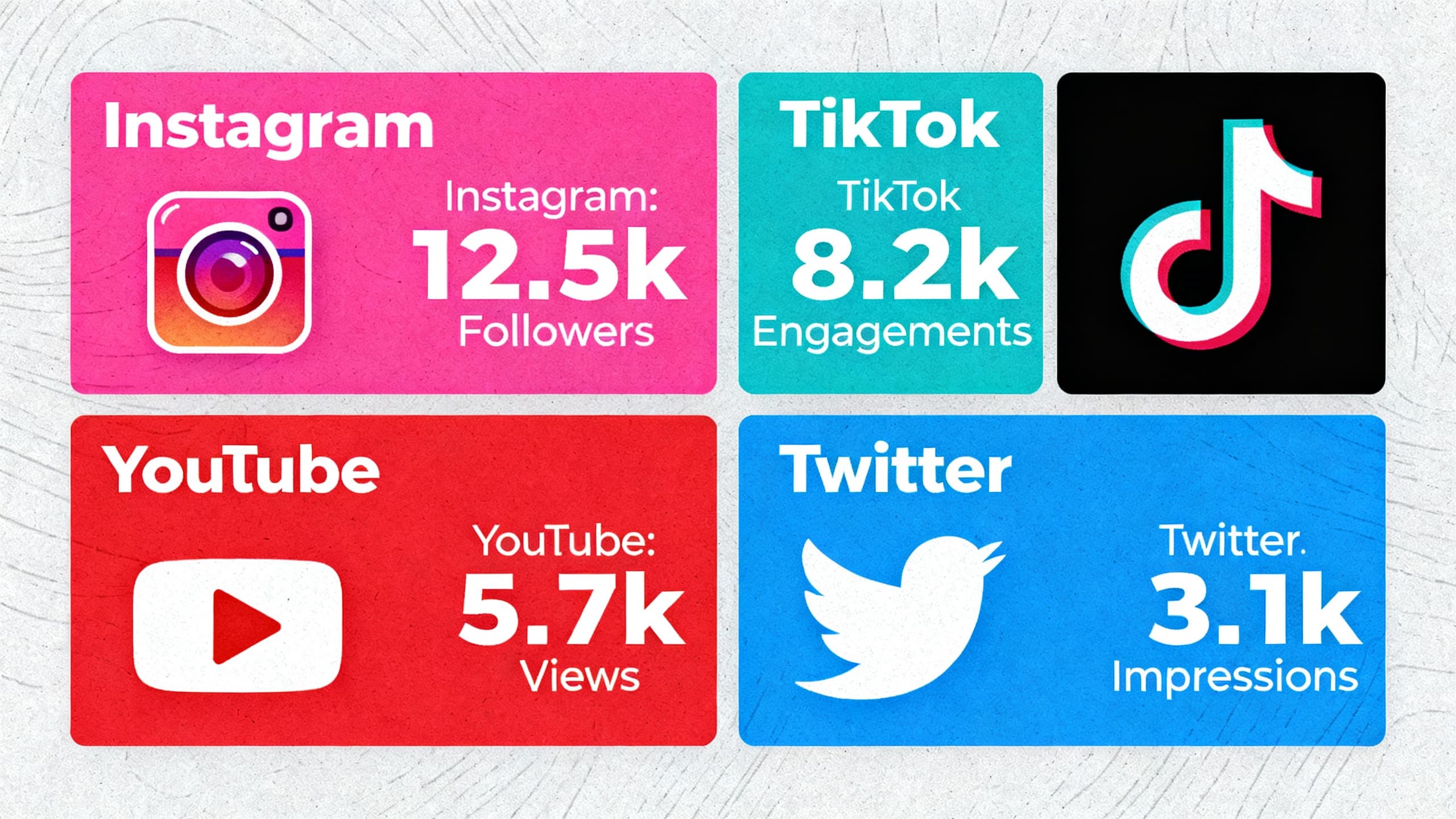
The AI-powered video creation revolution throughout 2024-2025 has fundamentally democratized professional content production, enabling creators with zero filming equipment, minimal technical skills, and modest budgets to produce high-quality engaging video content competing effectively with traditionally-produced material across TikTok, YouTube Shorts, Instagram Reels, and traditional YouTube, yet this production capability alone doesn't guarantee revenue, with thousands of creators producing excellent AI-generated content receiving zero income despite substantial views and engagement because they lack systematic monetization strategy, don't understand platform-specific requirements and timelines, miss revenue opportunities beyond platform ad revenue, or fail to build diversified income protecting against platform volatility and policy changes that can eliminate primary income overnight.
The monetization landscape for AI video creators in 2026 presents unprecedented opportunity with multiple viable revenue streams each offering distinct advantages, requirements, and scaling characteristics, from direct platform payments providing reliable baseline income once thresholds are met, through affiliate marketing enabling immediate revenue for pre-monetized channels, to sponsorships offering premium compensation for established creators, digital products and services creating leverage and passive income potential, and hybrid models combining multiple streams building resilient sustainable businesses generating $2,000-50,000+ monthly revenue from systematic content creation and strategic monetization optimization. Understanding which revenue streams are accessible at different channel stages, how to qualify for and optimize each stream, realistic timeline expectations from zero to substantial income, and strategic sequencing building toward diversified sustainable revenue determines whether AI video creation becomes profitable business or unpaid hobby consuming time without financial return.
Yet most creators approach monetization haphazardly or passively, either waiting hopefully for platform monetization thresholds without exploring alternative revenue, pursuing single monetization method missing diversification opportunities reducing risk and maximizing income, lacking strategic timeline understanding causing discouragement from unrealistic expectations, or failing to systematically optimize monetization leaving substantial money on table through missed opportunities, poor execution, or suboptimal strategy. This monetization neglect or mismanagement means talented creators producing valuable engaging content often earn fraction of potential income, struggle unnecessarily through extended pre-revenue periods that could be shortened through alternative monetization, or build fragile businesses dependent on single volatile income source vulnerable to platform changes, algorithm shifts, or market dynamics beyond their control destroying income instantly without warning or recourse.
The AI Video Monetization Opportunity
Understanding the specific advantages and considerations for monetizing AI-generated content versus traditional video.
The production cost and efficiency advantages AI video provides create superior monetization economics where minimal equipment investment (computer, software subscriptions) versus traditional filming equipment ($3,000-30,000+), no location costs or travel expenses for filming reducing overhead dramatically, no talent or crew costs beyond solo creator reducing production budget to near-zero beyond time, and dramatic production efficiency (5-15 minutes per video with Clippie versus 60-180 minutes traditionally) enabling high-volume systematic production maximizing revenue opportunities. The economic advantages mean AI video creators achieve profitability earlier and maintain higher profit margins than traditional creators with equivalent revenue.
The scalability enabling volume strategies shows AI video supporting business models impossible traditionally where producing 10-20+ videos daily becomes realistic for solo creator through automation and batch production, high posting frequency maximizing algorithmic favor on platforms rewarding consistency and volume, testing and iteration velocity enabling rapid optimization discovering high-performing formats and topics, and ability to operate multiple channels or distribute across multiple platforms efficiently. The scalability enables volume-dependent monetization strategies (ad revenue optimization, affiliate sales through quantity) that manual production cannot sustain.
The content flexibility and rapid pivoting capability AI provides enables monetization optimization where quickly testing different niches, formats, or topics discovering profitable opportunities without significant production investment, rapidly responding to trends or seasonal opportunities capitalizing on temporary high-value periods, diversifying content across topics or platforms without proportionally increased production burden, and pivoting entirely to different content strategy if current approach isn't monetizing effectively. The flexibility enables systematic optimization toward profitability rather than being locked into failing approaches by sunk production costs.
The platform policy and AI disclosure considerations affect monetization approaches where most platforms explicitly allow AI-generated content with proper disclosure requirements, YouTube requires disclosure of realistic AI-generated content in videos potentially affecting monetization or reach, sponsorship disclosure and transparency expectations around AI usage in branded content, and audience perception and acceptance varying by niche and content type. The AI-specific considerations require strategic navigation but don't prevent monetization when handled appropriately.
What This Comprehensive Guide Delivers
This framework provides complete monetization strategy and implementation roadmap for AI video creators.
The platform monetization section covers direct revenue from content distribution including YouTube Partner Program requirements, timeline, and optimization strategies, TikTok Creator Fund and alternative TikTok monetization approaches, Instagram Reels monetization and Meta platform opportunities, multi-platform distribution maximizing total platform revenue, and realistic revenue expectations and scaling trajectories. The platform revenue understanding establishes baseline monetization foundation.
The alternative monetization methods section explores revenue beyond platform payments including affiliate marketing for pre- and post-monetization creators, sponsorship acquisition and rate optimization for established channels, digital product creation (courses, templates, tools, ebooks) leveraging audience and expertise, service offerings (coaching, consulting, done-for-you services), and membership and community monetization. The diversification creates resilient income less vulnerable to single platform volatility.
The niche profitability analysis identifies highest-earning content categories including evergreen high-value niches (finance, business, productivity, health), trending opportunity niches showing rapid growth, content types commanding premium monetization rates, and strategic niche selection balancing passion with profit potential. The niche analysis guides strategic positioning for maximum revenue potential.
The automation and scaling workflows section provides systems for income multiplication including batch production and systematic content creation, automation tools and AI assistance reducing per-video time investment, team building and delegation for agency-scale operations, multi-channel and multi-platform expansion strategies, and passive and semi-passive income development. The scaling frameworks enable growing from solo creator to substantial business operation.
The realistic timelines and expectations section establishes achievable goals including typical progression from $0 to $500, $500 to $5,000, and $5,000 to $20,000+ monthly revenue, common obstacles and how to overcome them, investment requirements at different stages, and long-term business development trajectory. The realistic expectations prevent discouragement while providing motivation and clear targets.
By completing this comprehensive guide, you'll understand both the complete monetization landscape available to AI video creators and specific strategic implementation roadmap for building diversified sustainable revenue from zero through multiple five-figure monthly income.
Table of Contents
Monetization Methods for AI Video Creators
How to Earn from TikTok, YouTube & Instagram Reels
Affiliate Programs & Creator Tools
Automation Workflows for Scaling Income
Most Profitable Niches in 2026
FAQs
Conclusion

1. Monetization Methods for AI Video Creators
Comprehensive overview of all viable revenue streams and their characteristics for AI content creators.
Platform Ad Revenue: The Baseline Income Foundation
Understanding direct platform monetization providing passive income from views and engagement.
YouTube Partner Program (YPP) remains gold standard for creator monetization with clear sustainable revenue potential where requirements include 1,000 subscribers and 4,000 watch hours in past 12 months (or 1,000 subscribers and 10M valid public Shorts views in 90 days), enabling monetization through pre-roll, mid-roll, and post-roll ads on traditional videos plus Shorts ads revenue, typical CPM (cost per thousand views) ranging $2-10 for most content with premium niches (finance, technology, business) achieving $10-40+ CPM, and monthly revenue scaling directly with views (100K monthly views at $5 CPM = $500, 1M views = $5,000). The YPP provides most reliable scalable platform revenue for serious creators.
TikTok Creator Fund and alternatives offer platform compensation though less lucrative than YouTube where Creator Fund pays roughly $0.02-0.04 per 1,000 views, dramatically lower than YouTube (100x lower rates making it nearly worthless as primary income), requiring 10,000 followers and 100,000 video views in past 30 days to qualify, TikTok Creator Rewards Program (newer) paying slightly better for videos over 1 minute, and TikTok Shop and affiliate opportunities providing better revenue potential than direct platform payments. The TikTok platform revenue is supplementary not primary income source.
Instagram Reels monetization through various Meta programs shows evolving compensation where Reels Play Bonus program (invite-only) pays for Reels views though rates are low and inconsistent, general Instagram monetization requiring Professional Account and meeting eligibility criteria, Meta's shifting monetization landscape makes Instagram less reliable than YouTube for primary revenue, and Instagram's strength lies more in audience building and brand partnerships than direct platform payments. The Instagram monetization is bonus income not foundation.
Multi-platform distribution strategy maximizes total platform revenue where same content published to YouTube, TikTok, Instagram multiplies revenue opportunities, platforms don't penalize cross-posting allowing efficient reuse of content, vertical short-form content particularly suitable for multi-platform distribution (YouTube Shorts, TikTok, Instagram Reels), and diversification protects against single platform algorithm changes or policy shifts. The multi-platform approach is essential modern monetization strategy.
Affiliate Marketing: Immediate Revenue Without Platform Thresholds
How product recommendations generate commission income from day one without requiring monetization eligibility.
The affiliate marketing model enables pre-monetization revenue where promoting products or services through unique tracking links, earning commission (5-50%+ depending on program and product) when audience purchases through your link, requiring zero platform monetization eligibility, works from first video, and scaling directly with audience trust, engagement, and recommendation quality. The affiliate approach enables earning before meeting platform requirements providing crucial early revenue.
High-performing affiliate categories for AI video creators include productivity and creator tools (software, apps, courses) with 20-50% recurring commissions matching content niche, AI and technology products as natural fit for AI content creators, educational courses and training programs with $50-500+ per sale commissions, web hosting and SaaS tools offering recurring monthly commissions, and physical products through Amazon Associates though lower commission rates (1-10%). The category selection affects commission rates and revenue potential dramatically.
Strategic affiliate integration without damaging content quality includes recommending only genuinely useful products you've tested and would recommend regardless of commission, transparent disclosure building trust ("This video contains affiliate links, I earn commission at no cost to you"), integrating recommendations naturally into valuable content not creating pure promotional videos, and balancing affiliate and non-affiliate content (80% pure value, 20% including affiliate recommendations). The ethical strategic approach builds long-term trust and sustainable affiliate income.
Affiliate program selection and optimization maximizes revenue where researching programs in your niche identifying highest-paying opportunities, joining multiple programs diversifying income and providing recommendation options, tracking performance identifying which products and presentation styles convert best, and negotiating higher commission rates with brands once proving sales ability. The systematic optimization multiplies affiliate revenue over time.
Sponsorships and Brand Deals: Premium Compensation for Established Channels
How direct brand partnerships provide highest per-video compensation for creators with proven reach and engagement.
Sponsorship readiness and qualification typically requires established audience metrics where 10,000-50,000+ followers minimum for micro-influencer brand deals, demonstrated engagement rate (3-10%+ on posts and videos) proving audience attention and trust, specific niche or demographic valuable to brands (business professionals, parents, tech enthusiasts, specific age ranges), proven content quality and professionalism making brands confident in representation, and media kit or one-sheet presenting channel value proposition and audience demographics. The qualification varies by brand and niche but generally requires demonstrated influence.
Sponsorship rate calculation and negotiation determines compensation where typical rate ranges $100-500 per 10K followers for dedicated sponsored video (higher for premium niches and proven performance), flat fee versus performance-based (commission on sales) compensation models, negotiating based on average views, engagement, and audience quality not just follower count, considering exclusivity requirements and usage rights in pricing, and higher rates for experienced creators with proven ROI for brands. The negotiation skills and positioning dramatically affect compensation.
Finding and pitching sponsors systematically builds brand partnerships where identifying brands whose products genuinely align with content and audience, creating professional pitch including channel metrics, audience demographics, past sponsorship performance, and proposed integration approach, using sponsorship marketplaces (GRIN, AspireIQ, Klear) connecting creators with brands, direct outreach to relevant brands with compelling pitch and portfolio, and building reputation through excellent execution leading to repeat partnerships and referrals. The proactive systematic approach builds sponsorship pipeline.
Sponsorship execution and value delivery ensures positive relationships and repeat business where delivering on promises exceeding expectations, professional communication and meeting deadlines, authentic integration making sponsored content valuable to audience not just promotional, providing detailed performance reports showing sponsor ROI, and maintaining integrity only partnering with brands you genuinely recommend. The execution excellence leads to long-term partnerships and premium rates.

Digital Products: Leverage and Passive Income Creation
How creating information products, tools, or resources generates scalable income with minimal ongoing effort.
Course creation leveraging expertise enables high-ticket sales where teaching what you know about content creation, your niche expertise, or specific skills, pricing ranges from $50-2,000+ depending on depth and value delivered, one-time creation effort generating ongoing passive income as product sells repeatedly, platforms like Gumroad, Teachable, Kajabi enabling easy course delivery, and audience from content providing built-in customer base with existing trust. The courses provide leverage where single creation effort produces unlimited sales potential.
Templates, presets, and tools serve creator audiences specifically where Notion templates, Canva templates, video editing presets, or content calendars addressing creator needs, lower price points ($10-100) enabling higher conversion rates and volume sales, relatively quick creation (hours to days versus weeks for courses) enabling testing multiple products, and direct solving of practical problems creators face building strong product-market fit. The tool-focused products often sell better than courses for creator-focused audiences.
Ebooks and guides provide entry-level information products where documenting knowledge, processes, or insights in written format (20-100 pages), pricing typically $10-50 making them accessible impulse purchases, faster to create than video courses enabling rapid product launch, and serving audiences preferring written over video content. The ebooks provide easiest entry into digital products though typically lower revenue than courses.
Strategic product development maximizes success and revenue where validating demand before creation through audience surveys or pre-sales, starting with minimum viable product testing market before heavy investment, creating products solving real painful problems not just sharing interesting information, pricing based on value delivered not arbitrary numbers or competitor pricing, and continuously improving based on customer feedback and results. The strategic approach prevents wasting effort on products that don't sell.
Services: Direct High-Value Monetization
How leveraging skills and expertise for service delivery creates immediate substantial income.
Coaching and consulting leverages authority and expertise where one-on-one or group coaching on content creation, niche expertise, or specific skills, premium pricing ($100-500+ per hour or $500-5,000+ per package) reflecting personalized value, limited slots protecting time and maintaining service quality while creating scarcity, and requiring demonstrated expertise and results but providing highest per-hour compensation. The coaching enables direct monetization of expertise with excellent unit economics.
Done-for-you services scale service delivery beyond personal time where offering content creation, channel management, or niche-specific services to businesses or creators, building team or using AI automation (Clippie) enabling delivery at scale, charging $500-5,000+ monthly for ongoing service delivery, and creating recurring revenue more stable than one-time projects. The DFY services build agency-style business with significant revenue potential.
Strategy and audit services provide value without ongoing delivery where offering channel audits, content strategy development, or optimization consulting, project-based pricing ($500-3,000+ per engagement) for defined scope, leveraging analytical and strategic skills requiring less time than ongoing coaching or service delivery, and serving creators and businesses wanting direction without ongoing support. The strategic services provide efficient high-value delivery model.
Service positioning and client acquisition determines success where clearly defining ideal client and specific transformation or results delivered, showcasing expertise and results through content building authority and trust, creating clear service packages with defined deliverables and pricing, using discovery calls or applications qualifying serious clients, and systematizing delivery enabling consistent quality and results. The professional positioning and execution builds sustainable service business.
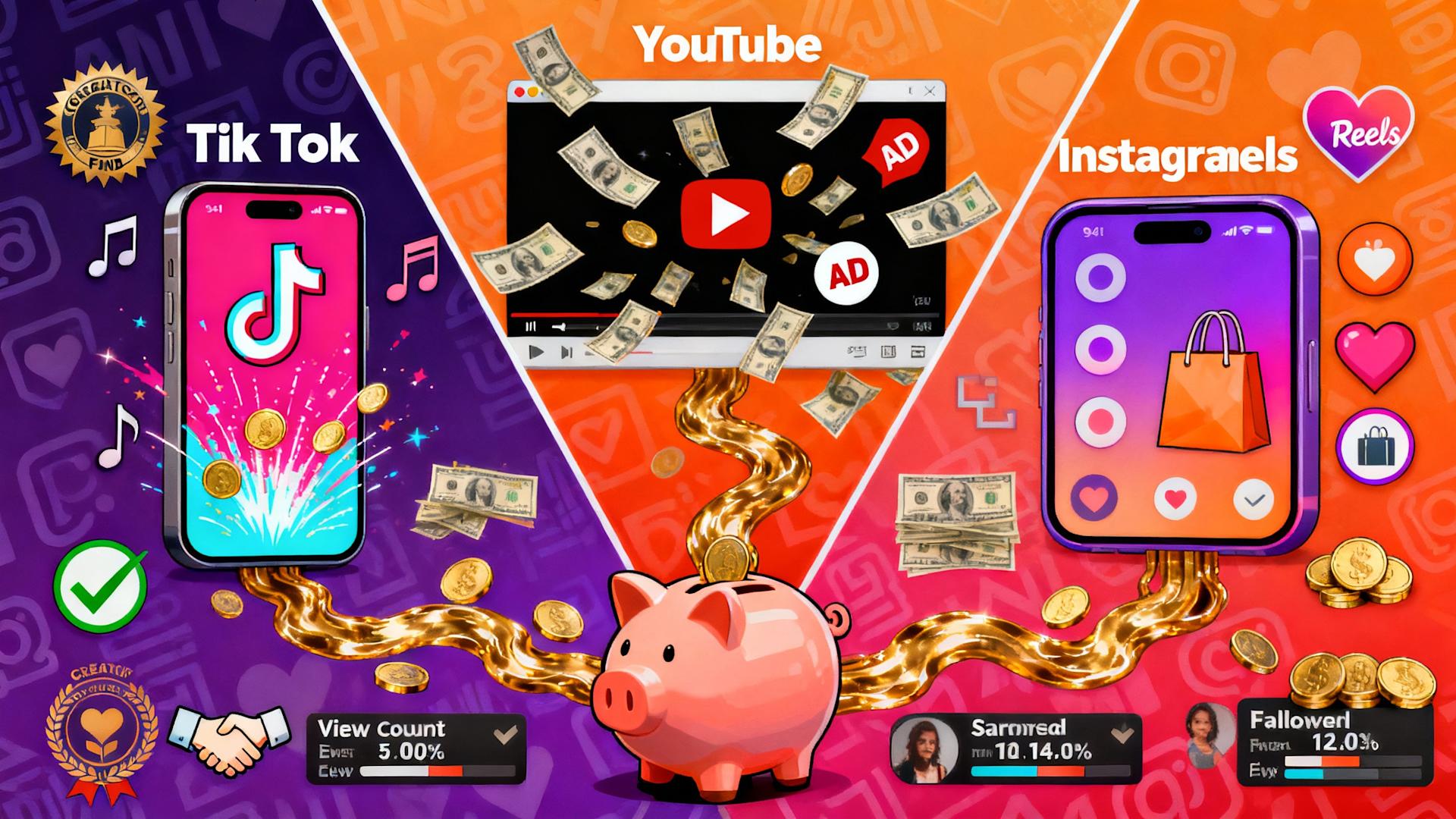
2. How to Earn from TikTok, YouTube & Instagram Reels
Platform-specific monetization strategies, requirements, timelines, and optimization approaches.
YouTube Partner Program: Requirements and Optimization
Comprehensive strategy for qualifying and maximizing YouTube's most reliable creator monetization.
YPP qualification requirements establish threshold for monetization where 1,000 subscribers as follower threshold showing audience interest and channel viability, 4,000 watch hours in past 12 months (240,000 minutes) or 10 million valid public Shorts views in past 90 days providing alternative path through short-form content, adherence to YouTube monetization policies including no copyright violations, advertiser-friendly content, authentic engagement, and available in country where YPP is offered (most countries worldwide). The requirements are achievable for dedicated creators typically within 3-12 months.
Accelerating YPP qualification through strategic content approach includes consistent posting frequency (3-7 videos weekly) building momentum and algorithmic favor, optimizing content for watch time through strong hooks, pacing, and retention, leveraging YouTube Shorts for rapid view accumulation reaching 10M Shorts views faster than 4,000 watch hours for some creators, promoting videos strategically through other platforms and communities driving initial traffic, and creating series or binge-worthy content encouraging extended viewing sessions. The acceleration strategies reduce time to monetization from 12 months to 3-6 months potentially.
Revenue optimization post-monetization maximizes earnings from same view count where mid-roll ad placement on 8+ minute videos dramatically increasing ad inventory and revenue, creating content in high-CPM niches (finance, business, technology, health) versus low-CPM entertainment, optimizing for session time encouraging viewers to watch multiple videos increasing total watch time and revenue, clean family-friendly content attracting premium advertisers paying higher rates, and longer videos (10-20 minutes) enabling more ads without hurting retention if content is engaging. The optimization can increase revenue 2-5x versus baseline approach.
YouTube Shorts monetization provides alternative or supplementary revenue where Shorts revenue sharing program distributing portion of ad revenue based on Shorts views, typical revenue much lower per view than traditional videos (roughly $0.01-0.10 per 1,000 views), value primarily in growth and traffic generation driving subscribers and traditional video views, and using Shorts strategically as channel growth engine not primary monetization vehicle. The Shorts approach works best as funnel to traditional long-form content generating primary revenue.
TikTok Monetization: Beyond the Creator Fund
How to actually earn from TikTok given Creator Fund's low payouts through alternative approaches.
TikTok Creator Fund reality shows limitation as primary income where payouts typically $0.02-0.04 per 1,000 views (100x lower than YouTube) making it nearly worthless unless achieving tens of millions of monthly views, requirements include 10,000 followers and 100,000 video views in past 30 days, and declining payout rates as more creators join reducing per-view compensation further. The Creator Fund supplements other income but cannot be primary revenue source for most creators.
TikTok Creator Rewards Program offers slightly better compensation where requires videos 1+ minutes in length potentially paying better than short-form Creator Fund, encourages longer-form content potentially improving monetization, still substantially lower than YouTube but improving on Creator Fund baseline, and representing TikTok's acknowledgment that Creator Fund alone is insufficient. The Rewards Program is improvement but still secondary to other monetization approaches.
TikTok Shop and affiliate opportunities provide better monetization than direct platform payments where TikTok Shop enabling direct product sales through livestreams and videos with commission on sales, affiliate program allowing promotion of products with commission (similar to Amazon Associates but TikTok-specific), conversion rates potentially high due to TikTok's impulse-purchase culture and in-app shopping integration, and providing revenue independent of view counts based purely on sales performance. The commerce-focused monetization often outperforms Creator Fund substantially.
Brand partnerships and cross-platform strategy leverage TikTok influence for external revenue where TikTok audience building creating sponsorship opportunities with brands, linking to other monetized platforms (YouTube, Instagram, email list) where revenue opportunities are better, TikTok as traffic source and brand builder not primary revenue generator, and treating TikTok as part of funnel driving audience to higher-monetization platforms. The strategic use acknowledges TikTok's limitations while leveraging its strengths.
Instagram Reels: Meta Monetization Ecosystem
How Instagram fits into diversified platform strategy with evolving monetization landscape.
Instagram monetization programs show evolving but inconsistent opportunity where Instagram Reels Play Bonus (invite-only) pays creators for Reels views though rates are low and program availability is limited and uncertain, Instagram monetization generally requiring Professional Account, compliance with Partner Monetization Policies, and meeting eligibility requirements varying by program, and Meta's overall creator monetization strategy evolving rapidly making Instagram less predictable than YouTube. The Instagram compensation is bonus income not reliable foundation.
Instagram's value in monetization ecosystem lies beyond direct platform payments where Instagram audience building valuable for brand partnerships and sponsorships, platform's visual nature and demographics particularly attractive to certain brands and niches, Instagram Shopping and product tagging enabling direct sales for product-based businesses, and cross-promotion with Facebook extending reach within Meta ecosystem. The Instagram value is primarily in audience building and brand partnerships not direct platform payments.
Instagram to email list funnel creates owned audience asset where using link in bio driving traffic to email signup page, email list providing direct audience access independent of algorithm, enabling promotion of products, services, affiliate offers, and sponsorships directly to engaged audience, and creating owned asset reducing platform dependency and risk. The email list building provides most valuable long-term asset from Instagram presence.
Multi-format content strategy maximizes Instagram monetization where using Reels for reach and growth (algorithm heavily promotes Reels), Stories for daily engagement and community building maintaining presence and connection, Feed posts for evergreen content and aesthetic cohesion, and IGTV/Video for longer-form content when appropriate. The multi-format approach leverages each content type's algorithmic advantages while building comprehensive presence.

Multi-Platform Distribution: Maximizing Total Revenue
How strategic content reuse across platforms multiplies monetization without proportionally increased effort.
Vertical video cross-posting strategy enables efficient multi-platform presence where creating content in vertical 9:16 format suitable for TikTok, YouTube Shorts, Instagram Reels, and Facebook Reels, posting same video across all platforms multiplying reach and revenue opportunities, minimal adaptation needed beyond platform-specific optimizations (hashtags, captions, music), and total time investment increasing 10-20% while revenue potential increases 200-400% through diversification. The cross-posting is essential efficiency strategy.
Platform-specific optimization while maintaining efficiency includes adapting captions and hooks for platform culture and norms (TikTok casual, YouTube slightly more formal, Instagram aesthetic-focused), using platform-native features (sounds on TikTok, hashtags on Instagram, Shorts-specific features on YouTube), posting at optimal times for each platform's audience activity, and testing which content performs best on which platforms adjusting strategy based on data. The optimization improves results without requiring completely separate content.
Strategic platform prioritization focuses energy efficiently where identifying which platform drives best monetization for your niche (usually YouTube for most creators), allocating 50-70% of optimization effort to primary monetization platform, maintaining consistent presence on secondary platforms with less intensive optimization, and being willing to abandon or de-prioritize platforms not providing adequate return on time investment. The prioritization prevents spreading too thin while maintaining multi-platform presence.
Platform risk mitigation through diversification protects business where algorithm changes on one platform don't destroy entire income, platform policy changes or account issues affecting one platform not eliminating all revenue, audience diversification ensuring you're not completely dependent on single platform's audience, and owned assets (email list, website, products) providing ultimate protection against platform volatility. The diversification is business continuity strategy not just optimization approach.

3. Affiliate Programs & Creator Tools
Strategic affiliate marketing specifically for AI video creators including best programs and optimization strategies.
High-Commission Creator Tool Affiliates
The most lucrative affiliate opportunities serving fellow creators and AI video producers.
Clippie AI affiliate program (if available) provides ideal monetization for AI video creators where promoting tool you're already using creating authentic genuine recommendations, recurring commission structure (typically 20-40%) generating ongoing monthly income from single referral, customers staying subscribed long-term due to product value maximizing lifetime value, and natural content integration showing your workflow and results demonstrating value. The tool affiliate creating sustainable recurring revenue from helping others achieve similar results.
AI and productivity tool affiliates align naturally with AI content creator audience where ChatGPT Plus, Jasper, and other AI writing tools serving content creators with 20-30% commissions, video editing software (Adobe Creative Cloud, Final Cut, DaVinci Studio) with referral programs, design tools (Canva Pro, Figma) offering recurring commissions, and productivity apps (Notion, Todoist, RescueTime) solving problems your audience faces. The tool focus creates natural authentic recommendations within content niche.
Course and education affiliate programs provide high-ticket commissions where promoting courses on content creation, AI tools, or niche-specific expertise, typical commissions $50-500+ per sale on $200-2,000 courses, platforms like Teachable, Kajabi, Udemy having affiliate programs, and value-focused positioning emphasizing genuine recommendation not just commission. The education affiliate enabling substantial per-sale revenue from engaged audience seeking growth.
Platform and hosting affiliate programs serve creators building online presence where website hosting (Bluehost, SiteGround, WP Engine) offering $50-200+ per signup, email marketing platforms (ConvertKit, Mailchimp, ActiveCampaign) with recurring commissions, page builders and WordPress tools serving creator entrepreneurs, and web infrastructure tools every serious creator eventually needs. The platform affiliate creates foundation recommendations valuable to growing creators.

Strategic Affiliate Content Creation
How to integrate affiliate recommendations ethically and effectively maximizing conversions without damaging trust.
The tutorial and review format naturally incorporates affiliate recommendations where creating comprehensive tool review or comparison showing actual usage and results, demonstrating specific use case relevant to your audience's needs and challenges, discussing both strengths and limitations building credibility through balanced perspective, including affiliate link in description with clear disclosure, and genuinely recommending only tools you use and would recommend regardless of commission. The tutorial format provides value while naturally leading to affiliate conversion.
"Tools I use" resource content compiles recommendations in high-value formats where creating comprehensive "tech stack" or "tools I use daily" videos showing complete workflow, organizing by category (video editing, AI tools, productivity, etc.) providing clear structure, explaining why each tool and what specific value it provides, including alternatives for different budgets or needs, and updating periodically as tools and recommendations evolve. The resource format creates evergreen high-value content with multiple affiliate opportunities.
Problem-solution content with affiliate integration serves audience while monetizing where identifying specific problems audience faces related to content creation or niche, presenting solution methodology or approach, recommending specific tool or product solving that problem with affiliate link, showing results or transformation possible with recommended solution, and ensuring 80% of content is pure educational value with 20% being affiliate recommendation. The problem-solution approach feels helpful not salesy.
Case study and results content demonstrates value compellingly where showing specific results achieved using recommended tool or product (revenue generated, time saved, quality improved), walking through exact process and implementation providing actionable value, transparently disclosing affiliate relationship maintaining trust, and focusing on genuine results and value not just promoting for commission. The case study provides social proof and specific value demonstration maximizing conversion.
Affiliate Disclosure and Trust Building
Maintaining audience trust while monetizing through affiliate recommendations.
Clear transparent disclosure meets legal and ethical requirements where stating clearly "This video contains affiliate links, I earn commission at no extra cost to you", positioning disclosure positively "I only recommend tools I use and trust, affiliate commissions help support this channel", placing disclosure prominently (video beginning, description, pinned comment) ensuring visibility, and explaining that recommendation is genuine regardless of commission strengthening trust. The transparency builds credibility rather than damaging it when done confidently.
Authentic selective recommendation prevents over-promotion destroying trust where recommending only products and tools you genuinely use and would recommend without commission, being selective limiting recommendations to truly valuable solutions not promoting everything, discussing limitations and drawbacks honestly showing balanced perspective not just hype, and declining affiliate partnerships with products you don't genuinely support regardless of commission potential. The selectivity makes recommendations credible and trustworthy.
Value-first content ratio maintains audience trust and engagement where 80-90% of content provides pure value without any monetization, 10-20% includes affiliate recommendations when genuinely relevant and valuable, avoiding making every video promotional preventing audience fatigue and skepticism, and tracking engagement metrics ensuring affiliate content maintains similar performance to non-affiliate content. The ratio prevents over-monetization damaging content quality and audience trust.
Alternative recommendation and budget options shows audience-first approach where providing non-affiliate alternatives when available showing you're not just promoting for commission, discussing free or budget options alongside premium recommendations serving full audience spectrum, explaining tradeoffs between different options helping audience make informed decision, and focusing on helping audience succeed regardless of whether they use your affiliate link. The comprehensive approach builds authority and trust increasing overall conversion despite providing alternatives.
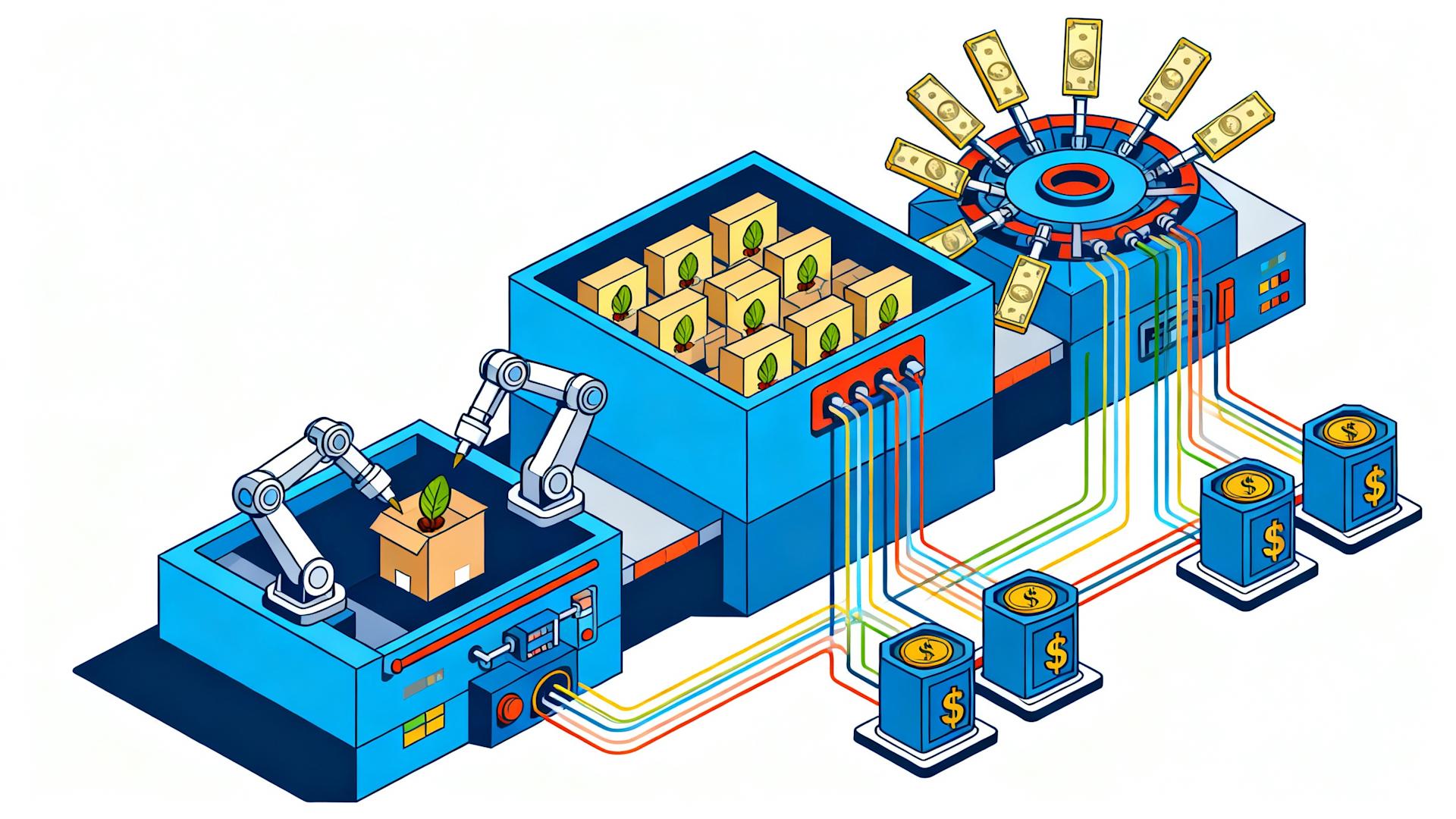
4. Automation Workflows for Scaling Income
Systematic approaches to multiplying revenue without proportionally increasing time investment through leverage and automation.
Batch Production and Content Calendar Systematization
How systematic workflow design enables sustainable high-volume production driving revenue growth.
Content batching methodology creates dramatic efficiency multipliers where filming/creating 10-20 videos in single focused session (2-4 hours with Clippie automation), eliminating repeated setup and breakdown overhead reducing total time 30-50%, mental focus and flow state improving quality and consistency, and batch editing and publishing completing multiple videos systematically. The batching enables producing 50-100 videos monthly sustainably versus 20-30 with sequential daily production.
Strategic content calendar ensures consistent output and monetization optimization where planning 2-4 weeks ahead preventing last-minute content creation stress, balancing different content types (evergreen value, trending topics, affiliate content, pure engagement), scheduling content around monetization opportunities (seasonal affiliates, product launches, sponsorship commitments), and building buffer protecting against disruptions and maintaining consistency. The calendar transforms chaos into systematic sustainable operation.
Template and framework development eliminates redundant creative decisions where developing video structure templates (hook, main content, call-to-action) reused across videos, creating thumbnail and title formulas maintaining brand consistency efficiently, establishing scripting frameworks for different content types, and building preset collections (editing, graphics, music) enabling efficient consistent production. The templates enable systematization without sacrificing quality or brand identity.
Production and publishing automation removes manual repetitive tasks where automated scheduling and publishing across platforms (Hootsuite, Buffer, native platform schedulers), caption and description templates automatically populated with relevant hashtags and links, automated cross-posting distributing content efficiently across multiple platforms, and analytics aggregation tracking performance without manual data collection. The automation eliminates 5-10 hours weekly of administrative work enabling focus on creation and strategy.
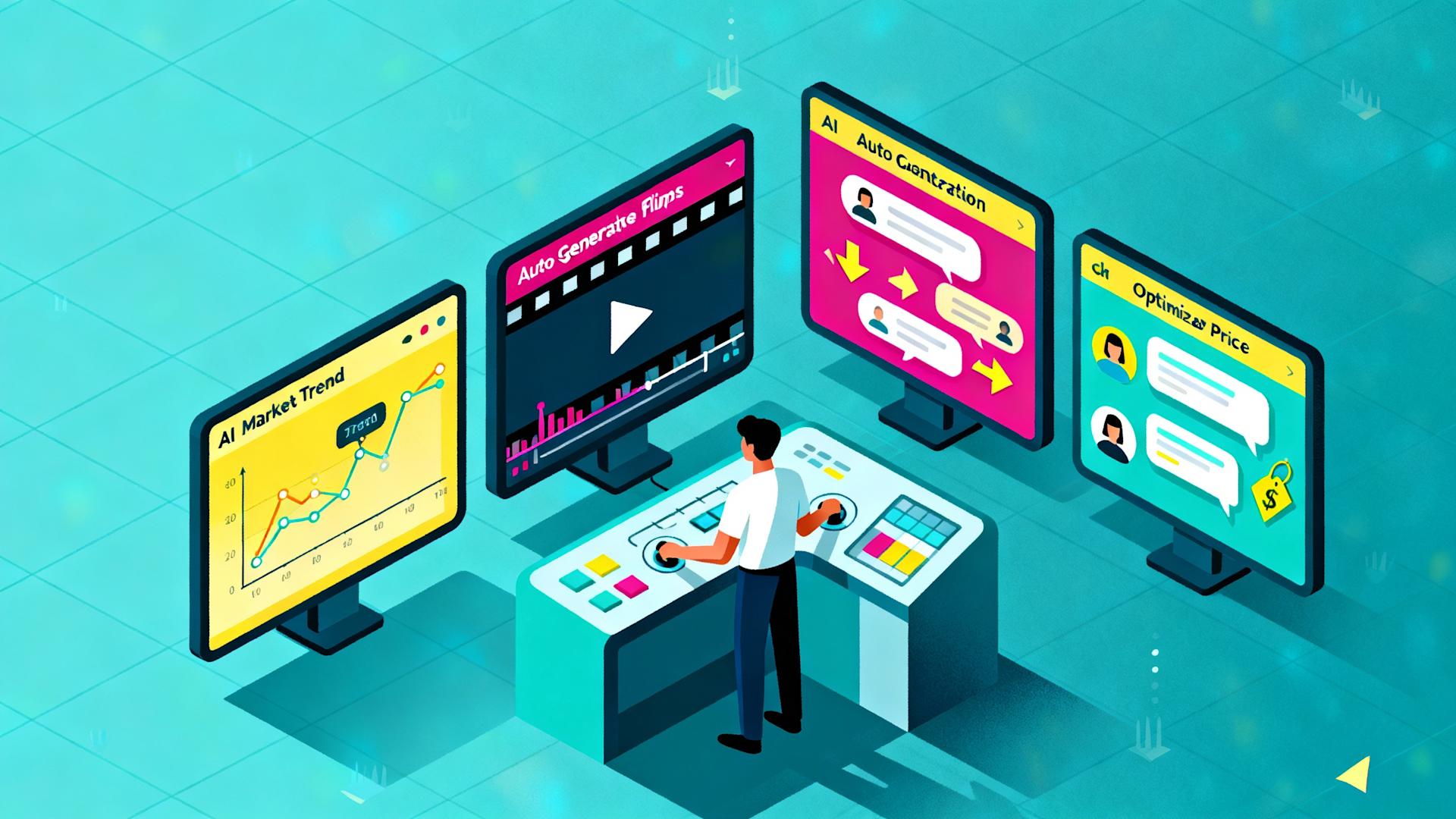
AI Assistance and Tool Integration
Leveraging AI and automation tools dramatically reducing time per video while maintaining quality.
Clippie's comprehensive automation specifically addresses content production efficiency for faceless video creators where complete story video production in 5-15 minutes versus 45-90 minutes manual editing, batch processing capability enabling creating 10-20+ videos in focused session, consistent professional quality without requiring editing expertise or perfectionism, and workflow enabling sustainable daily or multiple-daily posting driving algorithmic growth and ad revenue. The automation transforms production economics making high-volume systematic creation realistic.
AI writing tools reduce ideation and scripting overhead where ChatGPT, Claude, or Jasper generating video concepts, scripts, and outlines from prompts, overcoming creative blocks through AI collaboration providing starting points and options, research and information gathering accelerating prep work, and refinement and optimization improving drafts quickly. The AI writing reduces hours of scripting to 15-30 minutes preventing creative exhaustion while maintaining output quality.
Automated editing and enhancement tools streamline post-production where CapCut's AI features (auto-captions, effects, background removal) reducing manual editing time, Descript's text-based editing simplifying workflow for voice-heavy content, AI thumbnail and graphics tools creating professional visuals efficiently, and automated publishing and optimization tools handling technical details. The tool ecosystem enables efficient high-quality production without extensive manual technical work.
Analytics and optimization automation identifies improvement opportunities without manual analysis where automated performance reporting tracking key metrics across platforms, AI-powered insights identifying trends and patterns, competitor analysis tools monitoring successful content in niche, and A/B testing automation systematically optimizing thumbnails, titles, hooks. The automated optimization enables data-driven improvement without becoming data analyst.
Team Building and Delegation for Scale
Growing beyond solo creator capacity through strategic delegation and team development.
The delegation priority framework identifies highest-value outsourcing where time-consuming low-skill tasks delegate first (publishing, community management, data entry), preserving your time for high-value irreplaceable work (being on camera, creative direction, strategy, relationship building), calculating ROI where $15-25/hour assistant saving you 10-20 hours monthly provides 3-10x value through freed capacity, and starting small testing delegation before building complete team. The strategic delegation enables scaling without proportional time investment.
Virtual assistant and contractor utilization provides flexible affordable help where hiring virtual assistants for $10-25/hour for administrative tasks and workflow support, specialized contractors for specific skills (editing, thumbnail design, writing), project-based freelancers for one-time needs or testing before hiring ongoing, and platforms like Upwork, Fiverr, OnlineJobs.ph connecting with global talent. The flexible workforce enables scaling output without full-time employee commitment.
Team building for agency operations scales beyond solo creator toward multi-channel business where hiring dedicated editors, producers, or content strategists for ongoing roles, developing standard operating procedures and training enabling consistent quality, creating management and coordination systems for team efficiency, and potentially white-labeling or packaging offering services to other creators or businesses. The team building enables agency-level operations generating $20,000-100,000+ monthly revenue.
Systematization enabling delegation makes team management efficient where documenting processes and workflows in SOPs and training materials, creating templates and examples showing desired quality and approach, establishing quality control and review processes ensuring standards are met, and implementing project management systems (Asana, Trello, Notion) coordinating work and tracking progress. The systematization enables effective delegation without requiring constant involvement.
Passive and Semi-Passive Income Development
Creating revenue streams requiring minimal ongoing time investment after initial creation.
Evergreen content library generates ongoing revenue with minimal maintenance where creating comprehensive valuable content on evergreen topics continuing to attract views years later, optimizing for search (YouTube SEO, Google discovery) driving consistent organic traffic, maintaining and updating top-performing content keeping it current and relevant, and evergreen library providing foundation enabling producing 30-50% less new content while maintaining revenue. The library becomes asset generating passive value.
Digital product sales automation provides passive income after creation where courses, templates, ebooks, or tools selling automatically through automated funnels, minimal customer support required for well-designed information products, promotional content (YouTube videos, social posts) driving traffic to sales pages continuously, and occasional updates and improvements maintaining product value and relevance. The digital products enable earning without ongoing active delivery.
Affiliate and ad revenue automation generates passive income from content where existing content library generating ongoing views and revenue indefinitely, affiliate links in descriptions continuing to generate commissions months or years later, YouTube and platform ads automatically serving on content providing passive income, and minimal ongoing work required beyond creating new content adding to library. The passive revenue enables taking breaks without income collapse.
Membership and community models provide recurring revenue with scalable delivery where monthly subscription community providing ongoing revenue from same member base, group format enabling efficient value delivery versus one-on-one coaching, systematic content delivery (weekly videos, monthly Q&A) providing value without unsustainable custom work, and community member contributions and interaction providing value reducing your ongoing effort requirement. The membership model provides stable recurring revenue with sustainable delivery.
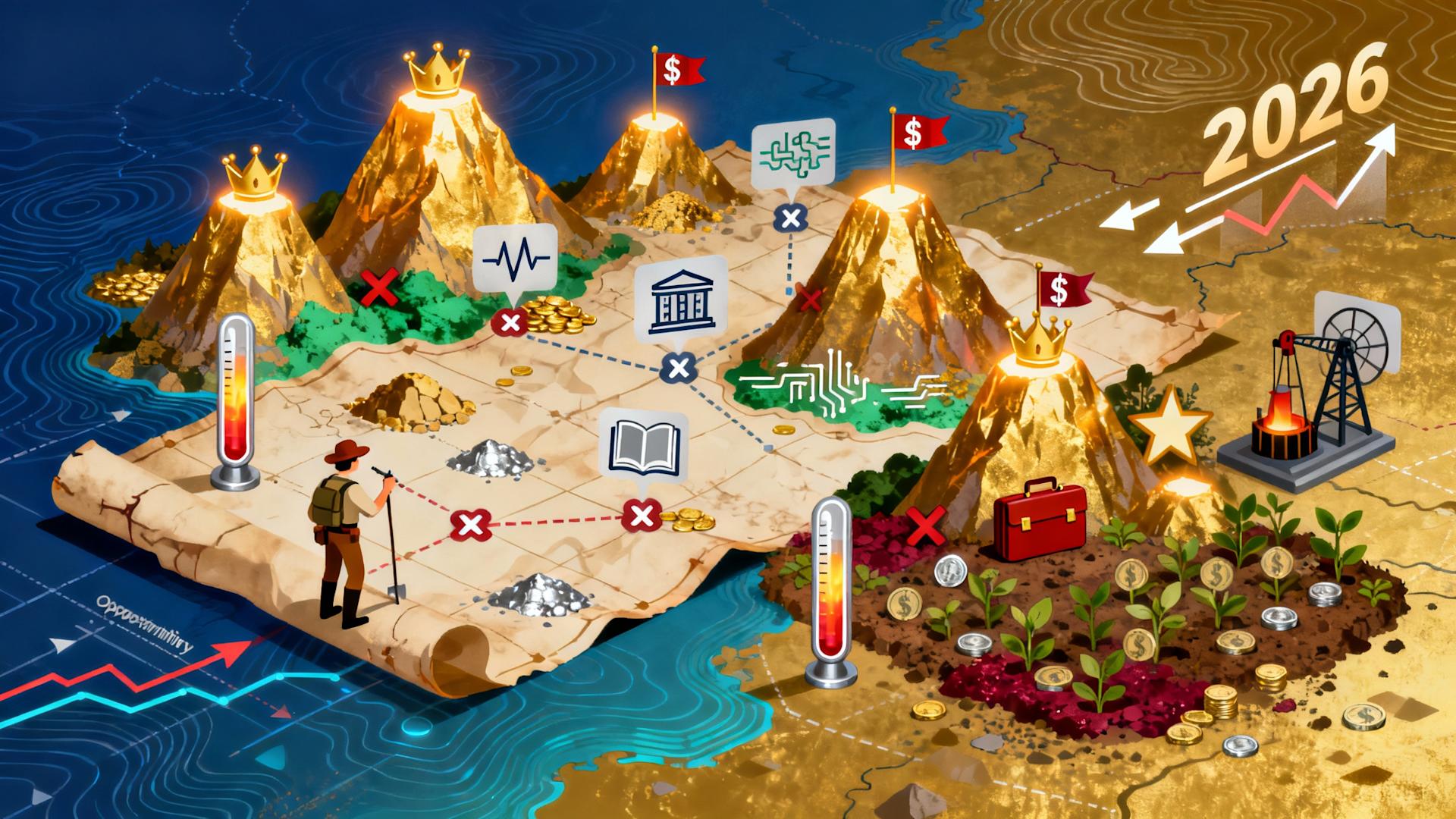
5. Most Profitable Niches in 2026
Strategic niche selection analysis identifying content categories offering highest revenue potential and monetization advantages.
Evergreen High-Value Niches
Content categories consistently commanding premium monetization rates and stable long-term demand.
Finance and investing content dominates high-CPM monetization where typical YouTube CPM $10-40+ (3-10x higher than entertainment content), audience actively seeking to improve financial situation making them highly engaged, affiliate opportunities for financial services, investing platforms, and courses providing substantial commissions, sponsorship opportunities with financial brands paying premium rates, and evergreen content (budgeting, investing principles, debt reduction) maintaining relevance indefinitely. The financial niche offers superior monetization across all revenue streams.
Business and entrepreneurship provides premium monetization opportunities where audience of business owners and professionals with higher purchasing power, CPM typically $8-25+ attracting business-focused advertisers, extensive affiliate opportunities (software, tools, courses, services) with high commissions, consulting and coaching services commanding $150-500+ per hour, and B2B sponsorships paying premium rates for access to business audience. The business niche combines strong platform revenue with excellent alternative monetization.
Productivity and self-improvement serves engaged audience seeking optimization where CPM typically $5-15+ with engaged professional audience, affiliate opportunities for productivity tools, courses, and books, digital product opportunities (templates, systems, courses) teaching optimization approaches, and broad appeal creating large addressable audience while maintaining decent monetization. The productivity niche balances volume potential with quality monetization.
Technology and software commands attention from valuable demographics where tech-focused audience typically young professionals with disposable income, CPM $6-20+ attracting tech advertisers, extensive affiliate opportunities for software, tools, hardware with recurring commissions, and tutorial and review content naturally incorporating product recommendations enabling monetization. The tech niche provides strong monetization with clear product recommendation opportunities.
Health and Wellness Niches
Content serving physical and mental health creating engaged audiences with monetization potential.
Fitness and nutrition combines mass appeal with monetization opportunity where broad audience interest creating large market potential, CPM typically $4-10+ competitive with most niches, affiliate opportunities for supplements, equipment, programs, and meal services, digital products (workout plans, meal guides, courses) selling well to motivated audience, and coaching and training services providing premium offerings. The fitness niche provides balanced monetization across multiple streams.
Mental health and mindfulness serves growing awareness and concern where increasing societal focus on mental health creating expanding market, audience seeking solutions actively engaged and willing to invest, affiliate opportunities for apps (Headspace, Calm), courses, books, digital products (journals, guided meditations, courses) serving self-improvement audience, and coaching services commanding $100-300+ per session. The mental health niche combines social value with solid monetization.
Sleep optimization and recovery represents emerging niche opportunity where increasing awareness of sleep importance driving interest, specific actionable solutions (supplements, devices, techniques) creating natural affiliate and product opportunities, relatively underserved niche compared to fitness or nutrition creating opportunity, and crossover appeal to productivity and health audiences. The sleep niche offers growth potential with developing monetization ecosystem.
Alternative and holistic health serves dedicated engaged community where passionate audience actively seeking non-mainstream health approaches, specific product recommendations (supplements, practices, services) creating affiliate opportunities, digital products teaching practices and approaches, and niche specificity reducing competition while maintaining sufficient audience size. The alternative health niche provides dedicated audience with monetization opportunities.
Trending Growth Niches
Emerging content categories showing rapid audience growth and monetization development in 2026.
AI and automation capitalizes on technology revolution where massive public interest in AI creating enormous content demand, tutorial and tool review content naturally monetizing through affiliates and sponsorships, audience of early adopters and professionals with strong purchasing power, rapidly evolving landscape creating constant new content opportunities, and position as expert in emerging field building substantial authority and opportunity. The AI niche offers ground-floor opportunity in massive growing market.
Faceless content creation and passive income serves growing creator economy where meta-content teaching content creation building engaged creator audience, clear demonstration of methods and results providing valuable content, affiliate opportunities for creator tools providing recurring commissions, digital products (templates, courses, systems) selling to aspiring creators, and consulting and services helping creators build channels. The creator education niche provides multiple strong monetization streams.
Sustainable living and minimalism reflects shifting values and priorities where growing environmental concern and minimalist philosophy driving interest, specific product recommendations (sustainable products, organization tools) creating natural monetization, lifestyle content appealing to thoughtful engaged audience, and overlap with productivity and wellness creating crossover opportunities. The sustainability niche provides purpose-driven content with developing monetization.
Remote work and digital nomad lifestyle serves post-pandemic shift in work culture where permanent shift to remote work creating sustained interest and audience, tutorial content on tools, productivity, work-life balance providing value, affiliate opportunities for remote work tools and services, aspirational lifestyle content attracting engaged audience, and consulting and coaching helping others transition to remote work. The remote work niche serves large growing audience with clear monetization.
Strategic Niche Selection Framework
Evaluating niche choice balancing passion, expertise, and monetization potential.
The monetization potential assessment evaluates revenue characteristics where researching typical CPM rates in niche (Social Blade, YouTube analytics communities), identifying available affiliate programs and commission structures, evaluating digital product and service opportunities based on audience needs and willingness to pay, and analyzing competition for sponsorships and brand partnerships. The financial analysis reveals revenue ceiling and diversification opportunities in niche.
The passion and sustainability evaluation ensures long-term viability where assessing genuine interest in niche topic (can you create content about this for years?), evaluating existing expertise or willingness to develop it, considering competition level and your ability to differentiate, and analyzing content refresh rate (rapidly changing topics requiring constant updates versus evergreen content). The sustainability analysis prevents choosing profitable niche you'll hate or burn out pursuing.
The audience size and engagement analysis balances reach and monetization where estimating total addressable audience size ensuring sufficient market, evaluating audience engagement and action-taking propensity (finance audiences highly engaged, pure entertainment less so), analyzing audience demographics and purchasing power affecting monetization potential, and assessing content consumption patterns (binge-worthy versus one-time viewing). The audience analysis reveals realistic growth and monetization trajectory.
The strategic positioning approach optimizes niche selection where considering sub-niche specialization reducing competition while maintaining audience size (not just "fitness" but "fitness for busy parents" or "minimalist home workouts"), identifying intersection of multiple interests creating unique positioning (e.g., "productivity for creative entrepreneurs" or "sustainable living for city dwellers"), and evaluating first-mover advantages in emerging niches versus established stable niches. The positioning creates differentiation and competitive advantage.
FAQs
1. How long does it typically take to start earning money from AI video content?
The monetization timeline question has nuanced answer depending on revenue stream and approach taken. The platform monetization (YouTube Partner Program) timeline for most dedicated creators shows 3-6 months reaching 1,000 subscribers and 4,000 watch hours with consistent posting (3-5 videos weekly), strong hooks and retention optimization, and strategic promotion and cross-platform distribution, though some achieve it in 1-3 months with viral success or existing audience while others take 9-12+ months with less optimized approach or difficult niche. The YPP qualification represents major milestone but requires sustained effort. The affiliate marketing immediate revenue potential shows earnings possible from first video if you include affiliate recommendations with proper disclosure, typical timeline: first commission within 2-4 weeks of consistent posting with affiliate links, building to $100-500 monthly within 2-4 months with growing audience and optimization, and scaling to $1,000-5,000+ monthly within 6-12 months with established audience and proven recommendations. The affiliate approach enables pre-monetization revenue crucial for sustaining momentum. The sponsorship timeline for established creators shows first brand partnerships typically appearing at 10,000-30,000 followers (3-9 months for most creators), initial deals $100-500 range growing with audience and proven performance, and scaling to $1,000-5,000+ per sponsored video within 12-24 months with 50,000-200,000+ followers and proven ROI for brands. The sponsorship represents later-stage but high-value revenue stream. The digital product revenue development shows timeline typically: creating and launching first product 2-4 months after starting channel building audience and understanding needs first, initial sales $100-500 first month testing product-market fit and optimizing, and scaling to $1,000-10,000+ monthly within 6-18 months with validated product and systematic promotion. The product timeline requires upfront investment but provides scalable revenue. The realistic complete timeline expectations for dedicated creator show month 1-3: $0-200 from early affiliate sales and testing monetization approaches, month 4-6: $200-1,000 achieving platform monetization and growing affiliate income, month 7-12: $1,000-5,000 adding sponsorships and potentially first digital products, and year 2: $5,000-20,000+ with diversified optimized revenue streams and scaling systems. The progression assumes consistent posting, strategic optimization, and avoiding major mistakes. The acceleration factors enabling faster monetization include starting with existing audience from other platforms or email list, focusing on high-CPM niches (finance, business, technology) versus low-CPM entertainment, aggressive affiliate promotion from day one rather than waiting for platform monetization, leveraging viral content or trends achieving rapid growth, and intensive focus and volume (daily posting) versus casual approach. The acceleration can compress 12-month timeline to 3-6 months. The deceleration factors slowing monetization include inconsistent posting or low volume limiting growth and momentum, poor content quality or optimization resulting in low retention and poor performance, wrong niche selection choosing low-monetization category or overly competitive space, failing to promote or build audience beyond organic growth, and treating as hobby versus business with casual uncommitted approach. The deceleration can extend timeline to 18-24+ months or prevent monetization entirely. The realistic expectations and mindset include understanding monetization is marathon not sprint requiring sustained consistent effort over months, accepting early months as building period focusing on skill development and audience building not immediate income, celebrating small wins (first commission, first 100 subscribers, first $100 month) maintaining motivation, and comparing progress to yourself not others avoiding discouragement from highlight reel comparisons. The patient persistent approach succeeds while impatient quick-money seeking typically fails.
2. Which monetization method should I focus on first as a beginner?
The monetization priority question requires strategic sequencing based on channel stage and capabilities. The beginner immediate priorities (months 1-3) include affiliate marketing as first monetization method requiring zero prerequisites or thresholds, enabling immediate revenue potentially from first video, teaching monetization skills and audience conversion valuable long-term, and providing early wins and validation maintaining motivation during building period. The affiliate approach should be primary beginner focus providing quickest path to first dollar. The platform monetization as simultaneous goal shows pursuing YPP qualification while building affiliate revenue, providing clear milestone and target maintaining focus and motivation, establishing foundation for long-term reliable income, and requiring no additional effort beyond creating quality content consistently. The dual focus optimizes both immediate and medium-term revenue. The audience building as absolute priority underlies all monetization where focusing 80% of effort on creating valuable engaging content building audience and authority, understanding that audience is fundamental asset enabling all monetization approaches, resisting distraction by premature complex monetization before having audience, and treating early monetization (affiliate) as learning and validation not primary income source. The audience foundation determines success of all future monetization efforts. The beginner anti-priorities (avoid initially) include sponsorships requiring substantial audience (10K+ followers) not achievable for months, digital products requiring audience understanding and validation better served by first building following, services and coaching requiring demonstrated expertise and results premature for complete beginners, and complex diversification attempting too many monetization approaches preventing mastery of any. The focus prevents overwhelm and enables mastery of foundational approaches. The strategic month-by-month progression shows month 1-2: Pure focus on content quality and audience building with simple affiliate integration learning basics, month 3-4: Optimizing affiliate approach while maintaining content focus and tracking toward YPP, month 5-6: Achieving YPP qualification adding platform revenue while scaling proven affiliate approaches, month 7-9: Adding sponsorship outreach as follower count grows while maintaining foundation, and month 10-12: Considering digital product development once understanding audience needs deeply. The progression builds systematically without premature complexity. The beginner monetization mistakes to avoid include obsessing over monetization before having audience (cart before horse), attempting too many approaches simultaneously preventing mastery of any, spending excessive time on monetization strategy instead of content creation, becoming discouraged by slow early revenue rather than celebrating progress, and comparing earnings to established creators rather than appreciating your stage. The mistakes waste time and energy while delaying actual progress. The specific beginner action plan includes week 1-4: Start channel with clear niche and content plan plus join 3-5 relevant affiliate programs in your niche, week 5-8: Integrate affiliate recommendations in every 3rd-4th video building experience and comfort, month 3-4: Analyze which affiliate content converts best doubling down on working approaches, month 4-6: Intensively pursue YPP qualification pushing toward thresholds, and month 6-12: Add additional monetization streams systematically once foundation is solid. The plan provides clear roadmap preventing paralysis or scattered effort. The mindset and expectations management includes understanding first $1 is hardest dollar but proves model works, accepting that early revenue will be small ($10-100 monthly) but represents real progress, celebrating milestones (first commission, first $100 month, YPP approval) maintaining motivation, trusting the process and focusing on consistent quality content creation, and maintaining long-term perspective knowing substantial income ($3,000-10,000+ monthly) takes 12-24 months building systematically. The patient strategic approach focusing on right things in right sequence dramatically increases likelihood of reaching substantial sustainable income.
3. Can I really make a full-time income just from platform ad revenue, or do I need other monetization streams?
The platform-revenue-only viability question addresses whether diversification is necessary or optional for full-time income. The YouTube ad revenue potential as sole income source shows definite possibility of full-time income from ads alone where creators earning $3,000-10,000+ monthly from YouTube ads alone with 500K-2M monthly views depending on CPM, high-CPM niches (finance, business, tech) potentially achieving full-time income with lower view counts (300K-500K monthly views at $20+ CPM = $6,000-10,000), and documented examples of creators sustaining full-time income purely from platform revenue proving viability. The ad-revenue-only approach can work for creators achieving sufficient scale. The view requirements for full-time income calculations reveal needed scale where $3,000 monthly (modest full-time income) requires 600K monthly views at $5 CPM, 300K monthly views at $10 CPM, or 150K monthly views at $20 CPM showing high-CPM niches requiring dramatically less scale, $5,000 monthly requires 1M views at $5 CPM, 500K views at $10 CPM, or 250K views at $20 CPM, and $10,000 monthly requires 2M views at $5 CPM, 1M views at $10 CPM, or 500K views at $20 CPM. The calculations show niche selection dramatically affecting required scale for full-time income. The platform-only approach risks and vulnerabilities include algorithm changes reducing views and revenue 30-70% overnight without warning or recourse, CPM fluctuations seasonally and economically creating income volatility, policy changes or demonetization eliminating income instantly, single point of failure where channel suspension means complete income loss, and platform dependency leaving you vulnerable to unilateral platform decisions. The concentration creates catastrophic business risk even if income is substantial. The diversification benefits beyond risk mitigation include typically 2-5x total income from same audience when adding affiliate, sponsorships, products versus ads alone, reduced income volatility as multiple streams balance each other, increased audience lifetime value through multiple touchpoints and offerings, business resilience withstanding platform changes or challenges, and optionality and flexibility enabling pivots or strategic shifts without complete restart. The diversification provides both higher total income and reduced risk simultaneously. The realistic diversified income model for full-time creator shows typical income breakdown: 40-60% from platform ad revenue as reliable foundation, 20-30% from affiliate marketing as consistent supplementary income, 15-25% from sponsorships and brand partnerships as premium component, and 10-20% from digital products or services as scalable growing stream creating 2-3x total income versus platform revenue alone. The diversification is both risk management and income optimization strategy. The strategic approach balancing simplicity and diversification includes starting with platform revenue and affiliate as foundation (2 income streams providing 70-80% of income), adding sponsorships at 10K-30K followers as third stream, considering digital products at 30K-50K+ followers once understanding audience deeply, and avoiding excessive diversification diluting focus and preventing mastery. The 3-4 income stream model balances simplicity with resilience. The niche-specific considerations show high-CPM niches potentially sustaining full-time income from ads alone with less diversification urgency (though still advisable), low-CPM entertainment content absolutely requiring diversification as ads alone inadequate for full-time income, and tutorial/review content naturally lending itself to affiliate monetization making diversification nearly automatic. The niche affects optimal monetization mix. The honest recommendation includes yes, platform revenue alone can technically provide full-time income with sufficient scale (typically 500K-2M monthly views), but diversification into 2-3 additional streams typically provides 2-3x higher total income from same audience dramatically accelerating path to full-time income, more importantly, diversification is critical risk management protecting against platform volatility, and optimal approach is building platform revenue foundation while systematically adding complementary streams creating resilient high-income business. The diversified approach is both faster path to full-time income and more sustainable long-term model versus single-stream dependence.
4. How do I find and approach sponsors when I'm ready for brand deals?
The sponsorship acquisition strategy requires systematic approach to identifying, pitching, and securing brand partnerships. The sponsorship readiness assessment determines if you're ready for brand outreach where 10,000+ followers represents minimum for micro-influencer deals though some brands work with smaller creators with highly engaged niche audiences, 3-10% engagement rate demonstrating active engaged audience not just follower count, specific audience demographic valuable to brands (professionals, parents, tech enthusiasts, specific age/income range), professional content quality showing brands their investment will be represented well, and media kit or channel overview ready to send presenting value proposition clearly. The readiness threshold varies by brand and niche but generally requires demonstrated influence and professionalism. The media kit development includes essential information for sponsors including channel overview and growth trajectory showing momentum and potential, audience demographics (age, gender, location, interests) from platform analytics, engagement metrics (average views, watch time, engagement rate, click-through rate), content examples and case studies showing your best work and results, past sponsorship performance if available proving ROI for brands, and contact information and rates/offerings making engagement easy. The professional media kit communicates value and credibility efficiently. The sponsor identification strategy finds relevant aligned brands where identifying products and services your audience actually uses and values (authentic fit crucial), researching companies in your niche actively running influencer campaigns (competitor sponsorships, industry news, LinkedIn job postings for influencer marketing roles), using sponsorship marketplaces (GRIN, AspireIQ, Klear, BrandConnect) connecting creators with brands, identifying brands you genuinely use and love enabling authentic partnership, and considering both established brands and startups/smaller companies potentially more accessible. The systematic identification creates pipeline of potential partners. The outreach and pitch approach secures partnerships where crafting personalized pitch explaining why you're good fit for their brand specifically, leading with value proposition (audience alignment, engagement, past performance) not asking for favor, proposing specific collaboration ideas showing thought about partnership, including media kit and relevant performance data backing up claims, and following up professionally after 1-2 weeks if no response without being pushy. The professional outreach positions you as business partner not supplicant. The rate negotiation and pricing strategy maximizes compensation where researching typical rates for your follower count and niche (micro-influencers $100-500 per post, 50K-100K followers $500-2,000, 100K-500K followers $2,000-10,000+ varying by niche and engagement), calculating based on average views and engagement not just followers (valuable engaged audience commands premium), considering usage rights and exclusivity in pricing (broader usage or exclusivity requires higher compensation), and negotiating confidently knowing your value while being flexible finding win-win structure. The negotiation skills develop with experience but start from position of value delivery not desperation. The execution and relationship building creates repeat partnerships where delivering on promises exceeding expectations showing brands you're reliable partner, professional communication and meeting deadlines building trust and reputation, authentic integration making sponsored content valuable to audience not just promotional requirement, providing detailed performance reports showing sponsor ROI justifying continued partnership, and maintaining integrity only partnering with brands you genuinely recommend not accepting every opportunity. The excellence creates referrals and repeat partnerships worth far more than single campaign. The alternative sponsor discovery includes inbound opportunities as channel grows where brands discover and reach out to you (ensure contact info is easily accessible in bio and descriptions), joining creator networks and agencies connecting brands with creators, attending industry events and conferences networking with brands and agencies, and building relationships before pitching creating warm outreach versus cold pitching. The inbound opportunities increase with channel authority and visibility. The common mistakes to avoid include pitching too early before having sufficient audience or credibility, generic mass pitching not personalizing to each brand showing lack of effort, underselling or overpricing due to lack of market awareness and confidence, accepting brands that don't align with values or audience for quick money, and poor execution or communication damaging reputation preventing future opportunities. The mistakes waste time or damage reputation making systematic professional approach essential. The realistic timeline expectations include first sponsor typically appearing at 10K-30K followers (3-9 months for most creators), initial deals often $100-500 testing relationship before larger commitments, scaling to $1,000+ per sponsored video at 50K+ followers with proven performance, and potentially reaching $5,000-20,000+ per campaign at 200K-500K+ followers with established authority. The progression rewards consistent growth and professional execution.
5. What's the most profitable content format: short-form (TikTok/Shorts) or long-form (YouTube videos)?
The format profitability question requires nuanced analysis comparing different success metrics and monetization characteristics. The long-form YouTube video revenue advantages show significantly higher monetization potential where traditional 8-20 minute YouTube videos generating $3-10+ per 1,000 views in ad revenue versus $0.01-0.10 per 1,000 for Shorts and TikTok (30-100x difference), longer watch time enabling more mid-roll ads dramatically increasing revenue per view, higher CPM rates for long-form content as advertisers pay premium for attention, and sustainable long-term revenue as content continues generating income for years. The long-form format provides superior direct monetization per view by orders of magnitude. The short-form content growth advantages show viral potential and reach where TikTok and Shorts algorithms aggressively promote content creating viral potential impossible on traditional YouTube, faster growth to large follower counts (100K-1M+ followers in months versus years for traditional YouTube), lower production barriers enabling higher posting frequency and volume, and broader discovery reach as platforms push content to completely cold audiences. The short-form format provides faster audience growth but lower direct monetization. The hybrid strategy optimal approach combines formats synergistically where using short-form for growth and traffic generation (TikTok, Shorts) building audience rapidly, driving traffic to long-form YouTube videos where monetization primarily occurs, posting same content across all platforms (multi-platform distribution) maximizing reach efficiently, and long-form videos providing depth while short-form provides volume and discovery. The hybrid approach leverages each format's strengths optimally. The short-form monetization optimization beyond platform payments shows how to actually earn from TikTok/Shorts despite low direct revenue where affiliate marketing through links in bio and descriptions generating commission revenue, building audience and email list creating owned asset for monetization, sponsorships and brand deals leveraging follower count and engagement, and cross-promotion to higher-monetization platforms (YouTube long-form) where revenue actually occurs. The short-form becomes marketing and audience-building channel rather than direct income source. The production efficiency considerations affect profitability analysis where short-form content typically faster to produce (especially with AI tools like Clippie producing videos in 5-15 minutes), enabling higher volume and posting frequency optimizing for algorithmic growth, but long-form content commanding dramatically higher revenue per piece despite longer production, and efficiency tools and systematization making long-form production faster closing production time gap. The efficiency analysis shows both formats can be produced sustainably with proper systems. The strategic format recommendations based on goals include if prioritizing rapid audience growth and visibility → short-form primary focus building following quickly, if prioritizing direct platform monetization and revenue per view → long-form primary focus maximizing earnings, if starting from zero with no audience → short-form initially to grow then transitioning to hybrid, and for established creators with audience → long-form primary with short-form for sustained growth and multi-platform presence. The strategy matches format to specific objective and stage. The niche-specific format considerations show some content naturally better suited to specific formats where tutorial and educational content often works better long-form enabling comprehensive coverage, entertainment and trending content potentially better short-form leveraging viral potential and brevity, story content working excellently in both formats with different pacing and depth, and most niches being format-agnostic with performance depending on execution quality rather than format inherently. The niche affects optimal format less than commonly assumed. The realistic profitability analysis comparing equivalent audiences shows creator with 500K short-form followers and 5M monthly views earning $500-2,000 monthly from platform ads, affiliate, and occasional sponsors, while creator with 100K long-form subscribers and 500K monthly views earning $2,000-5,000 monthly from platform ads alone plus affiliate and sponsors potentially reaching $5,000-10,000 total. The long-form monetization is substantially superior per follower and view despite smaller absolute numbers. The honest recommendation includes short-form excels at growth and reach making it ideal for building initial audience, long-form excels at monetization making it essential for substantial revenue once having audience, optimal approach is hybrid strategy using short-form for growth while building long-form presence for monetization, and treating short-form as traffic and awareness channel feeding higher-monetization long-form rather than expecting direct short-form platform revenue to provide substantial income. The hybrid strategic approach provides both rapid growth and strong monetization potential versus betting entirely on single format.
6. Should I focus on one niche or try multiple niches to maximize income?
The niche focus versus diversification strategy question involves trade-offs between specialization depth and opportunity breadth. The single niche focus advantages show clear benefits of specialization where developing deep expertise and authority in specific area building credibility and trust, consistent audience expectations knowing what to expect and returning for specific content type, algorithmic benefits as platforms recognize and promote you as authority in category, clear brand identity and positioning making you memorable and referable, and efficient content creation with specialized knowledge and frameworks. The focused approach builds authority and brand value in specific domain. The niche focus disadvantages and risks include market size limitations potentially constraining growth ceiling, audience fatigue if niche is too narrow or content becomes repetitive, vulnerability to trends and interest shifts in specific area, limited monetization opportunities if niche has poor commercial viability, and personal burnout from creating content on same narrow topic indefinitely. The focus creates constraints alongside its benefits. The multi-niche approach potential benefits include broader audience appeal reaching more people with diverse interests, testing multiple markets discovering highest-performing and monetizing niches, diversified risk where one niche decline doesn't destroy channel, more content variety maintaining creator interest and preventing burnout, and capturing multiple monetization opportunities across different verticals. The diversification provides flexibility and learning but with trade-offs. The multi-niche challenges and costs include diluted brand identity and positioning making it harder to build authority, algorithm confusion as platforms struggle to categorize channel and audience, split audience where subscribers interested in some content but not all reducing engagement, difficulty building expertise and depth across multiple areas, and increased production complexity managing different content types and requirements. The diversification creates complications alongside opportunities. The strategic hybrid approaches balance focus and exploration where primary niche for 70-80% of content building core authority and audience, secondary niche for 20-30% of content providing variety and testing opportunities, related niches versus completely different topics (e.g., fitness + nutrition versus fitness + cryptocurrency), and evolution over time as skills develop and market opportunities emerge. The balanced approach mitigates downsides while capturing benefits. The multi-channel strategy as alternative enables true diversification where operating separate channels for different niches maintaining brand clarity on each, testing new niches with dedicated channels before integrating or keeping separate, leveraging automation and systems enabling managing multiple channels sustainably, and building portfolio of channels diversifying risk and opportunity. The multi-channel approach provides diversification without brand dilution of single channel. The niche selection and focus timing strategy shows optimal sequencing where starting focused on single clear niche building initial audience and expertise (months 1-6), achieving monetization and establishing foundation before diversifying (months 6-12), strategically adding related secondary niche once primary is solid (month 12+), and considering multi-channel approach at 50K+ subscribers when having resources and systems for expansion. The timing builds from solid foundation before attempting complexity. The decision framework questions determining optimal approach include: How narrow is your expertise and passion? (deep narrow expertise favors focus; broad interests favor exploration), How large is addressable audience in focused niche? (small niche may require diversification), What are monetization opportunities in niche? (poor monetization suggests testing alternatives), Can you maintain interest and motivation long-term? (burnout risk suggests diversification), What are your goals and timeline? (rapid growth favors focus; long-term sustainability might benefit from diversification). The framework guides personalized decision based on specific situation. The common mistake patterns to avoid include starting too broad lacking focus to gain traction and build authority (newbie mistake trying to appeal to everyone), pivoting too quickly not giving niche adequate testing before abandoning (giving up after few weeks before finding product-market fit), diversifying prematurely before establishing core (adding complexity before foundation), and mistaking personal boredom for audience fatigue (you're bored creating it, but audience may still want it), and ignoring performance data making emotional rather than analytical decisions about niche. The mistakes waste time and prevent building momentum in any direction. The honest recommendation includes start focused on single clear niche building foundation and expertise (months 1-12 minimum), resist diversification until achieving monetization and stability (showing focused approach works), consider strategic expansion to related secondary niche once primary is established and systematized (enabling maintaining both sustainably), and think in terms of evolution and progression not permanent rigid choices (can change approach as you learn and grow). The focused beginning with strategic evolution provides best balance of depth, authority, and flexibility long-term creating sustainable growing business versus scattered unfocused approach building nothing substantial anywhere.
7. What should I invest early earnings back into to accelerate growth and monetization?
The reinvestment strategy question addresses optimal allocation of initial revenue for maximum growth and income acceleration. The tool and automation investment provides immediate ROI where AI video creation tools (Clippie, editing software) dramatically reducing production time enabling higher volume and consistency, AI writing tools (ChatGPT Plus, Jasper) reducing scripting and ideation time preventing creative burnout, productivity and workflow tools (Notion, project management) improving efficiency and organization, and analytics and optimization tools identifying improvements and opportunities. The tool investment typically provides 3-10x return through time savings enabling focus on high-value activities and increased output quality and volume. The education and skill development accelerates improvement where courses on content creation, monetization, or niche expertise filling knowledge gaps, coaching or mentorship providing personalized guidance and accountability, books, conferences, and learning resources building skills and knowledge, and testing and experimentation budget enabling learning through trying new approaches. The education investment provides compound returns through improved execution quality and strategic decision-making. The outsourcing and delegation enables scaling beyond solo capacity where hiring virtual assistant for administrative tasks (publishing, community management, data entry) freeing 5-15 hours weekly, contracting specialist freelancers for editing, thumbnails, graphics improving quality and saving time, building team gradually enabling systematic scaling of output and quality, and calculating ROI where $20/hour assistant saving 10 hours weekly for $200 monthly provides $200-500+ value through freed capacity. The delegation investment enables non-linear scaling impossible with solo capacity alone. The content promotion and paid traffic can accelerate growth where modest ad spend testing audience building and promotion strategies, promoting best-performing content extending reach and validating concepts, email list building through lead magnets and funnels creating owned audience asset, and treating promotion as market research and learning investment. The paid promotion provides data and learning accelerating organic growth optimization. The brand and quality upgrades improve positioning and perceived value where professional logo, branding, channel art establishing credible professional image, quality microphone and webcam if doing any on-camera work improving production values, stock footage, music, and asset subscriptions enhancing content quality, and tools and equipment enabling capability improvements (better editing, graphics, production). The quality investment compounds through improved audience retention and perception. The strategic investment priorities based on channel stage show months 1-6 pre-monetization: Invest primarily in tools and education enabling efficient quality production (Clippie, ChatGPT Plus, foundational courses) typically $50-150 monthly establishing production foundation and capability, months 6-12 early monetization ($500-2,000 monthly revenue): Reinvest 30-50% into delegation and outsourcing (VA, occasional contractors) and continuing education, months 12-18 established monetization ($2,000-5,000+ monthly): Reinvest 20-40% into team building, promotion, and quality upgrades systematically scaling operation, and 18+ months scaling phase ($5,000+ monthly): Develop sophisticated reinvestment strategy including product development, multi-channel expansion, and team growth creating scalable business. The staged investment matches capabilities to revenue stage. The investment mistakes to avoid preventing waste and disappointment include buying expensive tools or equipment prematurely before having skills to utilize them effectively, investing in courses or coaching without implementing learning (information without action produces zero results), paying for promotion or ads without having fundamentals in place (like trying to scale broken funnel), hiring team or outsourcing before documenting processes and standards (delegating chaos just creates expensive chaos), and spending on non-essentials or lifestyle inflation rather than growth investments before reaching substantial sustainable income. The mistakes waste limited resources without producing growth or returns. The investment discipline and mindset includes treating early revenue as seed capital for growth not personal spending money, requiring clear ROI thesis for any investment (how will this improve production, quality, growth, or monetization?), testing with minimal investment before scaling (spend $50-100 testing before committing $500-1,000+), tracking and evaluating return on each investment adjusting based on results, and maintaining frugality until revenue substantially exceeds expenses creating genuine financial security. The discipline maximizes investment returns building toward sustainable profitable business versus consuming early revenue prematurely. The realistic reinvestment recommendations include months 1-6: Invest $50-150 monthly in essential tools (Clippie, ChatGPT Plus) and 1-2 foundational courses, months 6-12: Reinvest 30-50% of revenue ($150-600 from $500-2,000 revenue) in VA, education, and tool upgrades, months 12-18: Reinvest 20-40% of revenue ($400-2,000 from $2,000-5,000 revenue) in team, promotion, and quality, and 18+ months: Develop sophisticated business investment strategy allocating profits to growth, team, product development, and financial security balanced with personal compensation. The systematic disciplined reinvestment accelerates growth trajectory while building sustainable business foundation that early consumption prevents.
Conclusion
The AI video monetization landscape in 2026 presents extraordinary opportunity for creators to build substantial sustainable income through systematic strategic approach to diversified revenue generation, with multiple viable monetization streams each offering distinct timelines, requirements, and scaling characteristics that when combined create resilient businesses generating $2,000-50,000+ monthly revenue from AI-powered content creation that would have been impossible or prohibitively expensive just years ago. The comprehensive monetization framework provided in this guide, from understanding complete revenue stream options through platform-specific optimization, affiliate marketing and sponsorship strategies, automation and scaling workflows, and strategic niche selection, equips creators with systematic roadmap for transforming AI video production capability into profitable sustainable business rather than unpaid hobby consuming time without financial return.
The platform monetization analysis reveals direct ad revenue providing reliable baseline income once qualification thresholds are met, with YouTube Partner Program offering strongest most sustainable platform compensation through $2-40+ CPM depending on niche generating $500-10,000+ monthly from 100K-2M monthly views, while TikTok and Instagram provide supplementary income and primarily serve as audience building and traffic generation channels feeding higher-monetization platforms. The platform revenue understanding establishes that while substantial income is possible from ads alone, reaching full-time income levels ($3,000-10,000+ monthly) requires significant scale (500K-2M monthly views) that takes 12-24+ months building for most creators, making diversification both practical necessity for accelerating income timeline and strategic risk management against platform volatility.
The alternative monetization methods demonstrate that creators can and should begin earning before reaching platform monetization thresholds through affiliate marketing enabling immediate commission revenue from first videos without requiring followers or qualification, sponsorships providing premium compensation once reaching 10,000-50,000+ followers with engaged audiences, digital products (courses, templates, tools) creating leverage and passive income potential once understanding audience deeply, services (coaching, consulting, done-for-you delivery) enabling direct high-value monetization of expertise, and hybrid models combining multiple streams building toward $5,000-20,000+ monthly diversified sustainable revenue protecting against single-stream vulnerability and platform dependency.
The niche profitability analysis identifies content categories commanding premium monetization across all revenue streams with finance and investing, business and entrepreneurship, and technology dominating high-CPM platform revenue while also providing excellent affiliate, sponsorship, and product opportunities, emerging growth niches like AI/automation, faceless content creation education, and remote work serving rapidly expanding markets with developing monetization ecosystems, and the strategic framework for evaluating niche selection balancing passion and sustainability with monetization potential and competitive positioning rather than choosing purely based on profit potential without regard to genuine interest and long-term viability.
The automation and scaling strategies show how AI tools and systematic workflows enable multiplying income without proportionally increasing time investment through Clippie's comprehensive automation reducing video production from 45-90 minutes to 5-15 minutes enabling sustainable high-volume posting driving algorithmic growth and ad revenue, batch production and systematization creating 30-50% efficiency improvements, strategic delegation and team building enabling scaling beyond solo creator capacity toward agency operations, and passive and semi-passive income development through evergreen content libraries, automated digital product sales, and membership models creating revenue requiring minimal ongoing effort after initial creation.
The realistic timeline and expectations establish achievable progression preventing both premature discouragement and unrealistic hype where months 1-3 typically generate $0-200 in early affiliate revenue while building audience and skills, months 4-6 bringing $200-1,000 as platform monetization is achieved and affiliate income grows, months 7-12 scaling to $1,000-5,000 through adding sponsorships and potentially first products with established audience, and year 2+ enabling $5,000-20,000+ with fully diversified optimized revenue streams and scaling systems. The progression acknowledges that building substantial sustainable creator income is marathon requiring 12-24 months of consistent strategic effort rather than sprint or quick-money opportunity, yet also demonstrates that this timeline is genuinely achievable for dedicated creators following systematic approach.
Your AI Video Monetization Implementation Roadmap
Begin immediately building diversified sustainable revenue through systematic monetization strategy:
Months 1-3: Foundation and First Revenue - Choose focused niche balancing passion with monetization potential using strategic framework, implement consistent posting schedule (3-7 videos weekly) building momentum and audience, join 3-5 relevant affiliate programs beginning monetization from day one, integrate affiliate recommendations transparently in every 3-4th video learning conversion, and track toward platform monetization pursuing YPP qualification systematically.
Months 4-6: Platform Qualification and Optimization - Intensively pursue remaining platform monetization requirements reaching thresholds, optimize affiliate approach based on conversion data doubling down on working recommendations, begin building email list creating owned audience asset, document and systematize production workflow improving efficiency enabling scaling, and achieve first platform monetization milestone (YPP approval) adding reliable revenue stream.
Months 7-12: Diversification and Scaling - Add sponsorship outreach and secure first brand partnerships as follower count grows, develop and launch first digital product (course, template, tool) leveraging audience insights, implement automation and efficiency tools (Clippie, AI writing, workflow systems) enabling higher volume, consider delegation of first tasks (editing, publishing, admin) beginning to scale beyond solo capacity, and optimize all revenue streams based on performance data systematically improving results.
Year 2+: Sophisticated Business Development - Build team and systems enabling agency-scale operations if desired, expand to multiple channels or platforms strategically diversifying presence and income, develop passive and semi-passive income streams reducing active production requirements, implement advanced optimization across all monetization methods, and maintain reinvestment discipline allocating profits to growth, quality, and long-term sustainability while beginning to extract personal income from profitable business.
Ongoing throughout all stages - Maintain focus on audience value and content quality as foundation enabling all monetization, track and analyze performance data making systematic data-driven improvements, stay informed about platform changes and monetization developments adapting strategy, build relationships and community with fellow creators providing support and learning, and maintain long-term perspective understanding substantial income builds over 12-24 months requiring patience and consistency.
Clippie AI specifically accelerates monetization timeline through production efficiency enabling sustainable high-volume posting reaching platform thresholds faster, producing 5-15 minute videos versus 45-90 minutes manual workflow creating 3-6x efficiency multiplier, supporting batch creation of 10-20+ videos in focused sessions maximizing algorithmic favor, maintaining professional quality without editing expertise or perfectionism, and freeing time for strategic monetization activities (affiliate content, sponsorship outreach, product development) rather than consuming all energy in production grinding.
Start Your Free Clippie Trial Now and accelerate your AI video monetization journey through dramatic production efficiency, creating professional videos in 5-15 minutes enabling the consistent high-volume posting that drives platform monetization, audience growth, and diversified revenue streams. Your profitable creator business, the financial freedom it provides, and the sustainable systems enabling long-term success start with the strategic monetization implementation and efficient production workflow you commit to today.
Related Blog Posts
1. YouTube Monetization Mastery: Reaching YPP and Optimizing Revenue in 2026: Complete strategic guide to YouTube monetization including accelerating qualification through growth optimization and Shorts strategy, maximizing revenue post-monetization through niche selection, ad optimization, and CPM improvement, long-term channel growth strategies building sustainable six-figure income, and avoiding demonetization protecting hard-earned revenue streams.
2. Affiliate Marketing for Content Creators: Building $5K+ Monthly Commission Income: Comprehensive affiliate monetization framework including strategic program selection identifying highest-converting opportunities, content integration approaches that convert without being salesy, trust building and ethical disclosure maintaining audience relationships, advanced optimization and scaling strategies, and diversification across multiple programs building resilient affiliate income.
3. From Side Hustle to Full-Time: The Complete Creator Business Development Roadmap: Strategic business planning guide for creator entrepreneurs including realistic financial planning and timeline expectations for full-time transition, revenue diversification strategy building multiple income streams, systems and automation enabling sustainable scaling, team building and delegation growing beyond solo capacity, and long-term wealth building through creator business transforming content into substantial personal financial security.
Make an AI story video
Write a script or let AI write one. Clippie turns it into a narrated video with AI scenes, voiceover and captions.
Read more

How to Make Top 5 Ranking Videos in 2026 (Step-by-Step)
Build ranking Shorts that can still earn: pick a debatable topic, set clear criteria, source clips you may use, script the countdown, add your commentary.

How to Create Short-Form Videos Using AI: 8 Steps (2026)
A beginner workflow for AI videos on TikTok, Reels and Shorts: pick a format, script a hook, add visuals, voice and captions, export at 9:16, label AI.

7 Free CapCut Alternatives for Short-Form Video (2026)
Compare Edits, YouTube Create, VN, Clipchamp, Canva, DaVinci Resolve and Shotcut: what each gives free users, what it caps first and where it falls short.