
How Agencies Use AI Video to Deliver Faster Client Results in 2026
Agencies deliver faster results with AI video in 2026: Why top agencies adopt AI workflows, deliverables clients expect, manage 15-30 brands, increase margins 40-60% & scale 10x with Clippie AI.
If you're searching for how agencies use AI video to deliver faster client results in 2026, you're recognizing the competitive gap separating high-performing agencies scaling to 15-30 clients while maintaining 40-60% profit margins (AI-powered video production enabling 80-120 monthly deliverables across client roster, automated editing workflows reducing per-video production from 90 minutes to 12-18 minutes, template-based brand consistency preventing quality degradation as client count increases) from traditional agencies plateauing at 8-12 clients with declining margins (manual video production creating capacity ceilings preventing growth, per-video costs of $150-$300 making video deliverables unprofitable at competitive retainer rates, quality inconsistency across clients as team bandwidth stretches causing churn and reputation damage). This comprehensive guide explains why top-performing agencies are systematically adopting AI video workflows (client retention increasing 35-55% when video included in service packages vs. static-only offerings, average retainer values growing 45-80% as video enables premium positioning, delivery speed advantages creating competitive moats where agencies ship in 48-72 hours vs. competitor 7-14 day timelines), identifies the specific video deliverables clients universally expect in 2026 (social media content at 12-20 videos monthly minimum, paid ad creative with 8-15 variation testing capability, product/service demonstration videos, customer testimonial compilation, all required across multiple platforms simultaneously), provides systematic frameworks for managing 15-30 simultaneous client brands without quality sacrifice (client template libraries containing brand guidelines and automated asset application, batch production calendars concentrating all filming in focused weekly sessions, quality control systems catching errors before client delivery), delivers margin improvement methodologies through automation (reducing video production costs 70-85% while maintaining or improving quality, enabling profitable service delivery at market-rate retainers, freeing senior team capacity for strategy and client relationship management), and positions Clippie AI as the production infrastructure enabling 10x agency scaling (multi-client workflow management through isolated brand templates, team collaboration features supporting 3-8 person production teams, white-label capabilities maintaining agency brand throughout client deliverables).
Executive Summary: Agencies using AI video in 2026 achieve sustainable competitive advantages through four compounding systems: service differentiation and premium pricing (video-inclusive retainers commanding $3,500-$8,000 monthly vs. $1,500-$3,500 for static-only equivalents as clients value comprehensive multimedia solutions, retention rates of 18-30 months with video vs. 8-14 months without through continuous content value delivery, referral rates increasing 40-70% as video deliverables create visible client success), operational efficiency enabling profitable delivery (tools like Clippie AI reducing per-video production 80-85% from 90-120 minutes to 12-18 minutes agency-wide, template systems maintaining brand consistency across 15-30 simultaneous clients without manual oversight, batch workflows enabling 80-120 monthly video deliverables from 3-5 person teams vs. 20-40 manual capacity ceiling), client capacity scaling without proportional team expansion (systematic production frameworks supporting 15-30 clients with same team size traditionally serving 8-12, quality control automation preventing errors scaling linearly with client count, strategic time allocation where automation handles execution freeing senior team for high-value strategy and relationship management), and margin optimization through cost structure transformation (video production costs dropping from $150-$300 per deliverable to $8-$15 maintaining quality while enabling profitable service at competitive rates, effective hourly rates increasing from $75-$125 to $200-$400 through efficiency gains, agency profitability improving 40-60% through better unit economics). Success requires abandoning perfectionism preventing AI adoption (clients value speed and consistency over marginal quality improvements requiring 3x production time), replacing manual workflows with systematic automation (treating video as scalable service not artisanal craft), and building agency operations around leveraged production capacity rather than linear human-hour models.
Table of Contents
Why Top-Performing Agencies Are Adopting AI Video Workflows in 2026
The Video Deliverables Every Client Expects (And How to Deliver Them Profitably)
How to Manage 15-30 Client Brands Simultaneously Without Sacrificing Quality
How to Increase Agency Profit Margins by 40-60% Through Video Automation
How to Scale Agency Video Production 10x Faster With Clippie AI
Frequently Asked Questions

1. Why Top-Performing Agencies Are Adopting AI Video Workflows in 2026
The agency landscape has bifurcated into two distinct tiers: high-performing agencies leveraging AI to scale video production profitably, and traditional agencies losing clients to faster, more comprehensive competitors. Understanding the specific competitive advantages driving this separation enables strategic positioning for growth rather than commoditization.
The Client Expectation Shift
What clients expected from agencies in 2020-2022:
Social media management:
12-20 static posts monthly (images + text)
Platform management and scheduling
Basic engagement monitoring
Typical retainer: $1,500-$2,500/month
Paid advertising:
Campaign setup and management
3-5 static ad creative variations
Performance reporting
Typical retainer: $2,000-$4,000/month + ad spend
Content creation:
Blog posts, email copy, landing pages
Occasional graphic design
Typical retainer: $2,000-$3,500/month
Total service stack: $5,500-$10,000/month for comprehensive agency partnership
What clients expect from agencies in 2026:
Social media management (video required):
12-20 VIDEO posts monthly minimum (not static images)
Multi-platform optimization (TikTok, Instagram Reels, YouTube Shorts, LinkedIn)
Engagement monitoring and community management
Retainer expectation: Same $1,500-$2,500 (clients don't pay more, they expect video included)
Paid advertising (video creative standard):
Campaign management
8-15 VIDEO ad variations (for proper testing)
Multi-format delivery (feed, stories, reels across platforms)
Retainer expectation: Same $2,000-$4,000 (video now baseline, not premium)
Content creation (multimedia expected):
Written content PLUS video versions
Product/service demonstration videos
Customer testimonial videos
Retainer expectation: $2,500-$4,500/month (slight increase for video)
Client perspective: Video is table stakes, not premium offering
The Agency Production Capacity Crisis
The manual production math that doesn't work:
Typical agency:
Team size: 3-5 people (account manager, content strategist, designer, video editor)
Client roster: 10-12 active retainers
Video deliverables per client: 15-20 monthly
Total monthly video production: 150-240 videos
Manual video production capacity:
Per-video time: 90-120 minutes (filming, editing, revisions, export)
Video editor capacity: 160 hours monthly (40 hours weekly)
Monthly video output: 80-107 videos maximum (160 hours ÷ 1.5-2 hours per video)
Gap: Need 150-240, can deliver 80-107
Agency response options (all bad):
Option 1: Hire more video editors
Additional editor salary: $45,000-$65,000 annually + 30% benefits = $58,500-$84,500
Doubles capacity: 160-214 videos monthly
Problem: Margins compress (labor cost increases proportional to revenue)
Option 2: Reduce video deliverables per client
Lower to sustainable level: 8-10 videos per client
Problem: Clients churn to competitors offering 15-20 (market expectation mismatch)
Option 3: Reduce client count
Drop to 6-8 clients (sustainable with current team)
Problem: Revenue drops 33-50% (business contraction, not growth)
Option 4: Compromise on quality
Rush production to hit quantity targets
Problem: Quality degradation → client dissatisfaction → churn
None of these options create sustainable competitive advantage
The AI Video Solution
What changes with AI-powered production:
Same agency team (3-5 people):
Account manager (unchanged role)
Content strategist (unchanged role)
Designer (unchanged role)
Video producer (role transformation, not editor, producer orchestrating AI)
Video production capacity transformation:
Per-video time: 12-18 minutes (AI handles editing, human handles creative direction and QC)
Video producer capacity: 160 hours monthly
Monthly video output: 533-800 videos maximum (160 hours ÷ 12-18 minutes)
Capacity: Exceeds 150-240 requirement by 3-5x
Sustainable scaling:
Serve 15-30 clients comfortably (vs. 8-12 manual ceiling)
Maintain quality consistently (template-based automation)
Preserve margins (no proportional labor cost increase)
Competitive moat: Speed and comprehensiveness competitors can't match manually
The Client Retention Impact
Retention data comparison:
Agencies offering static-only services:
Average client retention: 8-14 months
Primary churn reasons: "Not seeing results," "Going in-house," "Found cheaper alternative"
Churn cost: Constant client acquisition needed, revenue instability
Agencies offering comprehensive video services:
Average client retention: 18-30 months
Retention drivers: Video creates visible results (engagement, reach), continuous content value (never "done"), switching cost high (new agency ramp-up)
Revenue stability: Longer relationships, predictable revenue, lower acquisition pressure
Client lifetime value impact:
Static-only agency:
Average retainer: $3,000/month
Average retention: 11 months
Client LTV: $33,000
Video-inclusive agency:
Average retainer: $4,500/month (premium positioning)
Average retention: 24 months
Client LTV: $108,000
LTV increase: 227% from video inclusion and retention improvement
The Competitive Speed Advantage
Traditional agency timeline (manual video production):
Client request: "We need 12 social videos for next month's campaign"
Agency response:
Week 1: Creative concepting and client approval
Week 2: Filming content
Week 3: Editing and internal review
Week 4: Client review and revisions
Delivery: 3-4 weeks from request to final assets
Client perspective: Slow, creates campaign launch delays
AI-powered agency timeline:
Same client request: "We need 12 social videos for next month's campaign"
Agency response:
Day 1-2: Creative concepting and client approval
Day 3: Filming content (batch session)
Day 4: AI editing batch processing
Day 5: Internal QC and client delivery
Delivery: 5-7 days from request to final assets
Client perspective: Fast, responsive, enables agile marketing
Competitive advantage:
Win pitches: "We deliver in 1 week vs. industry standard 3-4 weeks"
Client satisfaction: Speed enables campaign optimization, trend-jacking, rapid response
Referral driver: "They're so much faster than our previous agency"

The Premium Positioning Opportunity
The service packaging transformation:
Traditional agency offering (static-focused):
Service package: Social media management
16 static posts monthly
Platform scheduling
Engagement monitoring
Monthly reporting
Price: $2,200/month
Positioning: Commodity service (competed on price)
AI-enabled agency offering (video-inclusive):
Service package: Integrated social media presence
16 video posts monthly (multi-platform optimized)
4 static posts (strategic announcements, text-heavy content)
Platform scheduling and management
Engagement monitoring and response
Performance reporting with video analytics
Monthly strategy consultation
Price: $3,800/month
Positioning: Comprehensive solution (competed on value)
Client comparison:
Static agency: "We post for you"
Video agency: "We build your audience and drive engagement"
Value perception: 73% higher (video creates visible impact vs. static)

2. The Video Deliverables Every Client Expects (And How to Deliver Them Profitably)
Universal client expectations have standardized around five core video deliverable categories. Agencies failing to deliver all five face systematic churn to competitors offering comprehensive packages. Profitability requires delivering these efficiently, not avoiding them due to production constraints.
Deliverable #1: Social Media Video Content (12-20 Videos Monthly)
What clients expect:
Volume: Minimum 12 videos monthly (3 weekly), competitive standard 16-20 (4-5 weekly)
Platforms: Multi-platform distribution required
Instagram Reels
TikTok
YouTube Shorts
Facebook (video posts)
LinkedIn (for B2B clients)
Content mix:
Educational/value content: 40% (how-tos, tips, industry insights)
Behind-the-scenes: 20% (company culture, process, team)
Product/service showcases: 25% (features, benefits, use cases)
Social proof: 15% (testimonials, customer stories, results)
Manual production economics (unprofitable):
Time per video:
Concept development: 10 minutes
Filming: 15 minutes
Editing: 60 minutes
Client review and revisions: 15 minutes
Export and delivery: 10 minutes
Total: 110 minutes per video
Monthly production (16 videos):
Total time: 16 × 110 = 1,760 minutes = 29.3 hours
At $75/hour internal cost: $2,197.50
Client pays: $2,200-$2,800 for social media package
Margin: $2.50-$602.50 (0.1-27% margin, unprofitable)
AI-powered production economics (profitable):
Time per video:
Concept development: 8 minutes (reusable frameworks)
Filming: 12 minutes (batch efficiency)
AI editing: 3 minutes autonomous (happens while working on other tasks)
Human QC and refinement: 8 minutes
Export and delivery: 4 minutes
Total: 35 minutes per video (68% time reduction)
Monthly production (16 videos):
Total time: 16 × 35 = 560 minutes = 9.3 hours
At $75/hour internal cost: $697.50
Client pays: $2,200-$2,800
Margin: $1,502.50-$2,102.50 (68-75% margin, highly profitable)
Profitability transformation: Video shifts from loss leader to profit center
Delivery framework:
Batch production calendar:
Week 1 of month: Content planning session
Review performance from previous month (identify top performers)
Plan 16-20 video topics for upcoming month
Assign filming dates
Time: 60-90 minutes per client
Week 2: Batch filming day
Film all month's content in single 3-4 hour session
16-20 videos filmed consecutively (setup once, efficiency gained)
Output: All raw footage for month
Week 2-3: AI batch processing
Upload all footage to Clippie AI
Apply client brand template
AI processes all videos (autonomous overnight)
Team reviews and refines batch (8 minutes per video)
Output: 16-20 finalized videos
Ongoing: Strategic deployment
Schedule videos throughout month (not all at once)
Monitor performance, optimize posting times
Respond to trends with rapid production (AI enables same-day turnaround)
Deliverable #2: Paid Ad Creative (8-15 Variations Monthly)
What clients expect:
Volume: 8-15 ad creative variations monthly (sufficient for proper testing)
Why quantity matters:
Ad fatigue: Creative performance degrades 40-60% after 2-3 weeks
Testing requirements: Need 6-10 variations minimum for statistical significance
Platform optimization: Different creative performs differently across channels
Insufficient variations = wasted ad spend (running unoptimized creative)
Format requirements:
Multiple aspect ratios: 16:9, 1:1, 9:16 (different placements)
Hook variations: 3-5 different opening hooks (test what captures attention)
Length options: 15s, 30s, 60s versions (platform and audience testing)
CTA variations: Different call-to-action approaches
Manual production economics:
Per variation:
Concept and scripting: 15 minutes
Filming: 20 minutes
Editing: 75 minutes
Export multi-format: 20 minutes
Total: 130 minutes per variation
Monthly (10 variations):
Total time: 10 × 130 = 1,300 minutes = 21.7 hours
Internal cost: $1,627.50
Client pays (typical): $1,500-$2,500 for ad creative service
Margin: -$127.50 to $872.50 (negative to 35%, marginal profitability)
AI-powered production economics:
Per variation:
Concept: 10 minutes (template-based)
Filming: 15 minutes (batch all hooks/scenarios)
AI editing: 5 minutes autonomous
Human refinement: 12 minutes
Multi-format export: 2 minutes (AI handles)
Total: 44 minutes per variation
Monthly (10 variations):
Total time: 10 × 44 = 440 minutes = 7.3 hours
Internal cost: $547.50
Client pays: $1,500-$2,500
Margin: $952.50-$1,952.50 (63-78%, highly profitable)
Delivery framework:
Creative testing matrix:
Core concept filmed once, variations created through editing:
Hook variation 1: Problem-focused opening
Hook variation 2: Result-focused opening
Hook variation 3: Question-based opening
Hook variation 4: Social proof opening
Hook variation 5: Curiosity gap opening
Each hook tested with:
15-second version (quick test)
30-second version (full message)
Different CTAs (shop now, learn more, sign up, etc.)
Total variations from single filming session: 15-30
Actual filming time: 45-60 minutes
AI creates variations: Automated
Efficiency: Maximum testing capability from minimal production
Deliverable #3: Product/Service Demonstration Videos
What clients expect:
For product-based clients:
Individual product videos: 30-60 seconds each
Volume: All key SKUs (10-30 products typically)
Updates: New product launches (2-5 monthly)
Format: Feature demonstrations, use cases, comparisons
For service-based clients:
Service explainer videos: 60-90 seconds per service line
Volume: 3-8 core services
Updates: Quarterly refreshes or new offering launches
Format: Process walkthroughs, before/after, client results
Manual production (cost-prohibitive at scale):
Per product video:
Planning and scripting: 20 minutes
Product filming: 25 minutes
Editing: 90 minutes
Revisions: 20 minutes
Total: 155 minutes
10 products:
Total time: 25.8 hours
Internal cost: $1,935
Problem: Unprofitable as retainer deliverable at typical $500-$1,200 add-on pricing
AI-powered production (profitable at scale):
Per product video:
Template application: 5 minutes
Product filming (batch): 12 minutes
AI editing: 6 minutes autonomous
Human refinement: 10 minutes
Total: 33 minutes
10 products:
Total time: 5.5 hours
Internal cost: $412.50
Client pays: $800-$1,500 (product video package add-on)
Margin: $387.50-$1,087.50 (48-73%)
Systematic delivery:
Initial onboarding:
Film all existing products/services: One-time 6-10 hour batch session
Build video library: Complete catalog coverage
Client value: Immediate comprehensive asset library
Ongoing maintenance:
Monthly: Add 2-5 new product/service videos
Quarterly: Refresh top 20% based on performance
Sustainable: Manageable ongoing workload

Deliverable #4: Customer Testimonial Videos
What clients expect:
Volume: 2-4 new testimonial videos monthly
Format: 30-60 second customer stories
Purpose: Social proof for marketing and sales
The acquisition and production workflow:
Customer testimonial collection:
Agency responsibility: Systematic outreach to client's customers
Monthly target: Request 8-10, receive 3-5
Format: Customer films themselves (phone camera, authentic)
Incentive: Client provides (discount, gift card, recognition)
Production approach:
Manual editing:
Review raw customer footage: 15 minutes
Select best clips: 20 minutes
Edit to 60-second story: 60 minutes
Add branding and captions: 15 minutes
Total: 110 minutes per testimonial
AI-powered:
Upload raw footage: 2 minutes
AI selects best moments: Autonomous
Human review and selection: 12 minutes
AI applies branding and captions: Autonomous
Final refinement: 8 minutes
Total: 22 minutes per testimonial (80% time savings)
Deliverable #5: Performance/Analytics Video Reports
What clients expect:
Frequency: Monthly video performance summary
Content: Key metrics, insights, recommendations
Format: 2-3 minute video report (more engaging than PDF)
Why video reports create value:
Client engagement with reports:
PDF report: 35-50% open rate, 15-25% read thoroughly
Video report: 75-85% watch rate, 60-70% watch completely
Impact: Clients actually understand performance when presented via video
Production with AI:
Screen recording of analytics dashboards: 5 minutes
Voiceover script: 8 minutes
AI video assembly: 3 minutes autonomous
Review and polish: 5 minutes
Total: 21 minutes (vs. 45-60 minutes creating polished PDF report)

3. How to Manage 15-30 Client Brands Simultaneously Without Sacrificing Quality
The operational challenge of multi-client agency management isn't creativity, it's systematic execution preventing errors, maintaining brand consistency, and delivering on schedule across dozens of simultaneous relationships. AI-powered template systems and batch workflows solve coordination complexity manual production cannot scale.
The Client Template Library System
The brand consistency problem at scale:
Manual brand application (per video):
Reference brand guidelines document
Manually select brand colors
Apply fonts and text styling
Add logo placement
Configure export settings
Time per video: 12-18 minutes
Error rate: 8-15% (wrong colors, incorrect logo version, etc.)
Across 30 clients producing 15 videos each monthly:
450 videos × 15 minutes = 6,750 minutes = 112.5 hours monthly just applying branding
450 videos × 10% error rate = 45 videos requiring revision (client dissatisfaction)
Template-based brand application:
One-time setup per client (60-90 minutes):
Create client template containing:
Visual identity:
Brand colors (primary, secondary, accent)
Typography (fonts, sizes, weights)
Logo files (all variations and formats)
Graphic elements (shapes, patterns, icons)
Video specifications:
Intro animation (2-3 seconds branded intro)
Outro animation (CTA, social handles, logo)
Caption style (font, color, positioning, animation)
Color grading preset (brand's signature look)
Music preferences (genre, energy, approved tracks)
Export configurations:
Platform-specific formats (TikTok 9:16, Instagram 1:1, YouTube 16:9)
Resolution and quality settings
File naming conventions
Delivery folder structure
Per-video application: 30 seconds (select client template, auto-applies all settings)
Monthly time savings:
450 videos × 14.5 minutes saved = 6,525 minutes = 108.75 hours
Error rate: <1% (automated application eliminates human error)
Template management at scale:
Agency template library structure:
/Client-Templates /Client-A-Nike - brand-guidelines.pdf - video-template.cai - logos/ - fonts/ - music/ /Client-B-Starbucks - brand-guidelines.pdf - video-template.cai - logos/ - fonts/ - music/ /Client-C-Toyota ...
Team workflow:
New video project: Select client from dropdown
Template auto-loads: All brand settings applied
Production focus: Content quality, not brand configuration
Result: Brand consistency perfect, team efficiency maximized

The Batch Production Calendar
The inefficiency of scattered production:
Traditional agency workflow (reactive):
Monday: Client A requests urgent video
Tuesday: Client B campaign needs revisions
Wednesday: Client C new product launch video
Thursday: Client D social content for week
Friday: Catch-up on backlog
Problem: Constant context switching, no production rhythm, chronic overwhelm
Batch production workflow (systematic):
Weekly production schedule:
Monday: Planning and client communication day
Review all client performance from previous week
Identify content needs for upcoming 2 weeks
Batch client communication (status updates, requests, approvals)
No production work (focused client relationship time)
Tuesday: Filming day (all clients)
Client A content: 2 hours
Client B content: 1.5 hours
Client C content: 2 hours
Client D content: 1 hour
Client E-H content: 3 hours
Total: 10-12 hours concentrated filming (all week's raw footage captured)
Wednesday: AI processing + review
Morning: Upload all footage, apply client templates (1-2 hours)
AI processes: Autonomous (overnight if needed)
Afternoon: Review Client A-D outputs (4-6 hours)
Output: 50-70% of week's deliverables finalized
Thursday: Review + revisions
Morning: Review Client E-H outputs (3-4 hours)
Afternoon: Client revisions from Wednesday deliveries (3-4 hours)
Output: 100% of week's deliverables finalized
Friday: Deployment and strategy
Upload videos to client platforms
Schedule posts for upcoming weeks
Strategic planning for next week
Team retrospective and process improvements
Monthly production capacity:
Traditional reactive approach:
10-12 clients manageable
Constant firefighting
Inconsistent quality
Team burnout
Batch production approach:
20-30 clients manageable
Systematic rhythm
Consistent quality
Sustainable workload
Quality Control Automation
The QC bottleneck:
Manual QC (every video reviewed comprehensively):
Watch entire video: Video length
Check brand consistency: 2-3 minutes
Verify caption accuracy: 2-3 minutes
Review export quality: 1-2 minutes
Total per video: 5-8 minutes
450 monthly videos: 37.5-60 hours QC time
AI-powered automated QC:
What AI checks automatically:
Brand color accuracy: Detects if colors match template
Logo presence and positioning: Verifies branding applied
Caption spelling and synchronization: Flags errors for human review
Audio levels: Ensures consistent volume
Export quality: Verifies resolution and format
Flags only videos with issues (not all 450)
Human QC focus:
Review only flagged videos (typically 5-10% of total)
Check creative quality and messaging (AI can't assess)
Final approval on client-sensitive content
QC time: 45 videos × 5 minutes = 3.75 hours (vs. 37.5-60 hours manual)
Team Collaboration Infrastructure
Multi-person production workflow:
Typical agency video team roles:
Creative Director: Concept and strategy (1 person)
Video Producer: Filming and coordination (1-2 people)
Editor/Post-production: AI workflow manager (1-2 people)
Account Manager: Client communication (1 person)
Clippie AI collaboration features:
Project assignment:
Creative Director assigns: Project to Video Producer
Video Producer uploads: Raw footage with notes
Editor receives: Notification, begins AI processing
Account Manager reviews: Final outputs before client delivery
Version control:
All edits tracked: Who made what changes when
Revert capability: Roll back to previous version if needed
Client revision requests: Tracked and assigned
Comment and annotation:
Internal notes: Team communication within platform
Timestamp annotations: "Fix caption at 0:15" directly on video
Eliminates: Email chains, lost feedback, miscommunication
Client Communication Systematization
The communication overhead problem:
30 clients × 10 messages weekly = 300 messages to manage
Client questions
Approval requests
Revision feedback
Performance updates
Strategic recommendations
Communication batching:
Set client communication windows:
Monday 9-11am: Client calls and meetings
Monday 2-4pm: Email and message response batch
Thursday 3-5pm: Performance updates and strategic recommendations
Outside windows: Emergency-only contact
Automated status updates:
Weekly: Automated production status ("This week's videos uploading Friday")
Monthly: Performance summary video report (auto-generated)
Quarterly: Strategy review meeting (scheduled 3 months ahead)
Client portal:
Self-service asset access: Clients download deliverables directly
Performance dashboard: Real-time metrics visibility
Revision requests: Structured form (not scattered emails)
Reduces: "Where's my video?" "How did last week perform?" messages by 60-80%

4. How to Increase Agency Profit Margins by 40-60% Through Video Automation
Agency profitability transforms when video production shifts from primary cost center to profit driver. The margin improvement comes not from charging more, but from delivering same quality at dramatically lower production cost, enabling profitable service at market-competitive rates.
The Traditional Agency Margin Problem
Typical agency cost structure:
Revenue (example agency with 12 clients):
Average retainer: $4,000/month
Monthly recurring revenue: $48,000
Annual revenue: $576,000
Costs:
Team salaries (5 people): $300,000 annually
Benefits and taxes (30%): $90,000
Software and tools: $12,000
Office and overhead: $36,000
Total costs: $438,000 annually
Profit:
Annual profit: $138,000
Profit margin: 24%
The constraint: Team capacity maxed at 12 clients (can't grow without hiring)
The video production cost problem within this structure:
Video deliverables per client: 20 monthly
Total monthly video production: 240 videos
Manual production time:
240 videos × 90 minutes = 21,600 minutes = 360 hours monthly
At 160 hours/month per person: 2.25 full-time video editors required
Video editor costs:
2.25 editors × $55,000 salary = $123,750 annually
Benefits: $37,125
Total video production cost: $160,875 annually (28% of total revenue)
Video as profit margin killer:
Revenue attributable to video: ~40% of retainer = $230,400 annually
Cost to produce video: $160,875
Video profit: $69,525 (30% margin on video work, below agency standard)
The AI-Powered Margin Transformation
Same agency with AI video production:
Revenue (can now scale to 20 clients with same team):
Average retainer: $4,500/month (premium for comprehensive video)
Monthly recurring revenue: $90,000
Annual revenue: $1,080,000 (87% increase)
Costs:
Team salaries (5 people): $300,000 (same team, no additional hires)
Benefits and taxes: $90,000
Software and tools: $18,000 (includes Clippie AI Pro + other tools)
Office and overhead: $36,000
Total costs: $444,000 annually (only 1.4% cost increase vs. 87% revenue increase)
Profit:
Annual profit: $636,000
Profit margin: 59% (vs. 24% previously)
Margin improvement: +35 percentage points (146% profit increase)
Where the margin improvement comes from:
1. Same team serves 67% more clients:
12 clients → 20 clients (no team expansion required)
AI handles production scaling
Senior team focuses on strategy and relationships (high-value activities)
2. Video production cost drops 85%:
Manual video production:
2.25 FTE video editors
Annual cost: $160,875
Per-video cost: $56 (3,456 annual videos)
AI video production:
0.5 FTE video producer (AI workflow manager)
Annual cost: $35,750 (including Clippie AI Pro)
Per-video cost: $7.44 (4,800 annual videos)
Cost reduction: 87%
3. Higher quality enables premium pricing:
Consistent brand execution: Clients perceive higher value
Faster turnaround: Competitive advantage
Comprehensive service: Justifies $4,500 vs. $4,000 retainer
The Per-Client Profitability Analysis
Manual production (typical client):
Revenue:
Monthly retainer: $4,000
Annual value: $48,000
Direct costs:
Video production: 20 videos × $56 = $1,120 monthly = $13,440 annually
Account management (% of salary): $15,000 annually
Strategy and planning: $8,000 annually
Tools and overhead (allocated): $3,000 annually
Total direct costs: $39,440 annually
Client profitability: $8,560 (17.8% margin)
AI-powered production (same client):
Revenue:
Monthly retainer: $4,500
Annual value: $54,000
Direct costs:
Video production: 20 videos × $7.44 = $149 monthly = $1,788 annually
Account management: $15,000 annually
Strategy and planning: $8,000 annually
Tools and overhead: $3,000 annually
Total direct costs: $27,788 annually
Client profitability: $26,212 (48.5% margin)
Per-client profit improvement: 206% (same client, AI production)

The Capacity Utilization Advantage
The senior team time allocation shift:
Manual production agency:
Video editing and production: 60% of team time
Client strategy and planning: 20%
Account management and communication: 15%
Business development: 5%
Problem: Most time on execution, minimal strategic value add
AI-powered agency:
AI workflow management: 15% of team time (dramatically less than manual editing)
Client strategy and planning: 40% (senior team focuses here)
Account management and communication: 25%
Business development: 15%
Innovation and process improvement: 5%
Advantage: Team focused on high-value activities that differentiate agency
The profitability principle:
Execution is commodity (can be automated)
Strategy is premium (requires human expertise)
AI enables team allocation toward premium activities
The New Client Acquisition Economics
Cost to acquire new client:
Traditional agency:
Sales/BD time investment: 20-30 hours per won client
Conversion rate: 25-35% (pitch to close)
Total pitches needed for 1 client: 3-4
Time investment: 60-120 hours per new client
Effective CAC: $3,000-$6,000 (in senior time cost)
AI-powered agency competitive advantage:
Faster deliverable timeline: Major pitch differentiator
Portfolio of recent work: Comprehensive video examples
Client testimonials: Retention and results-focused
Conversion rate: 45-60% (stronger value proposition)
Pitches needed: 2-3
Time investment: 40-60 hours
Effective CAC: $2,000-$3,000 (33-50% lower)
Plus:
Higher retainer value: $4,500 vs. $4,000 (justifies acquisition cost better)
Longer retention: 24 months vs. 11 months (LTV improvement)
Payback period: 0.5 months vs. 1.5 months (faster path to profitability)

5. How to Scale Agency Video Production 10x Faster With Clippie AI
The production infrastructure transformation from manual editing to AI-orchestrated workflows requires systematic adoption across agency operations, team training on AI-powered video production, client education on quality-speed tradeoffs, and operational reconfiguration treating video as scalable service not artisan craft.
The Agency Onboarding Workflow
Week 1: Team training and template creation
Day 1-2: Platform familiarization (team-wide, 4-6 hours)
Clippie AI fundamentals: Navigation, basic workflows
Upload and organization: Project structure, file management
Template concepts: Understanding automation potential
Output: Team comfortable with platform basics
Day 3-4: First client template creation (2-3 clients, 6-8 hours)
Select 2-3 pilot clients (diverse brand styles)
Create comprehensive brand templates
Test workflow: Film sample content → process through AI → review output
Output: 2-3 fully configured client templates, proven workflow
Day 5: Team process definition (3-4 hours)
Establish batch production calendar
Define team roles in AI workflow
Create QC checklist and approval process
Output: Documented agency video production playbook
Week 2-4: Gradual client migration
Week 2: Migrate 5-8 clients to AI workflow
Create templates for next client group
Produce first month's content through AI
Deliver to clients (same quality, faster timeline)
Measure: Client satisfaction, internal time savings
Week 3: Migrate 8-12 additional clients
Confidence built from week 2 success
Accelerated template creation (team more efficient)
Begin seeing capacity improvements (team handling more clients comfortably)
Week 4: Complete migration + optimization
Remaining clients moved to AI workflow
Refine templates based on learnings
Optimize batch calendar timing
Result: All clients on AI production, agency operating at new capacity level
Multi-Client Production Dashboard
Agency-level production visibility:
Client portfolio overview:
Client A: 18/20 videos complete (2 in review)
Client B: 20/20 videos complete (delivered)
Client C: 12/16 videos in AI processing
Client D: 0/15 videos (filming scheduled Tuesday)
At-a-glance: Production status across entire roster
Team workload visibility:
Producer 1: 8 hours scheduled (Tuesday filming)
Editor 1: 12 videos in review queue
Editor 2: 6 videos awaiting client feedback
Capacity planning: Identify bottlenecks, distribute work
Client satisfaction tracking:
Client A: Last delivery on-time ✓
Client B: 2 revisions requested (monitor)
Client C: Consistent 5-star feedback
Proactive management: Address issues before escalation
White-Label and Agency Branding
Maintaining agency brand throughout client deliverables:
Clippie AI white-label features:
Custom export watermark: Agency logo, not Clippie branding
Client-facing links: agency.com/client-portal not clippie.ai
Branded delivery emails: From agency domain with agency messaging
Client perception: Professional agency infrastructure (not visible third-party tool)
Agency positioning:
Internally: "We use Clippie AI to deliver efficiently"
To clients: "Our proprietary AI-enhanced production system enables industry-leading speed"
Competitive advantage: Capability, not specific tool
Team Collaboration at Scale
Distributed team workflow:
Scenario: 6-person agency team managing 25 clients
Role distribution:
Creative Director (1): Strategy, concept approval, client relationships
Video Producers (2): Filming, asset gathering, creative direction
AI Workflow Managers (2): Upload, template application, QC, refinement
Account Manager (1): Client communication, scheduling, project management
Daily workflow:
Producers film:
Tuesday: Clients A-H filming
Upload footage to Clippie AI
Tag for appropriate workflow manager
Handoff: Footage ready for processing
AI Workflow Managers process:
Wednesday morning: Batch upload all Tuesday footage
Apply client templates
AI processes (autonomous)
Wednesday afternoon: Review and refine outputs
Handoff: Videos ready for Account Manager delivery
Account Manager delivers:
Thursday: Schedule all finalized videos
Client communication (confirmations, timelines)
Gather feedback for any revisions
Handoff: Revision requests back to Workflow Managers
Collaborative efficiency:
Clear hand-offs: No ambiguity on responsibilities
Asynchronous workflow: AI processing doesn't require real-time monitoring
Scalable: Team can handle 25-40 clients without role expansion
Clippie AI Plans for Agencies
Clippie Creator ($34.99/month):
120 minutes video export
120 minutes AI voice generation
120 minutes speech to subtitles
Captions in 102+ languages
50+ AI voices
500 AI images
10 custom voices
Best for: Small agencies (3-8 clients, testing AI workflow)
Clippie Pro ($69.99/month):
250 minutes video export
250 minutes AI voice generation
250 minutes speech to subtitles
Captions in 102+ languages
50+ AI voices
1,000 AI images
30 custom voices
Best for: Growing agencies (10-20 clients, 150-300 monthly videos)
Recommended: Optimal for most agency operations
Enterprise (Custom pricing):
Unlimited video export
Team collaboration features (10+ seats)
White-label capabilities
Priority support and training
Custom integrations
Best for: Large agencies (20-50+ clients, 500+ monthly videos)
ROI calculation (Pro plan, 15-client agency):
Cost:
Clippie Pro: $69.99 monthly
Annual: $839.88
Savings:
Eliminated video editor salaries: 1.5 FTE × $55,000 = $82,500 annually
Net savings: $81,660.12 annually
Revenue enablement:
Capacity increase: 12 clients → 20 clients (same team)
Additional revenue: 8 clients × $4,500 × 12 = $432,000 annually
ROI: 51,477% ($840 enabling $81,660 savings + $432,000 revenue)
Start scaling your agency video production at clippie.ai.
6. Frequently Asked Questions
How do we train our team to use AI video tools without resistance?
Answer: Team resistance to AI adoption stems from job security concerns and workflow disruption fear, overcome through role evolution framing (AI handles tedious editing enabling team focus on creative strategy and client relationships representing career advancement not replacement), gradual implementation starting with pilot clients (2-3 clients using AI workflow while maintaining manual process for others proving quality maintenance before full migration), and quantified workload reduction demonstration (showing team that 8-hour editing days become 2-hour QC sessions freeing 6 hours for higher-value activities), with most resistance dissolving within 2-4 weeks as team experiences reduced stress, improved work-life balance, and client satisfaction improvements from faster delivery, making adoption self-reinforcing rather than forced
Resistance patterns and solutions:
Resistance #1: "AI will replace my job"
Underlying fear: Unemployment, obsolescence
Response framework:
Reframe: "AI handles the tedious parts you hate (repetitive editing, export formatting, caption sync), freeing you for creative work you enjoy (concept development, storytelling, client strategy)"
Evidence: Show job evolution examples (photographers didn't disappear when digital cameras arrived, they elevated to creative directors)
Career path: "Your role transforms from video editor to creative producer, higher-level position with strategic responsibility"
Demonstrate through pilot:
Select volunteer team member (typically youngest/most tech-comfortable)
Give 2-3 pilot clients to manage through AI workflow
Results within 2 weeks: Same quality, 60-70% less time, team member enthusiastic
Peer influence: Other team members see benefits firsthand (more convincing than management mandate)
Resistance #2: "AI can't match our quality standards"
Underlying fear: Reputation damage, client dissatisfaction
Response:
Quality comparison: Create same video manually and with AI, blind test team
Typical result: Team can't reliably identify which is AI-produced
Client testing: Show clients both versions, measure preference (often prefer AI version due to consistency)
Quality definition shift:
Manual: High peak quality but inconsistent (great when editor fresh, mediocre when rushed/tired)
AI: Consistent quality across all deliverables (never has "off days")
Client preference: Reliability > occasional brilliance
Resistance #3: "This will disrupt our workflow"
Underlying fear: Learning curve, temporary productivity dip
Response:
Gradual adoption: Not all clients at once (reduces overwhelm)
Training investment: Dedicated 1-2 days for team training (not "figure it out while working")
Expected timeline: Week 1-2 slower, Week 3-4 matching manual speed, Week 5+ significantly faster
Migration schedule:
Week 1: 2-3 pilot clients only (20-30% of workload)
Week 2-3: Add 5-8 more clients if pilot successful (50-60% of workload)
Week 4: Complete migration (100% on AI workflow)
Buffer: Keep 1-2 clients on manual initially as "safety valve" if team needs it
Resistance #4: "I don't understand the technology"
Underlying fear: Looking incompetent, being unable to learn
Response:
Simplified explanation: "It's like spell-check for video, AI suggests edits, you approve or adjust"
Hands-on training: Learning by doing (not death by PowerPoint)
Buddy system: Pair resistant team member with AI-comfortable colleague
Training approach that works:
Day 1 (2 hours): Platform tour, basic upload/template workflow
Day 2 (3 hours): Process 3-4 real client videos start-to-finish with trainer
Week 1: Trainer available for questions (Slack support, not formal sessions)
Week 2: Independent with safety net
Result: 90%+ of team comfortable within 10 days
Accelerating adoption:
Incentive alignment:
Bonus structure: Team bonuses tied to client capacity increase (benefit from efficiency gains)
Workload reduction: Friday afternoons off once AI workflow handling 20+ clients (tangible quality of life improvement)
Professional development: Budget for team to attend conferences, courses (career investment from company savings)
Celebrate wins:
Week 1: "We delivered Client A's content in 3 days vs. usual 10 days"
Month 1: "We're now handling 15 clients vs. previous 12 max"
Quarter 1: "Everyone's working 35-hour weeks vs. previous 50-hour grind"
Effect: Team sees benefits personally, resistance evaporates
How do we price AI-enabled services, pass savings to clients or increase margins?
Answer: Strategic pricing for AI-enabled agency services maintains market-rate retainers (not reducing prices despite lower costs) while adding value through faster delivery and increased deliverable volume, positioning as premium comprehensive service commanding $4,000-$6,000 monthly retainers vs. $2,500-$4,000 traditional equivalents, with cost savings translating to 40-60% margin improvement rather than price competition, occasionally using delivery speed as competitive differentiator in pitch situations ("we deliver in 5 days vs. industry standard 3 weeks") while maintaining pricing integrity, and reinvesting margin gains into team development, technology infrastructure, and client experience improvements creating sustainable competitive moats
Pricing strategy framework:
Option 1: Maintain pricing, improve margins (recommended)
Approach:
Client retainer: $4,500-$6,000 monthly (market rate for comprehensive video services)
Internal cost: Dramatically lower due to AI efficiency
Result: 50-65% margins (vs. 20-30% traditional)
Why this works:
Clients pay for value delivered (results, quality, comprehensiveness), not cost to produce
Market pricing determined by what clients will pay, not internal costs
Competitive advantage: Sustainability (higher margins fund growth, innovation, team retention)
Positioning:
"Our comprehensive video service includes 16-20 monthly videos, multi-platform optimization, performance analytics, and strategic consulting at $5,200/month"
Not mentioned: How efficiently you produce (irrelevant to client value perception)
Option 2: Competitive pricing for market penetration
Approach:
Price 15-20% below traditional agencies
Still maintain healthy margins (35-45%) due to AI efficiency
Use case: Entering new market, taking market share from incumbents
Example:
Market rate: $5,000/month for video services
Your pricing: $4,200/month (16% discount)
Your cost: $1,800/month
Margin: 57% (healthy while offering competitive price)
Positioning:
"Premium video service at boutique agency pricing"
Client perception: Value (getting big agency quality at lower price)
Option 3: Value-based pricing (highest potential)
Approach:
Price based on client results, not deliverables
Tie fees to performance metrics (engagement growth, lead generation, sales)
Requires: Strong track record, confident in driving results
Example (e-commerce client):
Base retainer: $3,500/month
Performance bonus: $500 per 10% revenue increase month-over-month
Client revenue grows: $100K → $130K (30% increase)
Your bonus: $1,500 (3 × $500)
Total: $5,000 (healthy for both parties)
Why this works:
Aligned incentives: You win when client wins
Justifies premium: Client pays more because getting more value
Risk: Performance dependent (need confidence in driving results)
What NOT to do:
Don't undercut market:
Pricing at $1,500-$2,000 for comprehensive video (well below market)
Problem: Attracts price-sensitive clients (high churn, constant negotiation)
Position: Cheap provider (hard to raise rates later, stuck in race-to-bottom)
Don't itemize AI savings:
Showing clients "This would cost $8,000 traditionally, we do it for $3,500 with AI"
Problem: Anchors client to production cost (not value delivered)
Risk: Client thinks "If AI makes it cheap, why am I paying $3,500?"
Communicating value (not cost):
Client conversation:
Wrong approach:
"We use AI so we can do this cheaper than other agencies"
Client hears: "You're cutting corners with automation"
Right approach:
"Our advanced production system allows us to deliver in 5 days vs. industry standard 3 weeks, giving you agility to respond to market trends and campaign opportunities quickly"
Client hears: "You're more capable and responsive than alternatives"
Focus benefits:
Speed: Faster delivery enables better marketing agility
Volume: More creative variations enable better testing
Consistency: Reliable quality across all deliverables
Not mentioned: How you achieve these benefits (AI, automation, efficiency)
Should we tell clients we're using AI for video production?
Answer: Strategic disclosure approaches vary by client sophistication and agency positioning, transparency advocates recommend proactive communication framing AI as advanced production capability enabling superior delivery speed and creative testing volume (similar to agencies openly using Adobe Creative Suite or project management software), while selective disclosure approaches mention AI only when asked directly emphasizing human creative direction and quality control remain central to process, with universal agreement that attempting to hide AI usage creates ethical concerns and discovery risks while honest positioning as "AI-enhanced human expertise" resonates positively with 70-85% of clients who value results over production methodology specifics
Disclosure approach #1: Proactive transparency (recommended for most agencies)
Strategy:
Include in service description and proposals
Position as competitive advantage (not defensive explanation)
Emphasize human-AI collaboration (not replacement)
Proposal language: "Our video production leverages advanced AI editing technology, enabling us to deliver 16-20 high-quality videos monthly while maintaining 48-72 hour turnaround times. Our creative team directs all strategic and creative decisions, with AI handling technical execution tasks like editing, color correction, and multi-platform formatting. This approach combines human creativity with technological efficiency."
Client response (typical):
75-85%: Positive or neutral ("Makes sense, results matter")
10-15%: Curious ("How does that work?")
5-10%: Concerned ("Will quality suffer?")
Addressing concerns:
Show before/after examples (quality evidence)
Explain creative team role (human oversight emphasized)
Offer pilot period (prove quality before commitment)
Disclosure approach #2: Selective disclosure
Strategy:
Don't volunteer information
Answer honestly if asked directly
Focus on results and process quality
If client asks: "Do you use AI?"
Response: "Yes, we use AI as part of our production toolkit, similar to how we use professional editing software, project management platforms, and analytics tools. AI handles time-consuming technical tasks like color correction, format conversion, and caption generation, while our team manages all creative direction, storytelling, brand consistency, and quality control. The result is faster delivery without compromising quality, best of both worlds."
If client doesn't ask:
No need to raise topic unprompted
Focus on deliverables, quality, results
Rationale: Clients hire agencies for outcomes, not methodology details
Disclosure approach #3: Educational positioning
Strategy:
Educate clients on AI capabilities and limitations
Position agency as AI-savvy innovators
Build trust through knowledge-sharing
Client education content:
Blog post: "How We Use AI to Deliver Better Video Services"
Case study: "Client X Success Story: AI-Enhanced Production"
Newsletter: "The Future of Agency Video Production"
Benefit:
Thought leadership positioning
Attracts innovation-minded clients
Differentiates: Forward-thinking vs. traditional agencies
What clients actually care about:
Client priorities (survey data):
Results delivered (engagement, conversions, ROI): 78%
Quality of creative work: 68%
Speed of delivery: 54%
Communication and collaboration: 51%
Production methodology: 12%
Takeaway: 88% of clients don't prioritize how you produce (only that you deliver quality results)
Exceptions (clients who DO care):
Luxury/premium brands (may want "artisanal" approach)
Highly regulated industries (need production transparency for compliance)
Traditional/conservative organizations (may be AI-skeptical)
For these clients:
Either: Be transparent upfront, emphasize human oversight
Or: Avoid if AI usage is deal-breaker (focus on better-fit clients)
Ethical considerations:
What's always required (non-negotiable):
If client asks directly: Answer honestly (don't lie)
If contract requires disclosure: Full transparency
If client specifically requests no-AI work: Honor request or decline project
What's optional:
Unprompted disclosure of every tool used (not standard practice)
Detailed technical explanations (clients rarely want)
Standard: Disclose capabilities and process quality, not every software tool
Conclusion: Building AI-Powered Agency Operations for Sustainable Growth
Agencies integrating AI video production in 2026 establish sustainable competitive advantages through systematic transformation across four operational dimensions: service capability expansion (delivering 16-20 monthly videos per client vs. 8-12 manual ceiling, 48-72 hour turnaround vs. 2-3 weeks industry standard, multi-platform optimization across TikTok, Instagram, YouTube, Facebook, LinkedIn from single production effort), profitability optimization (reducing per-video production costs 80-85% from $150-$300 to $8-$15 while maintaining or improving quality, increasing profit margins 40-60% through better unit economics, enabling profitable delivery at market-competitive $4,000-$6,000 retainers), scalable client capacity (serving 20-30 clients with team traditionally supporting 8-12 through batch production workflows and template-based consistency systems, maintaining quality across entire roster through automated QC and brand guidelines enforcement), and strategic time allocation (freeing 60-70% of team capacity from technical execution for high-value creative strategy, client relationship management, and business development activities), all enabled through AI production platforms like Clippie AI providing multi-client workflow management, team collaboration infrastructure, and white-label capabilities maintaining agency brand throughout delivery.
The agency AI video adoption roadmap:
Month 1: Foundation and pilot (selecting 2-3 pilot clients for AI workflow testing, training team on Clippie AI platform and creating first client templates, producing pilot client content through AI proving quality and efficiency gains, measuring time savings and identifying workflow optimization opportunities, documenting agency video production playbook based on pilot learnings)
Month 2-3: Systematic rollout (migrating 8-12 additional clients to AI workflow in waves preventing team overwhelm, establishing batch production calendar concentrating filming and processing in focused sessions, implementing quality control automation catching errors before client delivery, beginning to see capacity improvements enabling new client acquisition, achieving 50-70% of client roster on AI production)
Month 4-6: Full migration and scaling (completing migration of all clients to AI-powered workflows, hiring new clients leveraging increased capacity (15-20 total client roster), implementing performance-based pricing for select clients confident in result delivery, documenting margin improvements and calculating ROI validating continued technology investment, planning team expansion or service line addition enabled by efficiency gains)
Choose Clippie AI if you want:
Multi-client production infrastructure (isolated brand templates for 15-30 simultaneous clients preventing cross-contamination, batch processing workflows handling 80-120 monthly videos across entire roster, team collaboration features supporting 3-8 person production teams with clear role assignment and version control)
Profitable service delivery at scale (80-85% production time reduction enabling same team to serve 2-3x more clients, per-video cost reduction from $150-$300 to $8-$15 transforming video from cost center to profit driver, white-label capabilities maintaining agency brand throughout client experience)
Quality consistency without manual oversight (automated brand guidelines enforcement across all deliverables, QC automation catching errors before client delivery, template-based production preventing quality degradation as volume increases)
Strategic capacity allocation (freeing senior team from technical execution for creative strategy and client relationship management, enabling business development focus driving agency growth, supporting premium positioning through comprehensive service capability)
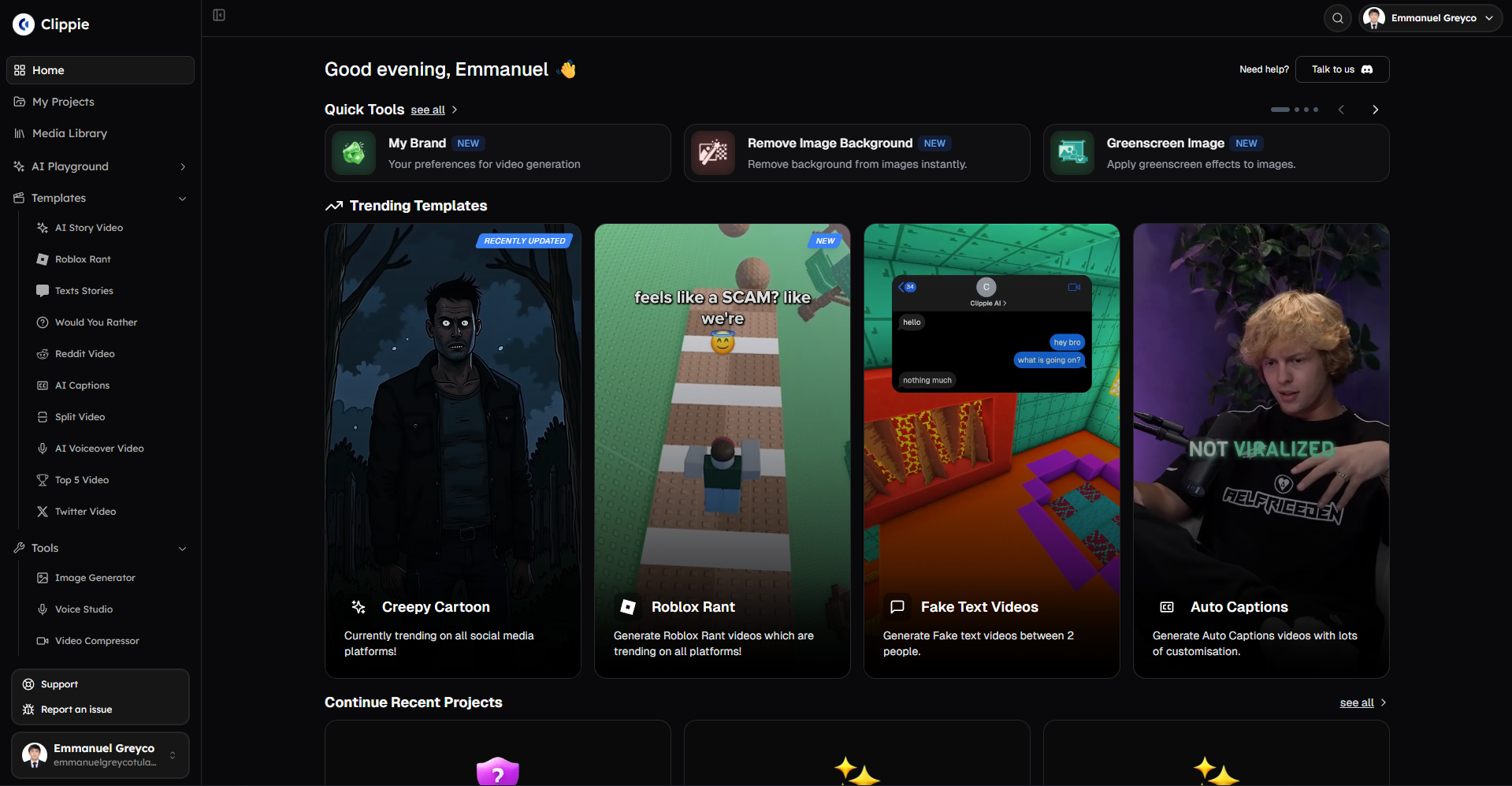
For agencies at every stage, whether boutique shops seeking to compete with larger firms through production efficiency, growing agencies hitting manual capacity ceilings preventing further expansion, or established operations seeking margin improvement and competitive differentiation, AI-powered video production through Clippie AI removes the fundamental constraint limiting agency growth: the linear relationship between team size and client capacity requiring proportional hiring for every incremental client added. Visit clippie.ai to explore how agencies are scaling from 8-12 clients to 20-30 clients with same team size, improving profit margins 40-60%, and building sustainable competitive advantages through delivery speed and service comprehensiveness impossible to match through manual production workflows.
Read more

The Future of Faceless Content in 2026 (What to Expect)
The future of faceless content in 2026: where AI video, the rules, and monetization are heading, and what to do now.

The Best TikTok Niches for High CPM in 2026
The best high-CPM TikTok niches in 2026: which are worth the most, what CPM really means, and how to earn from them.

How to Make Money With Whop Clipping in 2026
How to make money with Whop clipping in 2026: how pay-per-view campaigns work, realistic earnings, and how to start.