
How to Use AI Video for Lead Generation in 2026
AI video for lead generation 2026: Why video leads convert better, best formats for qualified leads, hooks that drive opt-ins, views to conversations & automate with Clippie AI.
If you're searching for how to use AI video for lead generation in 2026, you're recognizing the conversion gap separating businesses generating 400-800 monthly qualified leads through video-powered lead capture (explainer videos converting 18-35% of viewers vs. 2-5% on static landing pages, value-first demonstration videos pre-qualifying prospects before sales conversations, automated video sequences nurturing cold traffic to sales-ready status without manual intervention) from those struggling with traditional text-based lead forms (0.5-2% opt-in rates on generic contact forms, unqualified leads consuming sales team time, cold outreach generating 1-3% response rates requiring massive volume to sustain pipeline). This comprehensive guide explains why video leads convert dramatically better than traditional forms (demonstration capability eliminating purchase uncertainty before form submission, trust-building through face and voice unavailable in text, self-qualification where viewers who complete videos represent far higher intent than form submitters), identifies the highest-converting video lead formats (free training videos exchanging valuable education for contact information converting 22-38%, consultation offer videos positioning expert guidance as scarce resource converting 15-28%, tool/template preview videos demonstrating immediate utility converting 25-42%), delivers content hook frameworks that generate genuine opt-in desire (value gap hooks creating "I need this" response through partial information delivery, authority demonstration hooks positioning creator as uniquely qualified expert, transformation preview hooks showing achievable outcomes triggering aspiration), provides systematic view-to-conversation conversion processes (multi-video nurture sequences moving prospects from awareness to sales-ready status, retargeting frameworks converting engaged viewers into booked calls, qualification systems ensuring sales conversations with genuinely interested prospects only), and positions Clippie AI as the production platform enabling scalable lead video creation (reducing per-video production time 70-85% enabling monthly output of 15-20 lead magnets, maintaining quality consistency across all lead capture touchpoints, automating technical execution while human attention focuses on strategic messaging that actually converts cold traffic to qualified opportunities).
Executive Summary: AI video transforms lead generation in 2026 through three compounding advantages: conversion rate multiplication (video lead magnets converting 18-35% vs. 2-5% text equivalents, generating 3-7x more leads from identical traffic, video opt-ins indicating 4-6x higher purchase intent than text form submissions through self-qualification of time investment, demonstration-based trust reducing sales cycle length 30-50% by eliminating objections before first conversation), lead qualification improvement (viewers who complete 3-5 minute value videos represent far higher intent than drive-by form submitters, video engagement data revealing topic interest enabling conversation personalization, multi-video consumption patterns identifying hot prospects before outreach), and systematic scalability through AI production (tools like Clippie AI enabling batch creation of 15-20 monthly lead magnets in 8-10 hours vs. 40-60 hours manual equivalent, template systems maintaining brand consistency across all lead capture points, automated video sequences nurturing leads without ongoing manual effort once initial content created). Success requires abandoning low-value lead volume metrics (celebrating 500 monthly leads when only 15 convert to customers, focusing on wrong metric), replacing generic lead magnets with high-specificity value delivery (solving one specific problem completely beats surface-level coverage of ten problems), and building multi-video nurture systems that progressively qualify and warm prospects before sales conversation investment (moving from "spray and pray" cold outreach to systematic warm pipeline development where prospects arrive pre-educated and pre-qualified).
Table of Contents
Why Video Leads Convert Better Than Traditional Lead Forms (And by How Much)
The Best Video Formats That Consistently Capture Qualified Leads
The Content Hooks That Make Viewers Actually Want to Opt In
How to Turn Video Views Into Qualified Sales Conversations
How to Automate Lead-Generating Video Production With Clippie AI
Frequently Asked Questions
1. Why Video Leads Convert Better Than Traditional Lead Forms (And by How Much)
The lead generation conversion gap between video and traditional text forms isn't marginal, it's multiplicative. Understanding the specific psychological and practical mechanisms driving this difference enables businesses to architect lead capture systems generating 3-7x more qualified prospects from the same traffic investment.
The Conversion Data Comparison
Traditional text-based lead form performance:
Standard contact form (no value exchange):
Landing page traffic: 1,000 visitors
Form completion rate: 0.5-2%
Leads generated: 5-20
Lead quality: Low (minimal qualification, anyone can submit)
Sales conversation conversion: 5-10% (most leads not genuinely interested)
Customers acquired: 0.25-2 from 1,000 visitors
PDF download lead magnet:
Landing page traffic: 1,000 visitors
Opt-in rate: 2-8%
Leads generated: 20-80
Lead quality: Low-moderate (downloaded but may not read)
Sales conversation conversion: 8-15%
Customers acquired: 1.6-12 from 1,000 visitors
Video-based lead generation performance:
Free training video (5-8 minutes, high-value content):
Landing page traffic: 1,000 visitors
Video start rate: 45-65% (450-650 viewers start video)
Video completion rate: 60-75% (270-488 complete video)
Post-video opt-in rate: 35-55% (of completers)
Leads generated: 95-268
Lead quality: High (time investment signals genuine interest)
Sales conversation conversion: 25-40% (pre-qualified through content)
Customers acquired: 24-107 from 1,000 visitors
Performance multiplier:
Video lead generation produces:
5-13x more leads from identical traffic (95-268 vs. 5-20 text form)
9-107x more customers from identical traffic (24-107 vs. 0.25-2 text form)
Higher lead quality (25-40% sales conversion vs. 5-15% text form leads)
Why the massive difference: The conversion multiplier emerges from three compounding mechanisms unavailable to text-based lead capture.
Mechanism #1: Demonstration Eliminates Pre-Purchase Uncertainty
The uncertainty problem with text forms:
Every lead form submission involves perceived risk:
Information risk: "Will they spam me?"
Quality risk: "Will this actually be valuable?"
Fit risk: "Is this relevant to my specific situation?"
Text-based lead magnets ask prospects to take action (submit email) before uncertainty resolution, most choose not to risk it.
How video resolves uncertainty before asking:
Information quality demonstrated:
First 60-90 seconds delivers substantial value (proves quality without requiring opt-in)
Viewer experiences teaching style, depth, relevance (can assess fit before committing)
Result: Opt-in decision made with high certainty (not blind bet)
Specific relevance confirmed:
Video content reveals whether it matches viewer's exact situation
Wrong-fit viewers self-select out (don't opt in, saving everyone time)
Right-fit viewers highly motivated to opt in (already experiencing value)
Result: Higher conversion rate on more qualified audience
Authority and credibility established:
Voice, face, presentation style convey competence (or lack thereof)
Specific examples and depth demonstrate real expertise
Result: Trust built before asking for contact information (vs. text where trust requested upfront)
The demonstration conversion sequence:
Minute 0-1: Hook + value promise establishes relevance
Minute 1-4: Core teaching delivers on promise (uncertainty eliminated, this IS valuable)
Minute 4-5: Deeper application teased (creates desire for more)
Minute 5: Opt-in offer positioned as logical next step (viewer already wants it)
Conversion: 35-55% of completers opt in (vs. 2-5% text form cold traffic)
Mechanism #2: Time Investment Creates Self-Qualification
The qualification problem with low-friction lead capture:
Easy opt-ins (single field email forms) generate high volume but low quality:
Curiosity clicks: People opt in "just to see" without genuine interest
Freebie seekers: Collecting resources with zero purchase intent
Competitors: Researching competitive offerings
Wrong-fit prospects: Don't actually have the problem being solved
Sales teams waste 60-80% of time on unqualified leads from low-friction capture.
How video viewing time acts as qualification filter:
Investment signaling theory:
Watching 5-minute video requires meaningful attention investment
Only genuinely interested prospects invest this time
Completion signals: "This topic matters enough to give 5 minutes"
Result: Video leads represent 4-6x higher intent than text form submissions
The qualification data:
Text form lead (30-second submission): Converts to customer 5-15%
Video lead (5-minute viewing + opt-in): Converts to customer 25-40%
Difference: 2.7-5.3x higher conversion rate from leads requiring more effort to generate
Counterintuitive principle:
Making lead capture "harder" (requiring 5-minute video watch) generates fewer leads but dramatically more customers:
Easy text form: 1,000 traffic → 50 leads → 5 customers (10% conversion)
Video lead magnet: 1,000 traffic → 150 leads → 52 customers (35% conversion)
Same traffic, 10x more customers despite "harder" opt-in process
Why this works: Friction isn't bad, wrong-friction is bad. Video watching is productive friction (viewer gets value during qualification) vs. form-filling which is pure friction (no value delivered during process).
Mechanism #3: Multi-Sensory Trust Building
The trust deficit with text:
Text-based lead magnets must build trust through words alone:
Claims about expertise (anyone can claim anything)
Testimonials help but aren't experiencing creator directly
Limitation: Trust requested before evidence provided
How video accelerates trust:
Voice conveys competence:
Confident delivery signals subject mastery
Hesitation or filler words signal uncertainty
Pacing and clarity demonstrate communication skill
Effect: Viewers unconsciously assess "does this person know what they're talking about?"
Face conveys authenticity:
Facial expressions build emotional connection (mirror neuron response)
Eye contact (with camera) creates relationship feel
Micro-expressions difficult to fake (authenticity signals)
Effect: "I can tell this person is genuine" trust assessment
Demonstration proves expertise:
Walking through specific examples (shows real knowledge depth)
Handling complex topics clearly (demonstrates mastery)
Effect: "This person really knows their stuff" conviction
Trust acceleration timeline:
Text-based relationship: 3-5 touchpoints to build sufficient trust for conversation
Video-based relationship: Often 1-2 videos sufficient (trust builds 3-5x faster)
Business impact: Shorter nurture cycles, faster pipeline velocity, lower cost per qualified lead
The Lead Quality Data
Lead quality comparison (B2B service business example):
Text form leads:
Average time to close: 45-90 days (long nurture required)
Show rate for sales calls: 45-60% (many no-shows)
Close rate: 8-15% (many unqualified leads)
Objections during sales process: High (trust and understanding gaps)
Video leads:
Average time to close: 20-35 days (arrived pre-educated)
Show rate for sales calls: 70-85% (higher commitment level)
Close rate: 25-40% (pre-qualified and pre-sold)
Objections during sales process: Low (addressed in video content already)
Sales efficiency impact:
Same sales team capacity (20 conversations weekly):
Servicing text form leads: 20 calls × 12% close = 2.4 customers weekly
Servicing video leads: 20 calls × 32% close = 6.4 customers weekly
Same effort, 2.7x more customers from lead quality improvement alone
2. The Best Video Formats That Consistently Capture Qualified Leads
Not all video lead magnets perform equally. The highest-converting formats share three characteristics: they deliver immediate, specific value (not generic overviews), they demonstrate unique insight or methodology (not information available everywhere), and they create natural continuation desire (viewers want more after completion).
Format #1: Free Training Videos (22-38% Opt-In Rate)
What they are: 5-12 minute teaching videos solving one specific problem completely, positioned as free training in exchange for email opt-in to receive supporting resources or continued learning.
Why they convert:
Immediate value: Viewer walks away with actionable solution (even without opt-in)
Authority demonstration: Teaching depth proves expertise
Continuation desire: Solving one problem often reveals adjacent problems viewer wants solved
Reciprocity trigger: Receiving free value creates psychological desire to reciprocate
Structure for maximum conversion:
Hook (0-15 seconds): Identify specific problem being solved
"In the next 8 minutes, I'll show you exactly how to [achieve specific outcome]"
Specificity critical: "Generate leads from LinkedIn" > "Improve your marketing"
Value delivery (15 seconds - 8 minutes): Teach the complete solution
Framework or methodology: Give away the "what" and "how" (not just surface-level tips)
Specific examples: Walk through real scenarios (not abstract theory)
Implementation steps: Actionable instructions viewer can execute immediately
Opt-in offer (8-10 minutes): Position continued learning
Acknowledge what was just taught: "You now have the foundation for [outcome]"
Tease next level: "The next challenge most people face is [adjacent problem]"
Offer solution: "I've created a [resource] that walks you through [next step]. Enter your email below and I'll send it immediately."
Critical: Opt-in offer is logical continuation (not random unrelated resource)
Topic selection for maximum opt-ins:
High-performing topics:
Specific how-to processes: "How to write cold emails that get 30%+ response rates"
Common mistake correction: "The #1 reason your LinkedIn outreach isn't working (and how to fix it)"
Tool or system walkthroughs: "Our 5-step framework for qualifying leads before first conversation"
Low-performing topics:
Generic overviews: "Introduction to lead generation"
Motivation content: "Why you should be generating leads"
Theory without application: "The psychology of buyer behavior"
Platform deployment:
Landing page: Primary placement (organic traffic, paid ads funnel here)
YouTube: Organic SEO value (ranks for relevant searches, builds authority)
LinkedIn: Native video (reaches professional audience directly)
Email list: Existing subscribers (deeper education, segment interest)
Production with Clippie AI:
Film 8-12 minute training presentation (screen recording + talking head)
Upload to Clippie AI, apply "Training Video" template
AI processes: Adds captions, removes filler, applies brand intro/outro, color correction
Review and export: 10-15 minutes
Total production time: 60-90 minutes per training video
Performance example (B2B SaaS):
Landing page traffic: 2,000 monthly visitors
Video start rate: 55% (1,100 viewers)
Completion rate: 68% (748 completers)
Opt-in rate: 32% (239 leads)
Lead generation: 239 monthly qualified leads
Lead quality: 28% convert to sales calls (67 monthly sales-qualified opportunities)
Format #2: Consultation/Demo Offer Videos (15-28% Opt-In Rate)
What they are: 3-5 minute videos explaining what a consultation or product demo covers, why it's valuable, and positioning it as limited availability resource (exchanging contact information for access to scarce expert time).
Why they convert:
Scarcity positioning: Consultation time genuinely limited (vs. infinite digital resources)
Personalization promise: Implies custom solution to viewer's specific situation
Decision-stage targeting: Viewers booking consultations are further along buying journey
Authority transfer: Offering consultation positions creator as expert (not supplicant)
Structure:
Problem identification (0-45 seconds):
Name the specific problem consultation addresses
Quantify the cost of not solving it
Example: "If you're spending $5,000+ monthly on ads without clear ROI tracking, you're likely wasting 30-40% of your budget on underperforming campaigns"
What consultation covers (45 seconds - 2 minutes):
3-5 specific deliverables from consultation
Not vague: "We'll review your account" (too generic)
Specific: "I'll audit your top 10 campaigns, identify the 2-3 killing your ROAS, and give you an action plan to cut wasted spend within 7 days"
Who it's for / not for (2-3 minutes):
Qualifying statements: "This is for businesses spending $3,000+ monthly on paid ads"
Disqualifying statements: "If you're just getting started with ads, this isn't the right fit yet"
Effect: Self-qualification (wrong-fit prospects don't book, right-fit highly motivated)
Booking CTA (3-4 minutes):
Single clear action: "Click the button below to schedule your consultation"
Scarcity if genuine: "I only take 5 consultations weekly, current availability shown on calendar"
Zero obligation statement: "No commitment to work together, just 30 minutes of focused strategy"
Consultation qualification questions:
When viewer clicks to book, present 3-5 qualification questions:
Company size / revenue / ad spend (qualifying budget fit)
Specific challenge they're facing (customizes conversation)
Timeline for solving problem (urgency assessment)
What they've tried already (sophistication level)
Why qualification questions matter:
Further filters: Only serious prospects complete 3-5 questions
Personalizes conversation: Sales team armed with context before call
Reduces no-shows: Greater time investment increases commitment
Performance example (marketing agency):
Landing page traffic: 1,500 monthly
Video watch rate: 48% (720 viewers)
Completion rate: 72% (518 completers)
Consultation booking rate: 18% (93 booked consultations)
Show rate: 78% (73 completed consultations)
Sales-qualified conversations: 73 monthly
Close rate: 35% (26 new clients monthly)
Format #3: Tool/Template Preview Videos (25-42% Opt-In Rate)
What they are: 2-5 minute videos demonstrating a specific tool, template, spreadsheet, or resource, showing exactly what it contains and how to use it, positioned as free download in exchange for email.
Why they convert exceptionally well:
Tangible value: Viewer sees exactly what they're getting (eliminates uncertainty)
Immediate utility: Tool/template usable same day as download
Low commitment: Downloading resource feels less committal than booking consultation
Demonstration proof: Video shows resource working (not just describing it)
Structure:
Hook (0-10 seconds): Name the tool and specific outcome
"I'm about to show you the exact cold email template that generated 347 qualified leads in 90 days"
Specificity + proof: Builds immediate credibility
The problem this solves (10-30 seconds):
Why this tool exists
Example: "Most cold emails get 2-3% response rates because they follow generic formulas. This template structure consistently achieves 25-35% responses because it's built on conversation psychology, not sales tactics."
Screen walk-through (30 seconds - 3 minutes):
Show the actual tool/template
Walk through each section explaining purpose
Example: For email template, show subject line framework, opening hook structure, value proposition section, CTA format
Demonstrate with real example: "Here's how I used this last month..." (show actual sent email and response)
How to use it (3-4 minutes):
Implementation instructions
Common mistakes to avoid
Expected results and timeline
Example: "Most people see 15-25% response rates within first 50 emails sent using this template"
Download CTA (4-5 minutes):
"Enter your email below and I'll send this template immediately"
Bonus mention if applicable: "You'll also get my 5-day email sequence on optimizing cold outreach"
Social proof: "12,847 people have downloaded this template"
High-converting tool/template types:
Spreadsheet tools:
ROI calculator: "Calculate exactly how much each marketing channel returns"
Planning template: "90-day content calendar template"
Tracking spreadsheet: "Lead tracking system with automatic pipeline reporting"
Document templates:
Email templates: "5 cold email templates with 30%+ response rates"
Proposal template: "Client proposal template that closes 60% of opportunities"
Process document: "Our complete SOPs for lead qualification"
Checklists and frameworks:
Audit checklist: "47-point website conversion checklist"
Launch framework: "Product launch checklist used for 6 successful launches"
Implementation guide: "Step-by-step ad campaign setup checklist"
Why these perform 25-42% opt-in rates: Viewers can see exactly what they're getting before committing, eliminates all uncertainty. Plus immediate utility creates high perceived value even though delivery cost is zero.
Production efficiency:
These videos are fastest to produce:
Screen record walk-through: 20-30 minutes
Add talking head intro/outro: 10 minutes
Clippie AI processing: 10 minutes
Review and export: 10 minutes
Total: 50-60 minutes per tool preview video
Format #4: Case Study Videos (20-34% Opt-In Rate)
What they are: 4-8 minute videos walking through specific customer success story, showing before state, implementation process, and after results, positioned to demonstrate methodology effectiveness.
Why they convert:
Social proof: Real results from real customer (eliminates "will this work for me?" doubt)
Process demonstration: Shows what working together actually looks like
Transformation narrative: Emotional arc creates aspiration
Methodology reveal: Teaching through example builds authority
Structure:
Customer introduction (0-30 seconds):
Who they are, industry, size
Make them relatable to target audience
Example: "Sarah runs a 7-person marketing agency in Austin. She was spending $8,000 monthly on ads with inconsistent ROAS between 1.2x and 2.8x."
Before state (30 seconds - 1.5 minutes):
Specific challenge they faced
What they tried before (proves they're serious, not just lazy)
Cost of the problem (quantified)
Example: "She'd tried three different agencies and spent $12,000 on courses, but couldn't get consistent lead flow. She was considering shutting down paid ads entirely."
Implementation (1.5 - 5 minutes):
What methodology/system you used
Key changes implemented
Timeline of progress
Example: "We implemented our 3-phase testing framework: Week 1-2 we rebuilt her creative testing system. Week 3-4 we optimized for highest-intent audiences. Week 5-6 we scaled winning combinations."
After state (5-7 minutes):
Specific results achieved
Timeline to results
Comparison to before state
Example: "Within 60 days, Sarah's ROAS stabilized at 4.2x. She's now spending $15,000 monthly confidently because returns are predictable. That's $63,000 in monthly revenue from ads, up from $22,000 before."
Opt-in offer (7-8 minutes):
Offer related resource: "I've documented this exact 3-phase framework in a guide. Enter your email and I'll send it over, you'll see exactly what we did with Sarah and how to apply it to your business."
Case study selection criteria:
Relatable customer: Target audience sees themselves in this customer
Specific results: Numbers, not vague "got better"
Reasonable timeline: 30-90 days (believable), not "overnight success" (skepticism trigger)
Overcoming common objection: Address a specific fear/objection through the story
Performance example (B2B coaching):
YouTube organic traffic: 3,500 monthly views on case study video
Completion rate: 61% (2,135 viewers complete)
Opt-in rate: 27% (577 leads)
Lead generation: 577 monthly from single case study video
Sales qualification rate: 22% (127 sales-ready leads from one video)
3. The Content Hooks That Make Viewers Actually Want to Opt In
Generic value propositions ("Get my free guide") generate minimal opt-ins because they fail to create genuine desire. High-converting content hooks deploy specific psychological triggers that make viewers feel they need what's being offered, not just mild curiosity, but active want.
Hook Type #1: The Value Gap Hook
What it is:
Deliberately creating awareness of a gap between where viewer is now and where they could be, then positioning opt-in resource as bridge across that gap.
Psychological mechanism:
Loss aversion: Humans feel gap/loss more acutely than equivalent gain. Realizing "I'm missing out on X" creates stronger motivation than "I could gain X."
Implementation structure:
Step 1: Establish current state
"Most businesses generate leads but struggle to convert them to customers, typical conversion rates are 2-5%"
Viewer recognizes: "That's me" (identifies with current state)
Step 2: Reveal gap
"But when you optimize your lead nurture process using psychology-based sequencing, conversion rates of 18-35% are consistently achievable"
Viewer realizes: Gap between where they are (2-5%) and where they could be (18-35%)
Emotional response: "I'm leaving 4-7x potential customers on the table"
Step 3: Create authority
"Over the last 3 years, I've helped 142 businesses implement this exact system"
Credibility: This person has solved this problem many times
Step 4: Bridge offer
"I've documented the complete 7-step framework in a guide that takes 15 minutes to implement. Enter your email and I'll send it over right now."
Opt-in positioned as: Solution to the newly-realized gap
Value gap examples by industry:
Marketing/sales:
Current state: "Your sales team spends 60% of time on unqualified leads"
Gap: "With proper video-based qualification, 85% of their time goes to ready-to-buy prospects"
Bridge: "Lead Qualification Video Framework"
Productivity/software:
Current state: "You're spending 3 hours daily on manual data entry"
Gap: "Automation can reduce that to 20 minutes daily, 2.5 hours saved daily = 650 hours annually"
Bridge: "30-Minute Automation Setup Guide"
Health/fitness:
Current state: "Most people's sleep is disrupted 3-5 times nightly without realizing it"
Gap: "Optimized sleep environment leads to 0-1 disruptions, and you wake actually rested"
Bridge: "Sleep Optimization Checklist"
Why this converts 30-45% higher than generic offers:
Generic: "Get my free marketing guide" (viewer thinks: "Maybe, I guess") Value gap: "You're losing 4-7x potential customers, here's the fix" (viewer thinks: "I need to stop this loss immediately")
Hook Type #2: The Authority Demonstration Hook
What it is: Proving unique expertise or methodology before asking for opt-in, showing you know something specific that others don't.
Why it works: Abundance of generic content means viewers need proof of differentiation before investing attention. Demonstrating unique insight earns right to ask for email.
Implementation:
Contrarian insight:
Challenge common wisdom with specific counter-argument
Example: "Everyone tells you to post daily on LinkedIn. Here's why that's actively hurting your reach, and what to do instead."
Viewer reaction: "This is different from what I've heard elsewhere" (peaks curiosity)
Proprietary framework:
Name and explain your unique methodology
Example: "Our 3-Phase Creative Testing System, the framework we've used to improve ROAS by 40-120% across 89 ad accounts"
Naming creates: Perceived ownership and systematization (sounds like genuine methodology, not generic tips)
Specific data/results:
Share numbers from your experience
Example: "After analyzing 2,847 cold email campaigns, I've identified the 3 subject line patterns that generate 35%+ open rates consistently"
Specificity signals: Real analysis, not opinion
Authority demonstration video structure:
Hook (0-15 seconds):
Bold claim or contrarian position
Example: "I'm going to show you why most lead generation advice is backwards"
Evidence (15 seconds - 3 minutes):
Data, case studies, or specific examples proving the claim
Example: "Here are 12 businesses that did X, their lead flow dropped 40%. Here are 8 that did Y instead, lead flow increased 160%."
Methodology reveal (3-6 minutes):
Teach your framework or approach
Give away the "what" and high-level "how"
Example: "The difference is this 4-step qualification process. Step 1: [explanation]. Step 2: [explanation]..."
Depth offer (6-7 minutes):
Acknowledge what was taught vs. what's needed for implementation
Example: "You now understand the framework. The challenge is implementation, each step has 5-8 sub-components that determine whether it works."
Opt-in: "I've created an implementation guide walking through all 32 sub-components. Enter your email below."
Why authority demonstration drives opt-ins:
By proving you know something unique, viewer concludes:
"This person has insights I haven't seen elsewhere"
"If the free content is this good, the opt-in resource must be even better"
"I want to learn more from this source specifically"
Hook Type #3: The Transformation Preview Hook
What it is: Showing specific, achievable outcome viewer can reach, creating aspiration and belief that transformation is possible for them specifically.
Implementation:
Before/after structure:
Show clear starting point (relatable to viewer's current state)
Show end state (aspirational but believable)
Show the bridge (your methodology/resource connects the two)
Example (lead generation context):
Before: "6 months ago, this business was generating 12-18 leads monthly from $3,000 ad spend. Lead quality was poor, only 2-3 turned into customers."
After: "Today they generate 140-180 monthly leads from the same $3,000 spend. Lead quality is dramatically higher, 40-55 become customers."
Bridge: "The difference was implementing video-based lead magnets. Here's the exact system..."
Specificity requirements:
Vague transformations don't convert:
Bad: "Improved their marketing"
Good: "Increased qualified leads 347% in 90 days without increasing ad spend"
Numbers + timeline + constraint = believable transformation
Emotional arc in transformation content:
Struggle: Viewer identifies with frustration (empathy)
Discovery: Introduction of solution (hope)
Implementation: Showing it was achievable (belief)
Result: Specific outcome (aspiration)
Opt-in positioned as: "Here's how to create your own transformation"
Why transformation previews convert:
Humans are wired for narrative, stories stick where lists don't. Transformation narratives create:
Identification: "That starting point is where I am now"
Aspiration: "I want that end result"
Belief: "If they did it, I can too"
Action: "I need to know how they bridged the gap"
Hook Type #4: The Mistake Correction Hook
What it is: Identifying common mistake your audience is making, then positioning opt-in resource as the correction.
Why it works: Discovering you're doing something wrong creates immediate desire to fix it (loss aversion + urgency).
Structure:
Mistake identification (0-45 seconds):
Name the specific mistake
Example: "Most businesses ask for email addresses on the first website visit. This is costing you 70-85% of potential leads."
Why it's a mistake (45 seconds - 2 minutes):
Explain the mechanism of harm
Example: "Cold traffic doesn't trust you yet. Asking for email before providing value triggers immediate exit. Only 1-2% of first-time visitors will opt in immediately, meaning you lose 98-99% without engaging them."
The correction (2-5 minutes):
Teach the right approach
Example: "Instead, offer immediate value first. Give them a 3-minute video solving a specific problem, no opt-in required. After they watch and experience your expertise, THEN ask for email to send the implementation guide. This converts 22-35% instead of 1-2%."
Implementation resource (5-6 minutes):
Offer tool/guide for applying correction
Example: "I've created a guide showing 8 video topics that work as first-touch lead magnets, plus the exact landing page structure that converts 22-35%. Enter your email and I'll send it over."
Mistake correction examples:
Marketing:
Mistake: "Trying to generate leads before building authority"
Correction: "Build authority through free content, then lead generation becomes easy"
Resource: "Authority Building Content Calendar"
Sales:
Mistake: "Pitching on first conversation"
Correction: "First conversation is pure qualification, pitch only to confirmed-fit prospects"
Resource: "Qualification Question Framework"
Productivity:
Mistake: "Using calendar for task management"
Correction: "Calendar for appointments, dedicated system for tasks"
Resource: "Task Management System Setup Guide"
Why mistake correction converts 28-44%: Realizing a mistake creates urgency ("I need to stop doing this wrong thing now") far stronger than opportunity framing ("I could do this better thing eventually").
4. How to Turn Video Views Into Qualified Sales Conversations
Generating leads through video opt-ins is half the equation, converting those leads into sales-ready conversations determines actual business impact. The difference between 5% lead-to-conversation rates and 35% rates is systematic post-opt-in nurture leveraging both automation and strategic follow-up.
The Multi-Video Nurture Sequence
Why single video isn't sufficient:
One video exposure, even with opt-in, rarely creates sales-ready status:
Trust still building (one interaction insufficient for high-trust purchases)
Knowledge gaps remain (one video can't cover everything)
Timing may be wrong (viewer interested but not ready to buy yet)
Solution: Automated video sequence progressively qualifying and warming leads
The 5-video welcome sequence:
Video 1 (Immediate delivery after opt-in): Resource delivery + what's next
Length: 2-3 minutes
Content: "Thanks for opting in, here's [resource]. Here's how to use it for best results. Over the next 5 days, I'm going to send you 4 more videos covering [topics]. See you tomorrow."
Goal: Set expectation for sequence (viewer knows more value coming)
Video 2 (Day 2): Deeper dive on core concept
Length: 5-7 minutes
Content: Expand on the concept from Video 1 with additional methodology
Goal: Deepen understanding, build authority further
Video 3 (Day 4): Common mistakes and how to avoid them
Length: 4-6 minutes
Content: "Now that you understand [concept], here are the 3 mistakes that derail 80% of people implementing it"
Goal: Position as experienced guide (knows pitfalls from working with many clients)
Video 4 (Day 6): Case study / proof
Length: 5-8 minutes
Content: Walk through specific customer success implementing what's been taught
Goal: Proof it works, create aspiration
Video 5 (Day 8): Next steps / offer
Length: 3-5 minutes
Content: "You now have the framework. Most people hit 3 challenges implementing it: [challenge 1, 2, 3]. If you'd like help navigating these, I have [consultation / program / done-for-you service]. Here's what that looks like..."
Goal: Present offer as logical next step (not random pitch)
CTA: Book consultation or learn more about service
Sequence performance benchmarks:
Video 1 watch rate: 65-80% (just opted in, high engagement)
Video 2 watch rate: 45-60% (still engaged)
Video 3 watch rate: 35-50% (attrition natural)
Video 4 watch rate: 30-45% (highly qualified remaining viewers)
Video 5 watch rate: 25-40%
Video 5 CTA conversion: 12-25% (of viewers taking next action)
From 100 opt-ins:
30-40 watch Video 5
4-10 take next action (consultation booking, application, purchase)
4-10% lead-to-conversation rate from automation alone
Engagement-Based Retargeting
The opportunity: Not every lead progresses through email sequence, but their video viewing behavior reveals intent signals that can trigger personalized outreach or ads.
Engagement triggers:
High-engagement signal (warrants direct outreach):
Watched 3+ videos in sequence
Watched any video 2+ times
Clicked CTA links but didn't convert
Action: Personal email or LinkedIn message referencing specific videos watched
Medium-engagement signal (warrants retargeting ads):
Watched 1-2 videos in sequence
Watched 50%+ of any video
Action: Show retargeting ads with next-step content or offer
Low-engagement signal (warrants re-engagement content):
Opened emails but didn't watch videos
Watched <30% of Video 1
Action: Send different angle or topic (original didn't resonate)
Retargeting ad sequence for engaged leads:
Ad 1 (to video viewers):
Content: "Thanks for watching [video topic]. Here's what most people want to know next..."
Goal: Continue education, move deeper into funnel
Ad 2 (to ad 1 engagers):
Content: Social proof / case study
Goal: Build belief through others' results
Ad 3 (to ad 2 engagers):
Content: Consultation or offer positioning
Goal: Convert to conversation
Combined approach performance:
Email sequence alone: 4-10% lead-to-conversation
Retargeting alone: 2-5% lead-to-conversation
Email sequence + retargeting: 12-22% lead-to-conversation
Compound effect: Multiple touchpoints across channels dramatically improves conversion
The Consultation Booking Flow
Pre-qualification questions: When lead clicks to book consultation, present qualification questions before calendar:
Question 1: Budget/size qualifier
"What's your current [relevant metric]?"
Example for marketing agency: "What's your monthly marketing budget?"
Purpose: Filter out below-threshold prospects early
Question 2: Specific challenge
"What's the biggest challenge you're facing with [topic]?"
Open text field
Purpose: Customizes consultation, shows they've thought about it
Question 3: Timeline
"How soon are you looking to [achieve outcome]?"
Multiple choice: Immediately / Within 30 days / Within 90 days / Just exploring
Purpose: Urgency assessment
Question 4: Previous attempts
"What have you already tried?"
Open text field
Purpose: Sophistication level, shows they're serious
Why qualification questions improve show rates:
Time investment: Completing 4 questions increases commitment
Personalization: Consultation customized to their answers (higher perceived value)
Self-selection: Wrong-fit prospects often abandon during questions (saves everyone time)
Show rate impact:
No qualification: 45-60% show rate
With qualification: 70-85% show rate
Additional benefit: Calls that happen are higher quality (context provided)
The Follow-Up System for No-Shows and Non-Converters
No-show follow-up:
Immediate (15 minutes after missed call):
Automated email: "Looks like we missed you, here's a link to reschedule"
Include: Value reminder of what consultation would cover
Recovery rate: 25-35% reschedule
24-hour follow-up:
Personal video message (Loom or similar): "Hey [name], wanted to personally follow up, I had your [specific challenge from qualification questions] ready to discuss. Here's a quick 2-minute video with one immediate tip, and if you'd like to reschedule for the full session, link is below."
Recovery rate: Additional 10-15% reschedule
Total recovery: 35-50% of no-shows convert to completed calls
Non-converter follow-up: Lead went through nurture sequence but didn't book consultation:
Follow-up 1 (1 week after sequence ends):
Content: "Quick question, what held you back from booking a strategy session?"
Format: Plain text email (not marketing template, feels personal)
Goal: Understand objection
Follow-up 2 (2 weeks later):
Content: Case study specifically addressing common objection
Format: Video email
Goal: Overcome barrier with social proof
Follow-up 3 (1 month later):
Content: "Anything change? Still working on [challenge they mentioned]?"
Format: Plain text, brief
Goal: Check if timing better now
Follow-up series conversion:
Additional 5-12% of non-converters eventually book consultation
Timeline: Usually 30-90 days (buying cycle timing)
5. How to Automate Lead-Generating Video Production With Clippie AI
The production bottleneck preventing most businesses from executing video lead generation at scale isn't strategy, it's the 8-15 hours per video required manually. Clippie AI reduces per-video production to 90 minutes through AI-powered workflows, enabling monthly production of 15-20 lead magnets instead of 2-3.
The Lead Video Production Workflow
Step 1: Content planning (30 minutes, covers 10-15 videos)
Planning session output:
List 10-15 lead magnet topics (specific problems to solve)
Determine format for each (training / tool preview / case study / consultation offer)
Write hook and core teaching points per video
Determine opt-in offers per video
Strategic batching:
Group similar videos (all training videos filmed in one session)
Group by location (all screen-recording videos in one session)
Efficiency gain: Setup once, film multiple
Step 2: Batch filming (2-3 hours, produces 8-12 videos)
Setup (15 minutes one-time per session):
Camera/phone positioned (clean background, good lighting)
Screen recording ready (if applicable)
Notes/outline visible (but not reading script, natural delivery critical)
Filming protocol:
Record all hooks consecutively (momentum maintained)
Record all main teaching segments
Record all CTAs
Multiple takes: Record 2-3 versions per segment (choose best in editing)
Session output: Raw footage for 8-12 complete lead videos
Step 3: Clippie AI processing (10-15 minutes autonomous per video)
Upload:
Import raw footage (batch upload all 8-12 videos, 2-3 minutes)
Organize by video (folder or project structure)
Template application:
Select "Lead Magnet Video" template
Pre-configured with: Brand intro, caption style, CTA overlays, export settings
AI processing (10-15 minutes per video, all simultaneously):
Clippie AI handles across all videos:
Silence and filler removal (tightens pacing, maintains energy)
Caption generation (serves muted viewers, critical for lead videos)
B-roll insertion where applicable (keeps visual interest)
Audio normalization (consistent quality)
CTA overlay application (email capture button, text overlay)
Multi-platform versions if needed (landing page, YouTube, social)
Use processing time for: Writing email sequence copy, setting up landing pages, other tasks
Step 4: Review and landing page integration (15-20 minutes per video)
Video review:
Caption accuracy: Fix 1-3 typical AI errors per video
CTA visibility: Verify email capture elements clear
Pacing: Check that energy maintained (no awkward cuts from silence removal)
Brand consistency: Intro/outro correct
Landing page setup:
Embed video at top of page
Email opt-in form below video (or overlay CTA if supported)
Bullet points covering what video teaches (for SEO and scanners)
Social proof if available (testimonials, user count)
Total landing page creation: 15-20 minutes with template
Step 5: Email sequence setup (45-60 minutes per sequence)
Sequence creation:
Write 5 email scripts (Video 1 delivery, Videos 2-5 value/offer progression)
Upload videos to email platform (Vimeo, Wistia, or direct YouTube embeds)
Configure automation (triggers, delays, conditions)
Test sequence (send to yourself, verify all links and videos work)
One-time setup: Once email template created, subsequent sequences take 20-30 minutes only
Total production time per batch (10 videos):
Planning: 30 minutes
Batch filming: 150 minutes
AI processing: 15 minutes autonomous (not counted as active time)
Review per video: 18 minutes × 10 = 180 minutes
Landing pages: 18 minutes × 10 = 180 minutes
Email sequences: 50 minutes × 10 = 500 minutes (but many videos share sequences)
Total active time: 1,040 minutes = 17.3 hours for 10 complete lead magnet systems
Manual production equivalent: 10 videos × 8-12 hours = 80-120 hours
Time reduction: 78-85%
Clippie AI Features Specific to Lead Generation
Feature: Multi-platform export for omnichannel lead capture
Lead videos need deployment across:
Landing pages (primary conversion point)
YouTube (organic SEO, builds authority)
LinkedIn (reaches professional audience)
Facebook/Instagram (social media traffic)
Manual approach: Create 4 separate versions (3-4 hours per video)
Clippie AI: Single master file exports to all formats (5-10 additional minutes)
Feature: Caption generation = accessibility and muted viewing
85% of social media video watched muted initially. Captions convert muted viewers:
Manual captioning: 15-20 minutes per video
Clippie AI: 2-3 minutes (95-98% accuracy)
Impact: 40-60% higher completion rates with captions vs. without
Feature: 102+ language captions = international lead generation
For businesses with international audiences:
Generate captions in viewer's native language
No translation agency cost
Spanish, French, German, Portuguese, all major markets covered
Conversion impact: Native language content converts 64% higher than English-only for non-native speakers
Clippie AI Plans for Lead Video Production
Clippie Lite ($19.99/month):
30 minutes video export
30 minutes AI voice generation
30 minutes speech to subtitles
Captions in 102+ languages
50+ AI voices
100 AI images
1 custom voice
Best for: Small businesses creating 3-5 lead videos monthly
Clippie Creator ($34.99/month):
120 minutes video export
120 minutes AI voice generation
120 minutes speech to subtitles
Captions in 102+ languages
50+ AI voices
500 AI images
10 custom voices
Best for: Active lead generation systems (10-15 videos monthly)
Recommended: Ideal for most businesses scaling video lead gen
Clippie Pro ($69.99/month):
250 minutes video export
250 minutes AI voice generation
250 minutes speech to subtitles
Captions in 102+ languages
50+ AI voices
1,000 AI images
30 custom voices
Best for: Agencies and high-volume operations (20-30+ videos monthly)
ROI calculation (Creator plan):
Plan cost: $34.99 monthly
Lead videos enabled: 15 monthly (vs. 2-3 manual)
Leads per video: 150 average (at 25% opt-in from 600 viewers)
Total monthly leads: 2,250 (vs. 300-450 manual volume)
Lead value: $50 average (varies by business)
Additional monthly pipeline value: $95,000-$105,000
ROI on subscription: 271,492%
Start building your video lead generation system at clippie.ai.
6. Frequently Asked Questions
How long should a lead generation video be?
Answer: Optimal length depends on video purpose and placement, homepage/landing page lead magnets perform best at 5-8 minutes (sufficient depth to demonstrate expertise without losing attention, enabling complete problem-solution-offer arc), social media lead capture videos at 2-4 minutes (respect platform norms while delivering enough value to justify opt-in), consultation offer videos at 3-5 minutes (explain what consultation covers and qualify without requiring excessive time investment), and tool/template previews at 2-3 minutes (demonstrate utility quickly while maintaining interest), with the universal principle that videos should end when value delivery completes rather than hitting arbitrary time targets, going 30 seconds over ideal length to complete thought outperforms cutting content to hit time goal
Length guidelines by format:
Free training videos:
5-8 minutes: Optimal balance of depth and completion rate
Under 5 minutes: Often insufficient depth (feels surface-level)
Over 10 minutes: Completion rates drop significantly (viewers abandon)
Sweet spot: 6-7 minutes (enough depth to impress, short enough to complete)
Tool/template previews:
2-4 minutes: Demonstrate value quickly
Screen recording format allows: Packing substantial information into short time
Sweet spot: 3 minutes (thorough walk-through without drag)
Case study videos:
5-8 minutes: Tell complete transformation story
Under 5 minutes: Feels rushed (insufficient emotional arc)
Over 10 minutes: Drags unless exceptional storytelling
Sweet spot: 6 minutes (complete story with natural pacing)
Consultation offer videos:
3-5 minutes: Explain consultation value and qualify viewers
Under 3 minutes: Insufficient qualification (unclear who it's for)
Over 5 minutes: Too much friction before booking action
Sweet spot: 4 minutes (thorough explanation, quick decision)
Testing your optimal length:
Create same content at 2 different lengths, measure:
Completion rate: What % watch to end (need 55%+ for lead gen videos)
Opt-in rate: Which length converts better post-viewing
Lead quality: Do leads from different lengths convert to sales differently?
Most businesses discover: There's a specific length where completion and conversion optimize simultaneously (usually 5-7 minutes for teaching formats)
What opt-in conversion rate should I expect from video lead magnets?
Answer: Video lead magnet opt-in rates vary by format and traffic source, free training videos converting 22-38% of completers (viewers who finish video are pre-qualified by time investment), tool/template previews converting 25-42% of completers (tangible value visible increases conversion), consultation offers converting 15-28% of completers (higher commitment request reduces conversion but increases lead quality), with cold traffic performing at lower end of ranges and warm traffic (retargeting, email list, organic search) at higher end, and the critical metric being not just opt-in rate but lead-to-customer conversion where video leads typically convert 25-40% compared to 8-15% for traditional text form leads
Conversion rate benchmarks by scenario:
Cold traffic (paid ads to video landing page):
Video watch rate: 40-55% (start video)
Completion rate: 55-70% (of starters)
Opt-in rate: 25-35% (of completers)
Overall: 5.5-13.5% of landing page visitors become leads
Warm traffic (email list, blog readers):
Video watch rate: 60-75%
Completion rate: 68-78%
Opt-in rate: 32-45%
Overall: 13-26% of visitors become leads
Retargeting (previous website visitors):
Video watch rate: 55-70%
Completion rate: 72-82%
Opt-in rate: 35-50%
Overall: 14-28.5% of visitors become leads
Organic search (YouTube, Google):
Video watch rate: 65-80% (high intent from search)
Completion rate: 70-85%
Opt-in rate: 30-42%
Overall: 13.7-28.5% of visitors become leads
What affects conversion rates:
Positive factors (increase opt-in rate):
High-quality video production (professional audio/visual)
Specific, actionable content (vs. generic overviews)
Strong authority demonstration (proven expertise)
Clear, valuable opt-in offer (directly related to video content)
Social proof visible (testimonials, user count)
Negative factors (decrease opt-in rate):
Poor audio quality (unprofessional, hard to hear)
Generic content (available information everywhere)
Weak call-to-action (unclear what they're getting)
Unrelated opt-in offer (video about X, offering resource about Y)
Asking for too much information (name, email, phone, company = friction)
The more important metric: Lead-to-customer conversion
Video leads: 25-40% convert to customers
Text form leads: 8-15% convert to customers
Takeaway: Lower volume of higher-quality leads often produces more customers than high volume of low-quality leads
Should I gate my video content or offer it freely?
Answer: The optimal gating strategy depends on video purpose and viewer journey stage, awareness-stage educational content performs best ungated (building authority and trust through free value, enabling viral distribution, creating retargeting audiences for later conversion), consideration-stage implementation content works well partially gated (free intro demonstrating value, full implementation guide behind opt-in), and decision-stage consultation or product demos should be completely ungated (reducing friction at conversion moment, allowing prospect to assess fit before committing), with successful lead generation systems using hybrid approach where some videos drive traffic and authority ungated while others positioned as premium resources capture emails from engaged warm audience already trusting creator
Gating decision framework:
Ungated (freely accessible):
When to use:
Building initial awareness (reaching cold audience)
SEO and viral distribution (YouTube, social platforms reward ungated)
Authority building (proving expertise before asking anything)
Top-of-funnel content (first touchpoint with brand)
Example content:
"How to generate leads using video" (this blog's topic, educational)
"Common lead generation mistakes" (useful information, builds trust)
"Case study walkthrough" (social proof, accessible to all)
Benefit: Maximum reach, builds trust, creates retargeting audiences
Partially gated (preview free, full content behind opt-in):
When to use:
Middle-of-funnel content (viewer already aware of you)
Implementation guides (framework free, details gated)
Tool/template previews (show what it is, gate the download)
Example:
Free 3-minute video: "I'm going to show you our lead qualification framework"
Paid: Full implementation guide with templates behind opt-in
Benefit: Proves value before asking, converts engaged viewers
Fully gated (email required before watching):
When to use:
Premium content (masterclass, comprehensive training)
Audience already warm (coming from email, retargeting)
Want to build email list from existing audience
Example:
"60-minute masterclass on video lead generation" (full gate justified by length and depth)
Benefit: Every viewer captured as lead
The hybrid approach (recommended):
Use combination across funnel stages:
Stage 1: Ungated authority content
YouTube videos teaching fundamentals
LinkedIn/social videos building awareness
Blog-embedded educational videos
Goal: Build audience, establish authority, create retargeting pools
Stage 2: Partially gated implementation
Framework taught free, implementation guide gated
Tool preview shown free, template download gated
Goal: Convert warm, engaged audience to email list
Stage 3: Ungated conversion content
Consultation explainer videos (ungated)
Product demo videos (ungated)
Goal: Remove friction at conversion moment
Performance comparison:
All content gated:
Smaller audience reach (only opted-in viewers see)
Higher initial lead volume (everyone who watches is lead)
Lower authority building (limited viral potential)
All content ungated:
Maximum reach (no friction)
Lower lead volume (no capture mechanism)
Requires retargeting investment (capture through ads instead of opt-ins)
Hybrid approach:
Balanced reach and capture
Authority built through ungated + lead gen through gated
Most businesses find: Hybrid generates 2-4x more customers than either extreme
Conclusion: Building Systematic Video Lead Generation
AI video lead generation in 2026 creates compounding competitive advantages through three interconnected systems: psychological conversion engineering (demonstration-based trust eliminating purchase uncertainty before form submission generating 3-7x higher opt-in rates than text equivalents, time investment qualification filtering genuinely interested prospects from curiosity clickers producing 25-40% lead-to-customer conversion vs. 8-15% traditional leads, multi-sensory trust building through voice and face accelerating relationship development 3-5x faster than text-only nurture), high-converting format deployment (free training videos teaching complete solutions converting 22-38% through value-first reciprocity, tool/template previews demonstrating tangible utility converting 25-42% through uncertainty elimination, consultation offer videos positioning expert guidance as scarce resource converting 15-28% while pre-qualifying prospects through self-selection), and systematic production infrastructure enabling the volume systematic lead generation requires.
The video lead generation implementation roadmap:
Month 1: Foundation (creating first 3-5 core lead magnet videos using Clippie AI reducing production time 70-85%, establishing landing pages with embedded video and email capture, launching initial 5-video nurture sequence moving opt-ins toward sales conversations, measuring baseline conversion rates across video watch, opt-in, and lead-to-conversation metrics)
Month 2: Optimization (analyzing which video formats and topics generate highest opt-in rates and best lead quality, producing 5-8 additional variations of winning formats, implementing engagement-based retargeting showing follow-up content to video viewers, beginning to see first sales conversions from automated nurture sequences 30-45 days post-launch)
Month 3-6: Scale and systematization (expanding to 15-20 total lead magnet videos covering multiple audience segments and awareness levels, building hybrid gating strategy with ungated authority content feeding gated implementation resources, achieving 200-400 monthly qualified leads from video systems vs. 30-80 from traditional forms, documenting performance patterns enabling predictable lead generation forecasting)
Choose Clippie AI if you want:
Production volume enabling systematic testing (15-20 monthly lead videos in 17 hours vs. 80-120 hours manual equivalent, enabling the format and topic variation required to identify highest-converting combinations)
Multi-format versatility (free training videos, consultation offers, tool previews, case studies all producible within single platform using format-specific templates maintaining quality consistency)
Omnichannel distribution capability (multi-platform export creating landing page, YouTube, LinkedIn, and social versions from single master file, 102+ language captions enabling international lead generation without translation agency costs)
Systematic lead qualification through engagement data (video viewing patterns revealing prospect intent, completion rates indicating genuine interest vs. curiosity, multi-video consumption identifying sales-ready prospects before outreach investment)
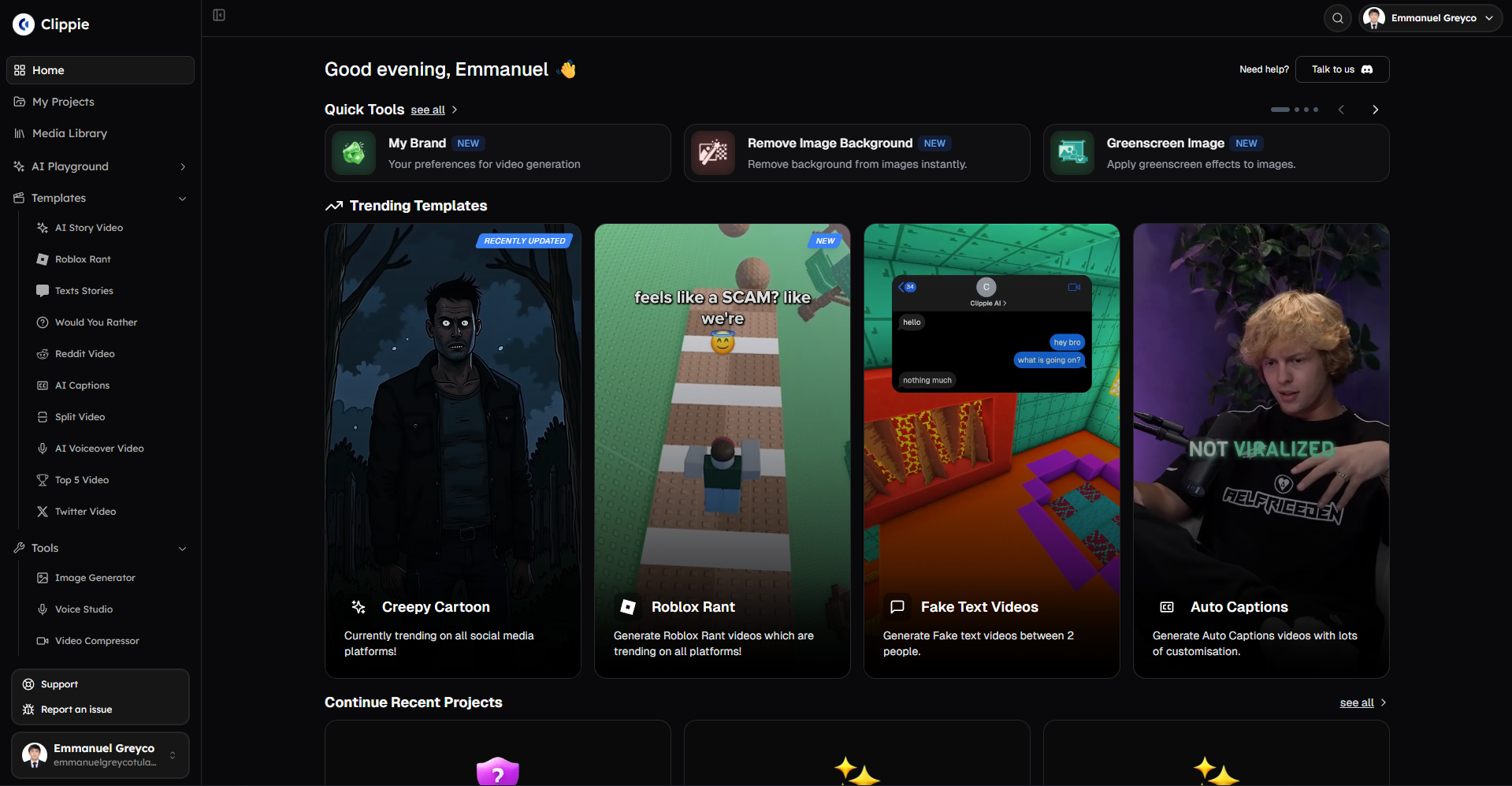
For businesses at every stage, whether service businesses seeking to replace cold outreach with inbound qualified conversations, B2B companies building sales pipelines without expanding SDR teams, or consultants and coaches converting expertise into scalable lead generation systems, AI-powered video production through Clippie AI removes the bottleneck preventing video lead generation at scale: the 8-15 hours per video required manually that limits most businesses to 2-3 lead magnets total when systematic success requires 15-20 active lead capture points across multiple audience segments, awareness levels, and conversion pathways. Visit clippie.ai to explore how businesses are building video lead generation systems producing 200-400 monthly qualified leads, converting 25-40% to customers, and compounding competitive advantages through systematic content production impossible through manual workflows.
Read more

The Future of Faceless Content in 2026 (What to Expect)
The future of faceless content in 2026: where AI video, the rules, and monetization are heading, and what to do now.

The Best TikTok Niches for High CPM in 2026
The best high-CPM TikTok niches in 2026: which are worth the most, what CPM really means, and how to earn from them.

How to Make Money With Whop Clipping in 2026
How to make money with Whop clipping in 2026: how pay-per-view campaigns work, realistic earnings, and how to start.