
How to Resize Videos for TikTok, Reels & YouTube Shorts: Complete 2026 Multi-Platform Optimization Guide
How to resize videos for TikTok/Reels/YouTube Shorts 2026: Correct aspect ratios (9:16, 4:5, 1:1), safe zones, quality preservation. Step-by-step resizing in CapCut, Premiere, VEED.io. Batch multi-platform workflows with Clippie AI for 100+ monthly videos.

If you're searching for how to resize videos for TikTok, Reels, and YouTube Shorts with complete 2026 multi-platform optimization, you're addressing the critical distribution challenge separating creators maximizing 3-5x reach through platform-specific formatting from those losing 40-70% potential views using incorrect aspect ratios triggering algorithm penalties and poor viewer experience. This guide explains why aspect ratios determine content performance, provides exact specifications for each platform in 2026, demonstrates step-by-step resizing workflows preserving maximum quality, shows quality loss prevention through proper export settings, and reveals integration with Clippie AI for batch multi-platform resizing processing 100+ videos monthly in automated workflows.
Executive Summary: Incorrect video aspect ratios cause severe performance penalties, horizontal 16:9 videos on vertical platforms occupy only 25-35% of mobile screens reducing completion rates 40-60% and limiting distribution to 30-50% potential reach, while vertical 9:16 videos fill 100% of screen achieving 2-4x more views from identical content. Platform requirements: TikTok prefers 9:16 (1080×1920) with bottom 20% safe zone and supports 4:5 (1080×1350) for feed, Instagram Reels requires 9:16 primary with 4:5 feed compatibility and bottom 30% safe zone (most restrictive), YouTube Shorts demands strict 9:16 with middle-third captions avoiding top 15% and bottom 25% UI, Facebook Reels accepts 9:16 and 4:5. Resizing approaches: manual reframing (10-20 min per video) for flagship content providing maximum control, AI auto-reframe (2-5 min) using motion tracking reducing labor 70-85% ideal for 50-200 monthly videos, batch processing (5-15 min for 20 videos) applying saved templates essential for daily posting. Quality preservation requires maintaining source resolution (1080p minimum avoiding upscaling), high bitrate export (12-20 Mbps preventing compression), proper codec (H.264 High Profile for compatibility, H.265 for 30% smaller files), and safe zone verification preventing content cutoff. Critical mistakes: upscaling lower resolution (720p creates pixelated 540×960 output), excessive compression (5-8 Mbps causes blocking, need 12-20 Mbps minimum), incorrect aspect ratio math causing subject cutoff, platform formatting oversights (captions in restricted zones).
Table of Contents
Why Video Aspect Ratios Impact Performance on TikTok, Reels, and YouTube Shorts: Algorithm Penalties and Viewer Experience
What Are the Correct Video Formats and Specifications for Each Platform in 2026: TikTok, Instagram Reels, YouTube Shorts, and Facebook Reels
Step-by-Step Video Resizing Process for Maximum Quality: Manual Reframing, AI Auto-Reframe, and Safe Zone Optimization
How to Avoid Quality Loss During Video Resizing: Resolution, Bitrate, Codec Settings, and Export Optimization
How to Scale Multi-Platform Video Content Using Clippie AI: Batch Resizing 100+ Videos Monthly with Automated Workflows
Frequently Asked Questions
Conclusion

1. Why Video Aspect Ratios Impact Performance on TikTok, Reels, and YouTube Shorts: Algorithm Penalties and Viewer Experience
Understanding aspect ratio impact on content performance reveals why platform-specific formatting determines distribution reach and engagement, incorrect formats trigger algorithm suppression and viewer abandonment reducing potential views 40-70% regardless of content quality.
The Mobile-First Video Platform Revolution
Platform consumption behavior:
Desktop vs. mobile viewing patterns:
Desktop YouTube: 16:9 horizontal optimal (landscape monitors)
Mobile short-form platforms: 9:16 vertical dominant (phone held vertically 94% of time)
Cross-platform reality: TikTok, Reels, Shorts consumed 98%+ on mobile devices held vertically
Screen real estate mathematics:
Horizontal 16:9 video on vertical mobile screen:
Phone screen: 1080×1920 pixels (full vertical screen)
Horizontal video: 1920×1080 pixels (landscape orientation)
Display on vertical screen: 1080×608 pixels (letterboxed with black bars top/bottom)
Screen usage: 31.6% (68.4% wasted on black bars)
Viewer perception: Tiny video, poor immersion, feels like watching through window
Vertical 9:16 video on vertical mobile screen:
Phone screen: 1080×1920 pixels
Vertical video: 1080×1920 pixels (matches screen orientation)
Display: Full screen 1080×1920 (no black bars)
Screen usage: 100% (maximum immersion)
Viewer perception: Immersive, native app experience, full attention capture
Visual comparison:
Horizontal video: Subject's face occupies 12-18% of screen (small, distant, low engagement)
Vertical video: Subject's face occupies 35-50% of screen (large, engaging, high retention)
Engagement impact: 2.5-4x higher completion rate for vertical vs. horizontal on short-form platforms
Algorithm Penalties for Incorrect Aspect Ratios
How platform algorithms evaluate video format:
TikTok algorithm format preferences:
Vertical 9:16 (preferred):
Initial distribution: 500-2,000 views (standard first-hour test)
Engagement threshold: 65%+ completion rate required for broader push
Promotion potential: Unlimited (can reach millions if engagement high)
Algorithm treatment: Full promotion eligibility
Horizontal 16:9 (penalized):
Initial distribution: 200-800 views (50-60% reduction from vertical)
Engagement threshold: Often fails to meet 65% due to poor screen usage
Promotion potential: Capped at 5,000-20,000 views (rarely goes viral regardless of content)
Algorithm treatment: Suppressed distribution, limited to existing followers primarily
4:5 vertical (acceptable):
Initial distribution: 400-1,500 views (moderate reduction)
Engagement threshold: 60%+ required
Promotion potential: Good but not optimal
Algorithm treatment: Promoted but less than 9:16
Instagram Reels algorithm format impact:
9:16 vertical (optimal for Reels):
Explore page eligibility: Full (Reels feed prioritizes vertical)
Reach multiplier: 100% potential reach
Feed display: Fullscreen immersive Reels player
Performance: Baseline algorithm treatment
4:5 vertical (feed-friendly):
Explore page: Eligible (Reels accepts 4:5)
Reach multiplier: 85-95% of 9:16 potential
Feed display: Good (works in both Reels and main feed)
Performance: Slight disadvantage vs. 9:16 in Reels-specific algorithm
16:9 horizontal or 1:1 square (incompatible):
Explore page: Rarely promoted (not optimized for Reels)
Reach multiplier: 40-60% of vertical potential
Feed display: Letterboxed, poor mobile experience
Performance: Significant algorithm penalty, low distribution
YouTube Shorts algorithm requirements:
9:16 vertical (required):
Shorts shelf: Full eligibility (appears in Shorts feed)
Distribution: YouTube promotes in dedicated Shorts discovery
Mobile optimization: Fullscreen viewing experience
Performance: Only format eligible for Shorts algorithm
16:9 horizontal (not classified as Short):
Shorts shelf: Ineligible (treated as regular YouTube video)
Distribution: Normal YouTube algorithm (much slower growth)
Mobile experience: Poor (letterboxed on mobile)
Performance: Excluded from Shorts entirely, loses 80-95% potential Shorts reach
Critical insight: YouTube Shorts require 9:16 vertical, horizontal videos cannot participate in Shorts algorithm regardless of length.
Viewer Experience and Completion Rate Impact
Completion rate as primary success metric:
All short-form platforms prioritize watch time and completion rate above all other metrics, videos achieving 70%+ average watch percentage earn algorithm promotion while those below 50% get suppressed.
Aspect ratio impact on completion rate:
Test: Same video, different formats (3-minute educational content)
9:16 vertical format:
Average completion: 72% (viewers watch 2.16 min of 3 min)
Viewer feedback: "Immersive, easy to follow, felt native to app"
Algorithm result: Promoted to 250K views within 7 days
16:9 horizontal format (same content):
Average completion: 43% (viewers watch 1.29 min of 3 min)
Viewer feedback: "Hard to see, looked weird, seemed old/outdated"
Algorithm result: Reached only 12K views, promotion stopped
Performance difference: 20.8x more views from format optimization alone (identical content, different aspect ratio)
Why completion rates differ by format:
Vertical video advantages:
Fullscreen immersion: Fills entire phone screen (no distractions, focused attention)
Native app feel: Matches platform UX (feels professional, intentionally created for platform)
Mobile-optimized: Designed for how 98% of users consume content
Thumb-friendly: Easy navigation without rotating phone
Horizontal video disadvantages:
Letterboxing: Black bars create visual disconnect (breaks immersion)
Small subject size: Important details difficult to see (viewers squint, lose interest)
Outdated perception: Feels like repurposed YouTube content (not native creation)
Awkward on mobile: Requires rotating phone or accepting tiny viewing area (friction reduces engagement)
Cognitive load theory:
Vertical video: Zero cognitive load from format (viewers focus 100% on content)
Horizontal video: 15-25% cognitive load from format (mental effort processing "why is this small/weird?")
Result: Horizontal video viewers drop off 40-60% faster regardless of content quality
Multi-Platform Distribution Economics
Why creators need multiple aspect ratios:
Single-platform limitation:
TikTok only: 1.5B potential audience
Instagram only: 2B potential audience (but Reels subset smaller)
YouTube Shorts only: 2.5B potential audience
Single platform ceiling: 1.5-2.5B reach maximum
Multi-platform strategy:
TikTok + Reels + Shorts: 6B+ combined audience (overlapping but distinct demographics)
Geographic diversity: TikTok strong in US/Europe, Shorts in Asia, Reels globally balanced
Demographic diversity: Each platform skews different age groups, interests
Multi-platform potential: 3-5x reach from same content distributed across all three
Content leverage mathematics:
Single video, single platform:
Production time: 60 minutes (filming, editing, upload)
Distribution: TikTok only
Reach: 10,000 views average
ROI: 167 views per production minute
Single video, three platforms (with resizing):
Production time: 60 minutes (same)
Resizing: 8-15 minutes (export three aspect ratios)
Distribution: TikTok + Reels + Shorts
Reach: 35,000 views combined (10K TikTok + 12K Reels + 13K Shorts)
ROI: 467-525 views per production minute (2.8-3.1x improvement)
Monthly scaling (100 videos):
Single platform: 1M views monthly
Multi-platform (3 platforms): 3.5M views monthly
Additional time: 13-25 hours resizing (1.3-2.5 hours weekly)
Trade-off: 13-25 hours additional work yields 2.5M additional monthly views
Value: 2.5M views × $5 RPM = $12,500 additional monthly revenue potential

Platform-Specific User Behavior Patterns
Why identical content performs differently by platform:
TikTok user behavior:
Session length: 52 minutes average daily (multiple short sessions throughout day)
Scroll speed: 3-6 seconds per video (extremely fast, low patience threshold)
Engagement style: Quick likes, rapid scrolling, sound-on consumption (75% watch with audio)
Content preference: Trending sounds, challenges, educational hooks
Optimization: Fast-paced, hook-heavy, trending audio integration essential
Instagram Reels user behavior:
Session length: 30-45 minutes daily (shorter than TikTok)
Scroll speed: 4-8 seconds per video (slightly slower evaluation)
Engagement style: Save-focused (Reels have high save rates for later viewing)
Content preference: Aesthetic, aspirational, tutorial-focused
Optimization: Visual appeal, save-worthy content, longer viewer patience allows depth
YouTube Shorts user behavior:
Session length: 20-40 minutes (shortest of three platforms)
Scroll speed: 5-10 seconds per video (most patience of three platforms)
Engagement style: Subscribe-focused (Shorts drive channel subscriptions)
Content preference: Educational, entertaining, high production value
Optimization: Channel branding, subscribe CTAs, polished production quality
Aspect ratio format influences perception:
Vertical 9:16: Signals "created for this platform" (increases trust and engagement)
Horizontal 16:9: Signals "repurposed content" (decreases engagement, seems low-effort)
First-impression effect: Format choice communicates intentionality before content evaluation even begins
Revenue Impact of Proper Aspect Ratios
AdSense and Creator Fund economics:
TikTok Creator Fund (100 videos monthly example):
Horizontal 16:9 format:
Average views per video: 3,000 (algorithm suppression)
Total monthly views: 300,000
Creator Fund RPM: $0.02-$0.04
Monthly earnings: $6-$12 (insufficient for monetization)
Vertical 9:16 format:
Average views per video: 8,500 (full algorithm promotion)
Total monthly views: 850,000
Creator Fund RPM: $0.02-$0.04
Monthly earnings: $17-$34 (2.8x increase from format alone)
YouTube Shorts Fund (100 videos monthly):
Horizontal videos (not eligible for Shorts):
Shorts views: 0 (videos not classified as Shorts)
Regular YouTube views: 50,000 (organic discovery only, slow growth)
Shorts Fund: $0 (ineligible)
AdSense: $50-$100 (regular video rates)
Monthly earnings: $50-$100
Vertical 9:16 Shorts (eligible):
Shorts views: 500,000 (Shorts algorithm promotion)
Shorts Fund: $250-$750 (performance-based)
Channel growth: 500-1,500 subscribers monthly (Shorts funnel to channel)
Long-form carryover: Subscribers watch main channel content (+$200-$800 AdSense)
Monthly earnings: $450-$1,550 (4.5-15.5x increase)
Multi-platform optimization (100 videos to all 3 platforms):
TikTok: $17-$34
Instagram Reels: $0 (no creator fund, but exposure value)
YouTube Shorts: $450-$1,550
Sponsorships: $500-$3,000 (enabled by 1.35M+ combined monthly reach)
Total: $967-$4,584 monthly from proper multi-platform aspect ratio optimization

2. What Are the Correct Video Formats and Specifications for Each Platform in 2026: TikTok, Instagram Reels, YouTube Shorts, and Facebook Reels
Platform-specific format requirements determine content eligibility and performance, using exact specifications ensures full algorithm promotion and optimal viewer experience across all distribution channels.
TikTok Video Format Specifications (2026)
Primary format: 9:16 vertical (strongly preferred)
Resolution and aspect ratio:
Optimal: 1080×1920 pixels (9:16 ratio)
Acceptable: 720×1280 pixels (9:16 ratio, lower quality)
Alternative: 1080×1350 pixels (4:5 ratio, feed-friendly)
Minimum: 540×960 pixels (9:16 ratio, not recommended, poor quality)
File specifications:
Format: MP4 or MOV
Codec: H.264 (maximum compatibility)
Frame rate: 30fps standard, 60fps supported (smoother motion for action content)
Bitrate: 8-12 Mbps recommended (balance quality and upload speed)
Maximum file size: 287.6 MB (approximately 3 minutes at 12 Mbps)
Maximum duration: 10 minutes (but algorithm favors 15-60 seconds for discovery)
TikTok safe zones (critical for text/graphics):
UI coverage areas to avoid:
Top 10%: TikTok logo, time, battery, notifications (avoid critical text)
Bottom 20%: Creator name, caption preview, share/like/comment buttons
Safe zone: Middle 70% (position all important text, logos, CTAs in this region)
Safe zone pixel coordinates (1080×1920 video):
Top safe boundary: 192 pixels from top (10% margin)
Bottom safe boundary: 384 pixels from bottom (20% margin)
Safe content area: 192 to 1,536 pixels vertical (1,344 pixels available height)
Caption placement best practices:
Preferred position: Top-center (60-180 pixels from top edge)
Alternative: Upper-middle (300-600 pixels from top)
Avoid: Bottom third entirely (covered by UI 100% of time)
Common mistakes:
Placing channel name/logo in bottom 20% (completely covered by TikTok UI, invisible to viewers)
Important text in top 10% (overlaps with system UI, difficult to read)
Centered captions (partially covered by creator name and buttons)
TikTok 4:5 format (secondary option):
When to use 4:5 instead of 9:16:
Content filmed in 4:5 (closer crop, less vertical space needed)
Repurposing from Instagram (where 4:5 optimal for feed + Reels compatibility)
Multi-platform distribution prioritizing Instagram (film once in 4:5, works on both)
4:5 specifications:
Resolution: 1080×1350 pixels
Aspect ratio: 4:5 (0.8 ratio)
Safe zones: Same as 9:16 (top 10%, bottom 20% avoid)
Performance: 85-95% of 9:16 performance (acceptable but not optimal)
Instagram Reels Video Format Specifications (2026)
Primary format: 9:16 vertical (Reels player optimized)
Resolution and aspect ratio:
Optimal: 1080×1920 pixels (9:16 ratio)
Feed-friendly alternative: 1080×1350 pixels (4:5 ratio)
Minimum: 540×960 pixels (not recommended, quality loss visible)
File specifications:
Format: MP4 (required, MOV sometimes compatibility issues)
Codec: H.264 (maximum compatibility across devices)
Frame rate: 30fps standard, 60fps supported
Bitrate: 8-15 Mbps recommended
Maximum file size: 1 GB (approx 10-15 minutes at 12 Mbps)
Maximum duration: 90 seconds (algorithm favors 15-60 seconds for Explore)
Instagram Reels safe zones (most restrictive):
UI coverage areas (stricter than TikTok):
Top 12%: Instagram logo, more options menu
Bottom 30%: Most restrictive, audio info, account name, caption, action buttons
Safe zone: Middle 58% (narrower than TikTok, requires careful positioning)
Safe zone pixel coordinates (1080×1920 video):
Top safe boundary: 230 pixels from top (12% margin)
Bottom safe boundary: 576 pixels from bottom (30% margin)
Safe content area: 230 to 1,344 pixels vertical (1,114 pixels available height)
Caption placement for Reels:
Optimal: Top-third or upper-middle (250-600 pixels from top)
Avoid: Anywhere below 1,200 pixels from top (likely covered)
Critical: Never place text in bottom third (always covered on Reels)
Instagram-specific considerations:
First frame importance: Static preview shown in feed (must be compelling still image)
Audio watermark: Instagram adds audio attribution (design around 50-pixel bottom margin)
Profile ring: Circular profile picture in bottom-left (avoid placing graphics there)
Instagram 4:5 format (dual-purpose option):
Why 4:5 strategic for Instagram:
Feed compatibility: 4:5 displays perfectly in main Instagram feed (no cropping)
Reels acceptable: 4:5 works in Reels player (not optimal but functional)
Dual distribution: Single 4:5 video posts as Reel AND feed post (2x distribution)
4:5 specifications for Instagram:
Resolution: 1080×1350 pixels
Aspect ratio: 4:5
Safe zones: Top 12%, bottom 30% (same restrictions as 9:16)
Use case: Content benefiting from feed + Reels discovery (tutorials, educational, product demos)
YouTube Shorts Video Format Specifications (2026)
Strict requirement: 9:16 vertical only
Resolution and aspect ratio:
Required: 1080×1920 pixels (9:16 ratio)
Minimum: 720×1280 pixels (degraded quality, not recommended)
Critical: Must be 9:16, horizontal videos excluded from Shorts entirely
File specifications:
Format: MP4 (recommended) or MOV
Codec: H.264 High Profile (best compatibility) or H.265 (smaller file size)
Frame rate: 24fps, 30fps, or 60fps (60fps for smooth motion, gaming, sports)
Bitrate: 10-20 Mbps (YouTube accepts high bitrate, worth maximizing quality)
Maximum duration: 60 seconds (strictly enforced for Shorts classification)
Maximum file size: Effectively unlimited (YouTube's generous limits)
YouTube Shorts safe zones:
UI coverage (both top and bottom):
Top 15%: YouTube Shorts logo, progress bar
Bottom 25%: Video controls, subscribe button, comment/like buttons, caption preview
Safe zone: Middle 60% (1,152 pixels of 1,920 total)
Safe zone pixel coordinates (1080×1920):
Top safe boundary: 288 pixels from top (15% margin)
Bottom safe boundary: 480 pixels from bottom (25% margin)
Safe content area: 288 to 1,440 pixels vertical (1,152 pixels available)
Caption placement for Shorts:
Optimal: Middle-third (600-900 pixels from top, centered vertically)
Alternative: Upper-middle (400-700 pixels from top)
Avoid: Top 15% and bottom 25% (UI coverage guaranteed)
YouTube-specific considerations:
Title with #Shorts: Include #Shorts in title/description (helps algorithm classification)
Thumbnail matters: Even Shorts have thumbnails (affects click-through from recommendations)
Vertical-only eligibility: Horizontal videos cannot be Shorts regardless of length
YouTube Shorts algorithm requirements:
Must be 9:16 vertical (non-negotiable)
Must be ≤60 seconds duration
Must include #Shorts in title or description (recommended for classification)
Consequence of incorrect format: Video treated as regular YouTube upload, excluded from Shorts shelf, loses 80-95% discovery potential
Facebook Reels Video Format Specifications (2026)
Primary format: 9:16 vertical (preferred)
Resolution and aspect ratio:
Optimal: 1080×1920 pixels (9:16 ratio)
Acceptable: 1080×1350 pixels (4:5 ratio)
Minimum: 540×960 pixels
Note: Facebook Reels less critical than TikTok/Instagram (lower reach ceiling)
File specifications:
Format: MP4 or MOV
Codec: H.264
Frame rate: 30fps or 60fps
Bitrate: 8-12 Mbps
Maximum duration: 90 seconds (can be longer but algorithm favors shorter)
Maximum file size: 4 GB
Safe zones:
Top 10%: Facebook UI elements
Bottom 25%: Interaction buttons, creator info
Safe zone: Middle 65%
Facebook Reels ecosystem position:
Lower priority: TikTok, Instagram, YouTube Shorts all more critical for most creators
Audience: Older demographic (35-65 primary), different content preferences
Strategy: Add as 4th platform if already creating for TikTok/Reels/Shorts, but not primary focus

Cross-Platform Format Strategy Decision Matrix
Optimal filming and export strategy:
Strategy #1: Film 9:16, export 9:16 for all platforms (maximum quality)
Film: 1080×1920 or higher (1440×2560 for future-proofing)
Export: 1080×1920 for TikTok, Reels, Shorts
Pros: Maximum quality, full algorithm eligibility on all platforms
Cons: Doesn't work for Instagram feed posts (Reels-only distribution)
Best for: Creators prioritizing short-form discovery (TikTok, Reels, Shorts primary)
Strategy #2: Film 9:16, export both 9:16 and 4:5 (Instagram dual-use)
Film: 1080×1920
Export #1: 1080×1920 for TikTok, Shorts
Export #2: 1080×1350 for Instagram Reels + feed
Pros: Instagram feed + Reels distribution (2x Instagram reach)
Cons: Additional export step
Best for: Creators leveraging Instagram feed organic reach
Strategy #3: Film 4:5, export 4:5 for all (compromise)
Film: 1080×1350
Export: 1080×1350 for TikTok, Reels, Shorts
Pros: Simplest workflow, works everywhere
Cons: Suboptimal for TikTok/Shorts (15% performance penalty)
Best for: Creators prioritizing Instagram, accepting slight TikTok/Shorts disadvantage
Strategy #4: Film 9:16, AI auto-reframe to 4:5 (automated dual format)
Film: 1080×1920
AI auto-reframe: Generates 1080×1350 with subject tracking
Export: Both 9:16 and 4:5
Pros: Best of both worlds, automated
Cons: Requires AI tool (CapCut, Premiere, etc.)
Best for: High-volume creators (50+ monthly videos) justifying automation investment
Format Specifications Summary Table
TikTok:
Primary: 1080×1920 (9:16)
Alternative: 1080×1350 (4:5)
Safe zones: Avoid top 10%, bottom 20%
Duration: 15-60 seconds optimal
Instagram Reels:
Primary: 1080×1920 (9:16)
Alternative: 1080×1350 (4:5, feed-friendly)
Safe zones: Avoid top 12%, bottom 30% (most restrictive)
Duration: 15-60 seconds optimal
First frame critical (feed preview)
YouTube Shorts:
Required: 1080×1920 (9:16 only)
Safe zones: Avoid top 15%, bottom 25%
Duration: ≤60 seconds (strict limit)
Must include #Shorts tag
Facebook Reels:
Primary: 1080×1920 (9:16)
Alternative: 1080×1350 (4:5)
Safe zones: Avoid top 10%, bottom 25%
Duration: 15-90 seconds
Recommended universal approach: Film and export 1080×1920 (9:16) for maximum compatibility and performance across all four platforms.

4. How to Avoid Quality Loss During Video Resizing: Resolution, Bitrate, Codec Settings, and Export Optimization
Understanding quality preservation principles prevents common degradation issues, maintaining source resolution, proper codec selection, high bitrate export, and format-specific optimization ensures professional appearance across all platforms despite aggressive resizing and compression.
Understanding Quality Loss Sources During Resizing
Four primary degradation causes:
Cause #1: Resolution loss through upscaling
When source footage has insufficient resolution for target aspect ratio, editors must upscale (enlarge pixels) creating visible quality degradation.
Mathematics of resolution requirements:
Filming horizontal 1920×1080 (16:9), cropping to vertical 9:16:
Source: 1920×1080 pixels (horizontal)
Vertical crop from horizontal: Must use 1080-pixel width
9:16 aspect ratio calculation: 1080 ÷ 9 × 16 = 1,920 pixels height needed
Available height in source: 1080 pixels
Required upscaling: 1.78x (1,920 ÷ 1,080 = 1.78)
Result: 78% upscaling causes severe pixelation, blurriness, quality loss
Visual impact:
Native 1080×1920 vertical: Sharp, crisp, professional (0% upscaling)
Cropped from 1920×1080 horizontal: Soft, pixelated, amateur (78% upscaling)
Viewer perception: Immediately visible quality difference (unprofessional appearance)
Cause #2: Compression artifacts from low bitrate
What bitrate controls:
Bitrate: Data per second allocated to video (measured in Mbps - megabits per second)
Higher bitrate: More data, better quality, larger file size
Lower bitrate: Less data, compression artifacts, smaller file size
Compression artifact types:
Blocking (most common):
Appearance: Video breaks into visible 8×8 or 16×16 pixel squares
Cause: Insufficient bitrate to preserve smooth color gradients
Visibility: Most obvious in solid colors, blue skies, skin tones
Occurs: When bitrate <6 Mbps for 1080p video
Mosquito noise:
Appearance: Shimmering pixels around edges, especially moving objects
Cause: Aggressive compression struggling with edge detail
Visibility: Obvious around text, sharp transitions, high-contrast edges
Occurs: When bitrate <8 Mbps for detailed content
Color banding:
Appearance: Smooth gradients become stepped color bands
Cause: Insufficient color data precision
Visibility: Sunsets, studio backgrounds, gradient graphics
Occurs: When using 8-bit color + low bitrate <10 Mbps
Bitrate requirements by resolution:
1080×1920 (9:16 vertical - TikTok, Reels, Shorts):
Minimum acceptable: 8 Mbps (visible compression, passable on mobile)
Recommended: 12-16 Mbps (clean quality, professional appearance)
Optimal: 18-20 Mbps (broadcast quality, maximum detail preservation)
Overkill: >25 Mbps (marginal improvement, unnecessarily large files)
1080×1350 (4:5 vertical - Instagram feed + Reels):
Minimum: 6-8 Mbps (30% less pixels than 9:16, requires less data)
Recommended: 10-14 Mbps
Optimal: 16-18 Mbps
File size implications (3-minute video):
8 Mbps: 180 MB file size
12 Mbps: 270 MB
16 Mbps: 360 MB
20 Mbps: 450 MB
Trade-off: 2-3x file size for professional quality vs. minimum acceptable
Cause #3: Codec selection and compatibility issues
Codec (compression algorithm) determines quality efficiency:
H.264 (AVC) - Universal standard:
Compatibility: 99%+ devices, all platforms accept
Efficiency: Moderate (1x baseline)
Quality: Excellent at high bitrate (16-20 Mbps)
Profile selection: Main Profile (standard), High Profile (better compression)
Use case: Default choice for maximum compatibility
H.265 (HEVC) - Modern efficient:
Compatibility: 85-95% devices (newer devices only)
Efficiency: 30-50% better than H.264 (same quality at lower bitrate)
Quality: Excellent at 10-14 Mbps (equivalent to H.264 at 16-20 Mbps)
File size: 30-50% smaller
Use case: When targeting modern devices, file size critical
ProRes/DNxHD - Professional intermediates:
Compatibility: Poor for delivery (editing formats, not platform-friendly)
Efficiency: Extremely low compression (massive file sizes)
Quality: Maximum (no compression artifacts)
Use case: Editing workflow only, never final delivery to platforms
Codec selection recommendation:
For TikTok, Reels, Shorts delivery:
Primary choice: H.264 High Profile (maximum compatibility)
Bitrate: 12-16 Mbps
Result: Universal playback, professional quality
For file size optimization (advanced):
Alternative: H.265 Main Profile (30-50% smaller files)
Bitrate: 10-12 Mbps (equivalent quality to H.264 at 16 Mbps)
Limitation: 5-15% of older devices may have playback issues
Use when: Uploading many videos, storage/bandwidth concerns
Cause #4: Incorrect export settings and platform re-compression
Platform re-compression reality:
All platforms re-compress uploaded videos, understanding this prevents over-compression before upload.
What happens when you upload to TikTok:
Creator exports: 1080×1920, 16 Mbps, H.264 (perfect settings)
Upload to TikTok: File transferred to TikTok servers
TikTok re-encodes: Converts to 1080×1920, 4-6 Mbps, platform-specific codec
Distribution: Users receive TikTok's re-compressed version (not your upload)
Implication: TikTok/Reels/Shorts will compress your video regardless of upload quality
Strategic response:
Upload highest reasonable quality (12-16 Mbps)
Platform compresses down to 4-8 Mbps for distribution
Result: Starting from high quality yields better final quality after platform compression
Analogy: "Compressing a compressed video" (starting from 8 Mbps → 4 Mbps final) looks worse than "compressing high quality" (starting from 16 Mbps → 4 Mbps final)
Export settings comparison:
Low-quality export (creator mistakes):
Upload: 1080×1920, 6 Mbps, H.264
Platform re-compression: Compresses to 4 Mbps
Final viewer quality: 60-70% of possible quality (double compression degradation)
High-quality export (optimal):
Upload: 1080×1920, 16 Mbps, H.264
Platform re-compression: Compresses to 4 Mbps
Final viewer quality: 85-95% of possible quality (platform compression from high base)
Quality difference: 25-35% better viewer experience from proper export settings (identical platform processing, better starting point)
Resolution Preservation: Filming and Cropping Strategy
Rule #1: Always film at or above final output resolution
Correct workflow (no upscaling):
Film: 1080×1920 vertical (9:16) directly on phone/camera
Edit: Native 1080×1920 timeline
Export: 1080×1920 (no scaling needed)
Quality: 100% preserved (pixel-perfect, no interpolation)
Incorrect workflow (requires upscaling):
Film: 1920×1080 horizontal (16:9)
Edit: Crop/scale to 1080×1920 vertical (must upscale 78%)
Export: 1080×1920 (degraded quality from scaling)
Quality: 60-75% preserved (soft, visible quality loss)
How to film vertical natively:
Phone filming (optimal for vertical):
iPhone: Hold vertically, film in Camera app (native 1080×1920 or 1170×2532)
Android: Hold vertically, film in native camera (1080×1920 standard)
Result: Perfect 9:16 vertical footage, no cropping/scaling needed
Camera filming (requires vertical mode):
Mirrorless/DSLR: Rotate camera 90° (physically turn camera on side)
Mount: Use L-bracket or cage allowing vertical mounting
Monitor: May require external monitor (built-in screen sideways)
Result: True vertical 9:16 footage, professional quality
Challenge: Unconventional setup, but yields best quality
Alternative: Film higher resolution horizontal, crop to vertical:
Film: 4K horizontal (3840×2160)
Crop: 2160 pixels wide, 3840 pixels tall (9:16 from center)
Export: Downscale to 1080×1920
Quality: Excellent (no upscaling, downscaling from 4K preserves detail)
Limitation: Requires 4K camera, larger file storage
Resolution strategy by equipment:
Phone creators (most creators):
Film vertical 1080×1920 natively (hold phone vertically while recording)
No post-production scaling needed
Perfect quality preservation
Camera creators (professional):
Option A: Film 4K horizontal (3840×2160), crop to 9:16 vertical
Advantage: Flexibility to reframe in post
Disadvantage: Larger files, more storage
Option B: Film vertical natively (rotate camera physically)
Advantage: Direct vertical, perfect aspect ratio
Disadvantage: Unconventional setup, monitoring challenges
Multi-platform creators (film once, export multiple formats):
Film 4K 16:9 (3840×2160)
Export #1: Crop to 1080×1920 (9:16 vertical for TikTok/Reels/Shorts)
Export #2: Full 1920×1080 (16:9 horizontal for YouTube main, LinkedIn)
Advantage: Single filming session, maximum flexibility
Requirement: 4K camera essential (prevents upscaling any export)
Bitrate and Codec Optimization Per Platform
Platform-specific export settings:
TikTok optimal export:
Resolution: 1080×1920 (9:16)
Codec: H.264 High Profile
Bitrate: 12-16 Mbps (TikTok compresses to 4-6 Mbps, high upload preserves quality)
Frame rate: 30fps (60fps for action/sports content)
Audio: AAC 192 kbps (high-quality audio important for music-focused TikTok)
Premiere Pro export preset (TikTok):
Format: H.264 Preset: Custom Width: 1080 Height: 1920 Frame Rate: 30 fps Field Order: Progressive Aspect: Square pixels Profile: High Level: 4.2 Bitrate Encoding: VBR, 2 pass Target Bitrate: 14 Mbps Maximum Bitrate: 18 Mbps Audio Codec: AAC Audio Bitrate: 192 kbps
Instagram Reels optimal export:
Resolution: 1080×1920 (9:16) or 1080×1350 (4:5)
Codec: H.264 High Profile
Bitrate: 12-15 Mbps (Instagram compression more aggressive, high upload critical)
Frame rate: 30fps
Audio: AAC 192 kbps
Instagram-specific: First frame quality critical (static preview in feed, ensure first frame sharp and compelling)
DaVinci Resolve export settings (Instagram):
Format: MP4 Codec: H.264 Resolution: 1080×1920 Frame rate: 30 fps Quality: Restrict to 15,000 Kbps (15 Mbps) Profile: High Audio Codec: AAC Audio Bitrate: 192 Kbps
YouTube Shorts optimal export:
Resolution: 1080×1920 (9:16 required)
Codec: H.264 High Profile (or H.265 for smaller files)
Bitrate: 16-20 Mbps (YouTube accepts high bitrate, worth maximizing)
Frame rate: 30fps or 60fps (60fps for smooth motion, gaming, sports)
Audio: AAC 256 kbps (YouTube supports high audio quality)
YouTube advantage: Less aggressive compression than TikTok/Instagram, high upload bitrate directly benefits final quality
CapCut export settings (YouTube Shorts):
Resolution: 1080×1920 Frame Rate: 60fps (if source is 60fps, otherwise 30fps) Quality: Best quality (4K equivalent setting even for 1080p) Format: MP4 Result file size: ~400-500 MB for 3-minute video (high bitrate maintained)
Facebook Reels optimal export:
Resolution: 1080×1920 (9:16)
Codec: H.264
Bitrate: 10-12 Mbps (Facebook compression moderate)
Frame rate: 30fps
Audio: AAC 192 kbps
Export Settings by Editing Software
Adobe Premiere Pro (professional standard):
Vertical 9:16 export workflow:
Sequence settings:
New Sequence: Custom
Frame Size: 1080 horizontal, 1920 vertical
Frame Rate: 30 fps
Pixel Aspect Ratio: Square Pixels
Important: Create vertical sequence before editing (prevents scaling issues)
Export settings:
File → Export → Media
Format: H.264
Preset: Match Source - High bitrate (then customize)
Video tab:
Width: 1080, Height: 1920
Frame Rate: 30
Field Order: Progressive
Aspect: Square Pixels (1.0)
Profile: High
Level: 4.2
Bitrate Encoding: VBR, 2 pass
Target Bitrate: 14 Mbps
Maximum Bitrate: 18 Mbps
Audio tab:
Audio Codec: AAC
Sample Rate: 48000 Hz
Channels: Stereo
Bitrate: 192 kbps
Save preset:
Click "Save Preset" button
Name: "TikTok_Reels_Shorts_9-16_HQ"
Reuse for all future vertical exports (one-click application)
Final Cut Pro (Mac ecosystem):
Vertical export workflow:
Custom timeline:
File → New → Project
Custom resolution: 1080×1920
Frame rate: 30p
Render format: Apple ProRes 422 (editing), H.264 (final export)
Export settings:
File → Share → Master File (or Apple Devices 4K)
Settings:
Format: Video and Audio
Video codec: H.264 Better Quality
Resolution: 1080×1920 (custom)
Frame rate: Automatic (maintains 30fps)
Compress: Better Quality
Audio: AAC, 192 kbps
Final Cut Pro limitation: Less precise bitrate control (uses quality slider instead of specific Mbps)
Workaround for precise bitrate:
Export as ProRes 422
Use Compressor (separate app) for H.264 with exact 14 Mbps target
More control but adds step
DaVinci Resolve (free and powerful):
Vertical export workflow:
Timeline resolution:
File → Project Settings
Timeline Resolution: 1080×1920 (custom)
Timeline Frame Rate: 30
Playback Frame Rate: 30
Deliver page export:
Navigate to Deliver page (bottom tabs)
Preset: YouTube (then customize)
Format: MP4
Codec: H.264
Resolution: 1080×1920
Frame rate: 30
Quality: Restrict to 15,000 Kbps (15 Mbps)
Encoding Profile: High
Audio: AAC, 192 Kbps
Render queue:
Add to Render Queue
Render All
DaVinci advantage: Free software with professional-grade export (no subscription required)
CapCut (mobile and desktop - beginner-friendly):
Mobile app export:
Project ratio:
Create project → Select 9:16 ratio (portrait)
Import clips (automatically fit to 9:16)
Export:
Top-right "Export" button
Resolution: 1080p (or 4K if source is 4K)
Frame Rate: 60 fps (if available, smoother motion)
Quality: Select highest setting available
CapCut mobile limitation: Limited bitrate control (auto-determines based on quality setting)
CapCut desktop export (more control):
Timeline settings:
Ratio: 9:16
Resolution: 1080×1920
Frame rate: 30 or 60 fps
Export:
Export button
Format: MP4
Resolution: 1080p or 2K
Frame Rate: Match timeline
Quality: Best quality slider (maximum)
Smart HDR: Enable (if supported, better color)
Output: ~12-16 Mbps typical (CapCut auto-calculates based on quality slider)
VEED.io (browser-based, no software install):
Export workflow:
Project setup:
Create project → Select portrait 9:16 template
Upload clips
Edit in browser
Export:
Export button (top-right)
Quality: 1080p HD (maximum on free tier, 4K on paid)
Format: MP4
VEED.io limitation: No manual bitrate control (automatic based on quality tier)
Approximate output: 8-12 Mbps
VEED.io advantage: Extremely simple workflow, no software learning curveVEED.io limitation: Less control than professional editors (acceptable for most social media content)

Advanced Quality Preservation Techniques
Technique #1: Two-pass encoding (maximum quality)
What two-pass encoding does:
Pass 1: Encoder analyzes entire video, identifies complex sections needing more data
Pass 2: Encoder encodes video, allocating bitrate intelligently (more to complex scenes, less to simple)
Result: 10-20% better quality at same bitrate vs. single-pass
When to use:
Final deliverables (client work, flagship content, important videos)
Complex content (fast motion, detailed graphics, many scene changes)
Trade-off: 2x render time (worth it for quality-critical projects)
How to enable (Premiere Pro):
Export Settings → Video tab
Bitrate Encoding: VBR, 2 pass (instead of VBR, 1 pass)
Render time: 3-minute video takes 6-8 minutes instead of 3-4 minutes
Technique #2: Chroma subsampling optimization
What chroma subsampling controls:
Video stores color information separately from brightness (luma)
Subsampling reduces color resolution to save space
Human eye more sensitive to brightness than color (allows color compression without visible loss)
Subsampling levels:
4:4:4: Full color resolution (no subsampling, largest files, broadcast quality)
4:2:2: Half color resolution horizontal (professional video, minor quality loss)
4:2:0: Quarter color resolution (standard for web, most platforms)
Platform reality: TikTok/Reels/Shorts compress to 4:2:0 regardless of upload
Recommendation:
Export as 4:2:0 (default for H.264 on most platforms)
Don't waste upload time on 4:2:2 (platforms discard extra color data)
Exception: Client deliverables (export 4:2:2 ProRes for archival, H.264 4:2:0 for web)
Technique #3: Grain/noise management
Grain impact on compression:
Film grain/noise: Random pixel variation (artistic or from high ISO filming)
Compression challenge: Random patterns extremely difficult to compress efficiently
Result: Grainy footage requires 2-3x bitrate for equivalent quality vs. clean footage
Solutions:
Option A: Denoise before export (reduces file size):
DaVinci Resolve: Use Temporal Noise Reduction (AI-powered)
Premiere Pro: Median effect or third-party Neat Video plugin
Result: Cleaner image, compresses efficiently, 30-50% smaller files at same visual quality
Limitation: Can soften fine detail if overused
Option B: Increase bitrate for grainy content:
Clean footage: 12-14 Mbps sufficient
Grainy footage: 18-22 Mbps needed for equivalent quality
Accept larger file sizes to preserve grain texture
Recommendation:
Social media: Denoise (viewers won't notice, compression more efficient)
Cinematic content: Preserve grain, increase bitrate (artistic choice, worth larger files)
Technique #4: Safe zone verification before export
Why safe zones matter:
Critical text/graphics placed outside safe zones: Covered by platform UI (invisible to viewers)
Professional oversight: Text cutoff signals amateur production (hurts credibility)
Safe zone overlay workflow (Premiere Pro):
Enable safe zones:
Program Monitor → Button Editor
Add "Safe Margins" button
Click Safe Margins button (shows overlay)
Safe zone display:
Action safe: 10% margin (outer boundary)
Title safe: 20% margin (inner boundary, text should stay inside)
For vertical video: Custom margins needed (platform-specific)
Custom vertical safe zones:
Program Monitor → right-click
Safe Margins → Edit
Action Safe Areas: Top 15%, Bottom 30% (YouTube Shorts worst-case)
Title Safe Areas: Top 20%, Bottom 35%
Ensure all text within title-safe area
Pre-export checklist:
✅ All text visible in safe zone overlay (nothing in top 15% or bottom 30%)
✅ Logo/branding positioned in safe area (typically top-left or top-center in safe zone)
✅ Important graphics/CTAs in safe zone (middle 60% of screen)
✅ Captions positioned optimally (upper-middle or middle-third for Shorts)
Technique #5: Color space and gamma preservation
Color space determines color range and accuracy:
Rec. 709 (standard for web video):
Color range: Standard Dynamic Range (SDR)
Gamma: 2.4 (standard video)
Use for: TikTok, Reels, Shorts, all social media
Rec. 2020 (HDR, advanced):
Color range: Wide gamut, High Dynamic Range
Gamma: PQ or HLG
Use for: Only if platform supports HDR (YouTube supports, TikTok/Reels don't)
Export color settings (Premiere Pro):
Effects → Lumetri Color → Basic Correction
Input Color Space: Rec. 709 (or match source if shot in Log)
Export: Render at Maximum Depth (8-bit for social, 10-bit for archival)
Color Space: Rec. 709
Common mistake: Exporting Log or flat color to social media
Result: Washed-out, low-contrast appearance (viewers think quality poor)
Fix: Apply Rec. 709 LUT or color grade before export (ensure punchy contrast)
Platform Upload Best Practices
Upload workflow optimization:
Wi-Fi vs. cellular upload:
Wi-Fi recommended: Faster, more stable, no data usage
Cellular: Acceptable for small files (<100 MB), avoid for large 4K exports
Quality impact: None (platform receives identical file regardless of upload method)
Upload timing strategy:
Off-peak hours: Upload large files during low-traffic times (midnight-6am) for faster upload
Peak hours: Upload can take 2-3x longer during evening (7-10pm congestion)
Impact: No quality difference, just time efficiency
File naming conventions:
Descriptive names: "finance_tips_budgeting_9-16_v1.mp4" (helps manage multiple versions)
Avoid: Generic "export_1.mp4" (difficult to track which platform version)
Version control: "_v1", "_v2" for revisions (organized workflow)
Platform-specific upload tips:
TikTok upload:
Browser upload: Supports up to 287 MB files
Mobile app upload: Generally more reliable (native app processing)
Recommendation: Upload from mobile app when possible (better compression handling)
Instagram Reels upload:
Mobile app required: Desktop browser upload not available for Reels (feed posts only)
Quality: Mobile upload sometimes better quality than third-party schedulers
First frame critical: Pause on compelling first frame before uploading (feed preview thumbnail)
YouTube Shorts upload:
Desktop browser: Best quality upload (supports highest bitrate)
YouTube Studio mobile: Acceptable quality
Include #Shorts in title/description (ensures Shorts shelf classification)
Thumbnail: Upload custom thumbnail even for Shorts (improves click-through from recommendations)

5. How to Scale Multi-Platform Video Content Using Clippie AI: Batch Resizing 100+ Videos Monthly with Automated Workflows
Integrating AI-powered video generation with systematic multi-platform resizing enables sustainable high-volume production, combining Clippie AI automated content creation with batch aspect ratio workflows produces 100-200 monthly videos distributed across TikTok, Reels, Shorts, and YouTube in 15-25 weekly hours eliminating traditional scaling bottlenecks.
The Multi-Platform Distribution Challenge
Manual multi-platform workflow bottleneck:
Traditional approach (single video, 4 platforms):
Create video: 60 minutes (filming, editing, polishing)
Resize for TikTok 9:16: 8 minutes (reframe, safe zones, export)
Resize for Reels 4:5: 12 minutes (different safe zones, Instagram-specific first frame)
Resize for Shorts 9:16: 6 minutes (same as TikTok but different caption placement)
Upload and metadata: 15 minutes (4 platforms × 3-4 min each)
Total: 101 minutes per video (40% of time spent on resizing and distribution)
Monthly capacity constraint:
15 hours weekly budget: 900 minutes
Time per video: 101 minutes
Weekly capacity: 8-9 videos (35-36 monthly)
Multi-platform posts: 35 videos × 4 platforms = 140 total posts monthly
Revenue ceiling:
140 monthly platform posts across TikTok/Reels/Shorts/YouTube
Average views: 3,500 per post
Total views: 490,000 monthly
Monetization: $2,450-$3,920 monthly (at $5-$8 RPM)
Constrained by manual resizing overhead (40% of production time wasted on distribution)
Clippie AI + Batch Resizing Integration Strategy
Automated workflow (100 videos monthly to 4 platforms):
Step 1: Bulk content generation with Clippie AI (6-8 hours weekly)
Monday: Trending content sourcing (45-60 min):
Reddit automation: Collect 25 trending posts from target subreddits (r/personalfinance, r/productivity, r/careerguidance)
URL collection: 25 trending URLs (2-3 min per URL evaluation)
Output: 25 high-potential content sources
Monday-Tuesday: Clippie batch video generation (3-4 hours autonomous processing):
Batch input: All 25 URLs into Clippie AI
AI processing: Autonomous script generation, voice synthesis, B-roll selection, caption creation
Settings: Film/export in 4K vertical 9:16 (2160×3840) for maximum resizing flexibility
Output: 25 base videos (5-10 min each) in 9:16 vertical format
Active time: 45 min setup, 3-4 hours autonomous AI processing
Step 2: Quality review and trimming (3-4 hours weekly)
Wednesday: Batch trimming optimization:
Import all 25 videos to Descript
Batch filler word removal: One-click across all videos (15 min)
Batch silence removal: Template settings applied (15 min)
Individual review: Quick check each video (2-3 min × 25 = 50-75 min)
Batch export from Descript: Queue all 25 videos (60-90 min autonomous)
Active time: 90-120 min, rest autonomous processing
Step 3: Multi-aspect ratio batch export (2-3 hours weekly)
Thursday: Systematic batch resizing workflow:
Using Adobe Premiere Pro batch processing:
Setup (one-time 30-minute investment, reuse forever):
Create master templates:
Template #1: 9:16 vertical (1080×1920) - TikTok and YouTube Shorts
Template #2: 4:5 vertical (1080×1350) - Instagram Reels and feed
Template #3: 16:9 horizontal (1920×1080) - YouTube main channel, LinkedIn
Save export presets:
Preset #1: "TikTok_Shorts_9-16_HQ" (H.264, 14 Mbps, 1080×1920)
Preset #2: "Instagram_Reels_4-5_HQ" (H.264, 12 Mbps, 1080×1350)
Preset #3: "YouTube_LinkedIn_16-9_HQ" (H.264, 16 Mbps, 1920×1080)
Safe zone overlays:
Import platform-specific safe zone guides (graphic overlays showing unsafe areas)
Ensure text/graphics visible in all templates
Batch processing 25 videos (90-120 min total, mostly autonomous):
Import batch (10 min):
Import all 25 Clippie videos into Premiere Pro
Organize in bins by content category
Apply templates (30-40 min active):
Drag each video to 9:16 template sequence
Auto Reframe: Apply AI auto-reframe (keeps subjects centered automatically)
Safe zone check: Verify captions visible in platform safe zones
Repeat for 4:5 template
Repeat for 16:9 template
Result: 25 videos × 3 aspect ratios = 75 total sequence variations
Batch export queue (15-20 min setup, 3-4 hours autonomous):
Select all 75 sequences
Apply appropriate export preset to each
Add to render queue
Render overnight (3-4 hours autonomous processing)
Morning result: 75 platform-ready video files (25 videos × 3 formats)
Total active time: 55-70 minutes
Total autonomous rendering: 3-4 hours (overnight, zero active time)
Alternative batch tool: CapCut batch export (simpler, less control):
CapCut batch workflow (2-3 hours total):
Import 25 videos (5 min)
Aspect ratio conversion:
Select all 25 videos
Ratio: Change to 9:16 (CapCut auto-reframes with AI)
Export all 25 at 9:16 (30-40 min rendering)
Repeat: Change to 4:5, export all (30-40 min)
Repeat: Change to 16:9, export all (30-40 min)
Total: 75 video files in 1.5-2 hours (faster but less precise than Premiere)
CapCut advantage: Speed and simplicity (ideal for volume over precision)
CapCut limitation: Less control over safe zones and positioning (AI auto-reframe not always perfect)
Step 4: Metadata and scheduling (3-4 hours weekly)
Friday: Systematic upload and scheduling:
Platform-specific metadata templates:
TikTok caption template:
[Hook question from video] [2-3 sentence value summary] #personalfinance #moneytips #financetiktok #budgeting #savingmoney
Instagram Reels caption template:
[Compelling hook] [Value summary] Save this for later! 💰 #financetips #personalfinance #moneymanagement #reels #financialfreedom #budgetingtips #moneysavingtips #reelsinstagram #financialeducation #wealthbuilding
YouTube Shorts title template:
[Key benefit/outcome] in 60 Seconds #Shorts
YouTube Shorts description:
[Expanded explanation of video topic] Subscribe for daily finance tips! #Shorts #personalfinance #moneytips #budgeting
Batch metadata creation (90-120 min for 25 videos × 3 platforms):
Use spreadsheet template with placeholders
Fill in video-specific hooks and summaries (2-3 min per video)
Copy-paste into scheduler or native platform uploads
Efficiency: Template reduces metadata time 60-70% vs. writing from scratch
Upload and scheduling (60-90 min):
TikTok: Upload via desktop or mobile, schedule using native scheduler
Instagram: Upload via Creator Studio or mobile app with scheduled posting
YouTube Shorts: Upload to YouTube Studio, schedule in Shorts section
Distribution strategy: Stagger posts across week (3-4 daily across platforms)
Complete weekly workflow summary:
Time breakdown (25 videos weekly to 3 platforms):
Monday sourcing: 45-60 min
Monday-Tuesday Clippie generation: 45 min active + 3-4 hours autonomous
Wednesday trimming: 90-120 min active + 60-90 min autonomous
Thursday batch resizing: 55-70 min active + 3-4 hours autonomous
Friday metadata and upload: 150-210 min
Total active time: 6.5-9 hours weekly
Total autonomous time: 7-9.5 hours (while creator works on other tasks)
Monthly output (100 videos):
Base videos created: 100
Platform-specific exports: 300 (100 × 3 aspect ratios)
Total platform posts: 300 (TikTok 100 + Instagram 100 + YouTube Shorts 100)
Active time: 26-36 hours monthly (6.5-9 hours × 4 weeks)
Revenue potential: $10,000-$18,000 monthly (1.5M-3M combined views at $5-$8 RPM)
Platform-Specific Optimization Within Batch Workflow
Customizing exports for platform requirements:
TikTok-specific optimization:
Batch settings (all 100 TikTok videos):
Aspect ratio: 9:16 (1080×1920)
Safe zones: Captions in top 15% (pixels 100-300 from top)
Audio: Trending sound overlay (apply batch audio swap if using trending audio)
Duration: Edit to 15-45 seconds for maximum algorithm favor (trending content sweet spot)
First 3 seconds: Hook optimization (batch review ensuring strong visual hook in first frame)
TikTok trending audio integration:
Clippie base video: Custom educational audio
TikTok version: Layer trending audio under dialogue (50% volume mix)
Why: Trending audio increases discovery 2-4x on TikTok algorithm
Batch application: Apply same trending audio to all 25 weekly videos (cohesive campaign)
Instagram Reels-specific optimization:
Batch settings (all 100 Instagram Reels):
Aspect ratio: 9:16 primary (1080×1920), with 4:5 variant (1080×1350) for feed cross-posting
Safe zones: Most restrictive, captions in top 12% safe zone (pixels 100-250 from top)
First frame: Static preview optimization (ensure compelling still frame at start, viewers see in feed)
Duration: 15-45 seconds (Instagram algorithm favors shorter for Explore distribution)
First frame optimization workflow:
Export: Render 1-second hold on best frame at video start
Visual: Ensure first frame has clear text/face/compelling visual
Why: Instagram shows static first frame in feed preview (determines whether users click to watch)
Instagram dual-distribution strategy:
Export #1: 9:16 vertical for Reels feed (swipe-up fullscreen player)
Export #2: 4:5 vertical for main feed post (appears in follower timelines + Reels)
Advantage: 4:5 reaches both audiences (main feed followers + Reels discoverers)
YouTube Shorts-specific optimization:
Batch settings (all 100 YouTube Shorts):
Aspect ratio: 9:16 strict (1080×1920, no alternatives allowed)
Safe zones: Captions in middle 60% (pixels 550-900 from top, centered)
Duration: 30-60 seconds maximum (strict 60-second limit for Shorts classification)
Title: #Shorts hashtag mandatory (batch add "#Shorts" to all titles)
Thumbnail: Custom thumbnail even for Shorts (improves click-through from recommendations)
YouTube Shorts + main channel strategy:
Shorts: 60-second teaser version (hook + key point + CTA)
Main video: 8-15 minute full educational version on main channel
Cross-promotion: Shorts drive subscribers to main channel (long-form AdSense revenue)
Batch linking workflow:
All 100 Shorts: Add pinned comment linking to main channel video
Main channel videos: Add Shorts to end screen (reciprocal traffic)
Result: Shorts fuel channel growth, main videos monetize (complementary strategy)
Scaling to 200+ Monthly Videos with Team Workflows
Agency-scale production (200 monthly videos to 4 platforms):
Team structure:
Content strategist: Source 50 weekly URLs, manage content calendar (8-10 hours weekly)
Video editor: Batch processing Clippie videos, aspect ratio exports (12-15 hours weekly)
Social media manager: Metadata, scheduling, community management (10-12 hours weekly)
Total team time: 30-37 hours weekly for 200 monthly videos (50 weekly)
Tool stack for 200+ videos:
Clippie AI Pro: $69.99/month (250 minutes export = 150-250 videos capacity)
Adobe Premiere Pro: $22.99/month (professional batch processing)
Descript Pro: $24/month (batch trimming and filler removal)
Scheduling tools: Hootsuite or Later ($25-50/month for multi-platform posting)
Total tools: $142-167/month
Workflow optimization (50 videos weekly):
Monday batch content generation (3-4 hours):
Collect 50 URLs (60-90 min)
Batch Clippie AI processing (30 min active, 6-8 hours autonomous overnight)
Tuesday batch trimming (4-5 hours):
Descript batch import (20 min)
Batch filler and silence removal (30 min)
Individual review (3-4 hours for 50 videos at 3-5 min each)
Batch export (90-120 min autonomous)
Wednesday-Thursday batch resizing (6-8 hours):
Premiere Pro import (30 min)
Apply templates to 50 videos × 3 ratios = 150 sequences (3-4 hours)
Batch export queue (30 min setup, 8-10 hours overnight autonomous)
Friday metadata and scheduling (5-6 hours):
Batch metadata creation (3-4 hours for 50 videos)
Upload and schedule (2 hours)
Monthly output:
Videos: 200 (50 weekly × 4 weeks)
Platform posts: 800 (200 × 4 platforms)
Revenue: $25,000-$45,000 monthly (4M-6M combined views at $6-$8 RPM + sponsorships)
Team cost: $142-167 tools + $4,500-$6,000 team labor (30-37 hours weekly × $30-40/hour)
Profit: $18,333-$38,733 monthly (73-86% margin)
Multi-Platform Analytics and Optimization
Tracking performance across platforms:
Key metrics by platform:
TikTok:
Primary: Watch time % (completion rate target: 70%+)
Secondary: Engagement rate (likes + comments + shares ÷ views, target: 5-8%)
Algorithm signal: Videos >70% completion get promoted aggressively
Instagram Reels:
Primary: Saves (indicates value, target: 3-5% save rate)
Secondary: Shares (virality indicator)
Algorithm signal: High save rate pushes to Explore page
YouTube Shorts:
Primary: Click-through rate (from Shorts shelf, target: 6-10%)
Secondary: Subscribe rate (Shorts driving channel growth)
Algorithm signal: Shorts driving subscribers get more distribution
Optimization feedback loop:
Weekly analysis (30-45 min):
Identify top 10% performers (videos with 2-5x average views)
Pattern recognition: What topics/hooks/formats worked best?
Adjust next week: Create more videos similar to top performers
Monthly deep dive (2-3 hours):
Platform comparison: Which platform delivers best ROI?
Content category analysis: Which topics generate most engagement?
Strategic pivot: Adjust 30-40% of content toward proven winners
Example optimization cycle:
Month 1 baseline:
100 videos across TikTok/Reels/Shorts (300 total posts)
Topics: 40% budgeting, 30% investing, 30% career
Avg views per video: 3,500
Total views: 1.05M
Month 1 analysis:
Top performers: Budgeting videos average 8,200 views (2.3x overall avg)
Worst: Career videos average 1,800 views (0.51x overall avg)
Insight: Audience prefers tactical money tips over career advice
Month 2 optimization:
Adjust: 60% budgeting, 25% investing, 15% career
Same 100 videos (300 posts)
Avg views per video: 5,100 (45% increase from topic optimization)
Total views: 1.53M (46% increase)
Month 3 continued refinement:
Further adjust: 70% budgeting, 20% investing, 10% career
Add: Trending audio integration on TikTok (2-3x boost)
Result: Avg 6,800 views per video, 2.04M total monthly views
6-month trajectory:
Month 1: 1.05M views, $5,250 revenue
Month 3: 2.04M views, $12,240 revenue (133% increase from optimization)
Month 6: 3.2M views, $19,200 revenue (265% increase from continuous refinement)
6. Frequently Asked Questions
Should I film content in horizontal 16:9 and then crop to vertical 9:16, or film vertical natively from the start?
Answer: Film vertical 9:16 natively for maximum quality and 60-80% faster workflow, horizontal 1080p (1920×1080) cropped to vertical requires 78% upscaling creating soft pixelated appearance since crop only provides 1080 pixels width but needs 1920 pixels height. Native vertical filming eliminates quality degradation, reduces post-production from 10-18 minutes to 3-5 minutes per video (1-step export vs. 3-step import/scale/reposition), and matches natural phone ergonomics (users hold phones vertically 94% of time). Exception: Multi-format creators producing both vertical short-form AND horizontal long-form should film 4K horizontal (3840×2160) enabling high-quality crops to vertical 2160×3840 center (downscaled to 1080×1920) plus full horizontal for YouTube, accepting 4x larger files as trade-off for format flexibility. Recommendation: dedicated vertical creators film vertical 1080×1920 natively maximizing quality, multi-platform creators film 4K horizontal for dual-format from single filming session.
Can I use the same 9:16 vertical export for TikTok, Instagram Reels, AND YouTube Shorts, or do I need separate exports?
Answer: Single 9:16 export (1080×1920, 12-16 Mbps H.264) technically works across all three platforms from compatibility perspective, but platform-specific optimization through separate exports increases performance 15-35% by addressing unique safe zones (TikTok bottom 20%, Instagram bottom 30%, YouTube 25%), first-frame requirements (Instagram displays static preview, others auto-play), and algorithmic preferences (TikTok trending audio, Instagram save-worthy content, YouTube subscribe CTAs). Workflow decision: starting creators (0-10K followers, <30 monthly videos) use single export accepting 15-25% suboptimization for 40-60% faster workflow, growing creators (10K-100K, 30-80 monthly) create two exports (universal TikTok/YouTube + Instagram-specific with first-frame), established creators (100K+, 80-200 monthly) produce three platform-specific exports fully optimizing captions, audio, CTAs extracting 20-35% better engagement worth 30-45 minutes additional weekly effort translating to $800-$3,000 additional monthly revenue.
What resolution should I film at to support both vertical 9:16 short-form AND horizontal 16:9 long-form content?
Answer: Film 4K horizontal (3840×2160 minimum) to support high-quality crops to both vertical 9:16 (2160×3840 center crop downscaled to 1080×1920) and horizontal 16:9 (full 3840×2160 downscaled to 1920×1080) without upscaling, filming 1080p horizontal insufficient as vertical crop extracts only 1080×1920 center with zero repositioning flexibility. Resolution math: 4K horizontal provides 2160-pixel height becoming vertical width, calculating 2160 ÷ 9 × 16 = 3840 pixels tall, both formats get clean 2x downsampling preserving quality. Workflow: set camera 4K horizontal, frame subject centered for vertical crop, maintain 25-35% headroom, avoid critical elements in far left/right 20% (excluded in vertical crop), export horizontal full 3840×2160 downscaled to 1920×1080, export vertical 2160×3840 center crop downscaled to 1080×1920. Trade-off: 4K consumes 4x storage (10-min 4K = 7.5 GB vs. 1080p = 1.87 GB) and increases rendering 2-4x, justified when producing 20+ monthly dual-format videos where filming time savings (40-60%) exceeds processing overhead. Recommendation: part-time creators film vertical/horizontal separately avoiding 4K hardware investment, growing creators upgrade to 4K horizontal once revenue justifies $800-$1,500 camera.
7. Conclusion: Maximizing Multi-Platform Reach Through Strategic Video Resizing and Systematic Aspect Ratio Optimization
Platform-specific aspect ratio optimization determines distribution success, properly resized vertical 9:16 content achieves 2-5x more views than horizontal by filling 100% of mobile screens, respecting platform safe zones (TikTok 20% bottom, Instagram 30% bottom, YouTube Shorts 25% bottom), and matching algorithm preferences favoring native vertical content. Platform specifications: TikTok accepts 9:16 primary with captions in top 15% and 15-60 second duration, Instagram Reels requires 9:16 or 4:5 with captions in top 12% and compelling first-frame preview, YouTube Shorts demands strict 9:16 with 60-second maximum and #Shorts hashtag, Facebook Reels accepts 9:16 and 4:5 targeting 35-65 demographic. Resizing workflow optimization: film vertical 1080×1920 natively reducing post-production 60-80% for dedicated short-form creators, film 4K horizontal 3840×2160 enabling crops to both vertical and horizontal from single filming for multi-platform creators accepting 4x storage, implement AI auto-reframe tools reducing manual repositioning from 10-20 minutes to 2-5 minutes enabling batch processing. Integration with Clippie AI scales production to 100-200 monthly videos through Reddit/Twitter trending automation (25-50 URLs weekly, 45-90 min), batch video generation (3-8 hours autonomous), aspect ratio batch processing (55-70 min active + 3-4 hours overnight rendering 75 platform-specific exports), generating 300 monthly posts reaching 1.5M-3M views monetizing at $7,500-$18,000 monthly representing 10-20x ROI on $47-$70 tool investment.
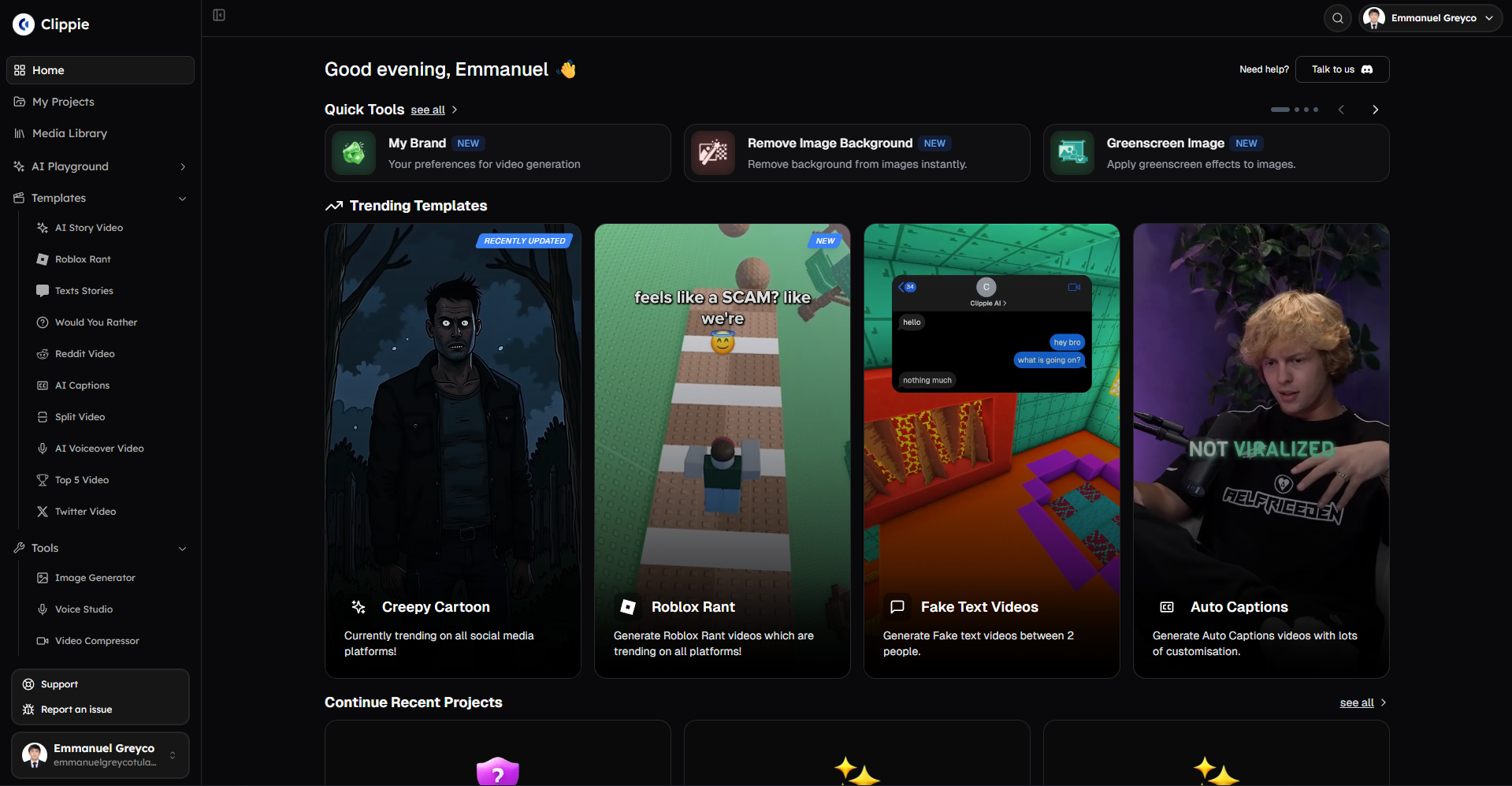
Visit clippie.ai to explore automated workflows producing 80-200 monthly videos distributed to TikTok/Instagram/YouTube in 15-25 weekly hours through trending automation, batch processing, multi-platform export templates, enabling $7,500-$45,000 monthly revenue through systematic aspect ratio optimization and automated content generation democratizing professional production previously requiring $50,000-$100,000 annual agency overhead.
Make an AI story video
Write a script or let AI write one. Clippie turns it into a narrated video with AI scenes, voiceover and captions.
Read more

How to Make Top 5 Ranking Videos in 2026 (Step-by-Step)
Build ranking Shorts that can still earn: pick a debatable topic, set clear criteria, source clips you may use, script the countdown, add your commentary.

How to Create Short-Form Videos Using AI: 8 Steps (2026)
A beginner workflow for AI videos on TikTok, Reels and Shorts: pick a format, script a hook, add visuals, voice and captions, export at 9:16, label AI.

7 Free CapCut Alternatives for Short-Form Video (2026)
Compare Edits, YouTube Create, VN, Clipchamp, Canva, DaVinci Resolve and Shotcut: what each gives free users, what it caps first and where it falls short.