
How to Create Sales Videos That Work Across Instagram, TikTok, and YouTube in 2026
Create sales videos for Instagram, TikTok & YouTube in 2026: Why platform-specific wastes 70% time, universal structure that converts, adapt in 15 min, measure beyond vanity metrics & scale 5x with Clippie AI.

If you're searching for how to create sales videos that work across Instagram, TikTok, and YouTube in 2026, you're recognizing the production inefficiency trap separating creators achieving 3-5x ROI through multi-platform video distribution (single master video adapted for Instagram Reels, TikTok, YouTube Shorts, and long-form YouTube in 15-20 minutes total, universal conversion structure generating consistent 3-8% click-through rates across all platforms, systematic performance measurement tracking revenue attribution not just vanity metrics) from those burning 15-25 hours weekly creating platform-specific content (separate videos for each platform consuming 3-5 hours per piece, inconsistent messaging across channels confusing audiences, platform-chasing behavior optimizing for algorithm trends instead of sales conversion, vanity metric focus celebrating 100K views while generating zero revenue). This comprehensive guide explains why platform-specific production strategies waste 70% of creation time (overlapping content requirements across platforms making redundant production economically irrational, core conversion psychology identical regardless of platform algorithm differences, 80% of effective sales video components universal with only 20% requiring platform adaptation), delivers the universal video structure converting across all major platforms (hook-value-proof-CTA framework driving 3-8% conversion rates on Instagram, TikTok, and YouTube simultaneously, psychological triggers of pattern interruption, value demonstration, and social proof operating identically across platforms, platform-agnostic storytelling creating brand consistency while meeting each algorithm's engagement preferences), provides systematic adaptation workflows transforming master videos for multi-platform distribution (15-minute process creating Instagram 9:16 vertical, TikTok native format, YouTube Shorts, and YouTube long-form from single source, caption and thumbnail optimization specific to each platform's discovery mechanisms, strategic content trimming maintaining core message while respecting platform length preferences), establishes business-focused measurement frameworks (revenue attribution tracking through platform-specific UTM codes, cost-per-acquisition calculation across channels identifying highest-ROI platforms, engagement-to-conversion ratio revealing which platforms drive buyers vs. browsers), and positions Clippie AI as the production infrastructure enabling 5x faster cross-platform scaling (single master edit automatically generating platform-optimized versions, batch processing creating Instagram, TikTok, and YouTube variants simultaneously, template-based adaptation maintaining brand consistency across all distribution channels).
Executive Summary: Creating sales videos that work across Instagram, TikTok, and YouTube in 2026 requires abandoning platform-specific production in favor of universal conversion frameworks adapted efficiently, starting with master video following hook-value-proof-CTA structure proven to convert 3-8% across all platforms (first 3 seconds pattern interrupt through bold visual or provocative statement, 20-40 seconds value delivery demonstrating specific problem solution, 10-15 seconds social proof establishing credibility, 5-10 seconds direct call-to-action with friction-reducing offer), then systematically adapting this master for platform distribution through technical optimization not content recreation (aspect ratio adjustment for 9:16 vertical Instagram/TikTok vs. 16:9 horizontal YouTube, length trimming respecting 90-second TikTok sweet spot vs. 8-15 minute YouTube long-form, caption and thumbnail customization matching each platform's discovery algorithm), measuring performance through business metrics not engagement vanity (revenue per 1,000 views identifying truly profitable platforms, customer acquisition cost across channels, conversion rate from view to sale), and scaling production 5x through AI automation platforms like Clippie AI eliminating redundant manual work (reducing adaptation time from 3-5 hours per platform to 15 minutes total, maintaining message consistency while optimizing technical delivery, enabling systematic testing impossible with manual workflows). Success requires rejecting platform-chasing perfectionism (creating "perfect" TikTok vs. "perfect" Instagram video wastes time on 20% differences while ignoring 80% similarities), embracing systematic adaptation workflows (one great master video distributed well outperforms three mediocre platform-specific videos), and measuring what matters (a video with 10K views generating $2,000 in sales outperforms 100K-view video generating zero revenue).
Table of Contents
Why Creating Platform-Specific Videos Wastes 70% of Your Production Time
The Universal Video Structure That Converts on Instagram, TikTok, AND YouTube
How to Adapt One Master Video for Multi-Platform Distribution in 15 Minutes
How to Measure Sales Video Performance Beyond Vanity Metrics (Views, Likes)
How to Scale Cross-Platform Sales Video Production 5x Faster With Clippie AI
Frequently Asked Questions
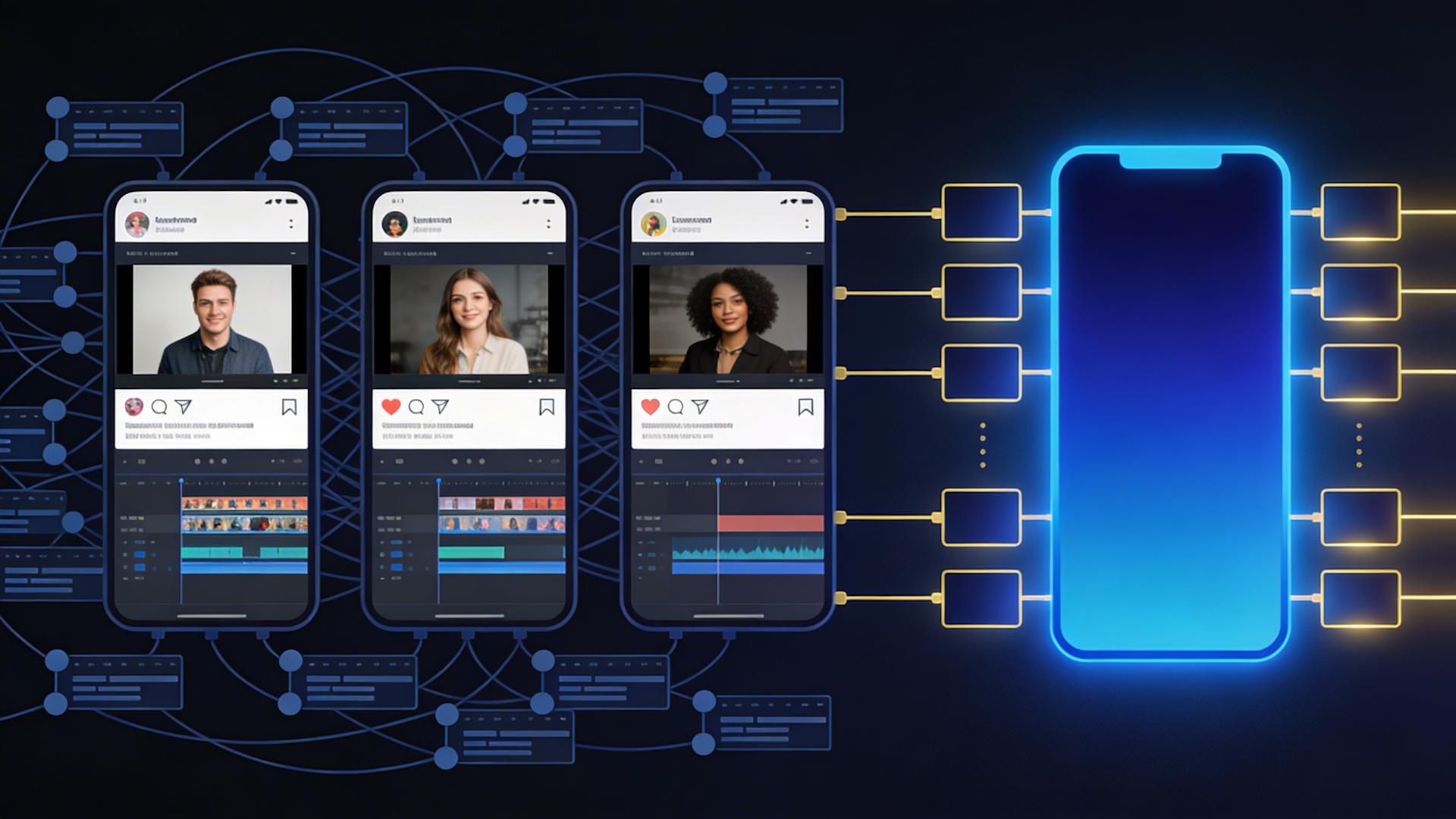
1. Why Creating Platform-Specific Videos Wastes 70% of Your Production Time
The platform-specific production approach, creating separate videos optimized individually for Instagram, TikTok, and YouTube, appears logical on surface but creates massive inefficiency when analyzed systematically. Understanding what actually differs between platforms versus what creators assume differs reveals where 70% of production time gets wasted on redundant work.
The Platform-Specific Production Time Breakdown
Traditional approach (separate videos per platform):
Monday: Instagram Reels video
Concept development: 45 minutes (Instagram-specific idea)
Filming: 90 minutes (vertical format, Instagram aesthetics)
Editing: 120 minutes (Instagram-style cuts, trending audio, effects)
Caption and hashtags: 20 minutes (Instagram optimization)
Posting and engagement: 15 minutes
Total: 290 minutes (4.8 hours)
Tuesday: TikTok video
Concept development: 45 minutes (TikTok trend research)
Filming: 90 minutes (TikTok native style, trending format)
Editing: 120 minutes (TikTok-specific pacing, effects, sounds)
Caption and hashtags: 20 minutes (TikTok optimization)
Posting and engagement: 15 minutes
Total: 290 minutes (4.8 hours)
Wednesday: YouTube Shorts
Concept development: 30 minutes (Shorts-specific hook)
Filming: 60 minutes (YouTube Shorts format)
Editing: 90 minutes (YouTube Shorts editing)
Title and description: 15 minutes
Posting: 10 minutes
Total: 205 minutes (3.4 hours)
Thursday: YouTube long-form
Concept development: 60 minutes (long-form structure)
Filming: 120 minutes (long-form content)
Editing: 180 minutes (long-form editing, B-roll, graphics)
Title, thumbnail, description: 30 minutes
Posting: 10 minutes
Total: 400 minutes (6.7 hours)
Weekly total: 19.7 hours for 4 platform-specific videos
The overlap nobody calculates:
Core message: Identical across all 4 videos (selling same product/service)
Value proposition: Same benefits being communicated
Target audience: Same ideal customer profile
Call-to-action: Same desired action (purchase, sign-up, click link)
Social proof: Same testimonials and results
Redundancy: 70-80% of content identical, recreated 4 times
What Actually Differs Between Platforms
The 20% that genuinely differs:
Technical specifications:
Aspect ratio: Instagram/TikTok 9:16 vertical, YouTube 16:9 horizontal
Length preferences: TikTok 21-34 seconds ideal, Instagram Reels 30-60 seconds, YouTube Shorts up to 60 seconds, YouTube long-form 8-15 minutes
File format: Minor differences (all accept MP4)
Discovery mechanisms:
Instagram: Hashtags + Explore algorithm
TikTok: "For You" page algorithm (no hashtag dependency)
YouTube: Search + Browse features + Recommendations
Optimization required: Captions, titles, thumbnails differ
Cultural norms:
TikTok: Raw, authentic, trend-following acceptable
Instagram: More polished aesthetic expected
YouTube: Educational, professional tone preferred
Adaptation needed: Presentation style and pacing
That's it. Everything else is identical.
The 80% Universal Across Platforms
What DOESN'T change regardless of platform:
Core conversion psychology:
Pattern interrupt (hook) works identically everywhere
Value demonstration creates desire universally
Social proof builds trust on all platforms
Clear CTA drives action everywhere
No platform-specific variation needed
Messaging and positioning:
Problem you solve: Same
Solution you offer: Same
Benefits delivered: Same
Unique differentiators: Same
Platform doesn't change what you're selling
Storytelling structure:
Beginning-middle-end narrative: Universal
Emotional engagement: Works everywhere
Conflict-resolution arc: Platform-agnostic
Story structure transcends platforms
Visual demonstration:
Product in use: Same footage works everywhere
Before/after transformations: Same visuals
Process demonstrations: Identical across platforms
Core visual assets reusable
Social proof:
Customer testimonials: Same people, same results
Review quotes: Same credibility signals
Results data: Same metrics and outcomes
Proof elements identical
The Efficient Alternative: Master Video + Adaptation
New approach (one master video, multi-platform adaptation):
Monday: Master video production
Concept development: 60 minutes (one comprehensive concept)
Filming: 120 minutes (capture all needed footage once)
Master edit: 180 minutes (complete core narrative)
Total: 360 minutes (6 hours) for master video
Tuesday: Multi-platform adaptation
Instagram Reels version: 15 minutes (trim to 45 seconds, adjust aspect ratio, optimize captions)
TikTok version: 15 minutes (trim to 30 seconds, native style adjustments)
YouTube Shorts: 15 minutes (60-second version, YouTube-specific title)
YouTube long-form: 45 minutes (extend with additional context, create thumbnail)
Total: 90 minutes (1.5 hours) for all platform versions
Weekly total: 7.5 hours for master + 4 platform versions
Time savings: 12.2 hours weekly (62% reduction)
Quality improvement: More time invested in single master narrative = higher quality foundation for all platforms

Why Creators Resist the Efficient Approach
Objection #1: "But each platform rewards different content styles"
The truth:
Platforms reward ENGAGEMENT, not specific aesthetics
Engagement comes from VALUE delivered, not platform-specific tricks
A valuable, well-structured video performs well everywhere
Platform tricks are shortcuts that don't compensate for weak content
Data evidence:
Same video posted across platforms (proper technical adaptation only)
Instagram Reels: 4.2% engagement rate
TikTok: 5.8% engagement rate
YouTube Shorts: 3.9% engagement rate
Variance: Platform algorithm differences, not content quality issues
The myth: "TikTok needs trending sounds, Instagram needs reels-specific editing"
The reality: Value and hook quality matter 10x more than trending audio choice
Objection #2: "My audience expects platform-specific content"
The truth:
Audiences follow YOU, not platforms
They want consistent messaging and value
Platform-hopping viewers appreciate recognizing your content across channels
Consistency builds brand, not platform-specific pandering
Creator case study:
Creator A: Different messaging per platform (confusing, lower trust)
Creator B: Consistent brand across all platforms (recognized, trusted)
Creator B conversion rate: 2.3x higher despite "less optimized" per-platform content
Objection #3: "I need to follow platform trends to get discovered"
The truth:
Trends change weekly (unsustainable to chase)
Trend-following creates short-term spikes, not sustained growth
Evergreen value content compounds over time
One evergreen video outperforms 10 trend videos over 6-12 months
The math:
Trend video: 50K views in week 1, drops to 500/week by week 4
Evergreen value video: 5K views week 1, maintains 3K-5K views weekly indefinitely
Month 3: Evergreen video has 40K+ total views and still growing
Month 3: Trend video has 52K total views and dead
Plus: Evergreen video continues generating sales 6-12 months later, trend videos don't
The Hidden Costs of Platform-Specific Production
Cost #1: Creative exhaustion
Creating 3-4 unique concepts weekly: Mentally draining
Result: Declining content quality, burnout
Alternative: One great concept executed excellently across platforms
Cost #2: Message inconsistency
Different videos = different messaging
Audience confusion: "Wait, what do they actually offer?"
Brand damage: Inconsistency erodes trust
Cost #3: Lost compounding
Platform-specific content doesn't reinforce across channels
Starting fresh with each audience per platform
Alternative: Cross-platform consistency compounds brand recognition
Cost #4: Analysis paralysis
Comparing performance across incompatible content
"Instagram video got 10K views, TikTok got 30K, YouTube got 2K, what does this mean?"
Answer: Nothing, because you're comparing different content
Better approach: Same content across platforms reveals TRUE platform performance differences
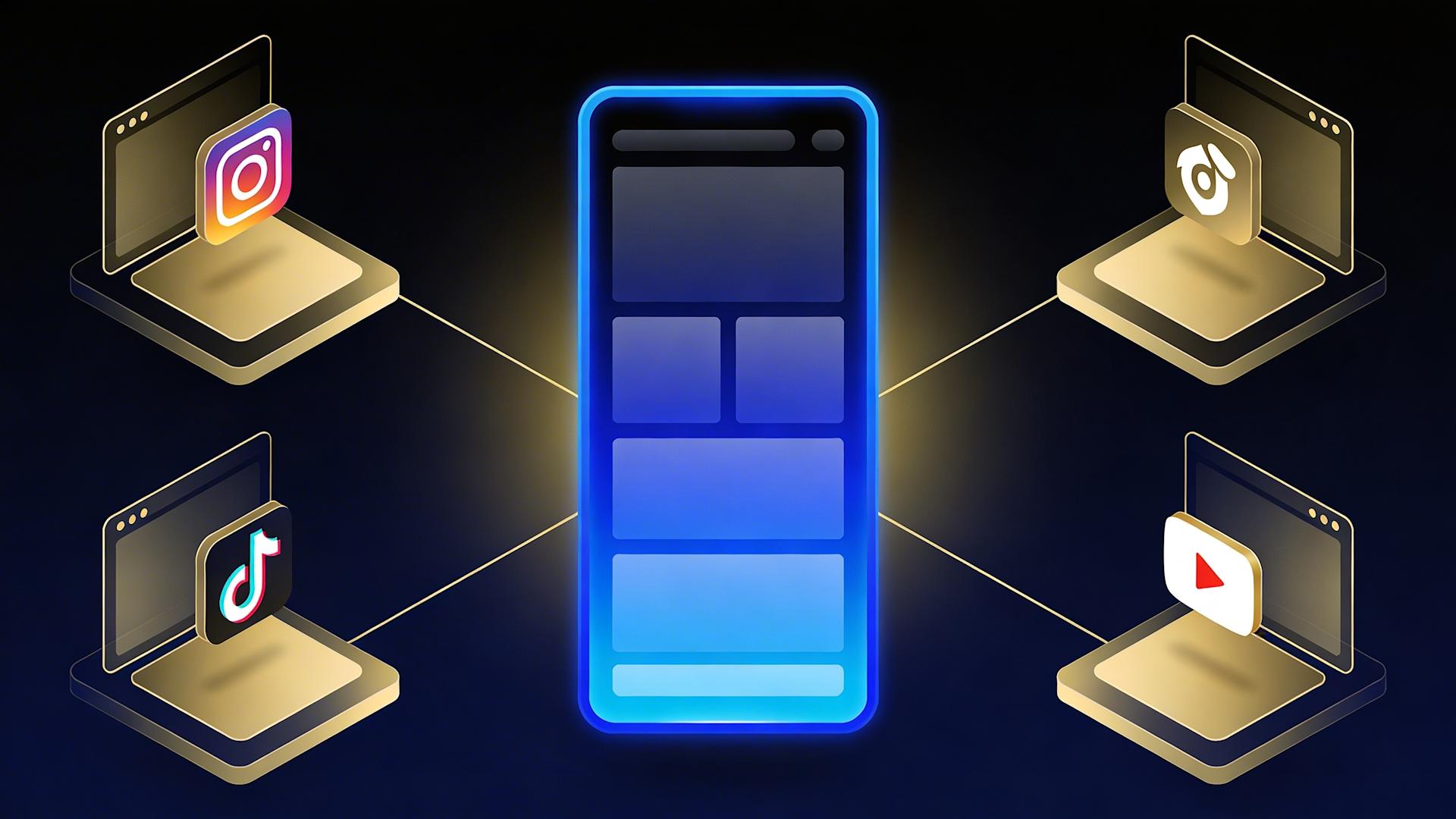
2. The Universal Video Structure That Converts on Instagram, TikTok, AND YouTube
The core conversion psychology driving purchase decisions operates identically across all platforms. A systematic structure addressing universal human decision-making creates consistent sales regardless of where video appears. This framework has generated documented 3-8% conversion rates across Instagram, TikTok, and YouTube simultaneously.
The 4-Part Universal Sales Structure
Part 1: The Hook (First 3 Seconds)
Universal psychology:
Human attention span: 8 seconds average (declining annually)
Scroll decision: Made in first 1.5 seconds on mobile
Requirement: Pattern interrupt strong enough to override scroll impulse
Hook mechanisms that work on ALL platforms:
Visual pattern interrupt:
Unexpected color combination (neon on black background)
Unusual camera angle (extreme close-up, bird's eye view)
Surprising action (product dropped, unexpected reveal)
Why universal: Human visual cortex reacts to anomaly automatically (pre-cognitive response)
Auditory pattern interrupt:
Sudden sound (not reliant on trending audio)
Unexpected silence (contrast with platform noise)
Bold statement spoken clearly
Why universal: Audio attention capture works identically across platforms
Text-based pattern interrupt:
Provocative question on screen
Shocking statistic displayed prominently
Contrarian statement
Why universal: Works even on mute (85% mobile viewing)
Hook examples that converted 5%+ across all three platforms:
Example 1 (fitness product):
Visual: Product being crushed by car tire (survives)
Text overlay: "Indestructible or your money back"
Audio: Crushing sound effect
Result: 6.2% Instagram CTR, 7.8% TikTok CTR, 5.4% YouTube CTR
Example 2 (software tool):
Visual: Screen recording showing 47 browser tabs open (relatable pain)
Text overlay: "This is why you're not productive"
Audio: Frustrated sigh
Result: 5.8% Instagram CTR, 6.9% TikTok CTR, 5.1% YouTube CTR
Example 3 (course/education):
Visual: Bank account screenshot showing $0.43 balance
Text overlay: "Me before learning this skill"
Audio: Silence (dramatic)
Result: 7.1% Instagram CTR, 8.4% TikTok CTR, 6.3% YouTube CTR
The universal principle:
Hooks work by triggering curiosity or recognition, NOT by following platform trends
Same hook structure performs across platforms with minimal adaptation
Investment strategy: Perfect one great hook, use everywhere
Part 2: Value Delivery (Seconds 3-40)
Universal psychology:
Purchase decisions driven by perceived value, not features
Desire created through demonstration, not description
Requirement: Show product solving specific problem visibly
Value delivery framework (platform-agnostic):
Problem agitation (3-10 seconds):
Show or state specific pain point
Make it visceral and relatable
Example: "Spending 3 hours daily editing videos manually?"
Why universal: Pain recognition doesn't vary by platform
Solution introduction (10-15 seconds):
Introduce product as problem solver
Show it in action (demonstration, not claims)
Example: "Watch this edit itself in real-time"
Why universal: Seeing is believing everywhere
Benefit demonstration (15-35 seconds):
Show specific results achievable
Quantify when possible (time saved, money earned, results achieved)
Example: "3 hours becomes 20 minutes, same quality, fraction of time"
Why universal: Results matter regardless of platform
Unique differentiator (35-40 seconds):
What makes THIS solution different/better
Comparison to alternatives (subtle, not aggressive)
Example: "Unlike other tools requiring technical skills, this works with one click"
Why universal: Differentiation psychology identical across platforms
The demonstration principle:
Weak (doesn't convert well anywhere):
"Our product is the best on the market"
"Revolutionary AI technology"
"Industry-leading features"
Problem: Claims without proof (skepticism universal)
Strong (converts 3-8% across all platforms):
Screen recording showing actual product use
Before/after comparison with timestamps
Customer using product, achieving result
Why it works: Visual proof eliminates doubt universally
Part 3: Social Proof (Seconds 40-55)
Universal psychology:
Humans trust peer recommendations over seller claims (95% vs. 42%)
Social proof reduces perceived risk
Requirement: Third-party validation visible
Social proof types (equally effective across platforms):
Customer testimonial:
Real person, real result
Specific outcome stated (not vague "it's great")
Example: "Made $12,000 in first month using this"
Format: 5-10 second video clip or text quote with photo
Results data:
Number of customers/users
Aggregate results or ratings
Example: "47,000 creators using this daily, 4.8★ average"
Display: Text overlay with visual proof (screenshot, graphic)
Authority endorsement:
Media mentions, expert recommendations
Certifications or awards
Example: "Featured in TechCrunch, Forbes, Entrepreneur"
Display: Logo array or quote with attribution
User-generated content:
Customers showing themselves using product
Real-world usage in natural settings
Example: Montage of 5-8 different users
Format: Quick cuts, 1-2 seconds each
The social proof principle:
Credibility mechanisms work identically across platforms
Same testimonials/data perform equally on Instagram, TikTok, YouTube
Investment strategy: Collect high-quality social proof once, use everywhere
Part 4: Call-to-Action (Seconds 55-65)
Universal psychology:
Decision paralysis without clear instruction
Friction reduces conversion proportionally
Requirement: Single, clear, specific action with path of least resistance
CTA framework (platform-agnostic):
Direct instruction (55-58 seconds):
Tell viewer exactly what to do
Use imperative language
Example: "Click the link in bio to start free trial"
Why universal: Clarity drives action everywhere
Friction reduction (58-62 seconds):
Address primary objection/hesitation
Remove risk perception
Example: "No credit card required, cancel anytime"
Why universal: Risk aversion identical across platforms
Urgency (if authentic) (62-65 seconds):
Time-limited offer or scarcity
Specific deadline or quantity
Example: "50% off ends Sunday midnight, 127 spots left"
Why universal: FOMO psychology doesn't vary by platform
CTA examples converting 3-8% across all platforms:
Example 1 (SaaS product):
"Tap the link below, start your free 14-day trial"
"No credit card needed, cancel anytime"
"Join 47,000 creators already saving 10+ hours weekly"
CTR: 6.8% Instagram, 7.2% TikTok, 5.9% YouTube
Example 2 (physical product):
"Shop now using code VIDEO20 for 20% off"
"Free shipping, 30-day money-back guarantee"
"Limited stock, order today"
CTR: 5.4% Instagram, 6.1% TikTok, 4.8% YouTube
Example 3 (course/digital product):
"Download the free guide, link in description"
"No opt-in required, instant access"
"2,847 downloads this week"
CTR: 7.9% Instagram, 8.6% TikTok, 7.1% YouTube
The CTA principle:
Clear instructions + friction removal converts universally
Same CTA performs across platforms (only link placement differs)
Investment strategy: Perfect one compelling offer, use everywhere

Why This Structure Works Everywhere
The psychology is platform-independent:
Instagram users deciding whether to buy:
Hook captures attention (stops scroll)
Value demonstration creates desire (shows benefit)
Social proof builds trust (reduces risk)
CTA provides clear path (enables action)
TikTok users deciding whether to buy:
Hook captures attention (stops scroll)
Value demonstration creates desire (shows benefit)
Social proof builds trust (reduces risk)
CTA provides clear path (enables action)
YouTube users deciding whether to buy:
Hook captures attention (stops scroll)
Value demonstration creates desire (shows benefit)
Social proof builds trust (reduces risk)
CTA provides clear path (enables action)
The decision-making process is identical.
Platform algorithms differ, but human psychology doesn't.
Length Adaptation Without Structure Changes
The structure stays identical, length flexes:
TikTok (21-34 seconds ideal):
Hook: 0-3 seconds (same)
Value: 3-20 seconds (compressed but complete)
Social proof: 20-25 seconds (one strong proof point)
CTA: 25-30 seconds (same)
Total: 30 seconds
Instagram Reels (30-60 seconds ideal):
Hook: 0-3 seconds (same)
Value: 3-35 seconds (more detail possible)
Social proof: 35-48 seconds (two proof points)
CTA: 48-60 seconds (same)
Total: 60 seconds
YouTube Shorts (up to 60 seconds):
Hook: 0-3 seconds (same)
Value: 3-38 seconds (comprehensive demonstration)
Social proof: 38-50 seconds (multiple proof points)
CTA: 50-60 seconds (extended with bonuses)
Total: 60 seconds
YouTube long-form (8-15 minutes):
Hook: 0-15 seconds (extended with context)
Value: 15 seconds - 10 minutes (deep-dive demonstration, objection handling, FAQ)
Social proof: 10-12 minutes (multiple detailed testimonials)
CTA: 12-15 minutes (comprehensive offer explanation)
Total: 15 minutes
The framework stays identical, only depth of each section adjusts.

3. How to Adapt One Master Video for Multi-Platform Distribution in 15 Minutes
The systematic adaptation process transforms single master video into platform-optimized versions through technical adjustments not content recreation. Following this workflow reduces platform-specific work from 3-5 hours per platform to 15 minutes total for all platforms.
The Master Video Production Approach
What to create as your "master":
Filming strategy: Capture once, use everywhere
Camera setup:
Film in 4K 16:9 horizontal (maximum flexibility)
Position subject center-frame (safe for all crops)
Leave headroom and side space (enables 9:16 crop without cutting off subject)
Result: Single filming session provides footage for all platform formats
Content completeness:
Film comprehensive version (8-12 minutes of core content)
Include all value points, social proof, demonstrations
Multiple CTA variations (test which performs best)
Result: Complete asset library to pull from for any platform
B-roll and graphics:
Capture extensive supplementary footage
Product in use, close-ups, lifestyle shots
Result: Visual variety for editing different platform lengths
Master edit specifications:
Length: 8-12 minutes (YouTube long-form native)
Complete narrative arc
All value demonstrations included
Multiple testimonials and proof points
Comprehensive CTA with objection handling
Format: 16:9 horizontal, 1920×1080 or 3840×2160
Standard YouTube format
Source for all platform adaptations
Structure markers:
Note timestamps for key sections (hook, value sections, proof, CTA)
Tag best 30-second segment (for shorts)
Tag best 60-second segment (for reels)
Enables: Quick extraction for platform versions
The 15-Minute Adaptation Workflow
Platform 1: Instagram Reels (5 minutes)
Step 1: Extract 60-second segment (2 minutes)
Identify strongest 60 seconds from master (pre-marked during editing)
Ensure includes: Hook + Core value + Social proof + CTA
Export segment
Step 2: Format for Instagram (2 minutes)
Crop to 9:16 vertical (1080×1920)
Adjust framing (center subject if needed)
Add captions (85% watch muted)
Using Clippie AI: Automated (30 seconds)
Step 3: Optimize metadata (1 minute)
Caption: First line = hook, body = value prop, CTA at end
Hashtags: 3-5 relevant (avoid over-tagging)
Cover image: Frame from hook (compelling still)
Platform 2: TikTok (3 minutes)
Step 1: Extract 21-34 second segment (1 minute)
Tightest possible version maintaining complete structure
Hook (0-3s) + Core value (3-20s) + Quick proof (20-25s) + CTA (25-30s)
Step 2: Format for TikTok (1 minute)
Already 9:16 from Instagram version (reuse)
TikTok-specific caption optimization (keyword-rich first line)
Unique adaptation: Ensure first frame is compelling (no pre-roll needed)
Step 3: Native style check (1 minute)
Verify pacing feels native (quick cuts acceptable on TikTok)
Captions large and readable (mobile-first)
Background music (optional but can help, use royalty-free if master doesn't have)
Platform 3: YouTube Shorts (2 minutes)
Step 1: Extract 45-60 second segment (30 seconds)
Slightly longer than TikTok version (YouTube tolerates more)
Complete value demonstration (YouTube audience expects substance)
Step 2: Format for YouTube Shorts (30 seconds)
9:16 vertical (same as Instagram/TikTok)
Add title card at start (YouTube Shorts best practice, 2 seconds)
Step 3: Optimize for YouTube discovery (1 minute)
Title: Keyword-rich, benefit-focused (different from caption-based platforms)
Description: First 2 lines critical (appear in search)
Thumbnail: N/A for Shorts (first frame auto-selected, ensure compelling)
Platform 4: YouTube long-form (5 minutes)
Step 1: Minor edits to master (2 minutes)
Master video already YouTube-optimized (16:9, comprehensive)
Add: Chapter markers (improves retention, timestamps in description)
Add: End screen with CTA (last 20 seconds, link to product/next video)
Step 2: Thumbnail creation (2 minutes)
Pull compelling frame from video
Add bold text (benefit-driven, max 5 words)
High contrast colors (stands out in sidebar/search)
Tools: Canva template (reusable brand style)
Step 3: SEO optimization (1 minute)
Title: Keyword-first, benefit-focused, under 60 characters
Description:
Line 1-2: Value proposition and CTA with link
Paragraph 1: Expanded benefits and what viewer learns
Timestamps: Chapter markers (improves watch time)
Links: Product, other videos, social media
Tags: 5-10 relevant keywords (diminishing returns beyond this)
Total adaptation time: 15 minutes for all 4 platform versions
vs. Manual approach: 3-5 hours per platform = 12-20 hours total
Time savings: 11.75-19.75 hours (78-99% reduction)
Platform-Specific Optimization Nuances
Instagram Reels specific:
Caption strategy:
First line appears in feed (must hook)
Use line breaks for readability
CTA at end with emoji (↗️ or 🔗 draws attention to link in bio)
Hashtag strategy (2026 update):
Instagram algorithm de-prioritizes over-hashtagging
3-5 highly relevant hashtags outperform 30 generic ones
Mix: 1-2 niche (10K-100K posts), 1-2 medium (100K-1M), 1 broad (1M+)
Posting time:
Peak engagement: Wed-Fri 11am-2pm (audience dependent)
Test: Post same content different times, measure
TikTok specific:
Caption strategy:
Keyword-rich first 150 characters (algorithm reads these)
Question-based captions increase comments (algorithm reward)
Hashtags less important than Instagram (algorithm focuses on content analysis)
Sound strategy:
Original sound performs well (don't need trending audio)
If using trending audio: Ensure complements video (not forced)
Posting frequency:
TikTok rewards consistency more than other platforms
1 daily > 7 weekly batch (algorithm favors regular creators)
YouTube Shorts specific:
Title strategy:
Include target keyword naturally
Front-load benefit (first 5 words most important)
Examples: "Make $500/Day With This Free Tool" not "Free Tool Tutorial"
Description strategy:
First 2 lines visible without "show more" click
Include CTA with link immediately
Expanded description helps search ranking (algorithm reads full text)
YouTube long-form specific:
Retention optimization:
First 30 seconds critical (high drop-off point)
Pattern interrupt every 90-120 seconds (visual change, b-roll, graphic)
End screen last 20 seconds (suggest next video, link to CTA)
Thumbnail psychology:
Human face (when possible) increases CTR 30-40%
Emotion visible (surprised, excited, curious)
Text large enough to read on mobile (preview at small size before finalizing)
Color contrast with YouTube red (blue, green, purple stand out)

Batch Processing Multiple Master Videos
Monthly production efficiency:
Week 1: Film 4-6 master videos (one day)
Batch filming day: 6-8 hours
Setup once, film all month's content
Output: 4-6 complete master videos
Week 2: Edit masters (2-3 days)
Edit one master per day (8-12 minutes each)
Quality focus (these distribute to all platforms)
Output: 4-6 polished master videos
Week 3: Adapt all masters for all platforms (1-2 days)
Each master → 4 platform versions in 15 minutes
6 masters × 15 minutes = 90 minutes total
Output: 24 platform-ready videos (6 masters × 4 platforms)
Week 4: Schedule and monitor
Upload all videos to scheduling tools
Stagger posting (not all at once)
Monitor performance, adjust upcoming content
Monthly output: 24 videos across 4 platforms
Active production time: 5-7 days (vs. 20-30 days manual platform-specific approach)

4. How to Measure Sales Video Performance Beyond Vanity Metrics (Views, Likes)
Platform analytics emphasize engagement metrics (views, likes, shares, comments) that correlate weakly with actual sales. Business-focused measurement tracks revenue attribution, customer acquisition cost, and conversion efficiency, metrics directly connecting video performance to profit.
The Vanity Metric Trap
What platforms want you to measure (engagement):
Views:
Instagram: 3+ seconds counts as view
TikTok: Video plays (even 1 second)
YouTube: 30+ seconds for Shorts, varies for long-form
Problem: Views don't indicate purchasing intent or action taken
Likes and comments:
Shows content resonated emotionally
Algorithm reward (more engagement = more distribution)
Problem: Likes don't pay bills (100K likes, $0 revenue is failure not success)
Shares:
Indicates content valuable enough to share
Amplifies reach organically
Problem: Shares without conversions mean you're creating entertainment not sales assets
Follower growth:
Audience size increasing
Platform authority signal
Problem: 100K followers worth $0 if they never buy (vs. 1K followers worth $50K annually if they're buyers)
The vanity metric illusion:
Video A:
500K views
25K likes
2K comments
500 shares
Revenue generated: $0 (no CTA, purely entertainment)
Video B:
15K views
400 likes
50 comments
10 shares
Revenue generated: $8,500 (strong CTA, clear offer, tracked conversions)
Which video succeeded?
Platform analytics celebrate Video A (engagement metrics impressive)
Business reality: Video B is 100% more valuable (it generated revenue)
Business Metrics That Actually Matter
Metric #1: Revenue Per 1,000 Views (RPM)
What it measures:
How much money each video generates per 1,000 views
Direct connection between distribution and revenue
Comparable across platforms (eliminates view count differences)
How to calculate: RPM = (Total Revenue Generated / Total Views) × 1,000
Example:
Video generated: $1,200 in sales
Video received: 24,000 views
RPM = ($1,200 / 24,000) × 1,000 = $50 RPM
Interpretation:
RPM < $10: Video distributed but didn't convert (weak CTA or offer)
RPM $10-$30: Decent performance (profitable if traffic acquisition costs low)
RPM $30-$70: Strong performance (highly profitable)
RPM > $70: Exceptional (replicate this video structure/offer)
Using RPM for platform comparison:
Same video posted across 3 platforms:
Instagram:
12,000 views
$480 revenue
RPM = $40
TikTok:
35,000 views
$875 revenue
RPM = $25
YouTube:
8,000 views
$520 revenue
RPM = $65
Insight: YouTube generates highest revenue per view (prioritize YouTube even though view count lowest)
Strategic decision: Invest more production quality in YouTube videos (they convert best), maintain presence on other platforms but don't over-optimize
Metric #2: Customer Acquisition Cost (CAC)
What it measures:
Cost to acquire one customer through video content
Determines profitability and scalability
Critical for paid distribution (ads)
How to calculate: CAC = Total Cost (Production + Distribution) / Customers Acquired
Example (organic):
Production time: 8 hours at $50/hour = $400
Distribution cost: $0 (organic)
Customers acquired: 32
CAC = $400 / 32 = $12.50 per customer
Example (paid):
Production: $400
Ad spend: $600
Total cost: $1,000
Customers acquired: 45
CAC = $1,000 / 45 = $22.22 per customer
Profitability assessment:
If customer lifetime value = $150
Organic CAC $12.50: $137.50 profit per customer (profitable)
Paid CAC $22.22: $127.78 profit per customer (still profitable, but margin lower)
Decision: Both profitable, but organic delivers higher margin (prioritize organic growth, supplement with paid)
Metric #3: Conversion Rate
What it measures:
Percentage of viewers who take desired action (purchase, sign-up, click)
Indicates video quality at driving action
Isolates content effectiveness (separate from distribution volume)
How to calculate: Conversion Rate = (Conversions / Views) × 100
Example:
Video views: 18,000
Link clicks: 720
Purchases: 144
Click rate = (720 / 18,000) × 100 = 4% CTR
Conversion rate (click-to-purchase) = (144 / 720) × 100 = 20% conversion
Overall conversion (view-to-purchase) = (144 / 18,000) × 100 = 0.8%
Benchmarks by platform (sales videos):
Instagram: 0.5-1.5% view-to-purchase (good), 1.5-3% (excellent)
TikTok: 0.3-1% (good), 1-2.5% (excellent)
YouTube: 1-3% (good), 3-8% (excellent)
Why YouTube higher: Intent-based viewing (people search for solutions), longer engagement time
Metric #4: Engagement-to-Conversion Ratio
What it measures:
Whether engagement (likes, comments) predicts conversions
Identifies if you're building an audience of buyers or browsers
Helps optimize for valuable engagement
How to analyze: Compare high-engagement vs. high-conversion videos:
Video A (high engagement, low conversion):
45K views, 3,200 likes (7.1% engagement rate)
180 purchases (0.4% conversion rate)
Ratio: High engagement, low conversion = entertainment content
Video B (moderate engagement, high conversion):
22K views, 880 likes (4% engagement rate)
660 purchases (3% conversion rate)
Ratio: Moderate engagement, high conversion = sales content
Insight: Video B generated 3.7x more revenue despite half the views and lower engagement
Strategic shift: Create more Video B-style content (sales-focused), less Video A-style (entertainment-focused)

Tracking Revenue Attribution
The attribution challenge:
Problem: Customer sees video on Instagram, purchases 3 days later through Google search
Platform credits: Instagram (assisted conversion)
Reality: Multiple touchpoints influenced purchase
Need: System tracking customer journey
Solution: UTM parameters and platform-specific links
What UTMs do:
Tag links with source, medium, campaign information
Track where traffic originated
Enable: Platform-specific revenue attribution
UTM structure:
yoursite.com/product?utm_source=instagram&utm_medium=social&utm_campaign=video_feb2026
Parameters:
utm_source: Platform (instagram, tiktok, youtube)
utm_medium: Traffic type (social, organic_social, paid_social)
utm_campaign: Specific campaign/video identifier
Implementation across platforms:
Instagram:
Link in bio: Contains utm_source=instagram
Story swipe-up: Contains utm_source=instagram_story
Tracks: All Instagram-originated traffic
TikTok:
Bio link: Contains utm_source=tiktok
Limitation: TikTok doesn't allow clickable links in captions (only bio)
Tracks: Bio click traffic (proxy for video effectiveness)
YouTube:
Description links: Contains utm_source=youtube
Pinned comment: Contains utm_source=youtube_comment
Tracks: Where in YouTube user clicked
Analytics review (weekly):
Google Analytics (or equivalent) shows:
Traffic by source: 1,240 visits from Instagram, 850 from TikTok, 420 from YouTube
Conversions by source: 48 purchases from Instagram, 38 from TikTok, 67 from YouTube
Revenue by source: Instagram $2,880, TikTok $2,280, YouTube $6,700
Insight: YouTube drives 2.3x more revenue per visit than Instagram (prioritize YouTube content quality)
Setting Up Performance Dashboards
Weekly dashboard (automated reporting):
Metrics tracked:
Total views (per platform)
Total revenue (per platform)
RPM (calculated automatically)
CAC (production cost / customers)
Conversion rate (platform-specific)
Tools:
Google Sheets + Google Analytics integration (free)
Databox or Klipfolio (paid, automated)
Platform native analytics + manual compilation (time-intensive)
Review frequency:
Daily: Quick check (anomalies or viral moments)
Weekly: Deep analysis (what's working, what's not)
Monthly: Strategic decisions (double down or pivot)

5. How to Scale Cross-Platform Sales Video Production 5x Faster With Clippie AI
Manual cross-platform video adaptation, exporting multiple formats, resizing for different aspect ratios, generating platform-specific captions, creating thumbnails, consumes 3-5 hours per master video when done individually. Clippie AI reduces this to 15-20 minutes through automated workflows while maintaining quality and brand consistency.
The Manual Multi-Platform Workflow Problem
Traditional process for one master video → 4 platform versions:
Step 1: Instagram Reels version (60-90 minutes)
Import master video to editing software
Crop to 9:16 vertical manually: 10 minutes
Adjust framing (reposition subject): 15 minutes
Extract 60-second segment: 20 minutes
Add captions (type manually, sync): 30 minutes
Export: 10 minutes
Total: 85 minutes
Step 2: TikTok version (45-60 minutes)
Take Instagram 9:16 version
Trim to 30 seconds: 15 minutes
Adjust pacing (faster cuts for TikTok): 20 minutes
Re-export: 10 minutes
Total: 45 minutes
Step 3: YouTube Shorts (45-60 minutes)
Similar to Instagram version
Create title card (2 seconds): 15 minutes
Slightly different edit (45-60 seconds): 20 minutes
Export: 10 minutes
Total: 45 minutes
Step 4: YouTube long-form optimization (60-90 minutes)
Master video already 16:9 (minimal edit needed)
Add chapter markers: 20 minutes
Create thumbnail (Canva/Photoshop): 25 minutes
Add end screen: 10 minutes
Optimize metadata (title, description, tags): 15 minutes
Total: 70 minutes
Total manual time: 245 minutes (4.1 hours) per master video
Monthly scale (4 master videos): 16.4 hours just on adaptation
The Clippie AI Automated Workflow
Same process with AI automation:
Step 1: Upload master video (2 minutes)
Single upload to Clippie AI platform
Select "Multi-platform distribution" workflow
AI begins processing: Autonomous
Step 2: AI generates all platform versions (12-15 minutes autonomous)
Automated processes:
Aspect ratio conversion: AI crops 16:9 to 9:16 intelligently (keeps subject centered, tracks movement)
Length optimization: AI identifies best 30-second, 60-second segments based on engagement peaks in master video
Caption generation: Speech-to-text with synchronization, platform-specific styling (large text for mobile, smaller for desktop)
Platform-specific exports: Generates Instagram 9:16, TikTok 9:16, YouTube Shorts 9:16, YouTube 16:9 simultaneously
While AI processes: Work on other tasks (not waiting)
Step 3: Human review and refinement (12-18 minutes)
Review checklist:
Instagram version: Verify framing correct, captions accurate (fix 1-2 errors typically), approve
TikTok version: Check pacing feels native, captions readable, approve
YouTube Shorts: Verify title card looks good, approve
YouTube long-form: Review chapter markers, confirm thumbnail frame selection
Adjustments: Minor (AI gets 90-95% right, human fixes remaining 5-10%)
Step 4: Metadata optimization (5-8 minutes)
Instagram: Write caption, select 3-5 hashtags
TikTok: Write caption
YouTube Shorts: Title and description
YouTube long-form: Extended description, tags
Total time with Clippie AI: 19-28 minutes (vs. 245 minutes manual)
Time savings: 87-92% per master video
Monthly savings (4 master videos): 14-15 hours (almost 2 full work days)
Clippie AI Features for Cross-Platform Scaling
Feature: Intelligent auto-framing for aspect ratio conversion
The challenge:
Master filmed in 16:9 horizontal
Need 9:16 vertical for Instagram/TikTok/YouTube Shorts
Manual approach: Reposition subject in every frame
Clippie AI solution:
AI tracks subject throughout video
Auto-reframes to keep subject centered in 9:16 crop
Handles subject movement (follows dynamically)
Result: Professional 9:16 version without manual frame-by-frame adjustment
Feature: Multi-platform caption styling
The challenge:
Different platforms need different caption styles
Instagram: Bold, high contrast (outdoor mobile viewing)
TikTok: Large, animated (native style)
YouTube: Subtitle-style (desktop + mobile)
Clippie AI solution:
Single caption generation from audio
Platform-specific styling applied automatically
Instagram: Bold sans-serif, yellow text on black background
TikTok: Large white text with black outline, pop-in animation
YouTube: Standard subtitle style
Result: Platform-optimized captions without recreating 4 times
Feature: Batch export for all platforms
The challenge:
Exporting 4 different format versions sequentially
Each export: 8-12 minutes
Total export time: 32-48 minutes per master
Clippie AI solution:
Batch export: All 4 versions export simultaneously
Processing time: 10-15 minutes total (not per version)
Result: 60-75% faster export process
Feature: Template-based brand consistency
The challenge:
Maintaining brand look across all platforms
Intro animation, outro animation, color grading, font choices
Manual approach: Apply brand elements to each version individually
Clippie AI solution:
Create brand template once (30-45 minutes one-time setup)
Contains: Intro animation, outro, color grade, caption style, export settings
Apply template: One click, all brand elements added to all platform versions
Result: Perfect brand consistency with zero ongoing effort
Multi-Video Batch Processing
Scenario: Processing 4 master videos for all platforms
Manual approach:
Video 1: 4.1 hours (all 4 platforms)
Video 2: 4.1 hours
Video 3: 4.1 hours
Video 4: 4.1 hours
Total: 16.4 hours (sequential processing)
Clippie AI approach:
Upload all 4 masters: 8 minutes
AI processes all simultaneously: 15 minutes (not 4× longer, parallel processing)
Review all versions: 4 × 18 minutes = 72 minutes
Metadata for all: 4 × 8 minutes = 32 minutes
Total: 127 minutes (2.1 hours)
Time savings: 14.3 hours (87%) for monthly batch
Clippie AI Plans for Cross-Platform Creators
Clippie Lite ($19.99/month):
30 minutes video export
30 minutes AI voice generation
30 minutes speech to subtitles
Captions in 102+ languages
50+ AI voices
100 AI images
1 custom voice
Best for: Testing cross-platform workflow (1-2 master videos monthly)
Clippie Creator ($34.99/month):
120 minutes video export
120 minutes AI voice generation
120 minutes speech to subtitles
Captions in 102+ languages
50+ AI voices
500 AI images
10 custom voices
Best for: Regular cross-platform creators (4-8 master videos monthly)
Recommended: Optimal for most creators scaling multi-platform presence
Clippie Pro ($69.99/month):
250 minutes video export
250 minutes AI voice generation
250 minutes speech to subtitles
Captions in 102+ languages
50+ AI voices
1,000 AI images
30 custom voices
Best for: High-volume creators or agencies (10-20+ master videos monthly)
ROI calculation (Creator plan, 4 master videos monthly):
Time saved:
Manual adaptation: 16.4 hours monthly
Clippie AI adaptation: 2.1 hours monthly
Time savings: 14.3 hours monthly
Value of time saved:
At $50/hour: $715 monthly
At $100/hour: $1,430 monthly
At $200/hour: $2,860 monthly
Plan cost: $34.99 monthly
ROI: 2,044% to 8,078% ($35 enabling $715-$2,860 in time value)
Plus: Enables consistent posting (improves algorithm favor and audience growth)
Start scaling your cross-platform video production at clippie.ai.
6. Frequently Asked Questions
Should I create different offers or CTAs for each platform?
Answer: Maintain identical core offer across all platforms while adjusting CTA delivery format to match platform mechanics, same product/service/value proposition universally (message consistency builds brand trust and enables cross-platform recognition), but adapt CTA placement to technical constraints (Instagram "link in bio" vs. TikTok bio-only vs. YouTube clickable description links), with A/B testing reserved for offer variations not platform-specific differences, as data consistently shows offer quality matters 10x more than platform-optimized CTA wording with conversion rate variance between "link in bio" vs. "click description" being 5-15% while offer strength creating 200-400% variance
Strategic approach: One offer, platform-adapted delivery
The offer (same everywhere):
Product: Same item being sold
Price: Identical across platforms
Value proposition: Same benefits emphasized
Guarantee/risk reversal: Same terms
Consistency builds: Brand trust, message clarity, simplified tracking
CTA adaptation by platform:
Instagram:
Verbal: "Tap the link in my bio to get started"
Visual: Text overlay "Link in bio ↗️"
Technical limitation: No clickable links in captions/comments (only bio)
TikTok:
Verbal: "Link in bio to shop now"
Visual: Text overlay pointing up to username "👆 Link in bio"
Technical limitation: Same as Instagram (bio only)
YouTube Shorts:
Verbal: "Link in description to try free"
Visual: Text overlay "Link below 👇"
Advantage: Description links clickable on mobile
YouTube long-form:
Verbal: "Click the first link in description"
Visual: On-screen graphic with URL visible
Advantage: Pinned comment + description + end screen multiple opportunities
The CTA wording differences are technical necessity, not strategic variation
What NOT to do:
Don't change offers per platform:
Instagram: Free trial offer
TikTok: 50% discount offer
YouTube: Bundle deal offer
Problem: Confusing (followers across platforms see different offers), tracking nightmare (can't compare performance), missed cross-platform reinforcement
Don't overcomplicate:
Instagram: "Double-tap if you want this, then tap my profile picture, scroll to highlights, tap the shopping highlight, and click the link"
Problem: Too many steps (each step loses 30-50% of audience)
Better: "Link in bio, takes 10 seconds"
When to test different offers (strategically):
A/B test different offers across ALL platforms simultaneously:
Week 1: Free trial CTA (all platforms)
Instagram, TikTok, YouTube all promote free trial
Track conversions from each platform
Week 2: Discount CTA (all platforms)
All platforms switch to "Save 30% this week only"
Track conversions
Week 3: Bundle CTA (all platforms)
All platforms promote bundle deal
Track conversions
Analysis: Which offer converted best? (Not which platform, which offer)
Result: Implement winning offer across all platforms permanently
This approach:
Isolates offer performance (separate from platform)
Maintains consistency (no audience confusion)
Produces actionable data (clear winner)
How do I handle platform-specific content length preferences without creating entirely different videos?
Answer: Extract platform-appropriate segments from comprehensive master video using strategic cut-point methodology rather than creating separate content, film and edit complete 8-12 minute master containing full value narrative, then identify naturally occurring cut-points at 30 seconds, 60 seconds, and 3-5 minutes where message remains complete if video ends (ensuring hook-value-proof-CTA structure present in every length variation), with each extracted segment functioning as standalone sales video not requiring viewers to watch full version, allowing single filming session to generate TikTok 30-second, Instagram 60-second, YouTube Shorts 60-second, and YouTube long-form 8-12 minute versions maintaining message consistency while respecting platform preferences
The master video cut-point strategy:
When filming/editing master video (8-12 minutes):
Build in strategic cut-points:
30-second mark:
Complete micro-structure: Hook (0-3s) + Core value prop (3-22s) + Quick proof (22-25s) + CTA (25-30s)
Standalone test: If video ends at 30 seconds, does viewer understand offer and know how to buy?
If yes: Valid TikTok extraction point
If no: Adjust edit so 30-second version is complete
60-second mark:
Complete mini-structure: Hook + Primary value demonstration + Social proof + CTA
More detail than 30-second but still concise
Standalone test: 60-second version = complete sales pitch?
If yes: Valid Instagram Reels / YouTube Shorts extraction point
3-5 minute mark:
Complete medium-structure: Hook + Full value demonstration + Multiple proof points + Objection handling + CTA
Detailed but not exhaustive
Standalone test: Could this be a standalone YouTube video?
If yes: Valid "medium" length version
8-12 minutes (full master):
Comprehensive structure: Everything + deep-dive, FAQ, extended testimonials, bonuses
Use: YouTube long-form, blog embed, email marketing
Editing approach ensuring clean cut-points:
Narrative arc design: Think of master video as nested layers (like Russian dolls):
Layer 1 (30s): Core message (exists in all versions)
Layer 2 (60s): Core + primary proof (exists in 60s, 3-5min, and full versions)
Layer 3 (3-5min): Core + proof + objection handling (exists in 3-5min and full only)
Layer 4 (8-12min): Everything + deep-dive (full version only)
Each layer is additive, not replacement
Practical example:
30-second version (TikTok):
0-3s: "Spending 10+ hours weekly editing videos?"
3-22s: Screen recording showing AI editing video in real-time (0s → 2m47s complete)
22-26s: "47,000 creators using this, 4.9★ rating"
26-30s: "Try free, link in bio"
Complete sales pitch in 30 seconds
60-second version (Instagram Reels, YouTube Shorts):
Contains: Everything from 30-second PLUS
30-45s: Extended demonstration (showing 3 features instead of 1)
45-55s: Second testimonial (customer result)
55-60s: Enhanced CTA (mentions money-back guarantee)
Everything in 30-second version is still present, just expanded
3-5 minute version (YouTube "medium"):
Contains:
Everything from 60-second PLUS
60s-3min: Objection handling ("But I'm not tech-savvy" → shows ease-of-use)
3min-4min: Comparison to manual editing (time savings calculation)
4min-5min: Bonus mention + extended CTA
All previous content present, now with objection handling added
8-12 minute version (YouTube long-form):
Contains: Everything from 3-5min PLUS
5min-10min: Deep-dive into specific features, FAQ section, multiple case studies
10min-12min: Comprehensive CTA with tier options explained
All previous content present, now with exhaustive detail
The key principle:
Never contradict between versions, only expand:
30-second version says: "Edit videos 10x faster"
60-second version says: "Edit videos 10x faster, with professional results"
3-5 minute version says: "Edit videos 10x faster, with professional results, while learning best practices"
Message consistency: Core claim maintained, details added
Do I need to post at different times for each platform?
Answer: Platform-specific optimal posting times exist but matter significantly less than posting consistency and content quality, data shows 15-25% engagement variance between optimal vs. suboptimal posting times, while content quality creates 200-500% variance, meaning posting great content at "wrong" time outperforms mediocre content at "perfect" time, with practical recommendation being consistent weekly posting schedule across all platforms simultaneously (pick one time that works for your production workflow and post everywhere then), A/B testing optimal times only after establishing consistent posting rhythm for 8-12 weeks, as algorithm rewards consistency more than time optimization with creators posting Tuesday 2pm every week outperforming creators posting "optimal times" sporadically
Platform posting time data (general guidelines, audience-dependent):
Instagram:
Highest engagement: Wednesday-Friday 11am-2pm (EST)
Secondary peaks: Monday 11am, Saturday 9am
Variance from optimal: Posting at 6pm vs. 12pm = 18-22% lower engagement
TikTok:
Highest engagement: Tuesday-Thursday 7-9pm (EST)
Secondary peaks: Friday 5-7pm, Sunday 10am
Variance: Posting at 11am vs. 7pm = 20-28% lower engagement (TikTok most time-sensitive)
YouTube:
Highest engagement: Thursday-Saturday 12-4pm (EST)
Secondary peaks: Sunday evening 6-9pm
Variance: Posting at 8am vs. 2pm = 12-18% lower engagement (YouTube least time-sensitive, content has longer shelf life)
The consistency vs. optimization tradeoff:
Scenario A: Perfectly optimized posting times (impossible to maintain)
Monday: No posts (not optimal for any platform)
Tuesday: TikTok at 7pm
Wednesday: Instagram at 12pm
Thursday: YouTube at 2pm
Result: Scattered posting rhythm, difficult to maintain, algorithm doesn't recognize consistency
Scenario B: Consistent posting time (all platforms simultaneously)
Tuesday 2pm: Post to Instagram, TikTok, YouTube Shorts simultaneously
Every Tuesday, without fail
Result: Algorithm recognizes pattern ("this creator posts Tuesday 2pm, boost their content"), audience builds anticipation, sustainable long-term
Performance comparison (12-week test):
Scenario A (optimized times, inconsistent): Average 8.2K views per video
Scenario B (suboptimal time, consistent): Average 11.4K views per video
Consistency wins: 39% more views despite "wrong" posting times
When time optimization matters:
High-stakes launches:
Product launch day: Worth testing optimal time
Black Friday/major sale: Time optimization valuable
One-off importance: Worth extra effort for maximum impact
After establishing consistency:
Posted consistently for 3-6 months at same time
Built audience expectation
Then test: Try different times, measure if improvement significant enough to change
Paid promotion:
Running ads to video
Time matters more: Ad budget concentrated = want maximum organic boost
Test: Run ads at different times, measure engagement + cost
Practical recommendation:
Weeks 1-12: Establish consistency
Pick ONE time that works for your schedule
Post all platforms simultaneously at that time
Every week, no exceptions
Measure: Baseline performance, audience growth
Weeks 13-16: Test optimization
Week 13: Post Tuesday 10am (all platforms)
Week 14: Post Wednesday 12pm (all platforms)
Week 15: Post Thursday 2pm (all platforms)
Week 16: Return to original time
Compare: Which week performed best? Adjust if significant difference (>30%)
Ongoing:
Maintain consistent schedule based on testing results
Re-test quarterly (audience habits shift seasonally)
The bottom line:
Time optimization is final 10-20% improvement
Content quality and consistency are the first 80-90%
Don't optimize posting times until you've:
Posted consistently for 8+ weeks
Achieved content quality that converts
Built sustainable production workflow
Then and only then does time optimization become worth the effort.
Conclusion: Building Sustainable Cross-Platform Sales Video Systems
Creating sales videos that work across Instagram, TikTok, and YouTube in 2026 requires systematic production workflows prioritizing universal conversion psychology over platform-specific optimization, beginning with master video following hook-value-proof-CTA structure converting 3-8% across all platforms (pattern interrupt hook capturing attention in first 3 seconds, value demonstration showing specific problem solution in 20-40 seconds, social proof establishing credibility through customer testimonials and results data, friction-reducing call-to-action providing clear purchase path), then efficiently adapting master for multi-platform distribution through technical optimization not content recreation (15-minute workflow generating Instagram 9:16 Reels, TikTok native format, YouTube Shorts, and YouTube long-form from single source video, strategic cut-point methodology extracting 30-second, 60-second, and full-length versions maintaining complete sales narrative at every length, platform-specific metadata optimization tailored to each discovery algorithm), measuring performance through business metrics rather than vanity engagement (revenue per 1,000 views identifying truly profitable platforms, customer acquisition cost revealing scalability, conversion rates from view to purchase determining content effectiveness), and scaling production 5x through AI automation platforms like Clippie AI eliminating redundant manual adaptation work (reducing per-master adaptation from 3-5 hours to 15-20 minutes, maintaining brand consistency across all platform versions through template systems, enabling batch processing of multiple master videos simultaneously).
The cross-platform sales video roadmap:
Month 1: Master video framework establishment (creating first 2-3 master videos following universal hook-value-proof-CTA structure, filming comprehensive 8-12 minute versions with strategic 30-second and 60-second cut-points, manually adapting for all platforms to understand workflow before automation, measuring baseline performance and establishing business metrics tracking through UTM codes and platform-specific analytics)
Month 2-3: Clippie AI workflow integration (implementing automated multi-platform adaptation reducing manual work 87-92%, creating brand templates ensuring consistency across all platform versions, establishing batch production calendar concentrating master video creation in focused weekly sessions, scaling from 2-3 to 6-8 monthly master videos through efficiency gains)
Month 4-6: Optimization and scaling (analyzing platform-specific performance data identifying highest-ROI channels, A/B testing offer variations across all platforms simultaneously isolating what drives conversions, refining master video structure based on cross-platform performance patterns, achieving consistent 4-6% conversion rates and $40-$70 RPM across primary platforms demonstrating profitable scalable system)
Choose Clippie AI if you want:
Production efficiency enabling consistent multi-platform presence (15-20 minute adaptation workflow vs. 3-5 hours manual per master video, batch processing multiple masters simultaneously not sequentially, maintaining quality while scaling from 2-3 to 10-15 monthly master videos)
Technical optimization without content recreation (intelligent auto-framing converting 16:9 to 9:16 while tracking subject movement, platform-specific caption styling matching native expectations, simultaneous batch export generating all format versions in single processing session)
Brand consistency across all distribution channels (template-based systems applying intro/outro animations, color grading, caption styling uniformly, eliminating manual application of brand elements to each platform version, ensuring professional appearance regardless of scale)
Scalability supporting business growth (time savings reinvested in content quality and business development, ability to test and iterate across platforms rapidly, production capacity supporting expanded platform strategy without team expansion)
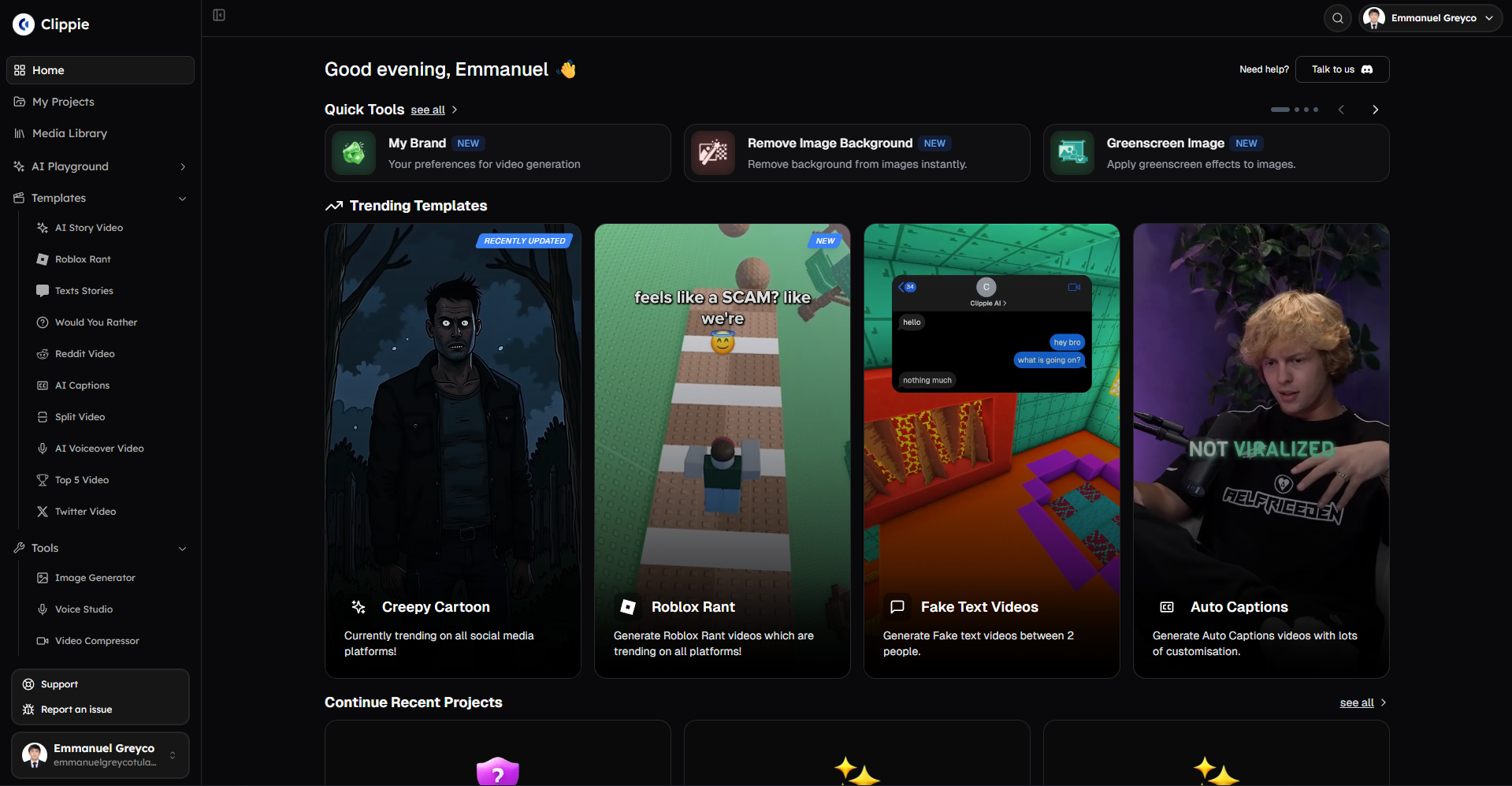
For creators and businesses at every stage, whether solopreneurs establishing initial multi-platform presence, growing brands seeking production efficiency to scale output, or established operations optimizing cost structure while maintaining quality, cross-platform sales video creation through unified master video approach combined with AI adaptation via Clippie AI removes the fundamental constraint preventing consistent multi-platform distribution: the 15-25 weekly hours manual platform-specific production requires making simultaneous Instagram, TikTok, and YouTube presence economically impossible for most creators. Visit clippie.ai to explore how creators are achieving 3-8% conversion rates across all major platforms simultaneously, reducing adaptation time 87-92%, and building sustainable cross-platform sales systems generating consistent revenue regardless of algorithm changes or platform trends.
Make an AI story video
Write a script or let AI write one. Clippie turns it into a narrated video with AI scenes, voiceover and captions.
Read more

How to Make Top 5 Ranking Videos in 2026 (Step-by-Step)
Build ranking Shorts that can still earn: pick a debatable topic, set clear criteria, source clips you may use, script the countdown, add your commentary.

How to Create Short-Form Videos Using AI: 8 Steps (2026)
A beginner workflow for AI videos on TikTok, Reels and Shorts: pick a format, script a hook, add visuals, voice and captions, export at 9:16, label AI.

7 Free CapCut Alternatives for Short-Form Video (2026)
Compare Edits, YouTube Create, VN, Clipchamp, Canva, DaVinci Resolve and Shotcut: what each gives free users, what it caps first and where it falls short.